-
-
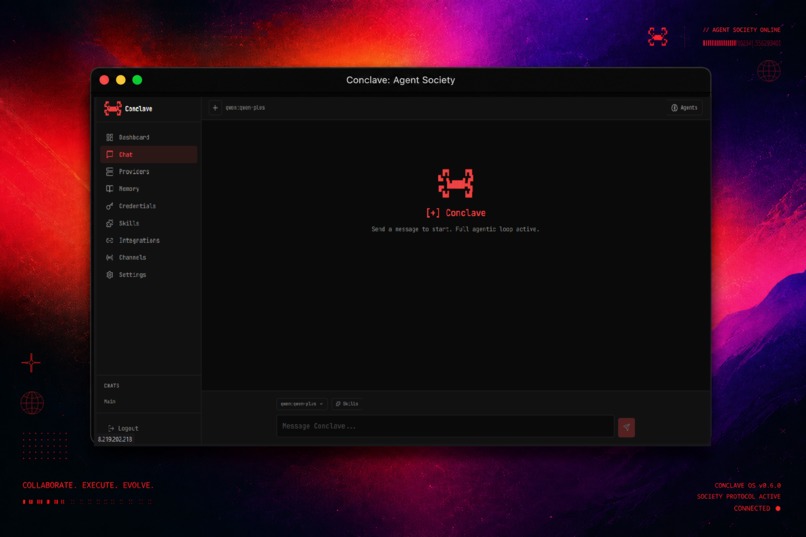
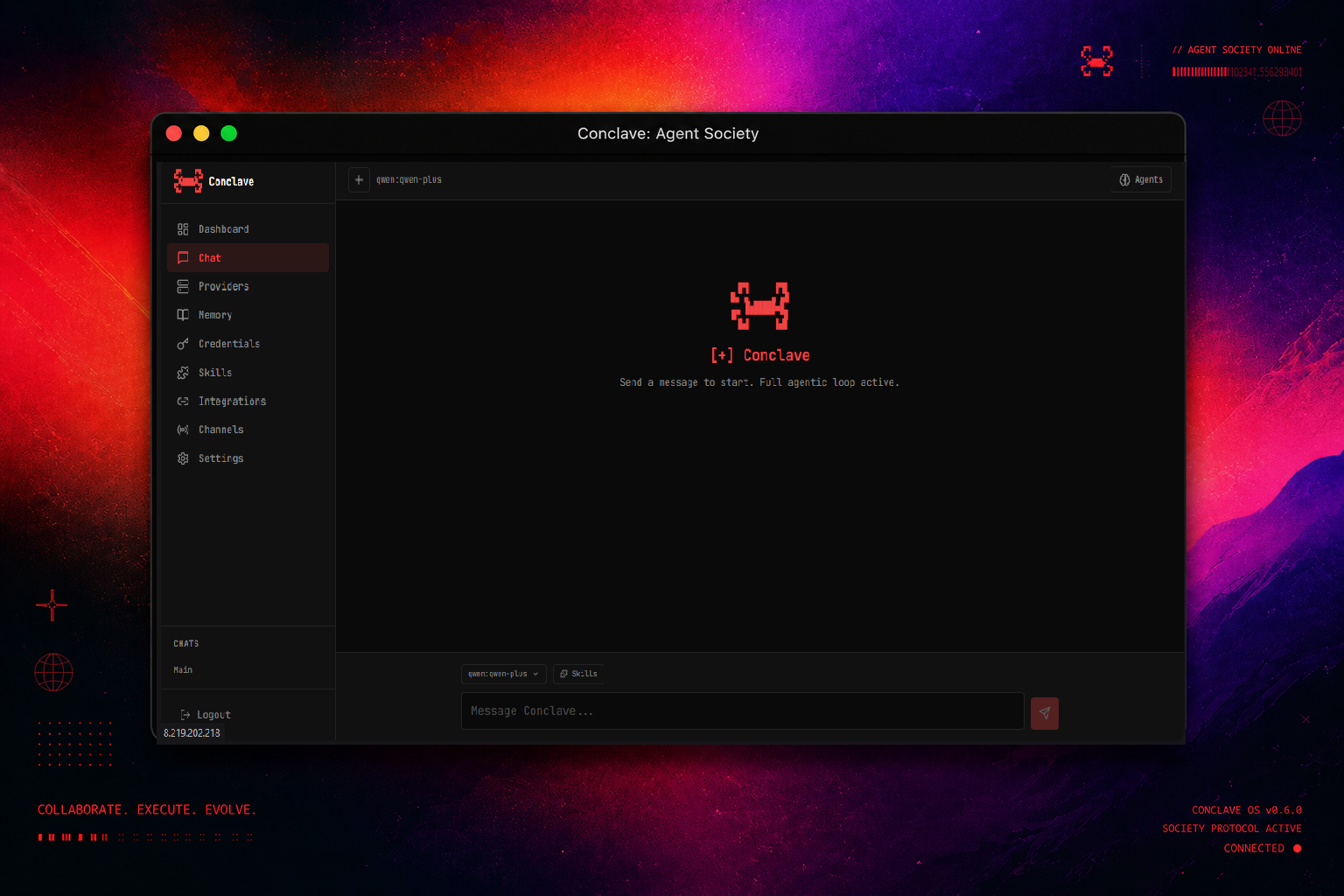
Website Channel
-
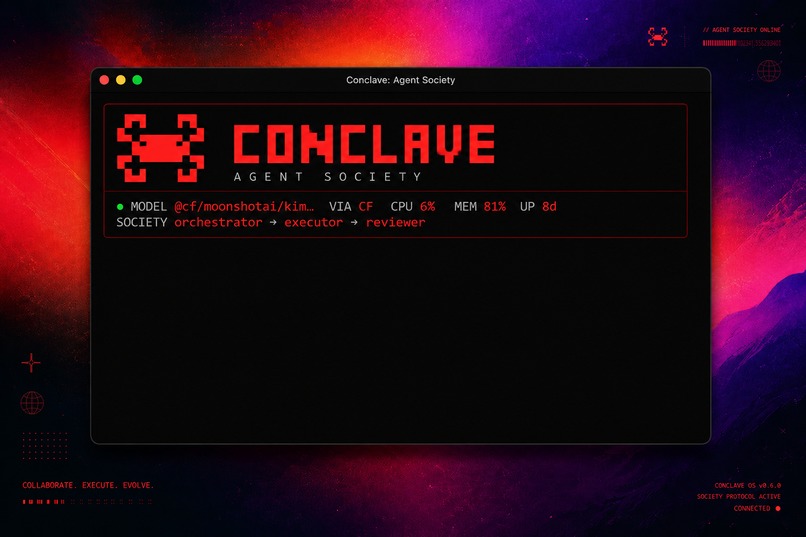
CLI Channel
-
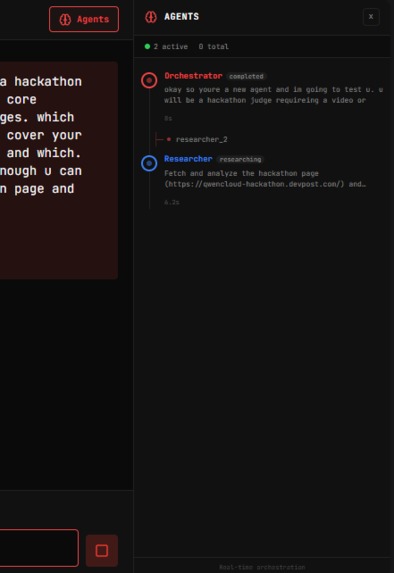
Multiple agents Being executed
Inspiration
Most AI agents today are incredibly capable—but they're still working alone.
In real organizations, complex problems are solved by teams with different responsibilities, not by one person doing everything. We wanted to bring that same collaborative approach to AI by building a society of autonomous agents that communicate, delegate work, review each other's outputs, and cooperate toward a common goal.
Rather than creating another chatbot, we wanted to explore what happens when AI starts behaving more like an organization.
What it does
Conclave: CoAgentic Society transforms a single user request into a collaborative workflow.
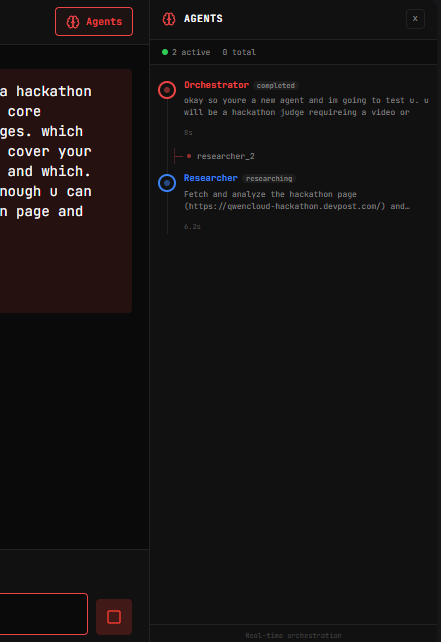
Specialized agents automatically divide responsibilities, coordinate execution, share memory, communicate through structured tasks, use external tools, APIs, MCP servers, and skills, then verify results before presenting them back to the user.
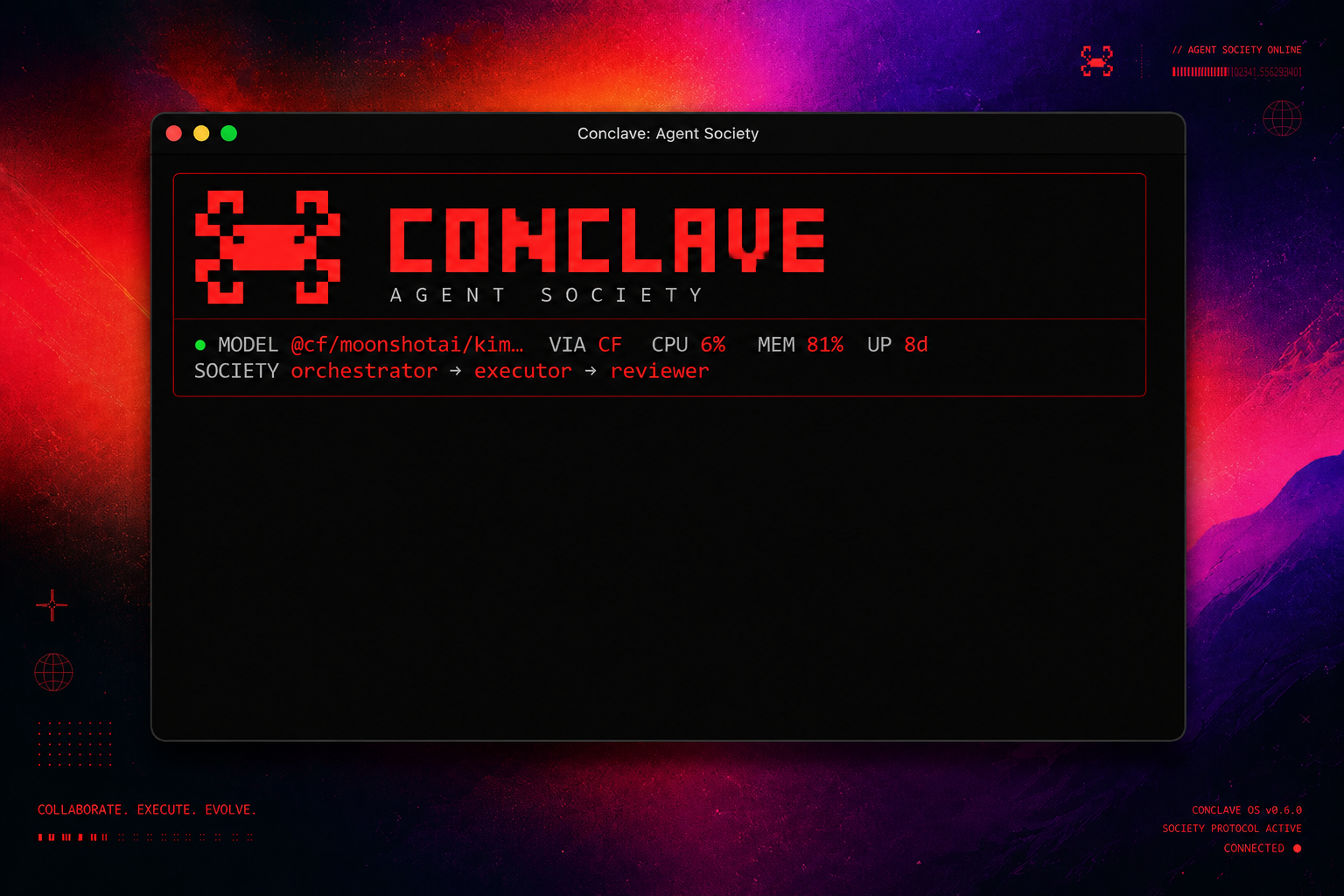
The platform dynamically creates, manages, and retires agents as needed while visualizing the entire collaboration process through a real-time CLI dashboard.
How we built it
We evolved our existing open-source AI agent framework into a collaborative multi-agent platform.
The system combines:
- Dynamic agent orchestration
- Shared and local memory
- Multi-provider LLM support
- MCP integration
- Skills and tool execution
- API integrations
- Shell and code execution
- Real-time CLI visualization
- Structured task delegation between agents
Instead of treating the language model as the entire application, we built an execution platform around it where specialized agents cooperate to solve problems.
Challenges we ran into
Building multiple intelligent agents is much harder than building one.
Some of the biggest challenges included:
- Preventing duplicated work
- Coordinating communication between agents
- Designing efficient delegation workflows
- Keeping shared memory synchronized
- Managing execution without unnecessary latency
- Visualizing a constantly changing agent society in a terminal interface
- Balancing flexibility with simplicity
Accomplishments that we're proud of
- Building a collaborative AI architecture instead of another single-agent assistant.
- Creating a dynamic society where agents can coordinate and specialize.
- Designing a real-time terminal interface that visualizes collaboration as it happens.
- Integrating external capabilities through APIs, MCP servers, skills, and tool execution.
- Building everything as an open-source project designed to grow beyond the hackathon.
What we learned
We discovered that the biggest improvements in AI don't always come from larger language models—they come from better systems.
Planning, delegation, communication, memory, and verification often have a greater impact on reliability than simply changing the underlying model.
Building an effective AI society is ultimately a systems engineering challenge, not just a machine learning one.
What's next for Conclave: CoAgentic Society
Our vision is to evolve Conclave into a fully autonomous collaborative platform.
Future plans include:
- Self-improving agent societies
- Dynamic role creation
- Distributed execution across multiple machines
- Long-term collaborative memory
- Smarter task negotiation and conflict resolution
- Community-contributed agent packages and skills
- Visual dashboards beyond the terminal
- Enterprise-scale autonomous workflows
Ultimately, we want Conclave to become a platform where intelligent agents don't just assist humans. They collaborate with each other to solve increasingly complex real-world problems.


Log in or sign up for Devpost to join the conversation.