-
-
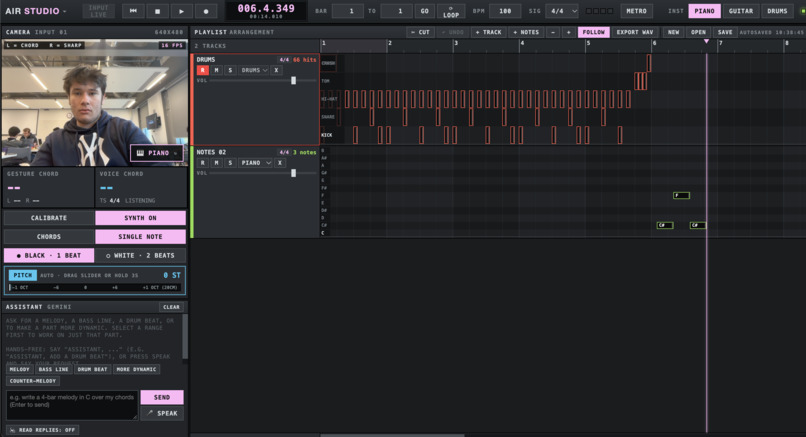
How it looks after recording some audio
-
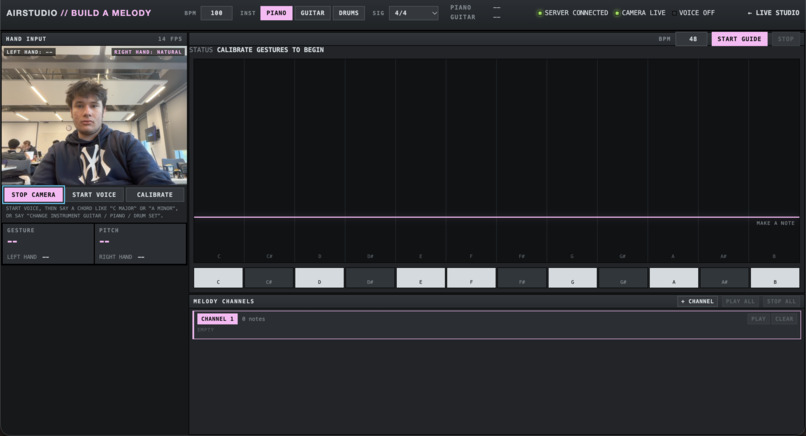
Our basic UI
Inspiration
When we heard about the theme of composition our first thought was music composition, a pretty broad and complex topic, and one thing that came to mind was the accessibility of instruments, not because of skill level which is something that can be practiced and learned, but instead mobility issues like arthritis that can affect anyone and take away their passion and hobbies or even work. We believe that all people should have access to art and music as a hobby and stress reliever, but also as a potential professional path, hence we were inspired to make a system that could bridge this lack of access.
What it does
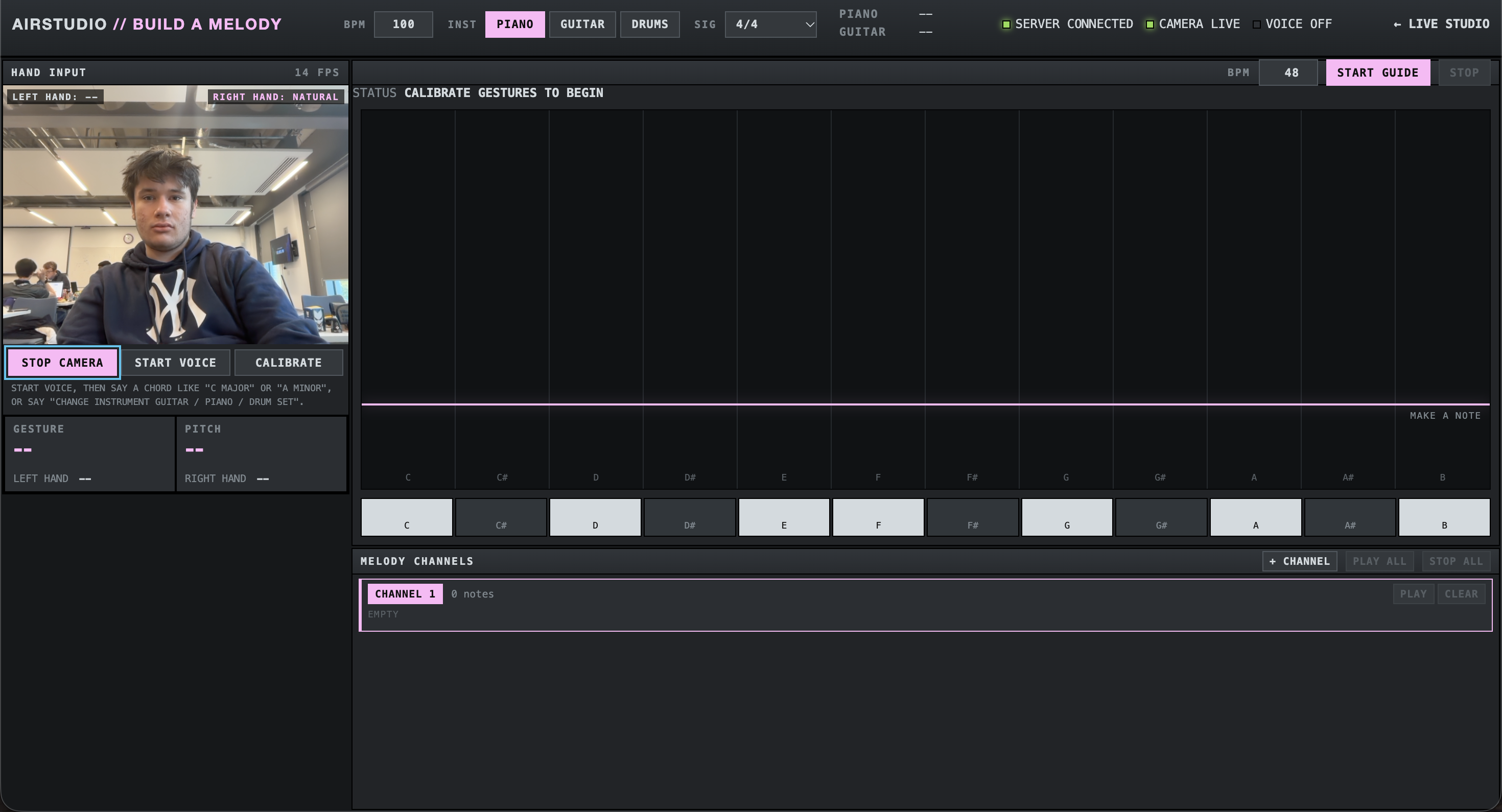
Through video and audio input and processing the system interprets hand gestures and verbally spoken cues as chords and notes, outputting the correct note/chord in the chosen instrument and recording the sound, allowing for looping, editing and composing different notes and instruments together. It allows for things like time signatures via the website but also speech, and the changing of pitch through an arduino distance sensor similar to a theremin. It also has a build a melody mode that teaches how to use the program and put together a basic tune for beginners, a calibrate button that allows you to record custom hand gestures for each note, and a built in ai agent that lets you prompt it to change your audio files as you need, as well as anything else you could want to do to the file.
How we built it
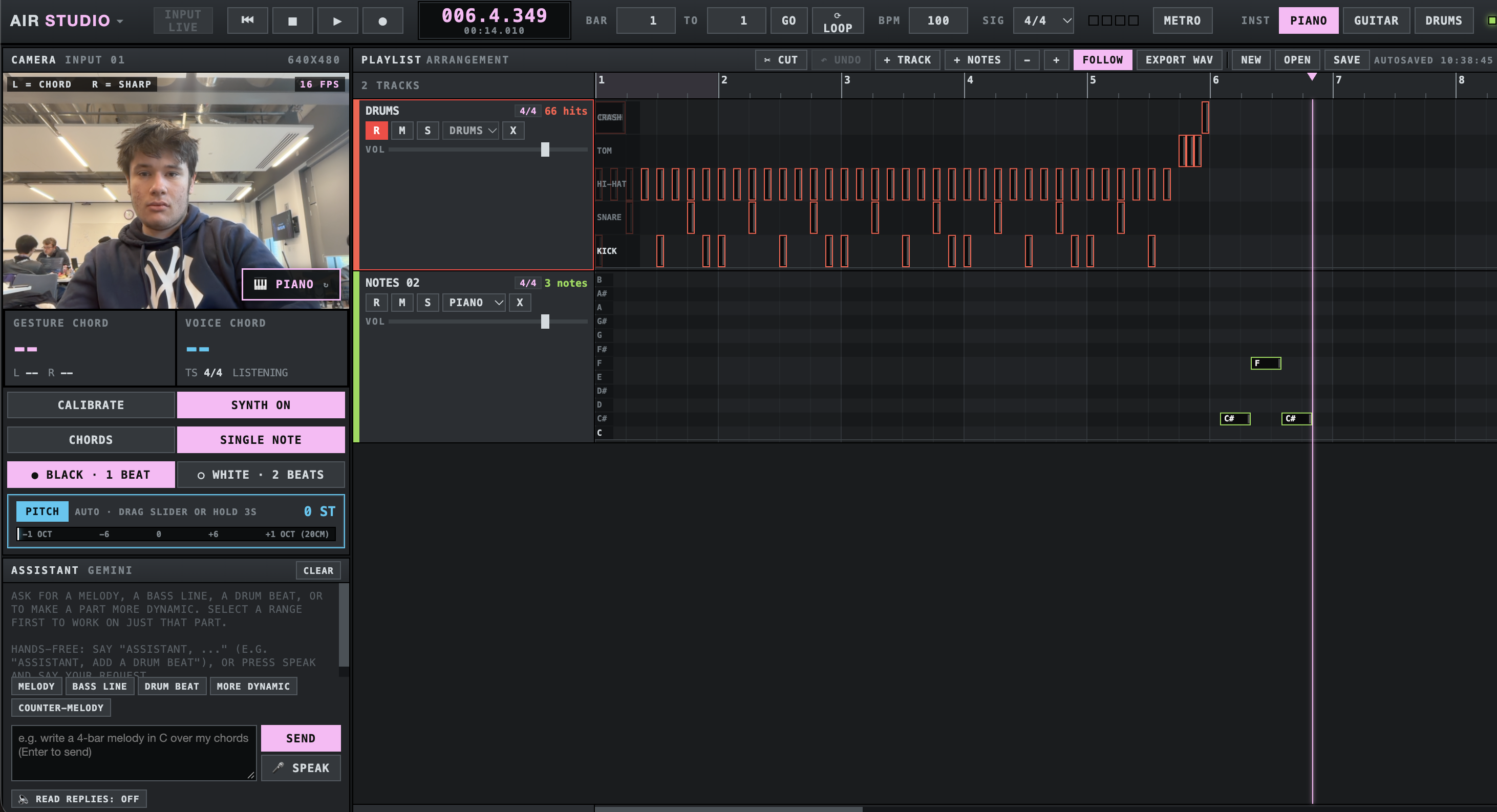
We started off by researching into arthritis friendly hand signals as well as how we can do audio and video processing, we began with the basic code for the hand gesture processing using python extensions to map coordinates and landmarks on the body from a visual camera to notes, and the audio processing which used gemini API as well as vosk for speech to text and interpreting the audio into different chords. We then worked on code for connecting our arduino camera, mic and distance sensor to a basic website uisng arduino app lab environment and then connecting this to our processing code therefore forming the basics of the system. The next step was outputting sound based on interpreted notes which was done with python synthesisers, then from these key technical features we fleshed out the ui of the app using high contrast colours for added accessibility and typical html and javascript design. We created a typical sound stage like you would see on most synethsiser websites allowing for the playback and editing of recorded audio. We then worked on some more specific features like being to able to differentiate between background noise and actual notes to allow more refined composition, non continuous note playing for extra controls and our build a melody mode, a game like system to act as a tutorial to ease new users into the hand gestures. Callibration was a very important feature in the development process and one we spent time on refining making sure each user can record their own custom hand gestures that the system will map out as coordinates.
Challenges we ran into
Connecting the arduino distance sensor was a big challenge for us, it was something we were new to and eager to learn. At first we tried to connect it to the the Arduino IDE, and later found that the app lab was the most compatible to use. We ran into hardware issues due to faulty wires which required a lot of trial and error before we found the issue was actually the wires and not our code. Merge conflicts were another big issue as communicating in a 4-developer team can be fastidious, overwriting each other's code was inevitable. Building a user-friendly, readable but professional and efficient we tried to recreate a music software environment that's usable by disabled people and more. We encountered an issue with the Computer Vision software, namely, the MediaPipe library, we came to realise that the criteria gestures we have trained the software to recognise were far too stringent, as a result, notes were not being triggered when they should've been, and the gestures were heavily reliant on the person who calibrated the software.
Accomplishments that we're proud of
Learning a new skill in programming audio and visual processing, creating our first music based project despite not having much of a musical background. Learning computer vision and sound processing, learning to integrate gemini api into its own audio processing and changing agent. Using Arduino hardware for the first time.
What we learned
We learnt a lot about the challenges facing people with mobility issues when it comes to music composition and hand movement. We learnt about mapping out coordinates on a body in a live video, as well as live speech to text processing and understanding. We learnt about integrating Arduino sensors into a system.
What's next for SynthAble
Given more time we would love to transition more of the website into voice commands to really have that seamlessly accessible usability. We would also love to experiment with creating sheet music to allow for more professional composition, making the program automatically convert the users input into sheet music as they go.
