-
App Startup and logo
-
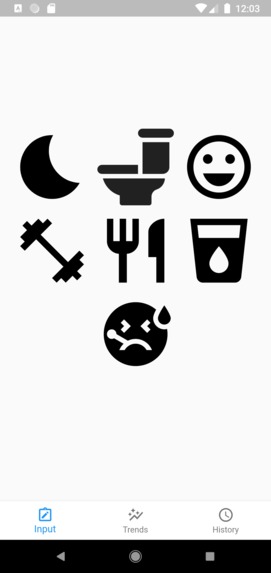
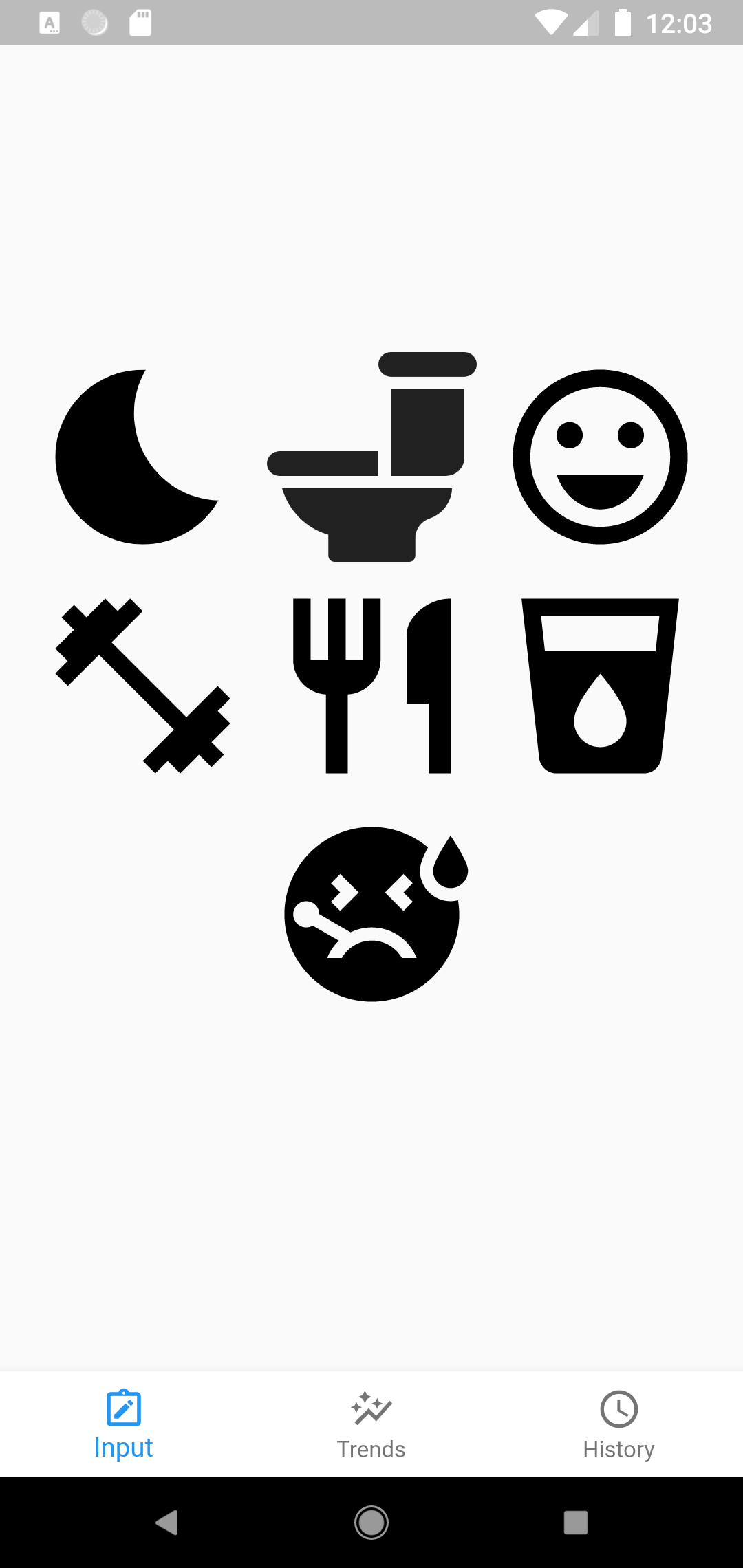
Data Input page
-
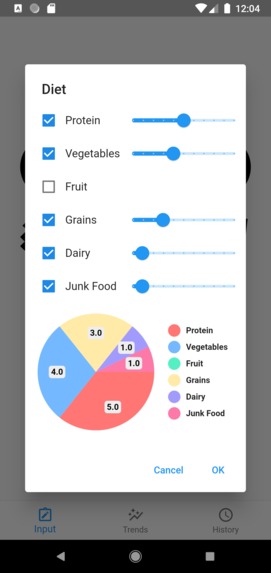
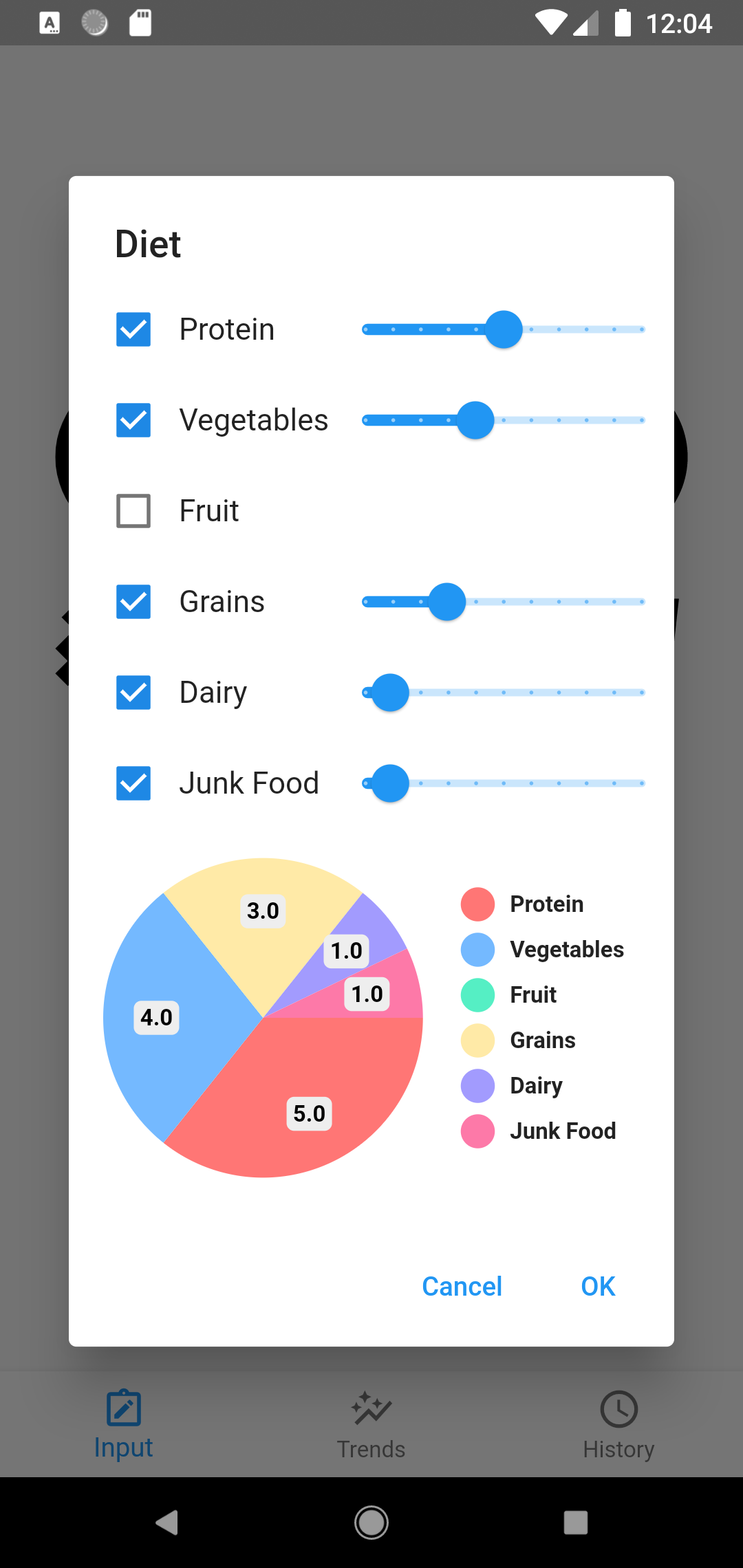
Pie Chart with sliders
-
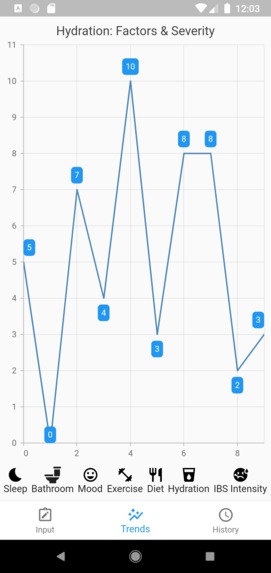
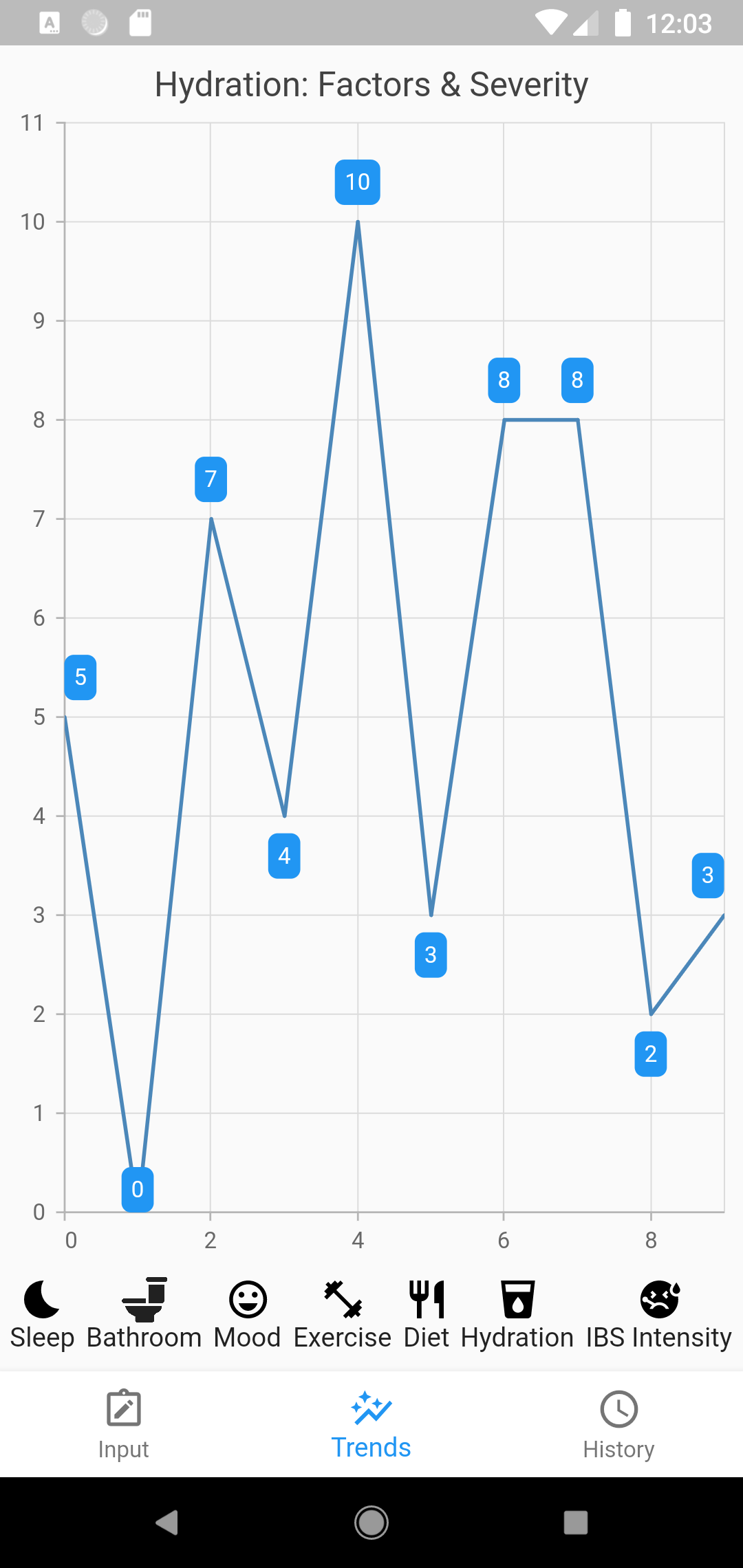
Data Trends page
-
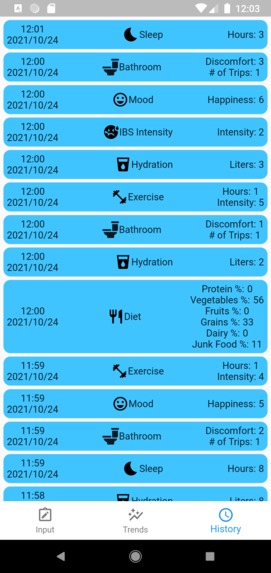
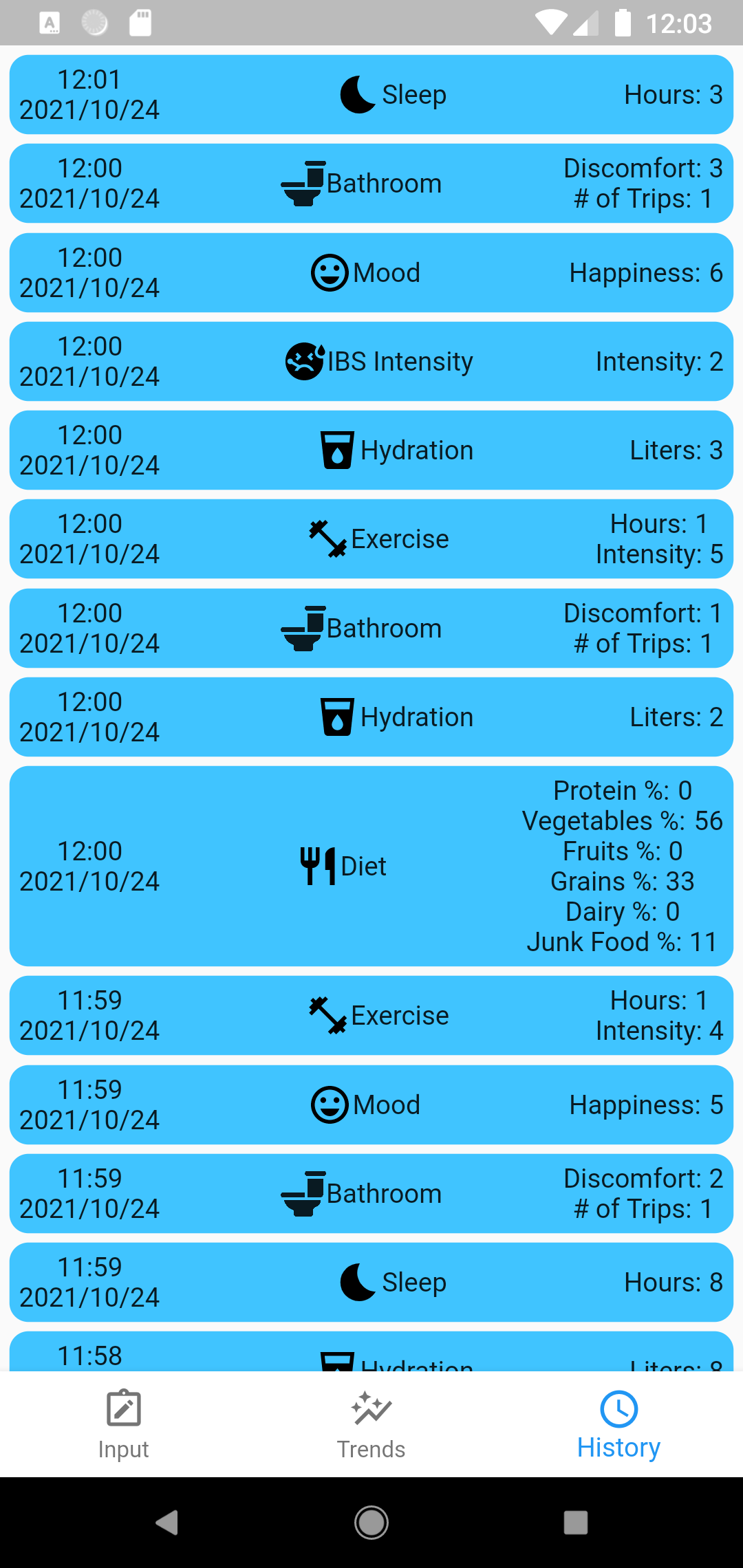
Data History page
Inspiration
One of our main inspirations for this app is due to personal experiences with IBS. Many members of our team have IBS, which causes them a lot of discomfort and complications. We wanted to create an app that would help improve the lives of people with IBS, by identifying trends in aspects of their lifestyles that could aggravate their symptoms of IBS We envisioned a product that would make their symptoms more manageable and reduce potential complications in the future.
What it does
Our goal was to create a simple, user-friendly app that identifies the most relevant patient-specific IBS causes and could help users alleviate IBS-related symptoms through lifestyle management. IBS, short for Irritable Bowel Syndrome, is a gastrointestinal disorder that roughly affects over 10% of the US population. We designed our mobile app, Synses, with the idea of allowing for users to track and identify trends in their lifestyles that may have a significant impact on their degree of IBS intensity.
How we built it
We decided to use Flutter, an open source UI software development kit, because it supports both Android and IOS devices. First, we planned out our core features, which would be data input, data graphing, and data history. These three features are crucial for our app because they allow us to track and identify trends that could affect the user’s IBS intensity. In terms of the database, we utilized the HiveDB that Flutter has to offer, which essentially stored the inputted data in a way that we could graph. We split the work between our team members, with each member working on a different aspect and connecting it together through GitHub. We also did design prototyping on Figma to plan out how we wanted the UI.
Challenges we ran into
As this is our first hackathon, we didn’t have much experience coding entire projects in a short duration. We were also using Flutter and Figma, tools that many of us were completely new to. We spent a substantial portion of our time figuring out how to use the different Widgets that Flutter provides, and one major challenge we had to overcome was figuring out how to take the data from the inputs and graph it through a database.
Accomplishments that we're proud of
It was our first time participating in a hackathon to develop an app, not to mention using an unfamiliar language and software toolkit, so we’re especially proud of utilizing many of Flutter’s internal features, including its Hive database and different widgets. We are also proud of the smaller aspects of our app, such as the sliders and the real time pie chart.
What we learned
Overall, this hackathon was a great first experience for all of us. We learned how to work as a team on a coding project, and felt the joys and struggles of a hackathon. All of us have definitely learned more about mobile app development using Flutter, specifically with designing UI and demonstrating trends with real-time input, which advanced our path to becoming better and more efficient programmers.
What's next for Synses - IBS Tracking App
The next step in our app development would be adding advanced data analysis and a server backed database. We plan on using KNN classification and the user inputted values to predict the intensity and likelihood of experiencing IBS symptoms. We also want to use a better database system to store our user values and stylize our app to develop a more cheerful app experience.
Built With
- dart
- figma
- flutter
- hivedb
- visual-studio


Log in or sign up for Devpost to join the conversation.