-
-
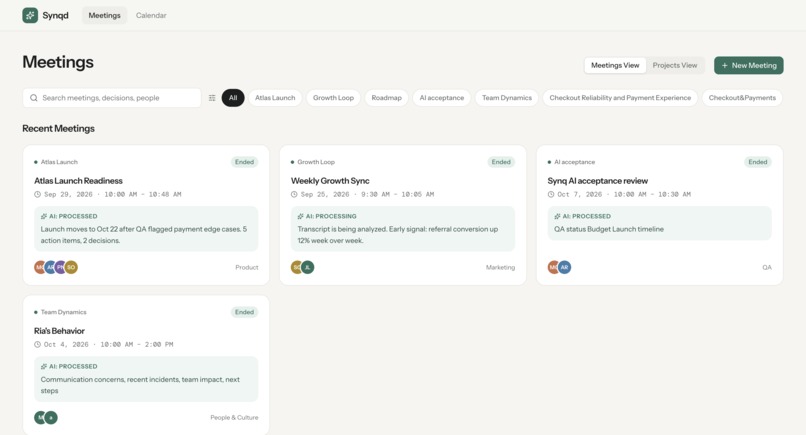
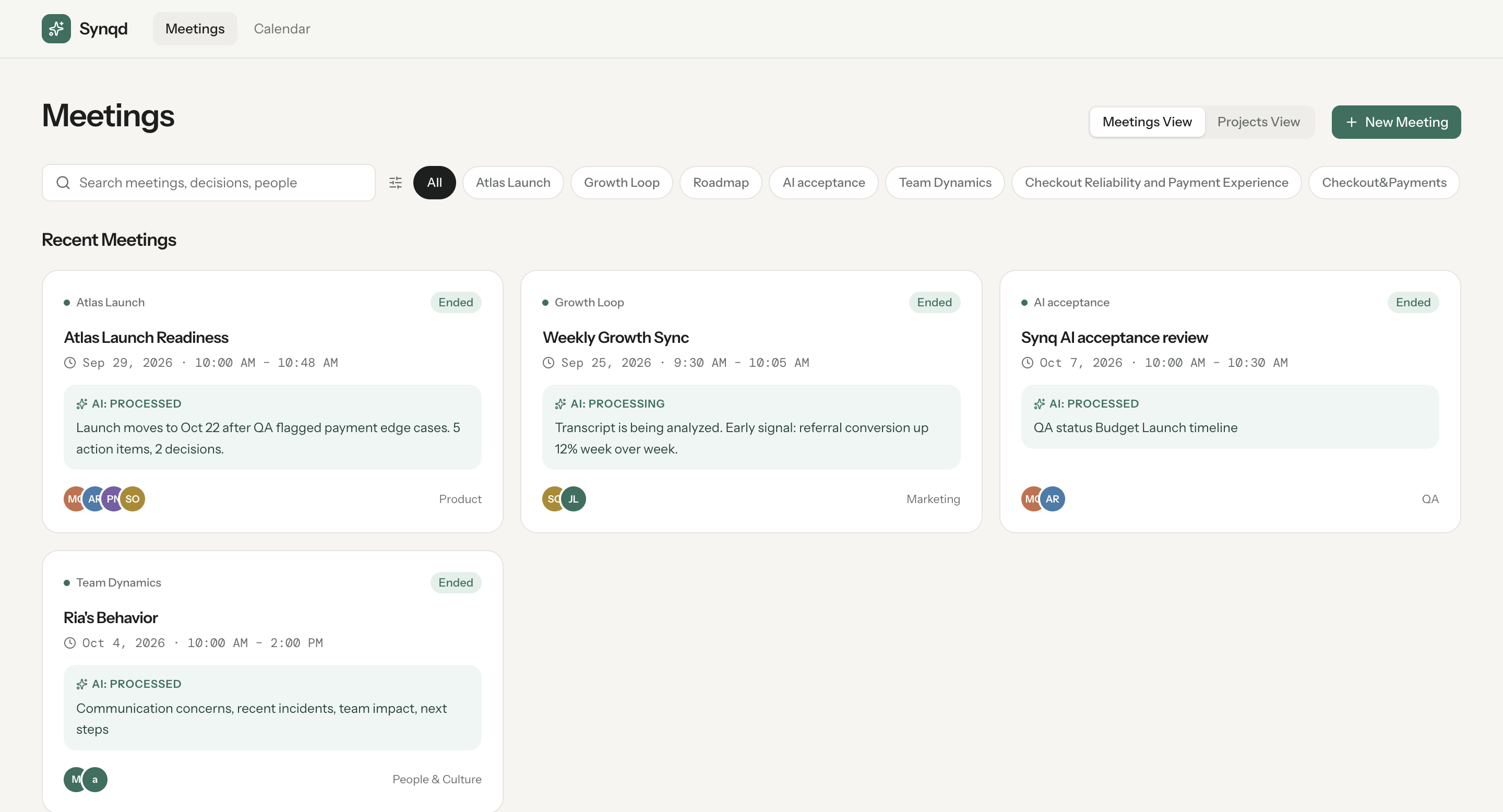
Where you view your meetings.
-
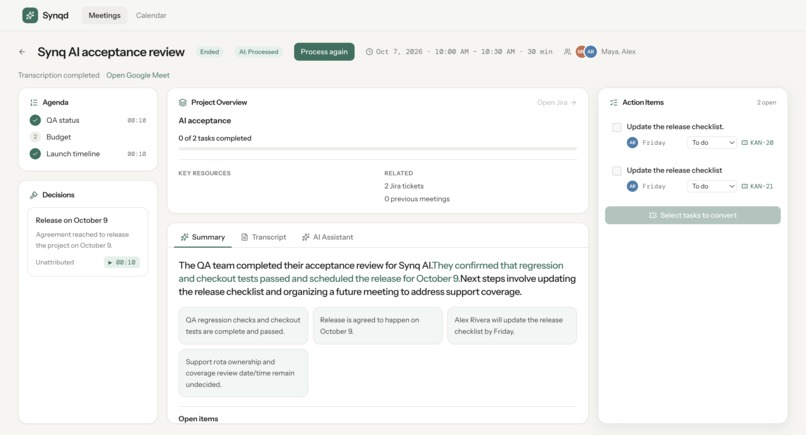
Meeting Dashboard
-
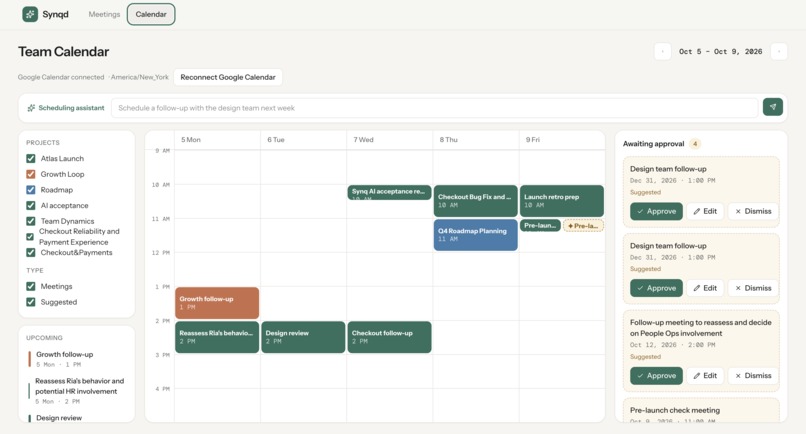
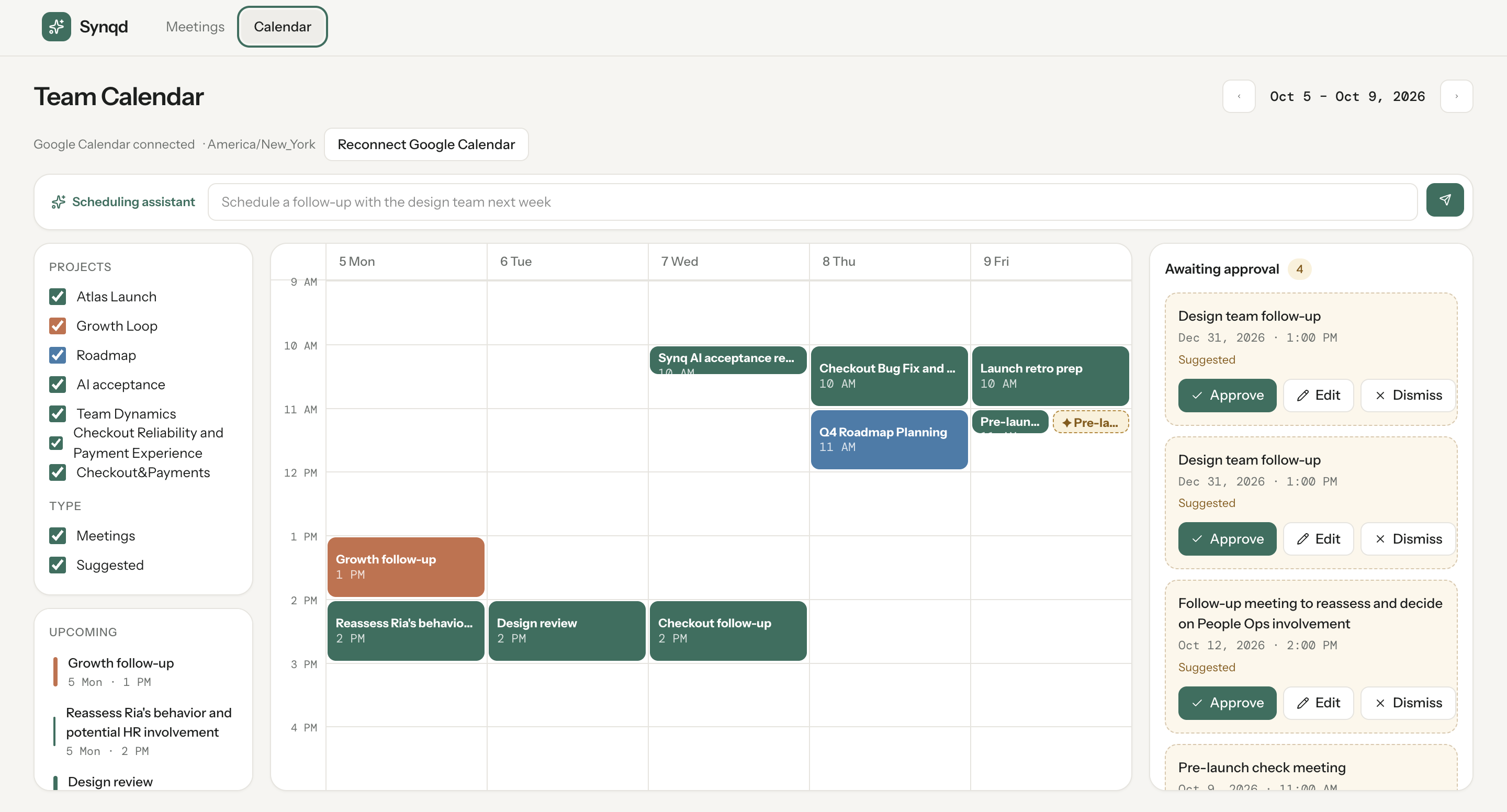
Team Calendar
-
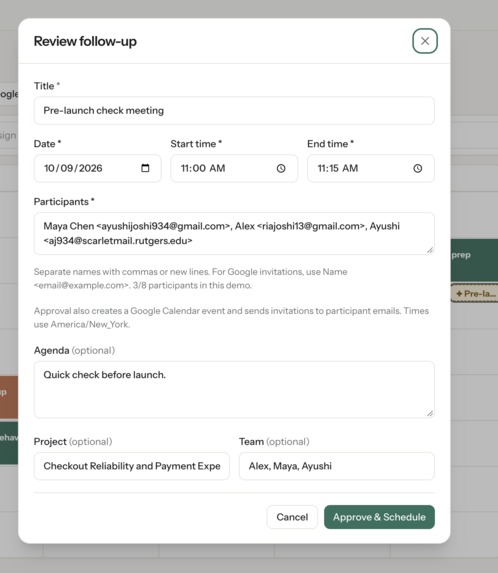
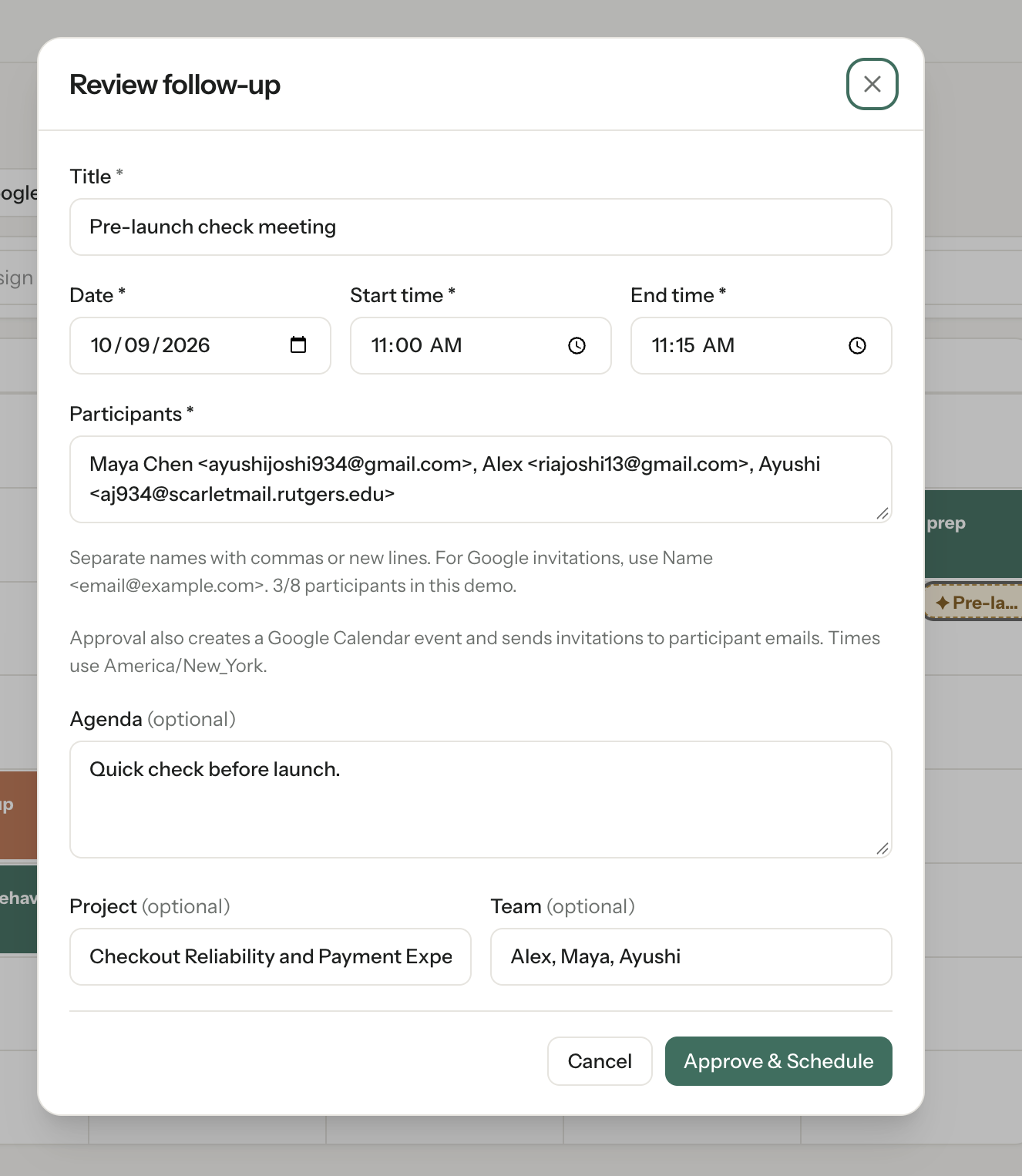
Schedule meeting through google calendar
-
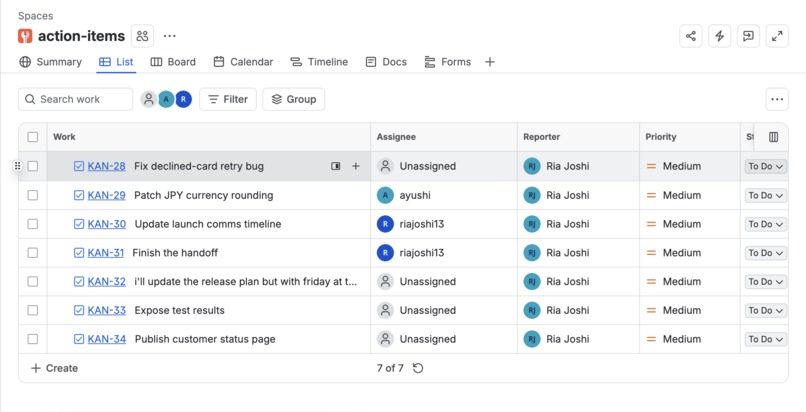
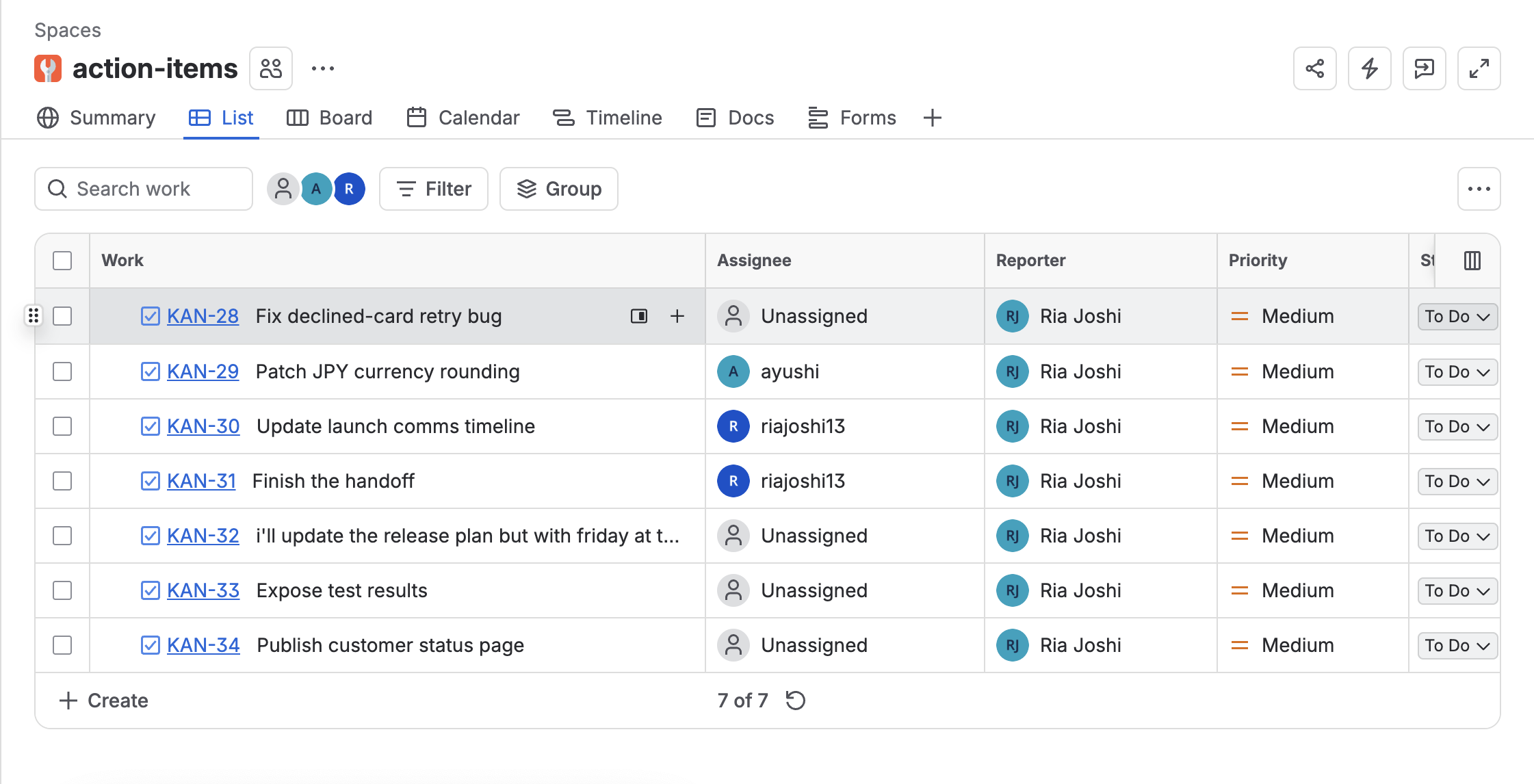
Jira Tickets
-
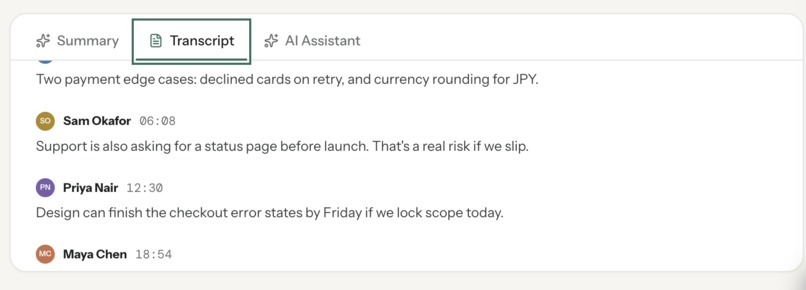
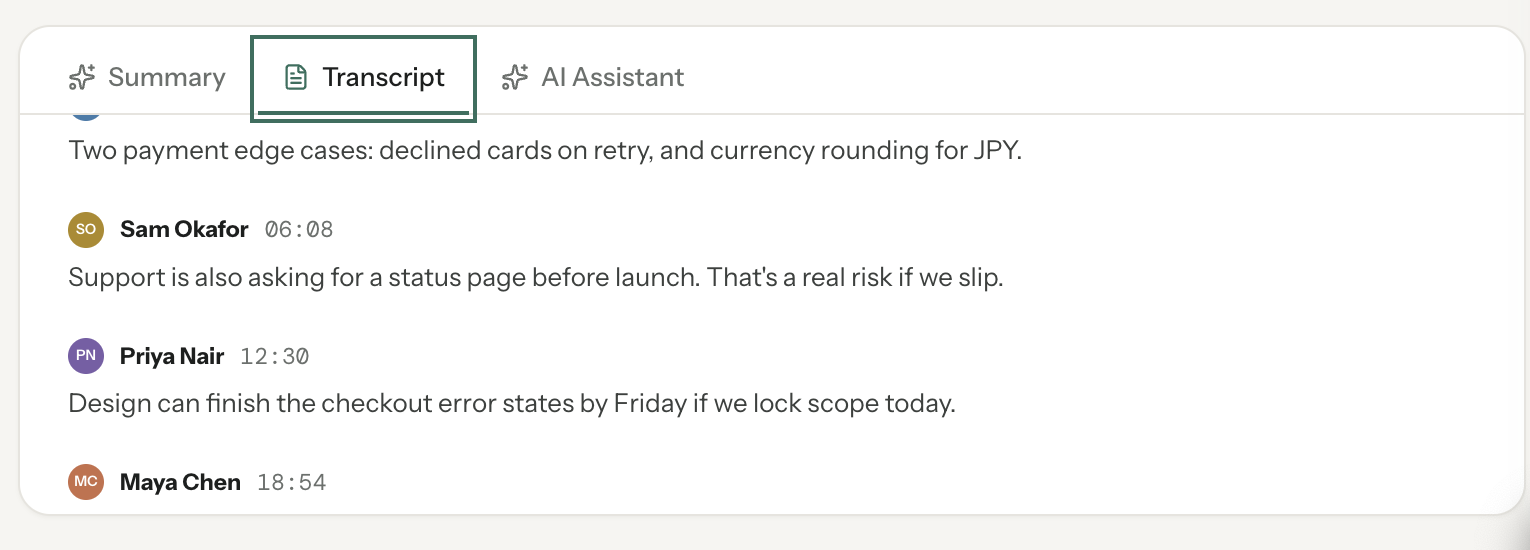
View meeting transcript
Inspiration
A meeting ends. Everyone closes their laptop. And within minutes, the most important parts of the conversation start slipping away.
A decision was made. Someone committed to a task. A deadline was mentioned once. A follow-up was agreed on.
But now those pieces are scattered across a transcript, someone's notes, Jira, a calendar, and everyone's memory.
We built Synqd because we realized the problem with meetings is not capturing what people say.
It is making sure what they say actually turns into action.
What it does
Synqd turns conversations into execution.
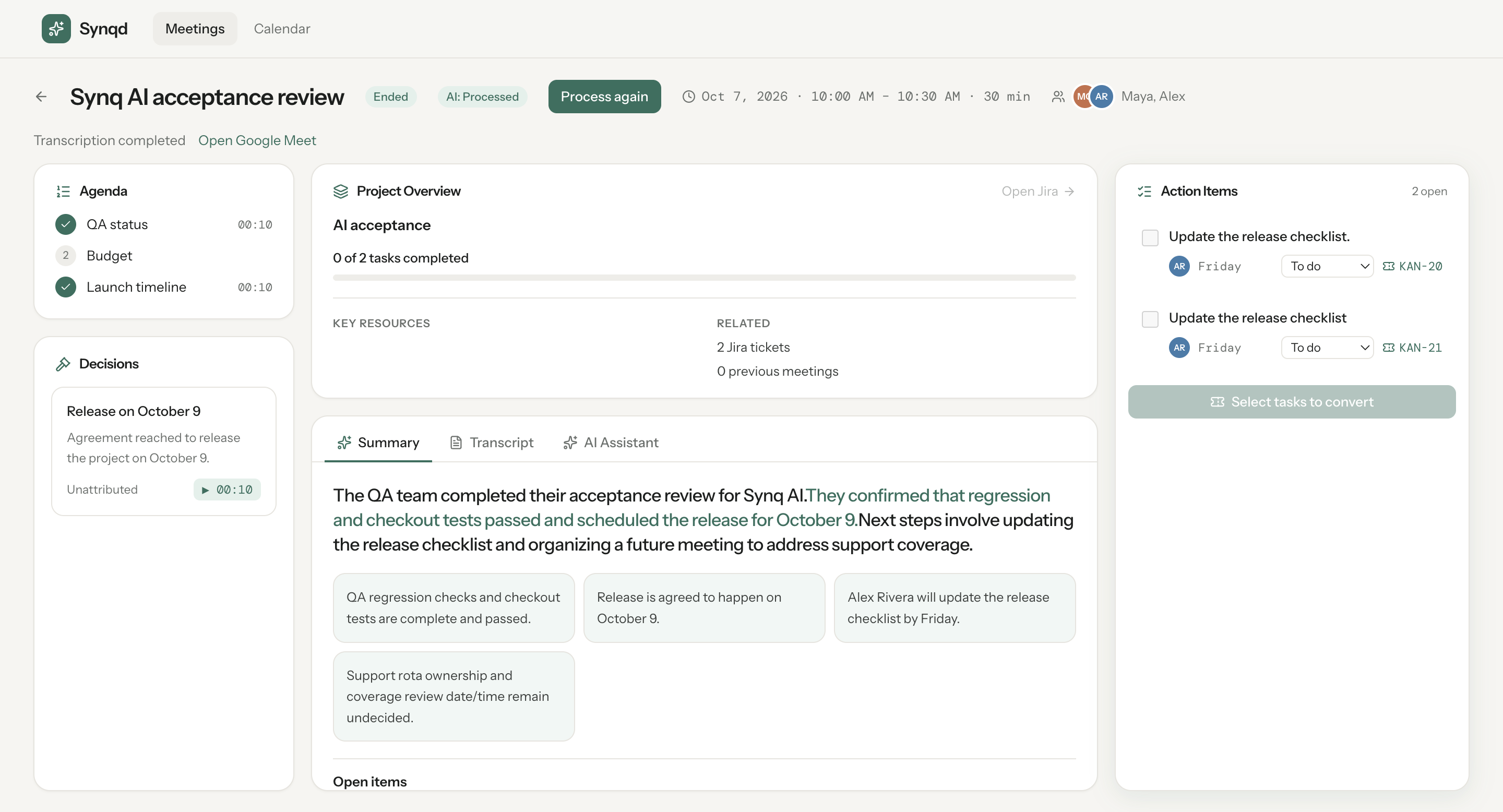
Synqd understands what happened in a meeting and transforms it into structured, actionable intelligence:
- Decisions that were actually made
- Action items with owners and deadlines
- Unresolved questions that still need attention
- Agenda progress based on what was actually discussed
- Follow-up meetings detected directly from the conversation
- Meeting summaries that focus on outcomes and next steps
But Synqd does not stop at generating another AI summary.
An action item can become a real Jira issue.
A follow-up discussed during the meeting can be surfaced for review and, with one approval, become a real Google Calendar event.
Instead of leaving a meeting with another transcript to read, teams leave knowing:
What did we decide?
Who owns what?
What happens next?
How we built it
We built Synqd as a complete meeting-to-action pipeline.
The meeting
Vexa brings meeting transcription directly into Synq, giving us the conversation that everything else is built around.
The intelligence
An LLM analyzes the transcript and transforms the conversation into structured meeting intelligence, including summaries, decisions, action items, unresolved questions, agenda completion, and suggested follow-ups.
We do not simply trust whatever the model returns. Our backend validates the AI output against the meeting and transcript before allowing it to affect application state.
The infrastructure
Our frontend is built with React, TypeScript, and Vite.
Our backend runs on Python Azure Functions, with Azure Cosmos DB providing persistent meeting state.
This allows the transcript, decisions, tasks, agenda progress, integrations, and follow-ups to remain connected throughout the meeting lifecycle.
The execution
Finally, Synqd connects meeting intelligence to the tools where work actually happens.
Jira turns commitments into trackable work.
Google Calendar turns approved follow-ups into scheduled meetings.
The result is one continuous flow:
Conversation → Understanding → Decision → Action
Challenges we ran into
The hardest part was not getting an AI model to summarize a meeting.
It was making AI reliable enough to influence real workflows.
We encountered model capacity issues, rate limits, structured output failures, inconsistent formatting, and cases where an AI response sounded reasonable but was not sufficiently grounded in what was actually said.
That forced us to think beyond prompting.
We built validation around the model, grounded extracted information in transcript evidence, preserved meeting data when AI processing failed, and kept consequential actions such as scheduling meetings under human control.
We also had to connect several independent systems into one reliable experience:
Live transcription → AI processing → Azure persistence → Jira → Google Calendar
Each system has its own state, APIs, and failure modes. Making them feel like parts of one continuous product was one of our biggest engineering challenges.
Accomplishments that we're proud of
Synqd actually closes the loop.
We did not want to build a prototype where buttons only looked like they worked.
A conversation in a real meeting can become structured decisions and action items inside Synq.
An extracted action item can become a real Jira issue.
A follow-up mentioned naturally during the conversation can be recognized by Synq, reviewed by a human, and turned into a real Google Calendar event.
We are also proud of one principle that shaped the entire system:
AI should understand the conversation, not control the user.
The model provides intelligence.
Our system validates it.
The user stays in control of consequential actions.
That distinction turned Synq from an AI demo into something that feels like a real product.
What we learned
We learned that building with AI is not about making one impressive model call.
The real engineering begins after that call.
Reliable AI products need grounding, validation, persistence, failure handling, thoughtful interfaces, and clear boundaries around what AI is allowed to do.
We also learned that meeting intelligence becomes dramatically more valuable when it connects directly to execution.
A task buried inside a summary is still something a person has to remember.
A task that becomes trackable work is different.
Most importantly, we learned that the future of meeting AI is not about producing better notes.
It is about making meetings matter after they end.
What's next for Synqd
We want Synq to understand the context surrounding a meeting, not just the words spoken during it.
The next step is connecting meetings with the documents, decisions, and project knowledge that shaped the conversation.
Imagine asking:
“Why did we decide to delay this launch?”
“What does the requirements document say about this feature?”
“What changed between our last three meetings?”
And getting an answer grounded in the team's actual meetings and knowledge.
Our vision for Synq is an intelligent workspace where conversations do not disappear when the call ends.
Decisions remain connected to the reasoning behind them.
Commitments become work.
Follow-ups actually happen.
Knowledge compounds instead of getting lost.
The meeting should be the beginning of the work, not the place where context goes to die.
Built With
- azure-cosmos-db
- azure-functions
- google-calendar-api
- google-gemini-api
- jira-rest-api
- oauth
- python
- react
- typescript
- vexa
- vite

Log in or sign up for Devpost to join the conversation.