Inspiration
In today's hyper-connected, fast-paced world, mental burnout and silent depression have become an invisible pandemic. Many people struggle with their emotional well-being but fail to realize it until they hit rock bottom. We noticed that while traditional journaling helps, it acts merely as a passive mirror. It listens, but it doesn't respond, analyze, or provide actionable support. We realized that people need more than just a diary, they need a companion that understands their emotional trajectory over time and knows exactly when to intervene before a crisis occurs.
What it does
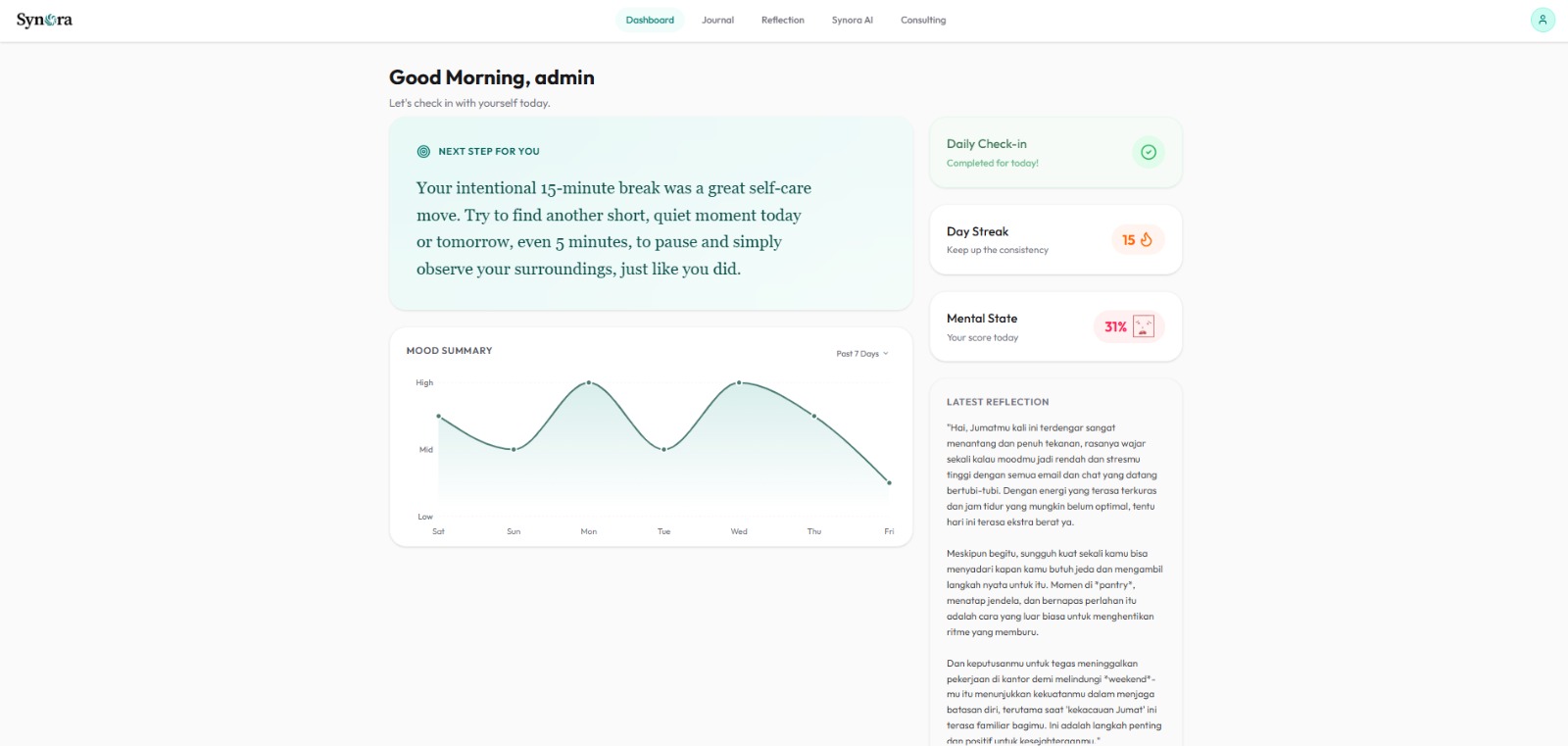
Synora is a personalized AI Mental Wellness Companion that transforms passive journaling into active emotional care.
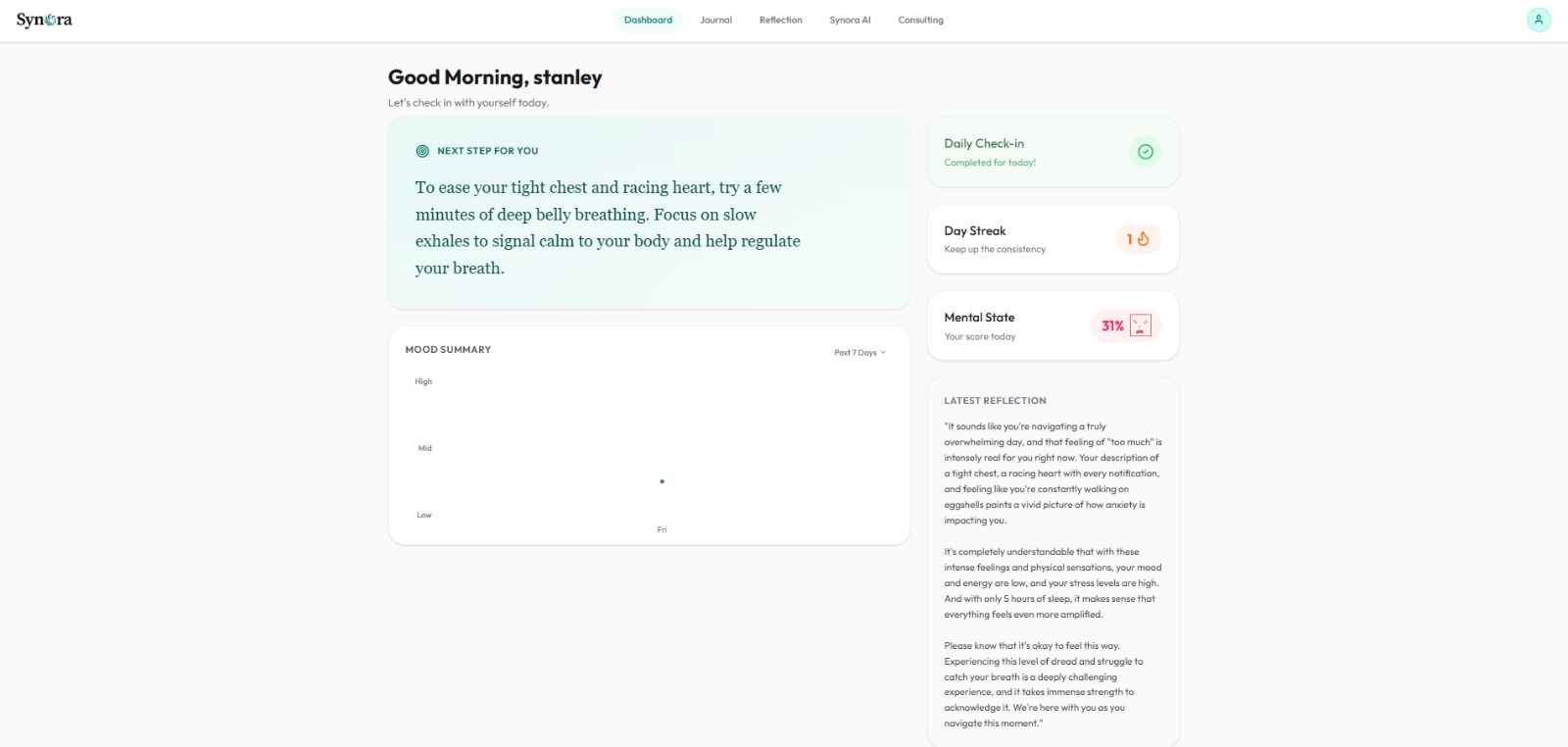
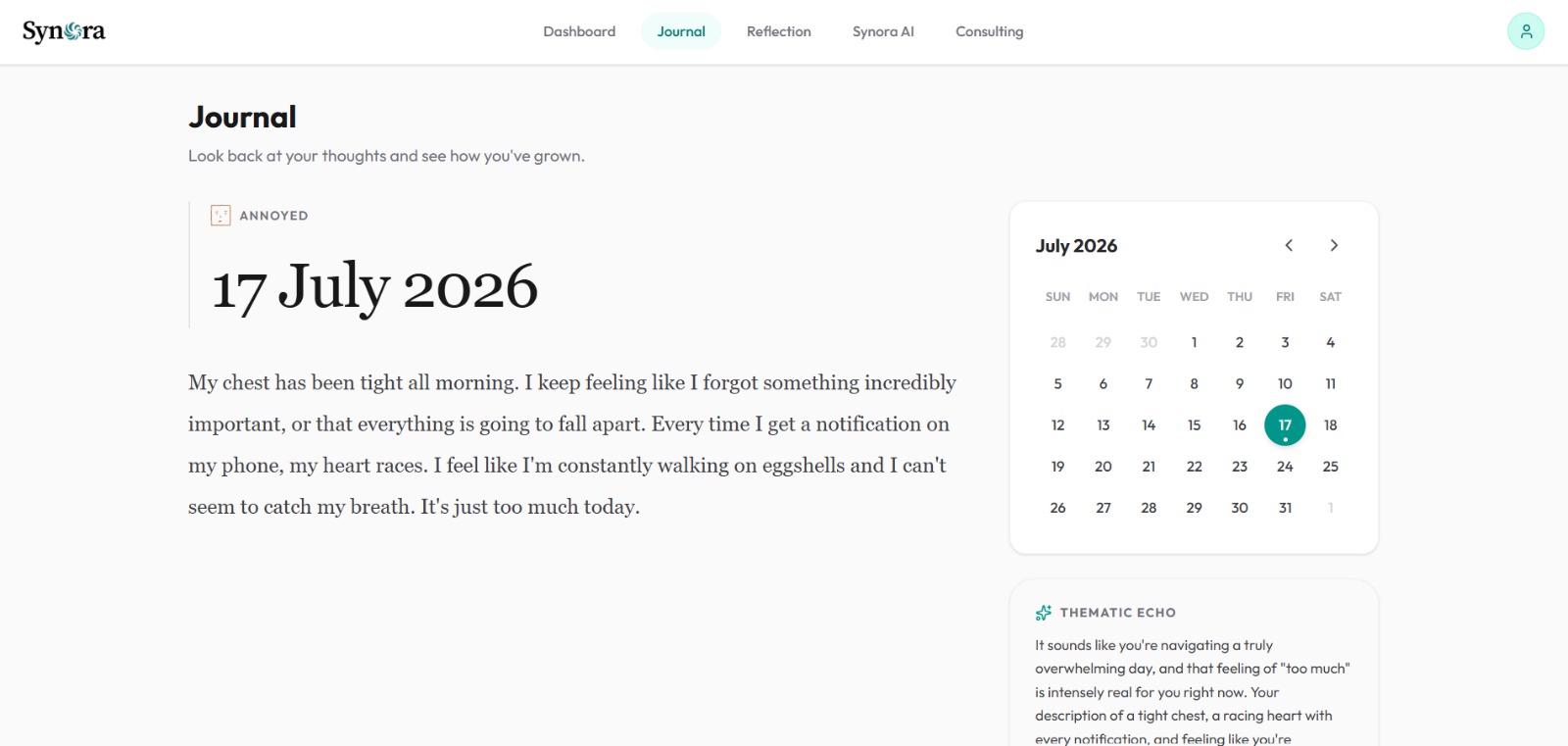
At its core, Synora allows users to perform daily check-ins (tracking mood, stress, energy, and sleep hours) and write long-form journals. Using Agentic AI, Synora processes these entries to:
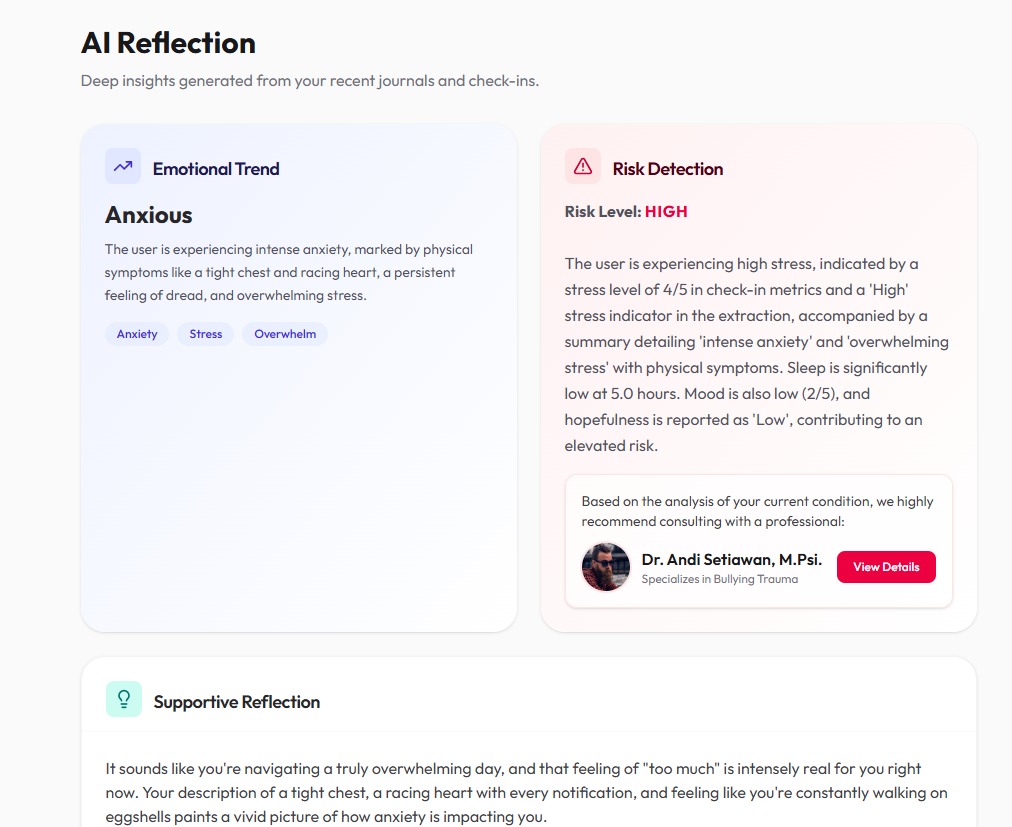
- Extract deep psychological metrics (emotion, hopefulness, social withdrawal, etc.)
- Provide empathetic, highly-tailored reflections and actionable micro-recommendations directly on their timeline.
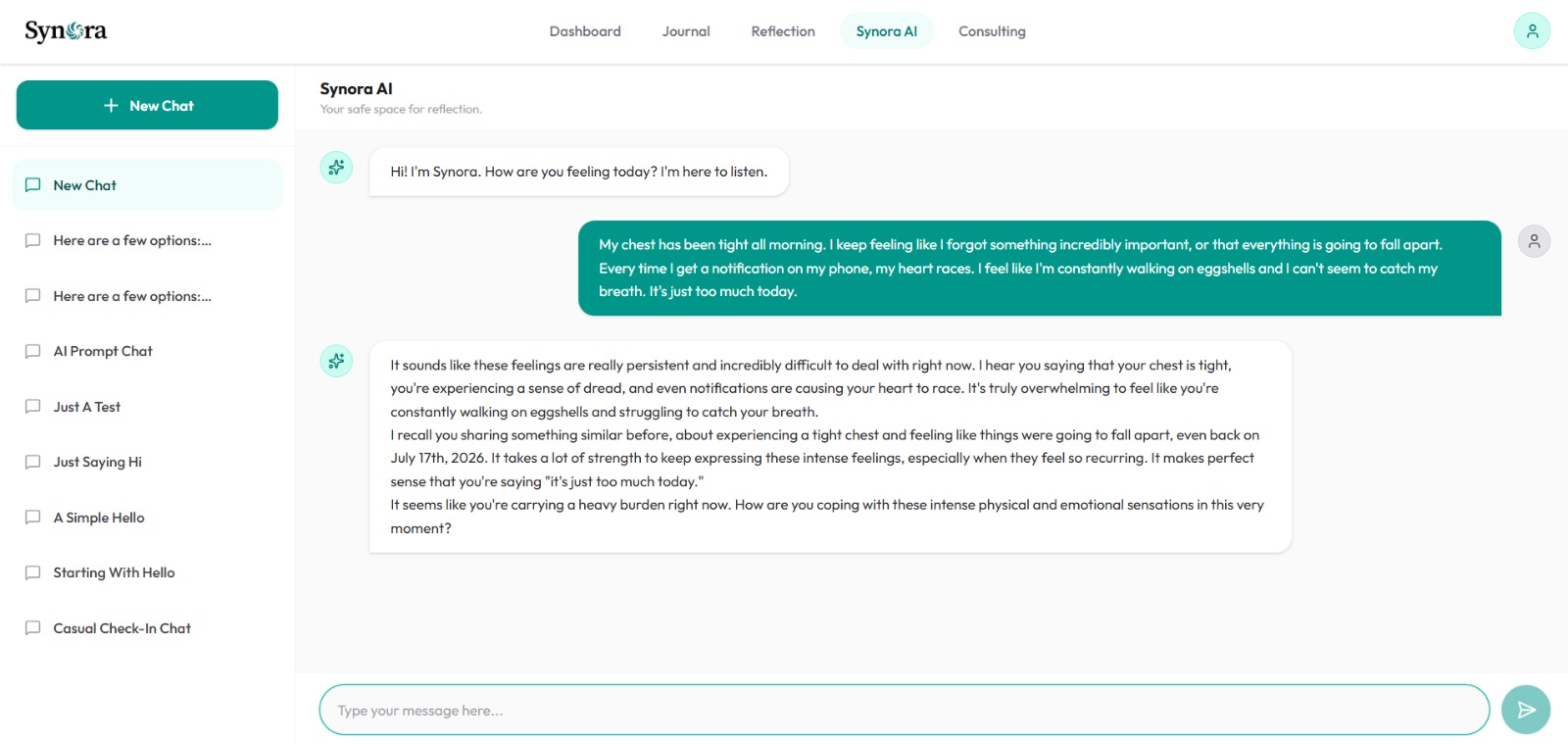
- Act as an intelligent chatbot with a Long-Term Memory (RAG) that remembers the user's past journals, creating a continuity of care.
- Smart Clinical Escalation: Synora continuously analyzes the user's emotional trends to detect burnout or depression risks. If an acute High-Risk Level is detected, the system executes a dual-action safety protocol. First, it dynamically matches and recommends a real human psychologist/doctor whose specific expertise perfectly aligns with the user's extracted psychological issues, bridging the gap between digital self-care and professional medical intervention. Second, as a fail-safe measure, the system will automatically send an alert email to the emergency contact listed in the user's profile, ensuring that a trusted human is informed and can provide immediate real-world support.
Challenges we ran into
Building an AI application that feels "human" is incredibly difficult. One of our biggest technical hurdles was Context Injection and Streaming. We struggled with making the AI's response stream fluidly to the frontend without awkward pauses or UI glitches (like empty chat bubbles). Furthermore, balancing the AI prompt to ensure it remains empathetic without crossing the line into giving dangerous medical diagnoses required extensive prompt engineering and risk-guardrail testing. Finally, mapping the 0-100% mental state score dynamically based on a matrix of 4 different check-in variables required us to rebuild our backend logic multiple times to ensure accuracy.
What we learned
We learned that Context is King. Providing an LLM with just a block of text isn't enough to simulate empathy. By explicitly injecting raw physical metrics (e.g., "User slept 3 hours, stress is 5/5") into the AI's system prompt alongside the journal text, the AI's responses became drastically more grounded and human-like. We also learned the intricacies of full-stack asynchronous programming, especially managing vector databases for RAG and orchestrating multiple AI agents concurrently to reduce latency.

Log in or sign up for Devpost to join the conversation.