-
-
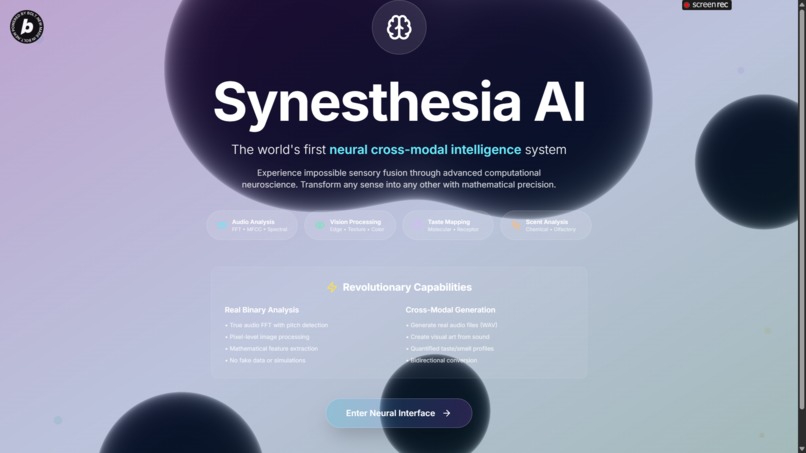
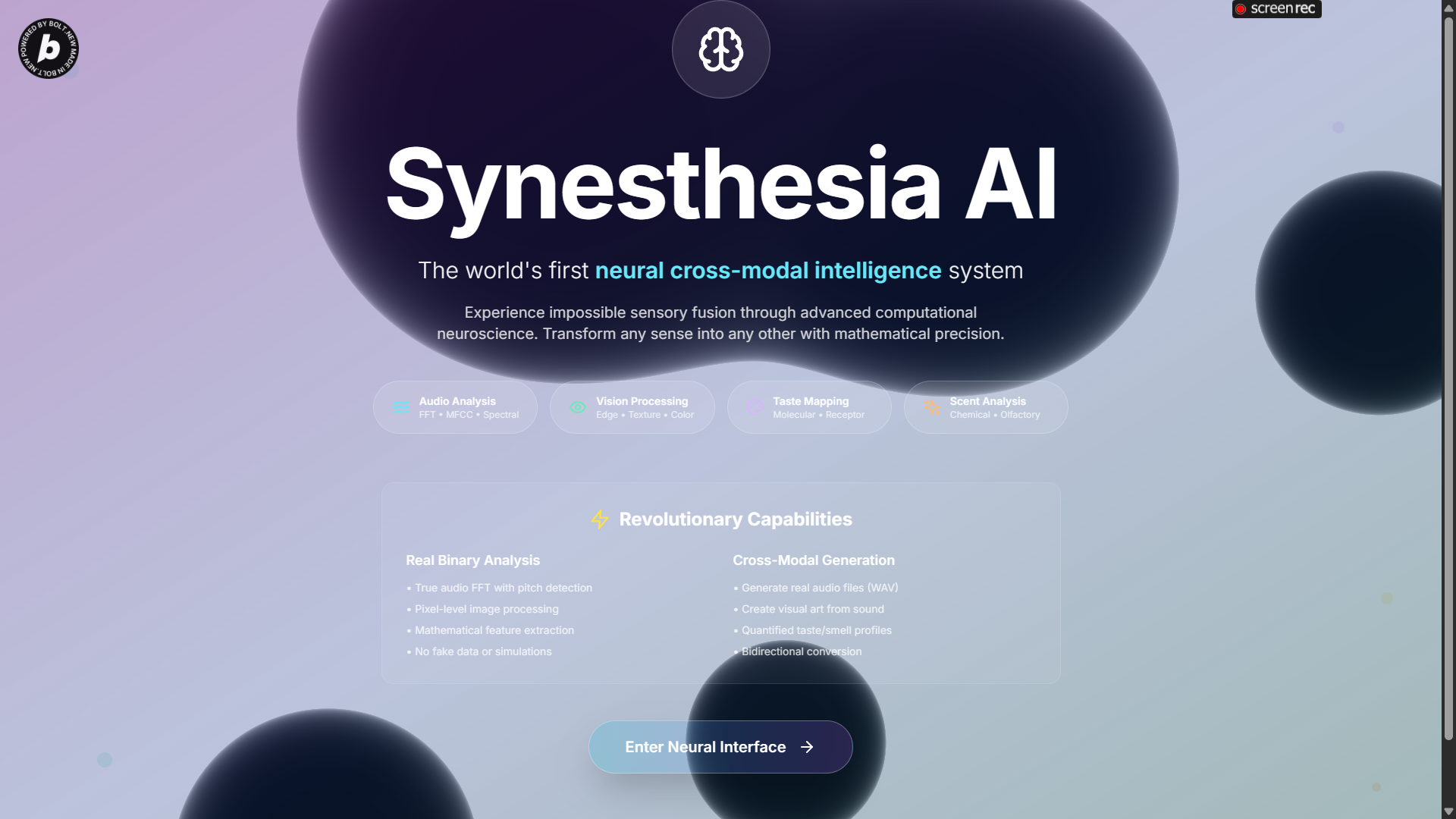
Landing page
-
Audio/photo upload
-
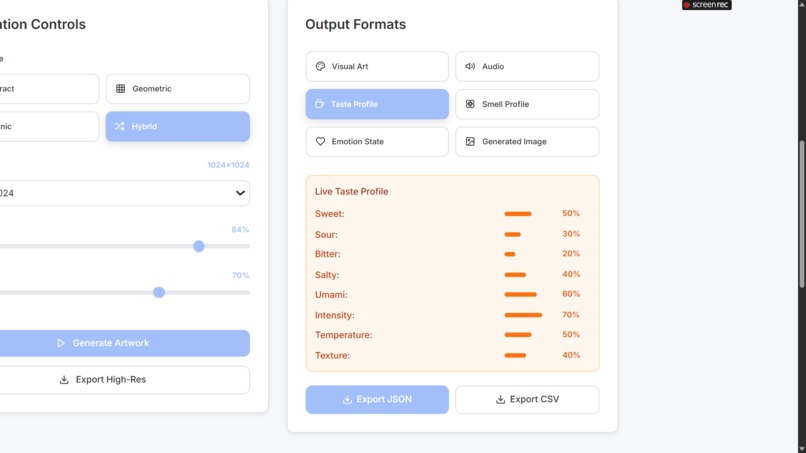
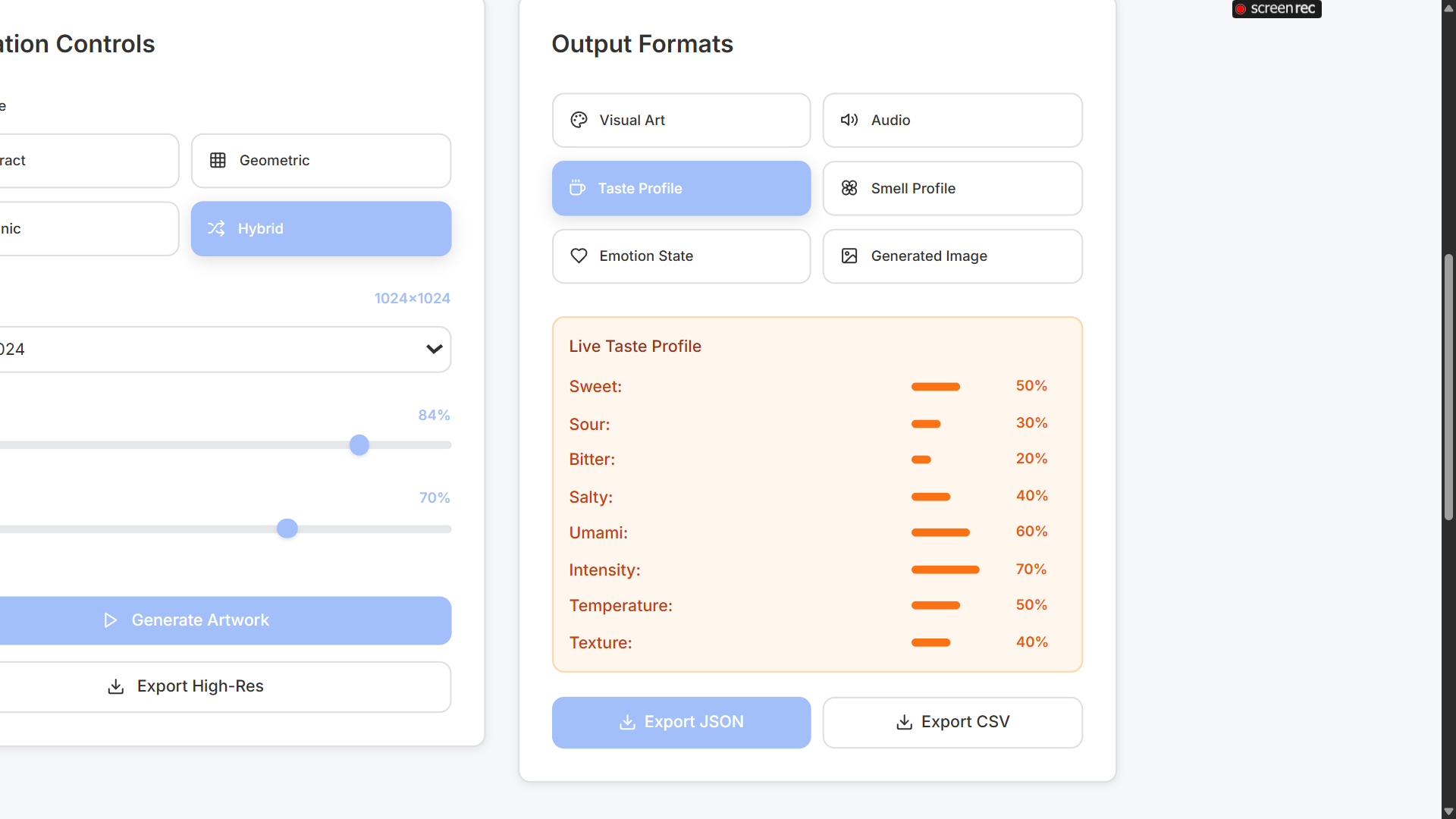
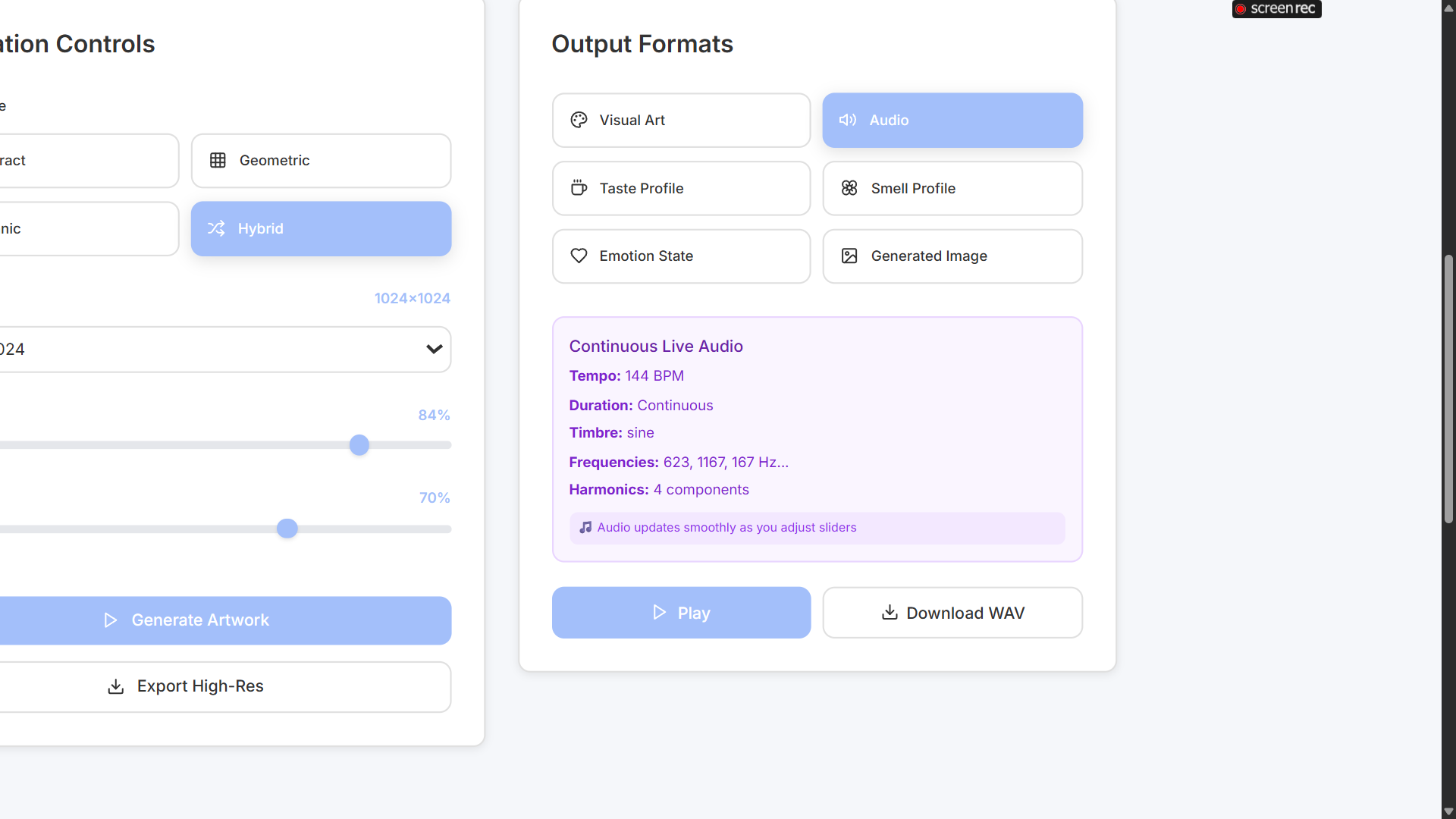
amount of smell parts it have
-
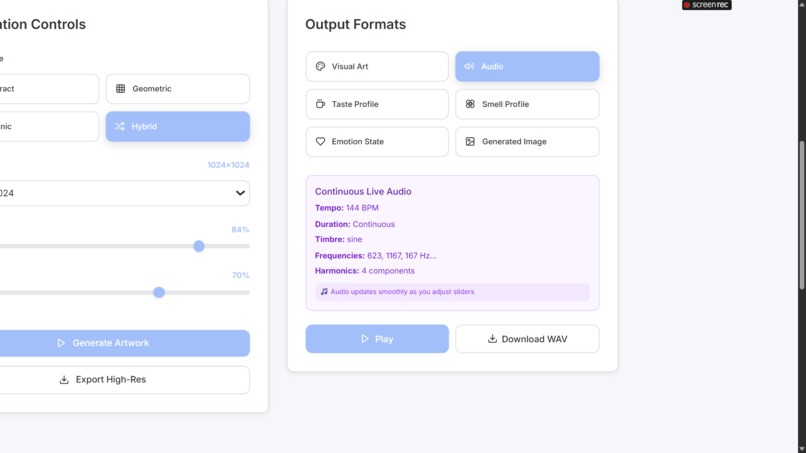
frequency audio it has an also its audible
-
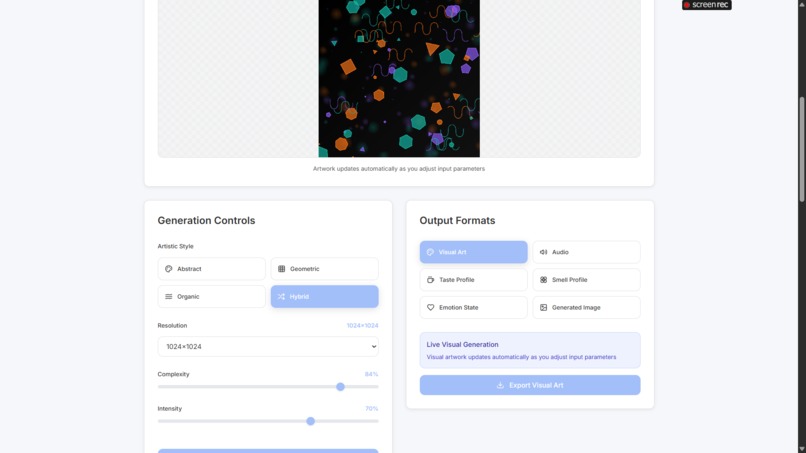
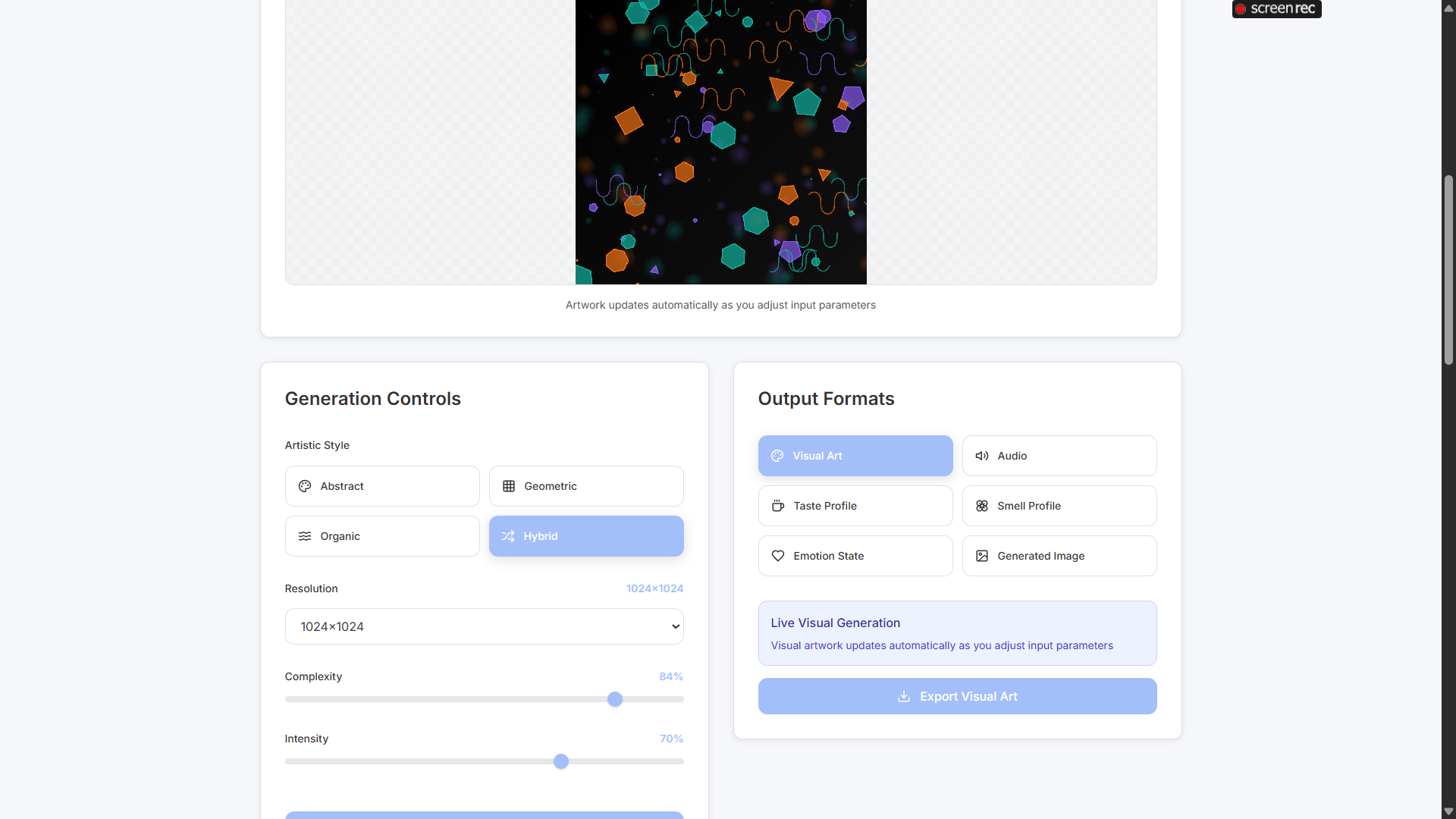
visual depiction of audio
Synesthesia AI Project
Inspiration
As someone who loves to understand how things connect—whether it's stories, ideas, or even physics analogies—I've always been fascinated by how our senses work together. I remember watching videos about synesthesia, where people can "hear" colors or "see" sounds, and I wondered: what if anyone could experience that, even just for fun? I wanted to build something that would let people explore the magic of sensory crossover, especially for creative minds in India who might not have access to high-tech tools but are full of curiosity and imagination.
What it does
Synesthesia AI lets you experience the wonder of mixing senses. You can upload audio or images, or just play with sliders for taste, smell, or emotion. The app instantly transforms these inputs into something new—like turning music into colorful art, or making a taste "sound" like a melody. It's a playful, creative tool for anyone who wants to see, hear, or even feel their ideas in a whole new way.
How we built it
I started with simple online tutorials and first time bolt.new for this complex project, since I didn't have a tech background. I learned about visual design, how to use drag-and-drop tools, and how to add interactivity without writing complex code. For the sensory magic, I used free libraries that could handle basic audio and image processing. I tested each feature as I built it, making sure it was easy to use and understand—just like the digital tools I use to organize my stories. Over time, I added more features, like real-time visual effects and simple audio generation, always keeping the user experience simple and fun.
Challenges we ran into
The biggest challenge was understanding how to connect different senses in a way that felt real and interesting, not just random. I spent a lot of time experimenting with different mappings—like how a certain sound should look, or how a taste might "sound." I also had to figure out how to make the app run smoothly, even with lots of visual and audio effects, using only the tools I had access to as a beginner.
Another challenge was making the app intuitive. I wanted anyone—even someone who's never used a computer before—to feel comfortable exploring and playing with Synesthesia AI.
Accomplishments that we're proud of
I'm proud that I built something completely new, even though I didn't have any technical training. I made a tool that lets people experience synesthesia in a simple, creative way. I'm also proud that I learned so much about design, user experience, and even a little bit about how our senses work together. And most of all, I'm proud that I made something anyone can enjoy—not just tech experts.
What we learned
I learned that you don't need to be a tech genius to create something amazing. With curiosity, patience, and a willingness to learn, you can build tools that inspire and surprise you—and others. I also learned how important it is to test your ideas with real people, and to keep things simple and fun.
What's next for Synesthesia AI
I want to keep making Synesthesia AI better and more accessible. I plan to add more ways to mix senses—maybe even let users create their own "sensory recipes." I also want to make it work well on phones and tablets, so more people in India and around the world can try it out. And I'd love to see how people use it for storytelling, education, or just pure fun.
Built With
- autoprefixer
- lucid
- ml-matrix
- postcss
- react
- three.js
- typescript
- vite

Log in or sign up for Devpost to join the conversation.