Inspiration
A feature can ship successfully on iOS, Android, and web—and still create three different customer experiences. We were inspired by the gap between how teams build products platform by platform and how customers experience them: as one continuous journey.
What it does
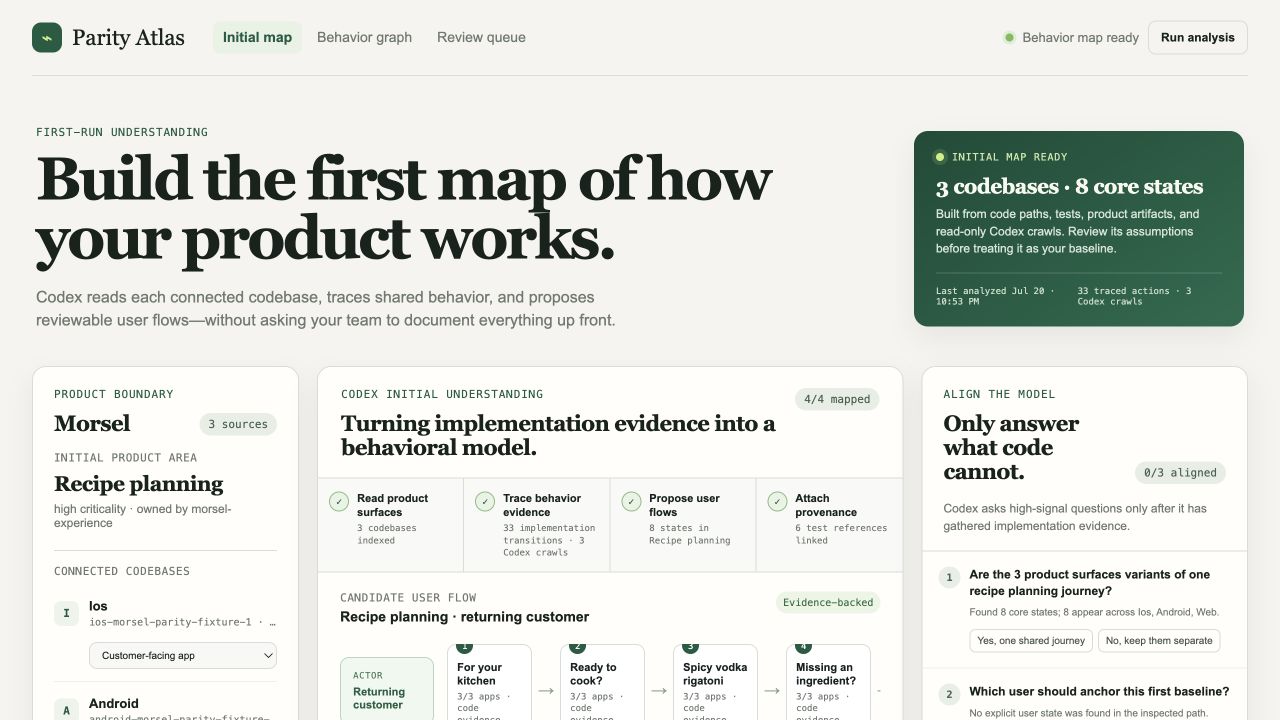
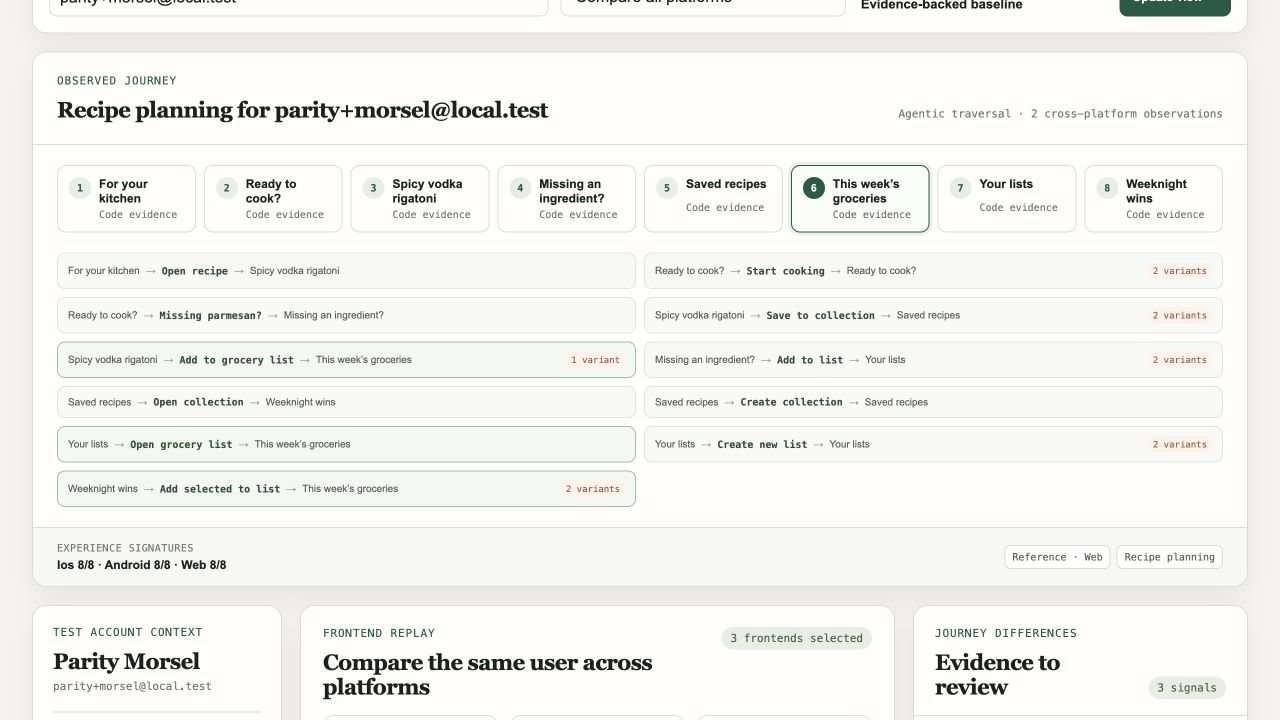
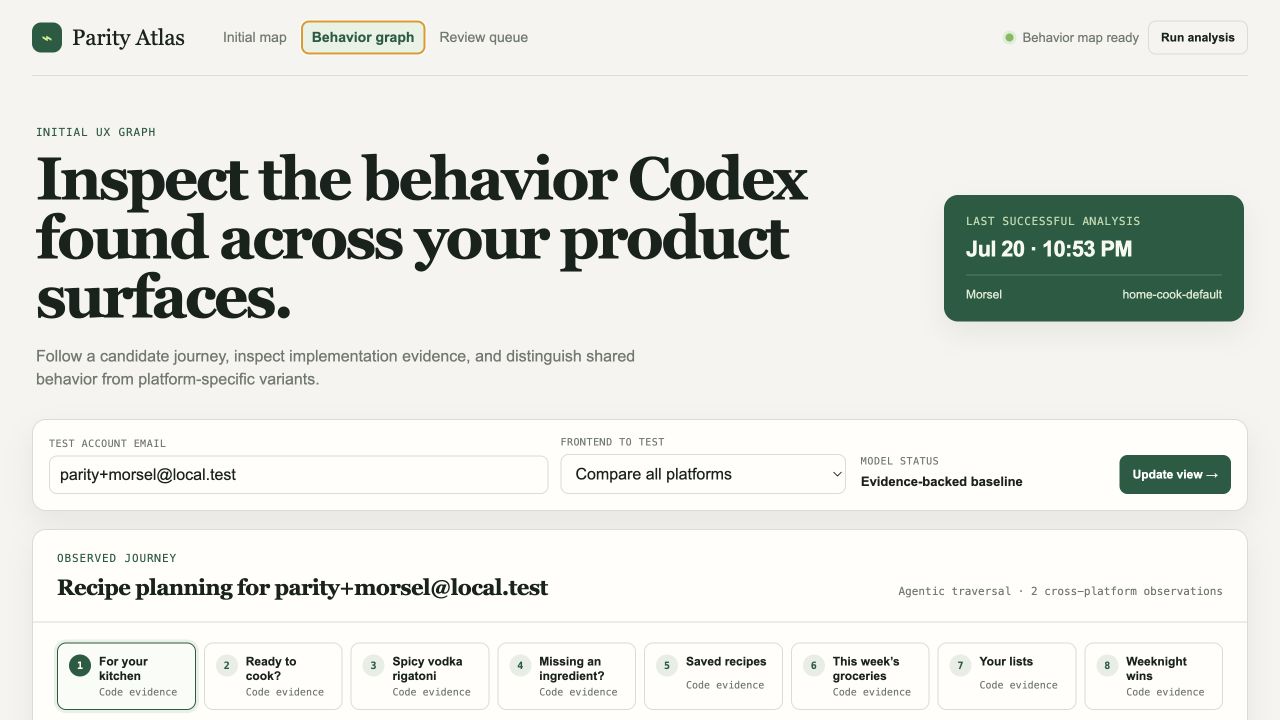
Synergy detects cross-platform UX drift before customers find it. It turns product requirements, design assertions, source code, and tests into versioned UX graphs for iOS, Android, and web, then compares equivalent journeys to flag behavior, flow, and UI-semantic mismatches.
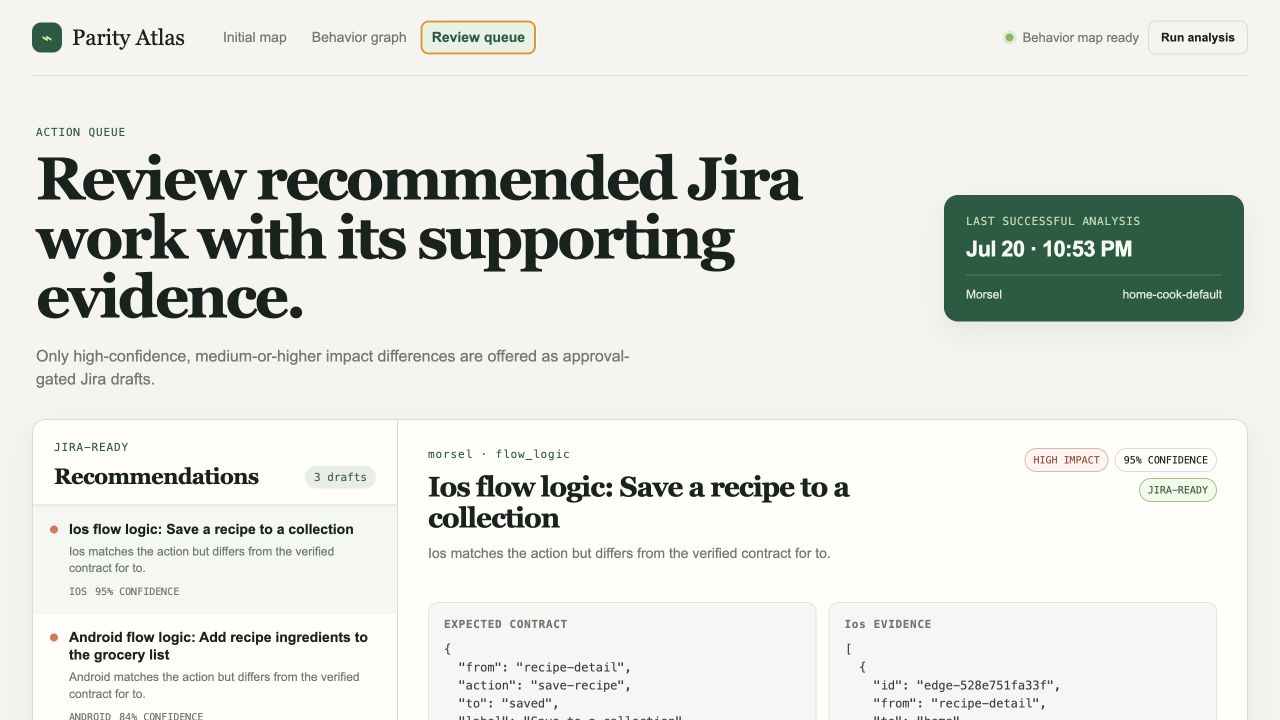
Teams can review the evidence behind each finding, mark intentional platform differences, and turn approved, high-confidence issues into Jira draft payloads.
How we built it
We built Synergy as a self-contained MVP with:
- A versioned product manifest covering repositories, artifacts, owners, and Jira routing
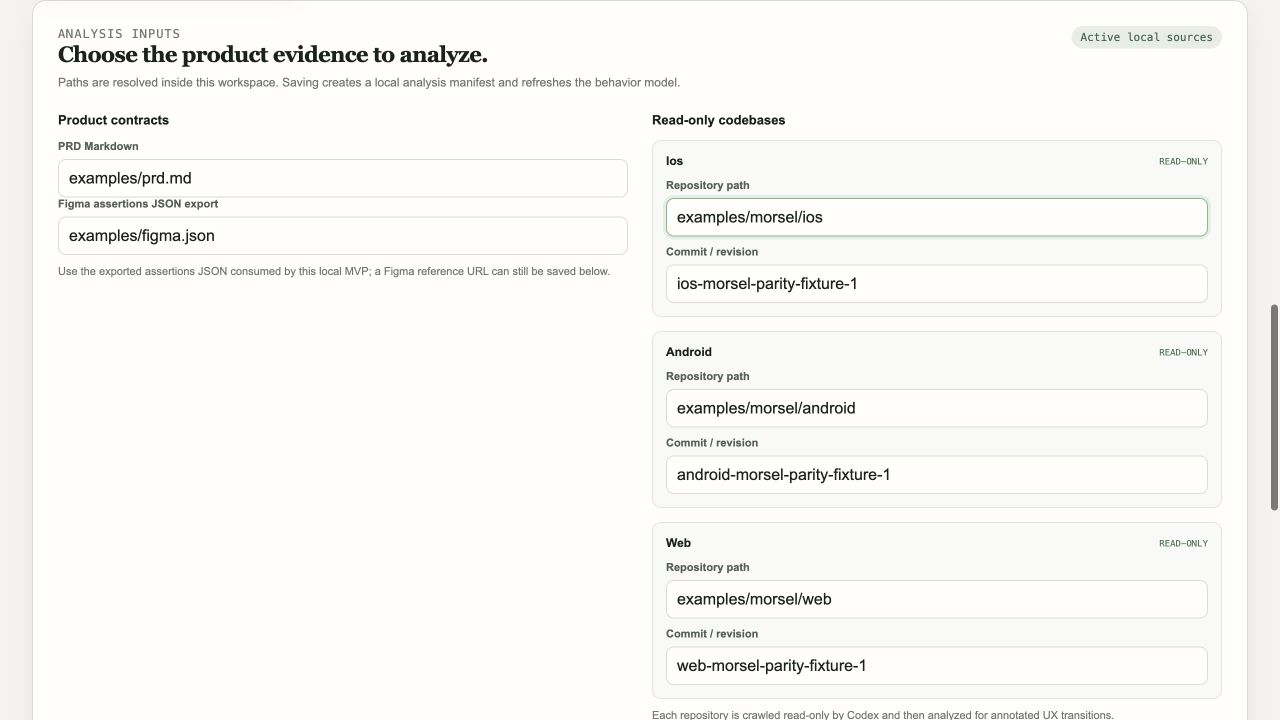
- PRD and Figma-assertion ingestion to establish an explicit product contract
- Static adapters for Swift, Kotlin/Java, and web code that build UX nodes and transitions from code, tests, and auditable annotations
- A read-only Codex crawl that adds bounded navigation and evidence context without replacing code or tests as the source of truth
- A local dashboard for reviewing platform graphs, inspecting evidence, rerunning analysis, and approving Jira drafts
For the pilot, we used a mock recipe app, Morsel, across iOS, Android, and web to demonstrate how the same recipe-planning journey can drift across implementations.
Challenges we faced
The hardest challenge was avoiding false confidence. Product requirements, Figma designs, code, and tests can disagree—and forcing a single “truth” would hide the exact ambiguity teams need to resolve. We designed Synergy to preserve conflicting evidence explicitly rather than inventing a conclusion.
We also needed to make AI assistance useful without making it authoritative. Codex is constrained to read-only, schema-validated context gathering; product artifacts, source code, and tests remain the evidence base for findings.
Finally, cross-platform parity is not identical UI. Some differences are intentional and appropriate for a platform, so Synergy supports versioned intentional-variant decisions to prevent repeated, noisy alerts.
What we learned
We learned that parity is fundamentally a product and collaboration problem, not just a testing problem. The most valuable output is not simply “these screens differ,” but a shared, evidence-backed view of where a customer journey diverges, who owns the decision, and whether that difference is intentional.
Built With
- ai
- automation
- chatgpt
- ci/cd
- codex
- cross-platform
- developer-tools
- figma
- git
- google-cloud-sdk
- javascript
- jira
- mobile
- node.js
- productivity
- qa
- sdlc
- ux
- web

Log in or sign up for Devpost to join the conversation.