-
-
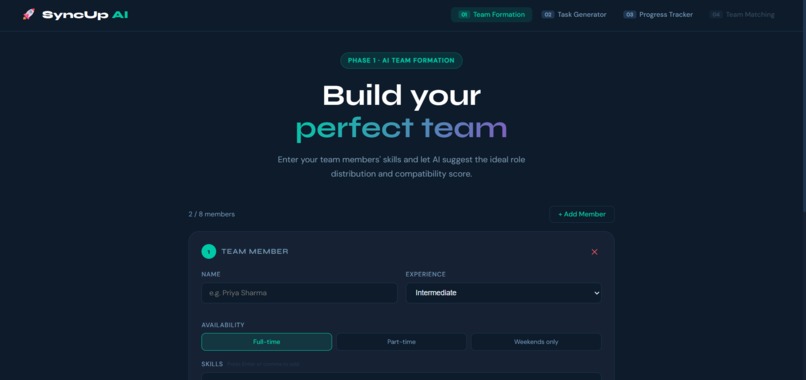
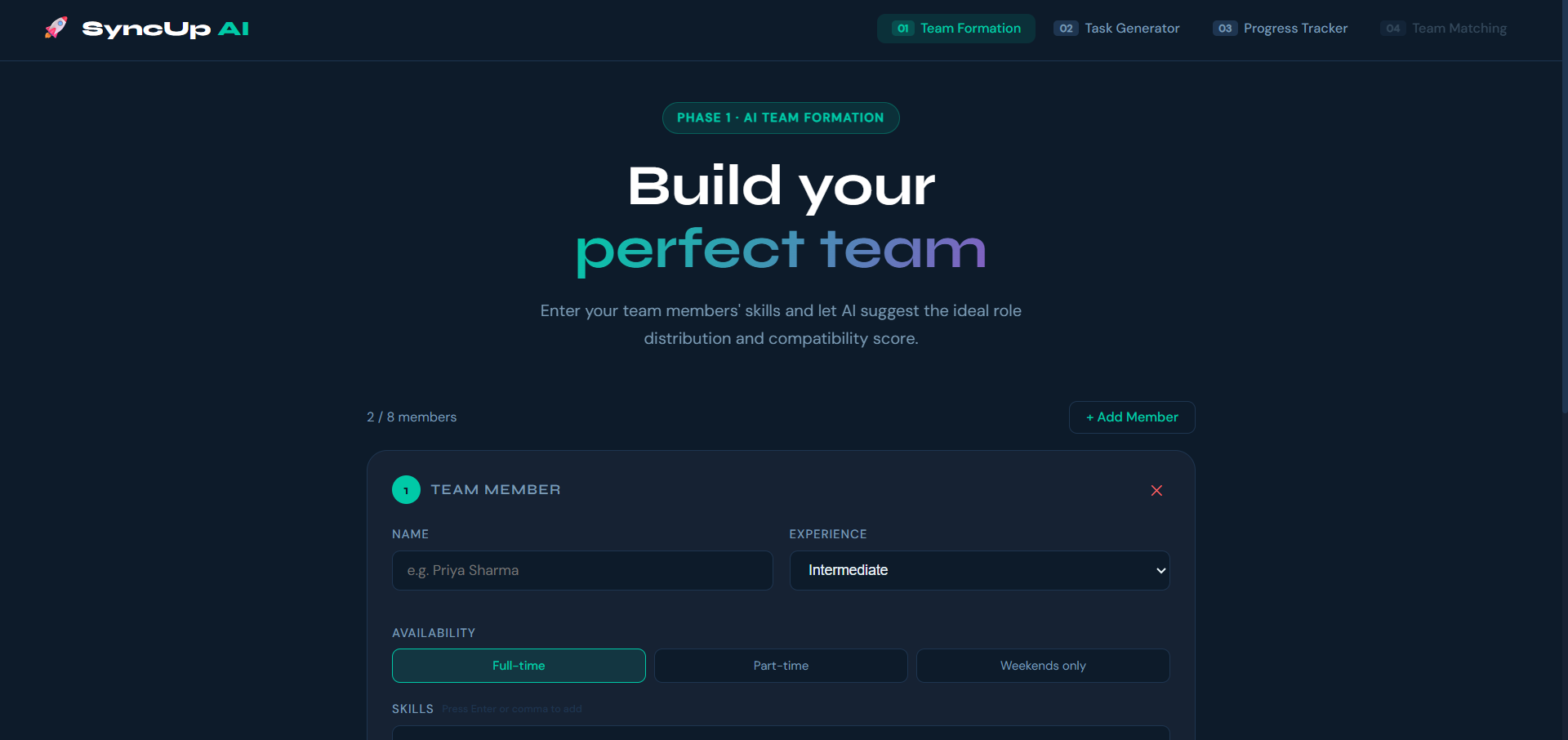
SyncUp 1: Building the perfect team with AI-powered role matchin
-
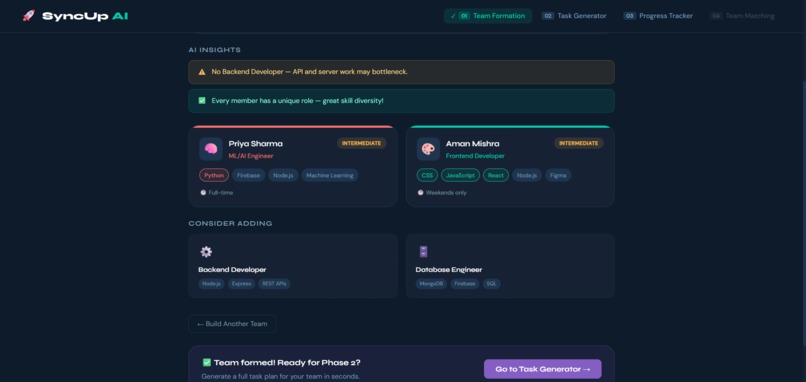
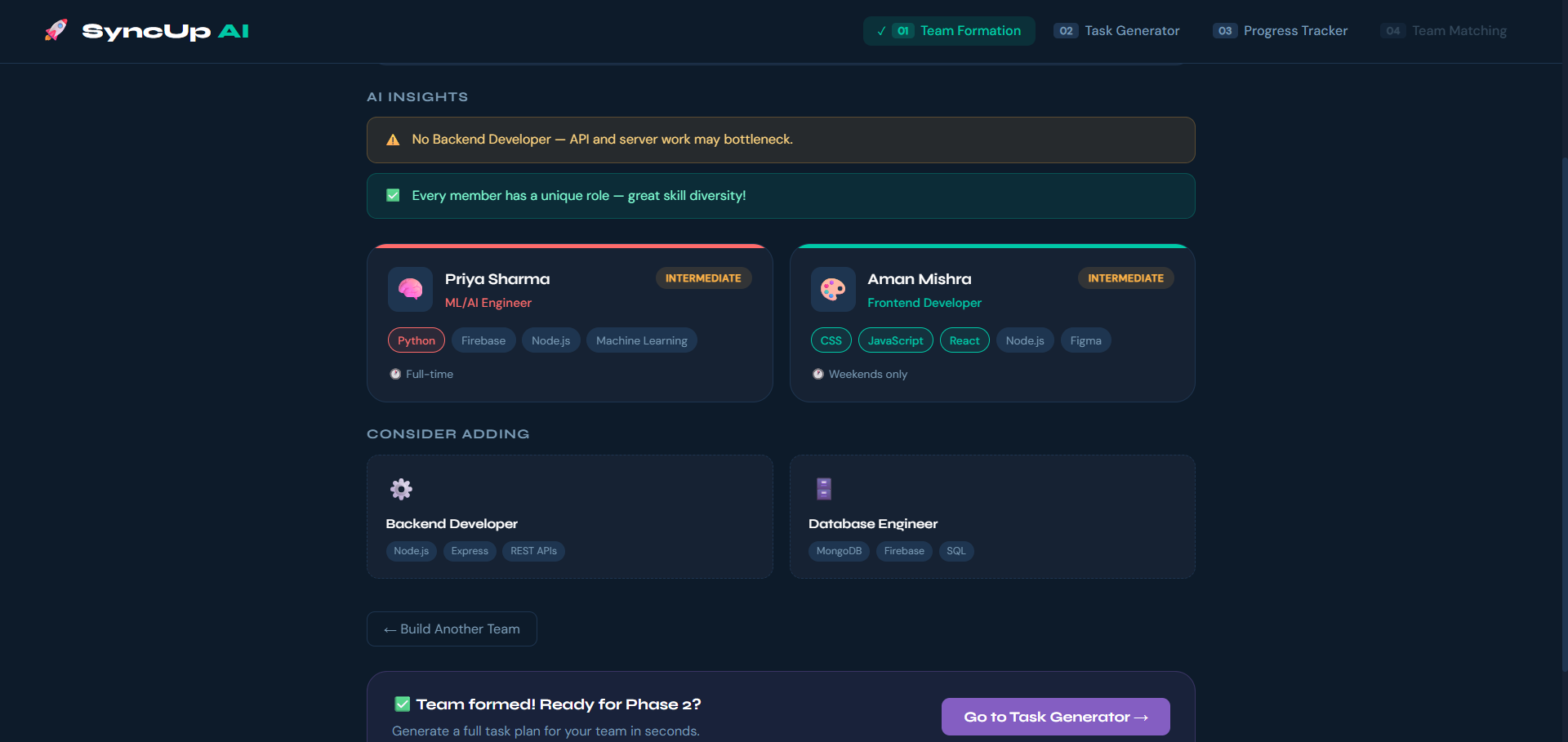
SyncUp 2: Smart insights, stronger teams — AI optimizing collaboration
-
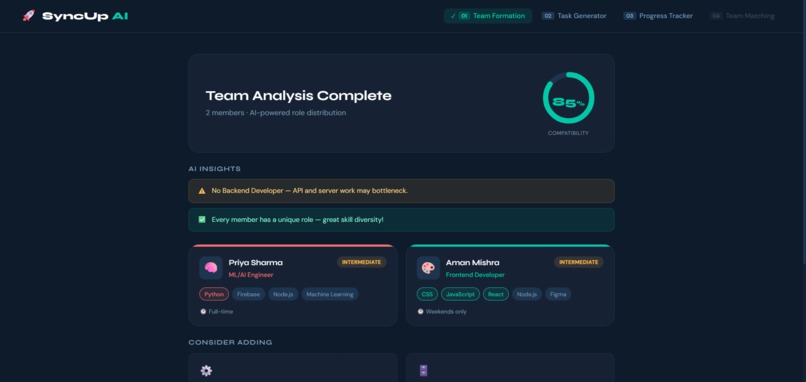
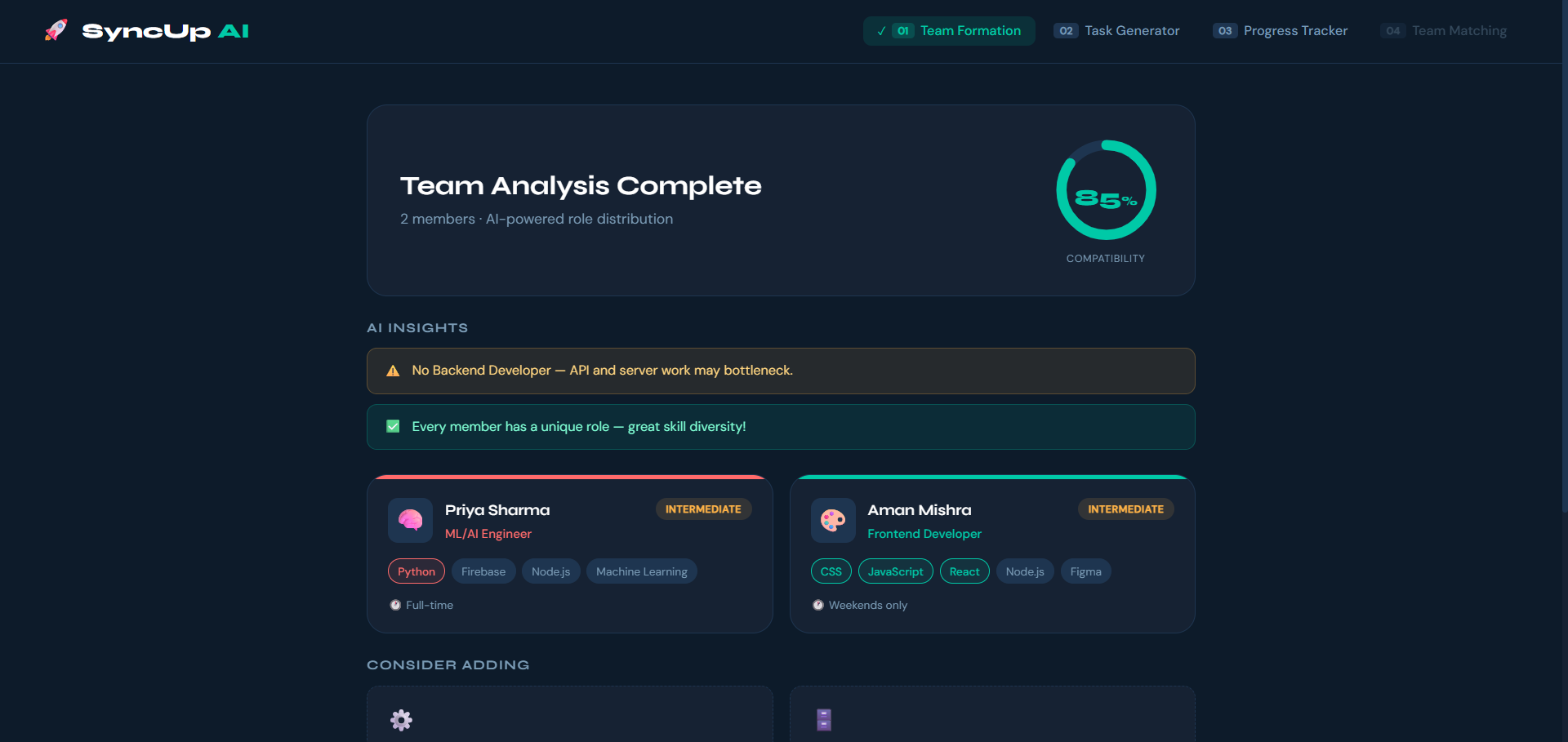
SyncUp 3: Team analysis complete — compatibility unlocked!
-
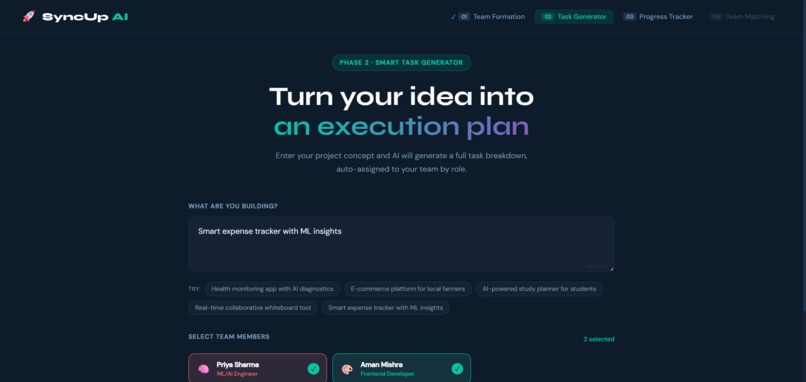
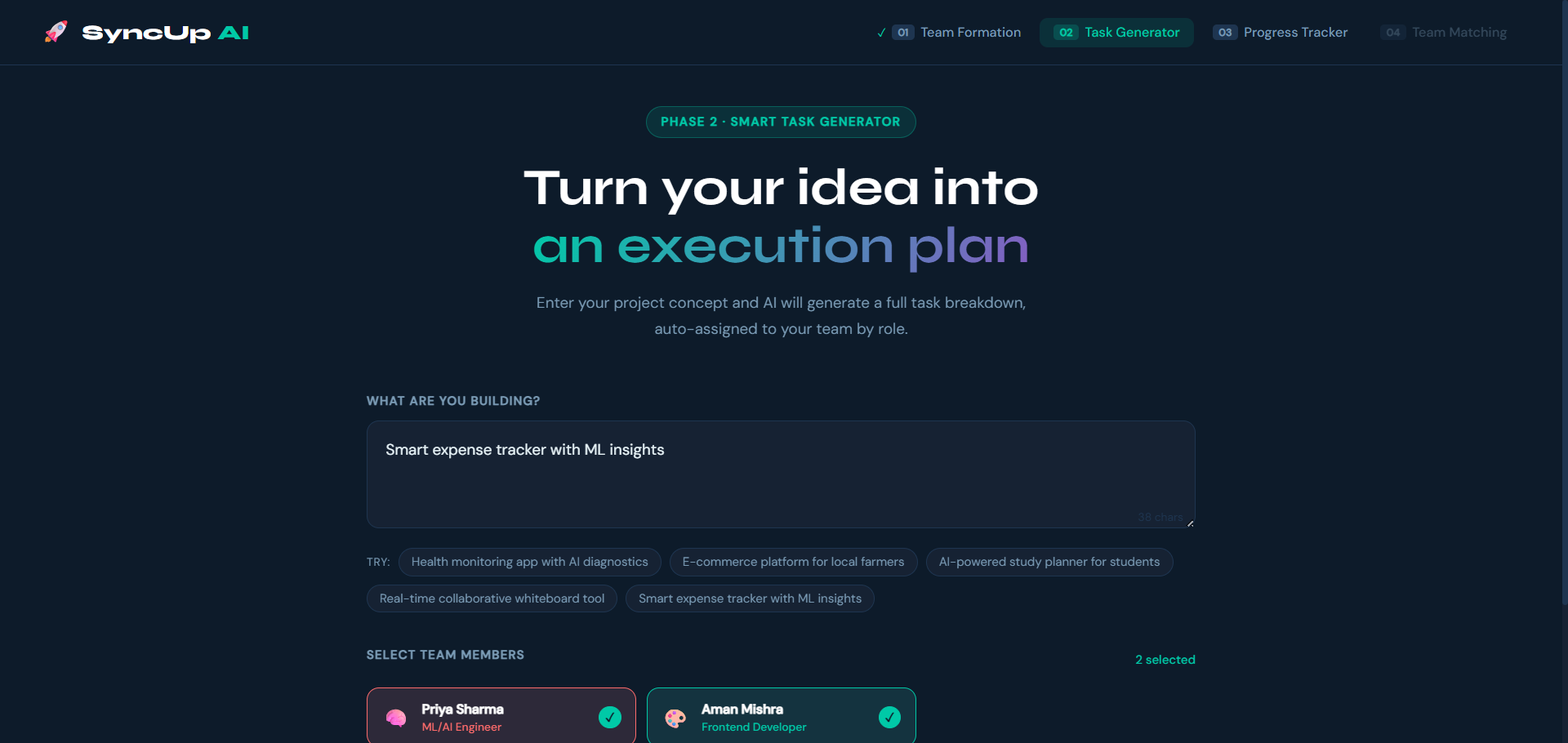
SyncUp 4: Turning ideas into action with AI-driven task planning
-
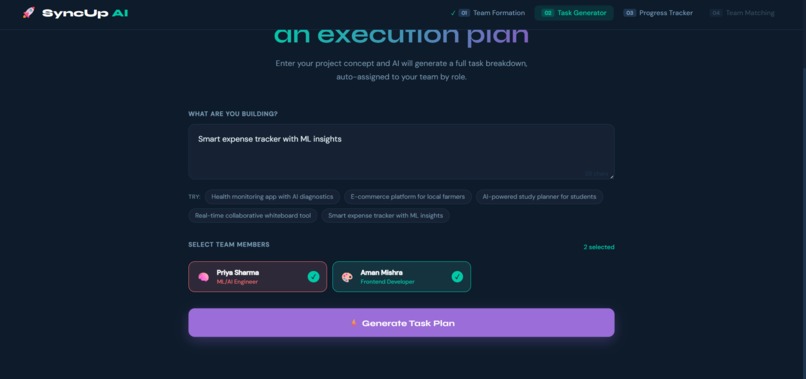
Sync Up 5: Turning ideas into execution with AI
-
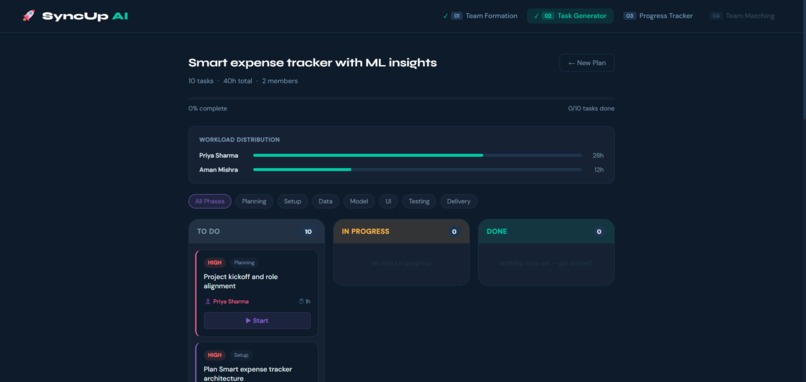
Sync Up 6: Seeing hundreds of minds syncing up to solve real-world problems is exactly why we do this. Let the building begin!
-
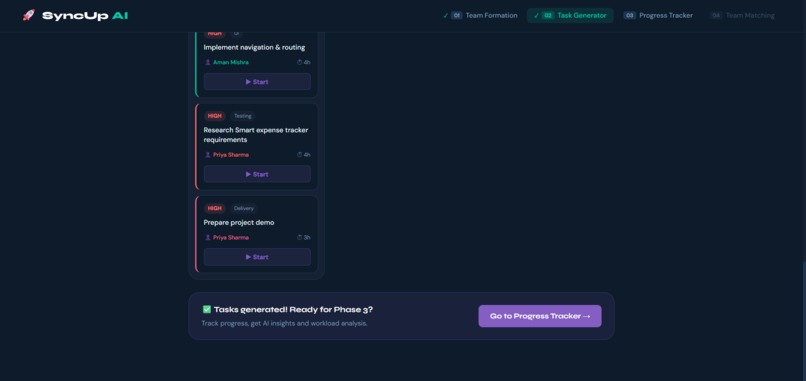
Sync Up 7: Every great piece of software starts with a messy whiteboard and a 'what if'
-
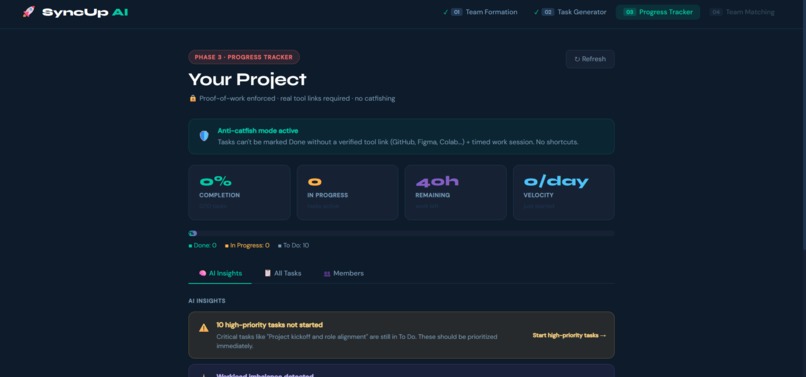
Sync Up 8: Current Status: 10 tabs open, 3 terminal windows, and a very large energy drink. This is where the magic and the happens.
-
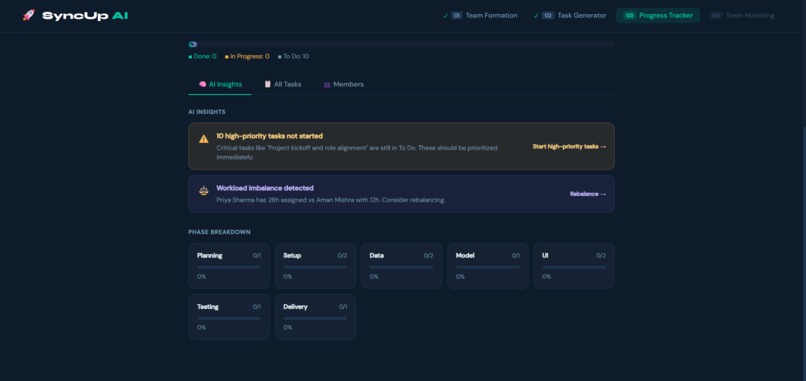
Sync Up 9: Nothing cures writer's block like a ticking clock and a looming demo deadline. Finish line, here we come!
-
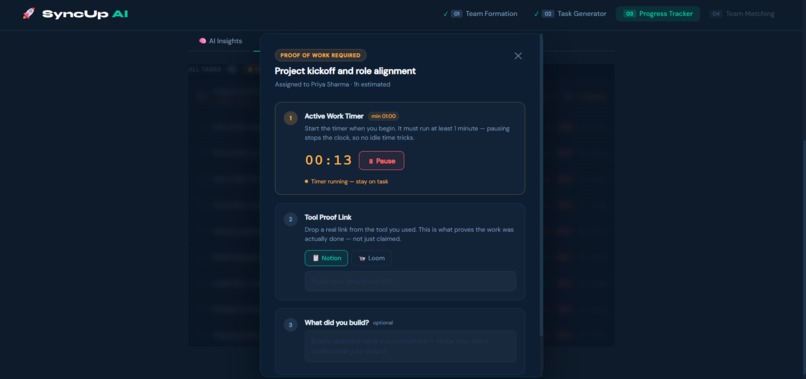
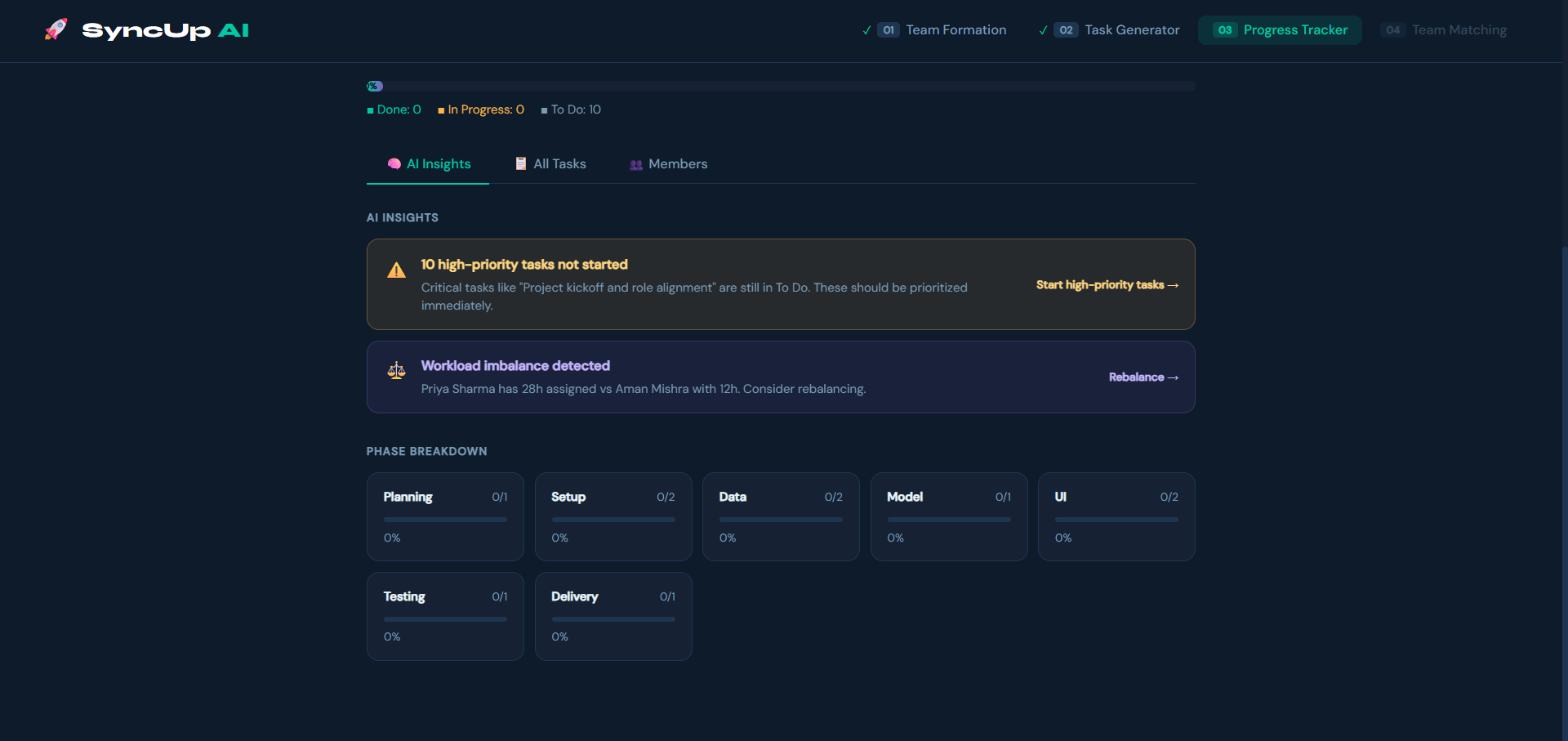
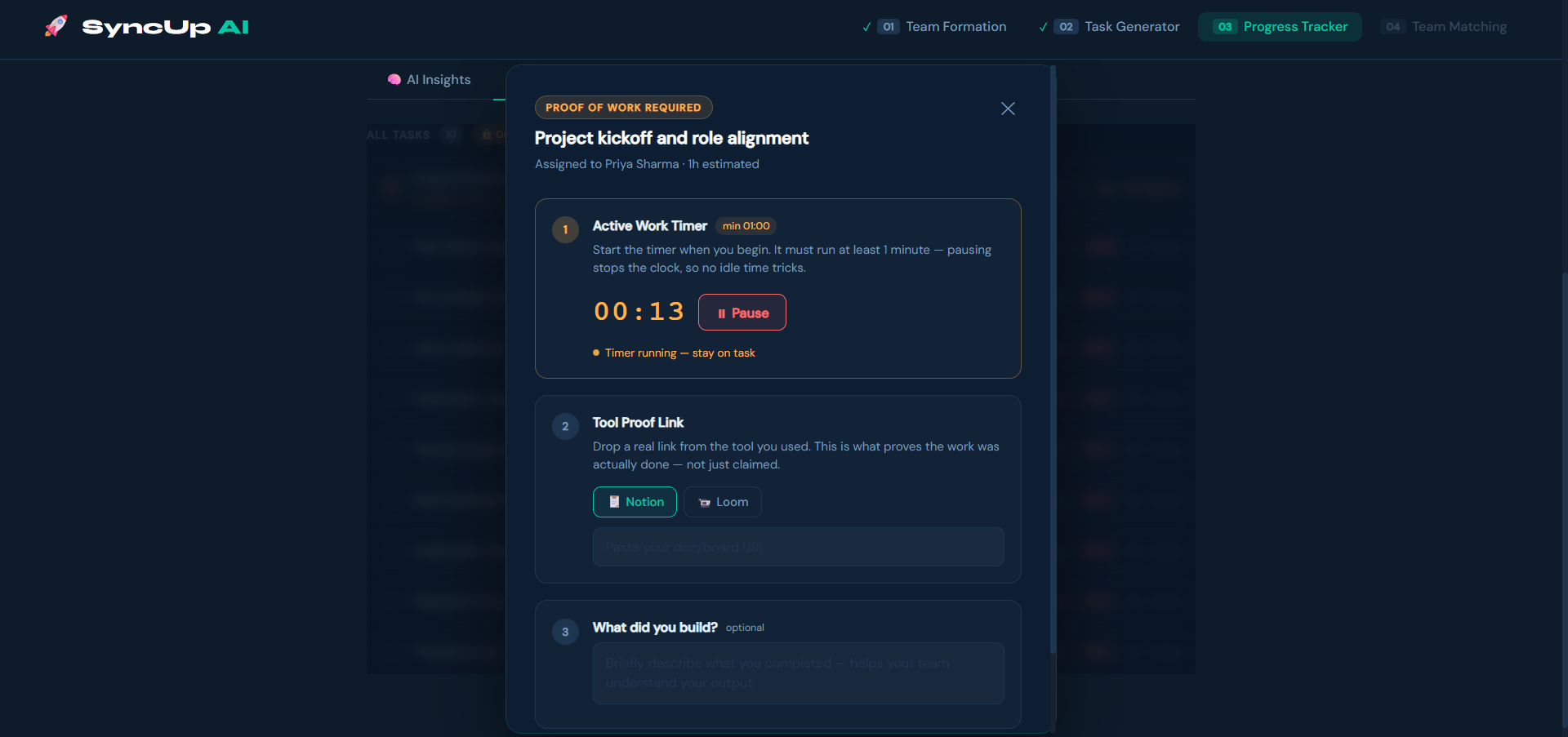
Sync Up 10: Real-time progress, zero idle-time tricks. This is how high-performing teams stay aligned from kickoff to completion.
-
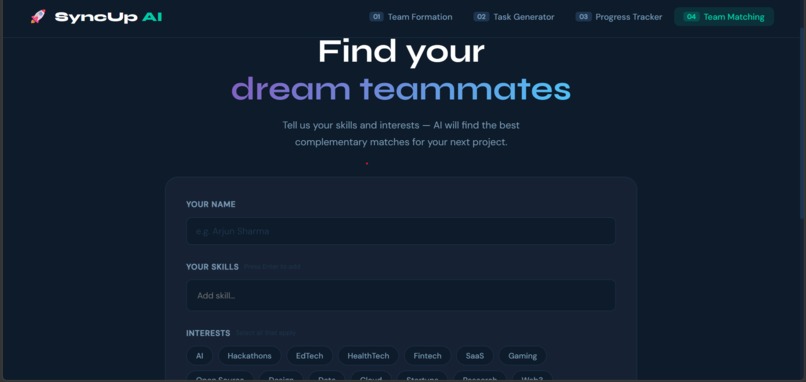
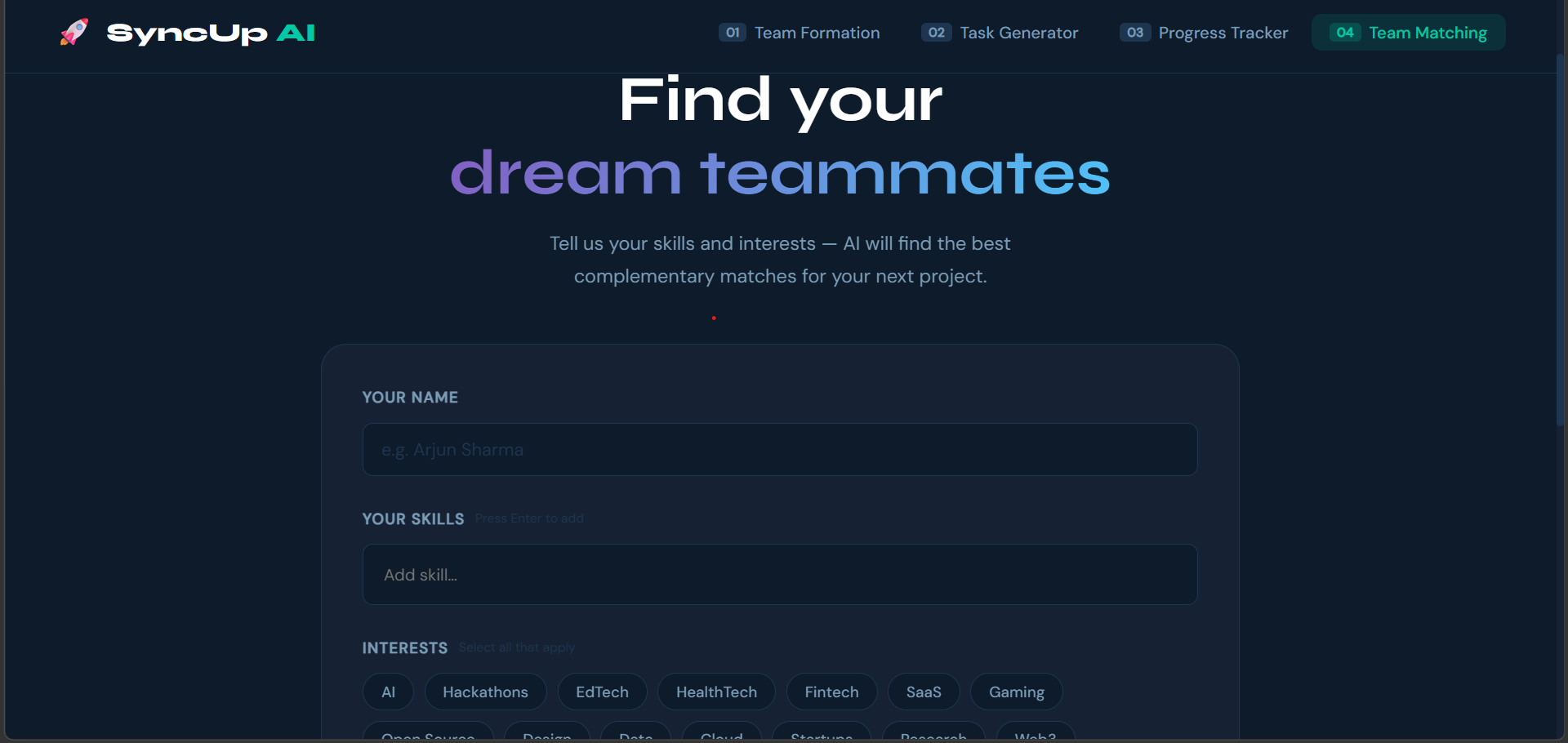
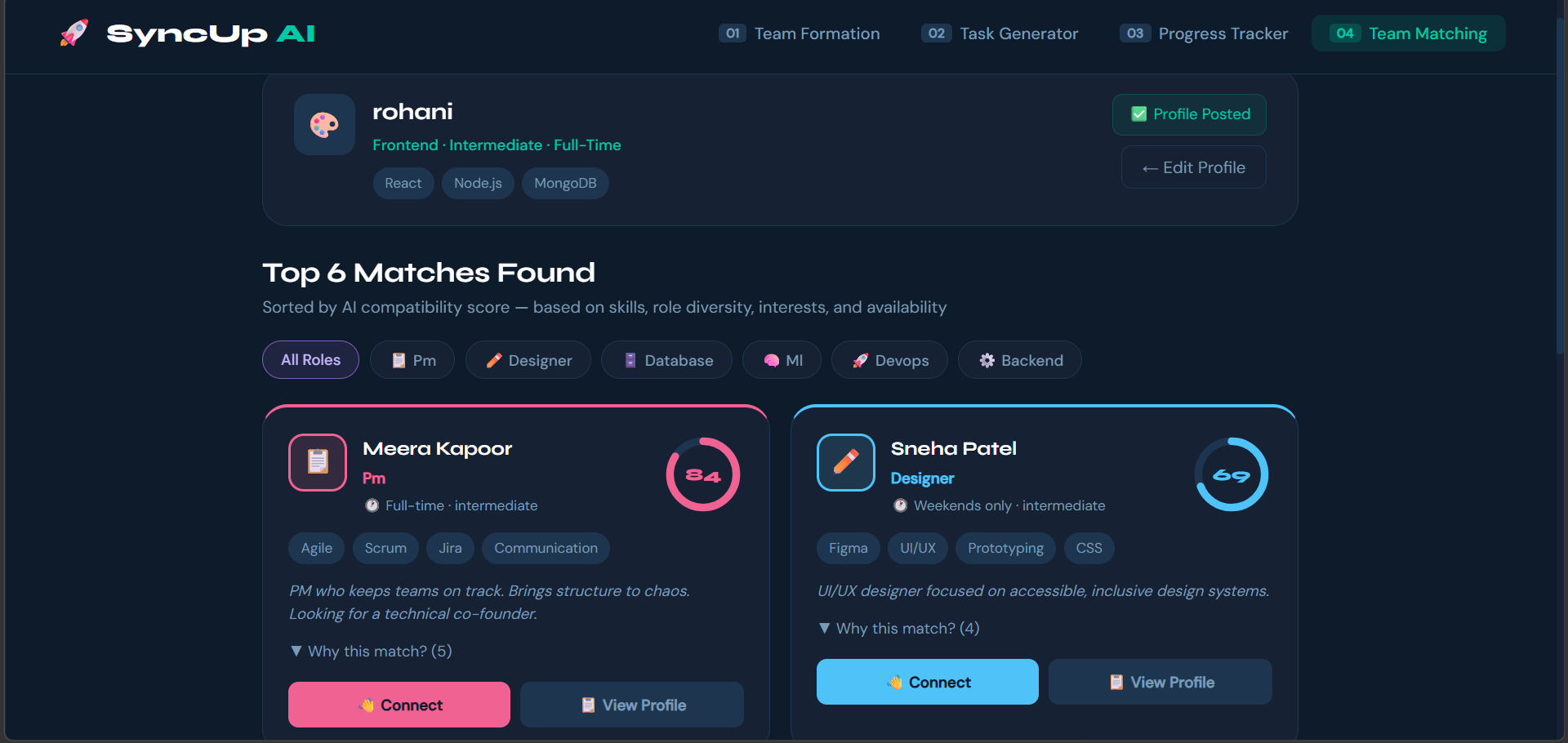
SyncUp 11: Stop searching, start matching. We take your skills and interests to find the best complementary partners for your big project.
-
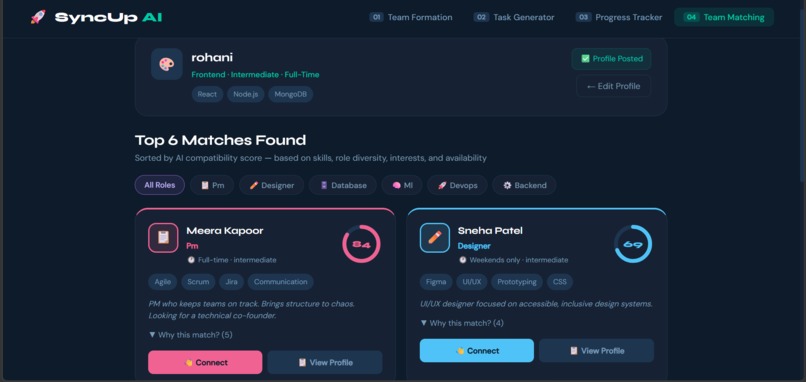
SyncUp 12:Sorting through the noise. SyncUp AI analyzes potential teammates
Inspiration
Hackathons are supposed to be fast, exciting, and creative—but in reality, most teams spend hours just figuring out who does what. We noticed that great ideas often fail not because of lack of skill, but because of poor coordination, unbalanced teams, and unclear planning.
SyncUp AI was inspired by this gap between idea and execution. We wanted to build something that doesn’t just manage projects—but actually builds the structure for you, instantly.
What it does
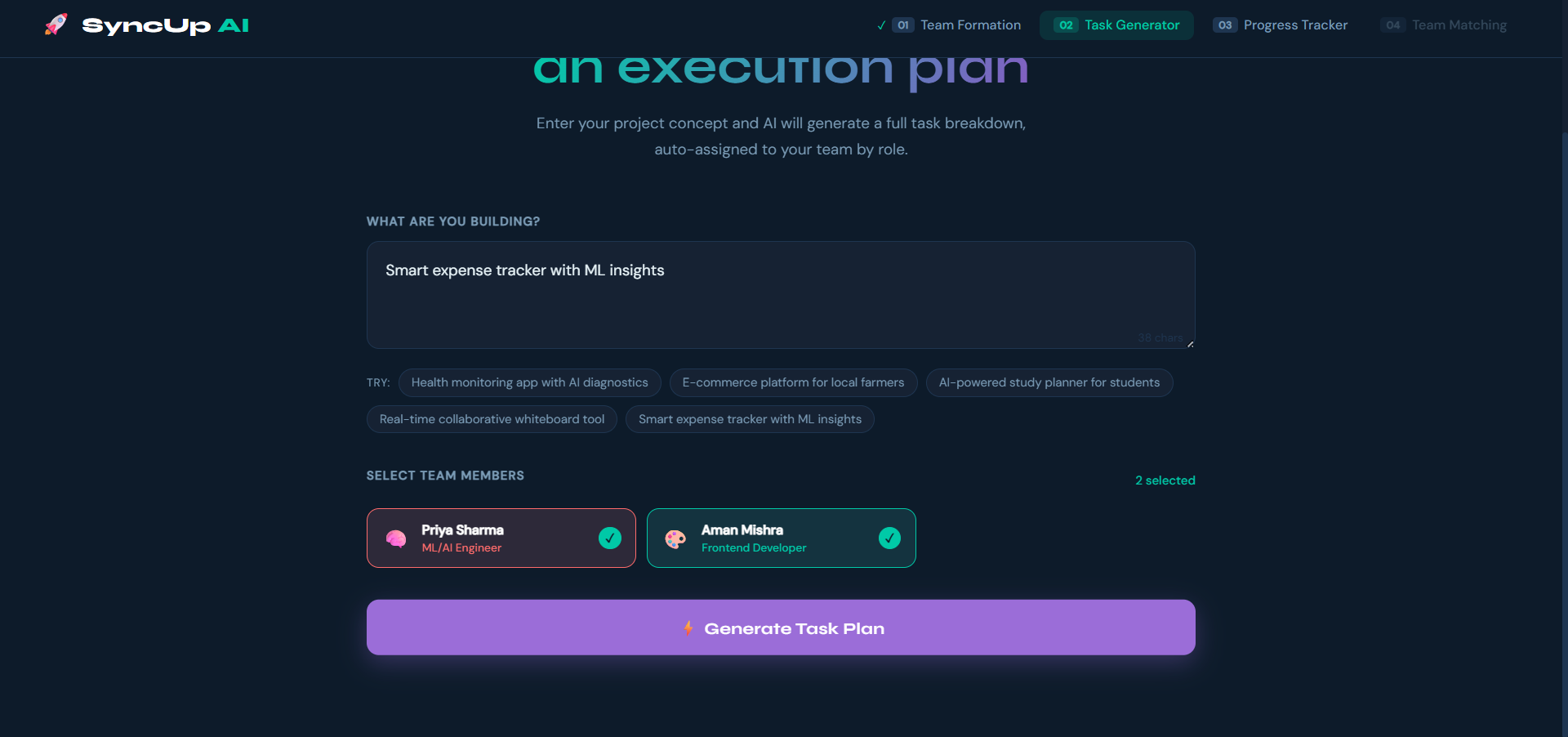
SyncUp AI is a full-stack web application that helps hackathon teams and student groups go from idea → execution in minutes.
It:
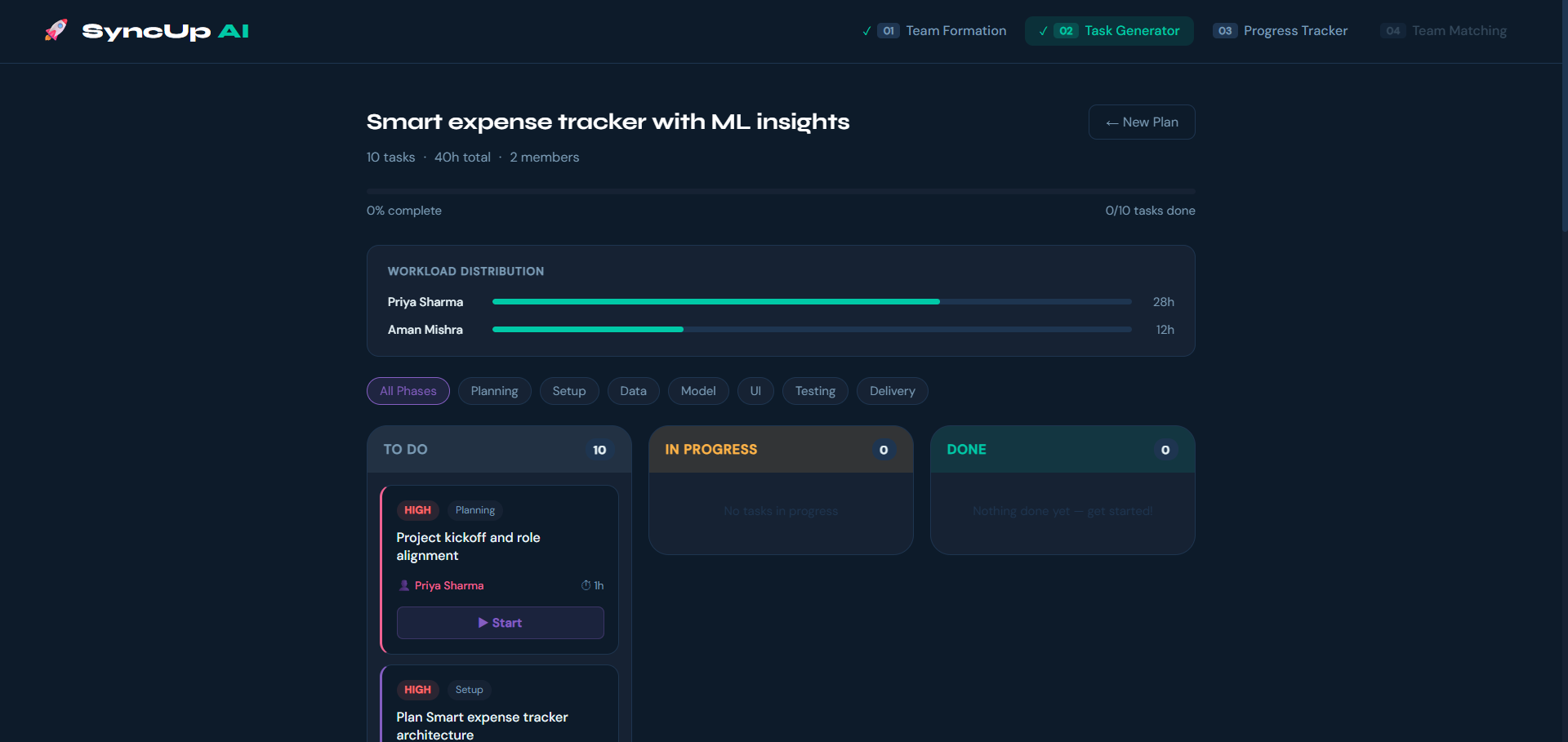
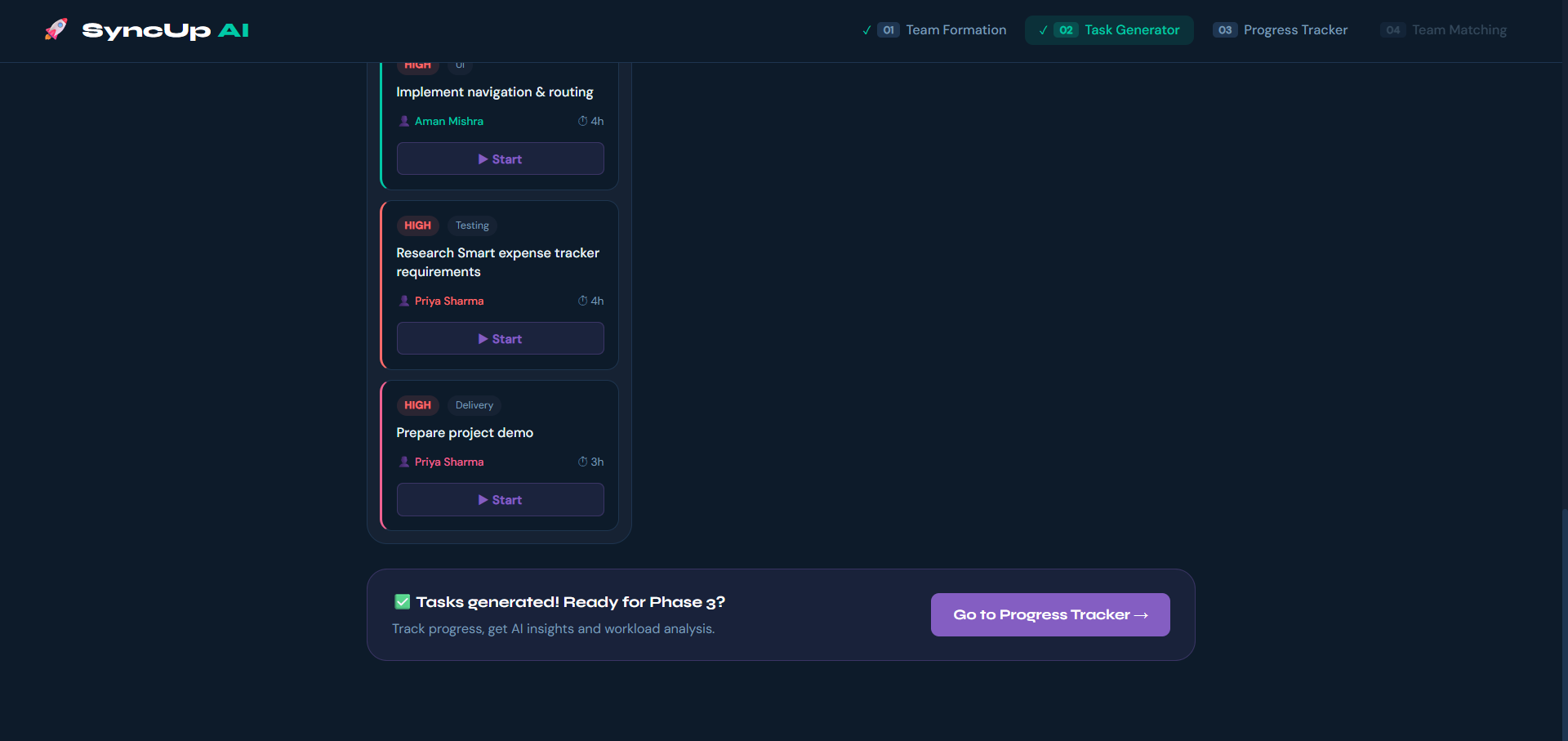
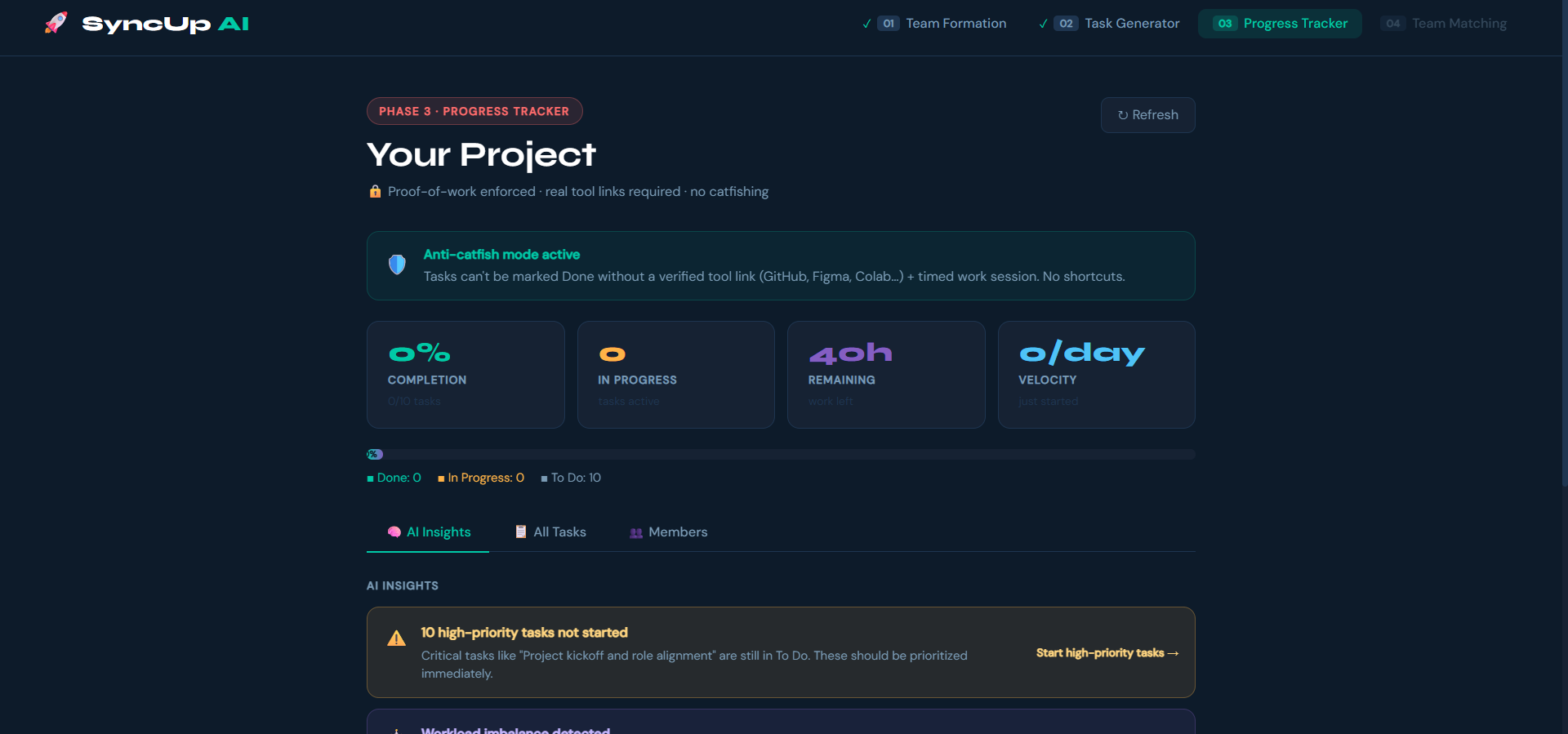
Forms balanced teams using AI by analyzing skills and compatibility Assigns roles automatically (Frontend, Backend, ML, etc.) Generates a complete task breakdown from a simple project idea Organizes tasks into a Kanban board with priorities and timelines Tracks real-time progress with smart insights Helps solo users find compatible teammates using AI matching
Unlike traditional tools, SyncUp AI doesn’t just track work—it actively guides and optimizes team collaboration.
How we built it
We built SyncUp AI as a full-stack application:
Frontend: React 18 (UI, state management, routing) Backend: Node.js + Express (REST APIs) AI Integration: Featherless AI using openai/gpt-oss-120b API Client: OpenAI-compatible npm package Database: In-memory (MongoDB-ready architecture) Core System Design: AI handles: Team role assignment Task generation Custom logic handles: Progress tracking Team matching algorithm
We structured the app into 4 phases:
AI Team Formation Smart Task Generator Progress Tracker Dashboard AI Team Matching System
The frontend communicates with the backend via REST APIs, while AI calls are handled server-side with fallback logic to ensure reliability.
Challenges we ran into Async handling issues: AI calls initially broke the app because routes didn’t properly await responses Unpredictable AI responses: The model sometimes returned inconsistent field names → we had to build robust fallbacks State management complexity: Passing data across multiple phases without Redux required careful structuring API reliability: Needed a fallback system so the app still works even if AI fails Time constraints (7-day hackathon): Balancing features vs stability was a constant challenge Accomplishments that we're proud of Built a complete end-to-end product, not just a prototype Successfully integrated AI into multiple core workflows Designed a system that solves 3 major hackathon problems in one platform Created a multi-phase experience (team → tasks → progress → matching) Implemented fallback logic, making the app resilient Clean UI with real-time dashboards, insights, and Kanban tracking
Most importantly, we turned a complex idea into a working product within days.
What we learned How to design AI-assisted systems, not just call APIs Importance of fallback logic and defensive coding when working with AI Structuring a scalable full-stack architecture under time pressure Managing real-world async flows in Node.js Designing for user flow, not just features
We also learned that execution matters more than ideas—which is exactly what SyncUp AI is built to prove.
What's next for SyncUp AI
We’re just getting started. Future plans include:
GitHub integration for real-time project syncing AI-based burnout and workload analysis Built-in team chat and collaboration tools Persistent database using MongoDB Full deployment (Vercel + Render) Mobile app version Mentor matching system
Our vision is to make SyncUp AI the default starting point for every hackathon team—where ideas instantly turn into execution.
Built With
- api
- cors
- css
- customrestapi
- dev
- devtools
- express.js
- featherless
- fonts
- forms
- git
- html5
- javascript
- mongodb
- node.js
- nodemon
- npm
- openai
- react
- restapi


Log in or sign up for Devpost to join the conversation.