-
-
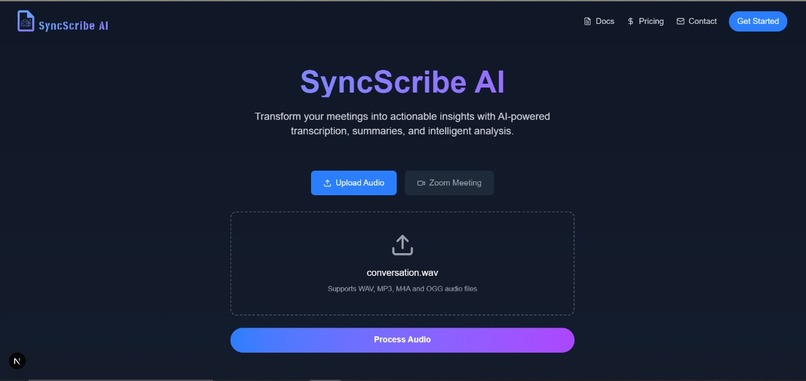
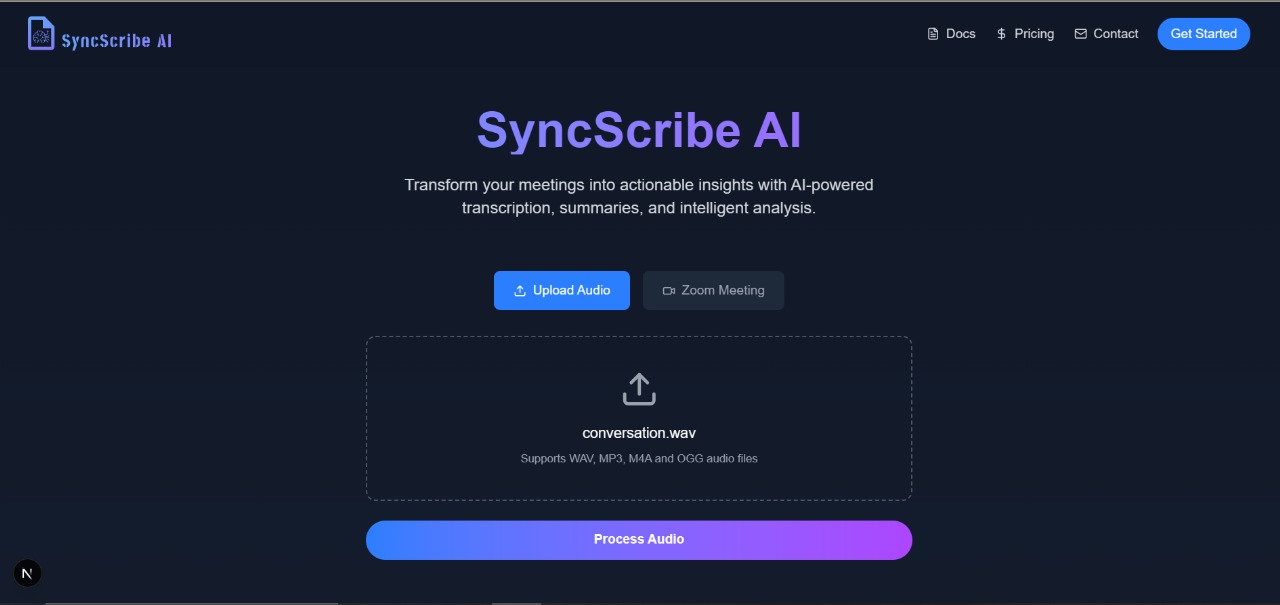
Home Page
-
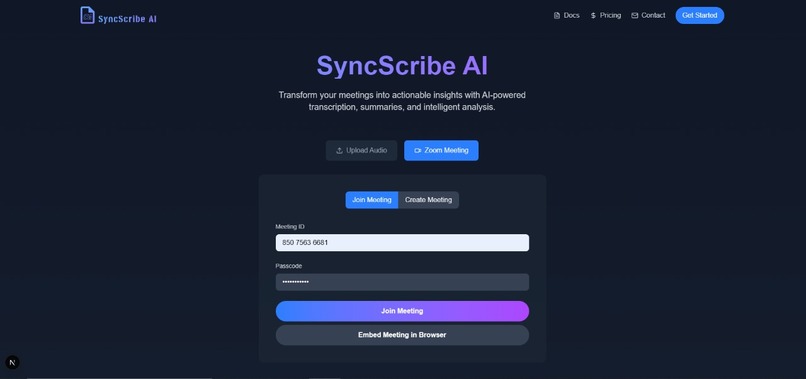
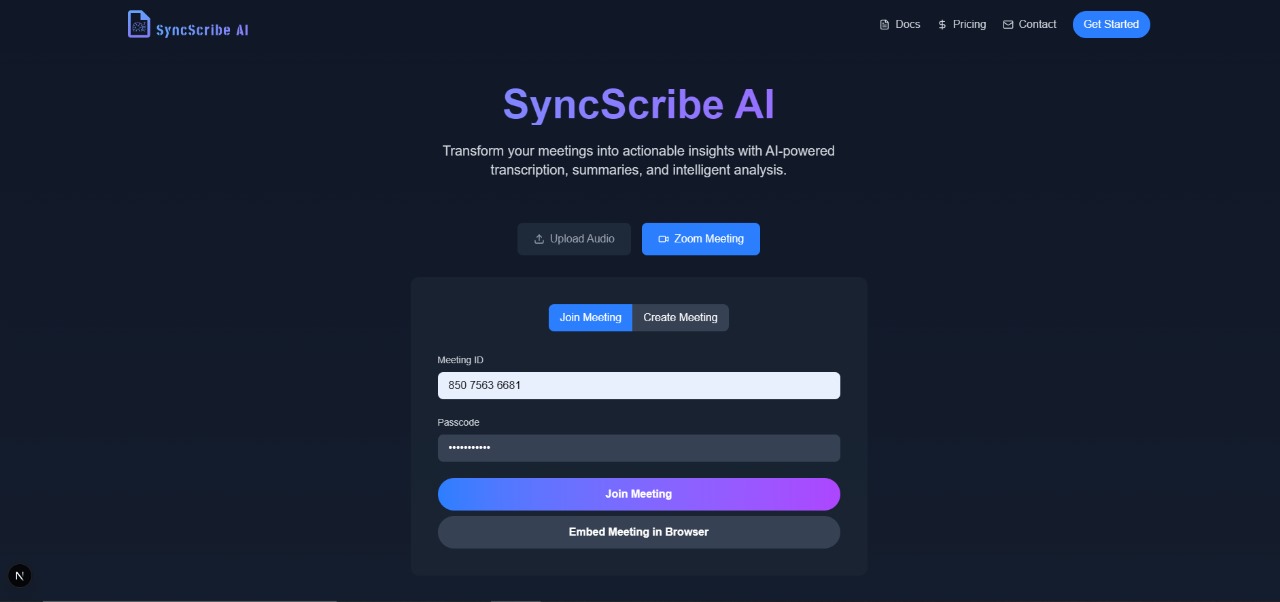
Join Meeting
-
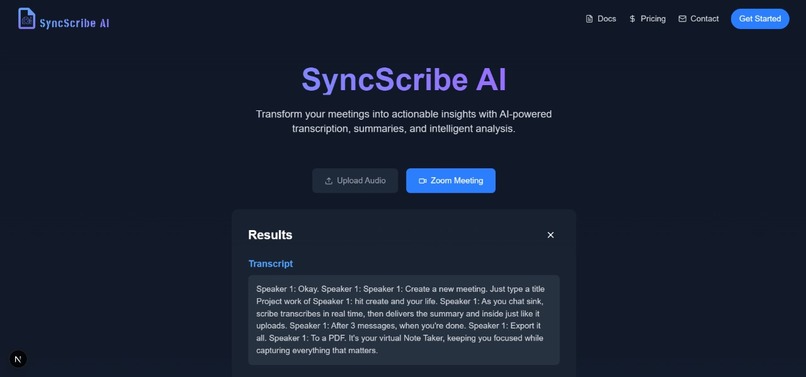
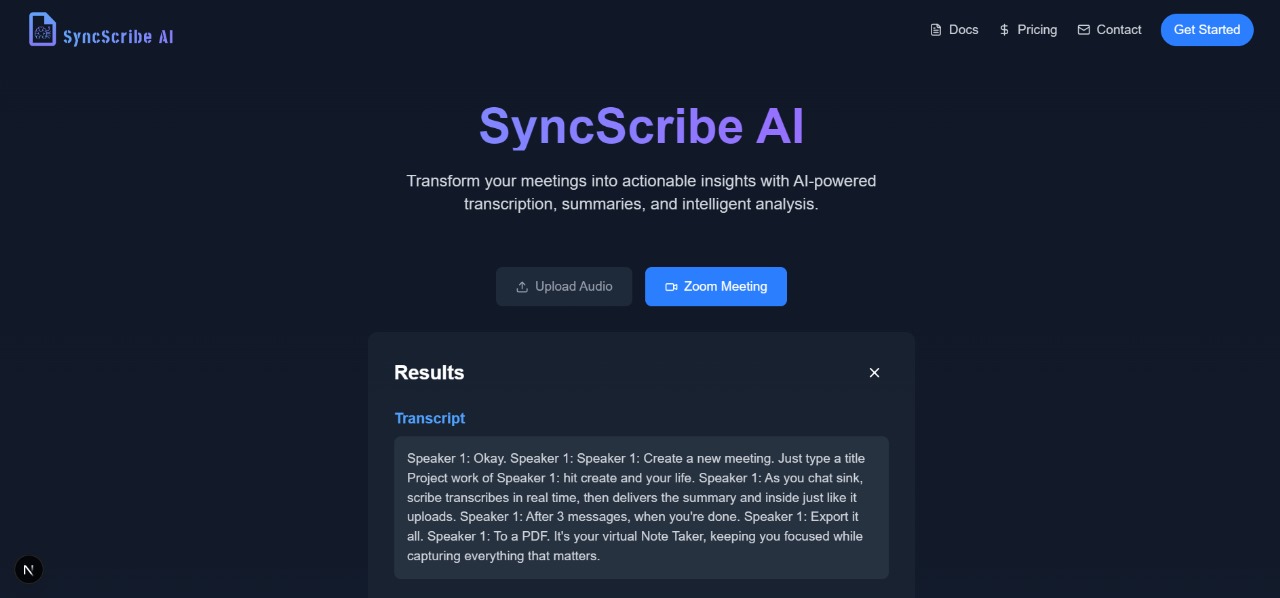
Transcript
-
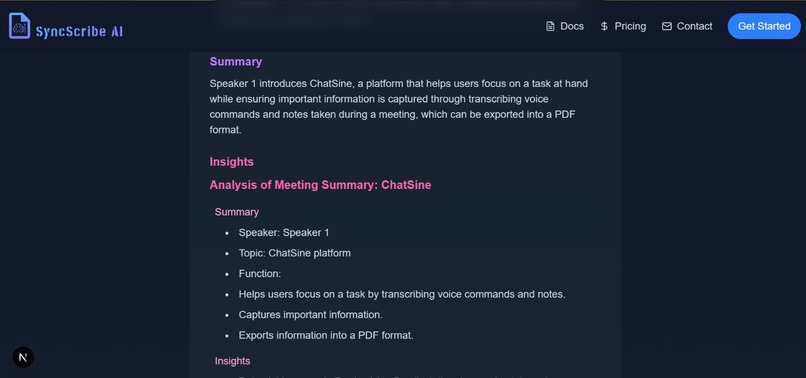
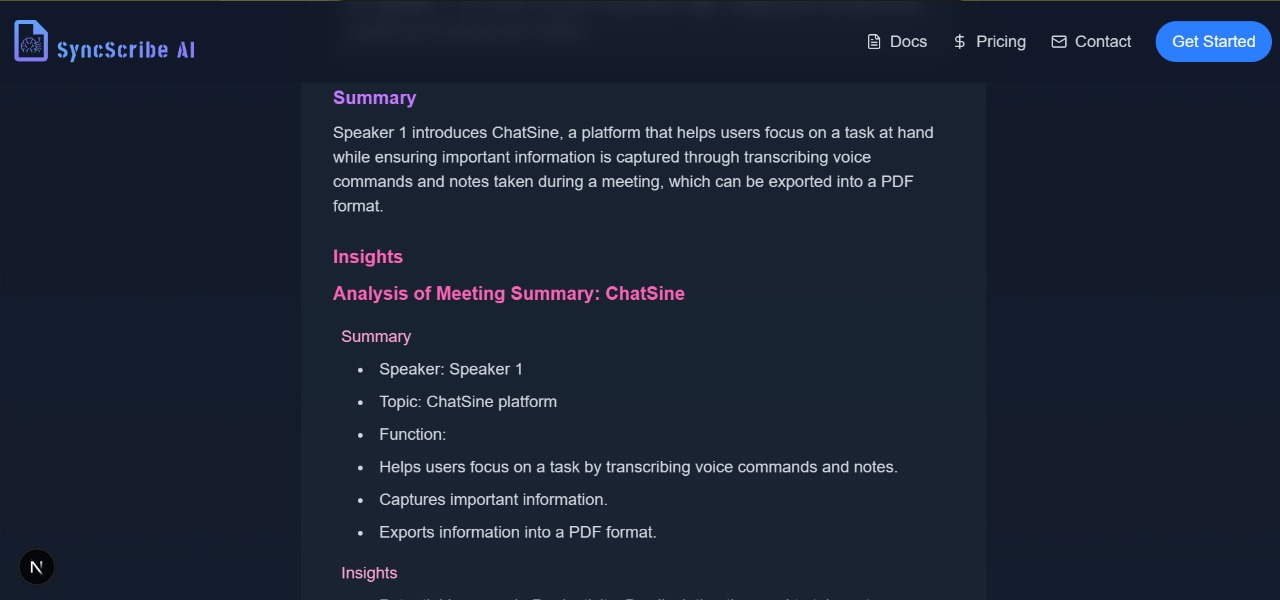
Summary
-
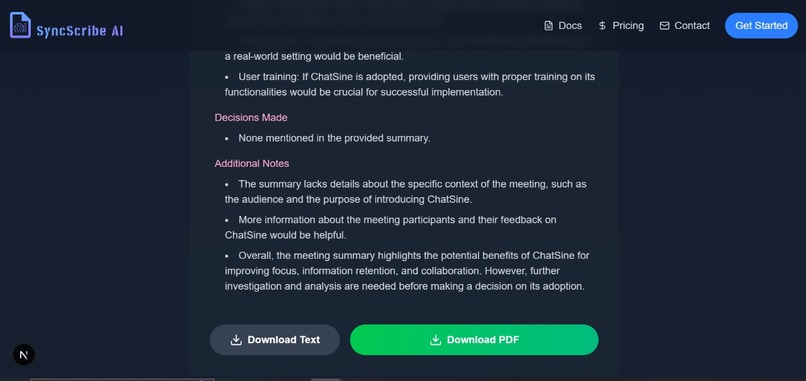
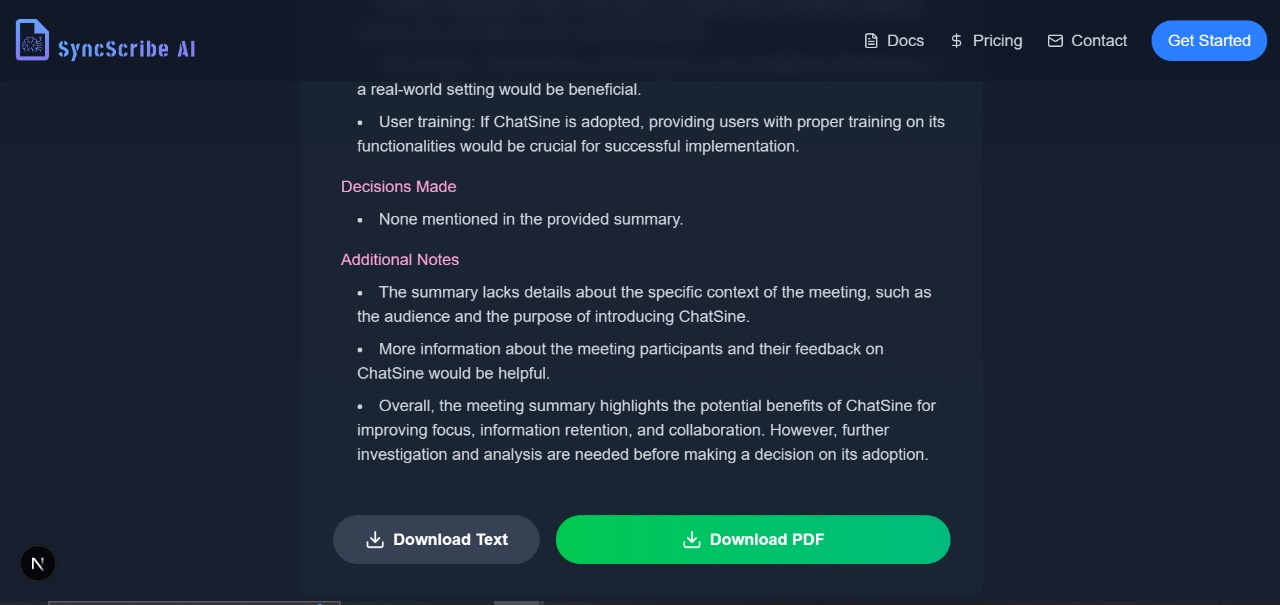
Insights and Download PDF
Inspiration
In today’s busy world, classrooms and corporate meetings buzz with ideas but often leave students buried in notes and employees with unclear tasks. We created Syncscribe AI to empower people by turning messy discussions into clear, actionable summaries. Whether it’s a student grasping tough lessons or a professional staying on track, Syncscribe AI makes conversations count, one class or meeting at a time.
What It Does
Syncscribe AI is an intelligent assistant that processes user-uploaded .wav files or integrates real-time with Zoom meetings, generating concise summaries, identifying key points and action items, and offering personalised follow-up suggestions. It transforms hours of audio into digestible insights, empowering users to focus on what matters—learning, contributing, and acting—without the hassle of manual note-taking or miscommunication.
How We Built It
We built Syncscribe AI using a blend of cutting-edge natural language processing (NLP), machine learning and AI tools. We used a speech-to-text API to transcribe audio from .wav files or live Zoom meetings, then processed the text with a combination of Cohere API, Gemini, and Vertex AI to generate summaries, identify tasks, and analyze discussion tone. A rule-based suggestion engine adds personalized empowerment tips. For the front end, we crafted a sleek interface with Next.js, while Flask powers the backend, ensuring seamless integration and real-time results for users.
Challenges We Ran Into
- Processing Correct Transcription: Background noise and overlapping voices often muddled the audio, making accurate transcription a challenge; we wrestled with fine-tuning the speech-to-text API to improve clarity.
- Integrating Vertex AI: Hooking up Vertex AI proved tricky, with unexpected hiccups in syncing it to our pipeline—we burned hours troubleshooting API calls and data formats.
- Integrating Zoom: Real-time Zoom integration was a beast; latency and authentication issues forced us to rethink our approach and lean hard into debugging to make it work smoothly.
Accomplishments That We're Proud Of
- Zoom Integration: Successfully linking Syncscribe AI with Zoom for real-time processing felt like a game-changer, opening doors to live use cases.
- Cross-Context Design: Syncscribe AI shines in both chaotic debates and structured strategy sessions, proving its versatility.
- Hackathon Speed: Turning an idea into a working prototype in record time gave us a serious sense of triumph.
What We Learned
- NLP Nuances: Training AI to “think” like a human note-taker is harder than it looks—context is king.
- User Focus: Feedback loops taught us that empowerment isn’t just about information; it’s about actionable confidence.
- Teamwork: Dividing tasks (e.g., front-end vs. AI logic) while staying synced was a crash course in collaboration.
- Tech Limits: Real-time AI is resource-hungry; we learned to prioritise efficiency over perfection.
What's Next for Syncscribe AI
- Multilingual Support: Adding real-time translation to empower non-native speakers in diverse teams and settings.
- Integration Expansion: Syncing with tools like Google Classroom, Slack, or Canvas for effortless adoption.
- Visual Enhancements: Creating mind maps or timelines from summaries to suit visual learners.
- Personalisation: Allowing users to customise preferences, like focusing on deadlines or highlighting questions, for a tailored experience.
- Scalability: Upgrading the backend to handle big groups—like university lectures or all-hands meetings—smoothly.
- Speaker Identification: Implementing tech to tag who’s speaking in discussions, making summaries and action items even clearer and more actionable.
Built With
- cohere
- fastapi
- flask
- gcp
- gemini
- javascript
- next
- python
- vertex

Log in or sign up for Devpost to join the conversation.