-
-
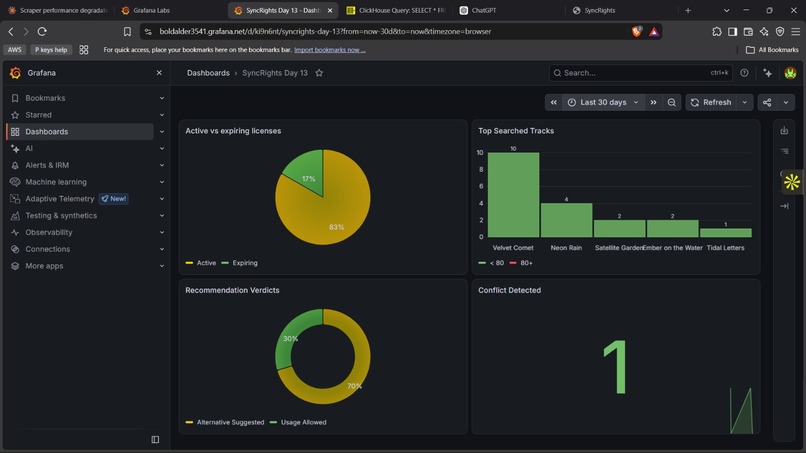
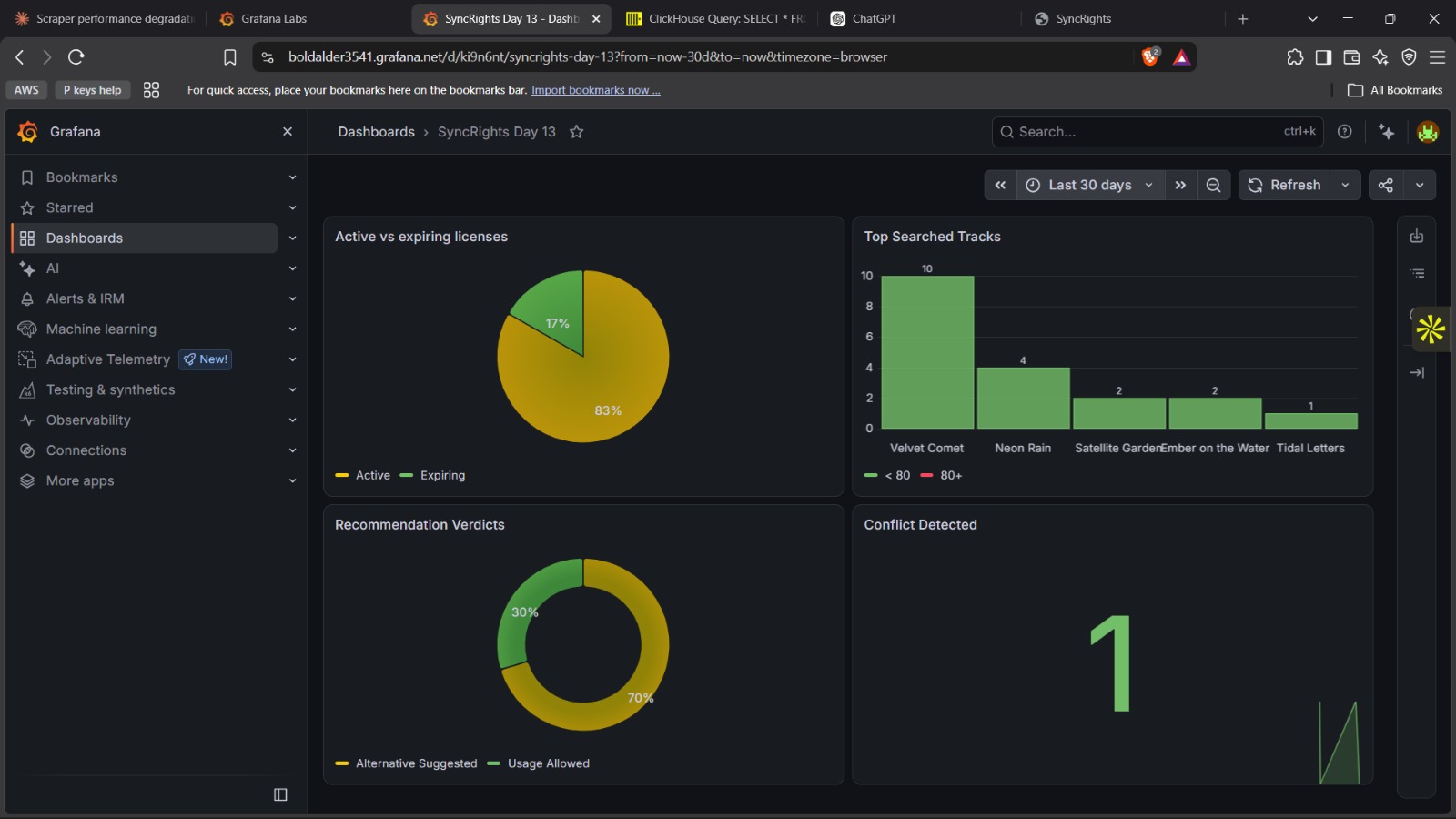
Graffana Dashboard
-
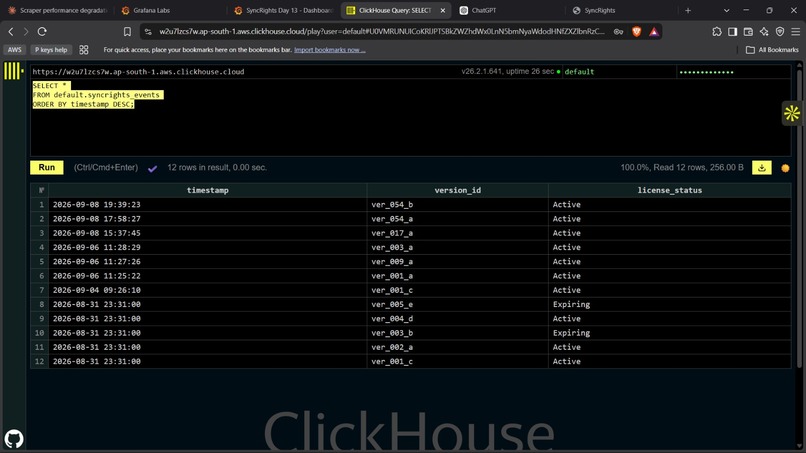
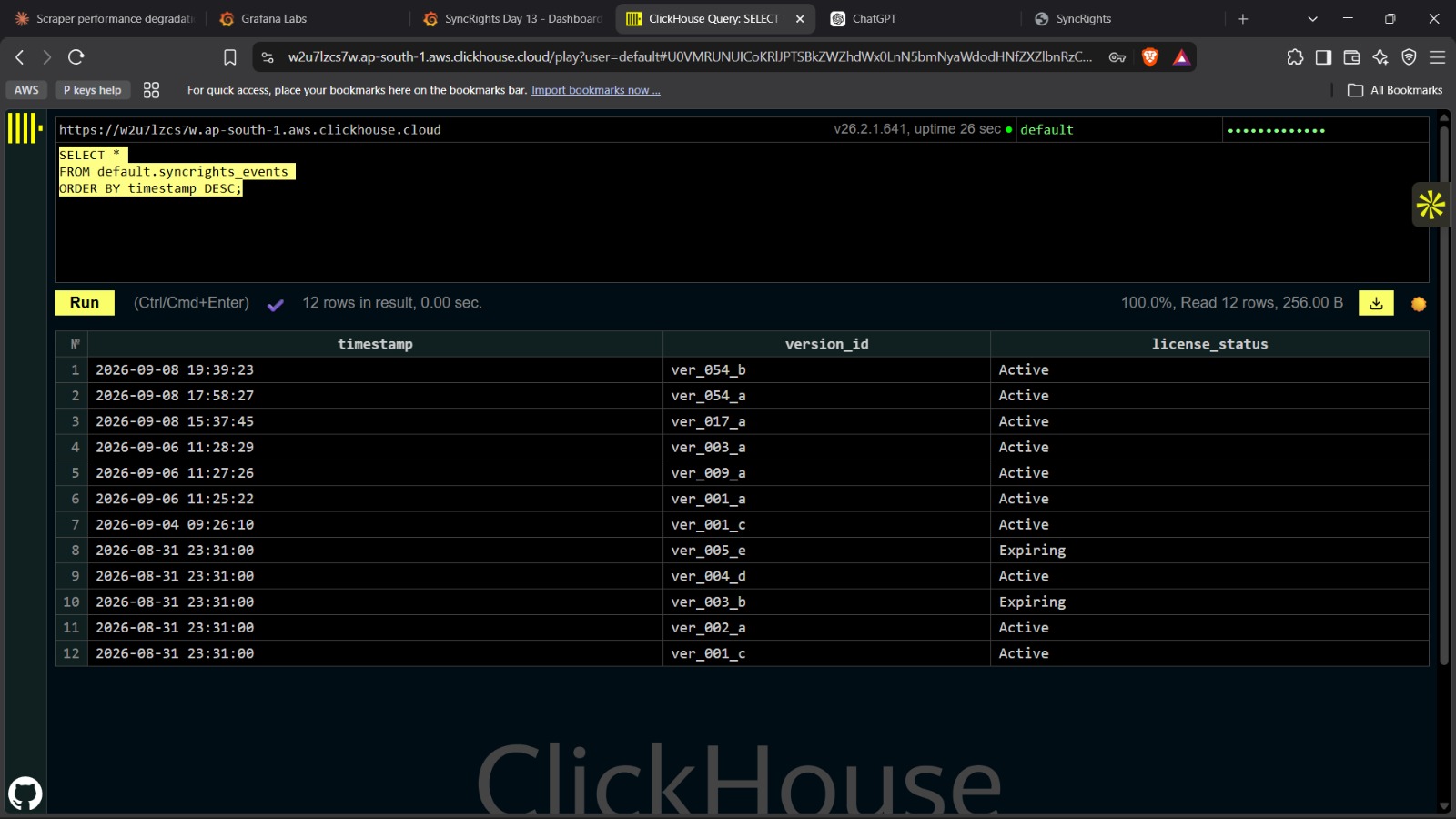
Clickhouse 3
-
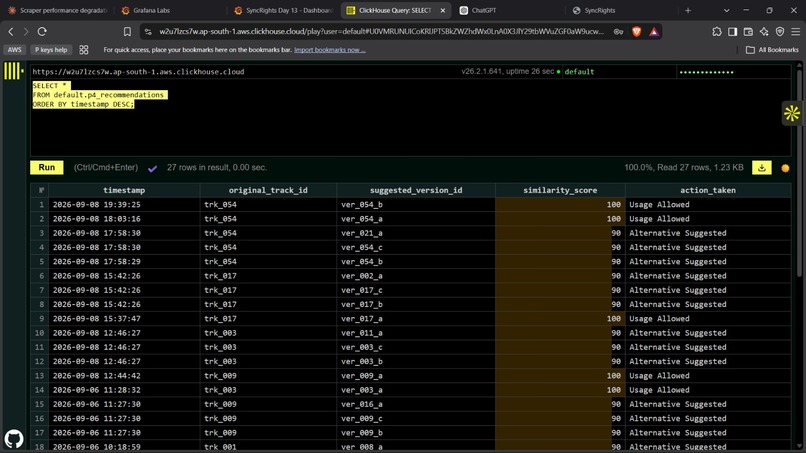
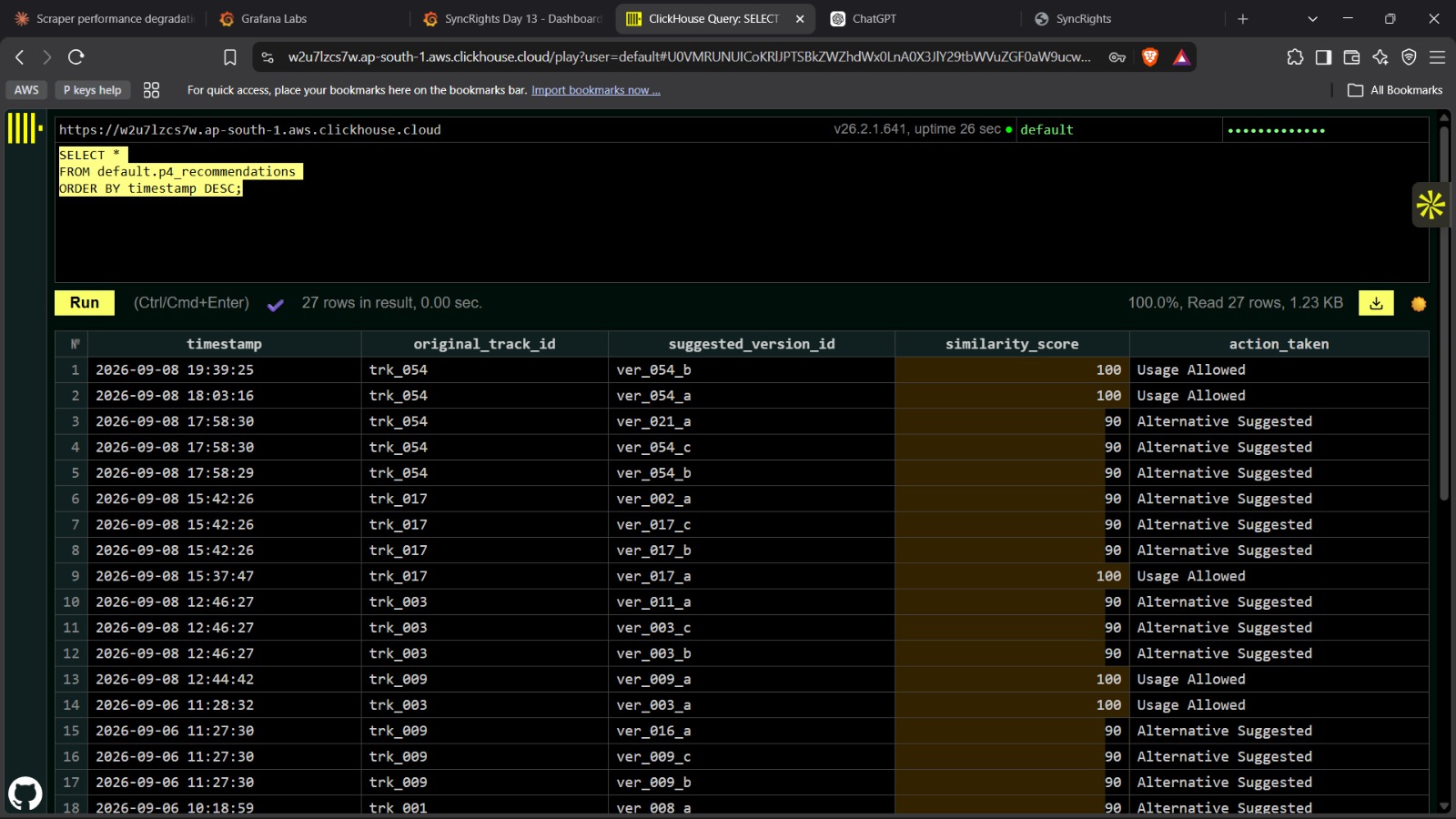
Clickhouse 4
-
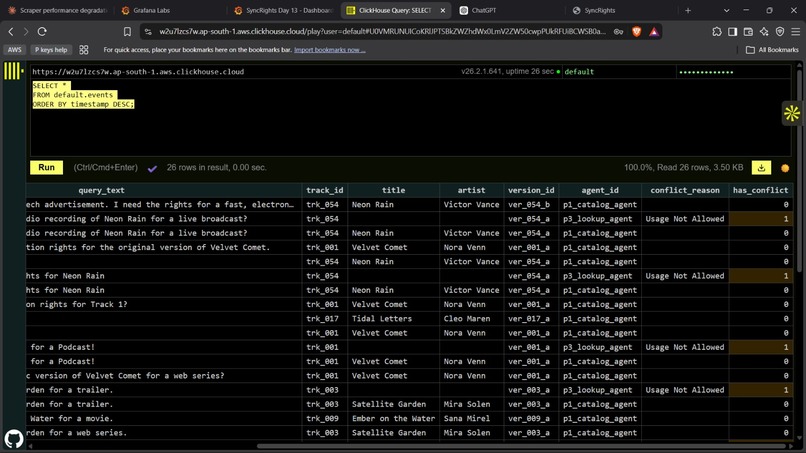
Clickhouse 2
-
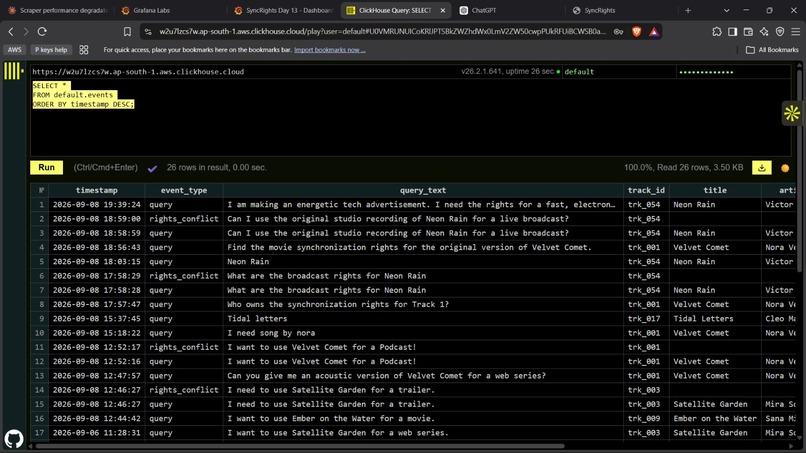
Clickhouse 1
💡 Inspiration
The music synchronization and licensing industry is a legal minefield. Content creators, broadcasters, and filmmakers often spend weeks negotiating rights or manually checking databases, only to face copyright strikes because a specific track version wasn't cleared for their specific usage (e.g., live broadcasts vs. movies). We wanted to build a system that acts as a real-time, intelligent legal assistant—automating rights clearance, flagging conflicts, and most importantly, offering immediate solutions.
⚙️ What it does
SyncRights is an AI-powered, multi-agent pipeline designed to automate music rights clearance. When a user searches for a track and specifies their intended usage (like "movie" or "live broadcast"):
- Agent P1 & P2: Identify the exact track version and verify usage rights in real-time.
- Agent P3: Flags licensing conflicts if the requested usage violates the track's clearance rules.
- Agent P4: The real magic! If a track is blocked, this agent automatically searches the catalog and recommends legally cleared alternative versions or remixes.
Everything is completely transparent. Users can view the "Agent Trace" on the UI to see exactly how the AI reasoned through the catalog data to reach its verdict.
🛠️ How we built it
Our architecture is built for speed and transparency:
- Frontend: Built with Next.js and styled with Tailwind CSS, deployed on Vercel for a seamless user experience.
- Backend: A robust FastAPI server hosted on Render, orchestrating our AI agents.
- The AI Brain: We utilized Google Gemini models wrapped in an MCP (Model Context Protocol) architecture to create specialized reasoning agents.
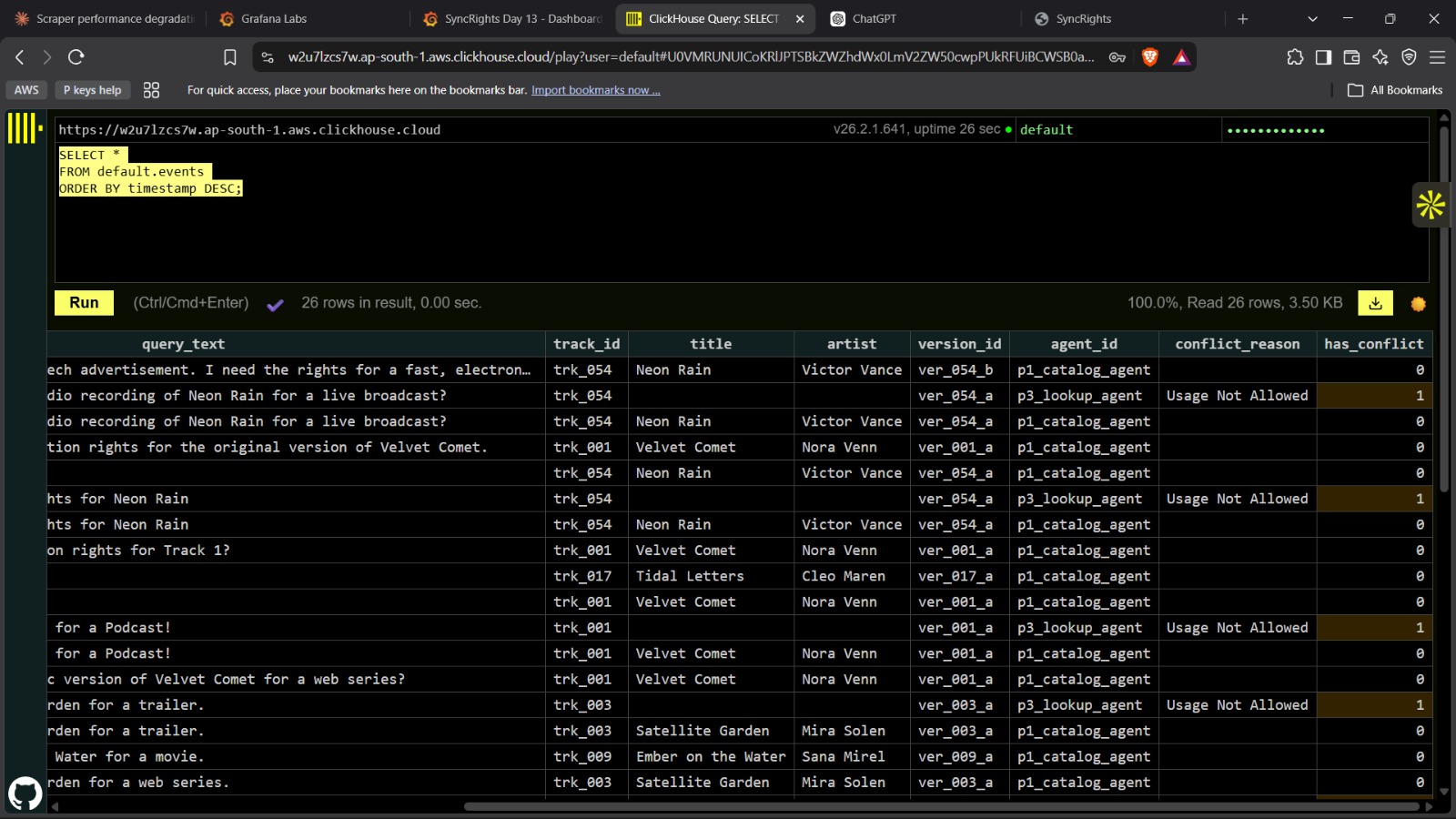
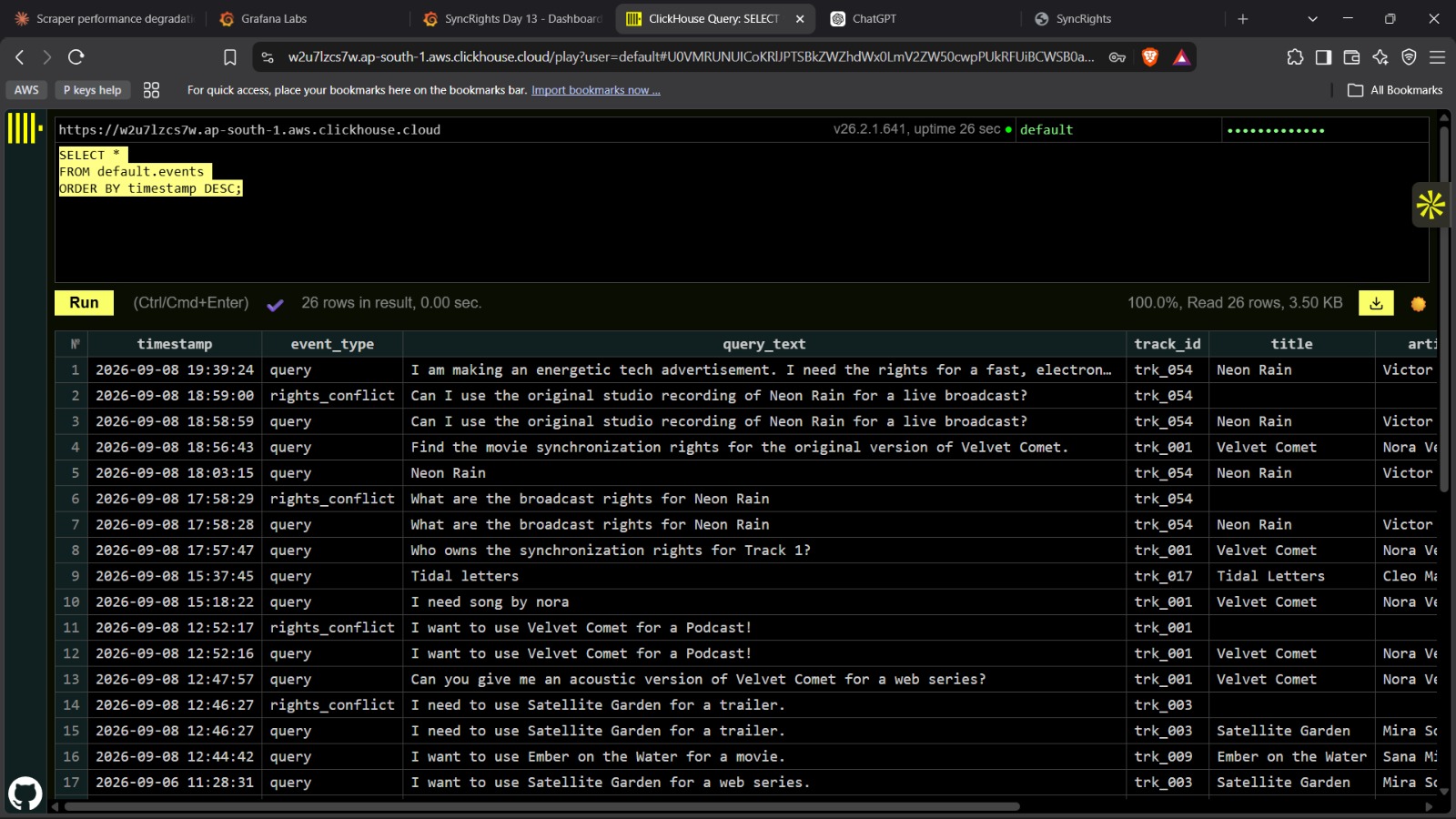
- Database & Monitoring: Catalog data and agent decision logs are stored in ClickHouse Cloud. We integrated Grafana dashboards to visualize agent actions, clearance rates, and pipeline metrics in real-time.
🚧 Challenges we ran into
Deploying a multi-agent system to production is never easy! We faced intense challenges getting our Next.js frontend to securely communicate with the FastAPI backend across cloud platforms. Dealing with strict CORS policies and debugging Next.js build-time environment variable caching tested our patience in the final hours. Additionally, parsing raw catalog data into a format that our Gemini agents could reliably reason over without hallucinating required extensive prompt engineering and trace logging.
🏆 Accomplishments that we're proud of
We successfully deployed a complete, production-ready AI pipeline! We didn't just build a wrapper around an LLM; we built a modular, multi-agent reasoning engine that connects to a real ClickHouse database and visualizes metrics on Grafana. The fact that our system doesn't just say "No" to a user, but actively finds legally cleared alternatives, is our biggest win.
📚 What we learned
We learned the immense power of agentic workflows. Breaking down a complex legal task (rights clearance) into smaller, specialized AI agents drastically improved accuracy. We also leveled up our DevOps skills, mastering Vercel, Render, and ClickHouse cloud deployments under extreme hackathon time pressure.
🚀 What's next for SyncRights
We plan to integrate smart contract functionality to allow users to not only verify rights but instantly purchase and sign micro-licenses on the blockchain. We also want to expand the catalog to include sound effects and stock video footage!
Built With
- ai-agents
- clickhouse
- fastapi
- google-gemini
- grafana
- mcp
- next.js
- python
- render
- vercel

Log in or sign up for Devpost to join the conversation.