-
-
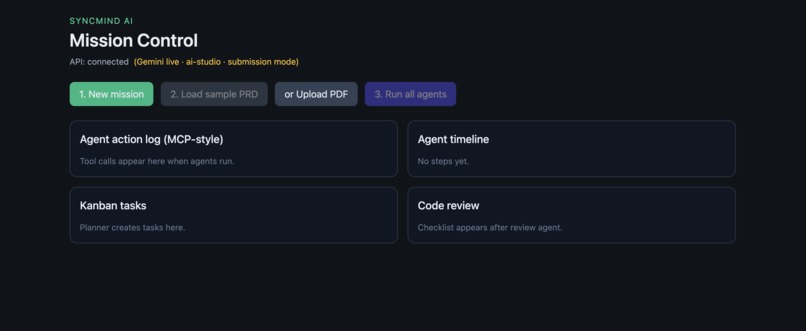
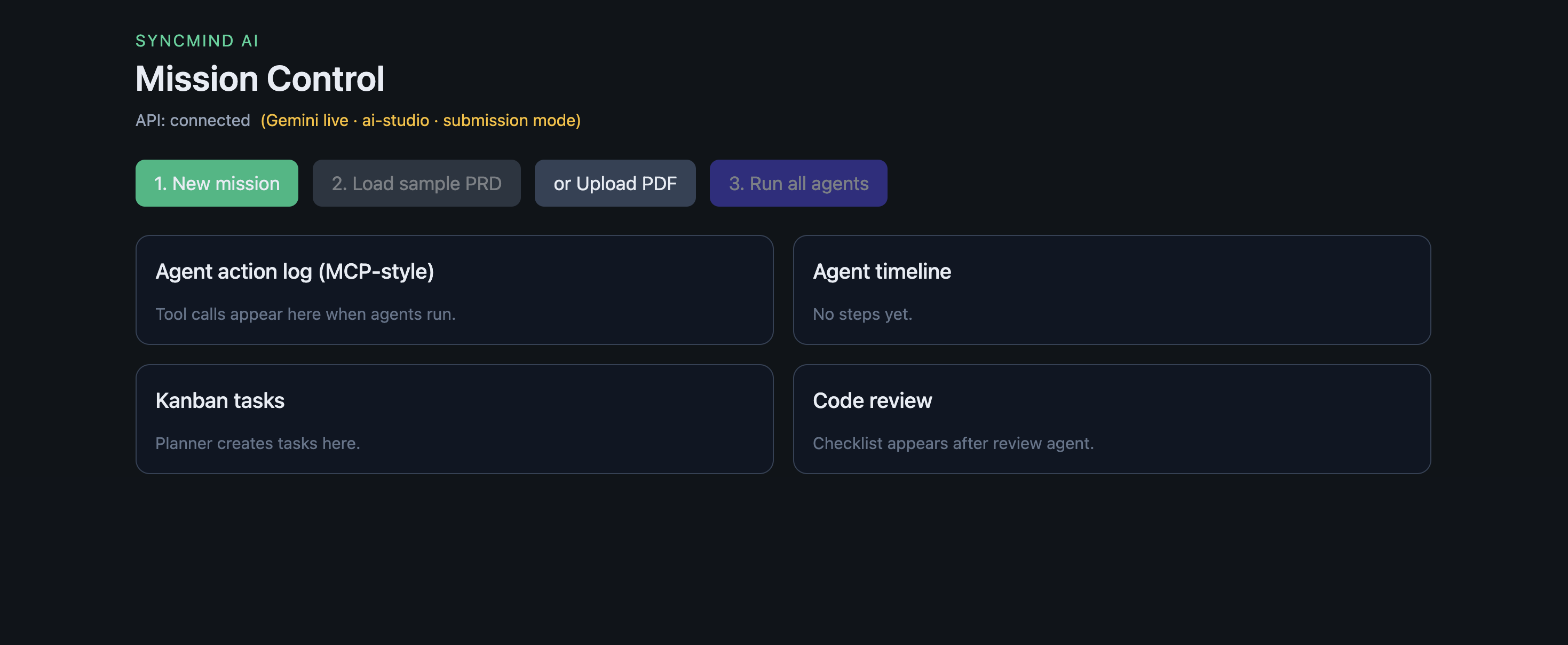
When you start new mission
-
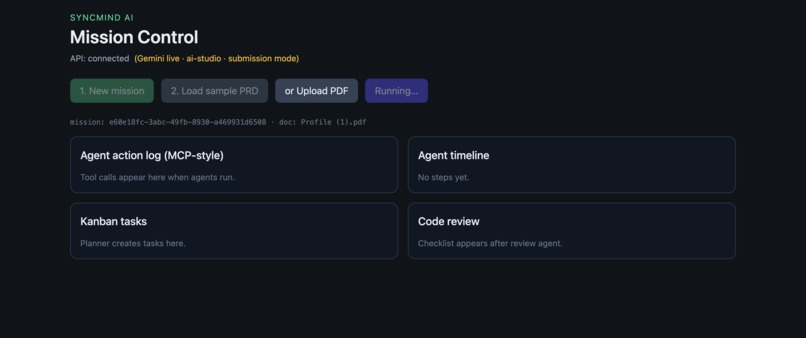
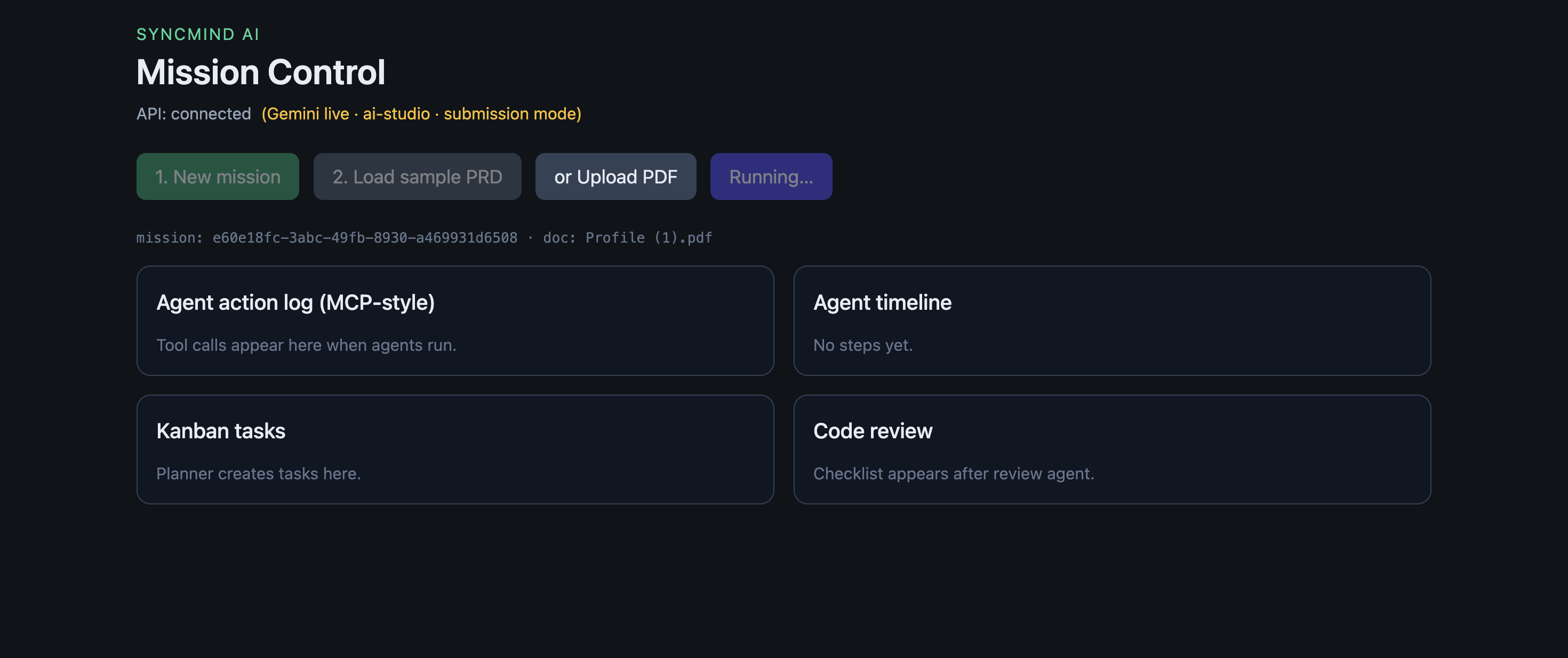
Agent running
-
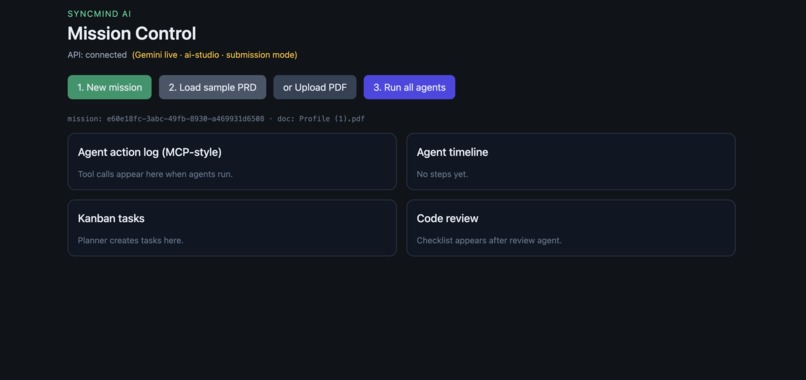
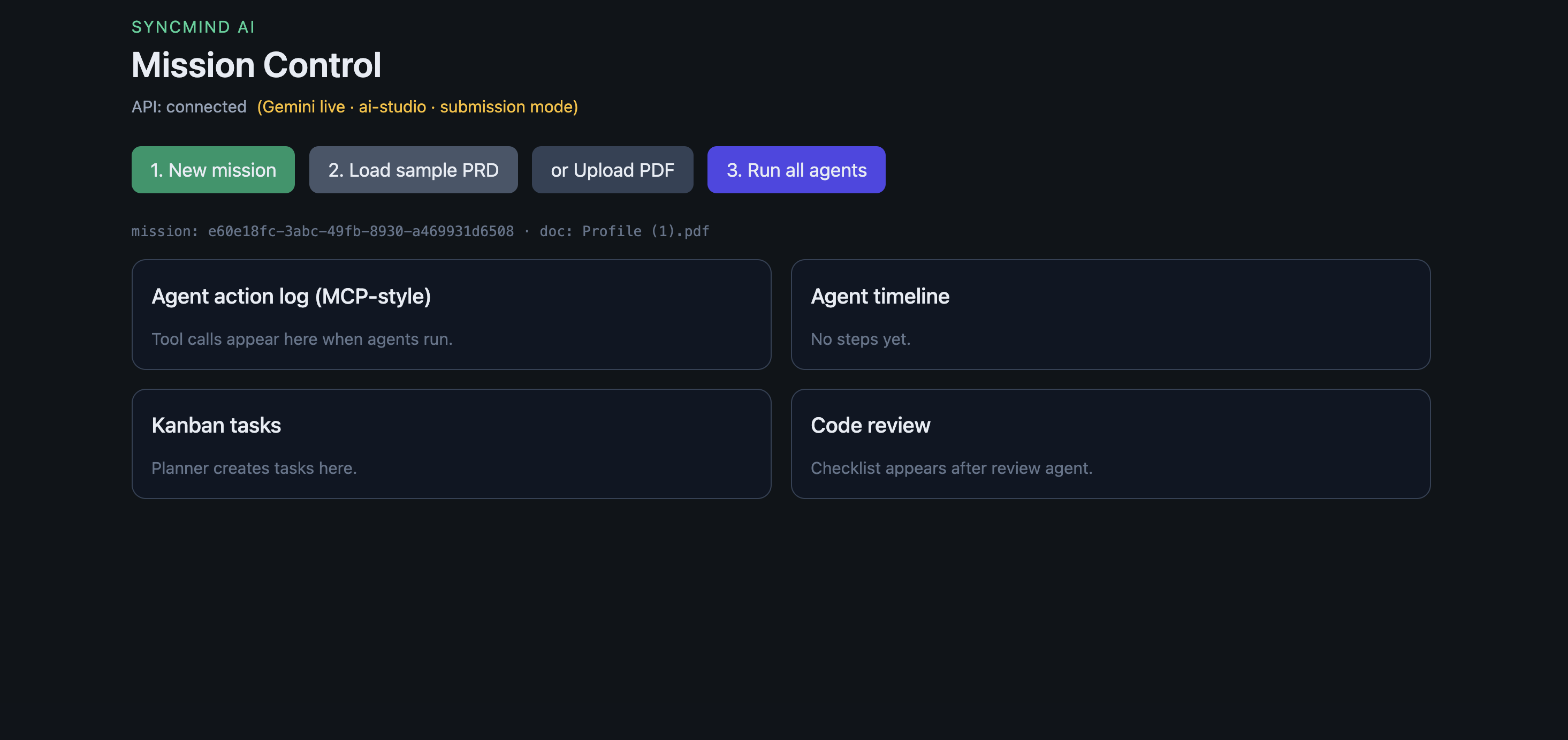
You can see sample, or upload any pdf in which you want to summarize
-
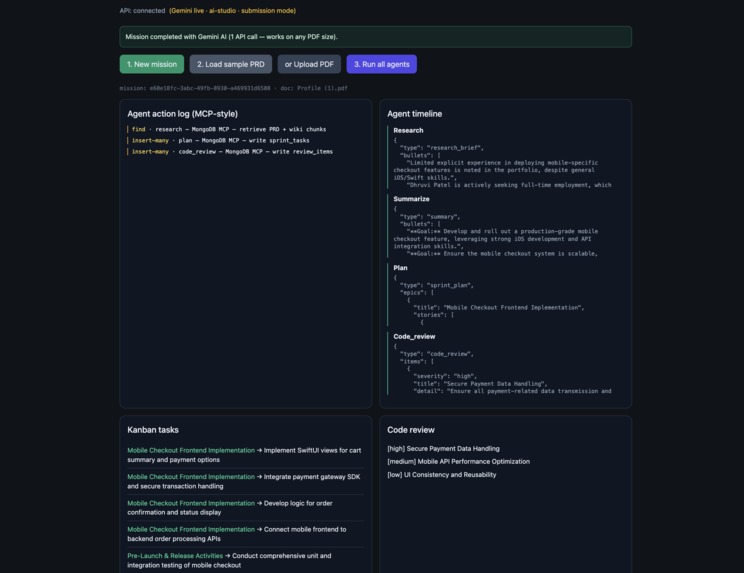
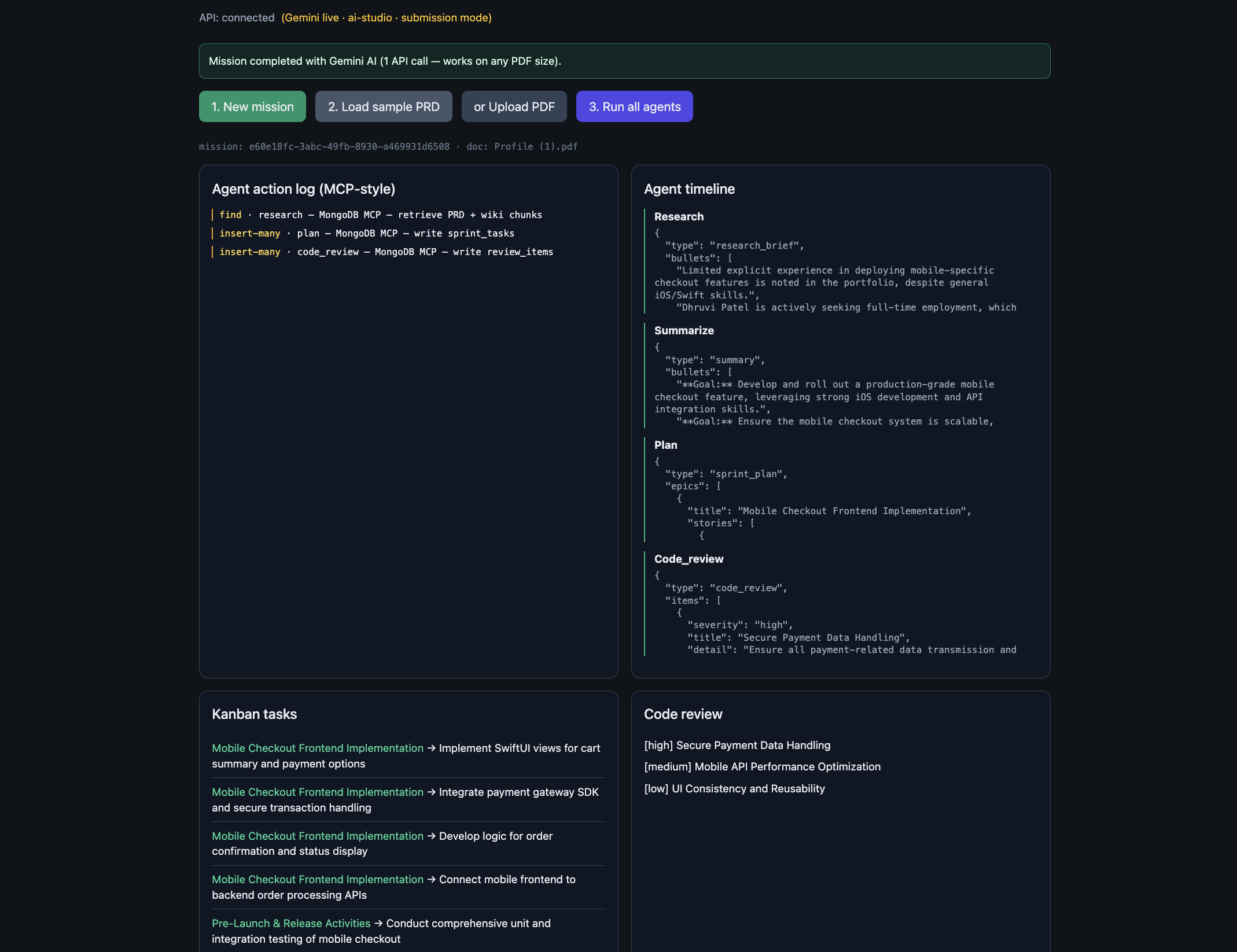
Result after running
Inspiration
Modern teams spend too much time switching between communication tools, AI chatbots, documents, and task managers. While AI assistants are becoming more powerful, most of them still work as isolated chatbots instead of collaborative teammates.
We wanted to build something beyond a simple AI chat application, a real-time collaborative workspace where multiple AI agents can actively assist users with research, planning, coding, summarization, and workflow automation.
Our inspiration came from observing how teams collaborate in tools like Slack, Notion, and Discord, but still manually handle repetitive tasks that AI could automate intelligently. We believed AI agents should not only answer questions, but also collaborate alongside humans in real time.
What it does
SyncMind AI is a real-time AI collaboration workspace powered by autonomous agents.
The platform allows users to:
- Communicate in real time through team chat rooms
- Upload files and documents for AI analysis
- Interact with multiple specialized AI agents
- Generate summaries, action items, and project plans
- Collaborate on coding and technical discussions
- Maintain persistent memory and contextual understanding across conversations
The system includes specialized AI agents such as:
- Research Agent
- Summarizer Agent
- Planner Agent
- Code Review Agent
For example, a user can upload a project requirement document, and the AI agents will collaboratively analyze it, generate a task breakdown, summarize key points, and suggest implementation strategies while all connected users see updates live in real time.
How we built it
We built SyncMind AI using a modern full-stack architecture focused on scalability, real-time communication, and AI orchestration.
Frontend
- React.js
- Tailwind CSS
- Socket.IO Client
Backend
- Node.js
- Express.js
- Socket.IO
- REST APIs
Database & Memory
- MongoDB for persistent storage
- Vector database for semantic memory and contextual retrieval
AI Infrastructure
- Gemini API for intelligent responses
- Multi-agent orchestration workflows
- Context-aware prompt engineering
- Retrieval-Augmented Generation (RAG)
Cloud & Deployment
- Google Cloud services
- Real-time event architecture
- Scalable backend deployment
One of the core technical focuses was enabling AI agents to work collaboratively while maintaining conversation context and synchronizing updates instantly across connected users.
Challenges we ran into
One of the biggest challenges was designing a reliable multi-agent workflow system. Coordinating multiple AI agents while maintaining consistent context and preventing redundant responses required careful orchestration logic.
We also faced challenges with:
- Real-time synchronization between users and AI responses
- Managing conversation memory efficiently
- Reducing AI response latency
- Structuring prompts for different agent responsibilities
- Handling document context retrieval accurately
- Maintaining scalability for simultaneous interactions
Another major challenge was balancing technical complexity with user experience. We wanted the platform to feel simple and intuitive despite having advanced AI workflows running in the background.
Accomplishments that we're proud of
We are proud of transforming a traditional real-time chat application into a collaborative AI-powered productivity platform.
Some accomplishments we are especially proud of include:
- Building a working multi-agent collaboration system
- Creating seamless real-time AI interaction
- Implementing contextual memory and intelligent retrieval
- Designing a scalable architecture using modern cloud technologies
- Developing a polished and interactive user experience
- Successfully integrating autonomous AI workflows into team collaboration
Most importantly, we built a product that feels practical and usable beyond the hackathon environment.
What we learned
This project taught us that building effective AI systems is not only about integrating large language models, it is about designing workflows, memory systems, and collaborative experiences around them.
We gained hands-on experience with:
- AI agent orchestration
- Real-time system architecture
- Context engineering
- Vector embeddings and semantic search
- Cloud-based deployment strategies
- Scalable backend design
- Human-AI interaction design
We also learned the importance of demo experience, product storytelling, and designing solutions around real-world workflows instead of building isolated AI features.
What's next for SyncMind AI
Our next goal is to evolve SyncMind AI into a fully autonomous AI collaboration platform for teams and developers.
Future plans include:
- Advanced agent-to-agent communication
- Persistent workspace memory
- AI-generated project management workflows
- Voice-enabled collaboration
- Live collaborative coding assistance
- Third-party integrations with GitHub, Google Drive, and Slack
- Personalized AI agents trained on workspace data
- Enterprise-grade deployment and scalability
We believe collaborative AI systems will become a major part of how modern teams work, and SyncMind AI is our step toward that future.


Log in or sign up for Devpost to join the conversation.