-
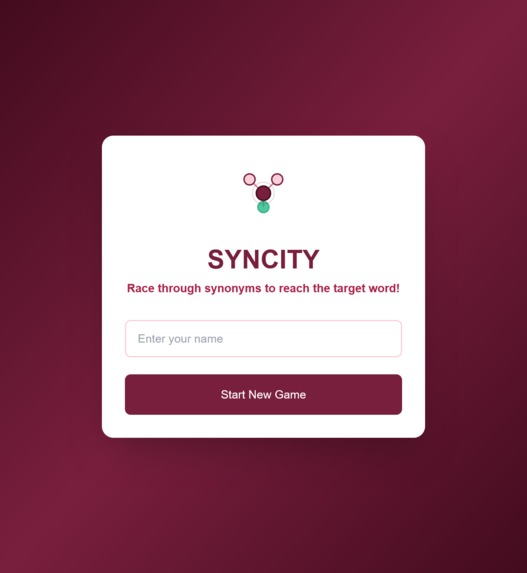
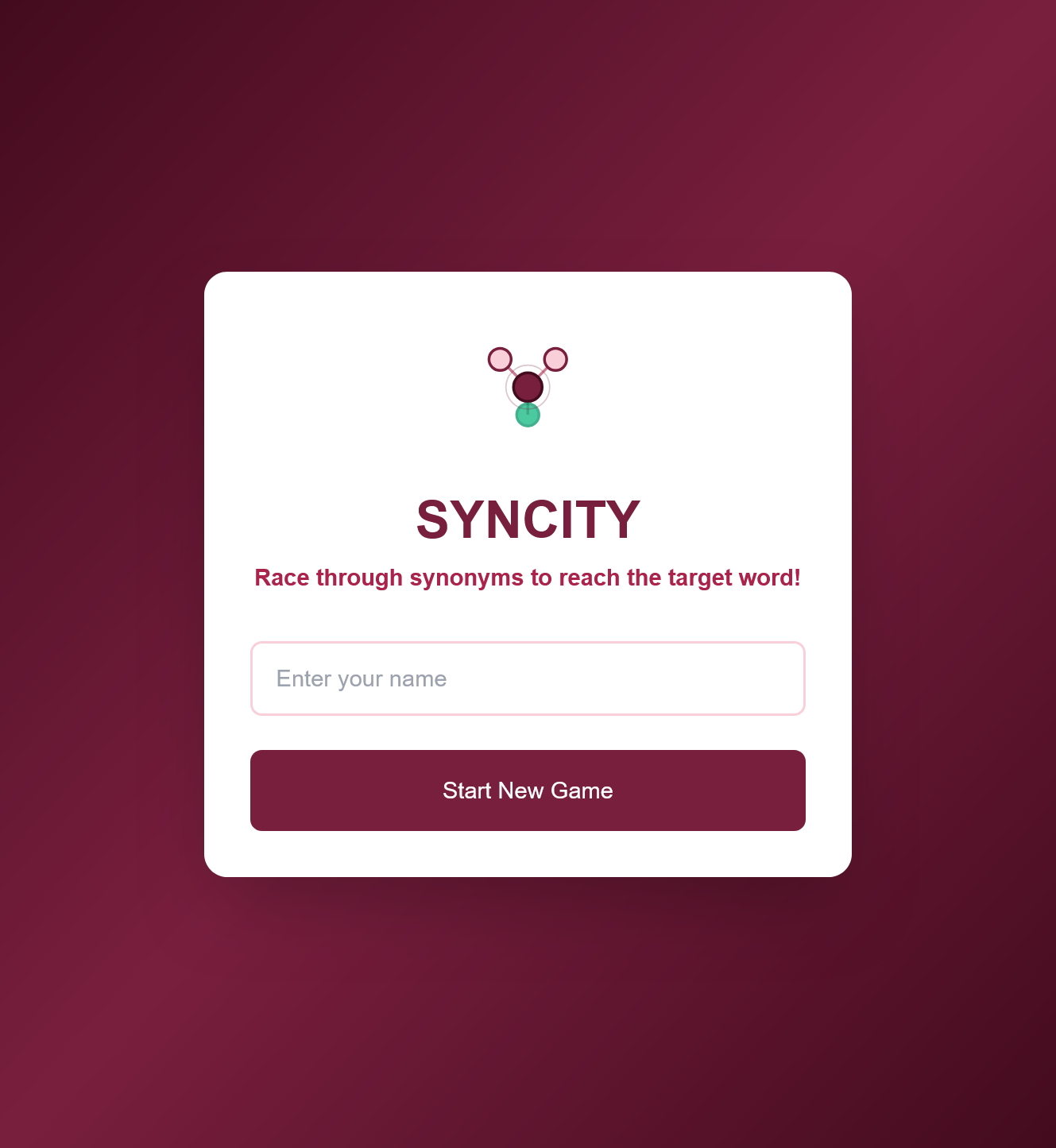
Homepage
-
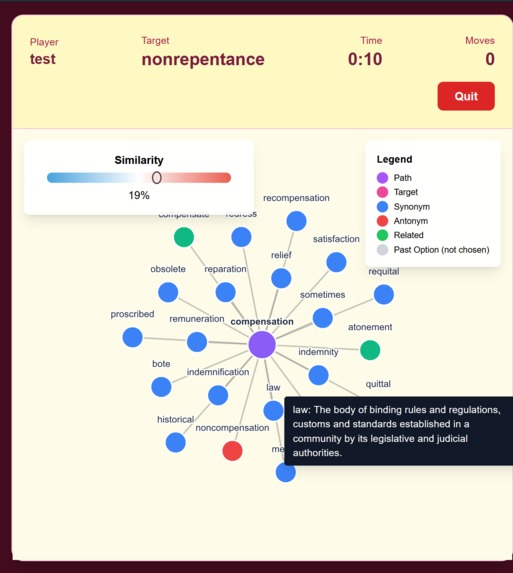
Start game
-
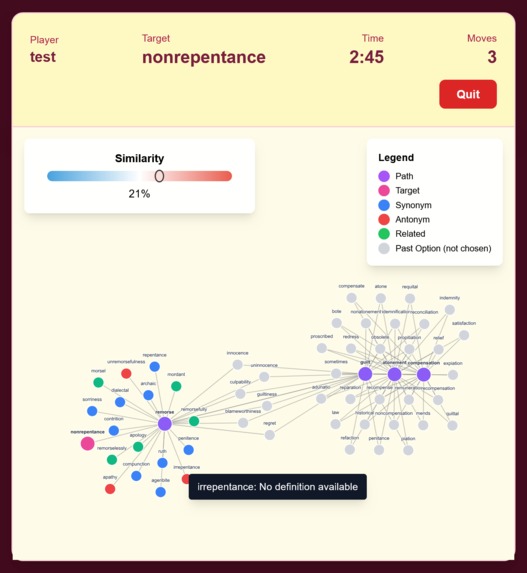
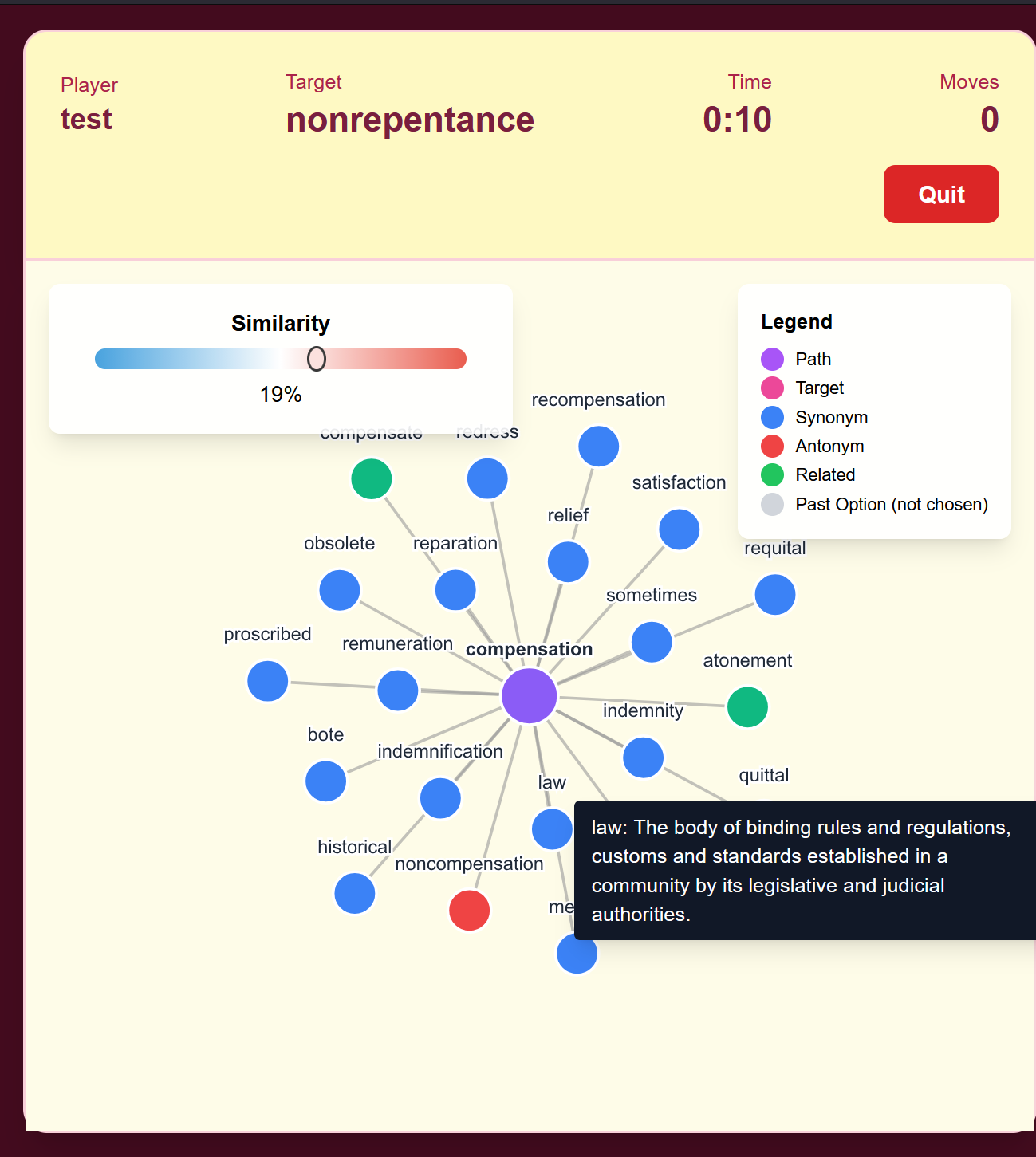
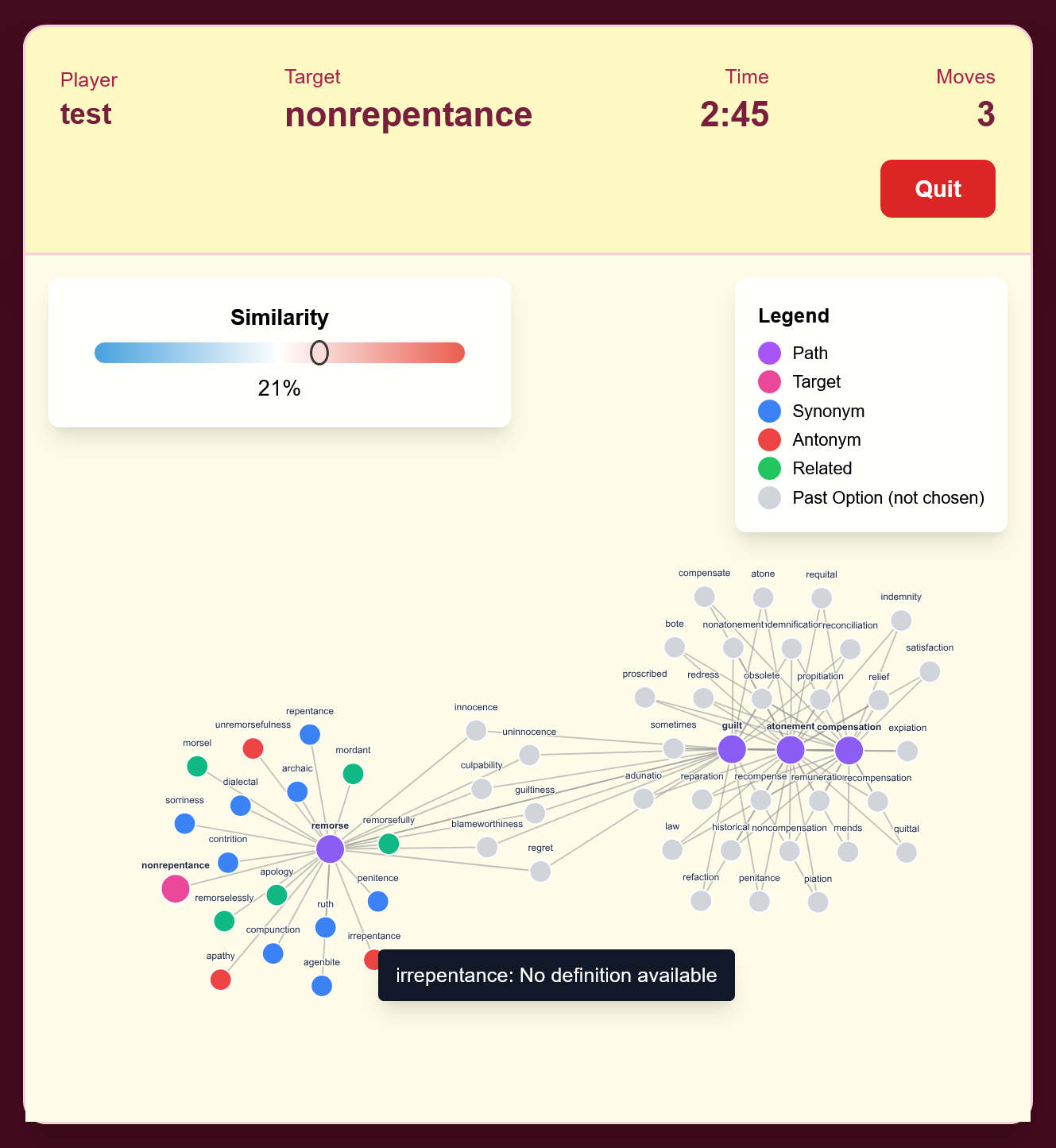
Mid-game
-
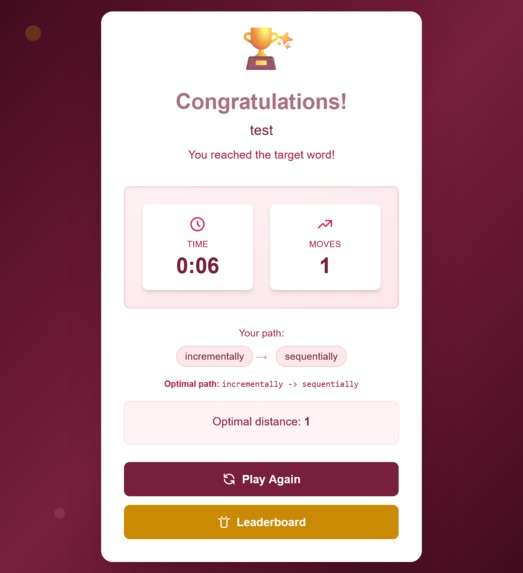
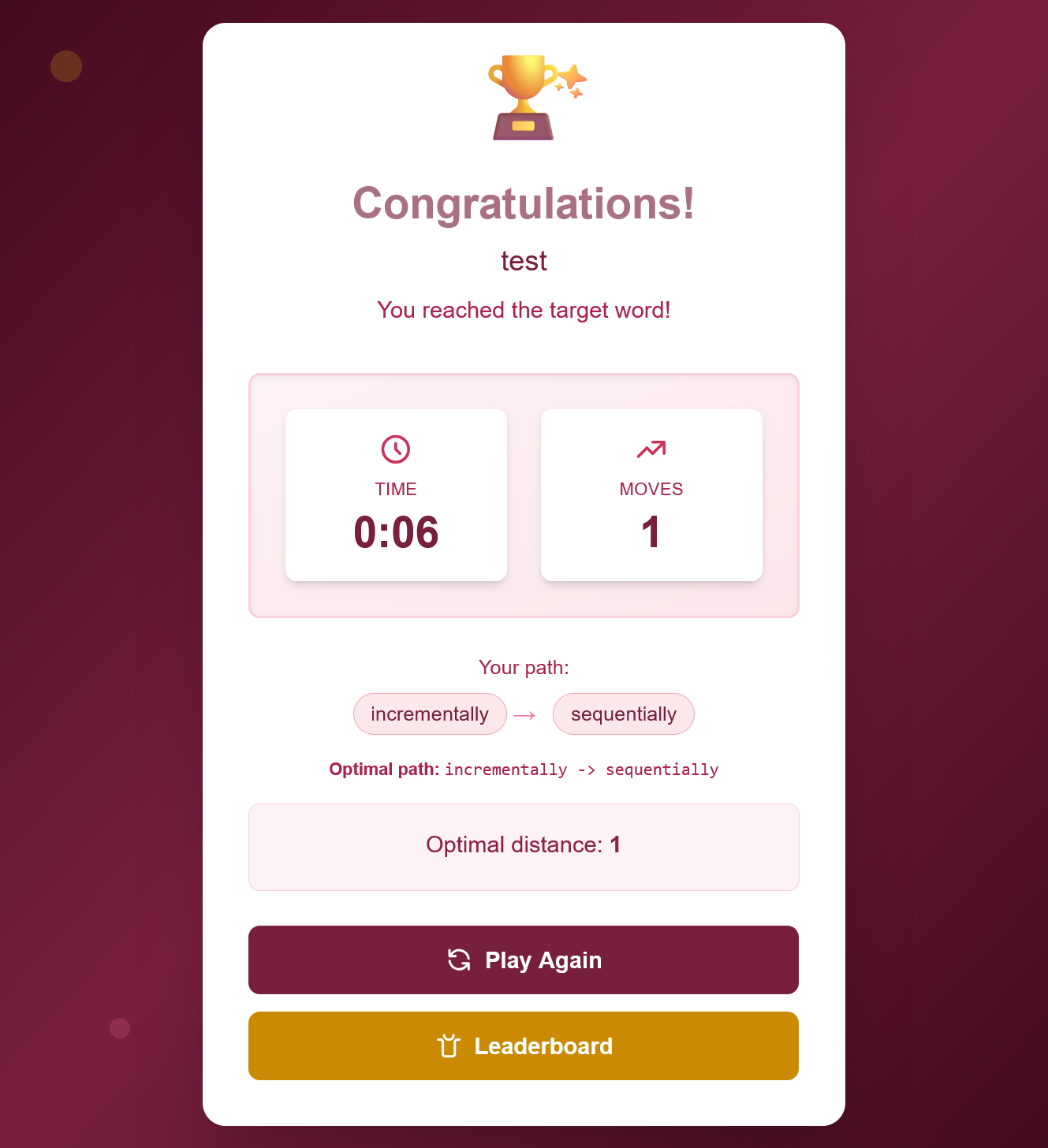
Success!
-
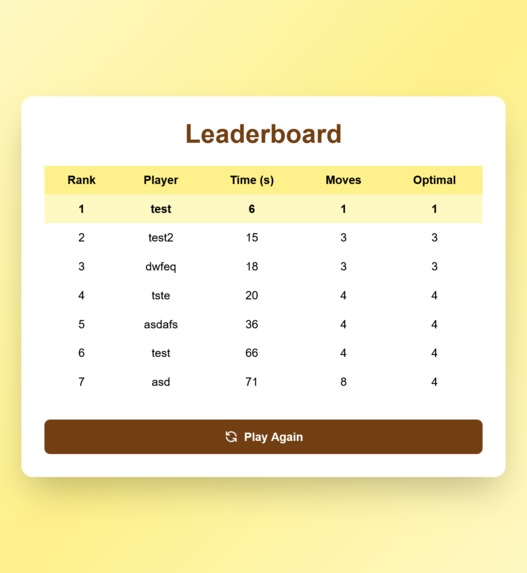
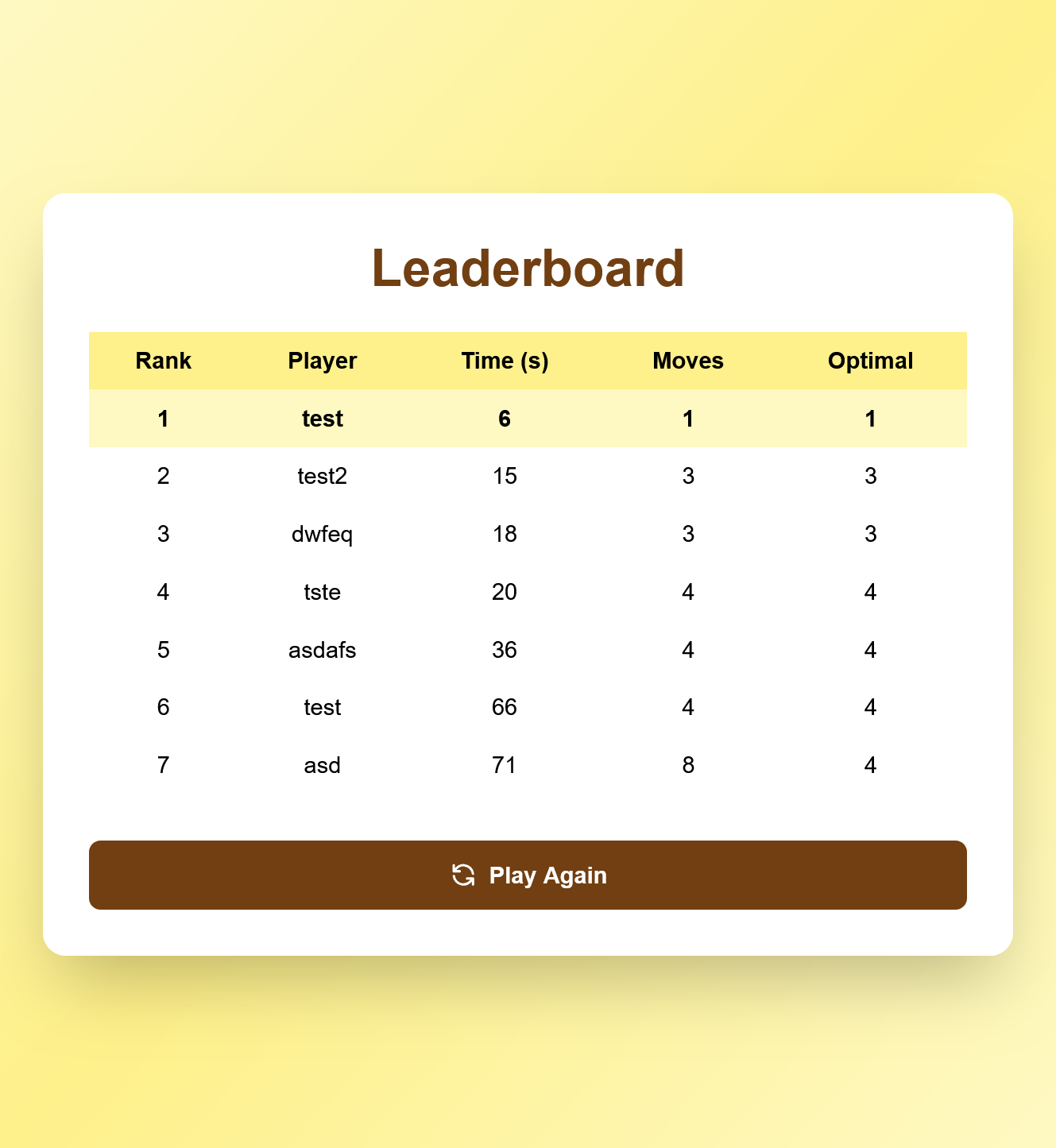
Leaderboard
-
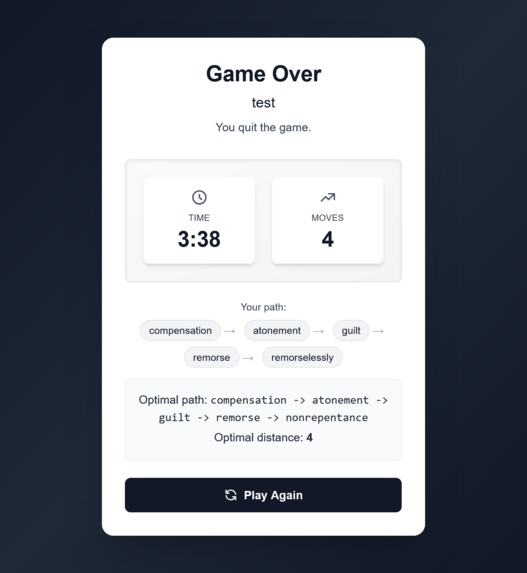
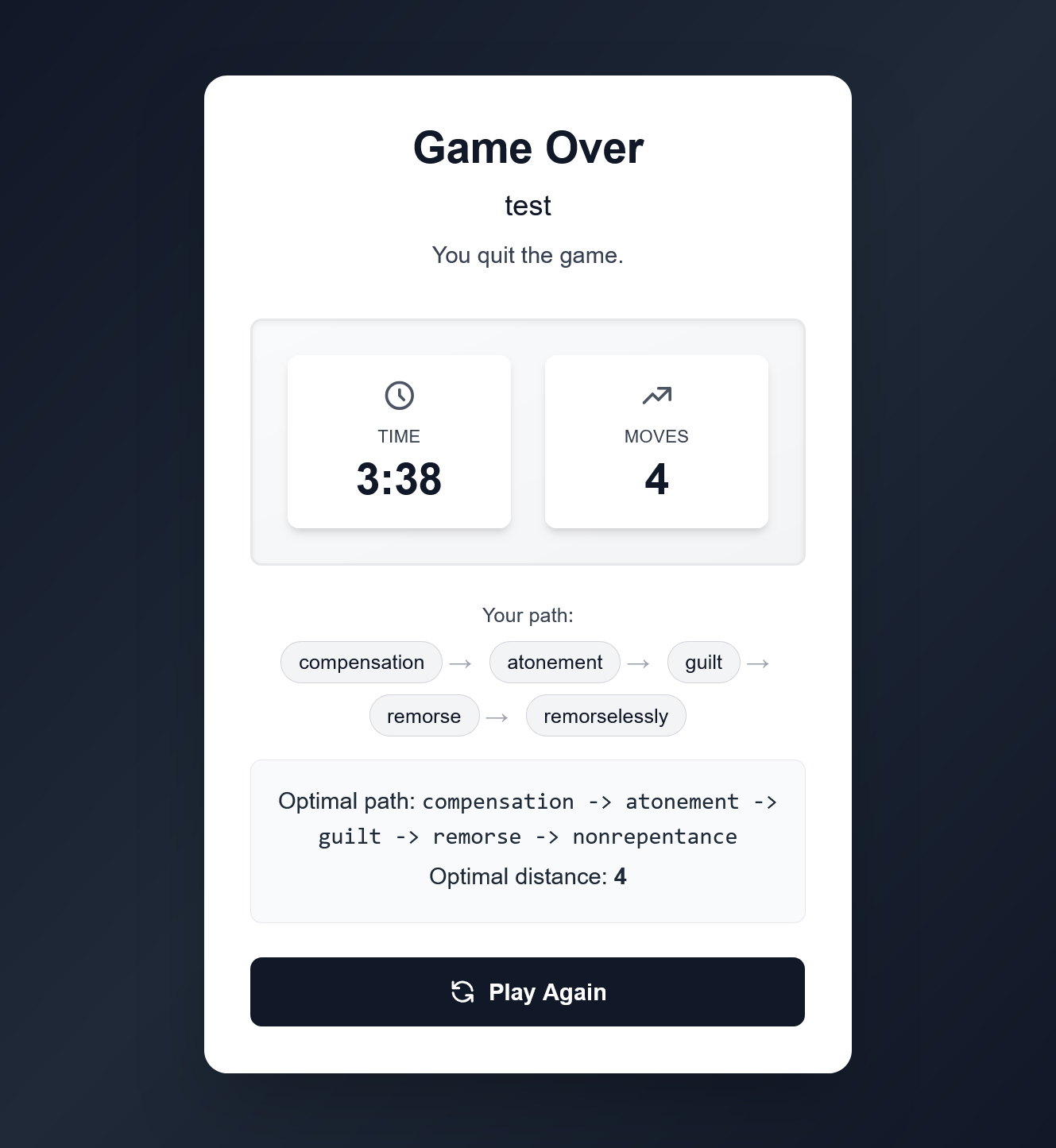
Game Over :(
Inspiration
We were inspired by WikiRacing and the idea that meaning is not linear, but connected. Language forms a web of associations, contrasts, and intuitions, and navigating it trains how we think, not just what we know. Syncity was born from the question: What if exploring meaning itself became the game?
What it does
Syncity is a fast-paced word-navigation game where players travel from a starting word to a target word by hopping through synonyms, antonyms, and related words. Each word is a node in a semantic graph, and every choice opens new paths while closing others.
Players race against the clock, track their number of moves, and use a proximity meter, which takes into account of word similarity powered by text embeddings, to estimate how close they are to the target word. Players may backtrack to rethink their strategy, and successful runs are recorded on a leaderboard.
Beyond gameplay, Syncity encourages vocabulary learning, lateral thinking, and intuition about how ideas relate.
How we built it
We modelled language as a semantic graph, where words are nodes connected through linguistic relationships. To estimate closeness between words, we used sentence transformers to generate AI embeddings, allowing us to compute semantic similarity in real time and power the proximity meter.
Tech stack:
- Frontend: TypeScript, React, Vite, Tailwind CSS
- Backend: Python, Flask
- Data: Wiktionary (parsed and cleaned)
- AI: Sentence transformer embeddings for semantic similarity
- Visualisation: Interactive graph-based word navigation
Challenges we ran into
- Data quality & safety: Wiktionary data contained profanities and irrelevant entries, requiring careful filtering
- Data parsing: Wiktionary’s structure was complex and inconsistent, making extraction and normalisation non-trivial
- Game balance: Balancing dataset size with playability to avoid dead ends while keeping the game challenging
- Team coordination: Sequencing frontend work carefully to avoid merge conflicts due to overlapping files
- Version control: Resolving Tailwind CSS version mismatches and improving Git workflows under time pressure
Accomplishments that we're proud of
- Built a fully playable and polished product, more complete than any of our previous hackathon projects
- Successfully integrated AI embeddings into real-time gameplay
- Overcame a long brainstorming block to create a concept all team members were excited about
- Improved significantly in team coordination, Git usage, and task division
- Delivered a game that is both fun and intellectually engaging
What we learned
- How to transform unstructured linguistic data into a usable product
- Practical experience applying AI embeddings in a real interactive system
- Better collaboration under tight deadlines, especially around version control
- The importance of early alignment on tools, dependencies, and workflows
- That strong ideas often emerge after pushing through creative blocks
What's next for Syncity
- New game modes, including live multiplayer versus mode
- Hint systems for learning-focused play
- Displaying the shortest semantic path after each game to compare with the player’s route
- Expanded datasets and difficulty tiers
- Educational adaptations for vocabulary learning and language exploration
Built With
- ai
- embeddings
- flask
- python
- react
- tailwindcss
- transformer
- typescript
- vite
- wiktionary

Log in or sign up for Devpost to join the conversation.