-
-
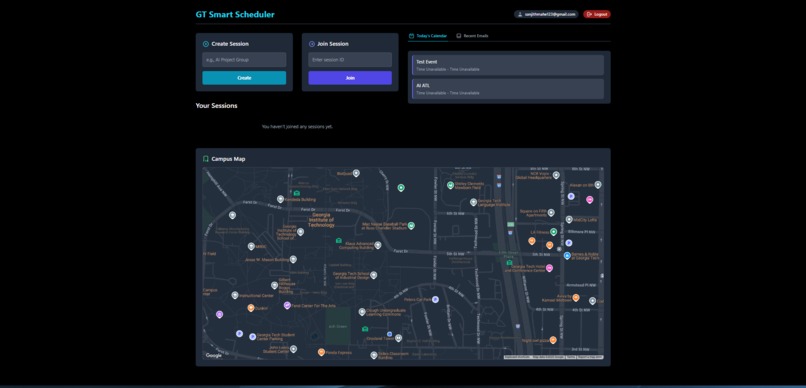
HomePage
🌟 Project Story: SyncAI – The Intelligent Meeting Orchestrator
💡 Inspiration: The $399 Billion Problem
The inspiration for SyncAI stemmed from a universal workplace frustration: the sheer difficulty and massive time waste associated with scheduling meetings and booking physical space. We realized that conventional scheduling tools are "dumb" when it comes to context.
Human Problem: We waste time navigating "Calendar Chaos", spending six hours per week in needless meetings, and struggling with time zone complexity where someone inevitably gets the 6:00 AM slot. Smart Problem: Existing schedulers fail because they can't distinguish a Critical Client Meeting from a Low-Priority 1:1, treating all conflicts as equal. Physical Problem: Workers waste time battling for a room, often encountering "Phantom Meetings" (booked rooms sitting empty) and equipment mismatches, with 40% of workers wasting over 30 minutes just finding a room.
We were inspired to build a system that moves beyond basic scheduling to solve these three pillars of complexity simultaneously.
🏗️ How We Built SyncAI
Our solution, SyncAI: The Intelligent Meeting Orchestrator, is built on a high-level layered architecture focused on contextual awareness and holistic problem resolution.
1. The Data Layer (Inputs)
The system is powered by integrating three key data streams:
External Calendar APIs: To pull participant availability (the current project uses the Google Calendar API). Facilities & Equipment Data: Information on meeting room capacity, required resources, and booking status. Real-Time Sensor Data: Visual AI pipeline (e.g., from Veo) provides real-time occupancy and "Opt-in/Check-in" data to resolve phantom meetings.
2. The SyncAI Intelligent Core
This is where the power of AI is applied:
- Contextual Prioritization Engine (AI): Data is normalized and ingested, feeding into an AI engine that weighs meeting conflicts. For example, a 'Client Pitch' with a 'REQUIRED' attendee might receive a weight of 100, while a low-priority internal meeting receives less weight.
- Geospatial & Time Zone Engine: This component calculates the best room based on the requester's current location, minimizing transit time and accurately handling international time zones.
- Resolution & Suggestion Engine: This module uses all the contextual and availability data to generate the single best proposal—time, room, and justification—moving beyond the endless scheduling loop.
3. The Interface Layer (Outputs)
The core output is seamless and automated:
- Automated Calendar Update: The proposed time and room are automatically booked and pushed back to the user's external calendar.
- Smart Room Controllers/Wayfinding: Output data can be used to update room panels or provide indoor navigation to the booked room.
🚧 Challenges and Learning
Technical Challenges:
- Bridging the APIs: The primary challenge was normalizing data streams from disparate sources (Calendar availability, facility data, and real-time occupancy) to feed a unified intelligence core. We learned the importance of robust data ingestion and normalization layers.
- TypeScript/Google Library Integration: We faced initial difficulties with setting up the environment for TypeScript, specifically resolving global type errors for the Google Identity Services (
googlenamespace) and GAPI, which required manual creation of a global declaration file (global.d.ts).
Algorithmic Challenges:
Contextual Prioritization: Defining the effective weights and rules for the Contextual Prioritization Engine was complex. We had to iterate on the logic to ensure the AI's "best" decision aligns with actual organizational priorities (e.g., when to bump an optional meeting for a critical one).
Time Zone Handling: We learned that simply comparing ISO strings is insufficient. Robust scheduling requires using the user's
timeZoneproperty (fromgetProfile) for both fetching and creating events to prevent the classic 6:00 AM slot mistake.
Built With
- database
- gcp
- gemini
- typescript


Log in or sign up for Devpost to join the conversation.