-
-
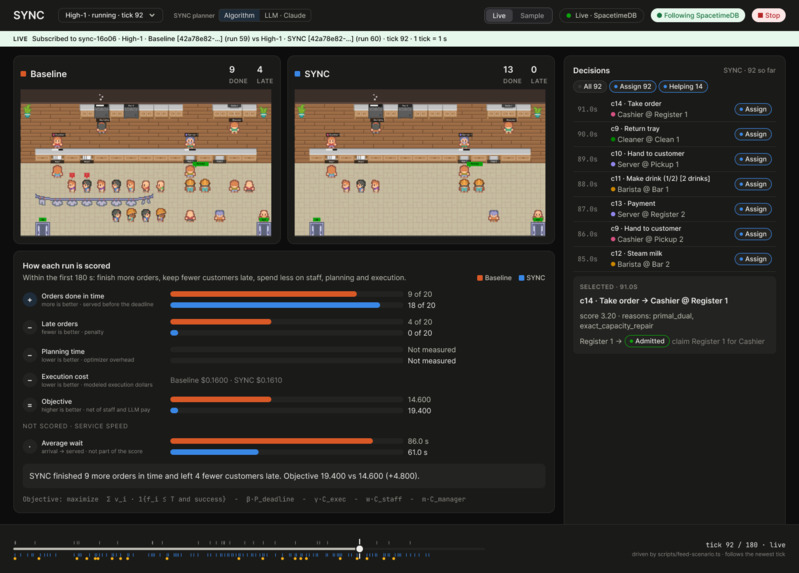
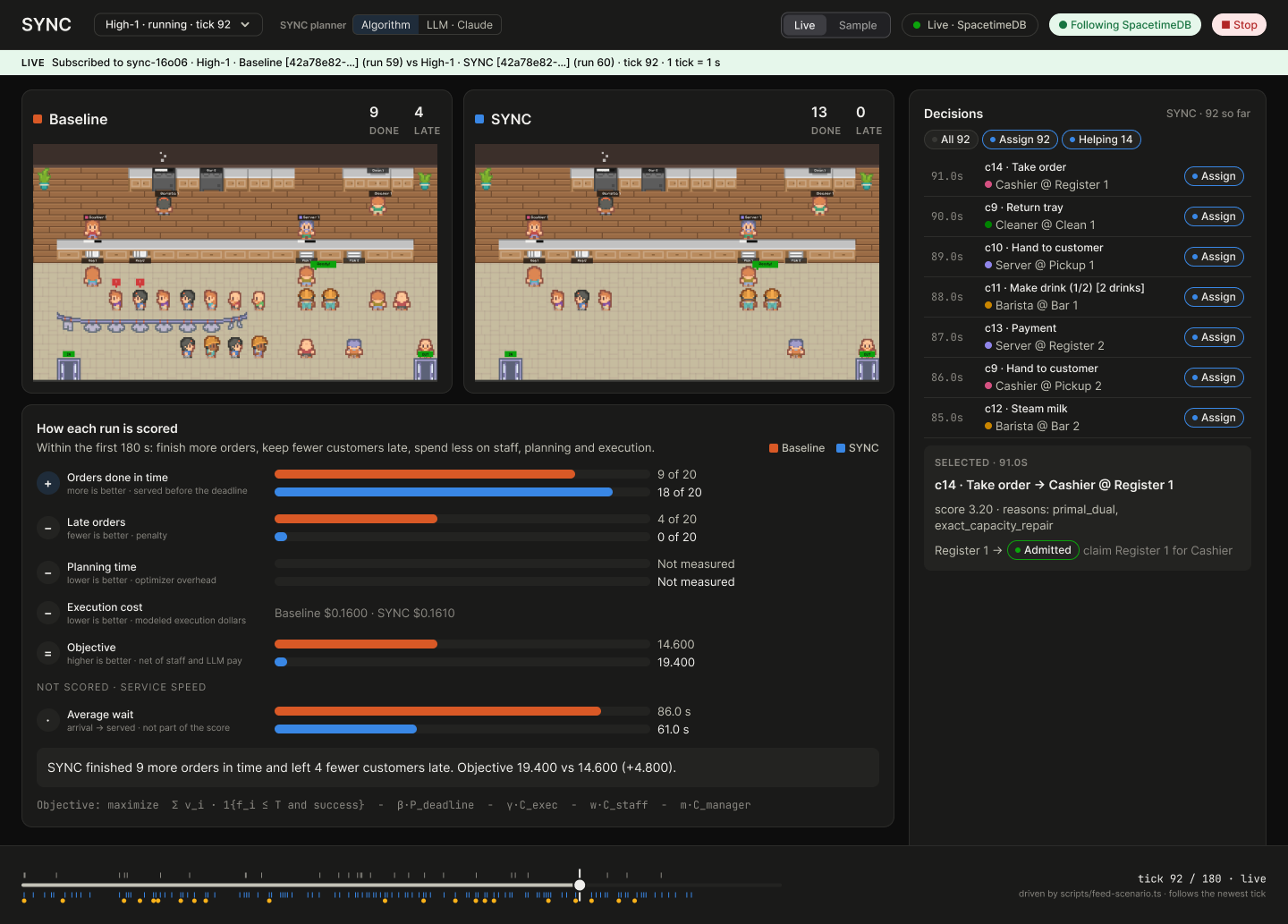
Dashboard-Live
-
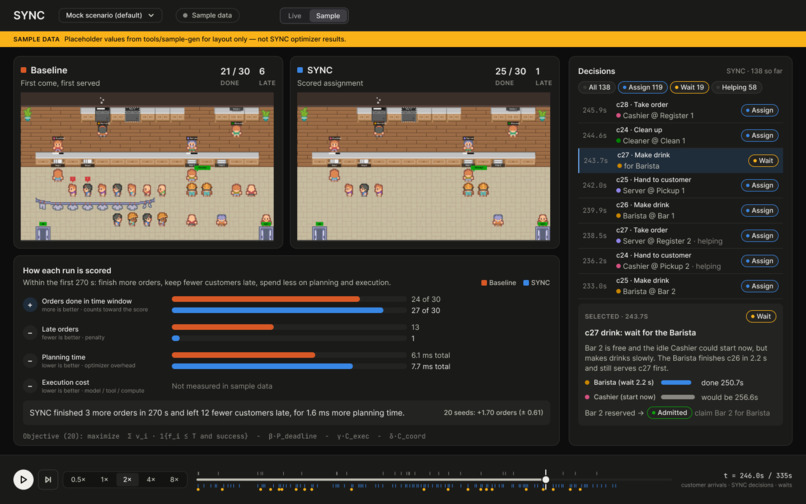
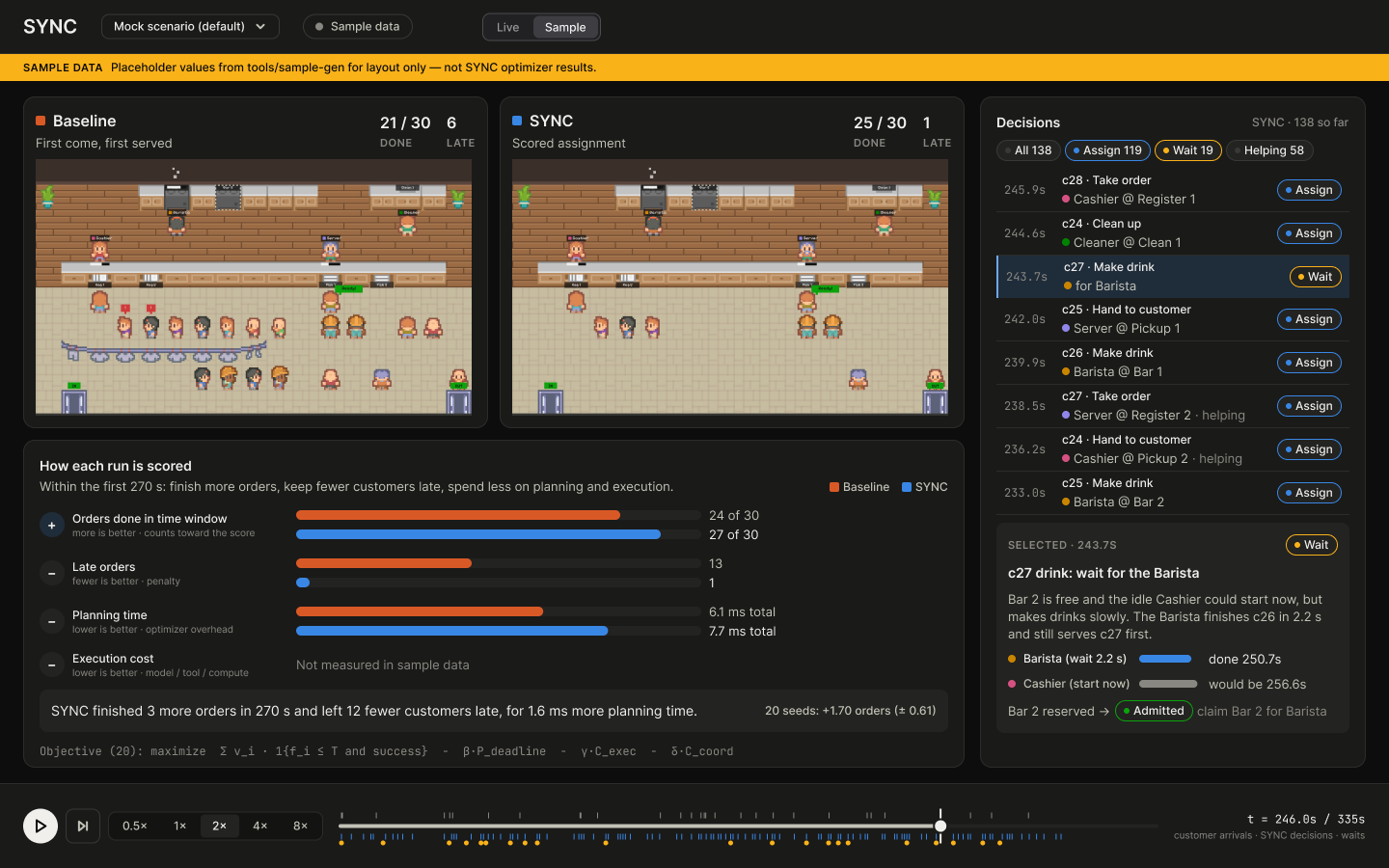
Dashboard-Sample
-
Components
-
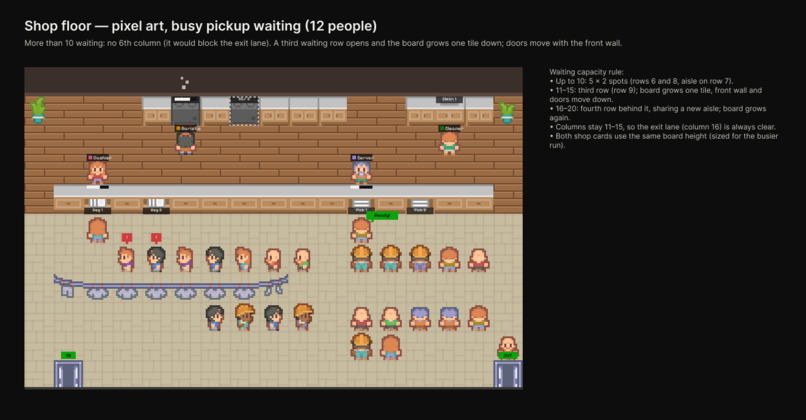
Pixel Floor Draft
-
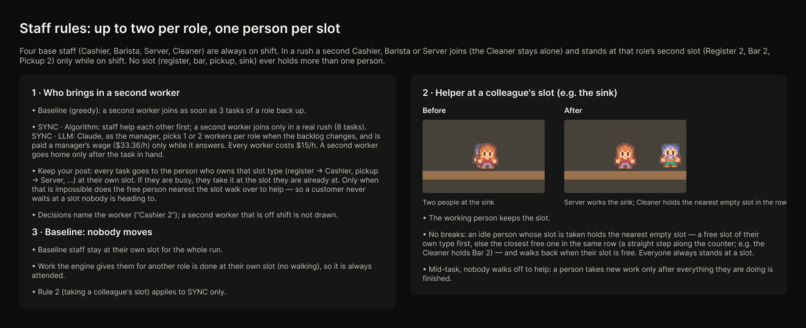
Staff Rules
-
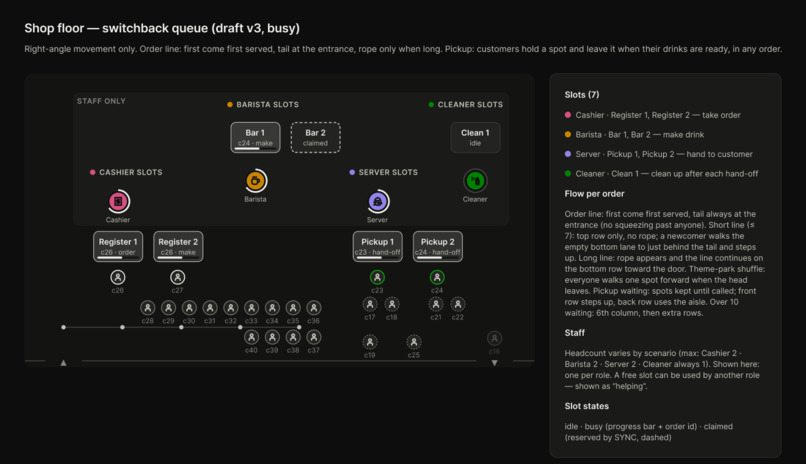
Customer Flow
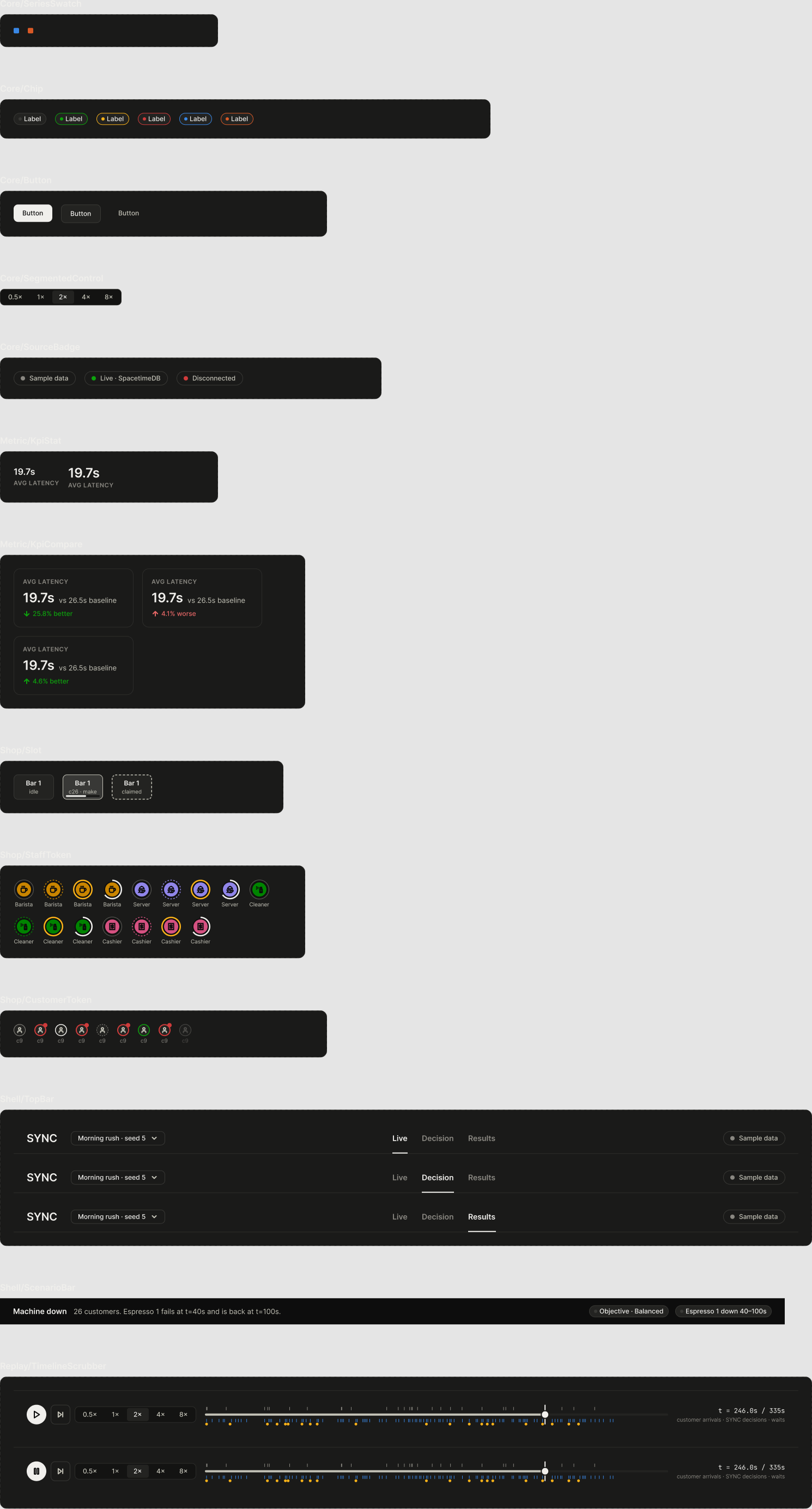
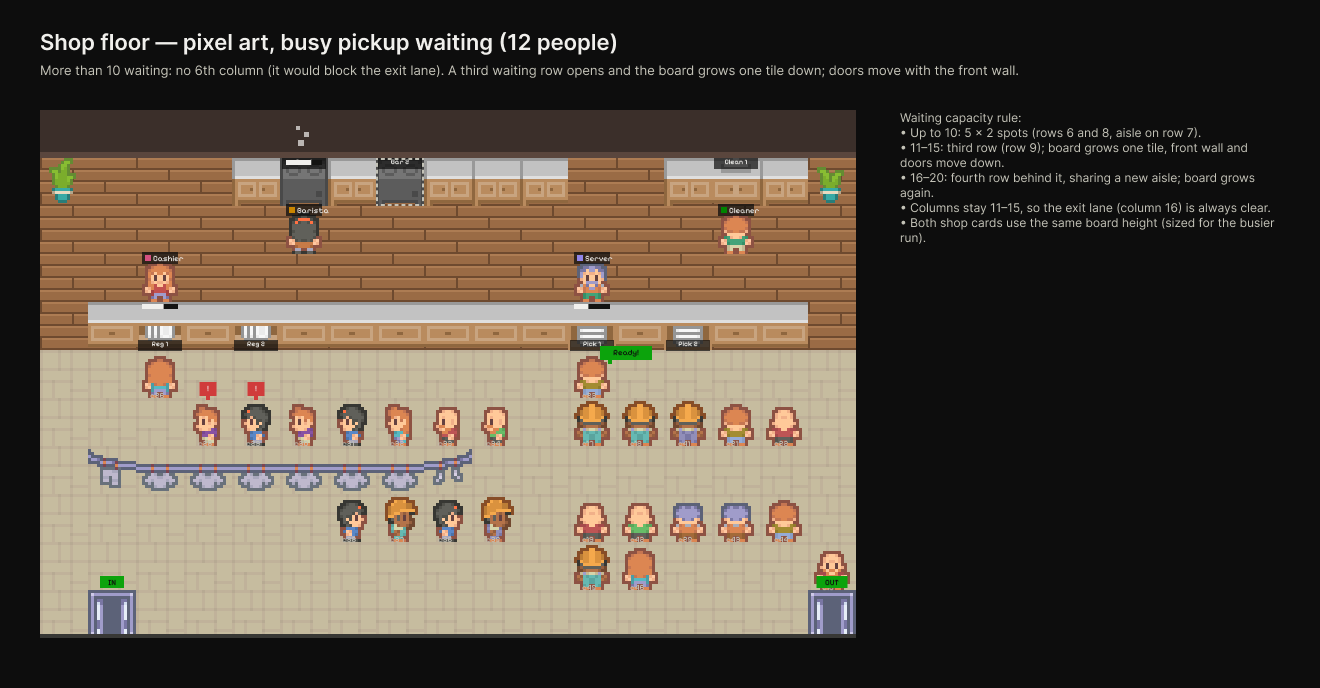
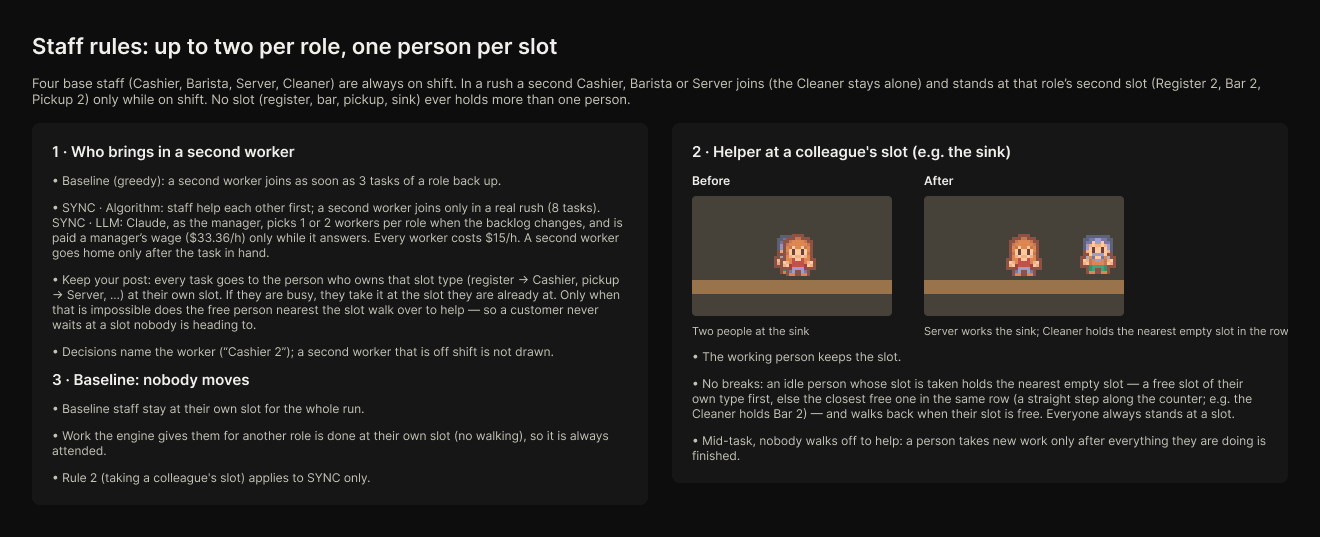
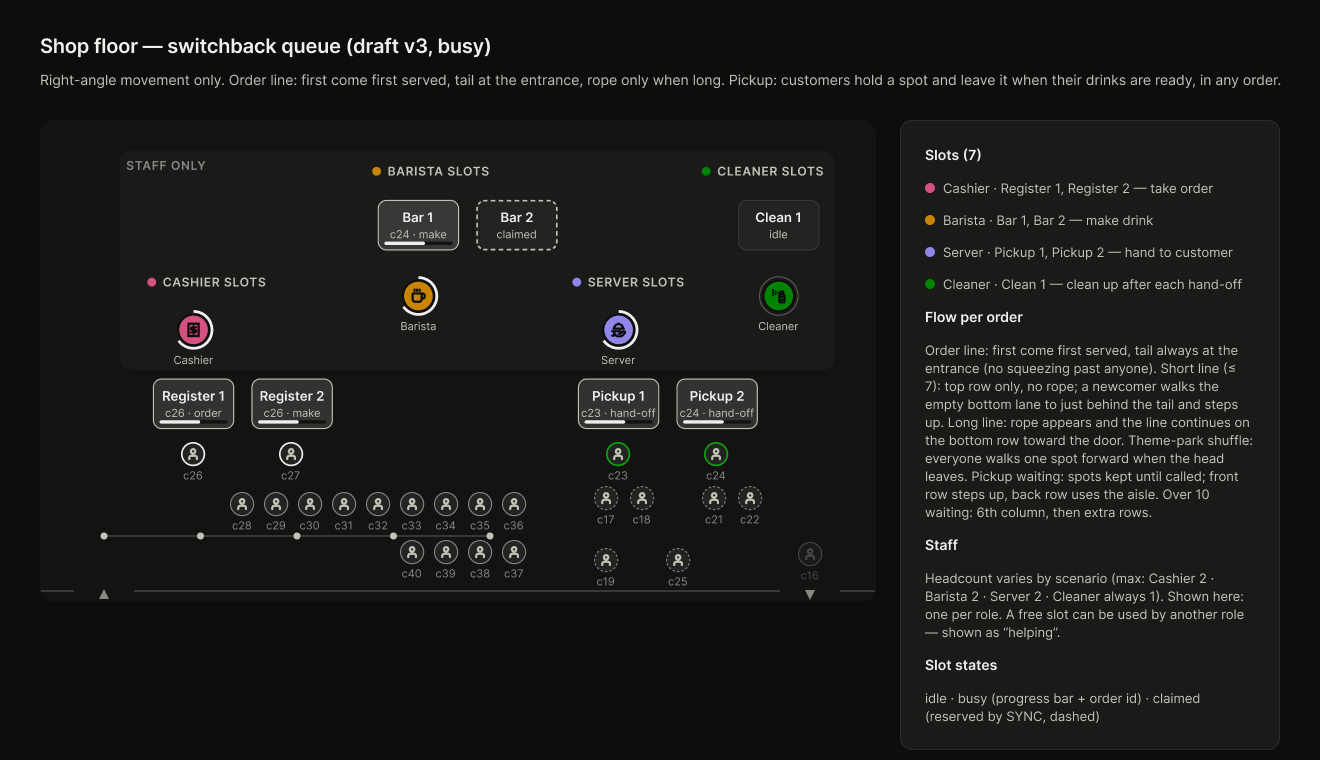
What it does ? SYNC is a framework-agnostic runtime optimizer that helps multiple AI agents work together more efficiently. It intelligently assigns tasks, manages shared resources, and schedules execution while respecting dependencies, agent capabilities, and operational constraints. Instead of making individual agents smarter, SYNC makes the entire team work smarter.
How we built it?
We built SYNC entirely in TypeScript, using SpacetimeDB for real-time state management and business logic. At its core, SYNC implements an Online Primal-Dual Framework with Dynamic Multi-Dimensional Knapsack Constraints to optimize task allocation and resource usage. To bring the idea to life, we built an interactive coffee-shop simulation using React and Phaser, where four agents collaborate to fulfill customer orders. We also integrated Anthropic's Claude API as the shop's manager: while our optimizer assigns every task, Claude decides when a role needs a second worker and when to send them home.
Challenges we ran into? Our biggest challenge was finding an efficient mathematical solution to a problem that constantly changes. We had to account for incoming tasks, agent permissions, task dependencies, limited resources, and a fixed rolling planning horizon all while making scheduling decisions in real time. Turning that complexity into a working, interactive prototype was easily our toughest challenge.
Accomplishments that we're proud of?
We're proud that we turned a complex optimization problem into a working system within a hackathon.
Even more exciting, SYNC outperformed a greedy first-come-first-served baseline in every tested scenario. Seeing our mathematical approach beat the "just add more staff" strategy was incredibly rewarding.
What we learned? We learned that the best solutions often begin with understanding the problem, not jumping straight into code. Once we formally modeled agent coordination as a mathematical optimization problem, the architecture and implementation became much clearer. We also realized how powerful a simple, interactive simulation can be in explaining complex engineering concepts.
What's next for SYNC?
We're planning to push SYNC beyond our coffee-shop simulation and test it against more complex, real-world agentic workflows. Our next steps include rigorous benchmarking against established scheduling algorithms and LLM-based approaches, improving adaptability, and integrating with existing agent frameworks. Ultimately, we want SYNC to become a reusable optimization layer that makes multi-agent systems faster, more efficient, and more resource-aware.
Built With
- anthropic-api
- css
- figma
- react
- react-phaser
- shell-script
- spacetimedb
- typescript


Log in or sign up for Devpost to join the conversation.