SynaptiQ: AI-Powered Adaptive Learning Management System
Inspiration
We were inspired by the fact that traditional learning platforms offer similar content to all students, despite differences in learning pace, understanding, and knowledge gaps. We wanted to build a system that adapts to each learner and makes education more personalized, engaging, and effective.
How We Built It
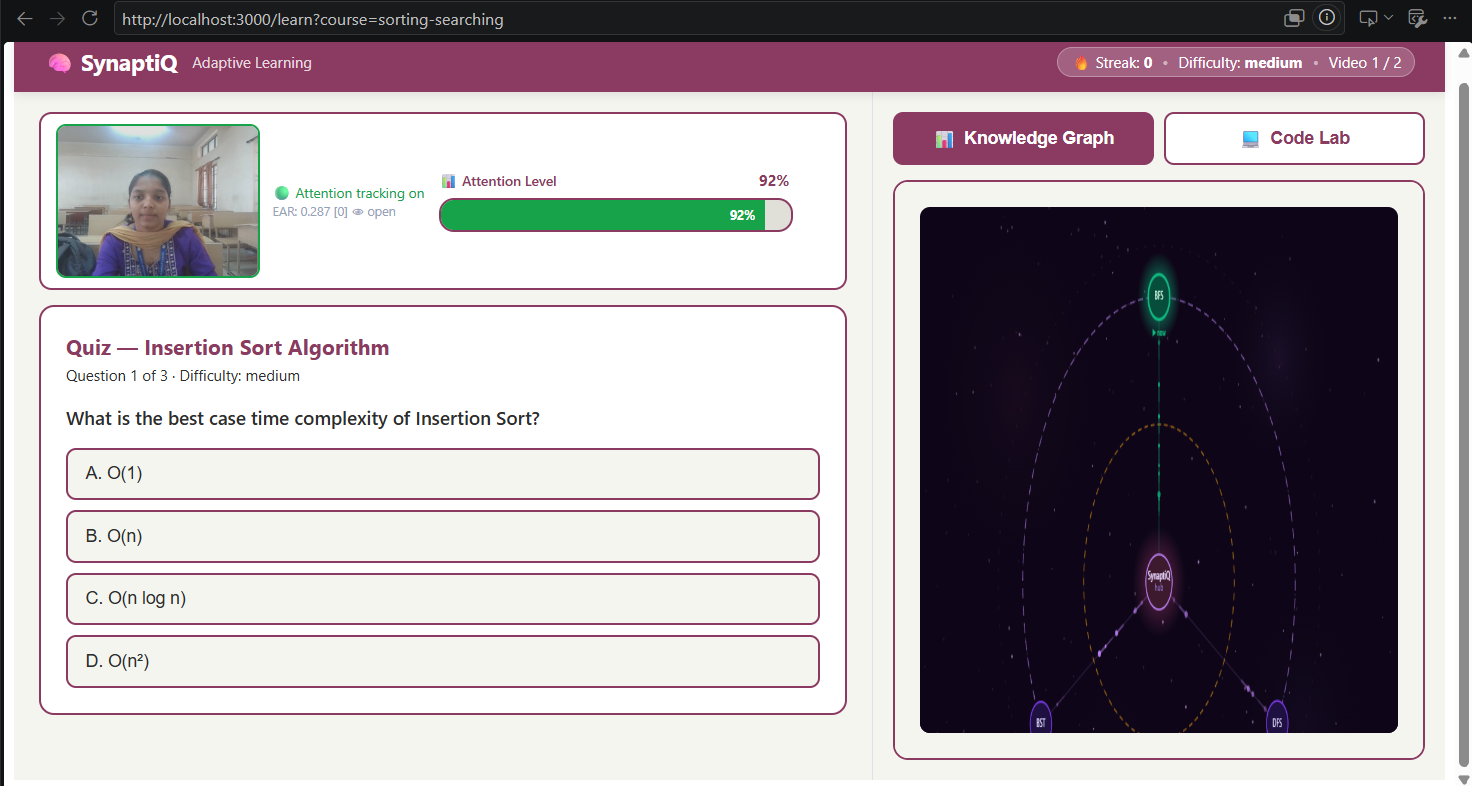
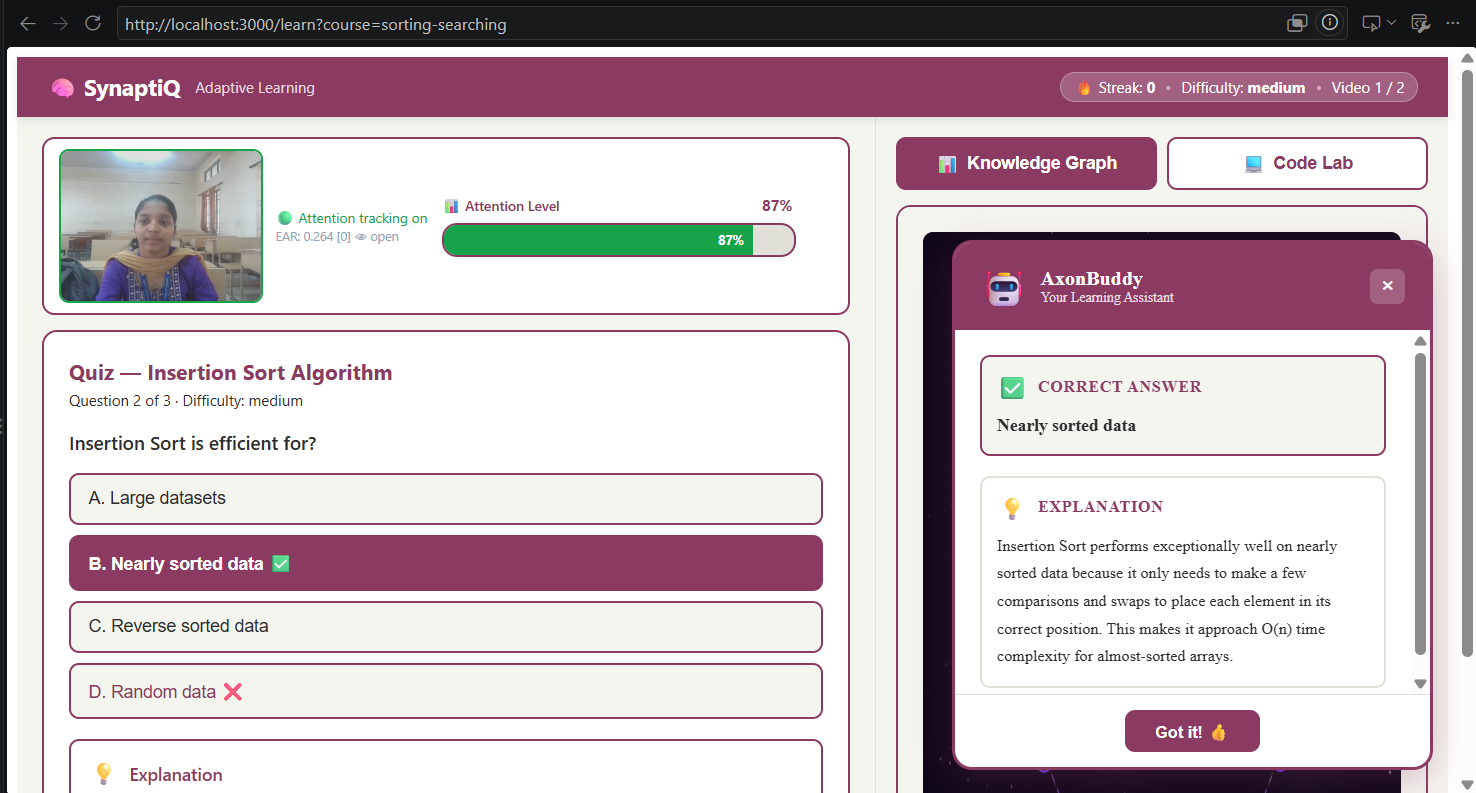
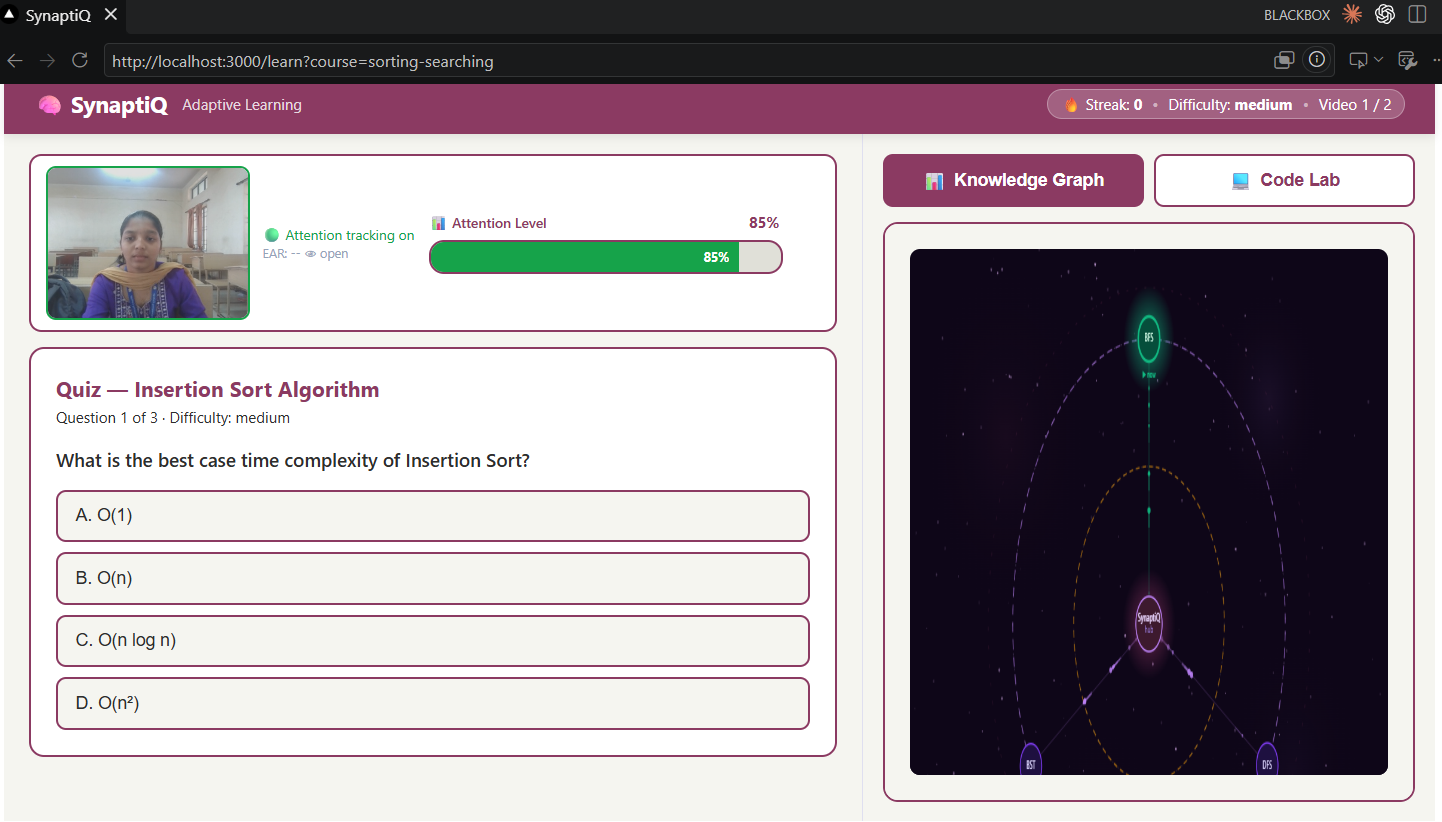
We developed SynaptiQ using Next.js, React, Tailwind CSS, Supabase, and OpenRouter LLMs. We integrated a Dynamic Probabilistic Knowledge Graph to track concept mastery, bite-sized video lessons for focused learning, AI-generated quizzes called Pulse Checks, and personalized explanations. We also explored webcam-based attention estimation using MediaPipe FaceMesh to make learning sessions more responsive.
Challenges We Faced
One of our biggest challenges was designing an adaptive learning flow that could identify knowledge gaps and recommend relevant content, including prerequisite topics. Integrating AI services, configuring Supabase, handling real-time learning data, and implementing webcam-based attention estimation also required careful debugging and experimentation.
What We Learned
Building SynaptiQ strengthened our understanding of AI integration, full-stack development, database management, knowledge representation, and adaptive learning systems. We learned that building an effective AI product requires more than adding intelligent features—it requires connecting them into a reliable, user-focused experience.
Impact and Future Vision
SynaptiQ aims to move beyond one-size-fits-all education by helping students learn at their own pace, identify weak concepts, and strengthen their understanding through personalized learning paths. Our vision is to make quality learning more accessible, interactive, and tailored to every learner.


Log in or sign up for Devpost to join the conversation.