-
-
-
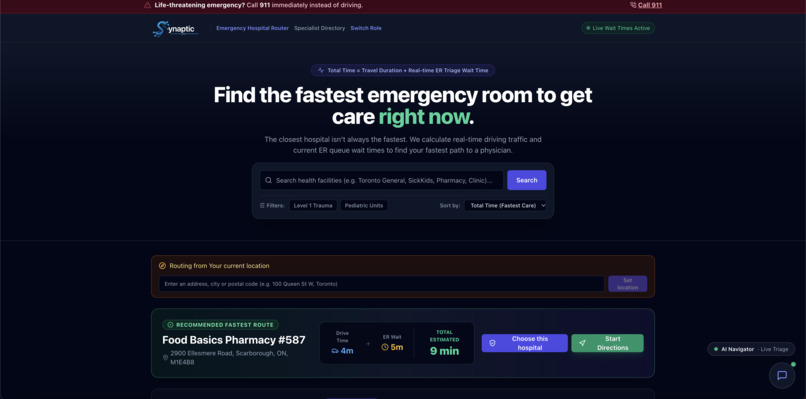
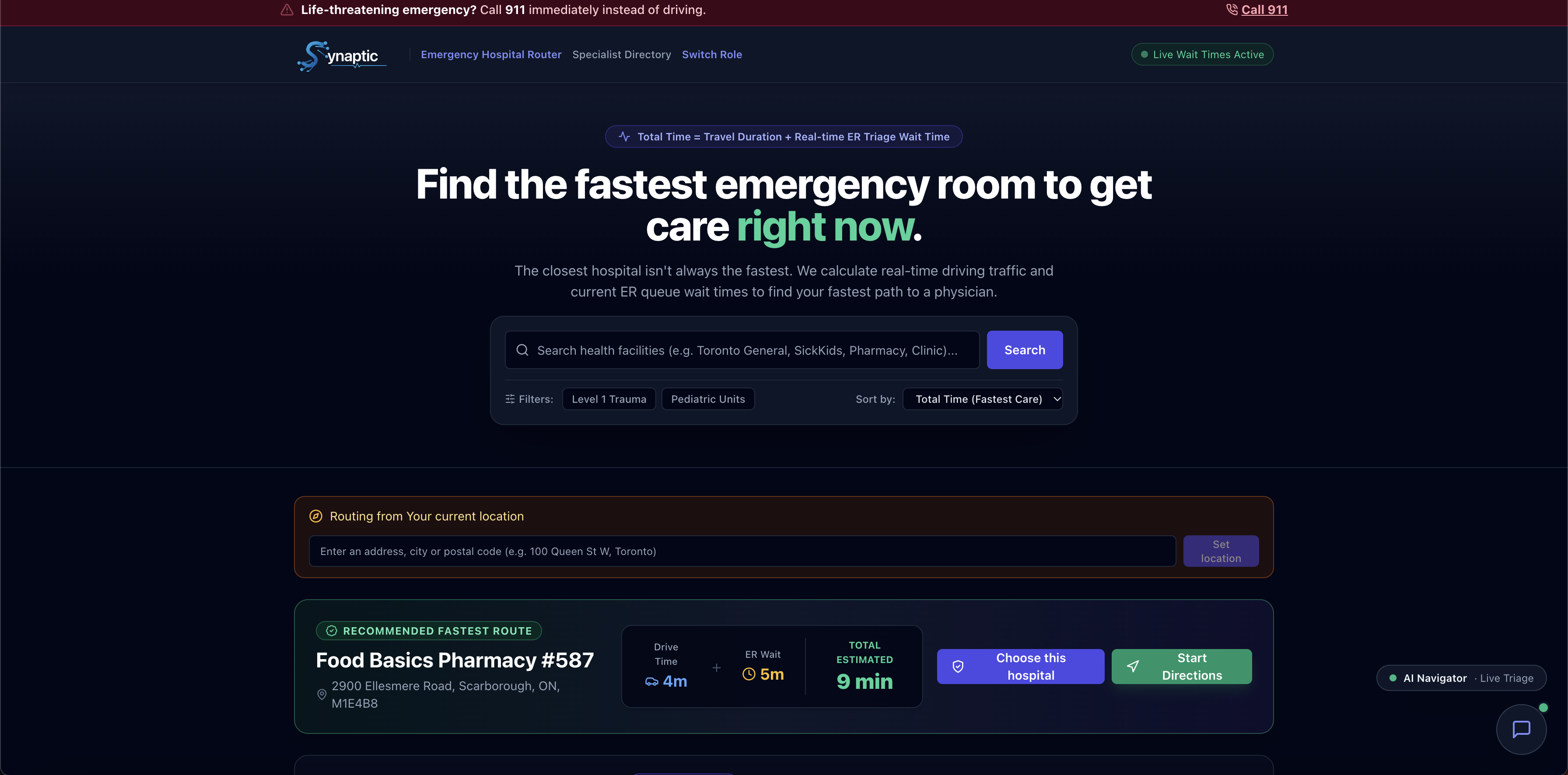
patient view - hospital search
-
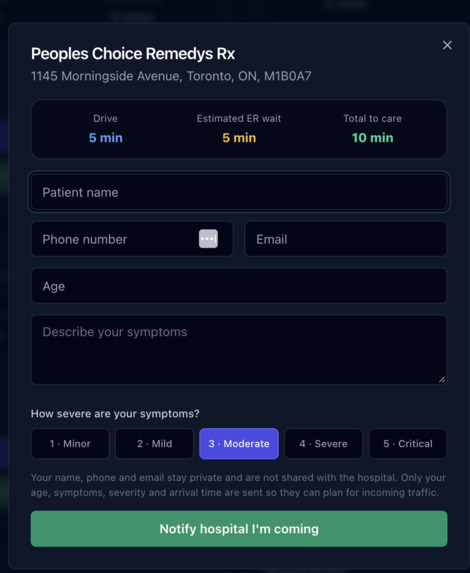
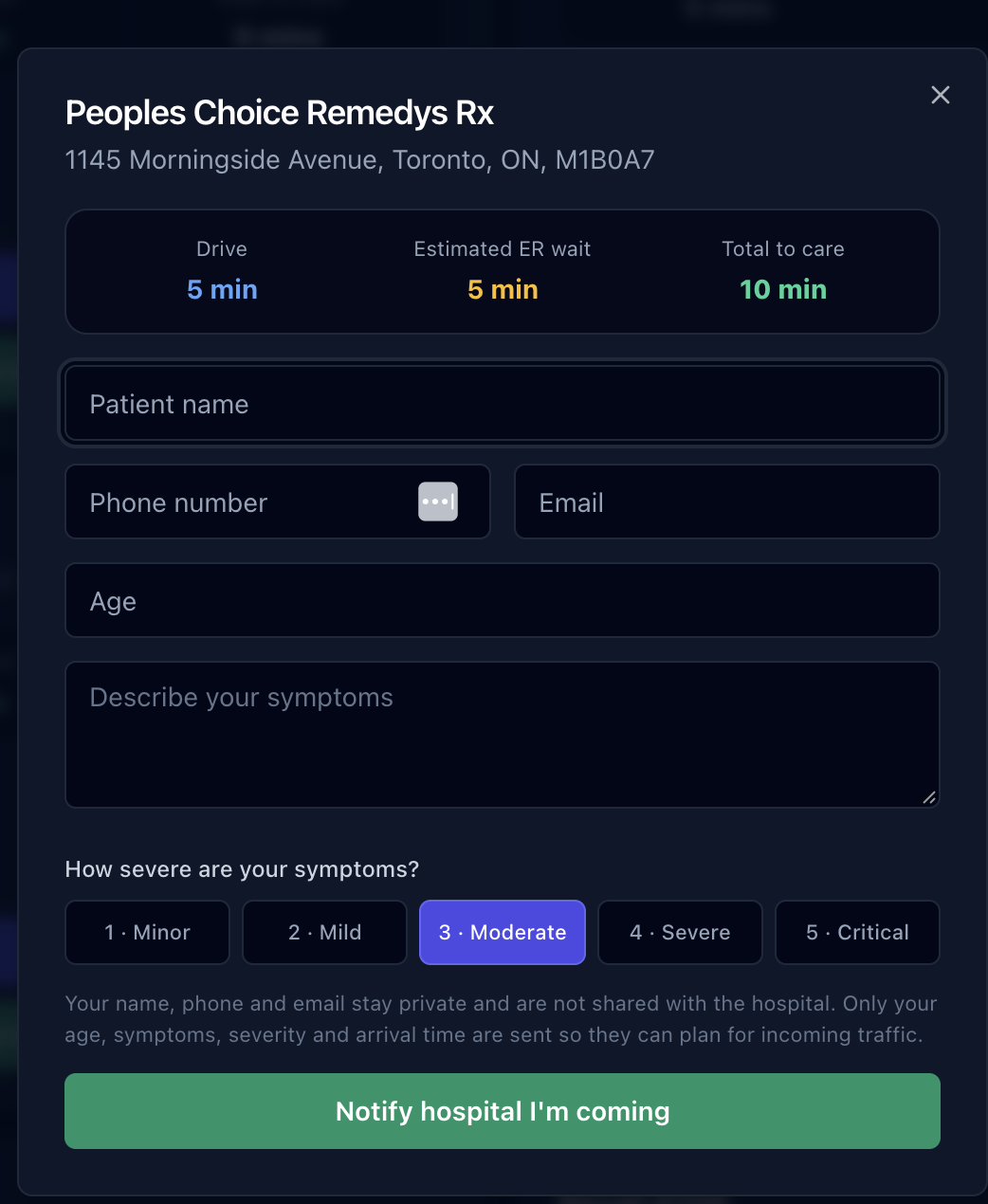
patient view - hospital notify
-
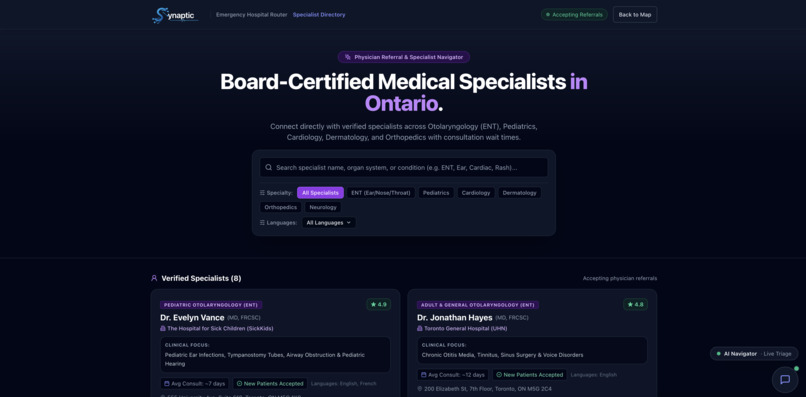
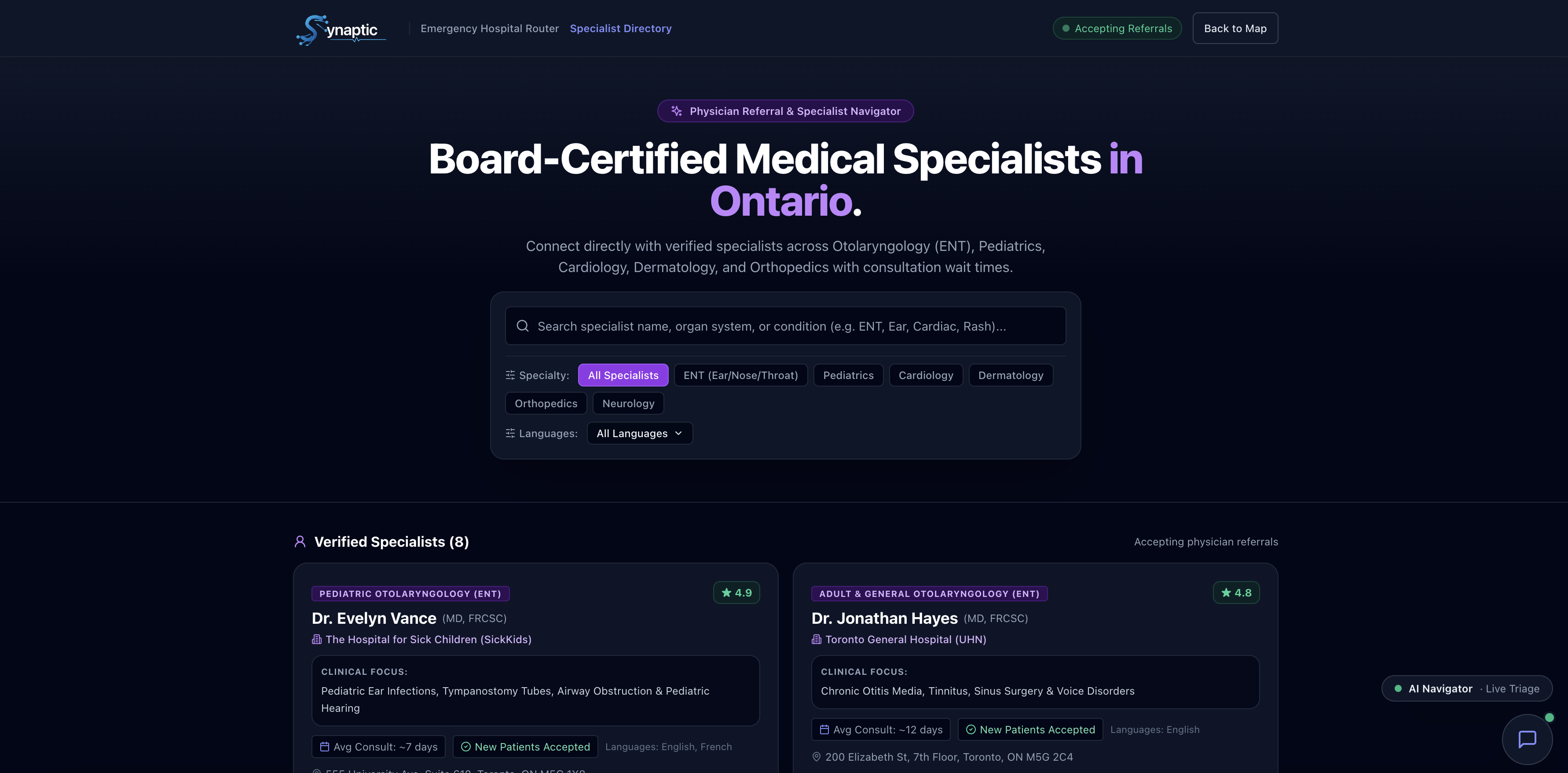
patient view - specialist search
-
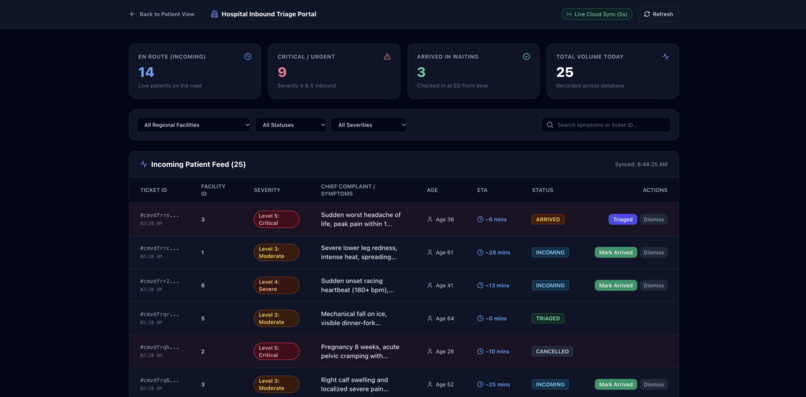
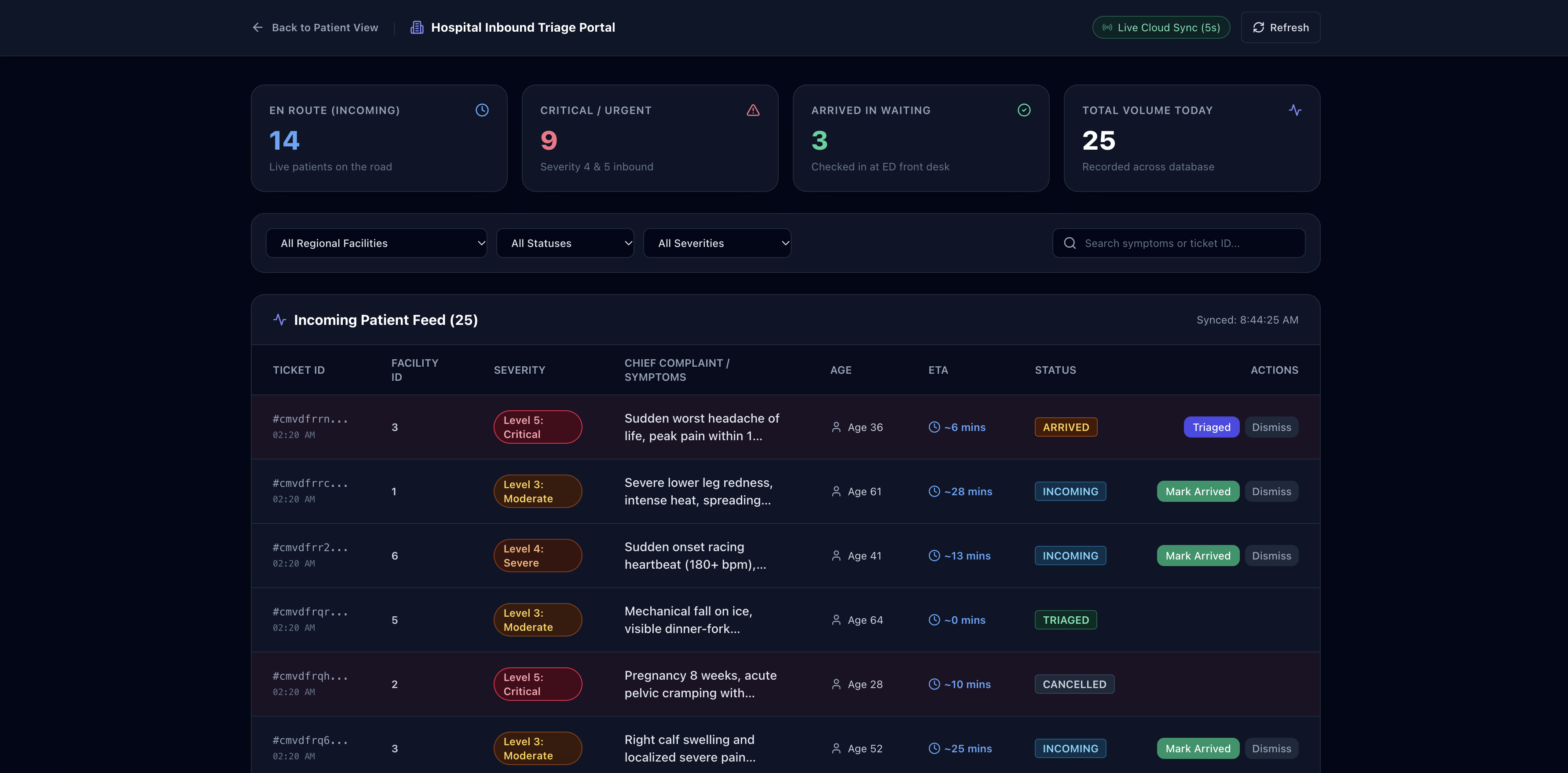
hospital view
Inspiration
- Every year, 23 thousand Canadians die from excessive hospital wait times. As such, Synaptic aims to solve this problem at its root: a lack of patient coordination. Our goal was not simply to create a project, but to make a contribution that can save lives and make a meaningful impact on our healthcare system.
What it does
-Synaptic is a patient triage and healthcare coordination website that aims to reduce wait times for patients. By being able to identify the correct places to receive the help they need, it results in efficient allocation of resources and reduces overcrowding. Additionally, our platform allows staff to be informed about inbound patients and their patient information to plan a response ahead of time.
How we built it
-Synaptic was built through the use of a myriad of different tools. Our team built Synaptic using Next.js for the front end, Shadcn and Tailwind CSS for UI elements, and a TimescaleDB for storing information. Additionally, Docker was used for containerization and local deployment of our platform. The process involved a lot of connecting the back-end and front-end implementations and frameworks, and close collaboration between team members to resolve roadblocks.
Challenges we ran into
-One challenge that we faced was getting the data and transforming it into an interface usable by patients and healthcare providers. There was a lot of data on locations of facilities and their fields, many of which would be hard for a user to look through by themselves. Additionally, when it came to advising patients, we were faced with a challenge: giving meaningful health advice while reducing misinformation. As such, our focus was mainly on allowing patients to select the fields relevant to themselves and leaving medical emergencies to professionals working as EMS.
Accomplishments that we're proud of
-We at Synaptic are proud that we were able to create a product that can have a real impact on as important a field as healthcare. Being able to transform data into a functional software platform in order to solve a problem affecting thousands of Canadians is something we are proud of.
What we learned
-Throughout the creation process of Synaptic, we learned to integrate many different tools to create a full-stack website. This was most of our team's first experience with tools such as TimebaseDB, allowing our team to learn how all of them connect together to create a larger platform.
What's next for Synaptic
-Our next steps are to connect with medical practitioners to create a specialist repository for users to search through and provide more accurate wait times. By including information that is up to date and detailed facility information, we hope to help users create better decisions when seeking medical care.
Built With
- docker
- geminiapi
- python
- shadcn
- tailwindcss
- timebasedb
- typescript
- vercel

Log in or sign up for Devpost to join the conversation.