-
-
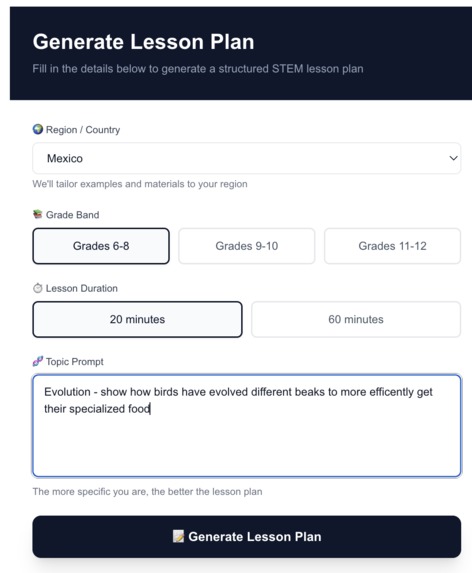
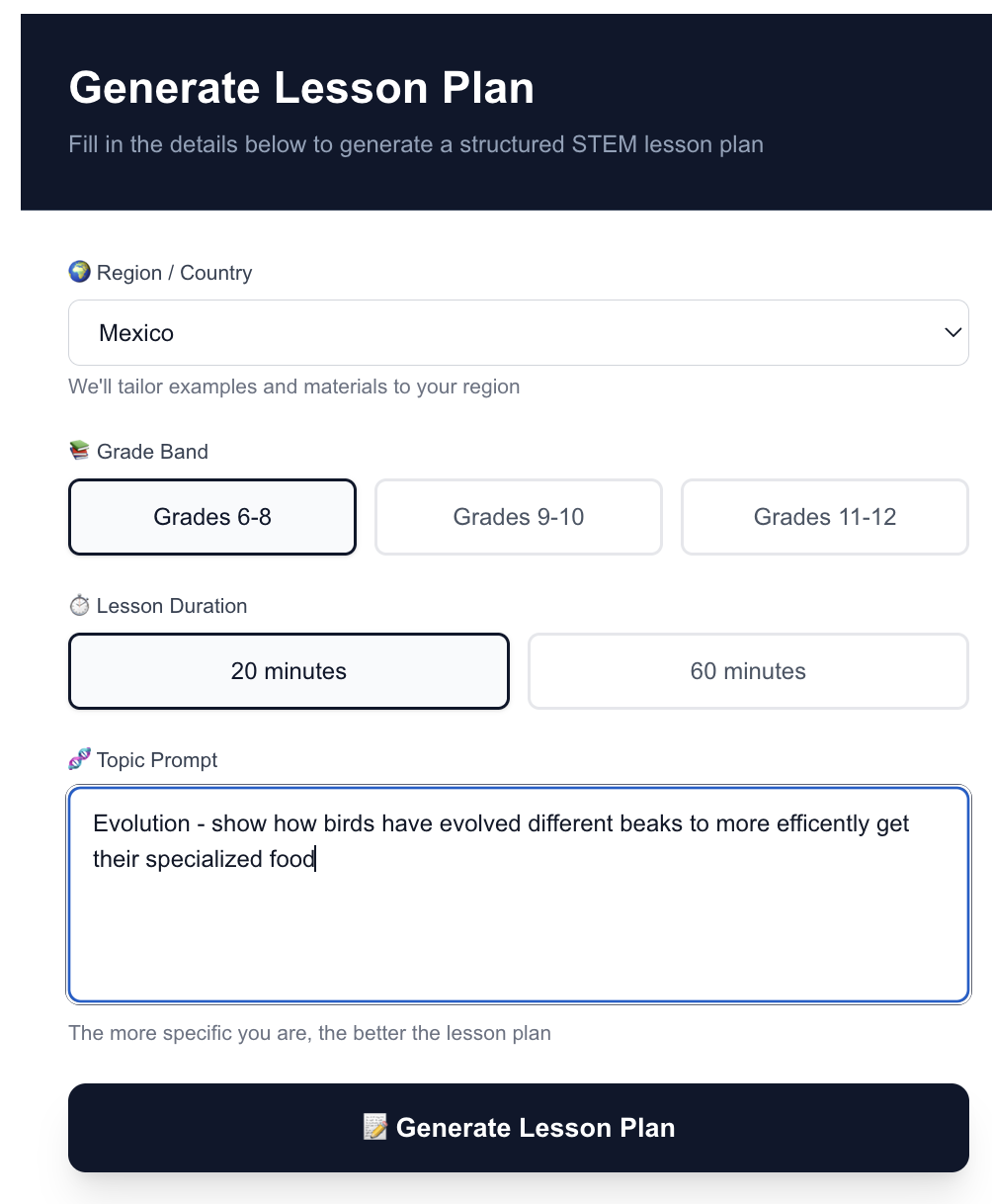
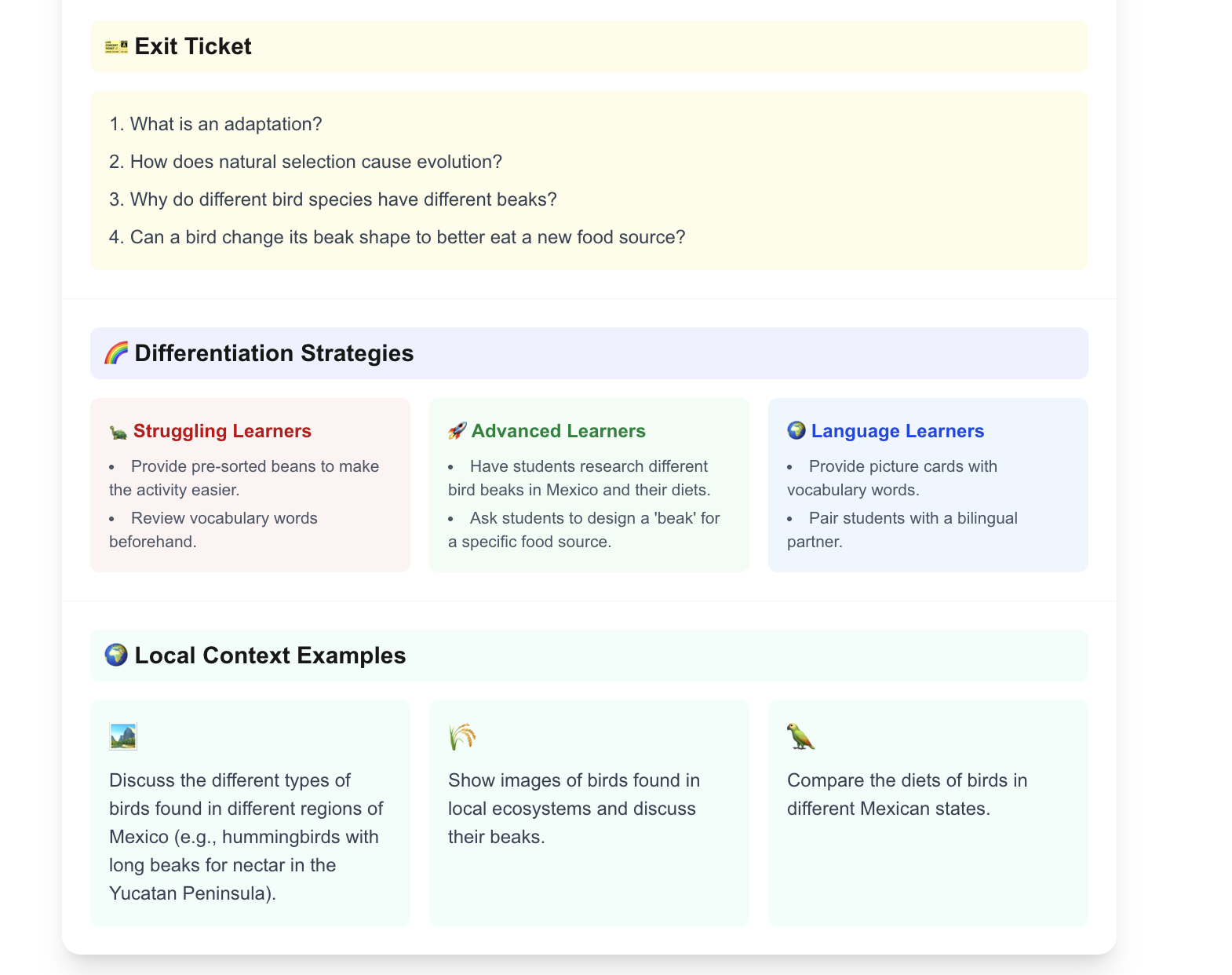
example prompt
-
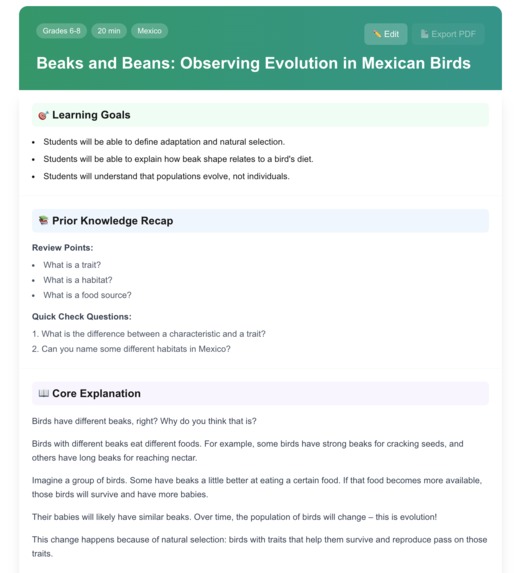
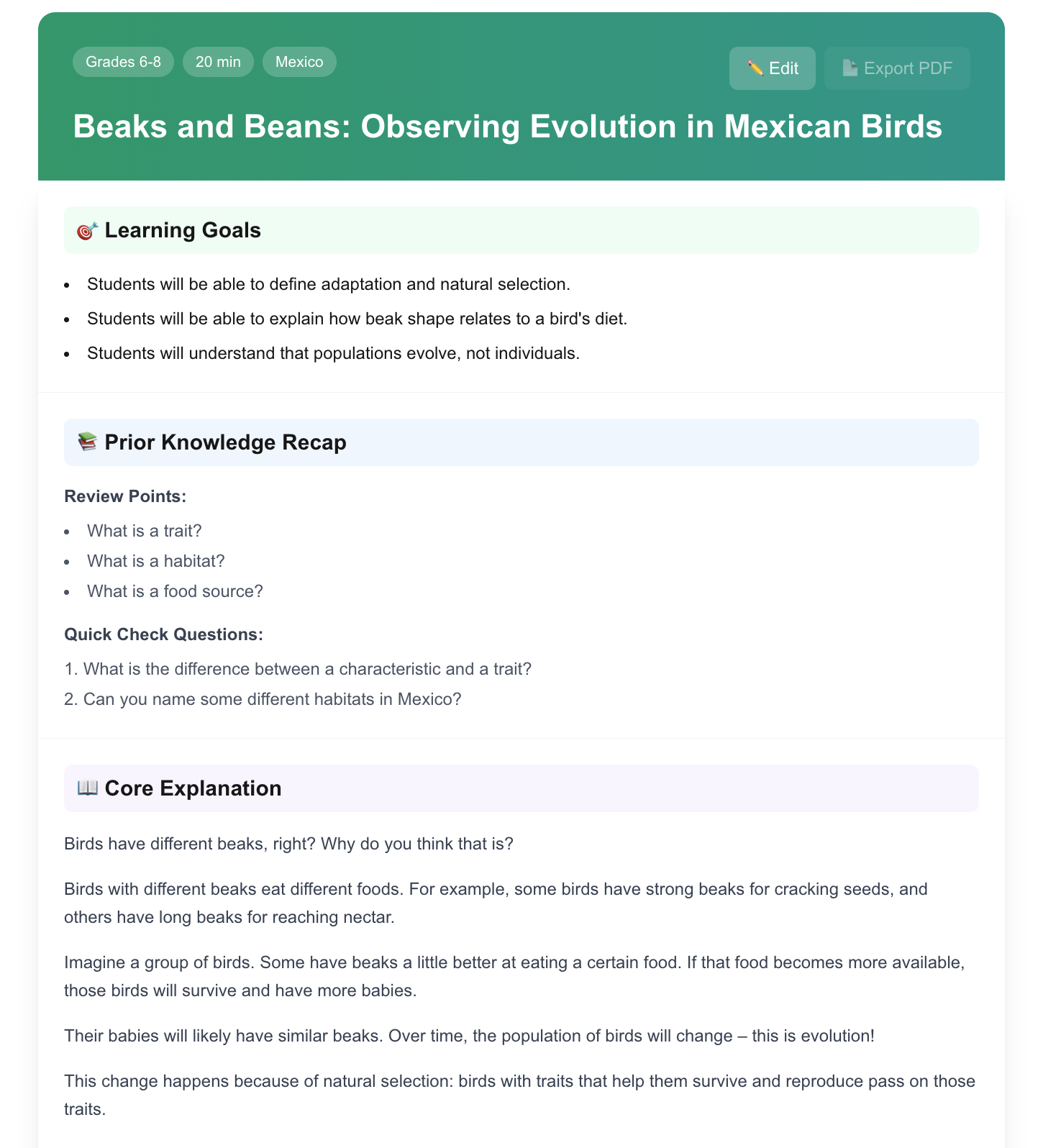
Lesson plan
-
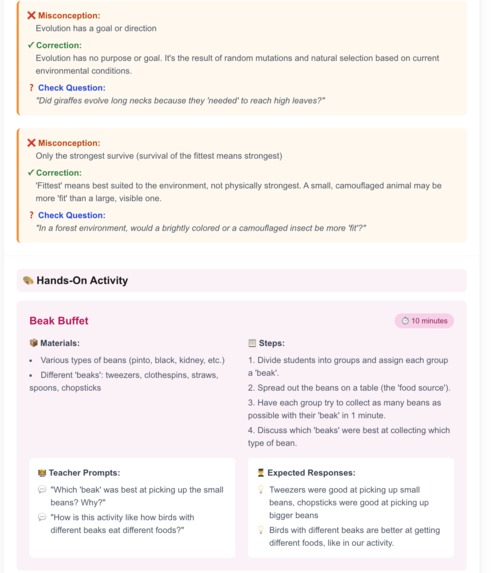
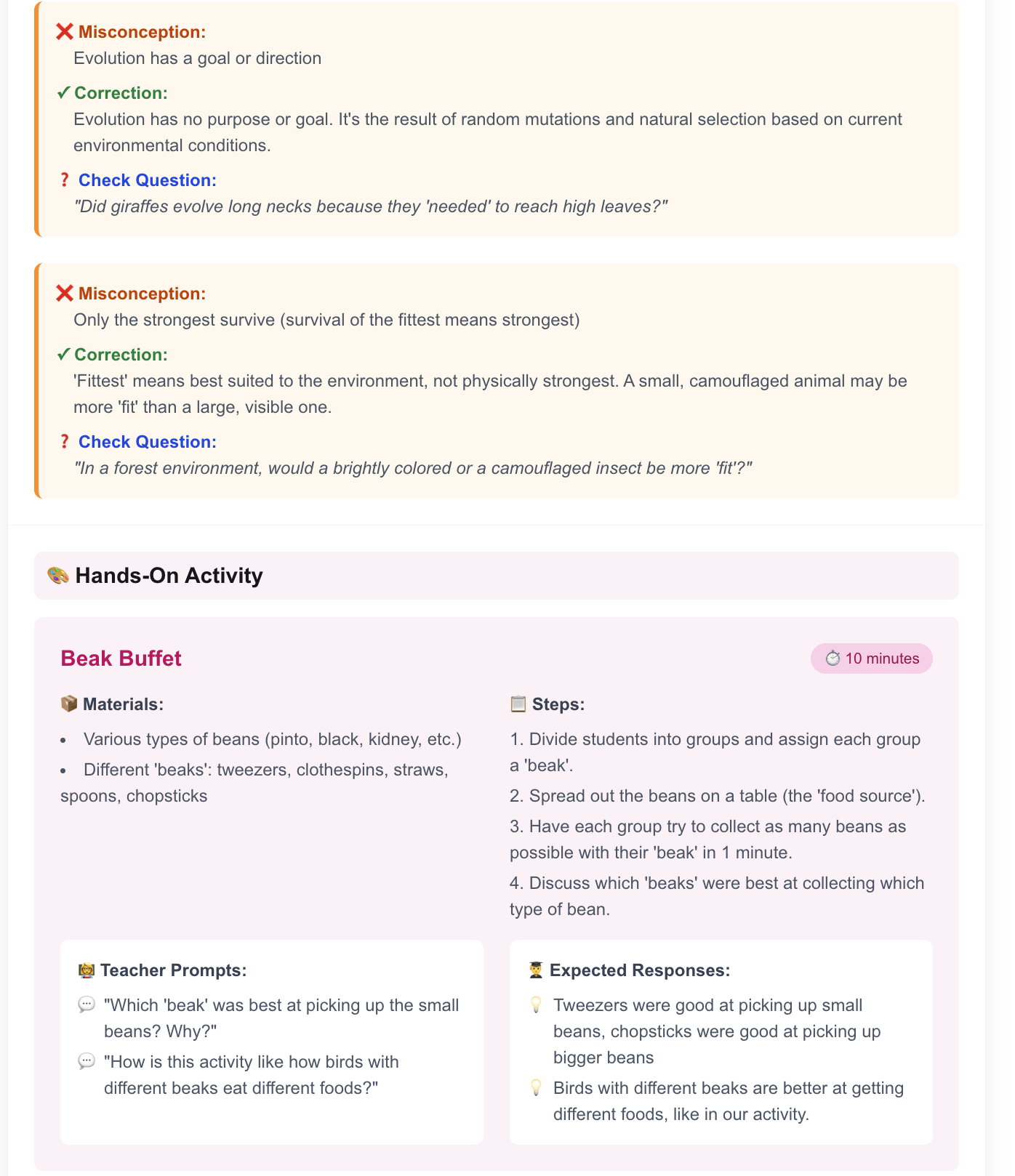
Misconceptions
-
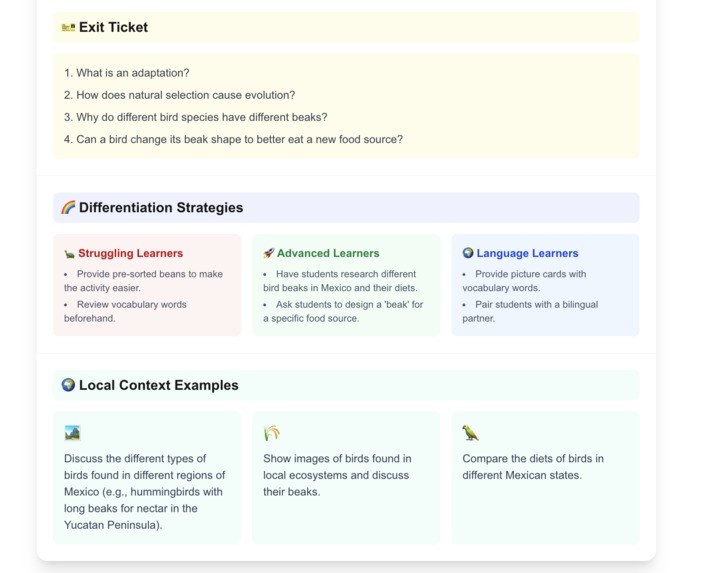
Region/local references
-
Inspiration
In many regions, particularly underdeveloped countries, there is a critical shortage of high quality, localized STEM curriculum materials. This leads to a scarcity in the access and scalability of existing educators, who get overburdened by the lack of time to compensate for their students. Moreover, it leads to a lack of information integrity, causing scientific misinformation and deeply ingrained misconceptions to arise against foundational STEM literacy. Current solutions are either too generic, too expensive, or too time consuming to prepare, failing to address the specific needs of diverse and resource constrained classrooms.
What it does
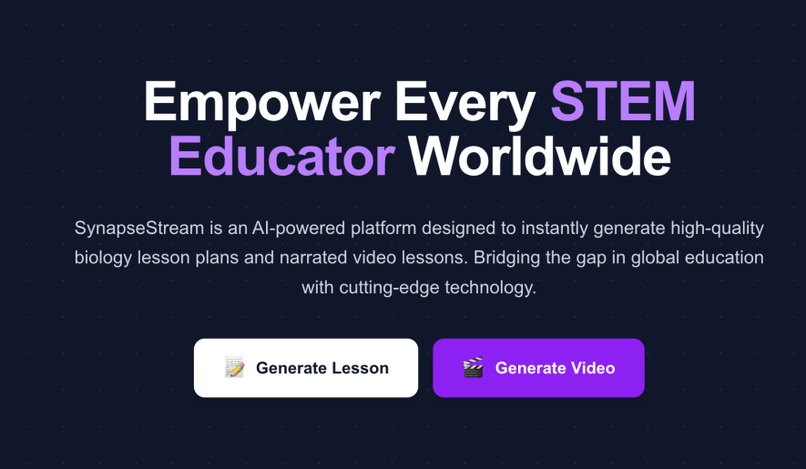
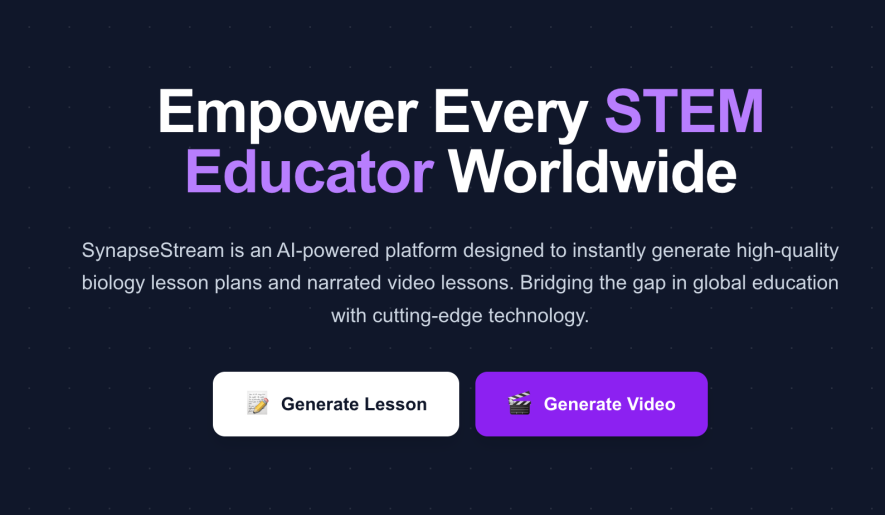
SynapseStream provides overworked teachers with the ability to create tailor-made lessons for their region and class, minimizing the course planning from its usual hours to seconds. By specifying their nation and grade level, a teacher from anywhere around the world can provide their students with high quality STEM education with no cost burden. Moreover, SynapseStream offers the option to pick either a 60 minute or 20 minute lesson. This enables the option to better teach small details that may have larger impact on the understanding of overall material. At 20 minutes, the teacher is provided with a more detailed and intricate explanation in case the teacher did not agree with the overall coverage of subtopic. As for the formatting of the lesson, SynapseStream grants educators the alternatives between word documents, presentations, voiceovers, or all of them combined. This allows for all teaching styles at all availabilities of technology. Students aren't expected to fit for a singular education curriculum, as SynapseStream is adaptive to both region-based structures and teaching methodologies.
How we built it
SynapseStream was engineered as a full stack, AI native application designed for scalability and reliability from the start. Our architecture cleanly separates core functions across specialized services. Our architecture cleanly separates core functions across specialized services.
At the heart of our platform is Gemini API, Google's own artificial intelligence service. It acts as our expert pedagogical model. Its role is to provide a a structured, multistep role. It is fed the curriculum parameters, the subject, as well as the structure that the users tailor to. Thanks to its robust architecture, Gemini fills in the role of both image and text generation. Moreover, it was structured such that it corrects misconceptions as a safeguard, not allowing the product to go against its own purpose.
ElevenLabs allowed for extra utility, converting lesson scripts into natural sounding audio narration. This is critical for accessibility and for regions where reading literacy may be a barrier. ElevenLabs TTS API allows teachers to preview lessons as if they were students, as well as providing the students with modality.
Managing the global educator accounts securely is non-negotiable. Auth0 handles the layer of security that deals with authentication, allowing educators to sign up and log in with ease using various methods. It provides us with enterprise grade security (such as access tokens), while giving users a simple, familiar login experience. Auth0 worked greatly to limit the time necessary to develop a token generating process, all while ensuring world class level integration.
As for the backbone of this project, Google's Firebase served as our unified backend. It stores all user profiles, generated lessons, and adaptation histories in fast and flexible queries. Its acts as the secure orchestrator. When a user requests a lesson, a Cloud Function is triggered. It calls the Gemini and ElevenLabs APIs, processes the data, and stores the final lesson kit in Firestore, all without exposing our API keys on the client. It is additionally tailored to not track the private information of users so as to not cause security issues on the client side. Client side information is limited to what they insert outside of the prompt, that being grade level and country of residence.
Challenges we ran into
A key ambition of SynapseStream was to automatically generate accurate, culturally relevant, and educationally sound diagrams and illustrations for our lesson slides. However, integrating image generation proved to be one our most significant technical and pedagogical hurdles. The core problem we faced were the scientifically dubious images and AI hallucinations. General purpose image models generated visually compelling image models that could easily mislead those with no prior information in the field, especially the students it was tailored for. A bird would be linked to a mammoth in one diagram, leading kids to believe that birds are direct descendants of mammoths. For a platform combating misinformation, this was unacceptable. While the idea was there, it was a method of providing something that was dubious at best.
Other issues were raised from cultural and contextual irrelevance. When generating scenes to illustrate concepts (e.g., "give an example of an animal that evolved from another animal"), models defaulted to animals that had no relation to its specific region. In the example given, this could lead kids to wonder on the wrong topic, such as what species of animal is the thing presented to them. For a tool designed for global use, especially underdeveloped regions, this created a disconnect and failed to provide relatable visuals examples for students.
The most jarring issue were the images efficiency. The generated images often had a cluttered or stylistically inconsistent structure, distracting from the core lesson rather than enhancing it. They lacked the clarity to have both text explanation while also sharing images to create a diagram with an example and a frame of reference. This could lead to future problems in regards to teachers needing to understand what they were provided over what they are teaching.
How we solved it
After extensive testing, we made a strategic decision for or MVP: limit the amount of countries to Grades 7-12 and a select number of countries. This focus allowed us to assume a higher baseline of student literacy and conceptual readiness. It made designing lessons with more sophisticated text, nuanced explanations, and complex diagrams from the start. Content was now tailored to national curricula at a level where standardization is highest and STEM misconceptions are most consequential for future academic paths.
Accomplishments that we're proud of
We are proud of what SynapseStream represents. It a meaningful step toward efficient, scalable, and equitable education. Our core achievement is building a system that helps educators bypass resource barriers. We create a pathway to understanding STEM like never before. Moreover, we preemptively correct misconceptions in our lessons, actively building a more scientifically literate world.
This structure helps the world become a more efficient place. We've turned weeks of curriculum planning into a task that can be done in minutes. By dramatically reducing the time and expertise required to prepare high qualilty STEM lessons, we are making the global education ecosystem more efficient. This allows educators to focus on what truly matters: teaching, mentoring, and connecting with their students.
On a technical level, we are proud to have built a platform that operates as the intersection of AI, education, and the whole world. Creating a system that an reliably generate hundreds of unique, curriculum-based lesson kits for different countries and grade levels. It is a significant engineering accomplishment, especially under the time constraints. It proves thoughtful technology can be harnessed to address systemic challenges at scale.
What we learned
Our journey through SynapseStream provided a profound insight into the urgent challenges facing global education. The most significant learning was understanding the true extent of educators' burdens. Through research and early pilot feedback, we saw that teachers in underdeveloped regions are not just on materials, they are largely overwhelmed by administrative tasks, large class sizes, and the immense pressure to be curriculum developers on top of instructors.
This insight was validated by our limits. To ensure accurate, deep lessons, we had to make a strategic choice to focus on grades 7-12. Attempting to tailor content for younger students presented fundamentally different challenges. The expectation for visual images were now much more strict, as you cannot fathom what they are thinking at any given moment. Their social understanding is not as developed as ours, and teachers are the ones who would take the fall back if misconceptions were to be cause by our product. We learned that the best path to providing can often by limiting it to a specific need but at a really great implementation.
What's next for SynapseStream
Our roadmap is guided by a single vision: creating a truly universal educational platform. In the immediate future, we hope to deepen and broaden our scope of reach. We wish to expand our library to include a richer suite of materials, allowing for interpretational materials like the arts to be handled well. Additional updates are more geared for grade levels, allowing the younger grade levels we ignored to also be taught well by our services. Lastly will be going truly global, making sure all nations on the planet are well provided and more efficient.
Built With
- eleventlabs
- fastapi
- firebase
- gemini
- github
- javascript
- nanobanana
- next.js
- node.js
- python
- typescript

Log in or sign up for Devpost to join the conversation.