-
-
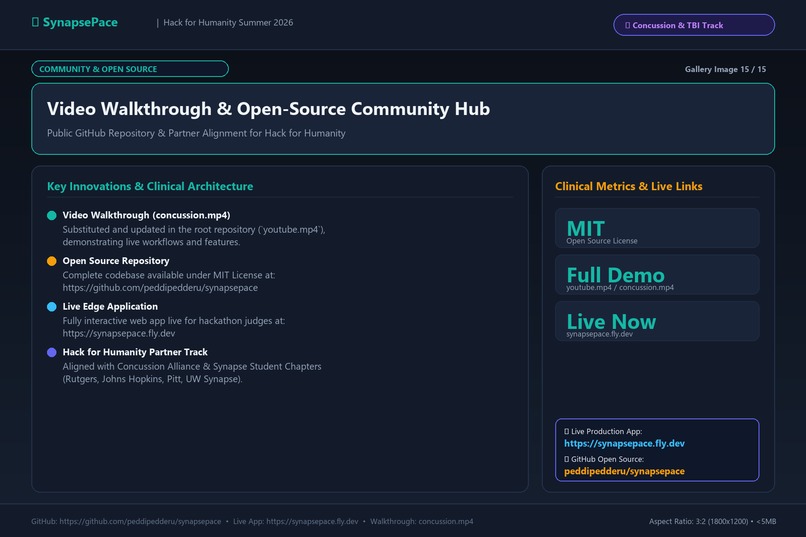
01_synapsepace_hero_overview.png
-
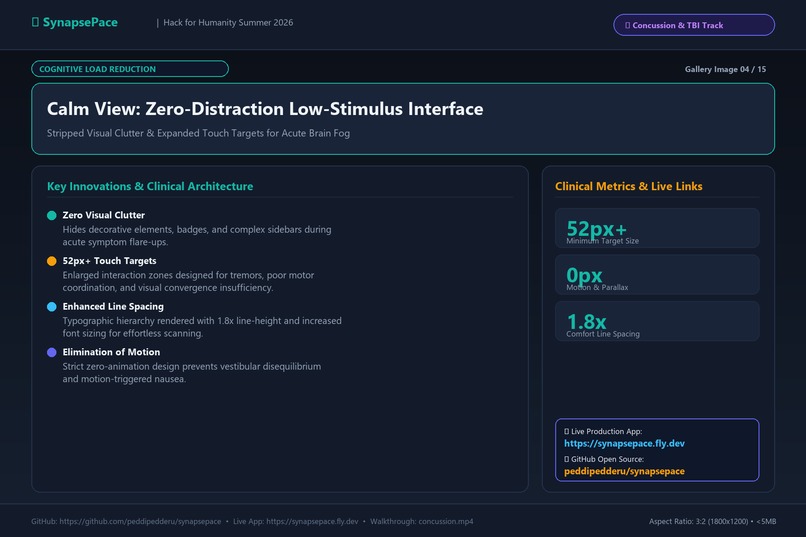
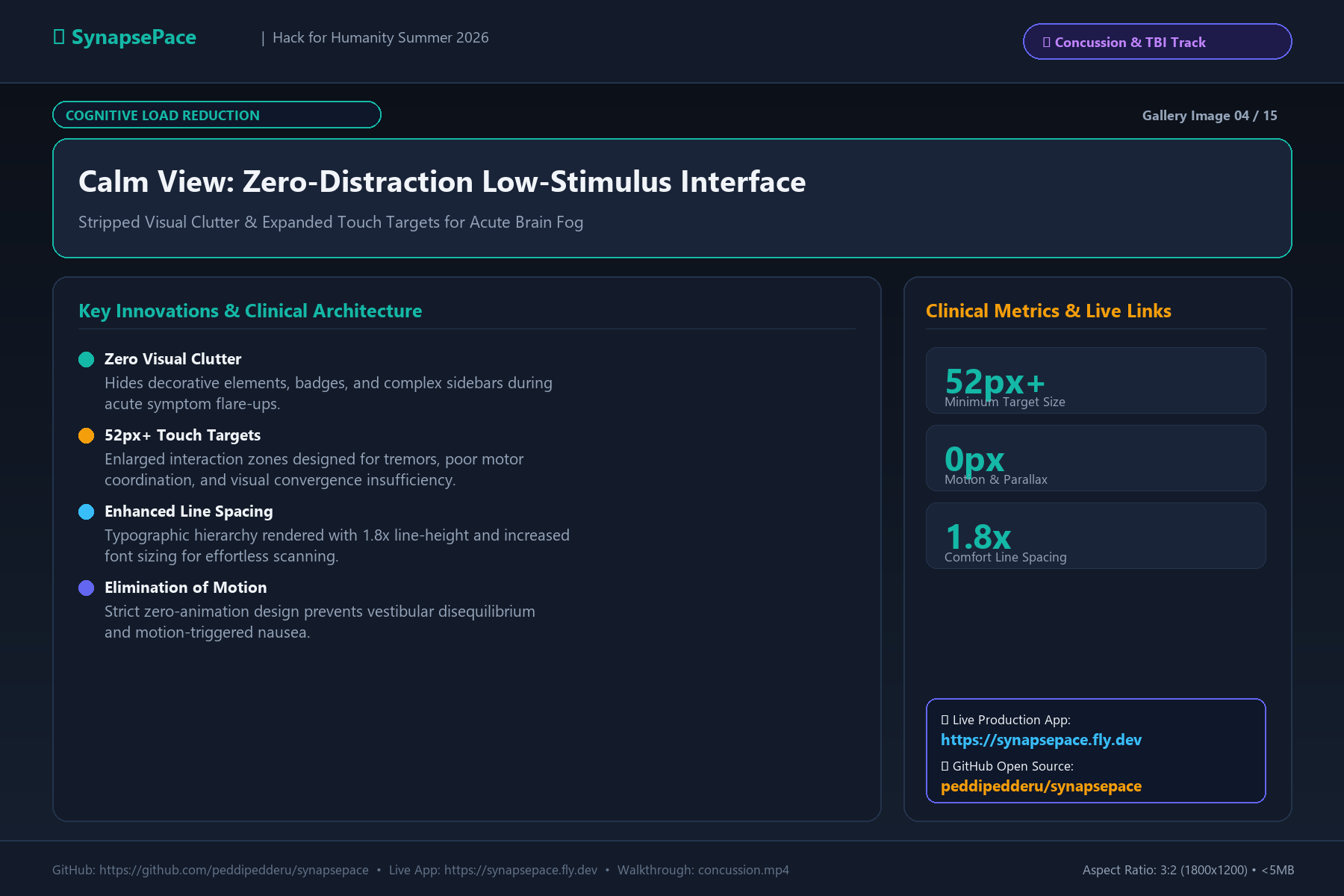
04_calm_view_minimal_load.png
-
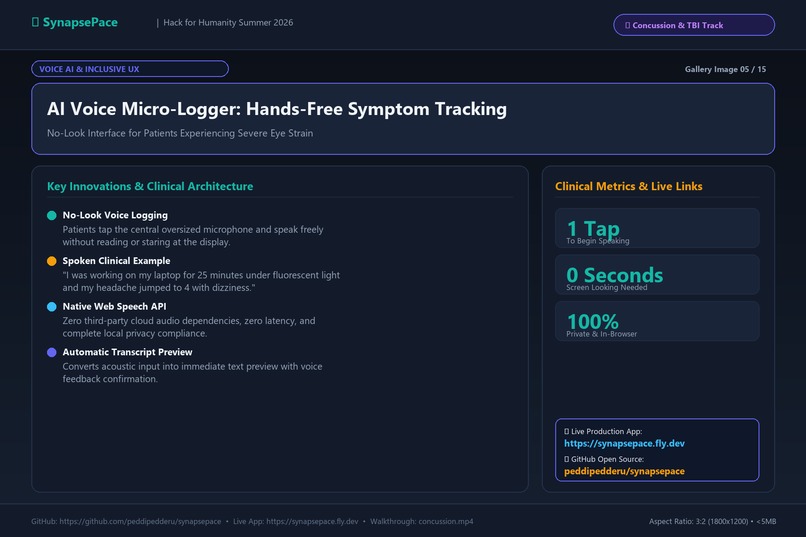
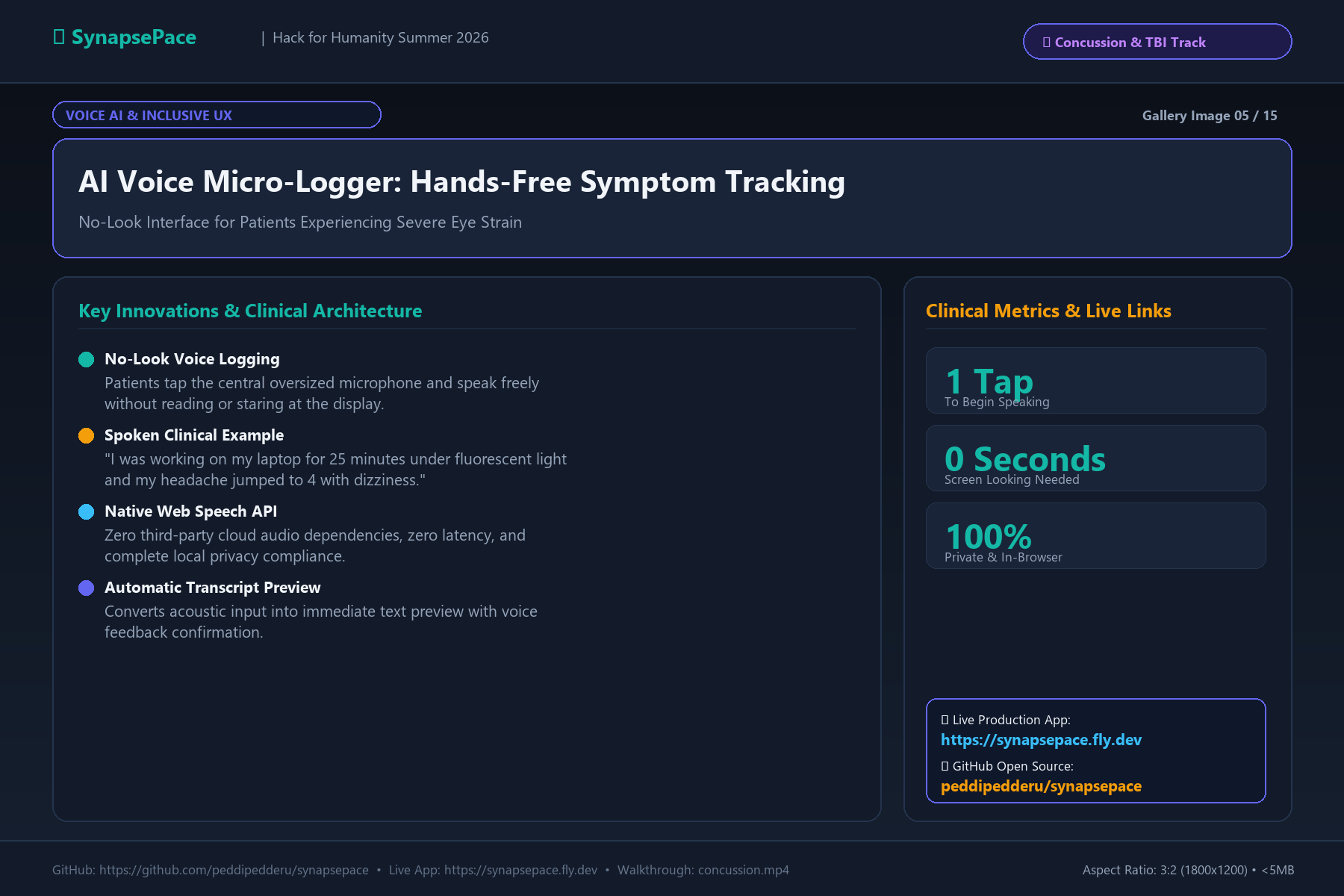
05_ai_voice_micrologger_scat6.png
-
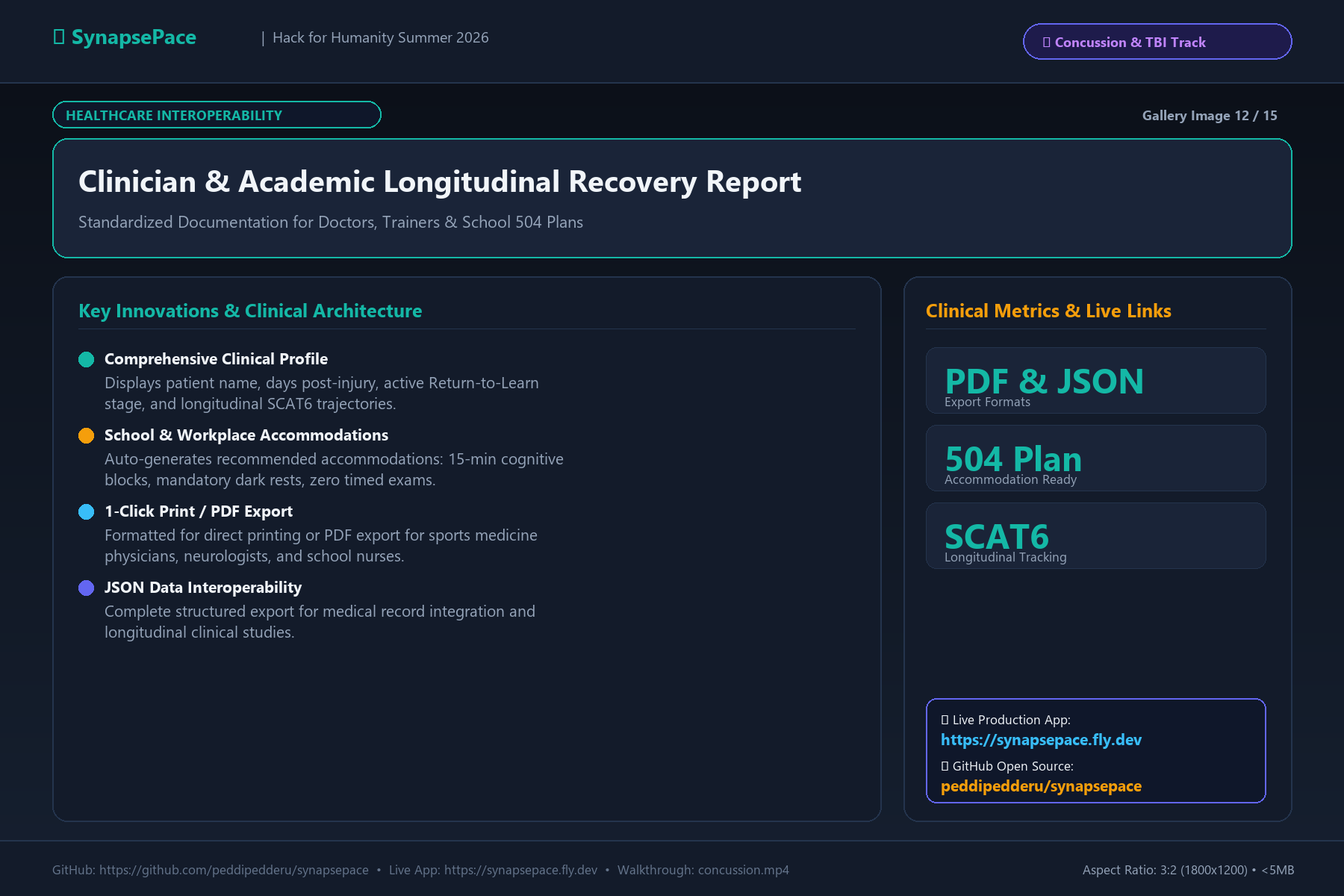
12_clinician_longitudinal_export_modal.png
-
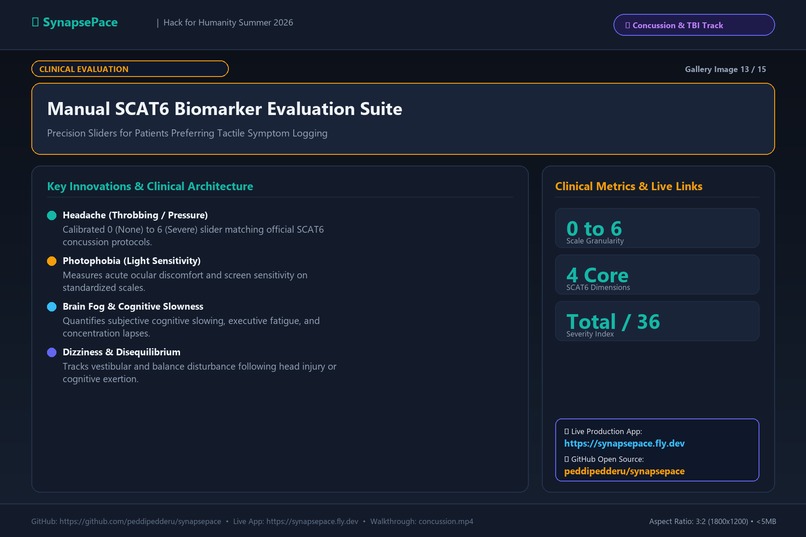
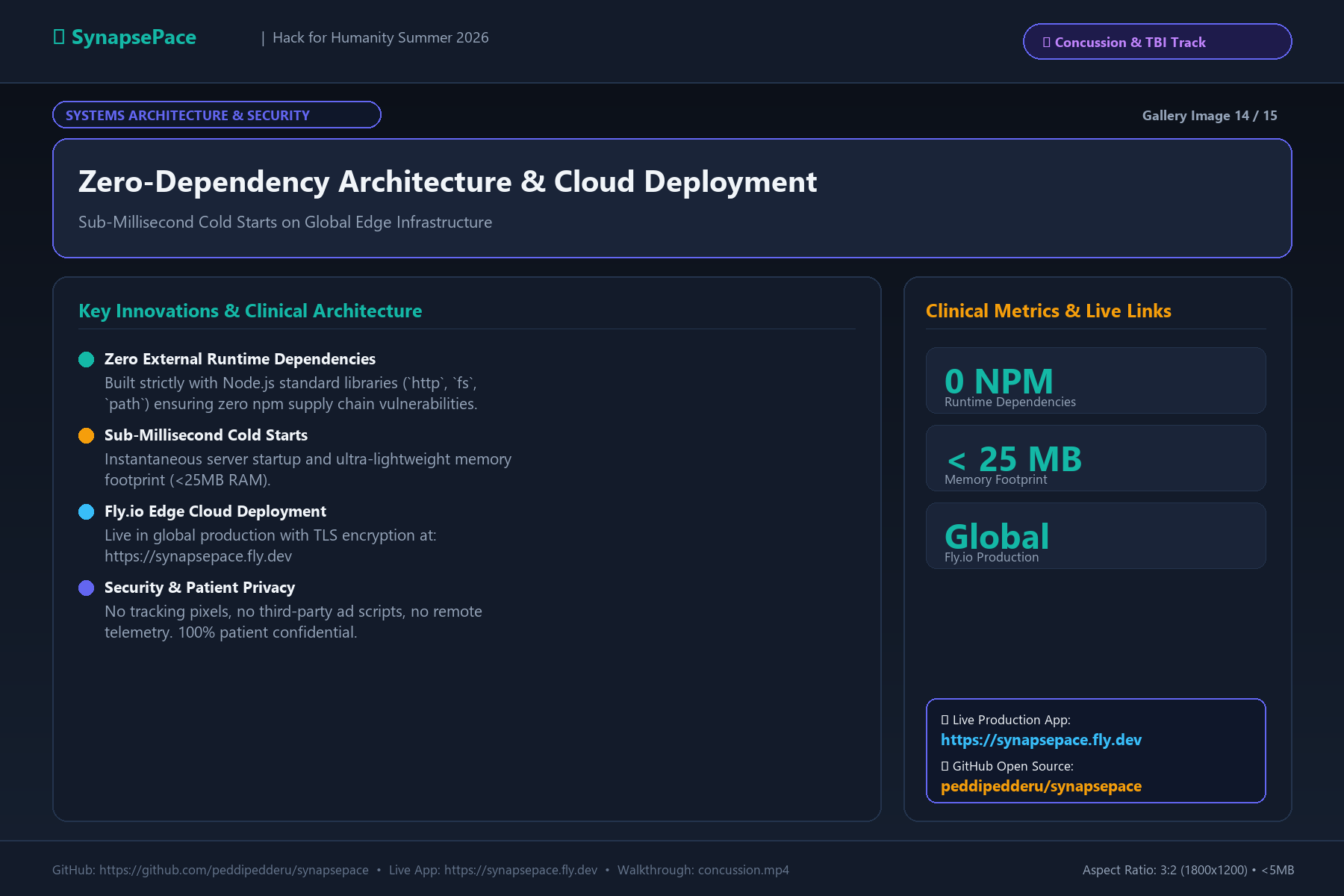
14_zero_dependency_cloud_architecture.png
-
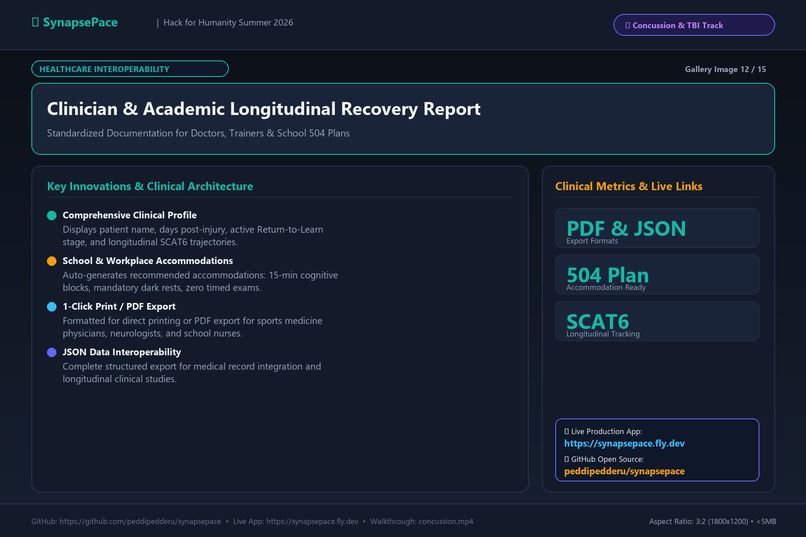
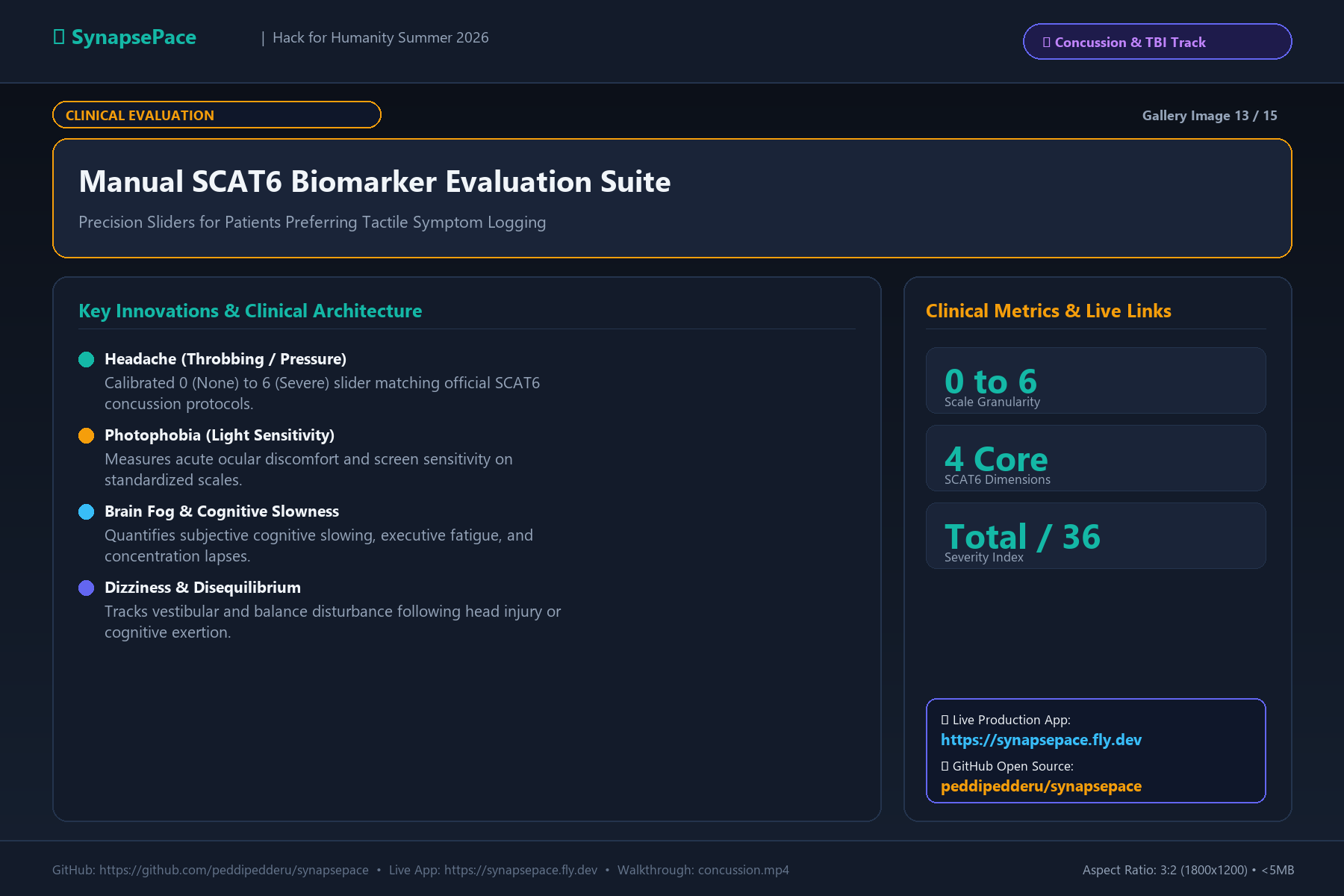
13_scat6_manual_biomarker_evaluator.png
-
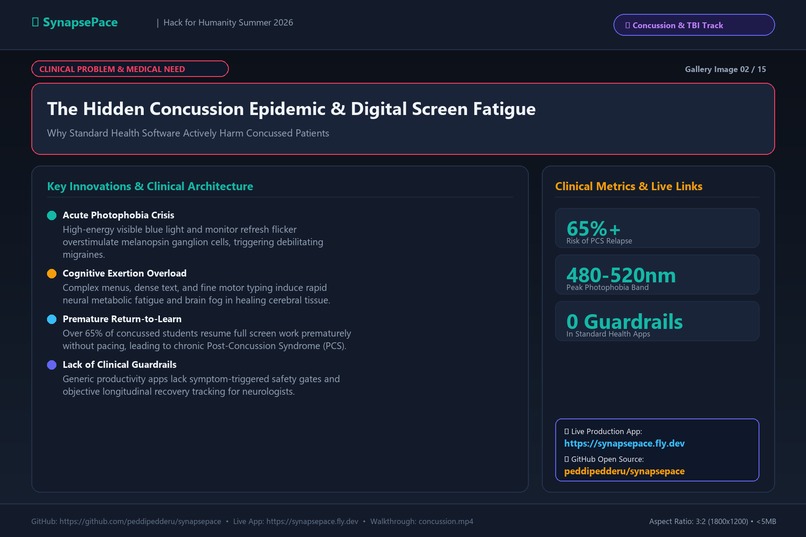
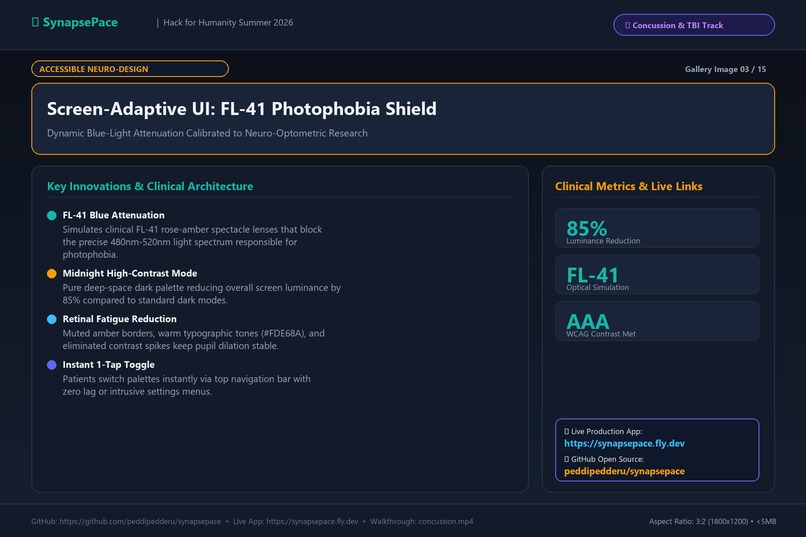
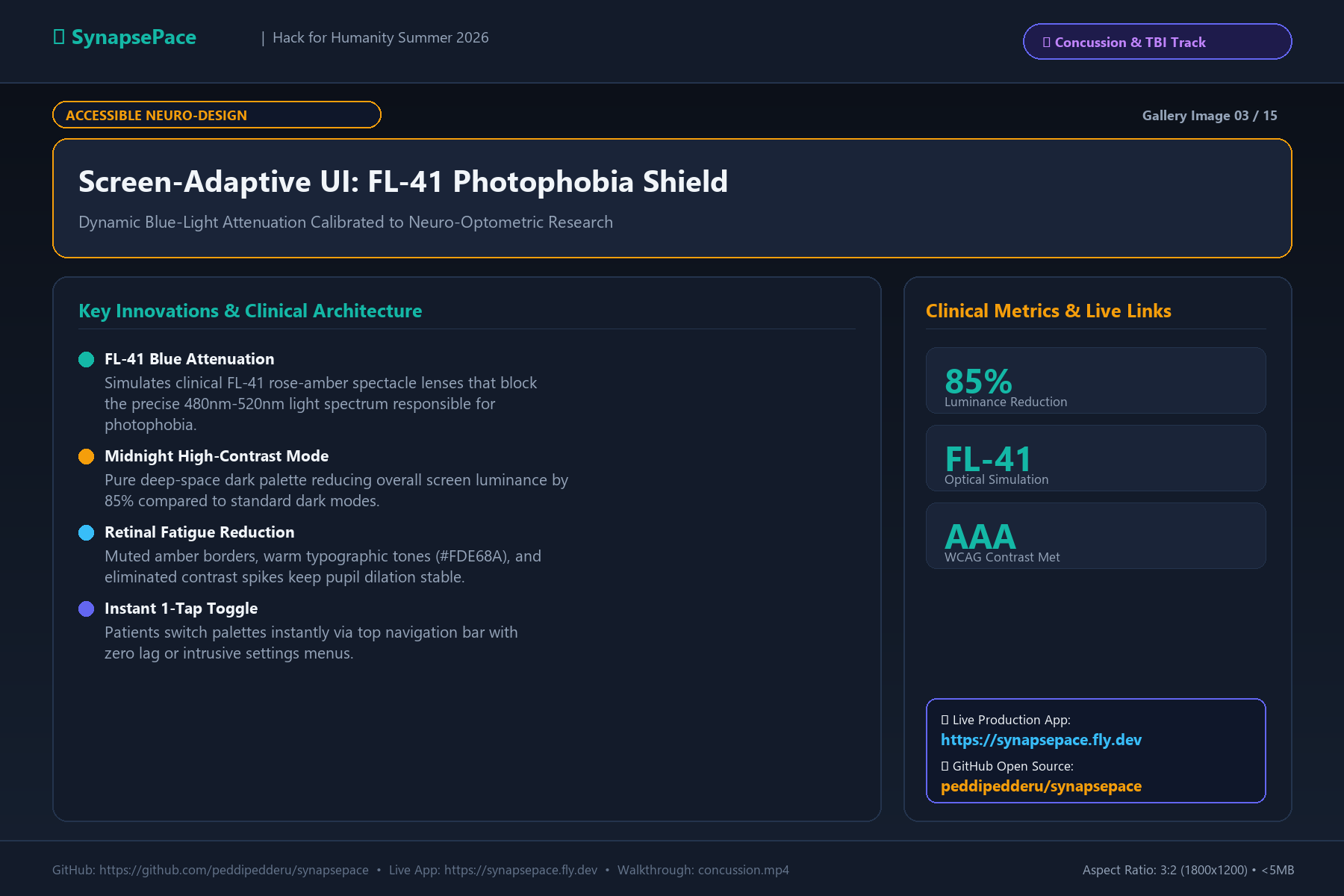
03_screen_adaptive_fl41_amber_shield.png
-
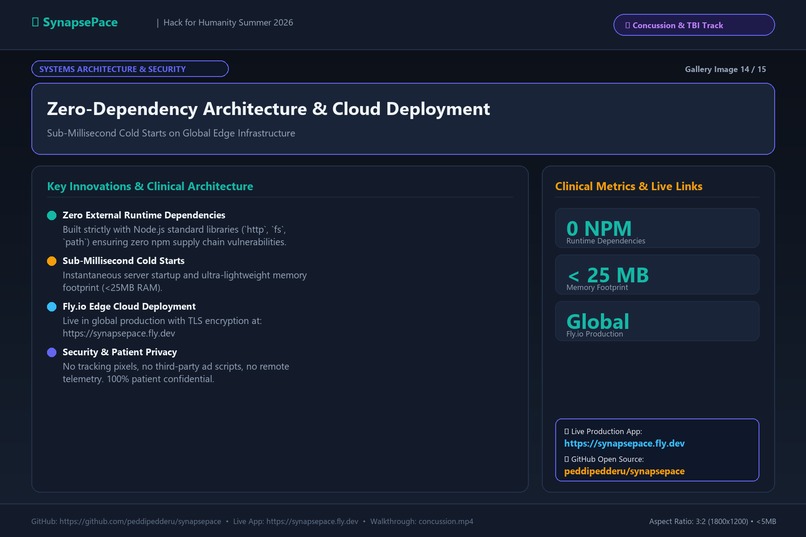
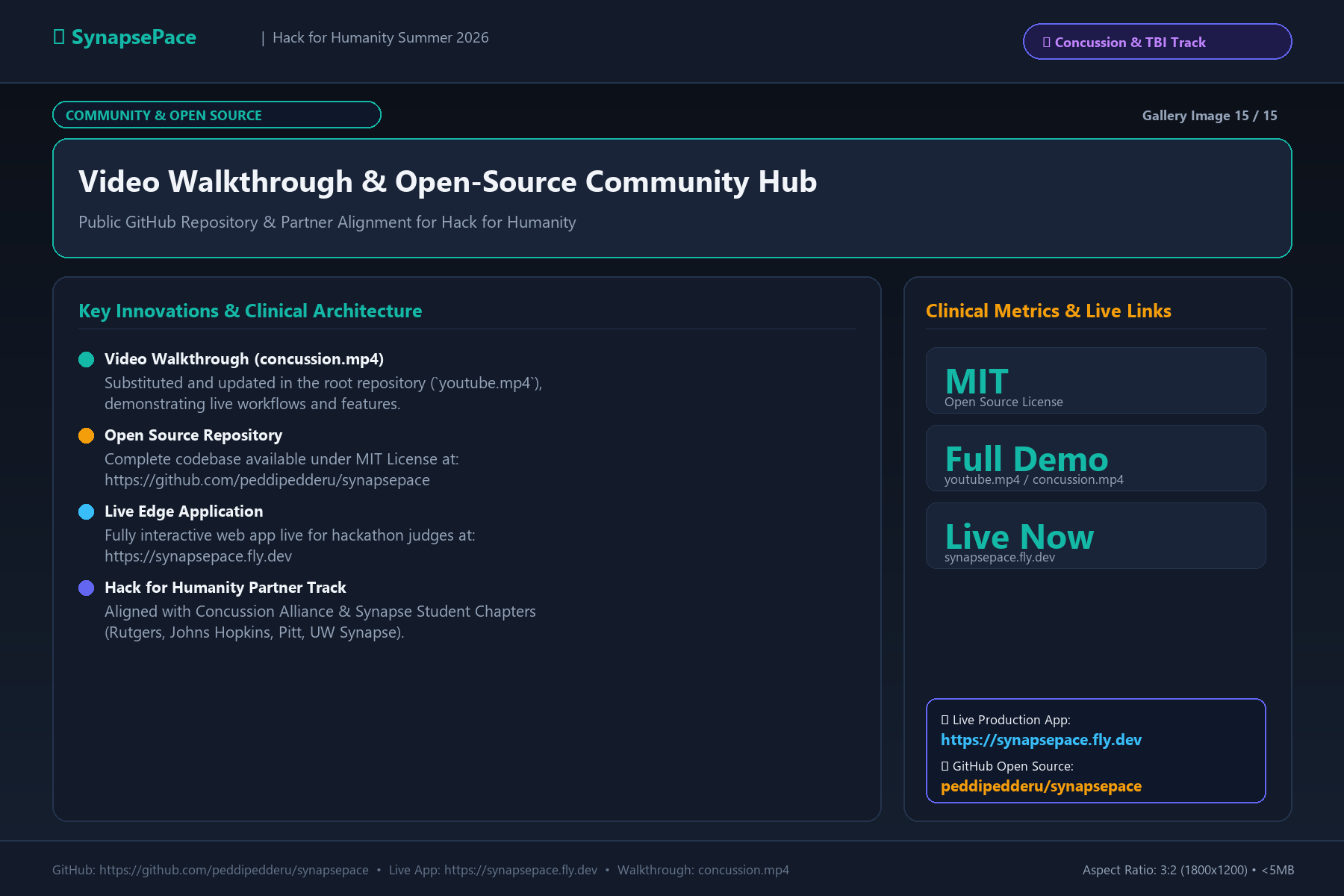
15_video_walkthrough_open_source_hub.png
-
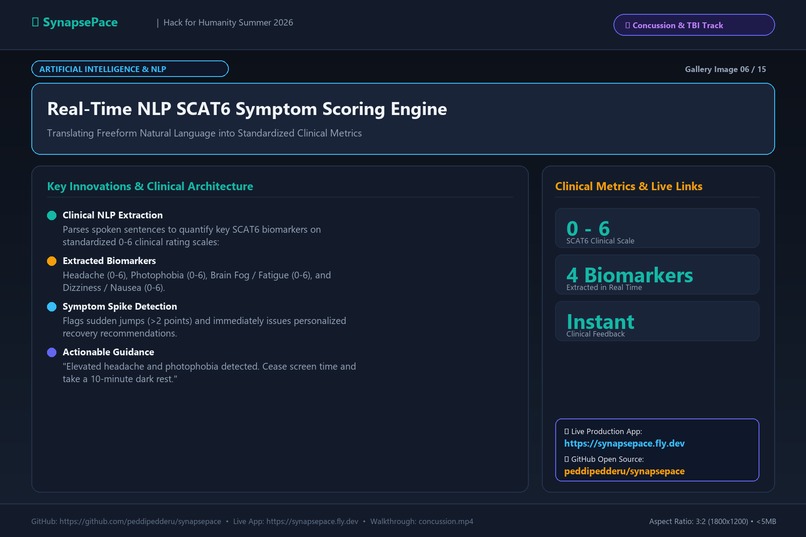
06_realtime_nlp_symptom_scoring.png
-
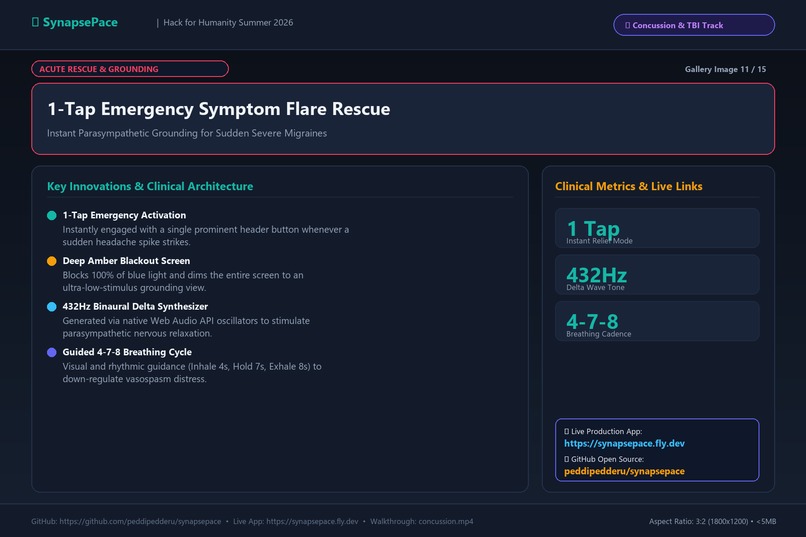
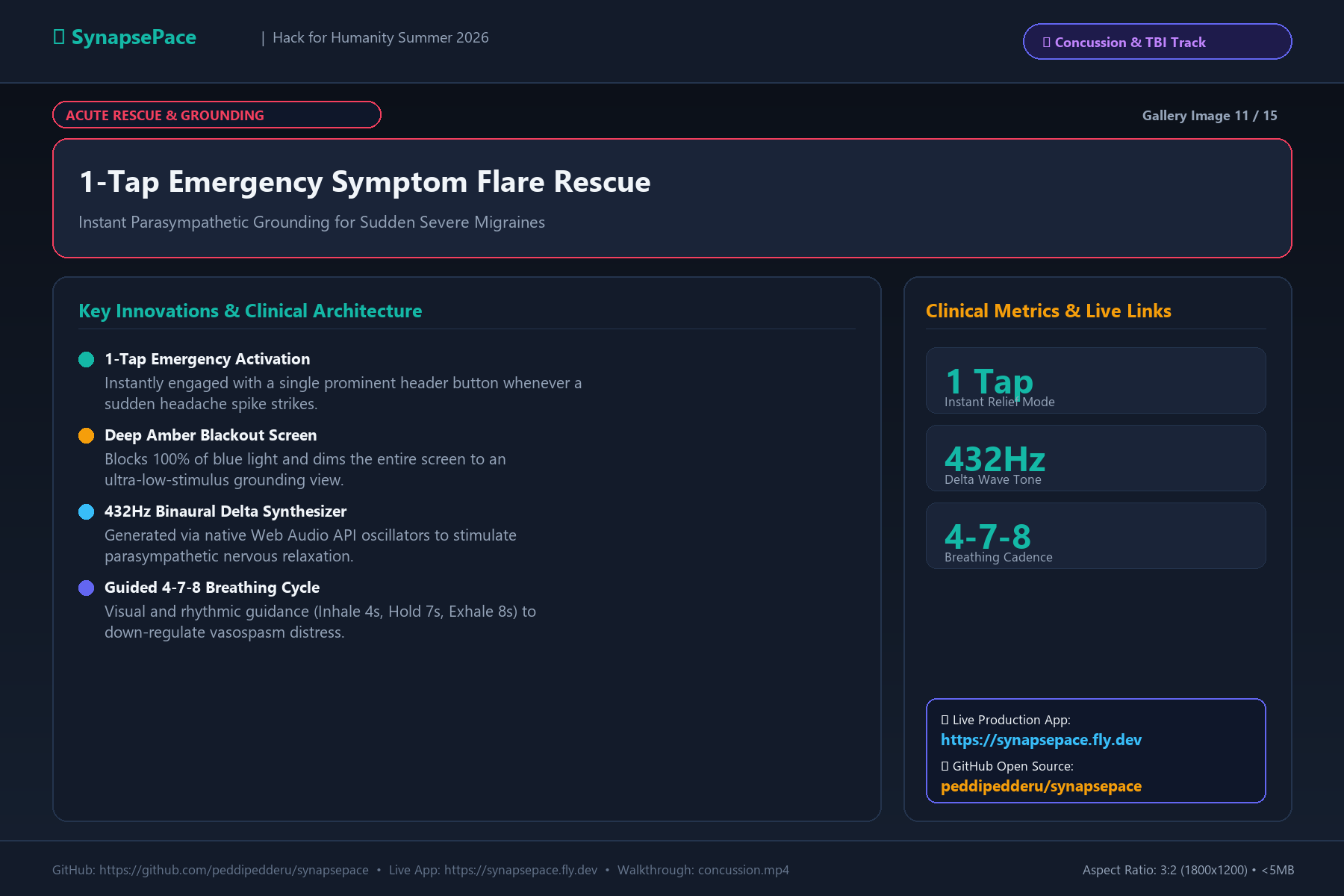
11_emergency_symptom_flare_rescue.png
-
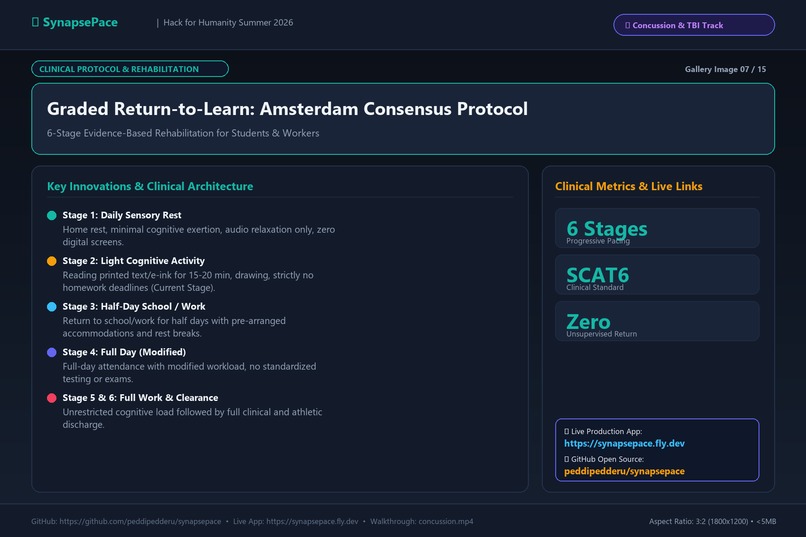
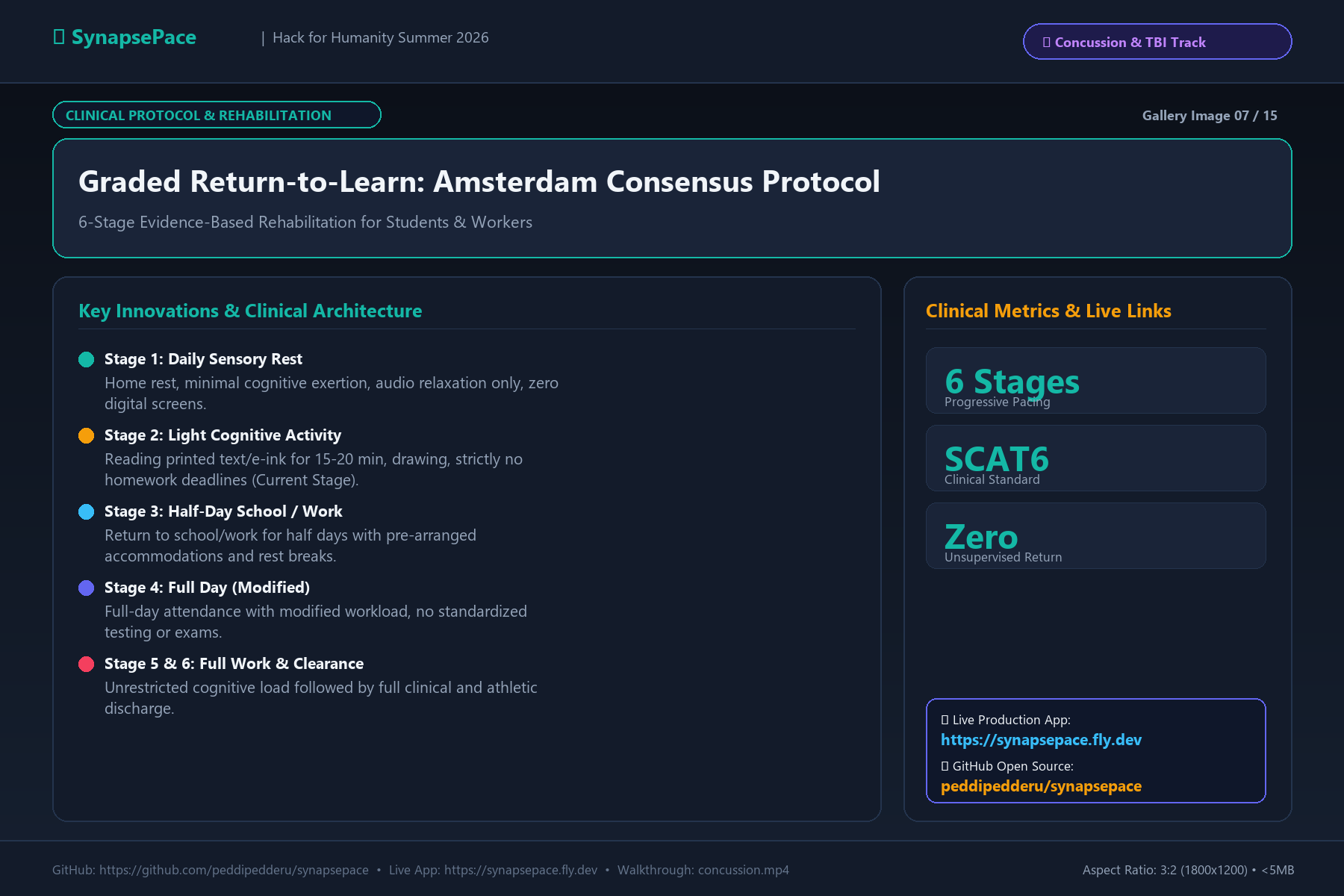
07_amsterdam_consensus_return_to_learn.png
-
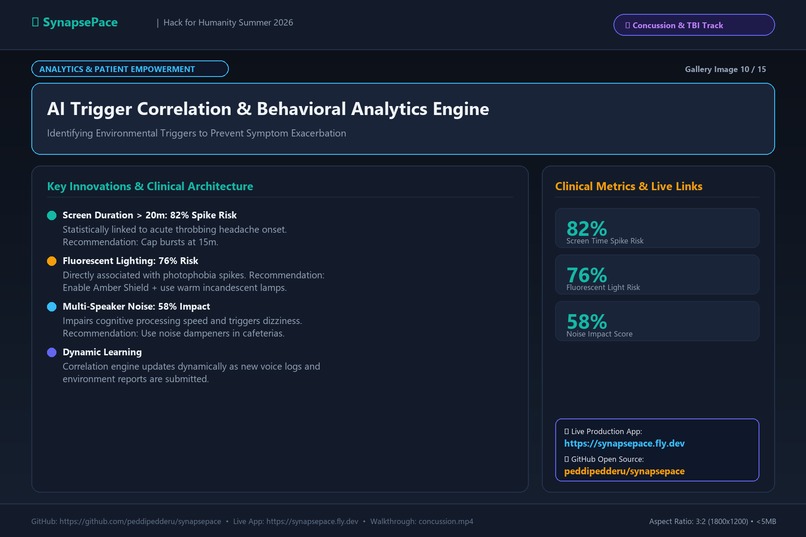
10_ai_trigger_correlation_engine.png
-
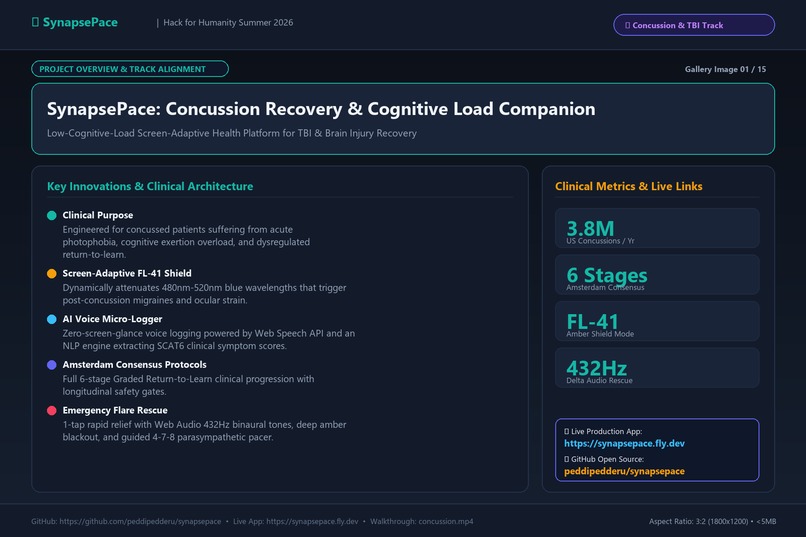
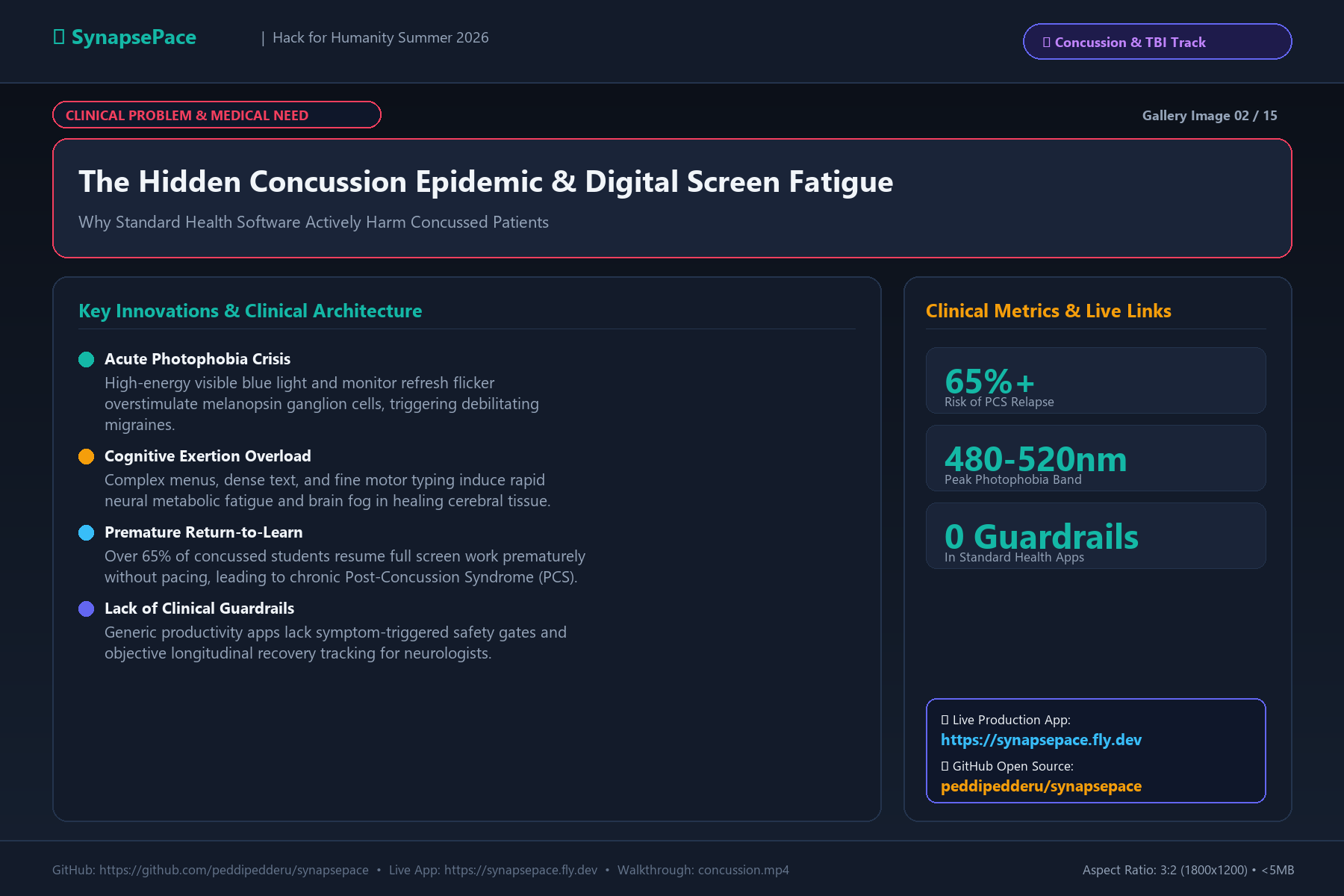
02_concussion_photophobia_problem.png
-
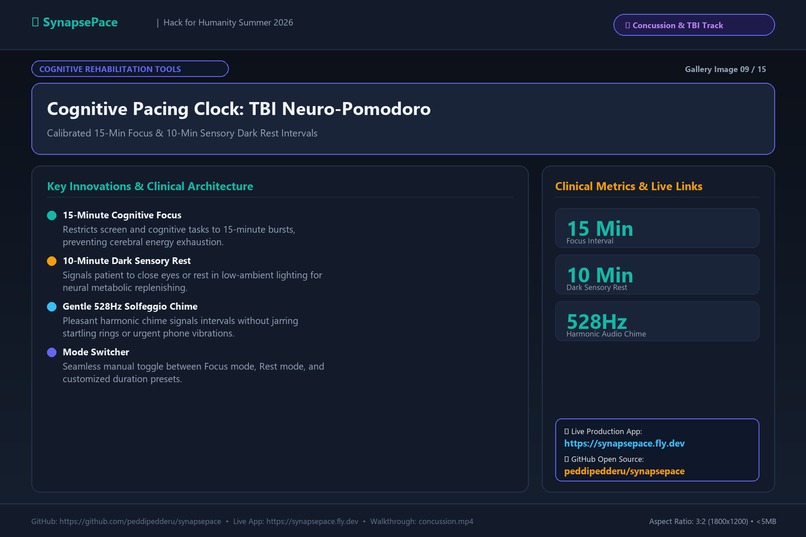
09_cognitive_pacing_clock_dark_rest.png
-
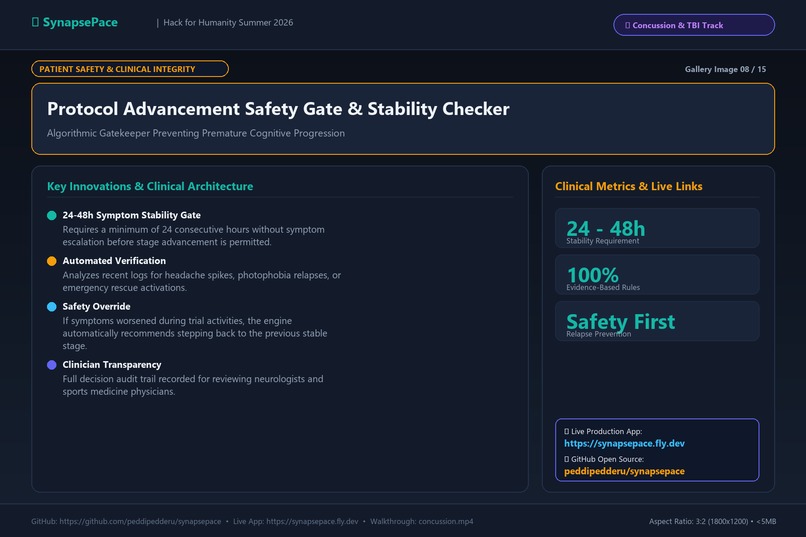
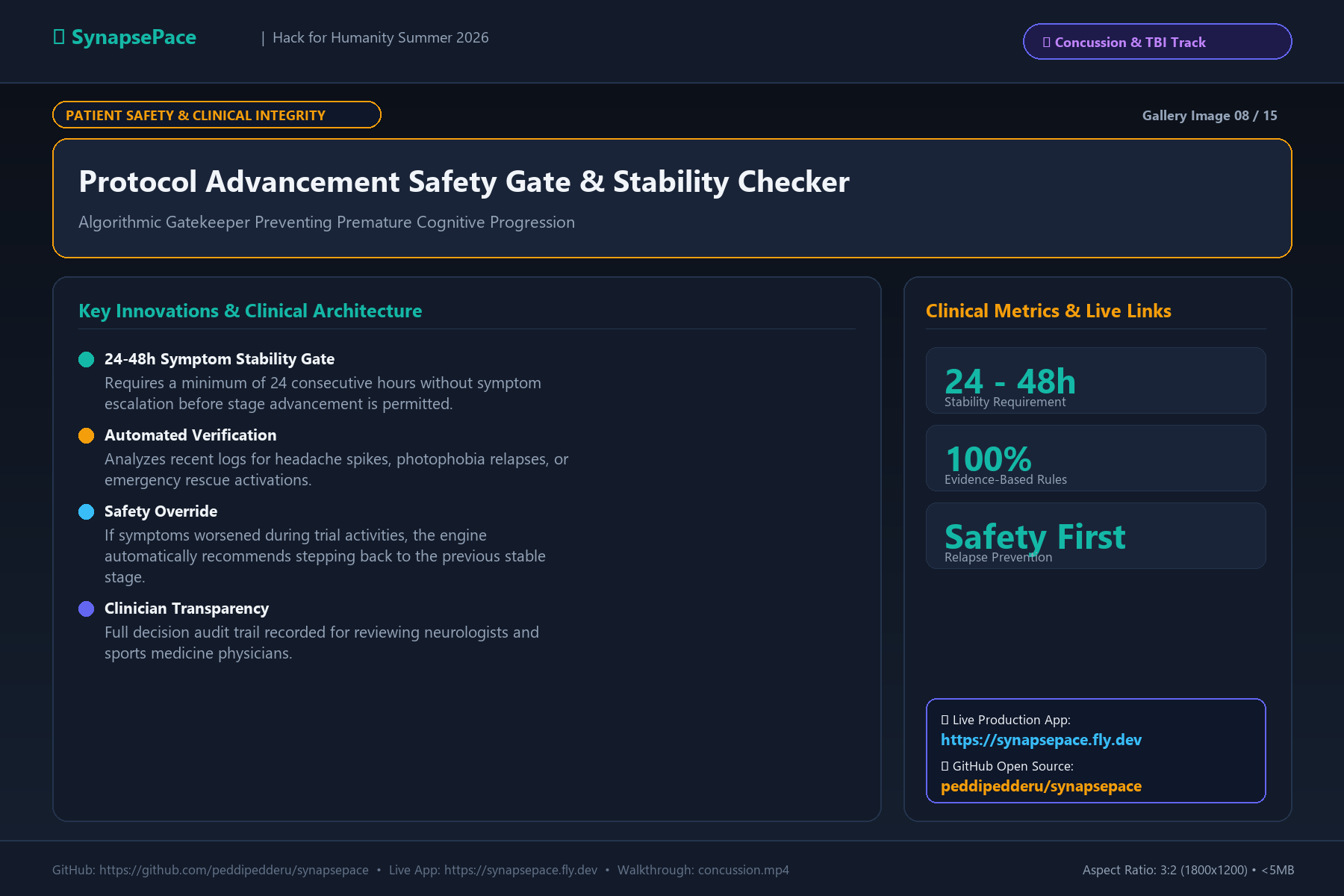
08_advancement_safety_gate.png
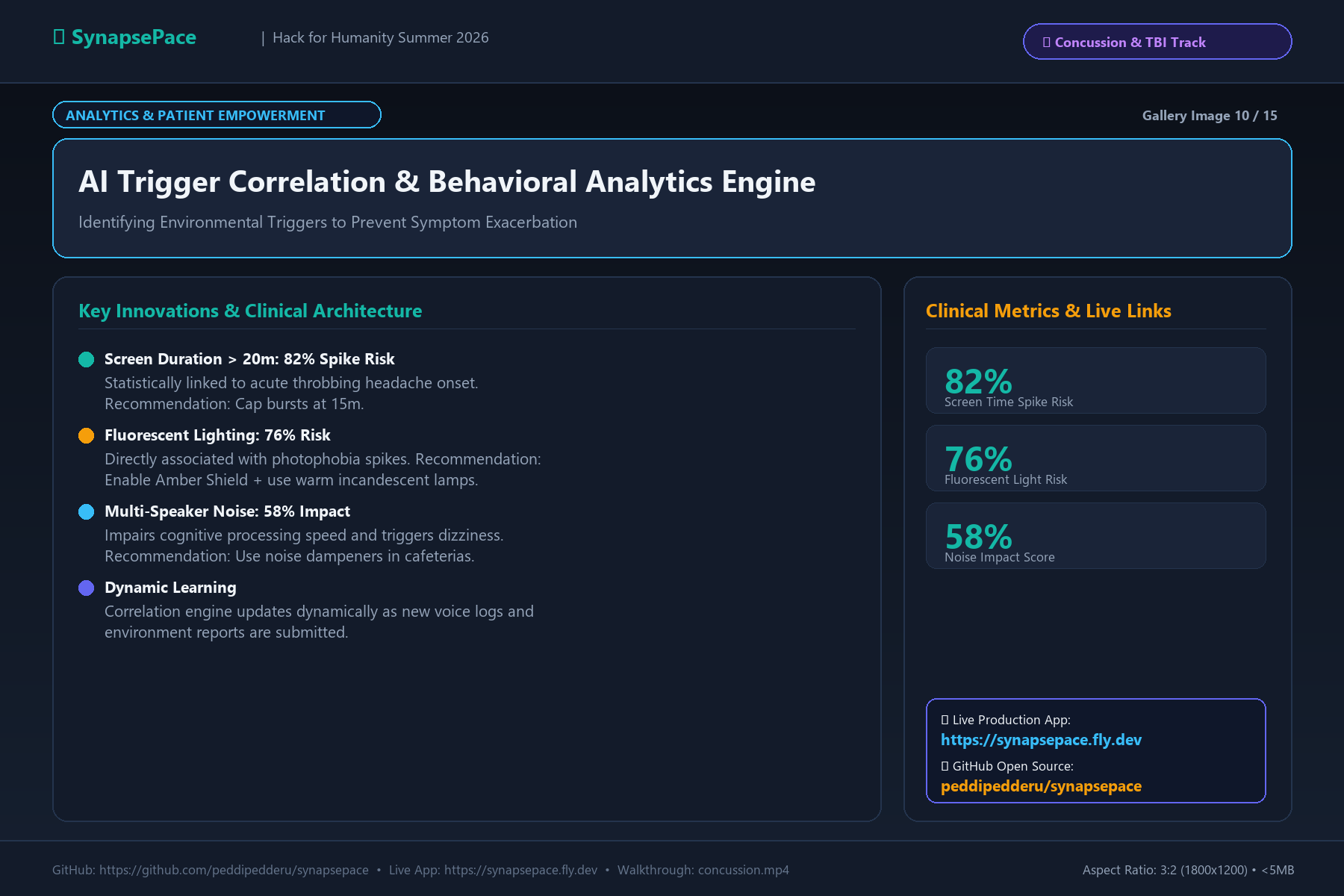
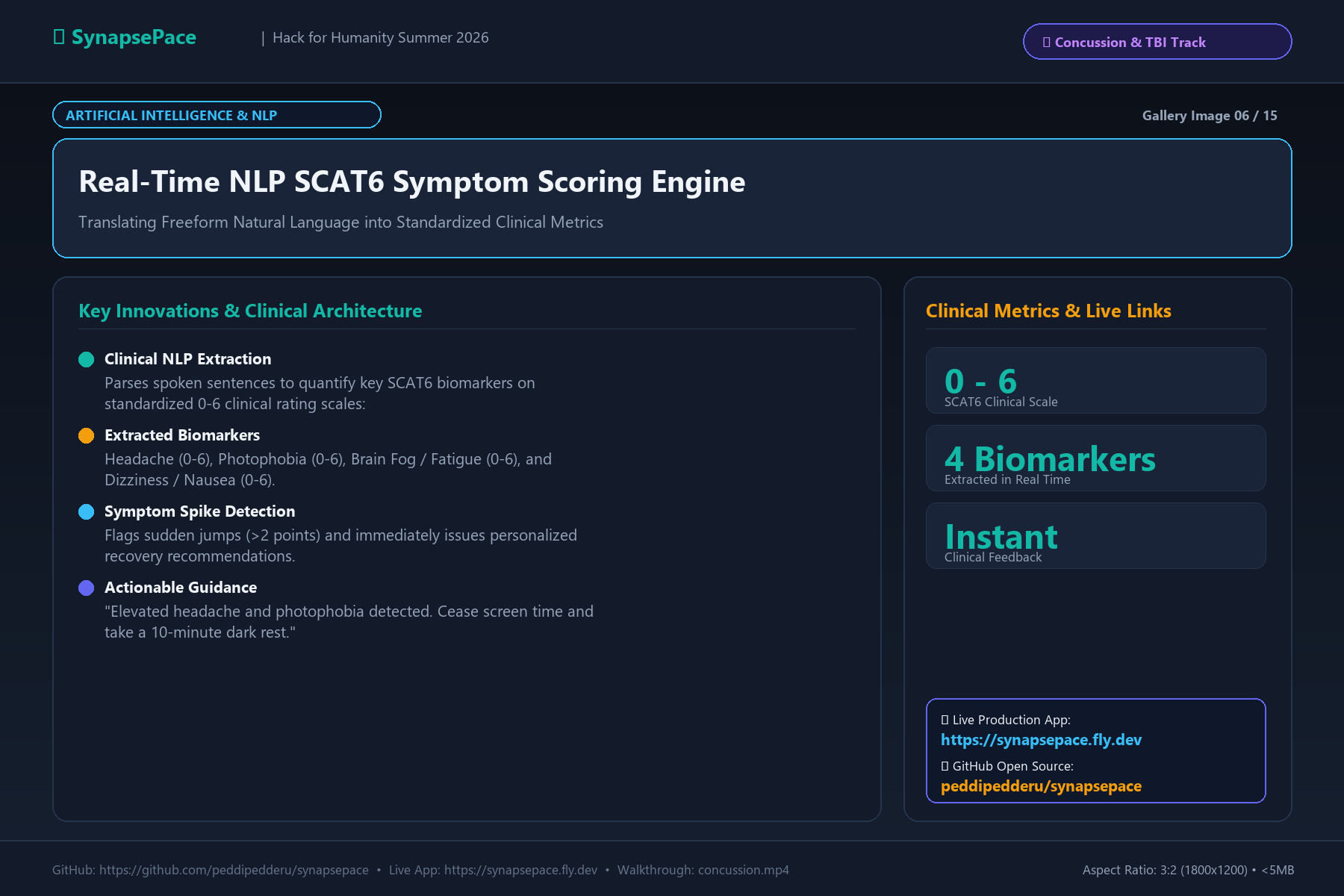
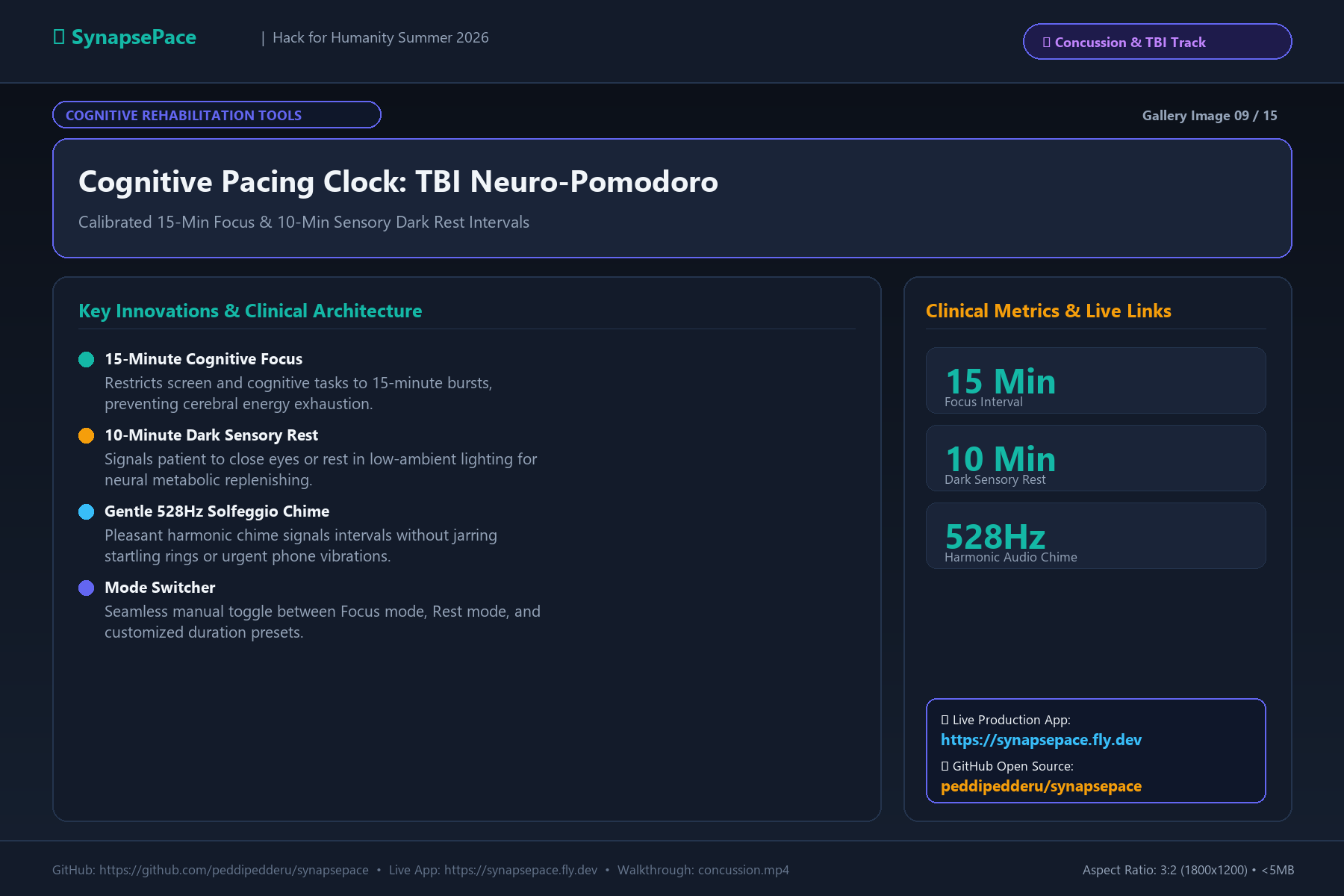
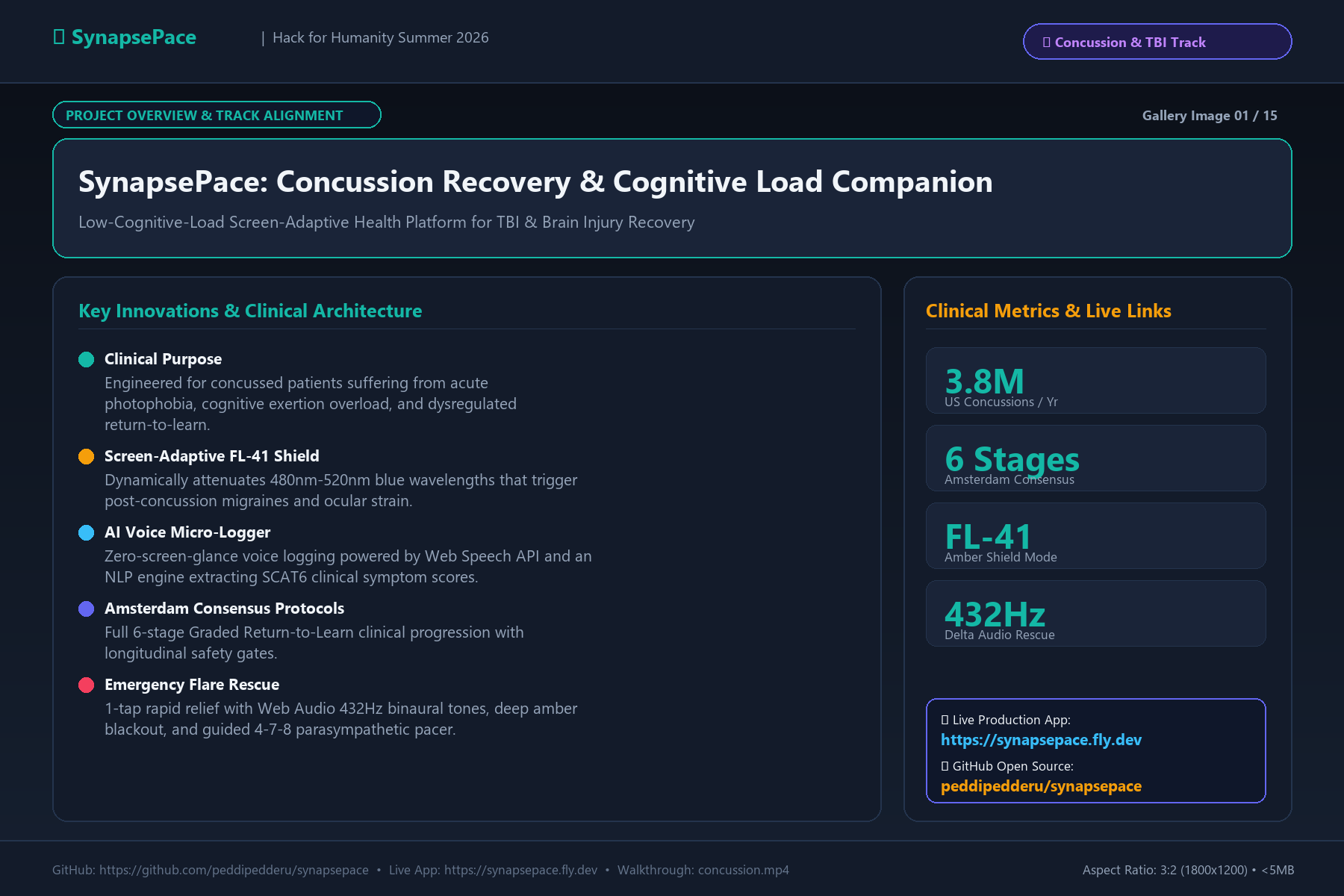
Inspiration
Over 1.5 million people sustain concussions or traumatic brain injuries (TBIs) every year. During recovery, standard digital screens and intensive interfaces trigger severe cognitive fatigue, headaches, and nausea. Most current health tracking applications are heavily visual, complex, and screen-intensive—making them unusable for the very people who need them most.
We were inspired by partners like Concussion Alliance and the Synapse Network to bridge this accessibility gap. We set out to create a low-cognitive-load companion that respects neurological recovery limits, prioritizing voice-first interaction and adaptive UI design to support individuals through step-by-step return-to-learn and return-to-work protocols.
What it does
Our project is a privacy-first, low-cognitive-load recovery companion designed specifically for individuals healing from concussions and traumatic brain injuries (TBIs). It acts as an ambient health monitor and digital pacing assistant that helps users manage their daily recovery without triggering screen-induced fatigue or sensory overload.
How we built it
We designed our architecture around privacy-first principles and minimal screen strain: 1.Low-Cognitive UI: Built with React and Tailwind CSS, featuring high-contrast modes, dynamic blue-light reduction, zero intrusive animations, and strict font legibility standards. 2.Voice-First Micro-Logging: Integrated Web Speech API and lightweight NLP to let users log symptoms, screen time, and exertion verbally without looking at a screen. 3.Backend & Cloud Infrastructure: Powered by Python FastAPI and hosted on Render for low-latency API execution and real-time symptom analysis. 4.Adaptive Symptom Analytics: We implemented a local mathematical model to dynamic compute a user's Symptom Strain Index (S) after every check-in:
Challenges we ran into
1.Designing for Sensory Overload: Traditional web design principles encourage rich animations and interactive visuals. Stripping away modern UI flair to build a truly ultra-minimalist, TBI-friendly interface forced us to completely rethink accessibility.
2.On-Device Voice & Privacy Processing: Health data requires high privacy standards. Handling speech processing locally while maintaining low latency across web browsers was a tough technical hurdle.
3.Calibrating Recovery Metrics: Balancing sensitivity so the algorithm triggers screen-dimming warnings before severe fatigue sets in—without overwhelming the user with unnecessary alerts—required multiple calibration passes.
Accomplishments that we're proud of
1.True Neurological Accessibility: We successfully designed a functional web application that completely reimagines traditional UI norms. Eliminating high contrast, aggressive pop-ups, and dense menus in favor of a low-cognitive, voice-first interface was a massive shift from standard web development, but we achieved an experience that genuine TBI sufferers can navigate without fatigue. 2.Cross-Track Integration: We managed to align our solution across multiple competition priorities—addressing concussion care (partner tracks Concussion Alliance & Synapse Network), implementing privacy-centric AI/ML practices, and deploying a production-ready cloud stack. 3.Seamless Render Deployment: We deployed our FastAPI backend and web environment using Render, building a robust, low-latency foundation capable of streaming voice responses and updating symptom metrics in real time.
What we learned
1.Neurological Accessibility: Accessibility extends far beyond screen readers; cognitive fatigue, light sensitivity, and visual contrast require distinct UI paradigms.
2.Responsible AI & Health Data: Machine learning models in healthcare must be deterministic, transparent, and user-controlled rather than black-box predictors.
3.Cross-Disciplinary Engineering: Translating clinical return-to-activity guidelines into clear software features deepened our appreciation for healthtech engineering.
What's next for synapsespace
1.Build a dedicated, HIPAA-compliant clinician export view that transforms daily symptom logs into standardized clinical recovery curves (such as Return-to-Learn/Return-to-Play progression charts) so neurologists and physical therapists can make data-driven adjustments during follow-up appointments. 2.Smart Ambient Hardware Sync: Expand Synapsespace beyond the browser screen by integrating with smart home protocols (like Matter/Philips Hue). When a user experiences acute symptom flare-ups, Synapsespace can automatically dim the physical lights in their room and lower connected smart shades to create an instant low-stimulation environment.

Log in or sign up for Devpost to join the conversation.