Inspiration
The inspiration came from Impiricus's sister company DocUpdate. DocUpdate is a free application that allows HCP to write prescriptions, translate conversations and do some operational work. We liked how Impiricus' values aligned with helping HPC's first and thought how we can build something that supplements that mission.
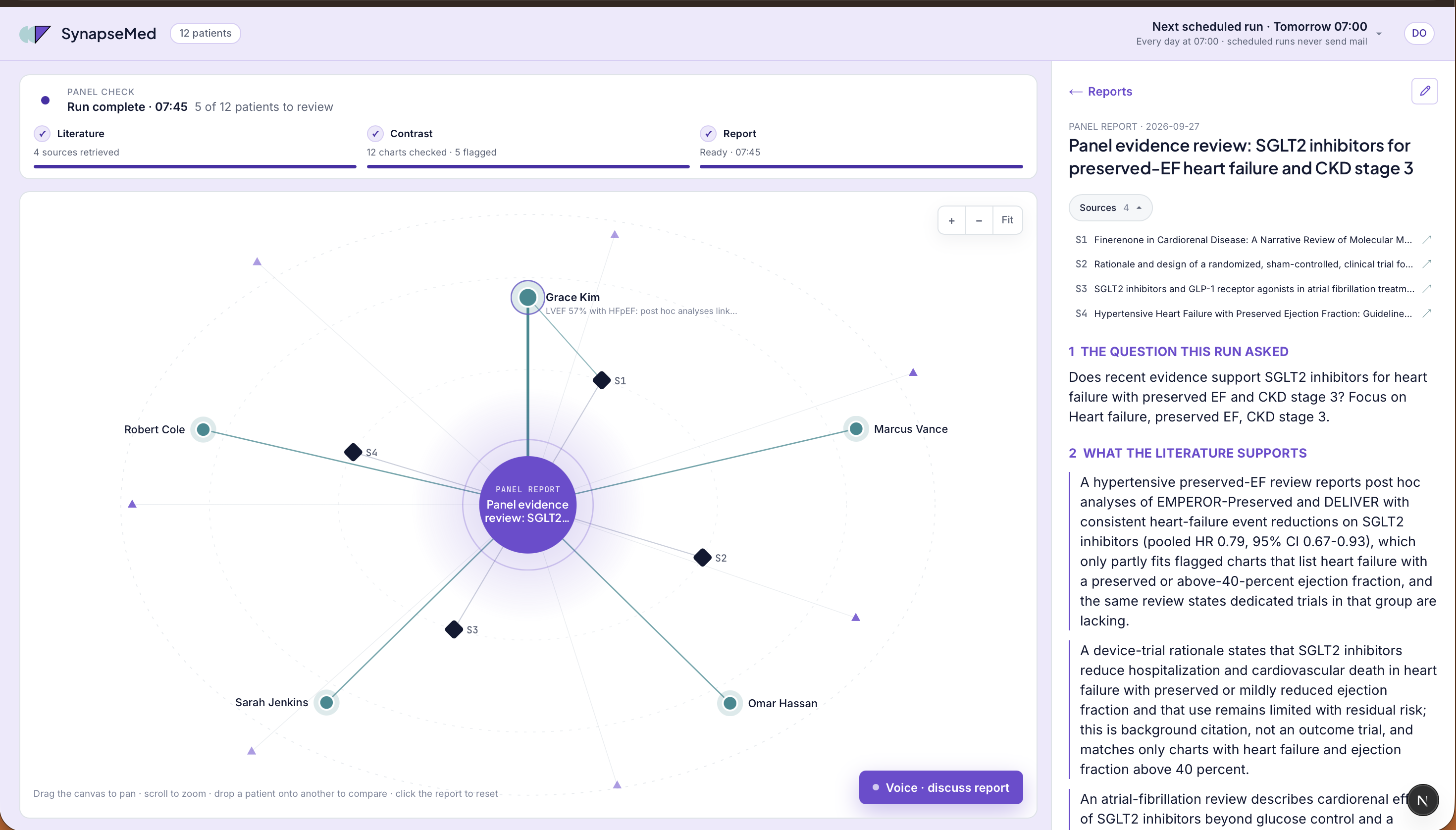
We brainstormed for a while and decided to build SynapseMed. SynapseMed is the research agent that helps every HCP keep up with medical literature that affects their patients directly. It surfaces the right data at the right time and on demand so HCP's can prioritize their reading lists accordingly!
What it does
Under the hood, SynapseMed has a bunch of agents working alongside to serve a product that is reliable, fast and intelligent. The research agent searches for relevant medical literature on schedule and when prompted by the HCP.
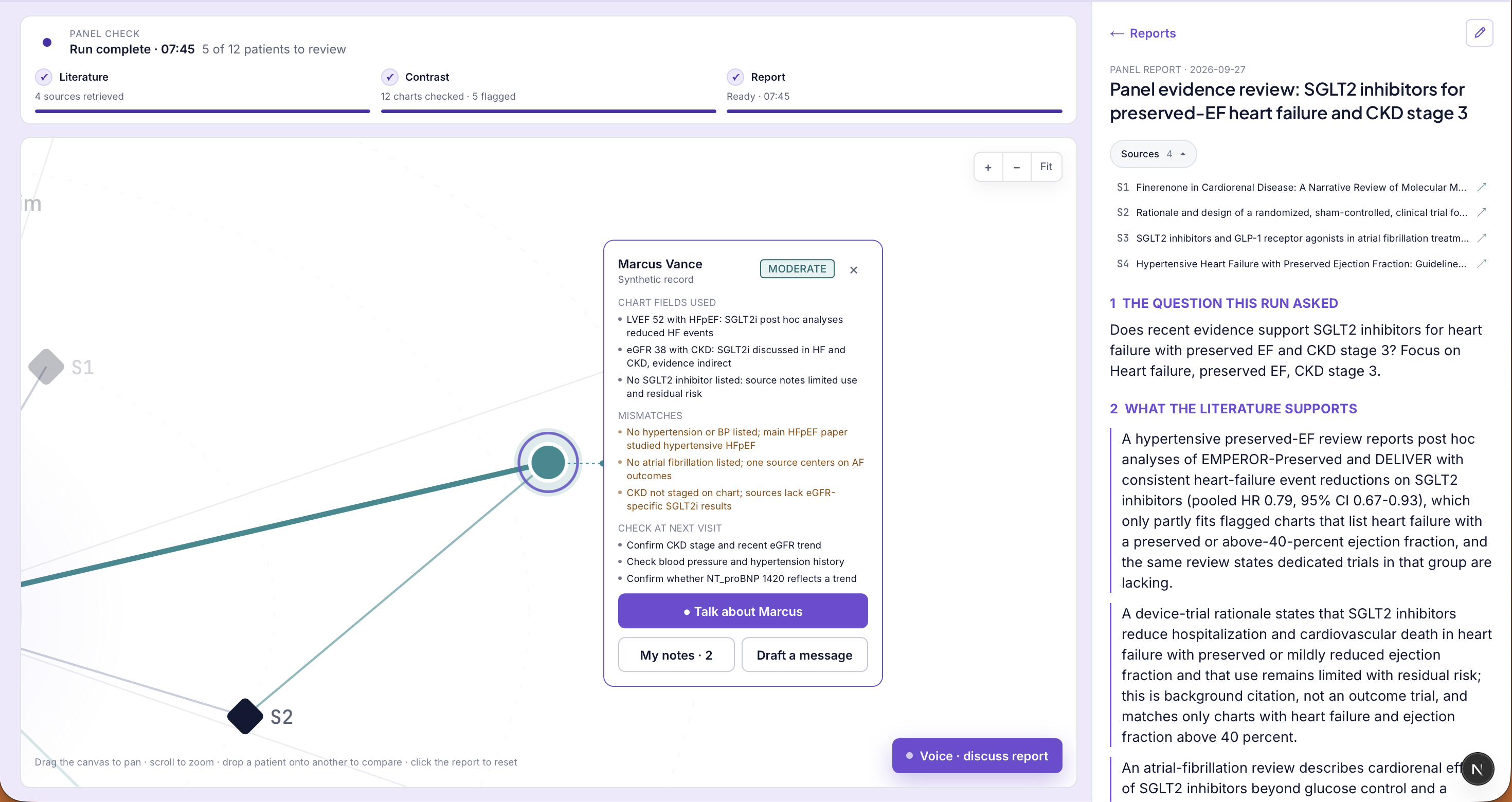
The triage agent takes the research agent's broad output and contrasts it with the HCP's patient cohort to surface a risk score from moderate to critical to indicate how the new study is affecting their patients today. The agents never suggest an action but provide concrete evidence. The triage agent, powered by Grok 4.7, outputs a summary of the study and it's effect. 2 different outputs for 2 different stakeholders: human HCP and the other 2 agents.
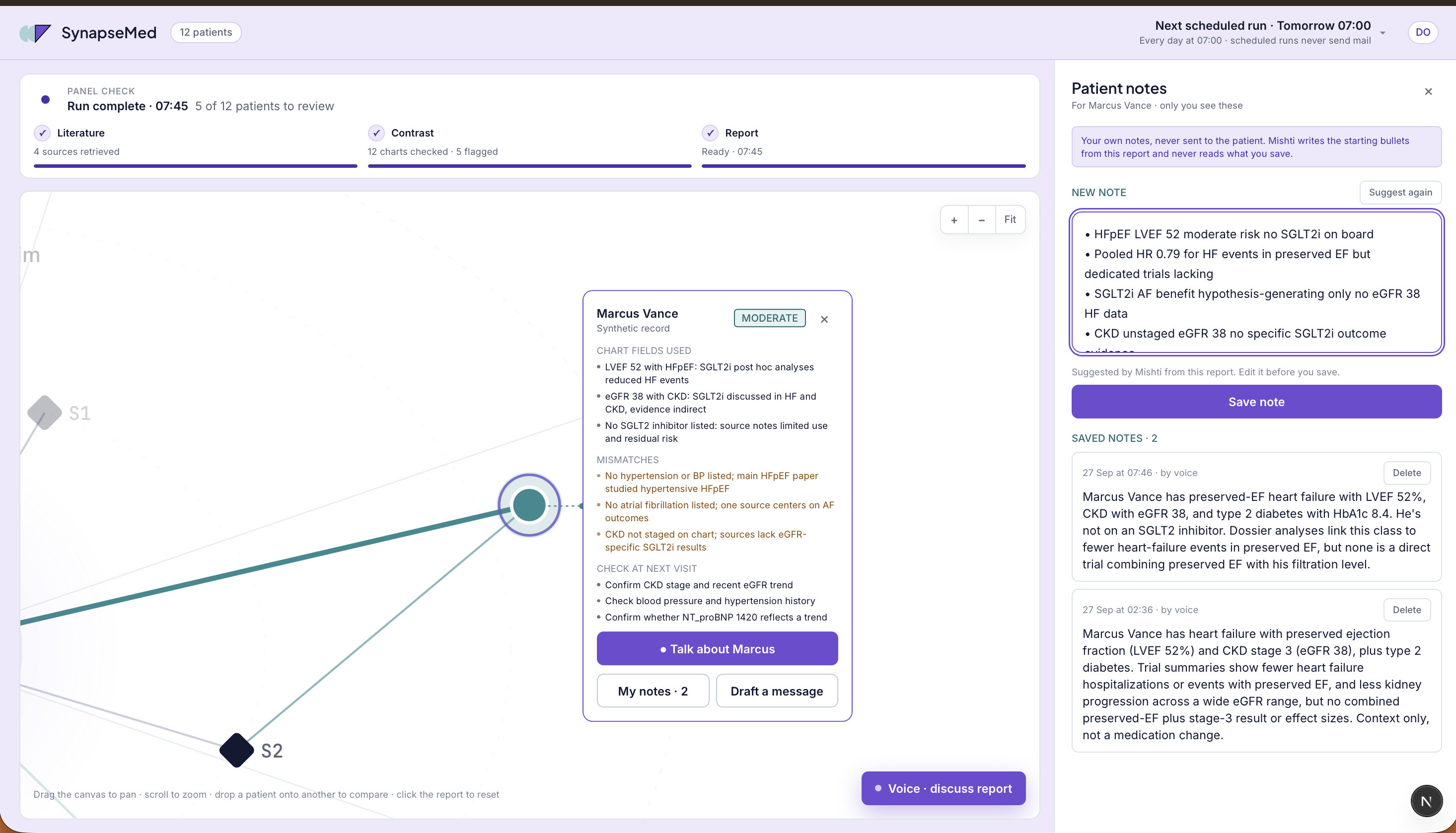
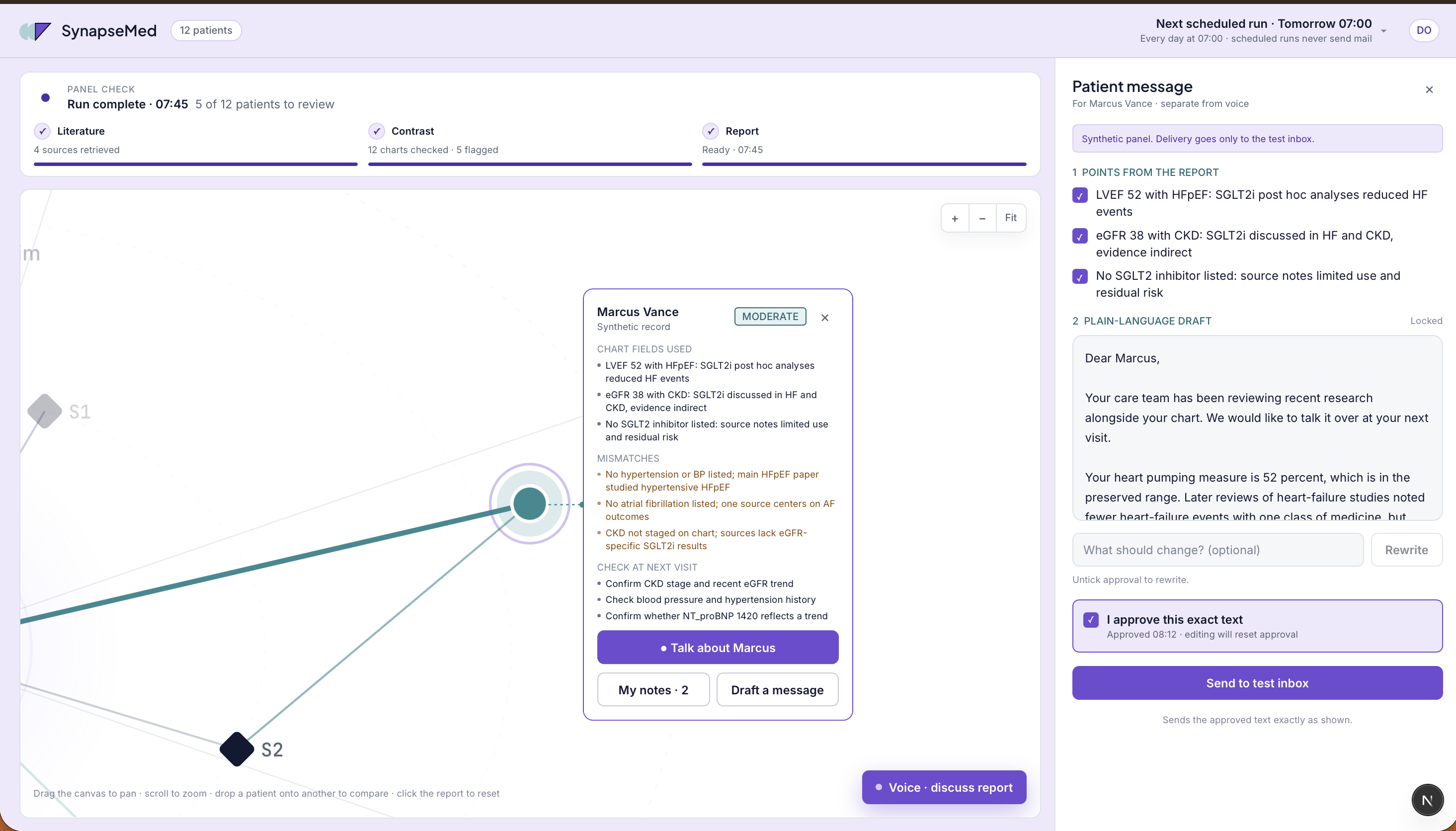
The third agent is a voice agent powered by Grok AI Voice, that converses with the HCP regarding the report. It has access to tools such as the writing agent that writes notes for future references and drafts messages to send to patients. The writing agent is powered by Grok 4 Fast Non-reasoning that allows for incredibly fast UX. The context is fed by the Triage agent so every information is accurate.
This application can be used almost entirely by the voice mode!
How we built it
We decided to use technologies we're familiar with and wrote the frontend with TypeScript in Next.JS and the backend with Python in FastAPI. We carefully designed tool calling abilities and database access with our agents to ensure even the synthetic data is secure.
How the agents work:
Research agent. It turns the doctor's question and the panel's conditions into a few PubMed searches, limited to 2021–2026, and keeps up to 12 papers. An uploaded file is added as another source. gpt-4.1-mini then writes findings using only those abstracts. If that call fails, the run keeps a generic finding instead of inventing a study.
Triage agent. Mishti, on Grok 4.7, reviews one chart at a time. She must call get_chart and get_source before she can call record_assessment. The server checks that assessment against the real chart values and the dossier, and sends it back if a number, source, or word limit is wrong. Simple rules run first and stay as a floor, so a chart they flag is not dropped if the model misses it. A second Grok call then writes the panel report the doctor reads.
Voice tool calling. The browser opens a live session with Grok Voice and gives it two tools, draft_message and save_note. When Mishti decides to use one, the browser runs it, puts the draft or note on screen, and sends the result back so she can say what happened. There is no tool that approves or sends. She only talks from the briefs the triage agent already wrote.
Challenges we ran into
One of the biggest challenges with working in anything healthcare is datasets. We used the PubMed API to parse through literature using the Research Agent as explained above.
The product flow. Designing a product for people we have minimal interactions with was incredibly hard.
Accomplishments that we're proud of
Originally, we were working on another idea that required huge insurance data sets to be useful. Upon realising getting access to such dataset is impossible for us, we decided to pivot 12 hours before the deadline. We're incredibly proud for being able to turn this idea into a reality with the cool tech we wanted to use such as Grok Voice.
What's next for SynapseMed
We need some sleep.
Built With
- figma
- github
- openai
- postgresql
- python
- spacexai
- vercel

Log in or sign up for Devpost to join the conversation.