-
-

1
-
-
-
-
-
-
-
-
-
-
-
-
-
-



My Inspiration
My professional background is in clinical pathology, where a single, unverified piece of data can have critical consequences. We never trust a single test result; we cross-reference and demand a second opinion to achieve clinical-grade certainty. When I saw the world embracing AI that generates information with incredible speed but questionable accuracy, I knew I had to apply that same principle of rigorous verification.
The inspiration for AI Fusion was to build a system that brings a pathologist's approach to AI – creating a chain of verification where multiple AIs are forced to critique each other's work to forge a more reliable and trustworthy answer.
What it does
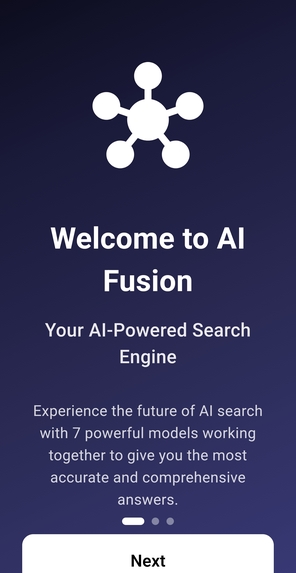
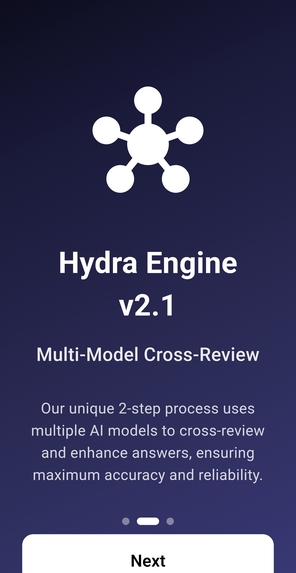
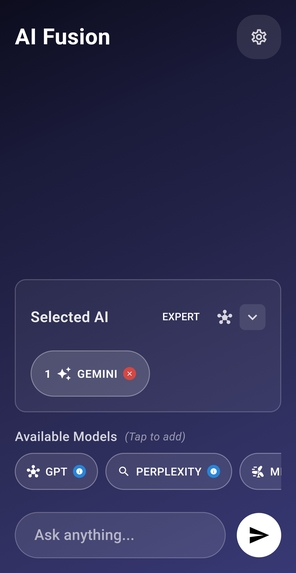
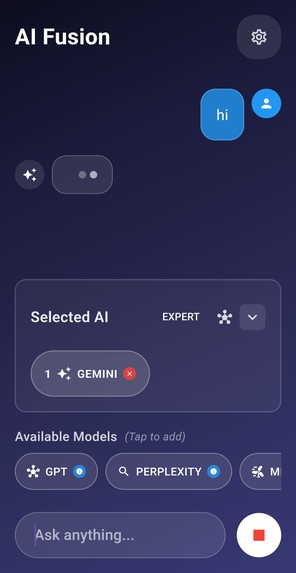
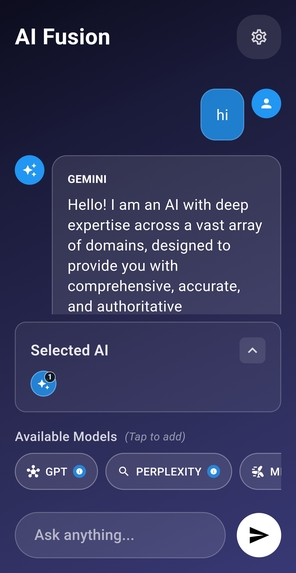
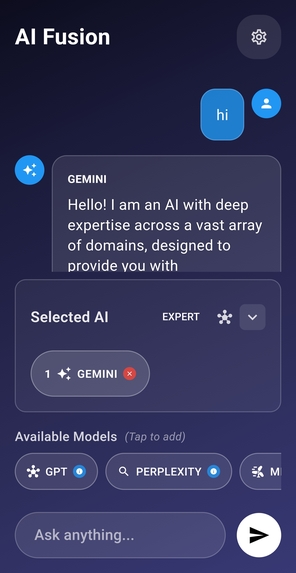
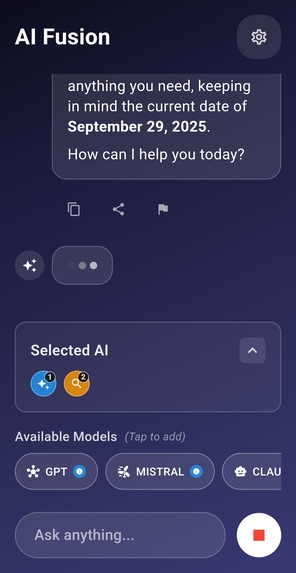
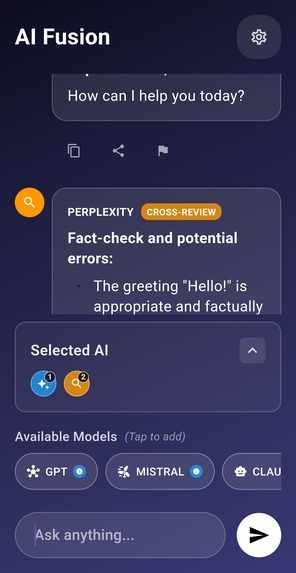
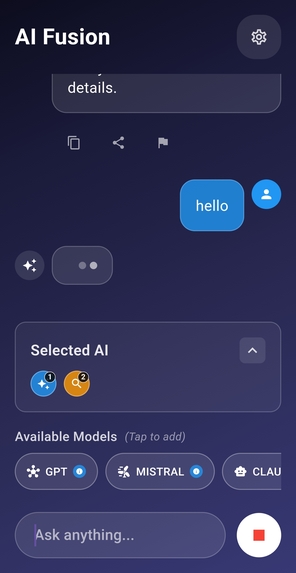
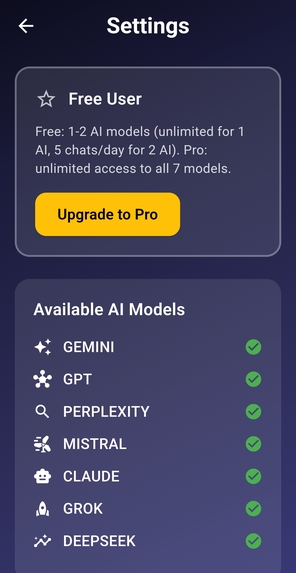
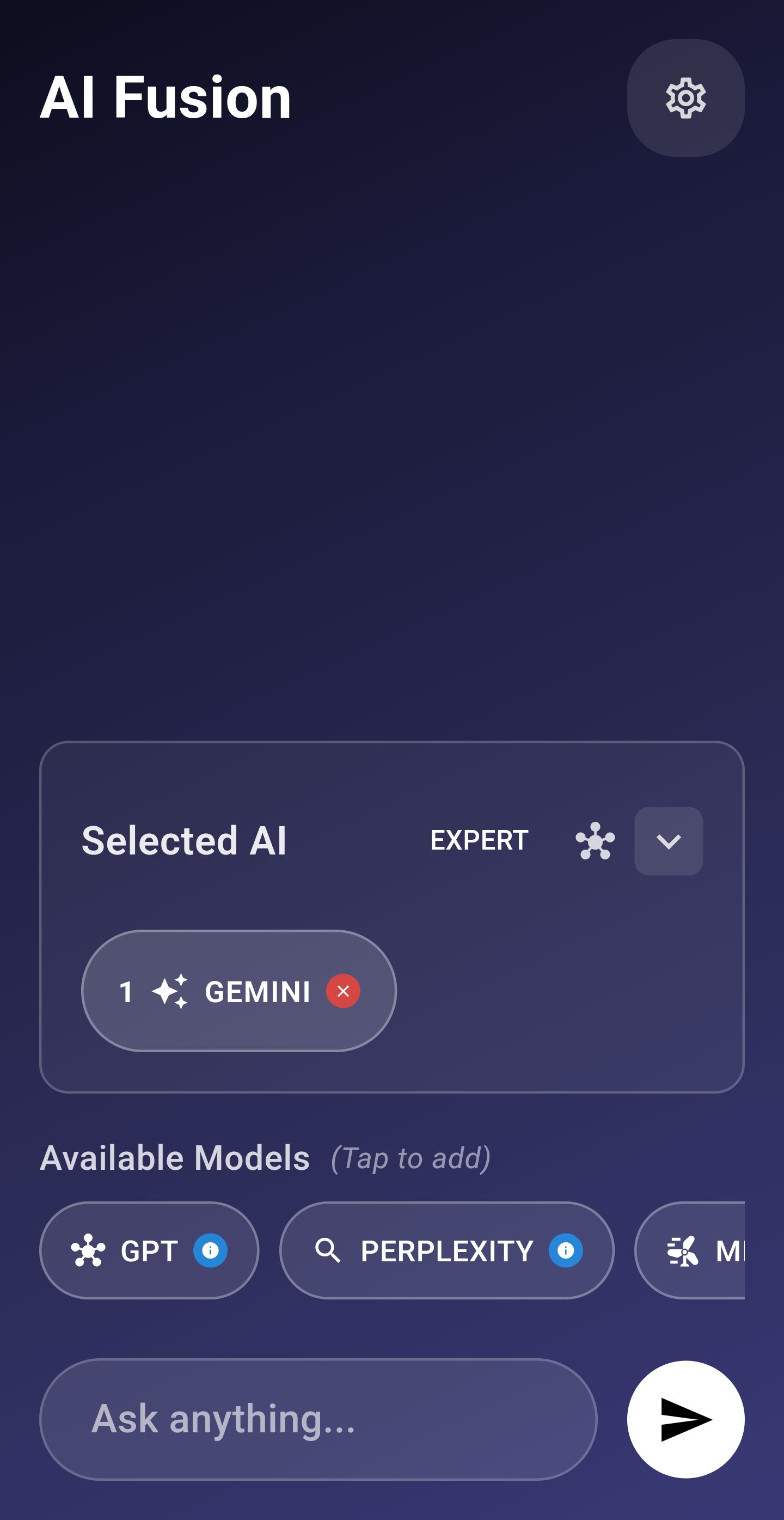
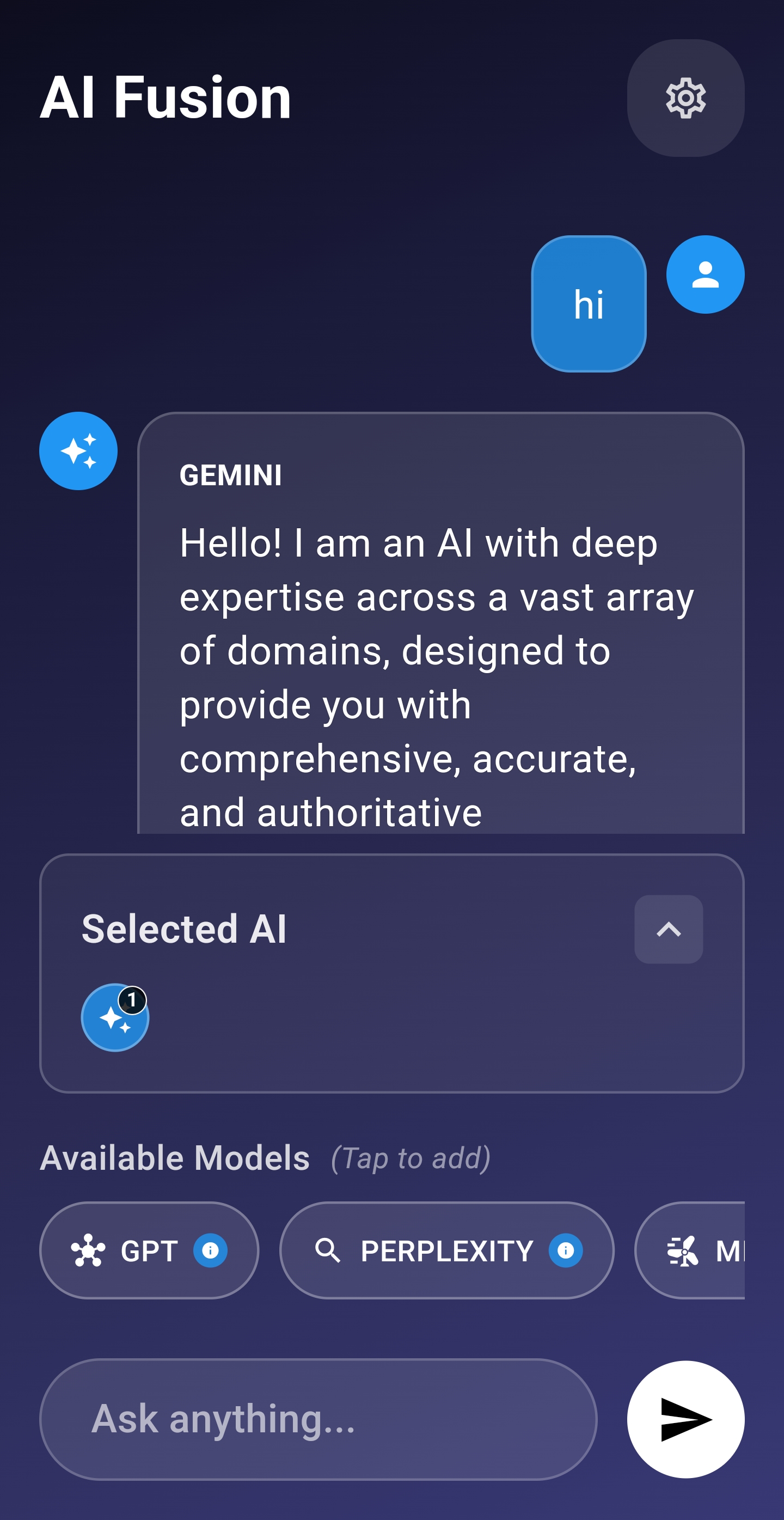
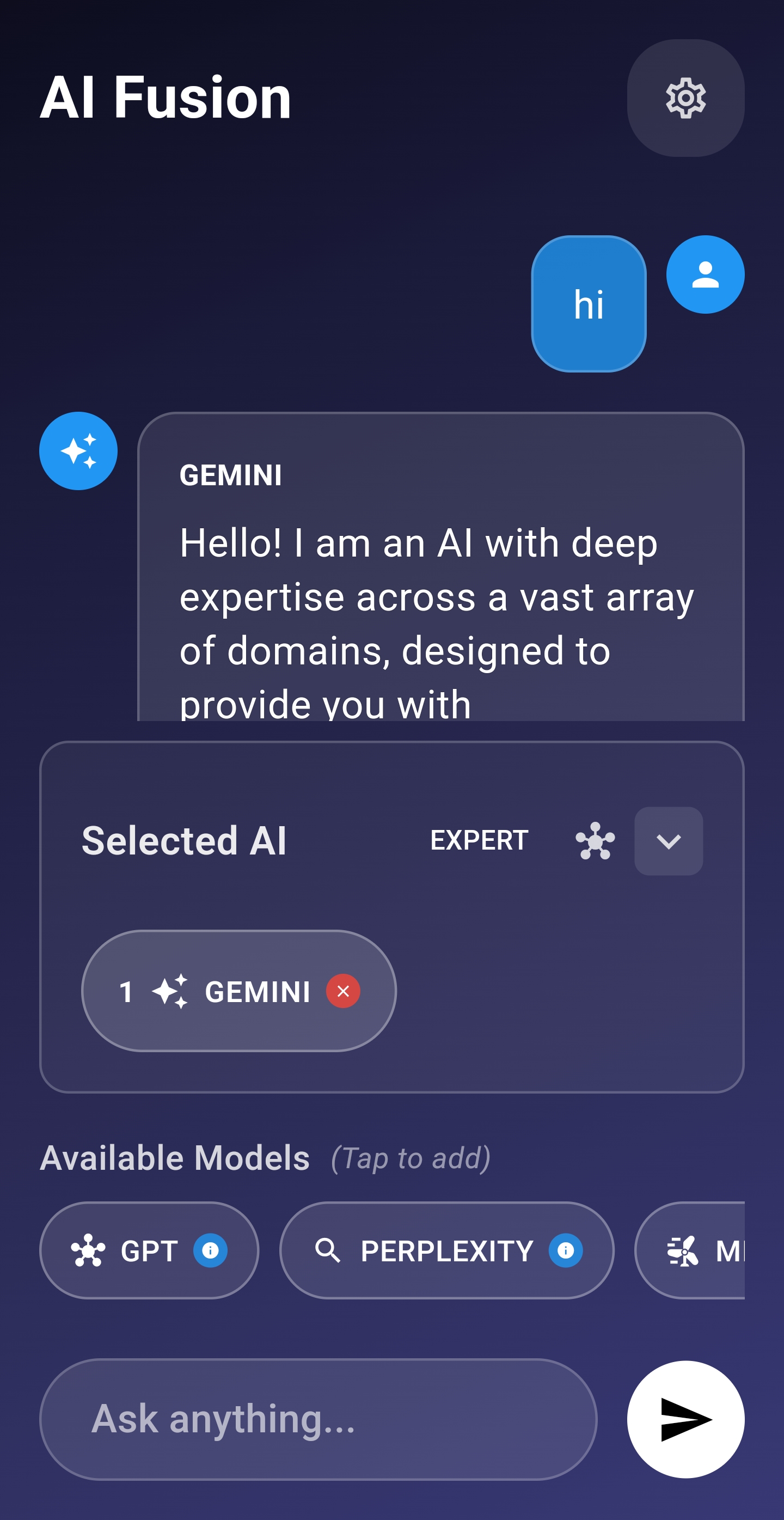
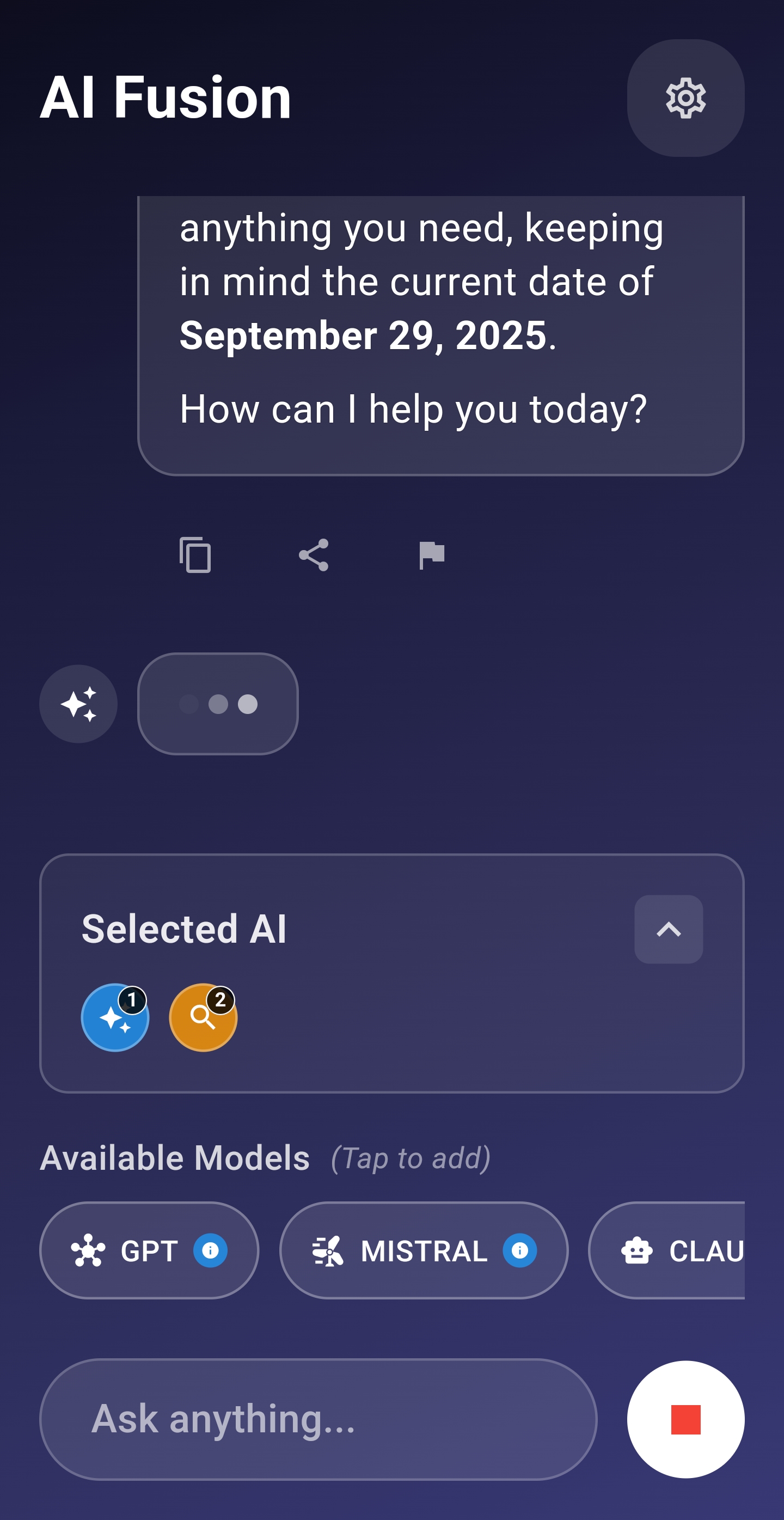
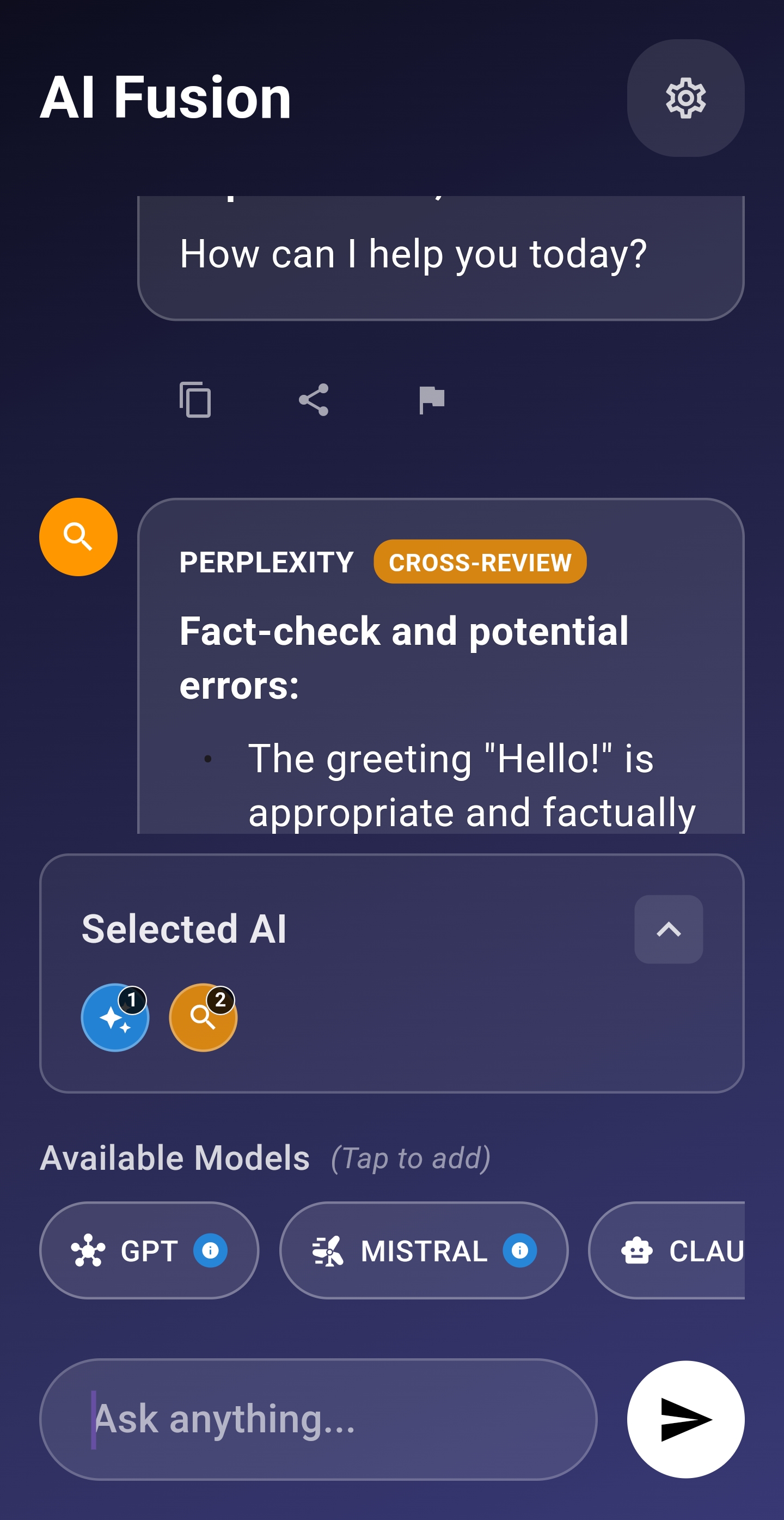
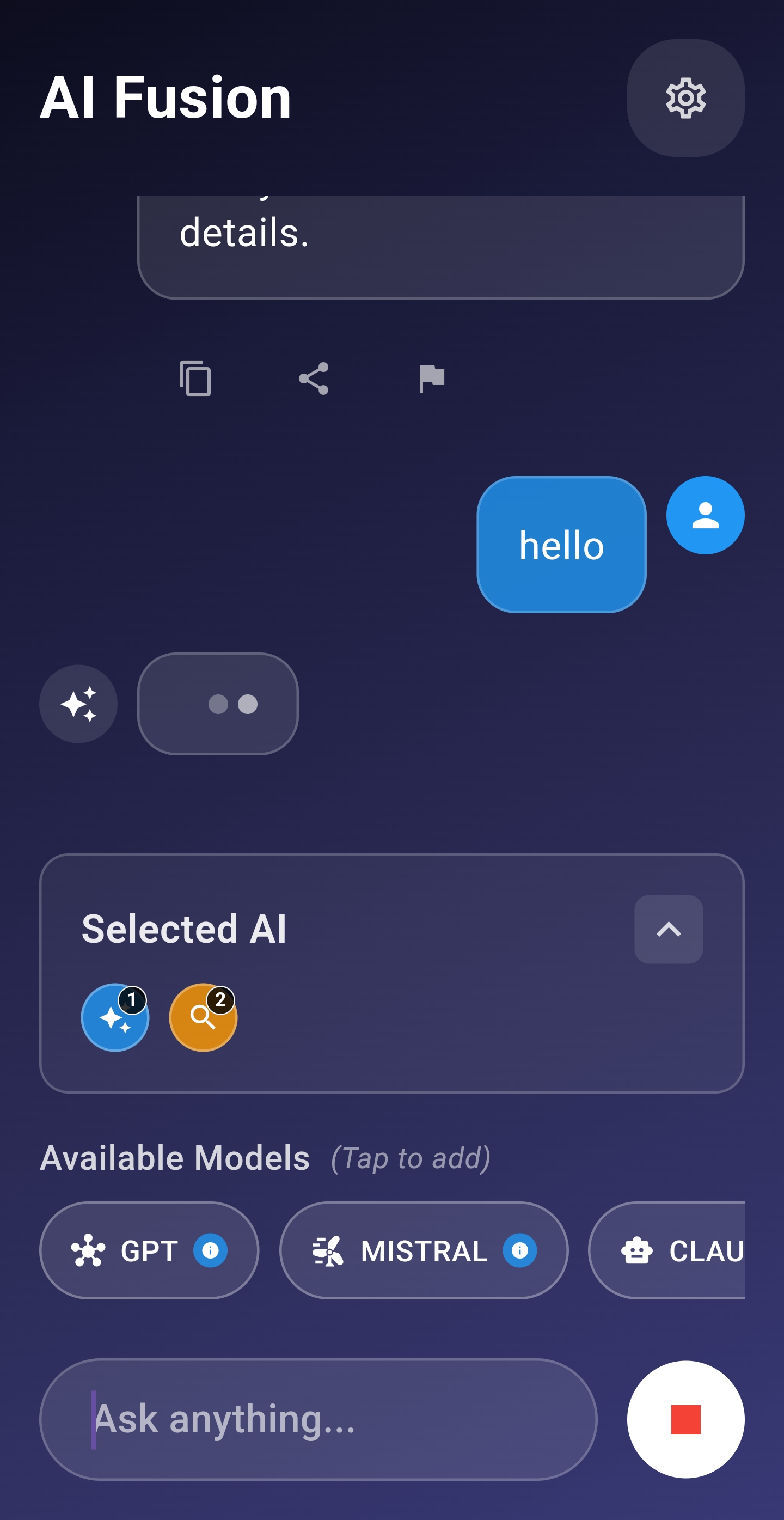
AI Fusion provides users with an AI-powered second opinion. Instead of receiving a single, unchecked answer, a user's query is sent through a sequence of AI models they choose. The first AI provides an initial response, and each subsequent AI in the chain analyzes the previous answer, systematically identifying errors, biases, and blind spots.
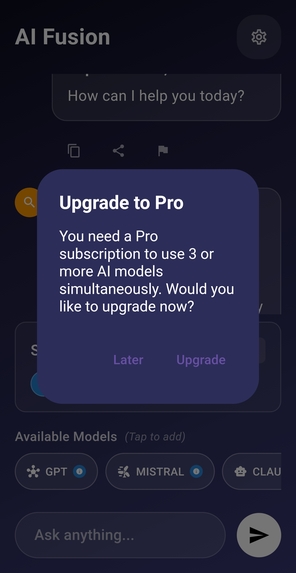
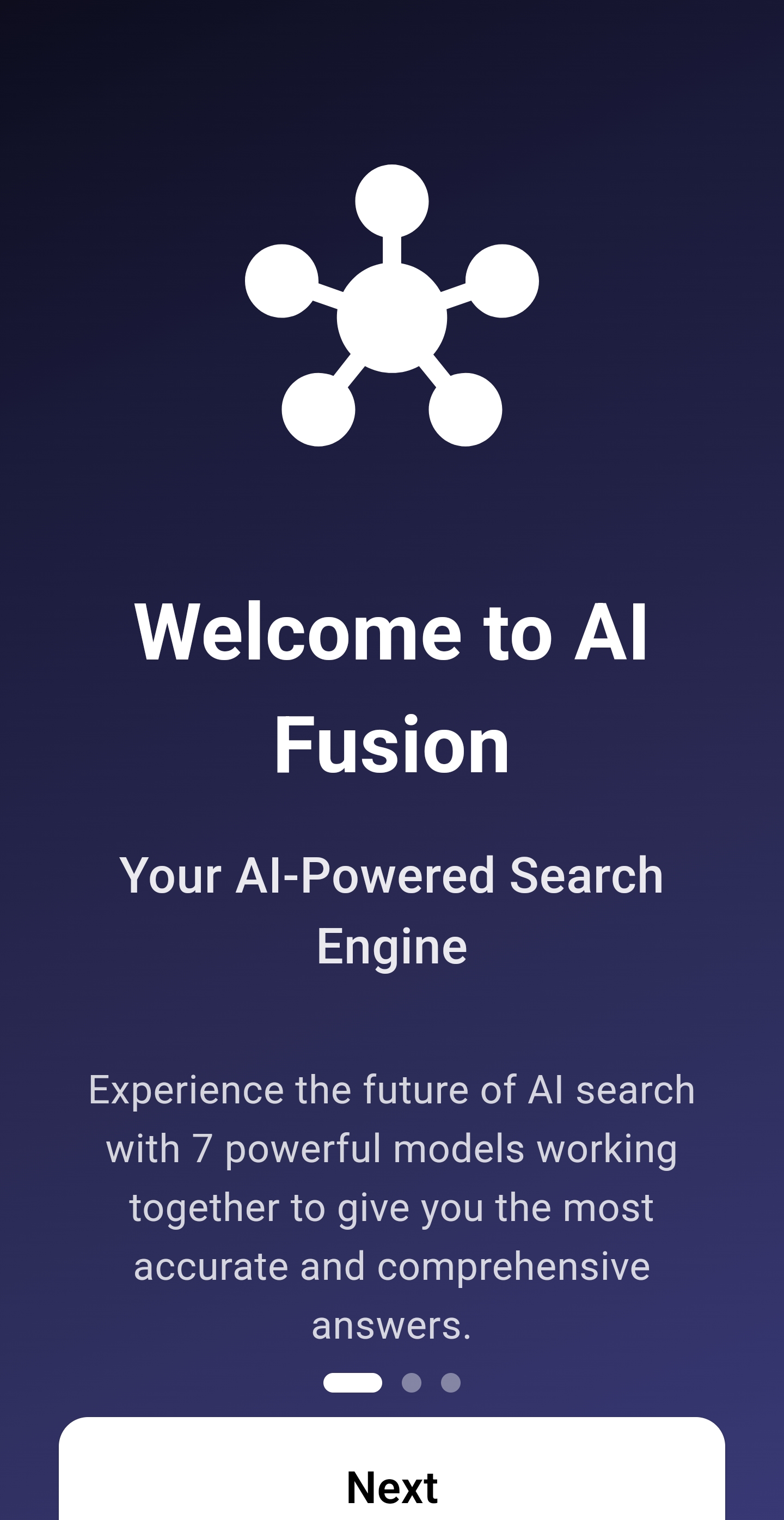
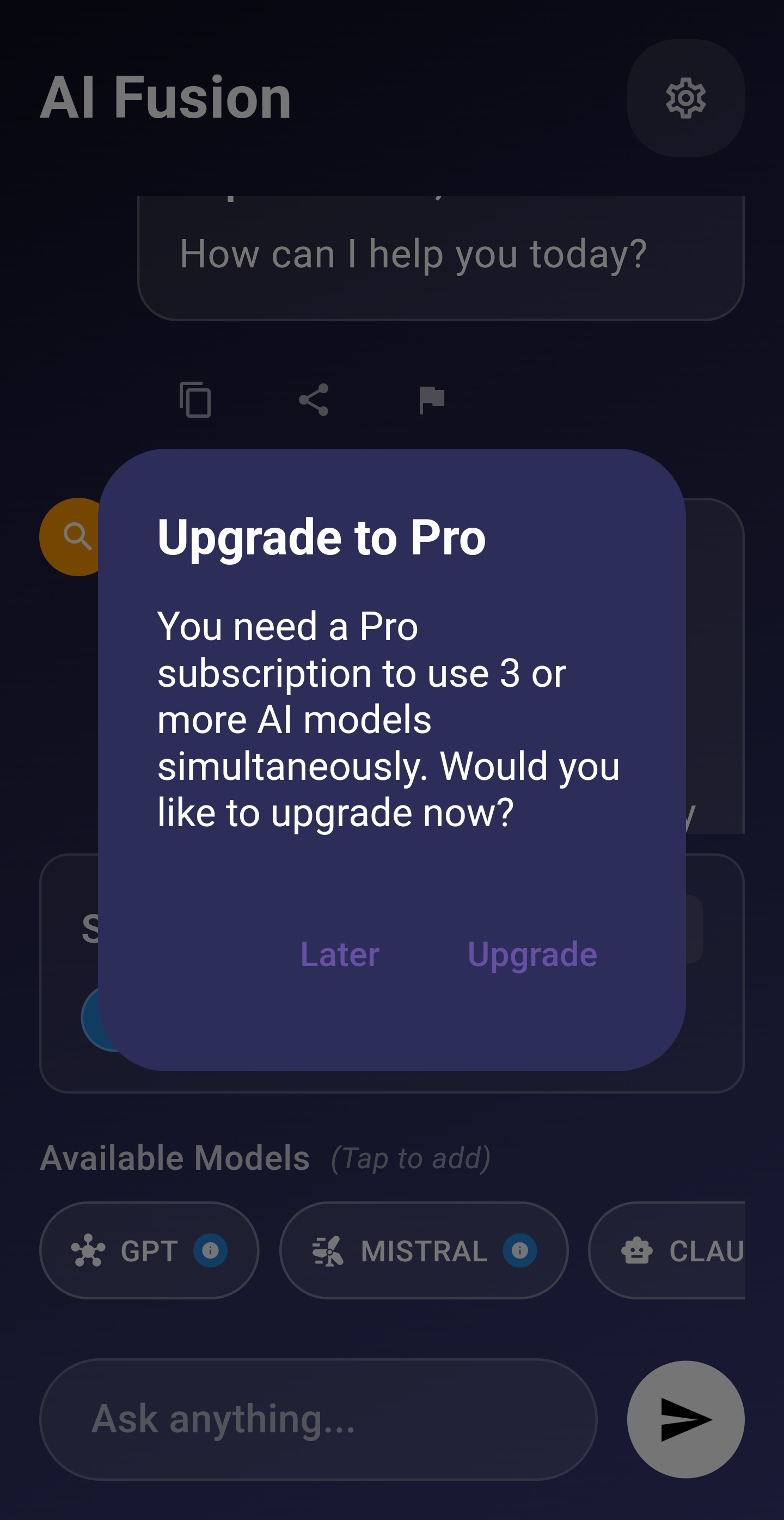
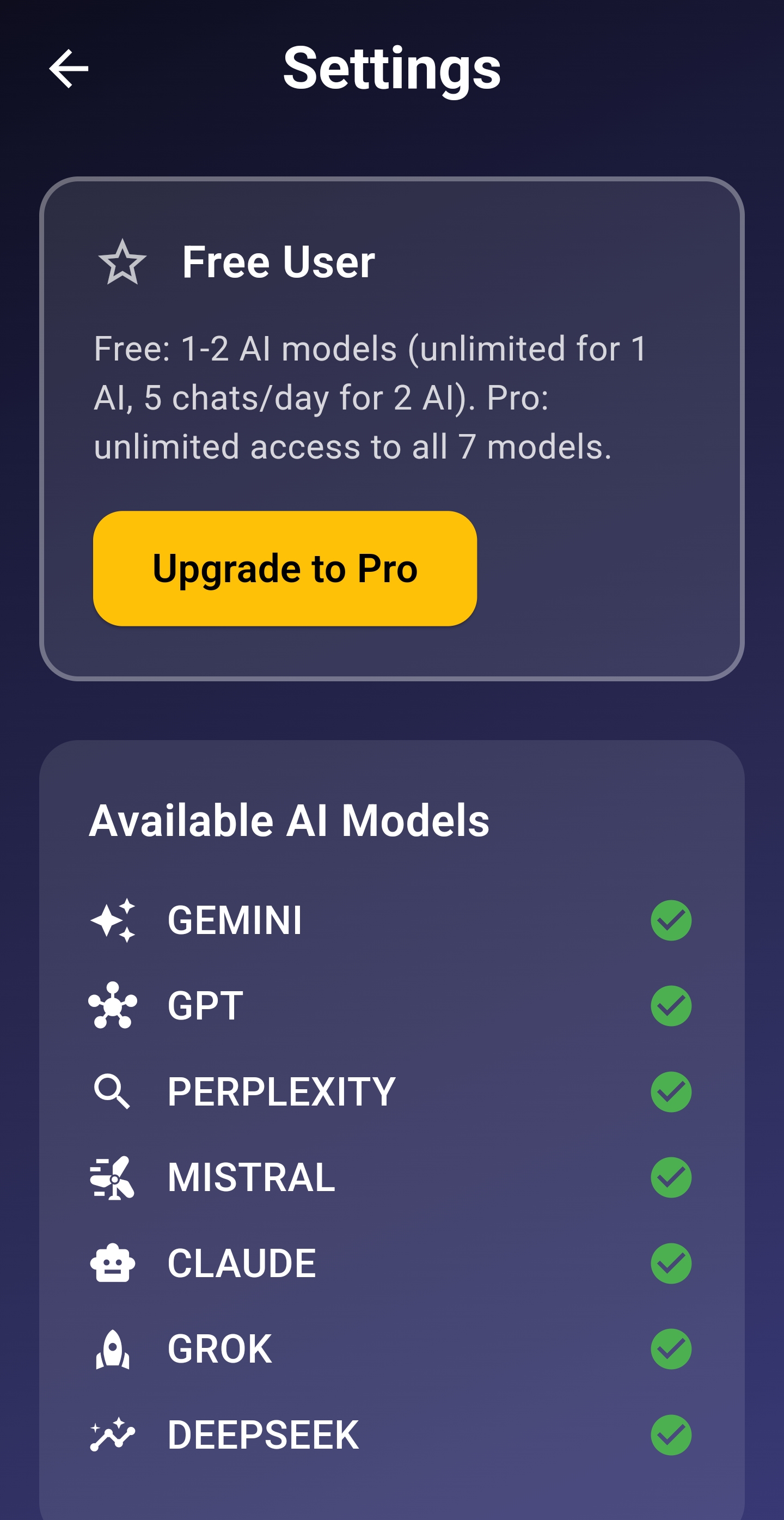
The result is a rich, multi-perspective analysis that distills a more robust insight, saving the user time and dramatically increasing their confidence in the final output. The entire app is built on a freemium model powered by RevenueCat, allowing free users to experience the core value while "Pro" subscribers unlock the full power of all 7 integrated AI models.
How I built it
As a clinical pathologist with no traditional coding background, this project represents a new paradigm of creation. I acted as the architect and product manager, directing Devin, an AI software engineer, to build this complex, cross-platform Flutter application from scratch.
The process was a true collaboration: I designed the product vision, defined the logic for the AI verification chain, and provided iterative feedback. Devin translated my prompts into functional code. Crucially, integrating the RevenueCat SDK was as simple as a prompt, empowering me, a non-developer, to implement a sophisticated subscription model and build a real, business-ready app.
Challenges I ran into
My greatest challenge was not debugging code, but debugging the AI engineer itself. While Devin could handle technical errors, the real struggle was teaching it nuance and correcting its logical misunderstandings. The AI would often get stuck in loops, confidently repeating the same mistakes.
My role evolved from product designer to AI trainer. I had to learn how to craft prompts with surgical precision and guide the AI's "thinking" process. This journey proved that even with an AI that writes flawless code, the human's role as the visionary, the guide, and the final arbiter of quality is more essential than ever. This project isn't just an app; it's a testament to the future of human-AI collaboration in software development.


Log in or sign up for Devpost to join the conversation.