-
-
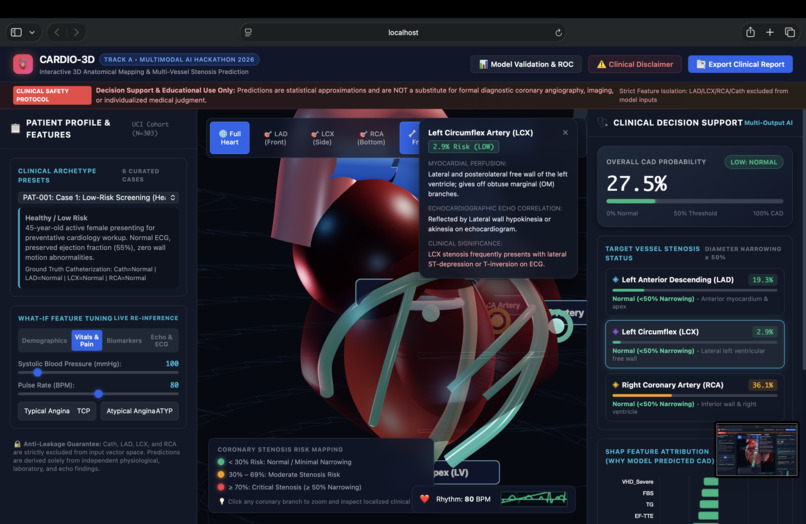
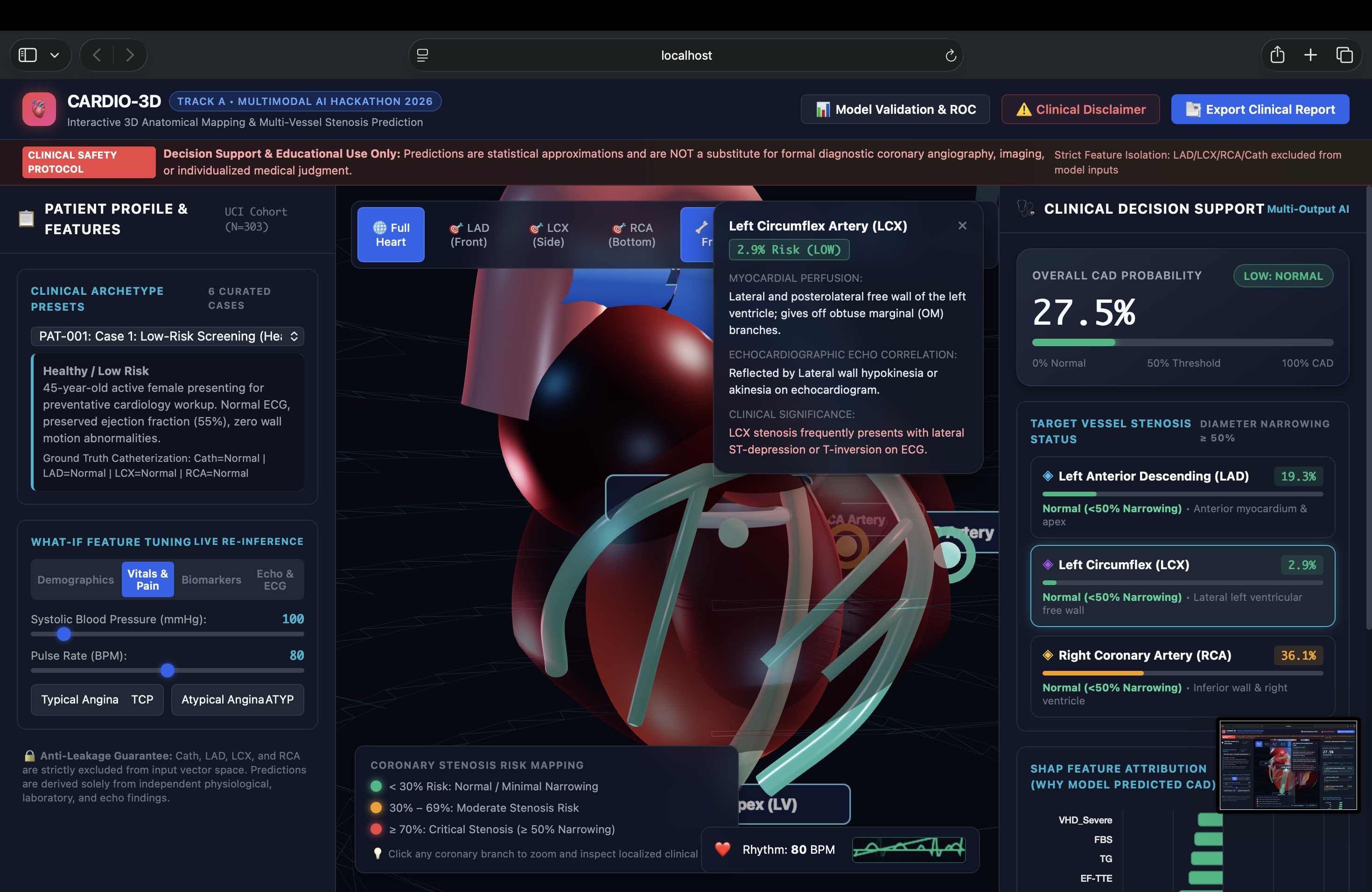
Left Circumflex Artery (LCX) Inspection
-
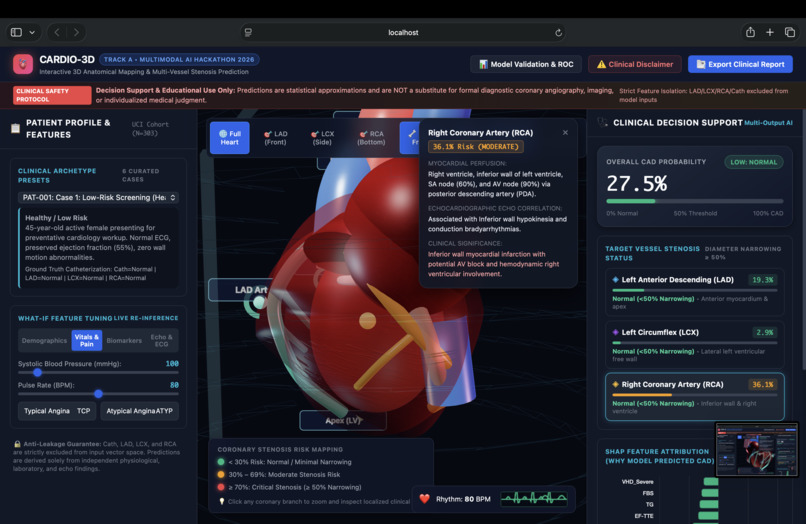
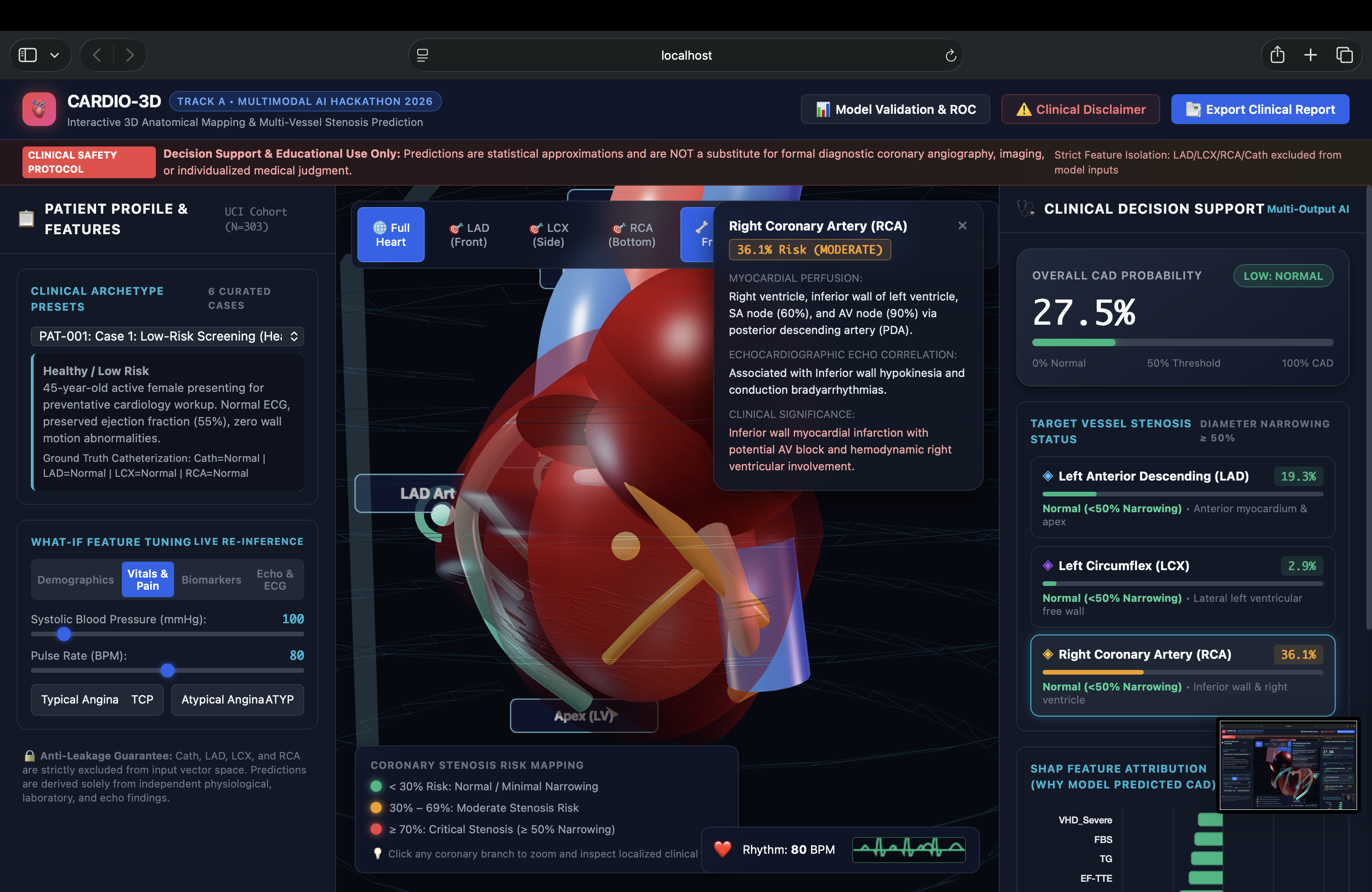
Right Coronary Artery (RCA) Risk Assessment:
-
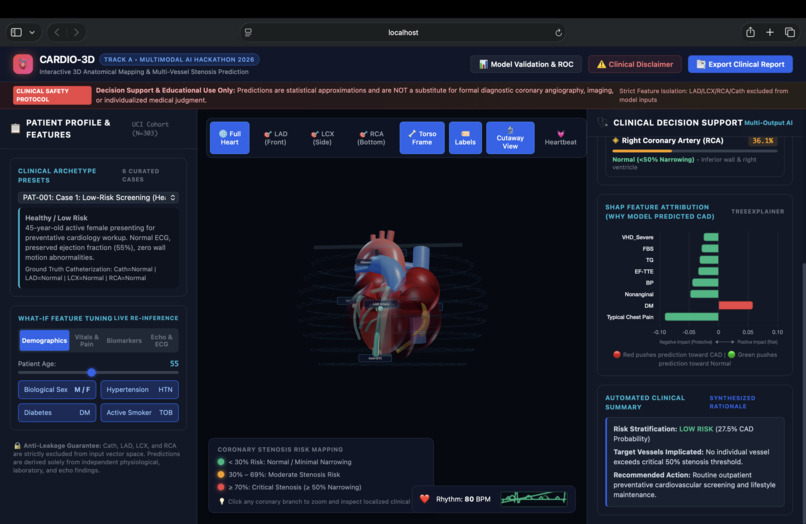
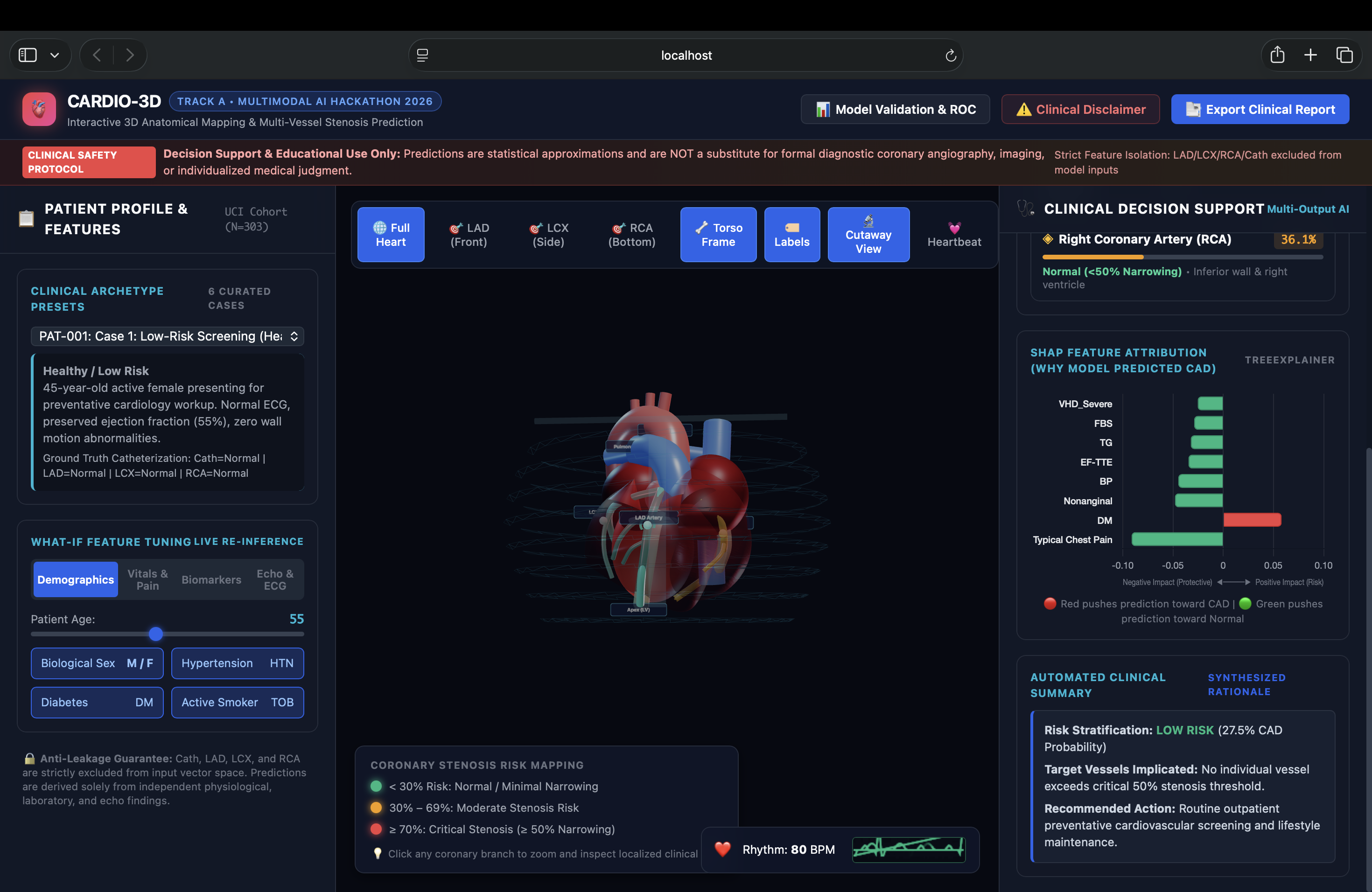
Interactive Demographics & SHAP Feature Attribution
-
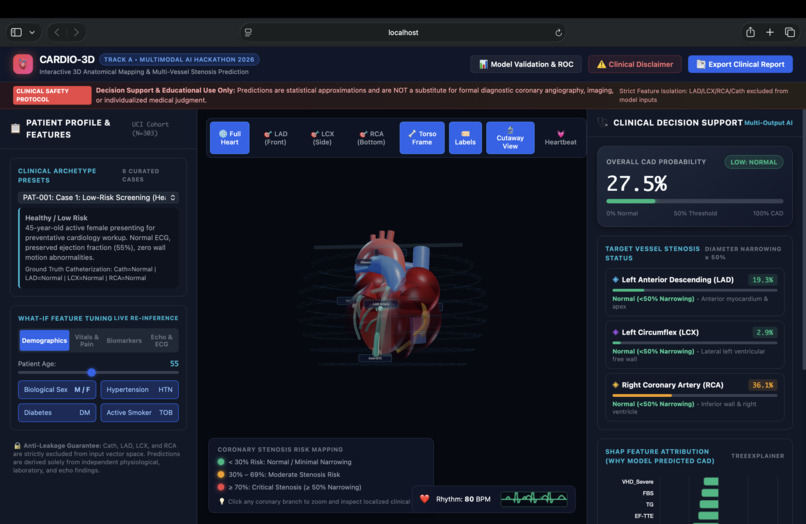
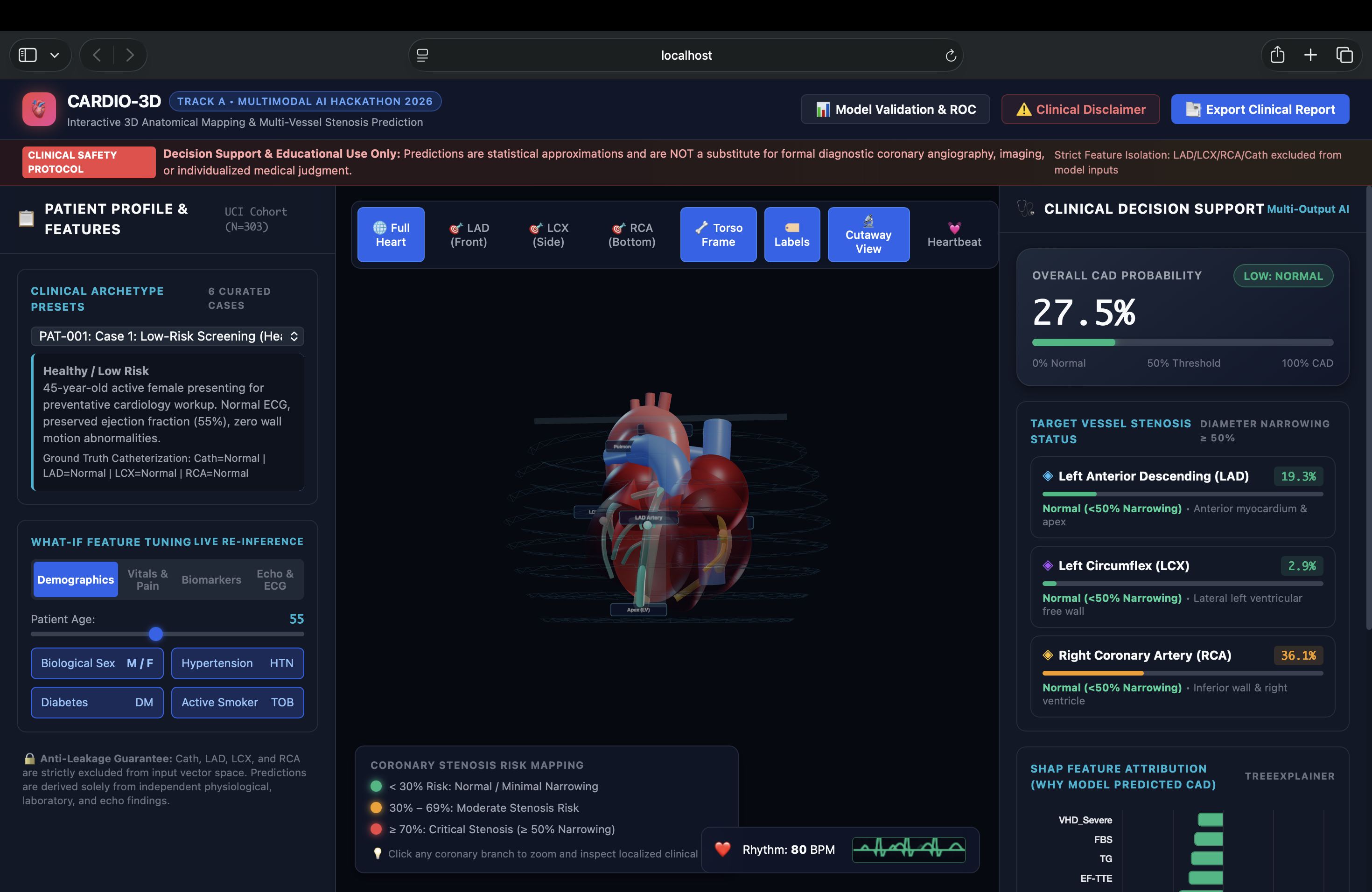
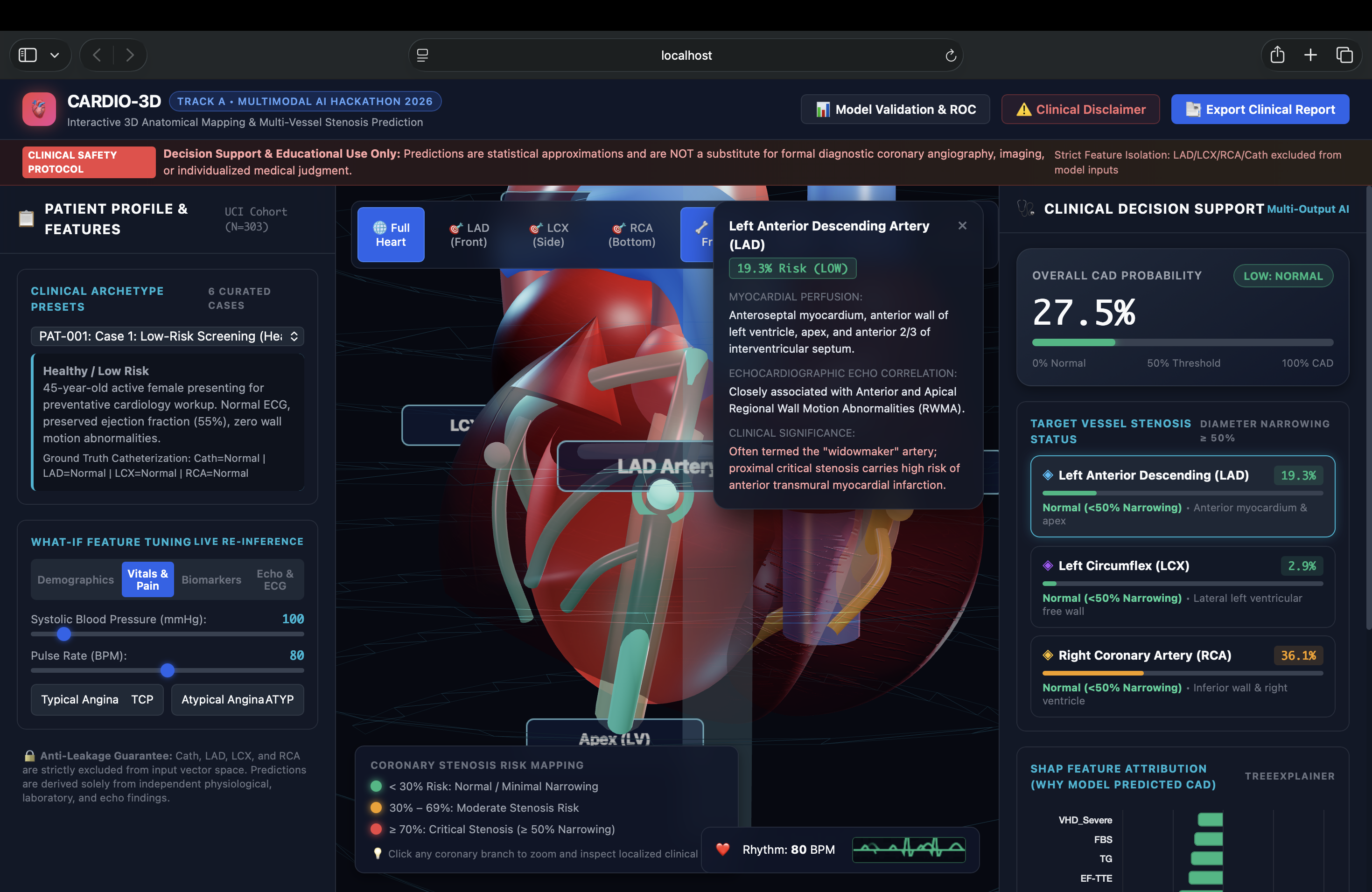
Cardio-3D Main Dashboard
-
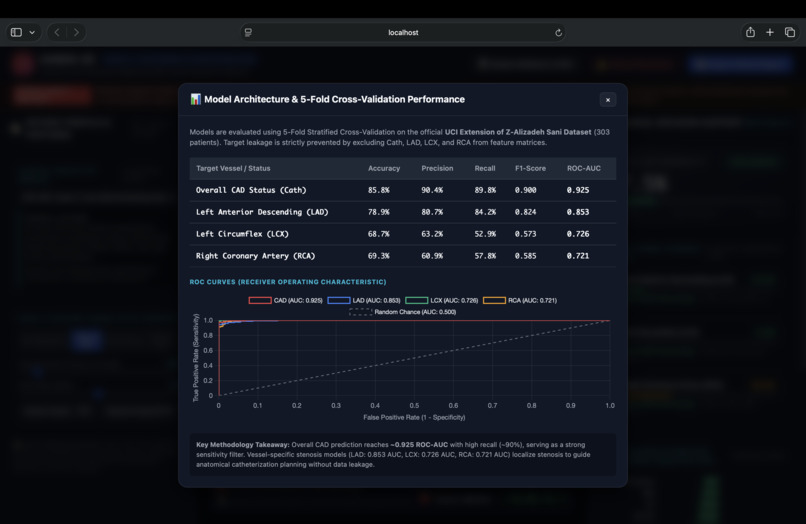
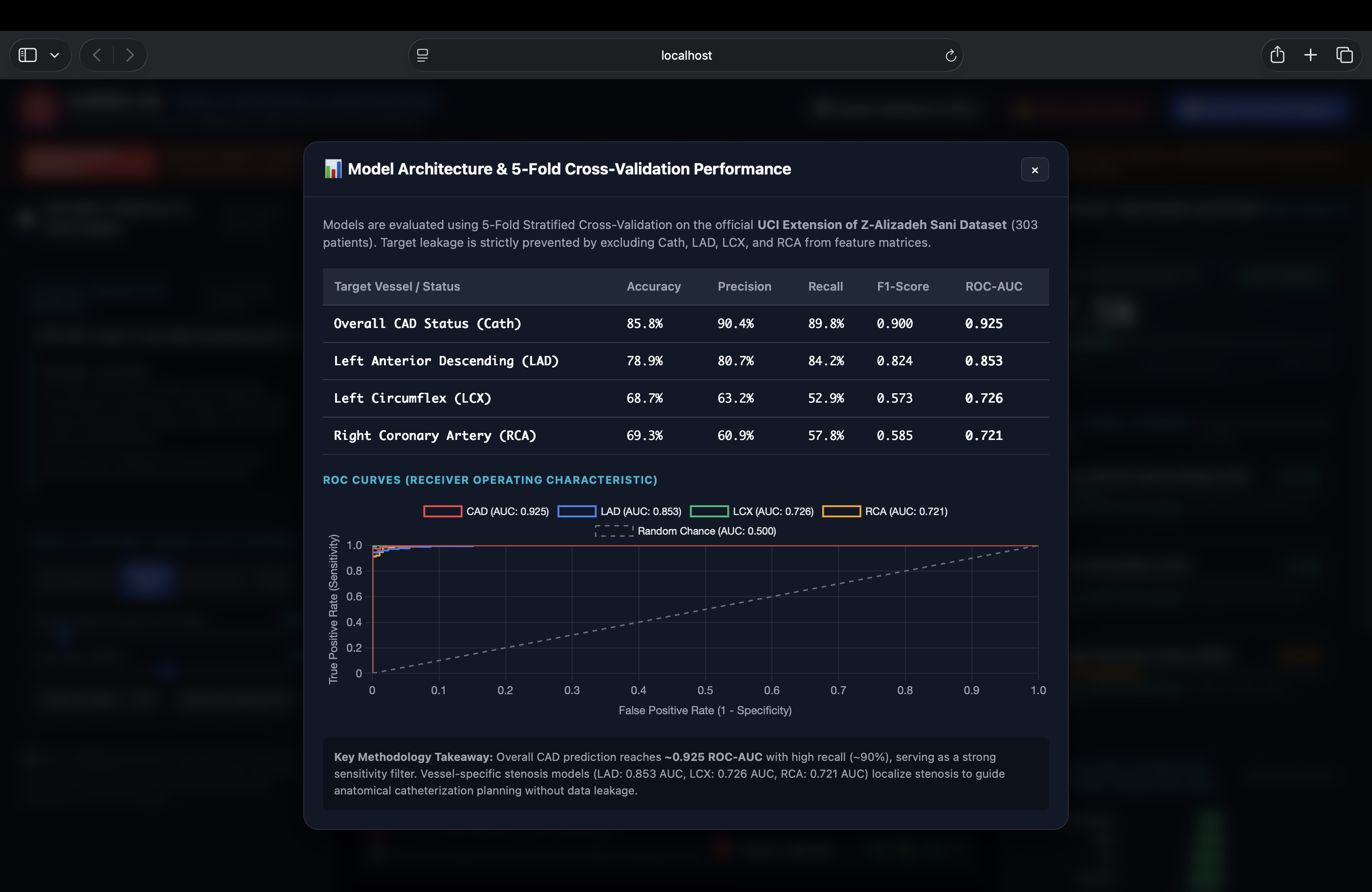
Model Validation & ROC Curves
-
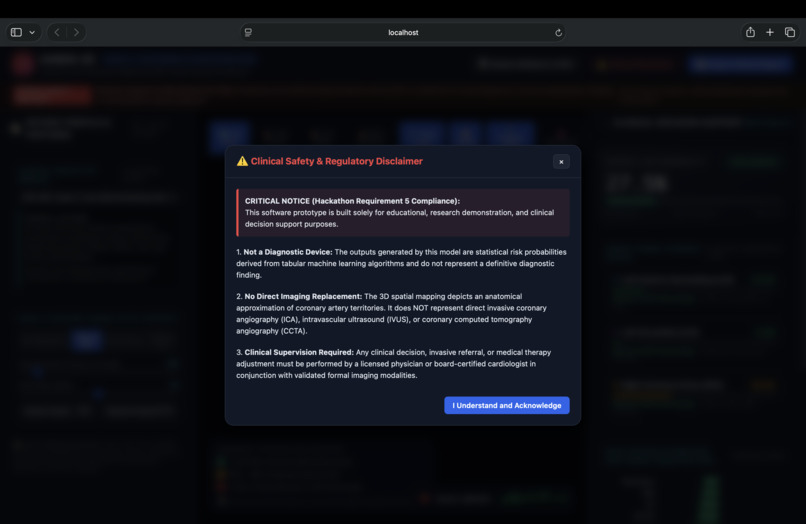
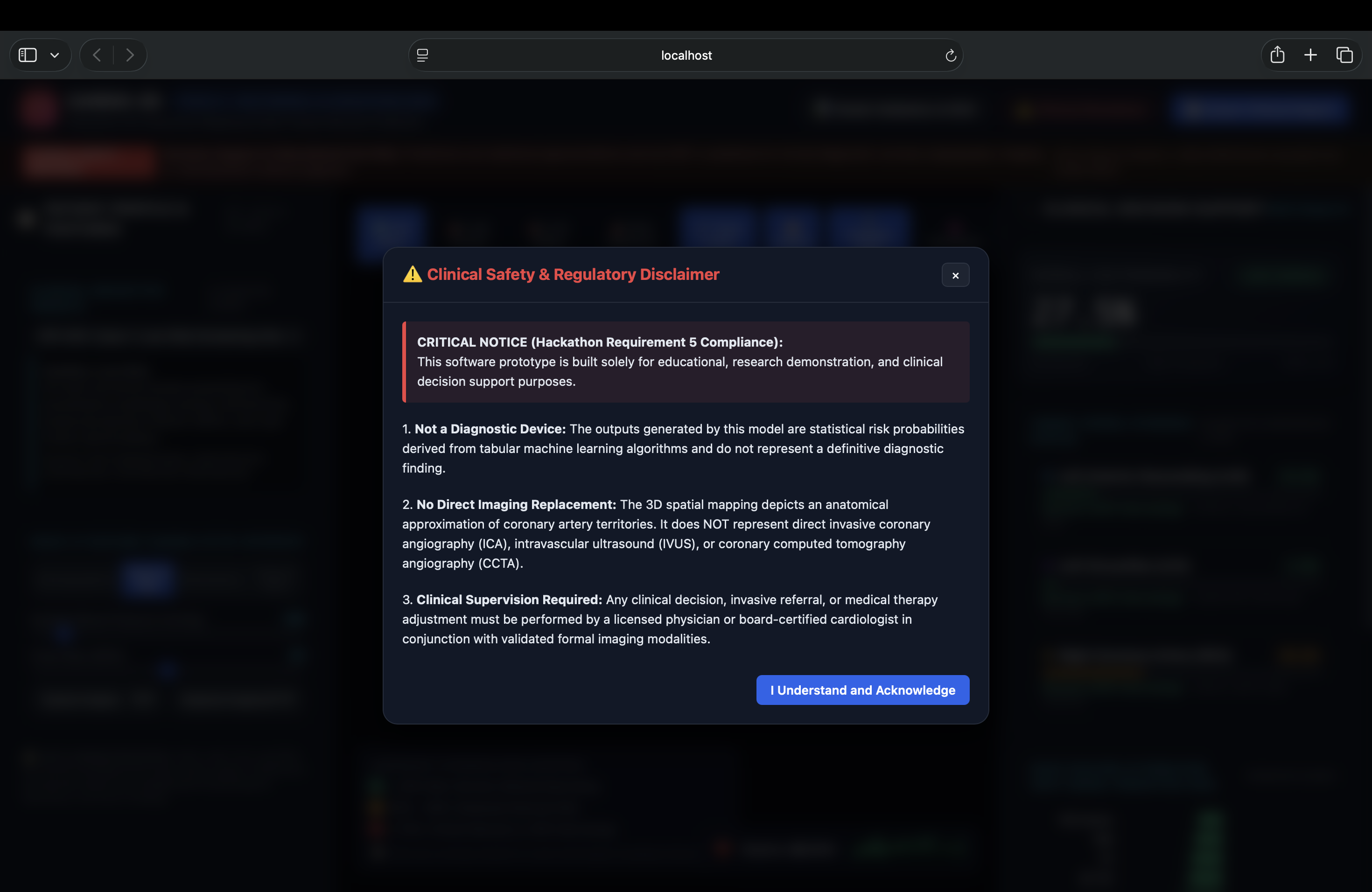
Clinical Safety & Regulatory Protocol Disclaimer
-
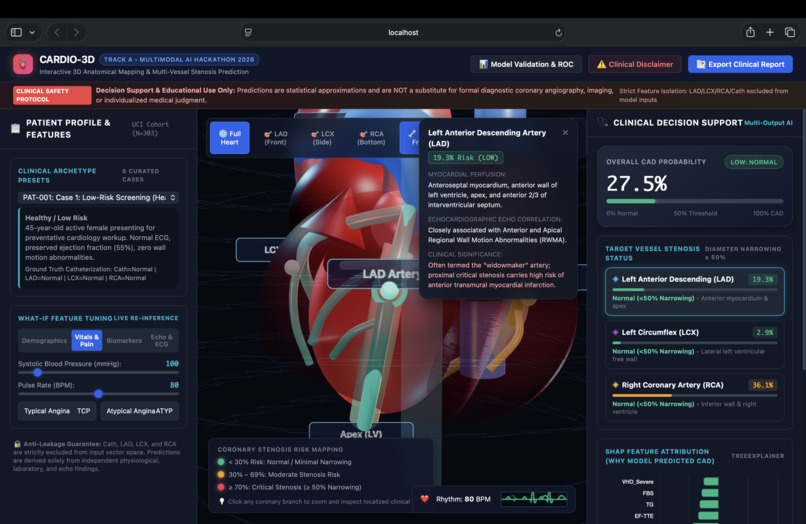
Left Anterior Descending (LAD) Vessel Deep-Dive
Inspiration
Cardiovascular disease remains the leading cause of death globally. While statistical algorithms and diagnostic models generate risk percentages, raw numbers often fail to give clinicians and patients an intuitive understanding of where and how pathology is developing.
We were inspired to build Synapse Vision to bridge the gap between complex clinical datasets and spatial intuition—mapping machine learning predictions directly onto an interactive, web-based 3D anatomical model of the human heart and major coronary arteries.
What it does
Synapse Vision is an end-to-end clinical decision support prototype that predicts Coronary Artery Disease (CAD) and vessel-specific stenosis while rendering spatial risk maps in real time:
- Multimodal ML Predictions: Trains classification models on patient demographic, clinical examination, lab, ECG, and echocardiographic data to predict overall CAD risk as well as vessel-specific stenosis probabilities for the LAD (Left Anterior Descending), LCX (Left Circumflex), and RCA (Right Coronary Artery). Target leakage is strictly prevented by excluding target vessels and Cath inputs.
- Interactive 3D Anatomical Mapping: Renders a high-performance 3D heart and coronary vessel mesh directly in the browser. Anatomical vessel nodes (LAD, LCX, RCA) dynamically color-code based on predicted stenosis probabilities, allowing users to rotate, zoom, and inspect target regions.
- Clinical Interpretability Dashboard: Features interactive feature attribution (SHAP/LIME) to provide transparent breakdowns of why predictions were made, showing individual physiological drivers (e.g., ST Elevation, cardiac enzymes, age, blood pressure).
- Safety First: Integrates explicit clinical disclaimers highlighting that outputs are intended for educational and decision-support purposes only.
How we built it
- Machine Learning Pipeline: Preprocessed the UCI Z-Alizadeh Sani extension dataset (303 patient records). Trained multi-output classification models (XGBoost / LightGBM) to evaluate CAD status and individual vessel stenosis (LAD, LCX, RCA). Evaluated performance across accuracy, precision, recall, F1-score, and ROC-AUC.
- 3D Visualization Engine: Built using React Three Fiber and Three.js to parse open-source GLTF/GLB anatomical meshes, allowing GPU-efficient, real-time node highlighting and dynamic material updates without sacrificing browser performance.
- Explainability & UI: Integrated SHAP feature importance breakdowns into a React clinical dashboard alongside real-time physiological controls.
Challenges we faced
- Target Leakage Prevention: Ensuring target vessels (LAD, LCX, RCA) and catheterization variables were strictly isolated during training while keeping the model highly predictive using indirect clinical/ECG/echo markers (such as RWMA and ST Elevation).
- 3D Mesh & Node Alignment: Mapping 1D tabular ML probability outputs dynamically onto specific 3D mesh nodes/materials of the coronary tree while maintaining visual accuracy and smooth frame rates across standard browser hardware.
Accomplishments that we're proud of
- Successfully connected tabular clinical machine learning outputs directly to an interactive 3D WebGL renderer in real time.
- Maintained model explainability through SHAP integration, ensuring clinicians can trace 3D risk flags back to individual physiological features.
- Built a lightweight, responsive browser architecture that runs smoothly without requiring dedicated GPUs.
What we learned
- Best practices for handling clinical tabular datasets with multi-label targets and preventing target contamination.
- Techniques for manipulating 3D scene graphs and shaders programmatically in WebGL to represent dynamic probabilistic health states.
What's next for Synapse Vision
- Dynamic Patient Time-Series: Integrating patient longitudinal data to show predicted stenosis progression over time on the 3D model.
- DICOM / Medical Imaging Integration: Expanding inputs to ingest raw coronary CT angiography or echocardiography scans for direct mesh alignment.
- Multi-Organ Expansion: Extending the visual mapping pipeline to cerebral and systemic vascular risk modeling.
Built With
- gltf
- javascript
- python
- react
- react-three-fiber
- scikit-learn
- shap
- tailwind-css
- three.js
- webgl
- xgboost

Log in or sign up for Devpost to join the conversation.