-
-
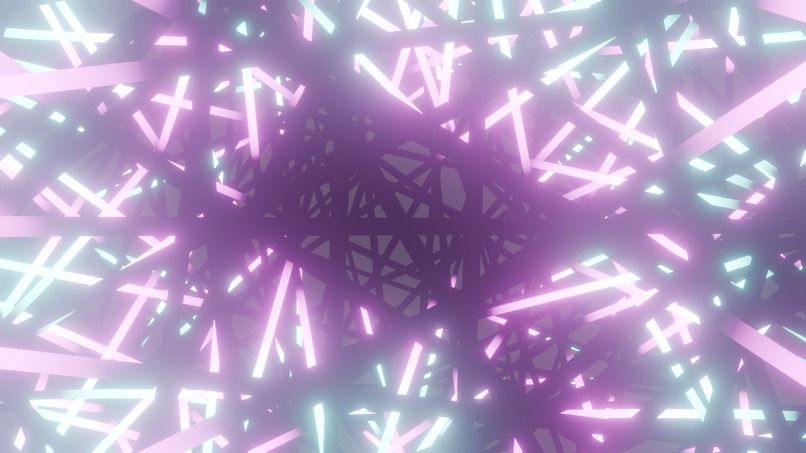
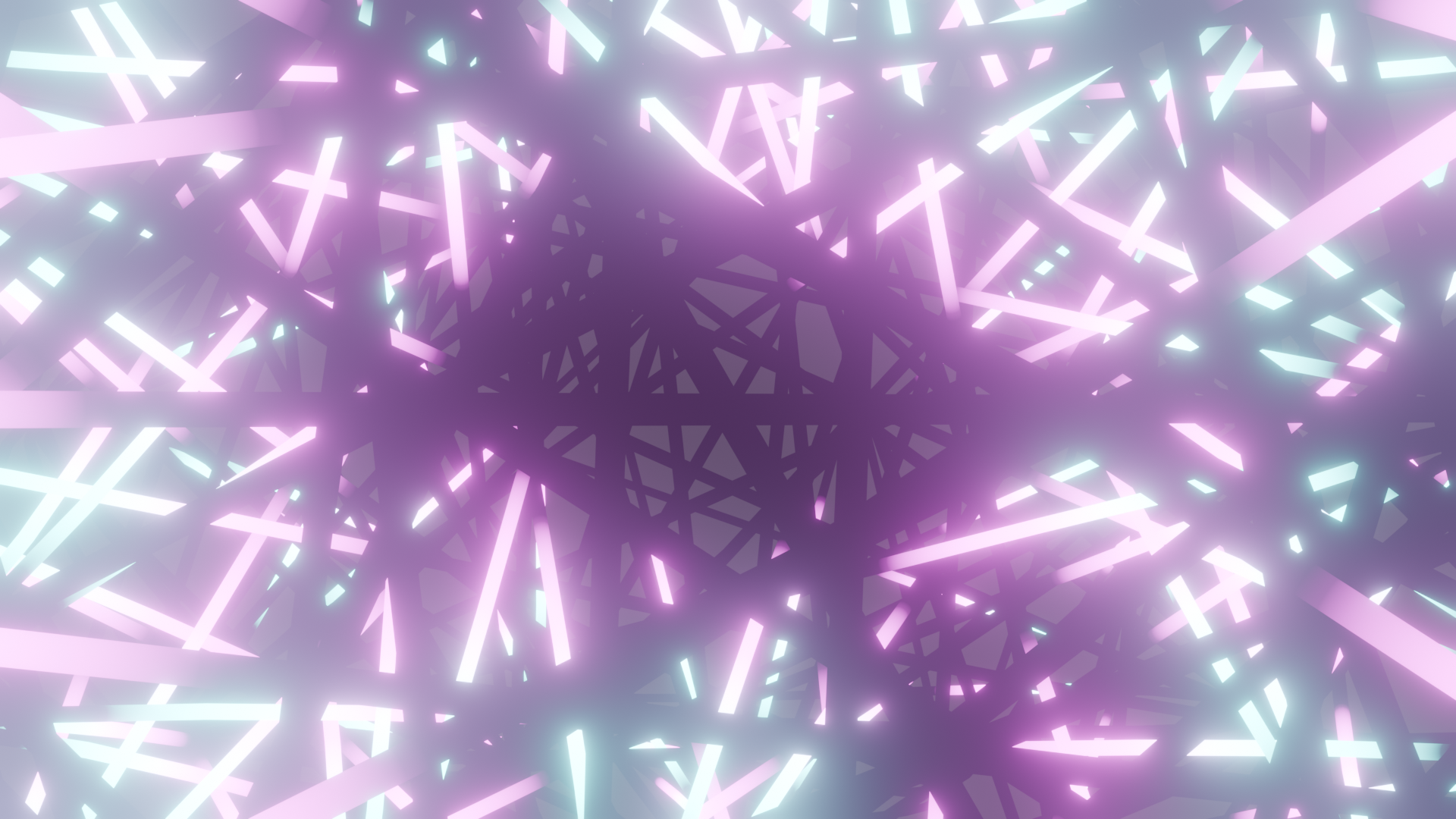
Rendered image
-
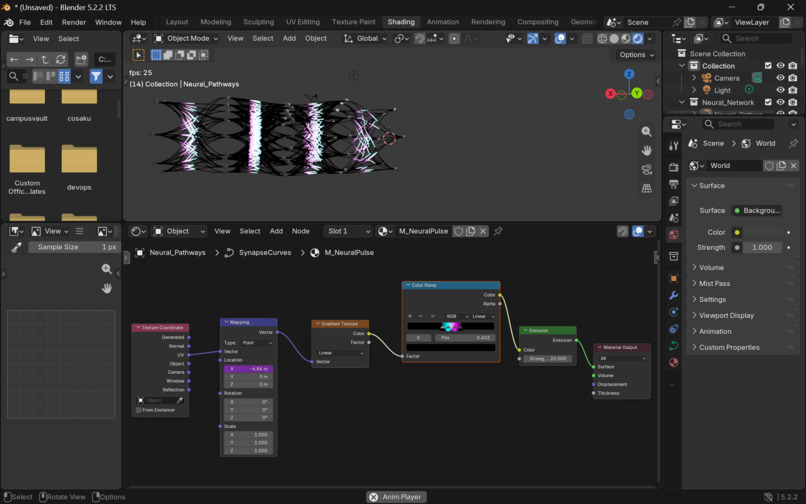
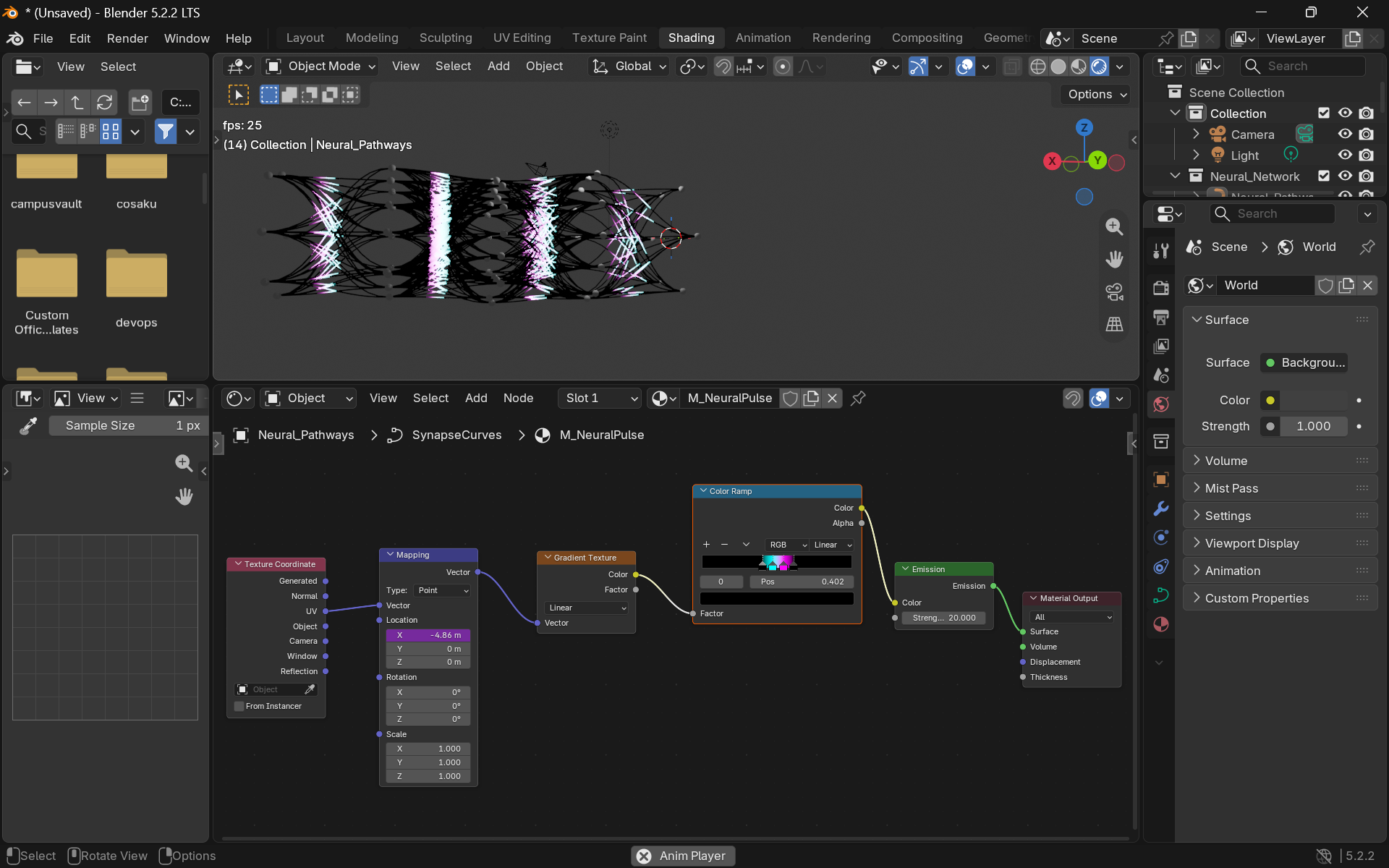
shading
-
-
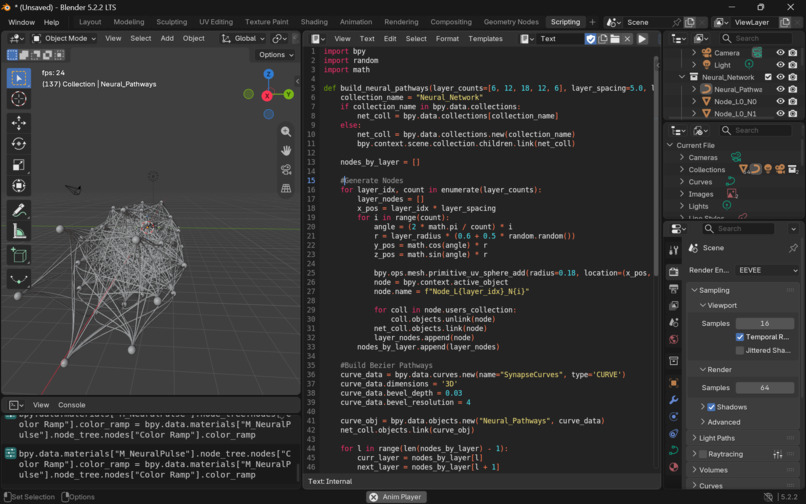
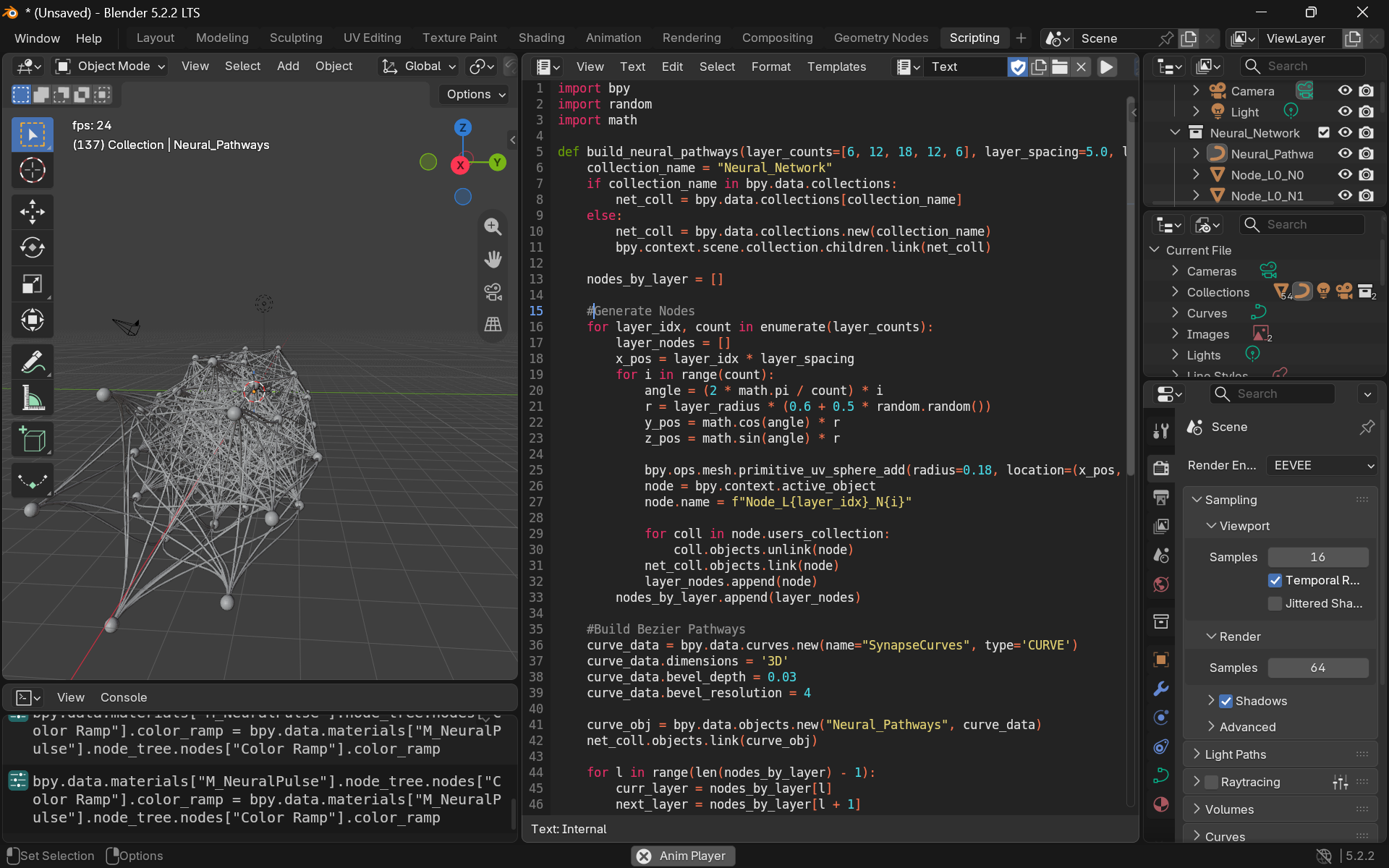
code snippet
Inspiration
The concept for Synapse Velocity: Programmatic Neural Speed was born from a desire to merge high performance procedural generation with the theme of Speed. Instead of manually modeling complex structures, we wanted to explore how code could dictate both physical form and temporal acceleration. Neural networks represent the ultimate translation of velocity instantly transmitting data across vast interconnected pathways making them the ideal canvas to showcase procedural animation driven entirely by math.
What it does
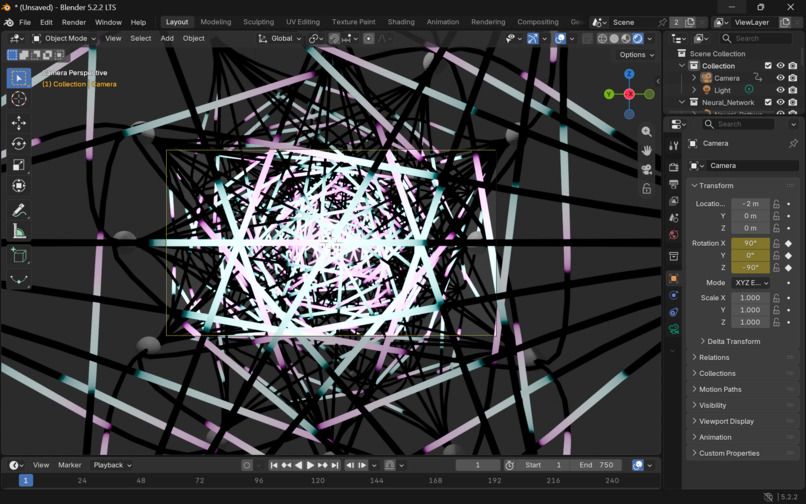
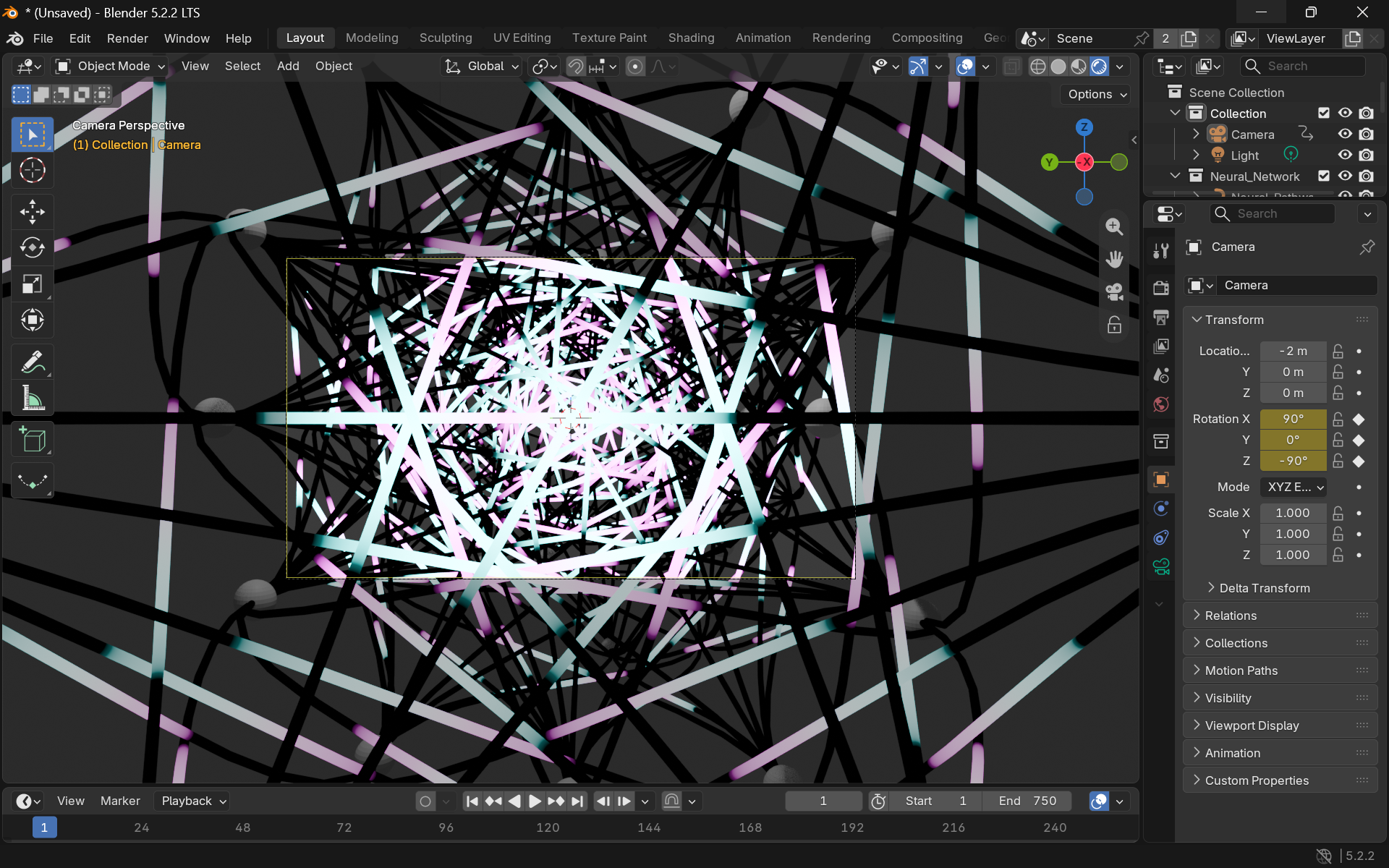
Procedural Neural Topology: Generates a complex, multi-layered 3D network of nodes and interconnected Bezier curves dynamically via Blender's Python bpy API.Accelerating Data Pulses: Features custom shader-driven light bullets that shoot through the pathways, accelerating exponentially over time using custom mathematical drivers ($-(frame \times \text{speed})$). Cinematic Camera Fly-Through: An exponential camera track that plunges through the core of the network, synchronized with the data flow to evoke a sense of hyper-speed and scale. Stylized Neon Aesthetics: Utilizes a custom M_NeuralPulse material network paired with EEVEE compositor bloom to deliver high-contrast, cyberpunk-inspired visual feedback.
How I built it
Engine & Scripting: Built using Blender 5.2.2 LTS, leveraging the Python bpy module to programmatically spawn nodes, manage curve geometry, and assign custom materials. Shader Architecture: Engineered a node-based pulse shader using texture coordinates, mapping, and gradient textures coupled with precise colorramps to create tight, sharp packets of light sandwiched in pure black. Dynamic Math Drivers: Integrated exponential growth equations into the shader nodes and camera animation curves to drive the acceleration theme mathematically. Post-Processing: Configured EEVEE's compositor node pipeline with a Glare/Bloom node to achieve vibrant light bleed and cinematic depth.
Challenges I ran into
Managing pulse sharpness: Early iterations of the gradient texture created wide, washed-out bands of color instead of fast-moving light bullets. We solved this by tightly clamping and sandwiching color stops on the colorramp with pure black boundaries. Camera pacing & timing: Balancing the camera's transition speed with the frequency of the data pulses required fine-tuning keyframe interpolation in the graph editor to ensure a smooth, high-speed rush without lingering too long in empty space.
Accomplishments that I am proud of
Achieving a fully script-driven workflow where the entire topology and animation behavior are mathematically controlled rather than hand-animated. Successfully implementing infinite tiling via Vector Math (Fraction) nodes to keep the data pulses continuously streaming without resetting or breaking texture coordinates. Crafting a sleek, high-impact aesthetic that fits the strict timeline constraints of a speed-themed contest.
What I learned
Deepened our mastery of Blender's Python API (bpy) for procedural asset generation.
Gained advanced intuition on utilizing procedural texture nodes and math drivers to simulate complex energy flows and motion dynamics.
Asset and AI disclosure
All 3D assets, neural network topologies, and animations were procedurally generated from scratch using custom Blender nodes and a Python (bpy) script. No third-party pre-made models, textures, or external AI-generated assets were used in this project.

Log in or sign up for Devpost to join the conversation.