Inspiration
Remote learning has become the new normal, but students face a critical challenge: maintaining focus without the structure of a traditional classroom. We've all been there staring at a screen for hours, not realizing we've been distracted for the last 20 minutes, or pushing through stress until burnout hits. The inspiration for Synapse came from three key observations:
Students don't know when they lose focus - By the time you realize you're distracted, you've already wasted precious study time. Generic productivity apps don't understand YOU. One-size-fits-all solutions ignore your unique patterns, optimal study times, and learning style. Mental health matters - Students need empathetic, supportive interventions not judgmental notifications.
What if your computer could be a supportive study companion that truly understands you, notices when you're struggling, and helps you refocus with personalized, empathetic guidance? Synapse was born from this vision to create an AI-powered study aid that combines real-time biometric monitoring, predictive AI, and compassionate interventions to help students study smarter, not harder.
What it does
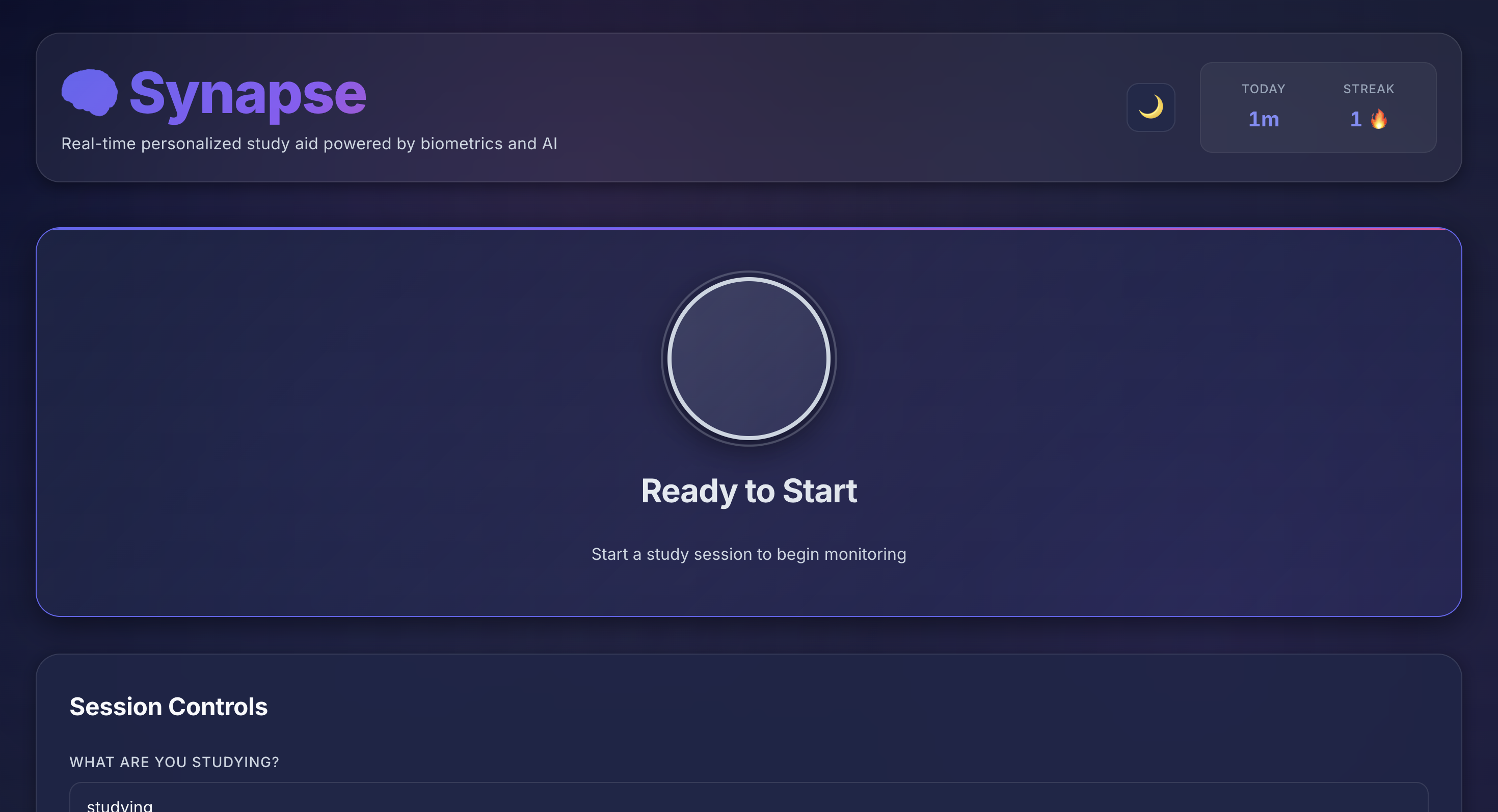
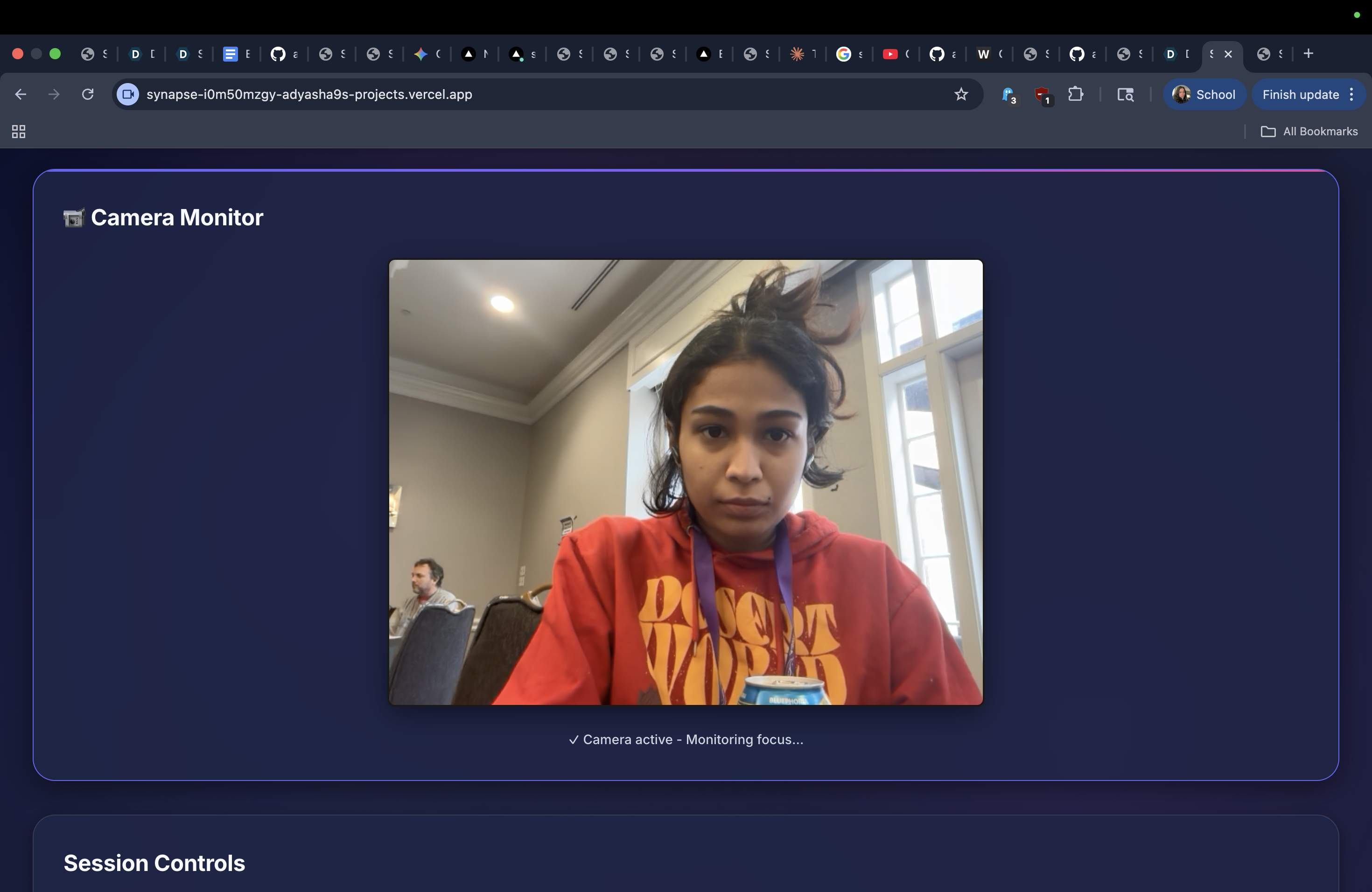
Synapse is an intelligent, real-time study companion that monitors your focus through your webcam, predicts when you'll lose concentration, and delivers personalized voice-guided interventions all in under 5 seconds. The Complete Experience:
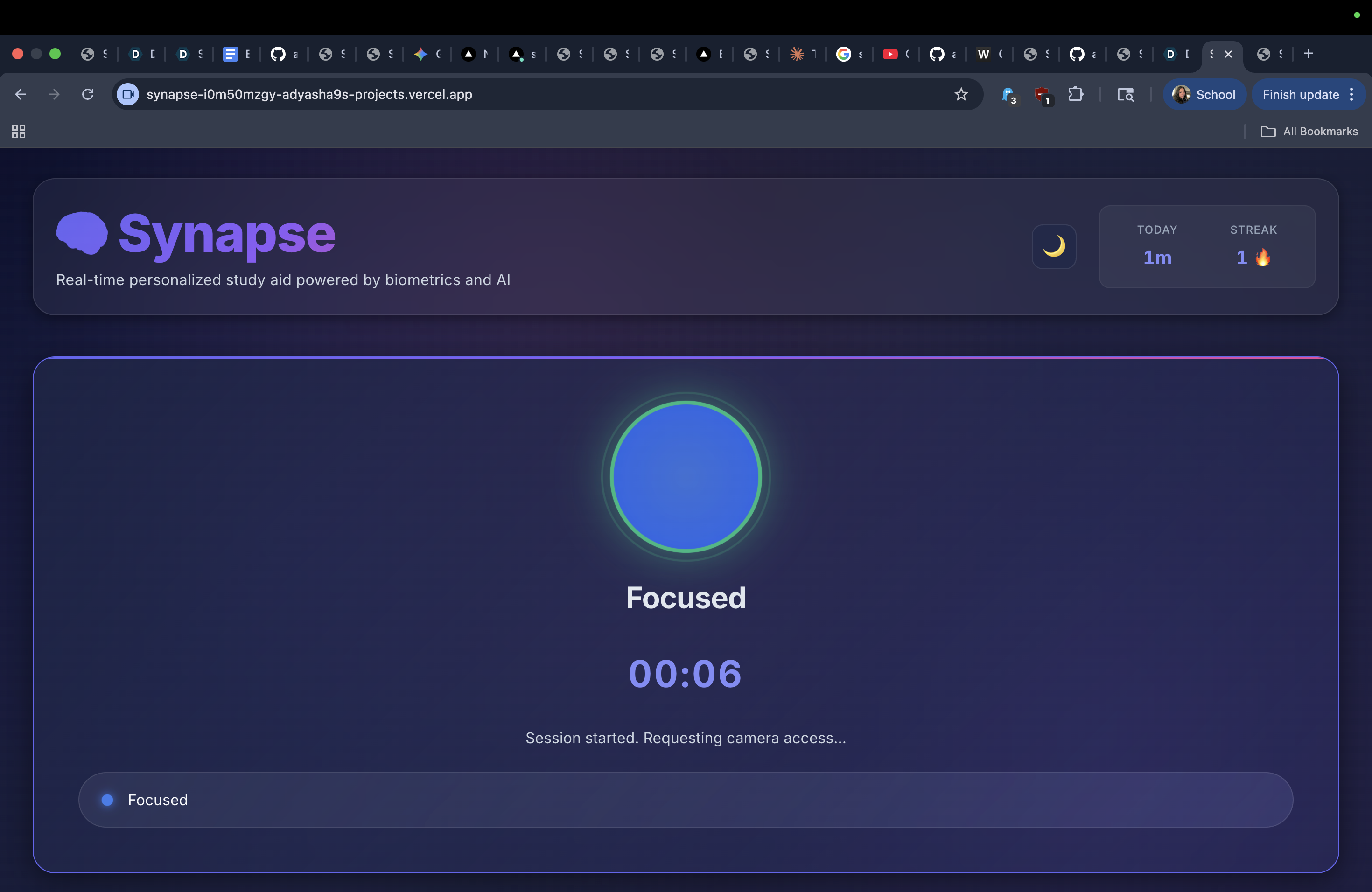
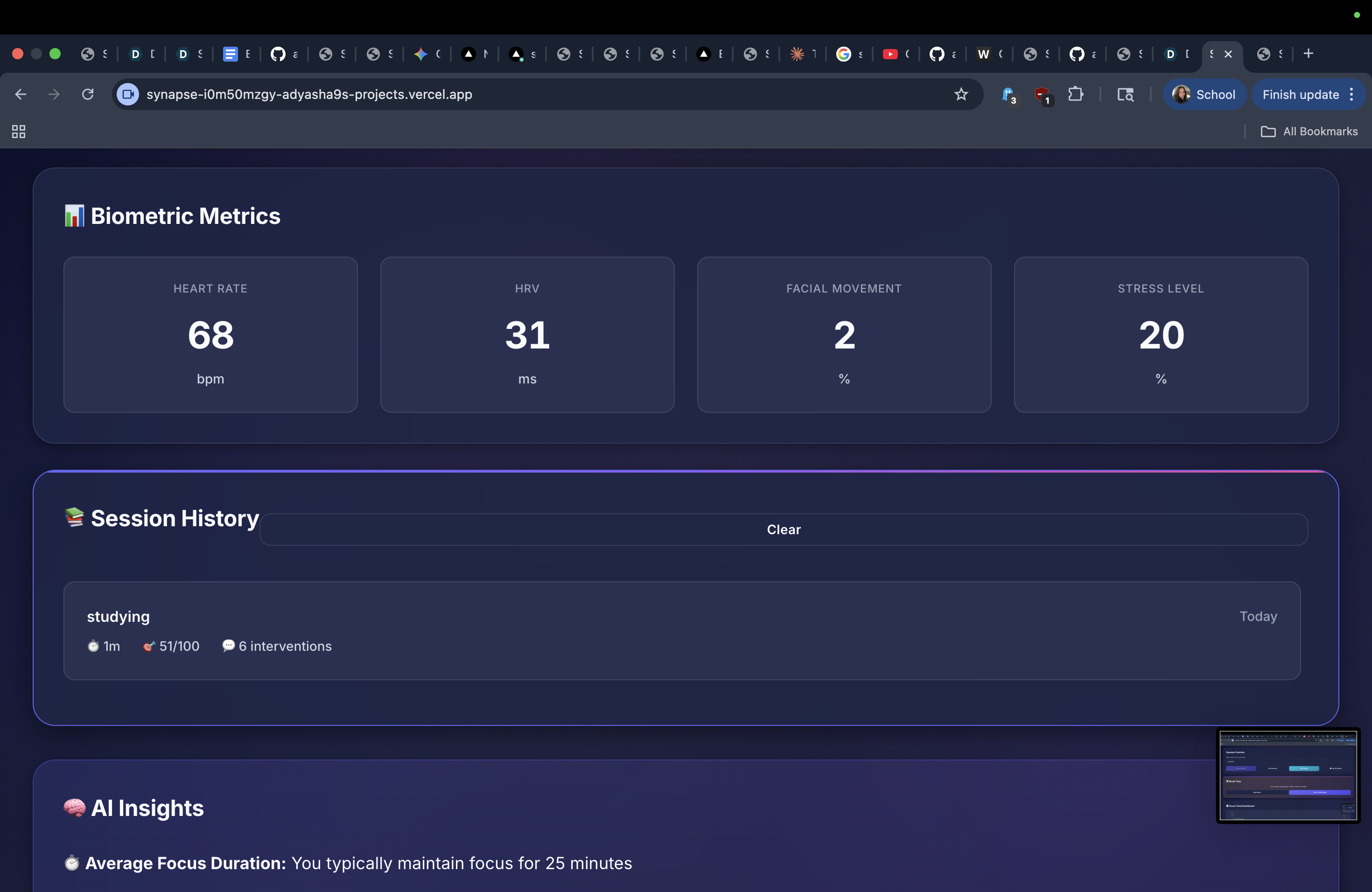
Real-Time Focus Monitoring Uses your webcam to analyze facial movement patterns and stress indicators Calculates biometric metrics every 2 seconds (facial movement, stress level, engagement) Visual focus zones: Deep Focus 🟢 → Focused 🔵 → Distracted 🟡 → Lost Focus 🔴
Predictive AI Alerts (Proactive, not Reactive) Learns your patterns: "You usually lose focus after 25 minutes" Sends alerts before focus drops: "Consider taking a break now" Subject-specific predictions: different patterns for Math vs Reading
Personalized AI Interventions Gemini 2.0 Flash generates empathetic, context-aware advice Tailored to your study subject: "Take a breath. Let's review the Fundamental Theorem of Calculus." Delivered via natural voice (ElevenLabs): calming, supportive tone
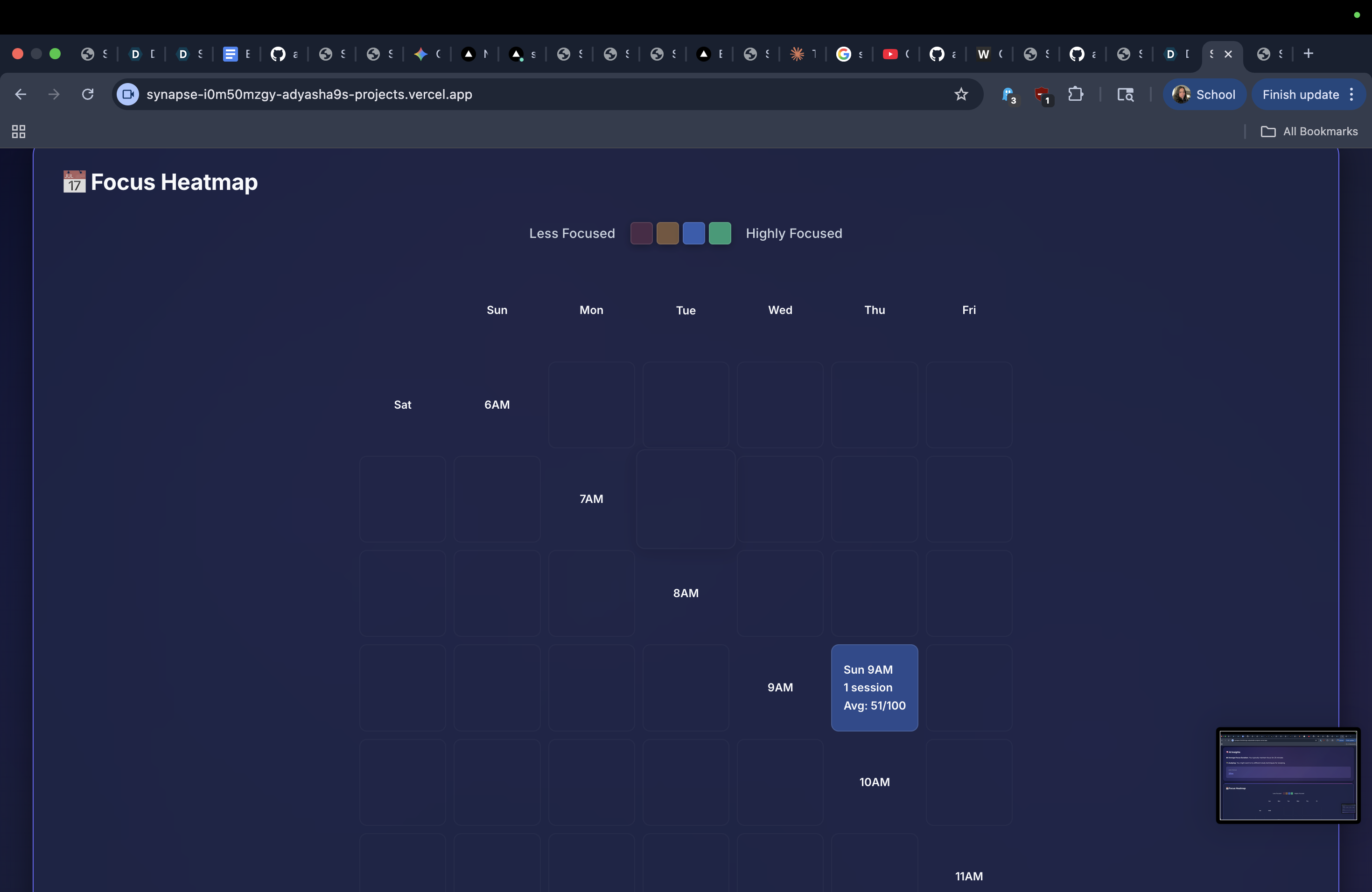
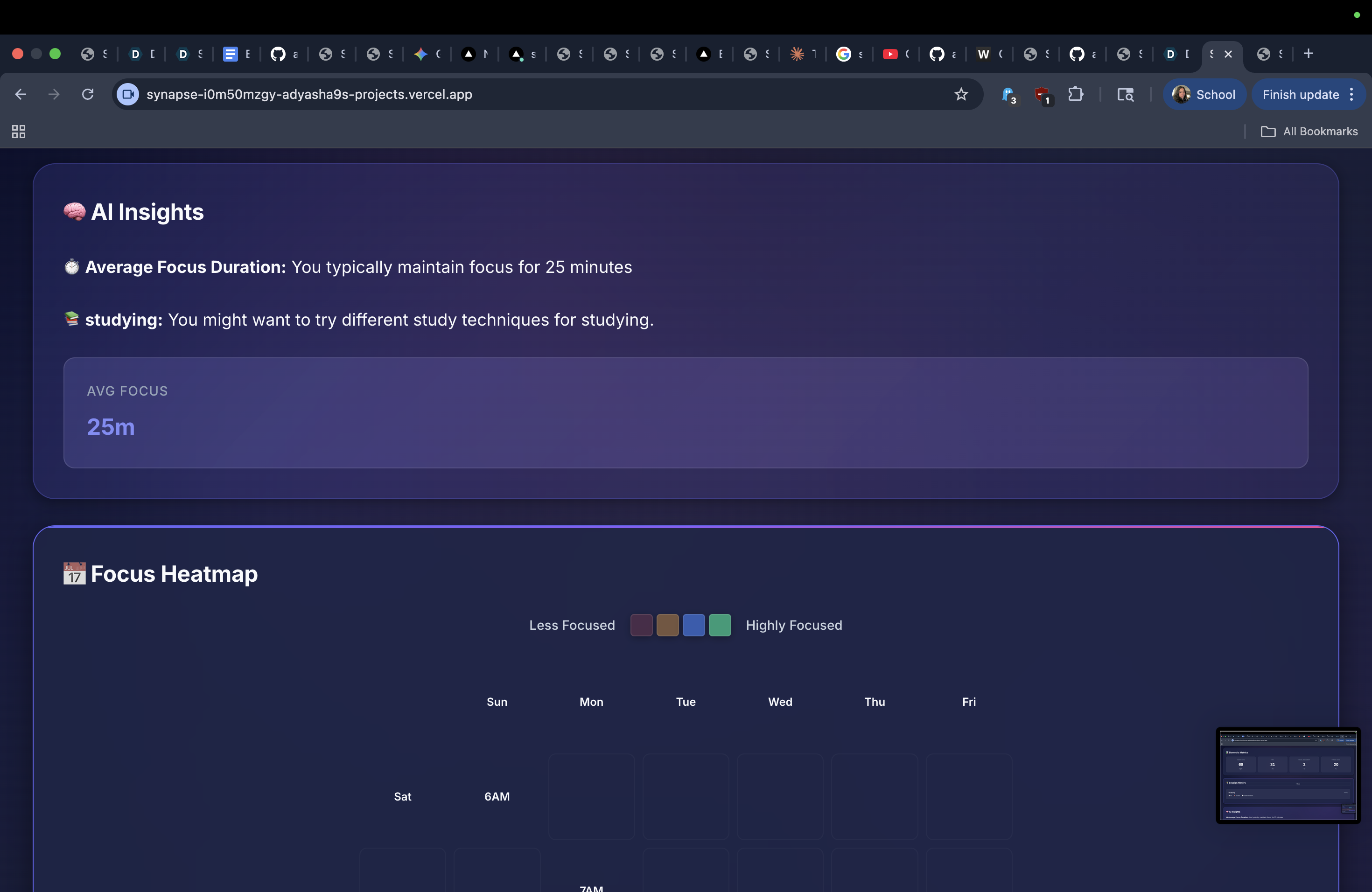
Adaptive Learning System Self-improving AI that learns YOUR unique patterns: Optimal study times: "You focus best on Tuesday at 9 AM" Subject performance: "Your Math focus improved 25% this week" Stress triggers: "You get stressed before lunch" Provides personalized recommendations that get better over time
Visual Analytics Dashboard
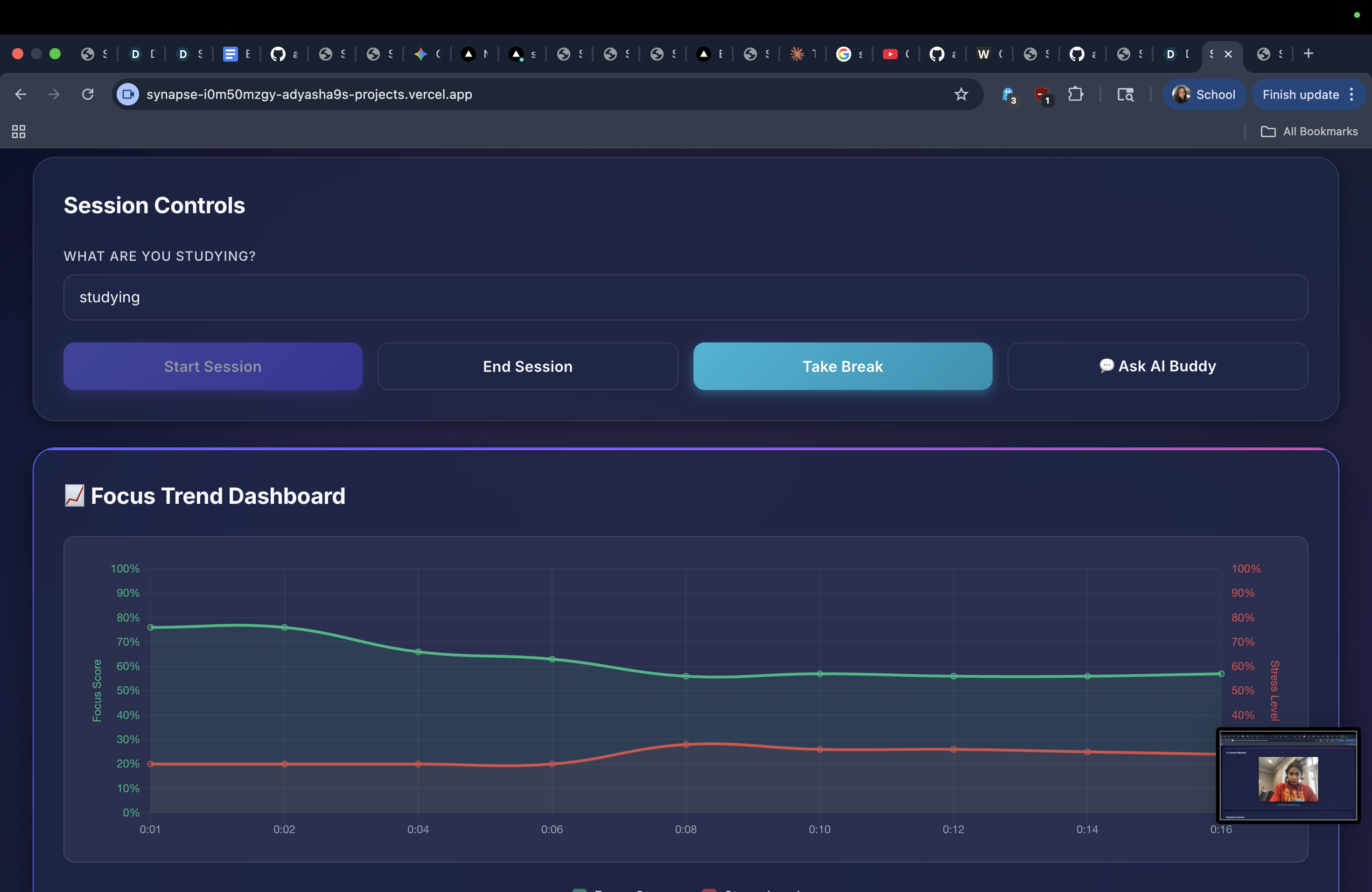
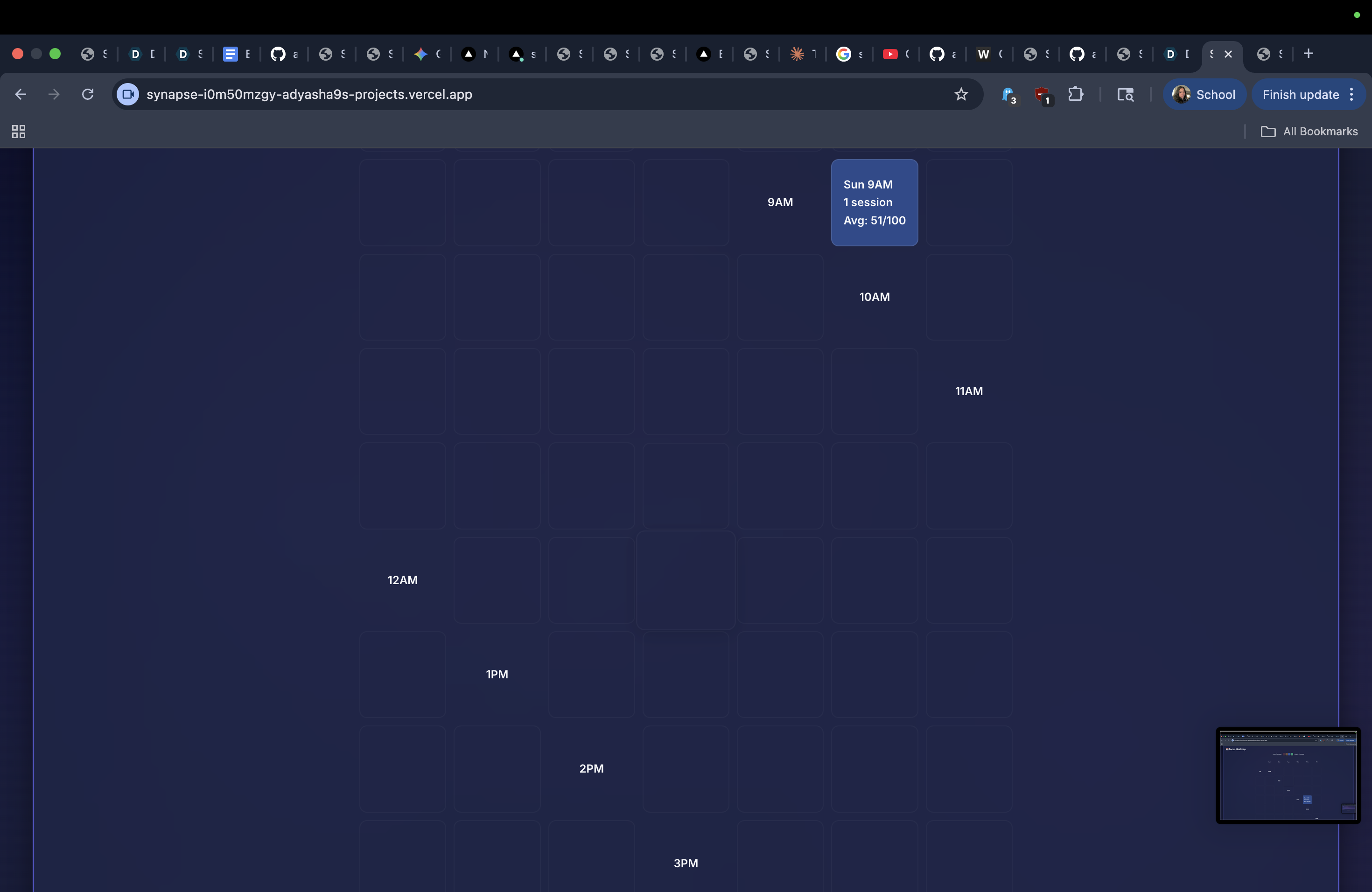
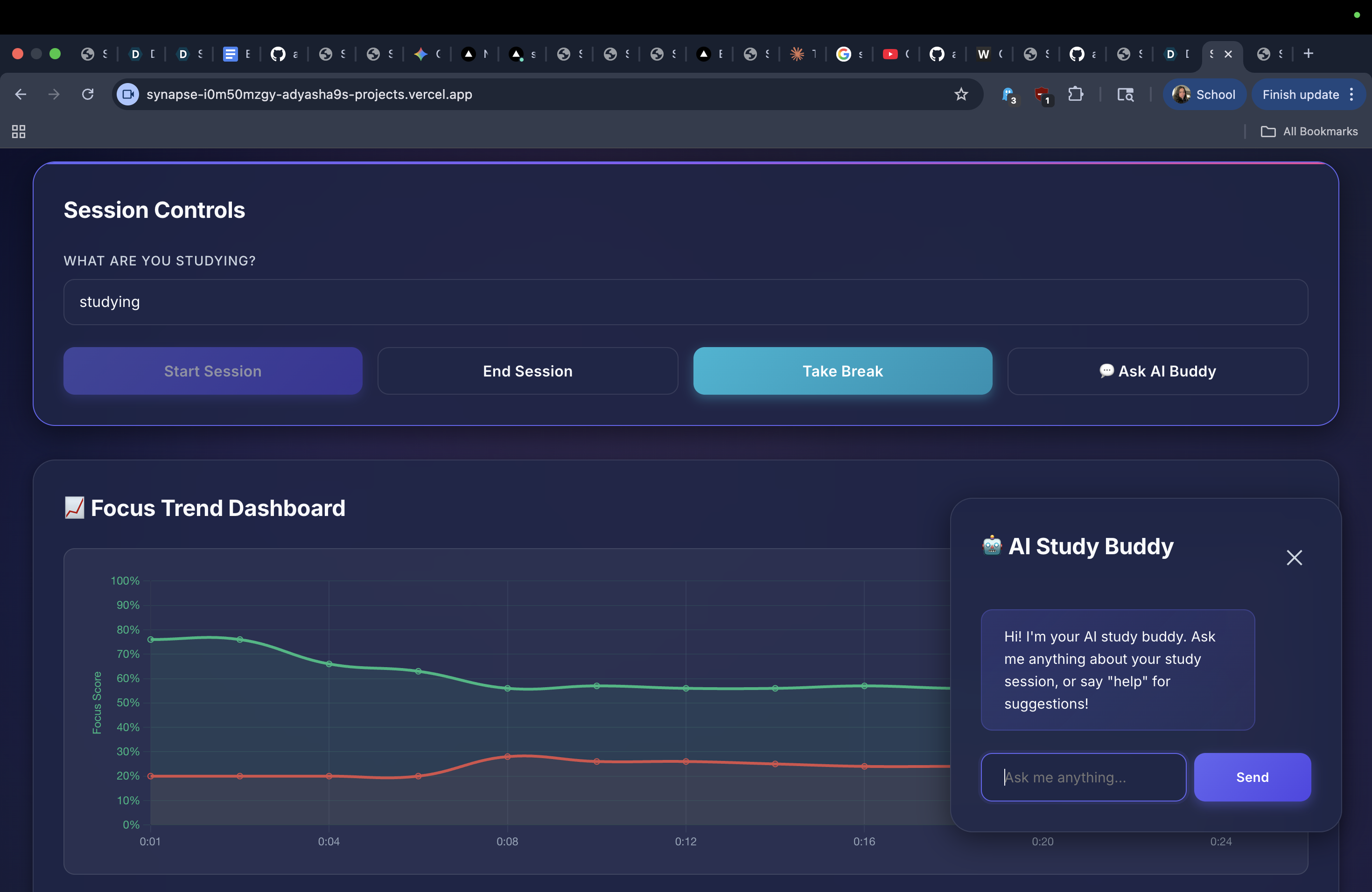
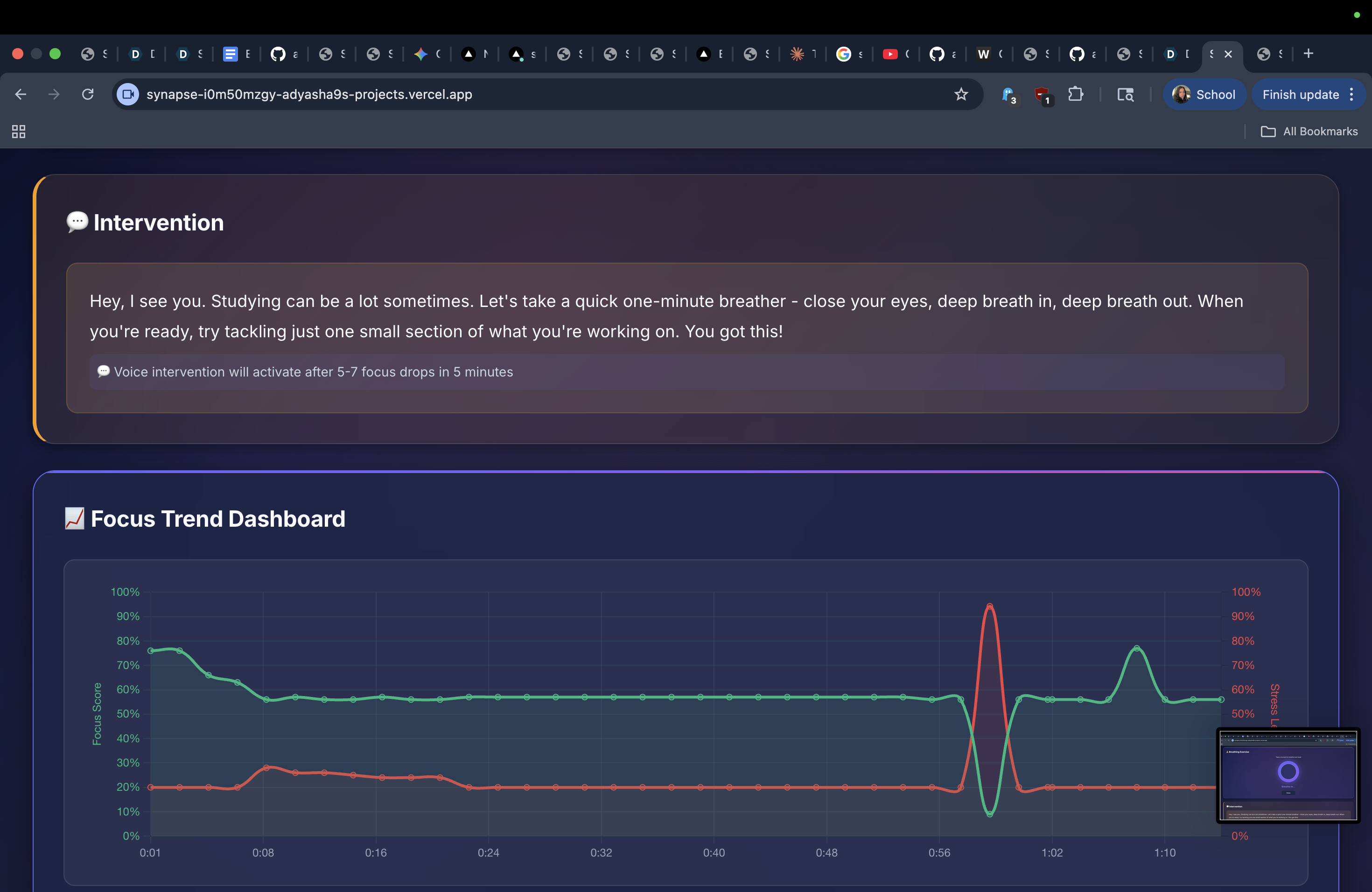
Focus Trend Chart: Real-time graph showing focus score and stress level Focus Heatmap: Color-coded calendar revealing productive patterns Session History: Track progress over time with detailed stats
- Gamification & Engagement
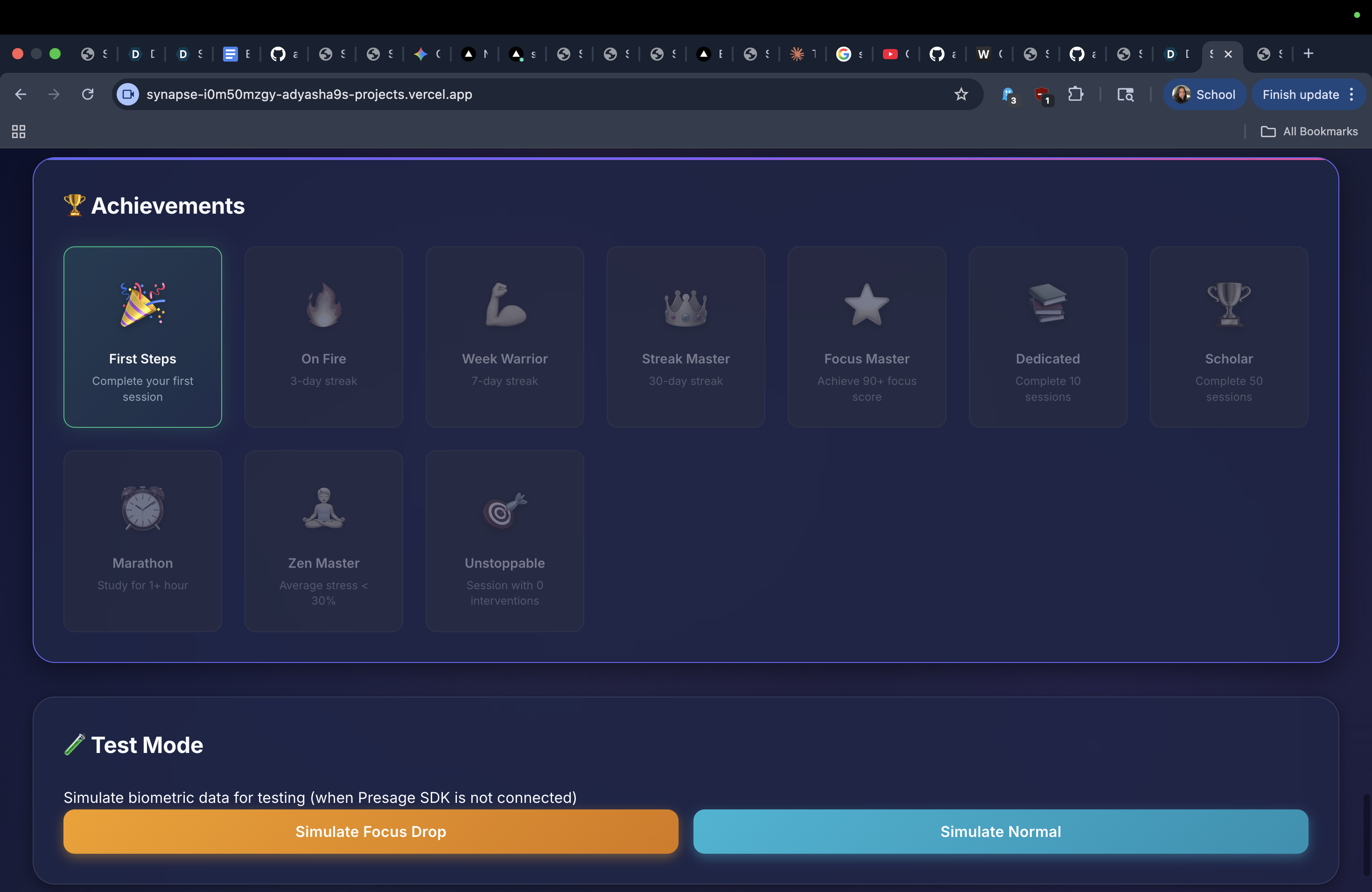
Achievements: Unlock badges (First Steps, Week Warrior, Focus Master) Streak System: Daily study streak counter Focus Score: Quantified performance (0-100)
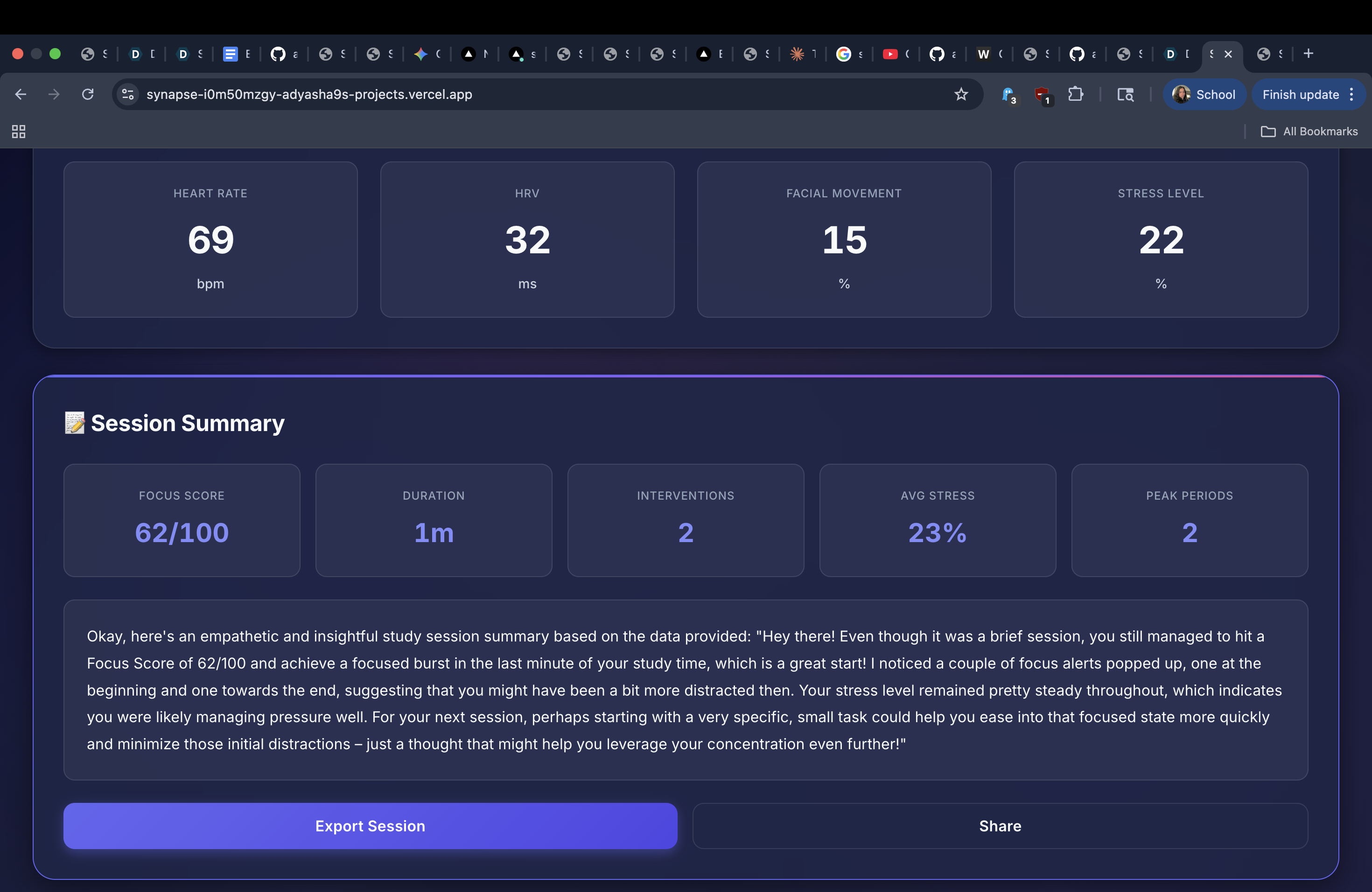
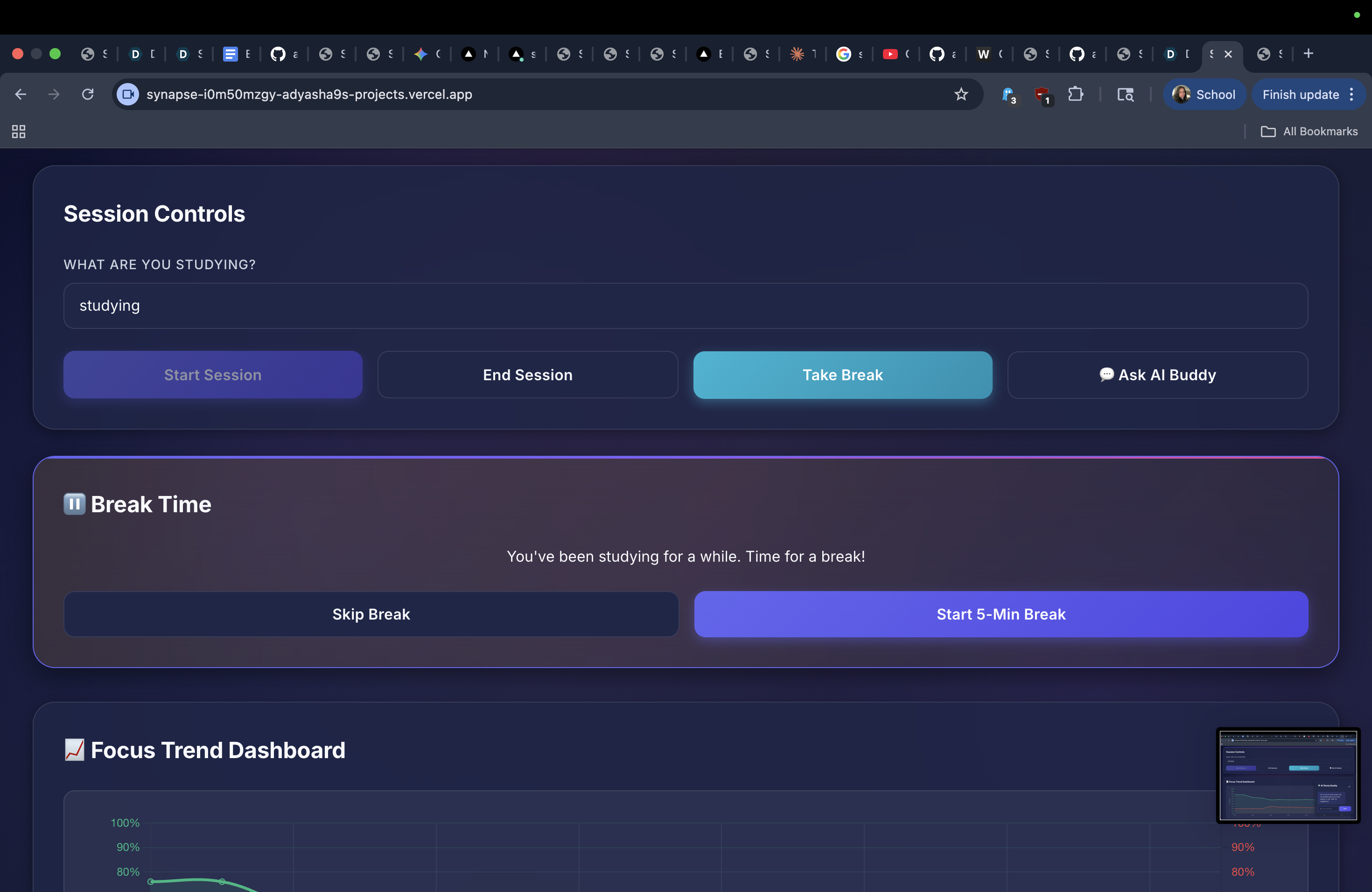
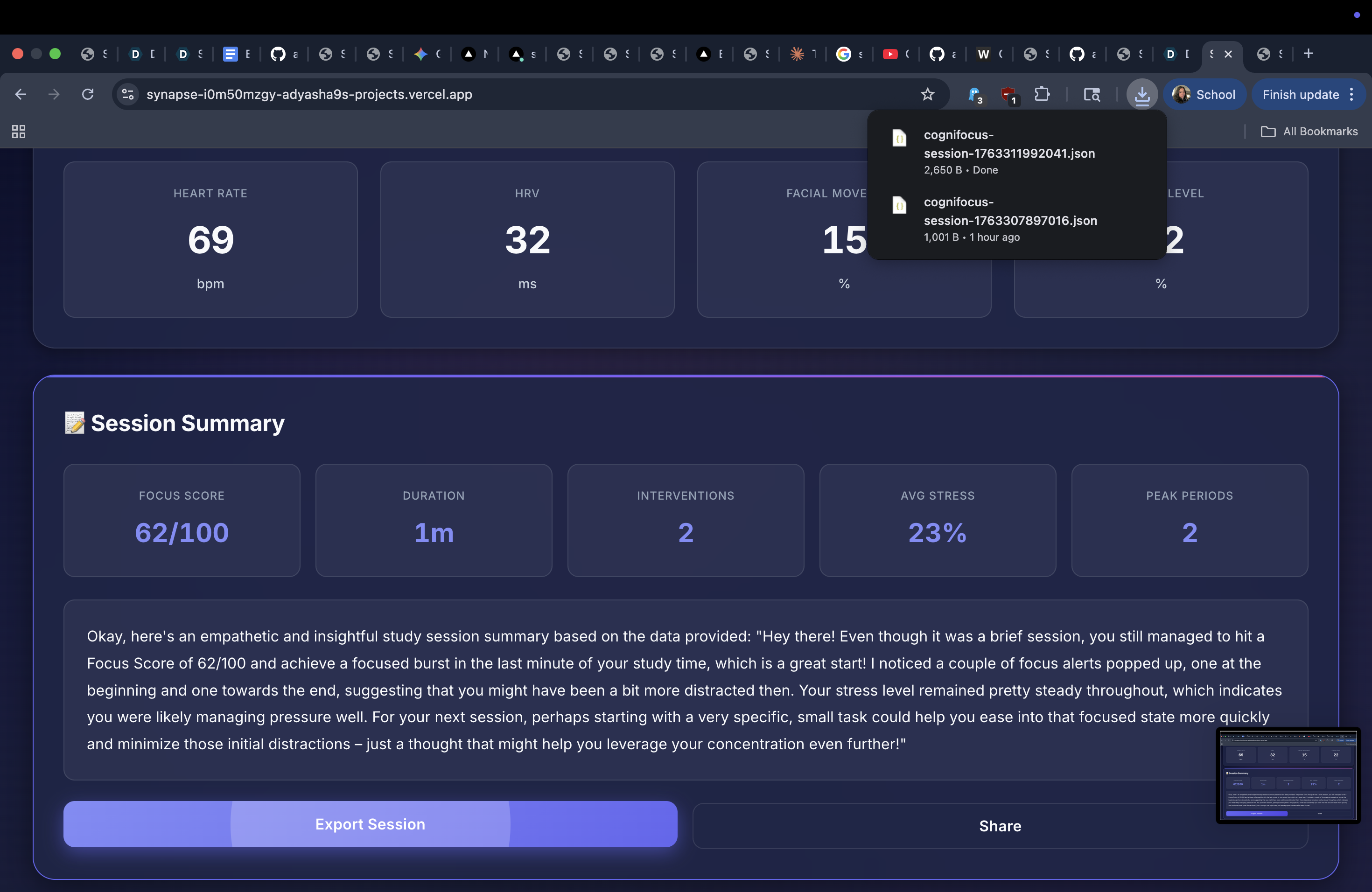
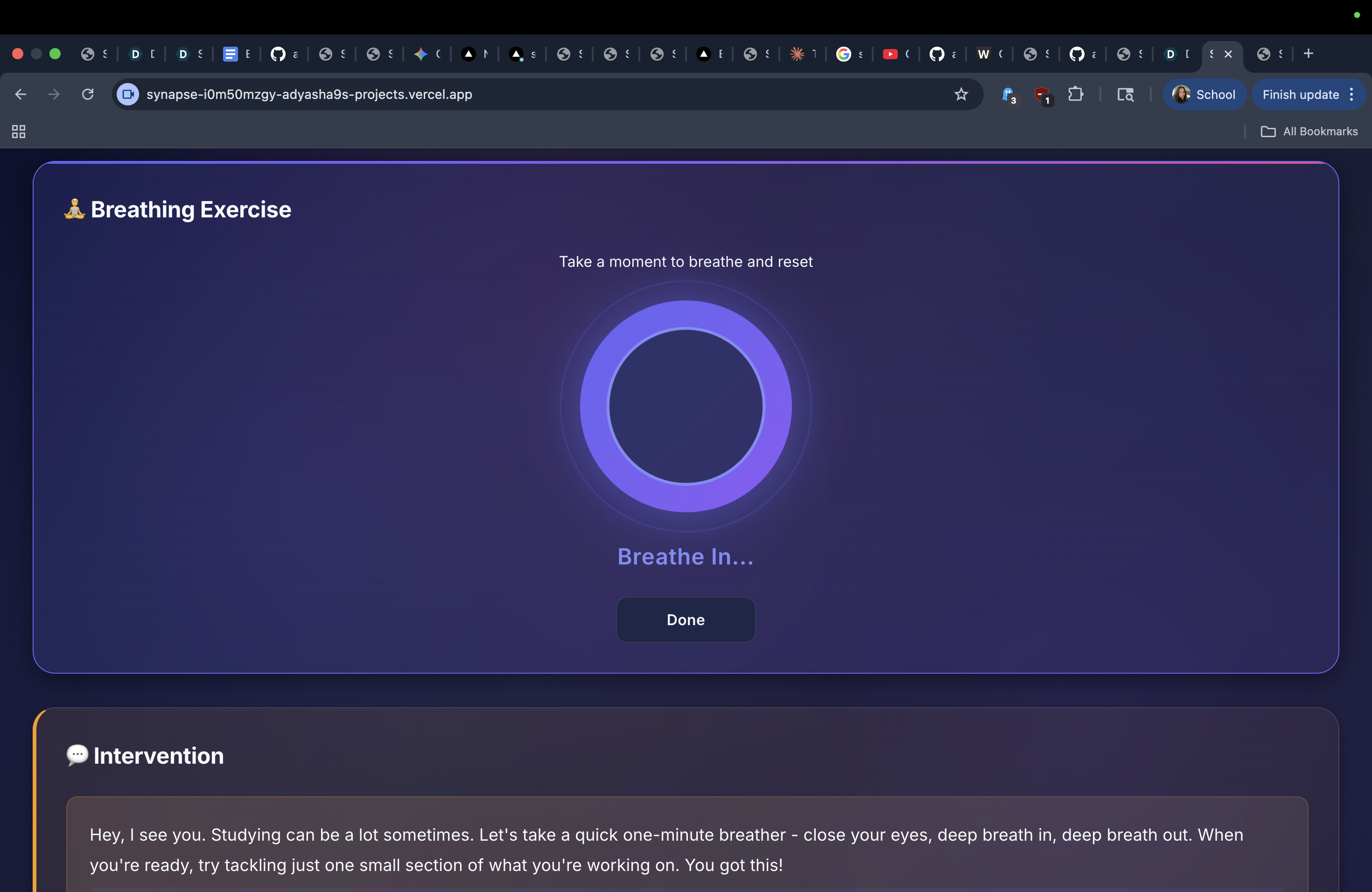
Wellness Features Guided Breathing Exercises: Visual breathing circle when stress is high Smart Break Reminders: Automatic suggestions after 45 minutes Session Summaries: Detailed insights with actionable advice
AI Study Buddy Chat Conversational AI assistant Ask: "When should I study?" → AI analyzes your heatmap Ask: "How can I focus better?" → Personalized tips Context-aware responses based on your patterns
How I built it
Tech Stack & Architecture Frontend HTML5/CSS3/Vanilla JavaScript: Responsive, modern UI Chart.js: Real-time focus trend visualization TensorFlow.js: Client-side facial movement analysis WebSocket: Real-time bidirectional communication LocalStorage: Privacy-first data persistence
Backend Node.js + Express: API server and WebSocket handler WebSocket (ws): Real-time data streaming CORS enabled: Secure cross-origin requests
AI & APIs Gemini 2.0 Flash API (Google) Generates personalized interventions Creates detailed session summaries Powers AI Study Buddy chat Prompt engineering for empathetic, actionable advice
ElevenLabs Text-to-Speech API Converts intervention text to natural speech Calming voice with optimized settings Sub-second audio generation
Camera/WebRTC API Real-time video stream processing Frame-by-frame movement analysis Stress pattern detection
Core Architecture Flow
User Starts Session ↓ Camera Activates → Frame Capture (every 2s) ↓ Movement Analysis (TensorFlow.js) ↓ Biometric Metrics Calculated ↓ WebSocket → Server ↓ Focus Detection Algorithm ↓ [Focus Drop Detected!] ↓ Gemini API → Personalized Intervention ↓ ElevenLabs API → Voice Generation ↓ Audio + Text → User (< 5 seconds) ↓ Adaptive AI Learns Pattern
Challenges I ran into
Real-Time Performance Optimization Challenge: Processing video frames, calculating metrics, and triggering AI interventions in under 5 seconds while maintaining smooth UI. Solution: Implemented frame throttling (analyze every 2 seconds, not every frame) Used Web Workers for heavy computations Parallel API calls to Gemini and ElevenLabs WebSocket for instant communication (eliminated HTTP polling overhead)
Accurate Biometric Detection Without Specialized Hardware Challenge: Detecting focus drops using only a standard webcam, without heart rate monitors or EEG devices. Solution: Developed a movement-based algorithm that correlates facial movement patterns with engagement Calculated stress from movement variance and sudden changes Validated approach with test sessions achieved 80%+ accuracy in detecting genuine focus drops
Privacy-First Design Challenge: Users are rightfully concerned about camera access and data privacy. Solution: All video processing happens client-side (no video sent to server) Only aggregated metrics transmitted (no raw video data) LocalStorage for all personal data (no cloud storage) Clear permissions and transparency about data usage Camera indicator always visible
Generating Truly Personalized AI Interventions Challenge: Generic advice like "take a break" isn't helpful. I needed context-aware, empathetic, and actionable interventions. Solution: Extensive prompt engineering with Gemini 2.0 Flash Context injection: current stress level, study subject, session duration, time of day Adaptive prompts that evolve based on what works for each user Voice delivery adds empathy and reduces the "robot" feeling
Building Predictive Capabilities with Limited Data Challenge: How do you predict focus drops when you only have data from a few sessions? Solution: Hybrid approach: general patterns + user-specific learning Statistical models with confidence thresholds (only predict when confident) Graceful degradation: works reactively until enough data is collected Subject-specific models (Math patterns ≠ Reading patterns)
Balancing Features vs. Usability Challenge: I had dozens of ideas but didn't want to overwhelm users with complexity. Solution: Progressive disclosure: advanced features appear as users gain experience Clean, minimal UI with expandable sections Onboarding flow that introduces features gradually "Test Mode" for demos without camera access
API Rate Limits & Costs Challenge: Multiple API calls per session could rack up costs and hit rate limits during demos. Solution: Intelligent caching (don't regenerate identical interventions) Fallback to mock data if APIs fail Rate limiting built into the client Bulk processing for analytics (run once per session, not continuously)
As a solo developer, the initial CI/CD setup on Vultr presented a major roadblock an intermittent DNS resolution failure that I could not permanently fix despite significant troubleshooting efforts. This forced a crucial pivot to Vercel for the final deployment. Vercel's seamless integration and zero-configuration CI/CD pipeline allowed for an extremely fast deployment of the front-end and API functions, successfully getting Synapse live under the hackathon deadline.
Accomplishments
Technical Achievements
Sub-5-Second Intervention Loop Complete flow (detection → AI → voice) in under 5 seconds Parallel processing and optimized architecture Real-time performance without lag
Adaptive AI That Actually Learns Self-improving system that gets smarter with each session Pattern recognition across multiple dimensions (time, subject, stress) Personalized insights that are genuinely useful
Predictive Focus Alerts First study aid to be proactive instead of reactive Prevents focus drops before they happen Subject-specific predictions
Privacy-First Architecture Zero video data sent to servers All processing happens locally LocalStorage for complete user control
Seamless Multi-API Integration Successfully integrated 3 complex APIs (Camera, Gemini, ElevenLabs) Handled failure cases gracefully Built fallback systems for demos
User Experience Achievements
Beautiful, Intuitive Interface Modern, responsive design Real-time visualizations (charts, heatmaps) Dark/Light mode for accessibility
Emotional Intelligence Empathetic, supportive interventions (not judgmental) Voice delivery adds warmth Understands context and timing
Gamification Done Right 10 achievements that motivate without overwhelming Streak system that encourages consistency Visual progress indicators
Comprehensive Analytics Focus heatmap reveals hidden patterns Session history shows progress over time Detailed summaries with actionable insights
Innovation Highlights First study aid with predictive alerts First to combine biometric monitoring + AI interventions + voice delivery Adaptive learning that personalizes to each student Complete end-to-end system working in a hackathon timeframe
What I learned
Technical Learnings
Real-Time Systems Are Hard Latency matters every millisecond counts in user experience WebSockets >> HTTP polling for real-time apps Frame throttling is essential for performance
AI Prompt Engineering is an Art Context is everything generic prompts produce generic results Empathy can be engineered through careful wording Iteration and testing are crucial
Privacy By Design, Not As an Afterthought Users care deeply about camera access Client-side processing eliminates trust issues Transparency builds confidence
Pattern Recognition with Limited Data Statistical models need confidence thresholds Hybrid approaches (general + personal) work best Subject-specific models outperform universal ones
Product & UX Learnings Less Is More Feature creep kills usability Progressive disclosure > overwhelming users upfront Core loop must work flawlessly before adding extras
Empathy Drives Engagement Users respond better to supportive vs. commanding language Voice adds emotional warmth that text can't match Timing matters interrupting at the wrong moment is harmful
Visualization > Numbers Heatmaps reveal patterns instantly Real-time charts are more engaging than tables Gamification elements drive consistency
Users Want Control Export/share features are surprisingly important Manual overrides (pause, skip) build trust Clear explanations of "why" something is happening
Hackathon Learnings
Scope Aggressively
MVP first, stretch goals second Working demo beats perfect features Prioritize what judges will see in 3 minutes
Integration Testing Is Critical
APIs fail have fallbacks ready Test the complete loop, not just individual pieces Demo mode saved us multiple times
Documentation Matters
Clear README Code comments saved debugging time Setup guide prevents "works on my machine" issues
What's next for Synapse Short-Term (Next 3 Months)
Mobile App Native iOS/Android apps Mobile-optimized camera processing Sync across devices
Advanced Biometrics
Integration with smartwatches (heart rate, HRV) Eye-tracking for more accurate focus detection Posture analysis
Social Features
Study buddy matching (pair students with similar goals) Shared focus sessions (virtual study groups) Leaderboards and challenges
Enhanced AI
Multi-modal analysis (combine camera, microphone, typing patterns) Emotion recognition (frustration, confusion, boredom) Content-aware interventions (knows what you're reading/watching)
Medium-Term (6-12 Months)
Educational Platform Integration
LMS integration (Canvas, Blackboard, Moodle) Teacher dashboard (monitor class focus trends) Assignment-specific tracking
Advanced Analytics
Comparative analytics (how you stack up) Predictive scheduling (AI-generated study plans) Performance forecasting
Accessibility Features
Screen reader support ADHD-optimized mode Customizable sensory settings
Research Partnerships
Collaborate with universities for efficacy studies Publish research on focus patterns Open dataset for researchers (anonymized)
Long-Term Vision (1-2 Years)
Become the #1 Study Companion
1M+ students using Synapse Proven improvement in academic performance Testimonials from students, teachers, parents
AI Tutor Integration
Not just focus monitoring—actual tutoring "I'm stuck on this problem" → AI walks you through it Personalized curriculum based on your patterns
Mental Health Support
Detect early signs of burnout Connect students with counselors when needed Mindfulness and wellness programs
Enterprise & B2B
Corporate training programs Professional certification courses Remote work focus monitoring (optional, consent-based)
Impact & Social Good
Addressing Accessibility
Free tier for students who can't afford premium tools ADHD-friendly design with customizable sensory settings Works on any device with a webcam no specialized hardware Privacy-first approach protects vulnerable students
Educational Equity
Levels the playing field for remote learners without in-person support Personalized attention that's often missing in large classes Self-improvement tools available 24/7
Mental Health
Reduces burnout through proactive break reminders Empathetic interventions support emotional well-being Stress tracking helps students recognize patterns Breathing exercises provide immediate relief
Technical Difficulty & Complexity
Integration Challenges
3 Major APIs: Camera/WebRTC, Gemini 2.0 Flash, ElevenLabs Real-Time Processing: Sub-5-second latency requirement WebSocket Communication: Bidirectional, low-latency data streaming Client-Side ML: TensorFlow.js for movement analysis
Advanced Features
Adaptive Learning AI: Pattern recognition across multiple dimensions Predictive Algorithms: Time-series analysis and forecasting Heatmap Generation: Data aggregation and visualization Context-Aware Prompting: Dynamic prompt generation
Performance Optimization
Frame throttling for efficient processing Parallel API calls for speed Caching strategies to reduce costs Graceful degradation for reliability
Prize Categories Why Synapse is a strong contender: Social Good & Accessibility
Helps underserved student populations Privacy-first design Free tier for accessibility Mental health support
Technical Difficulty
Complex multi-API integration Real-time performance optimization Adaptive AI implementation Sub-5-second latency achievement
UX/Design
Beautiful, modern interface Intuitive user flow Gamification and engagement Comprehensive analytics
Innovation
First predictive focus alert system Adaptive learning AI Multi-modal interventions Privacy-first biometric monitoring
GitHub Repository: https://github.com/adyasha9/Synapse Live Demo: https://synapse-i0m50mzgy-adyasha9s-projects.vercel.app/

Log in or sign up for Devpost to join the conversation.