-
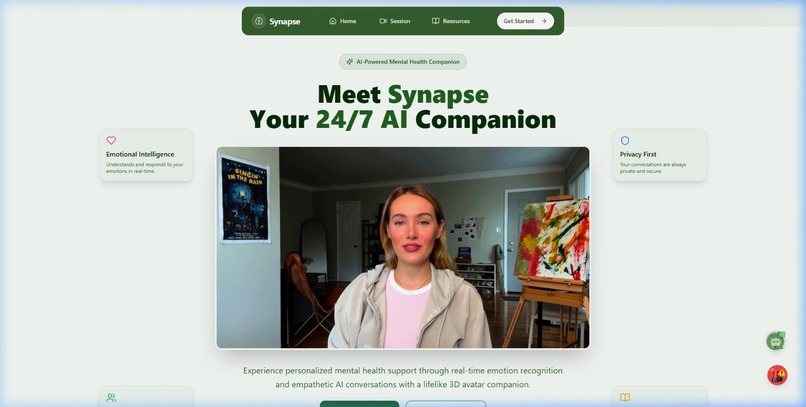
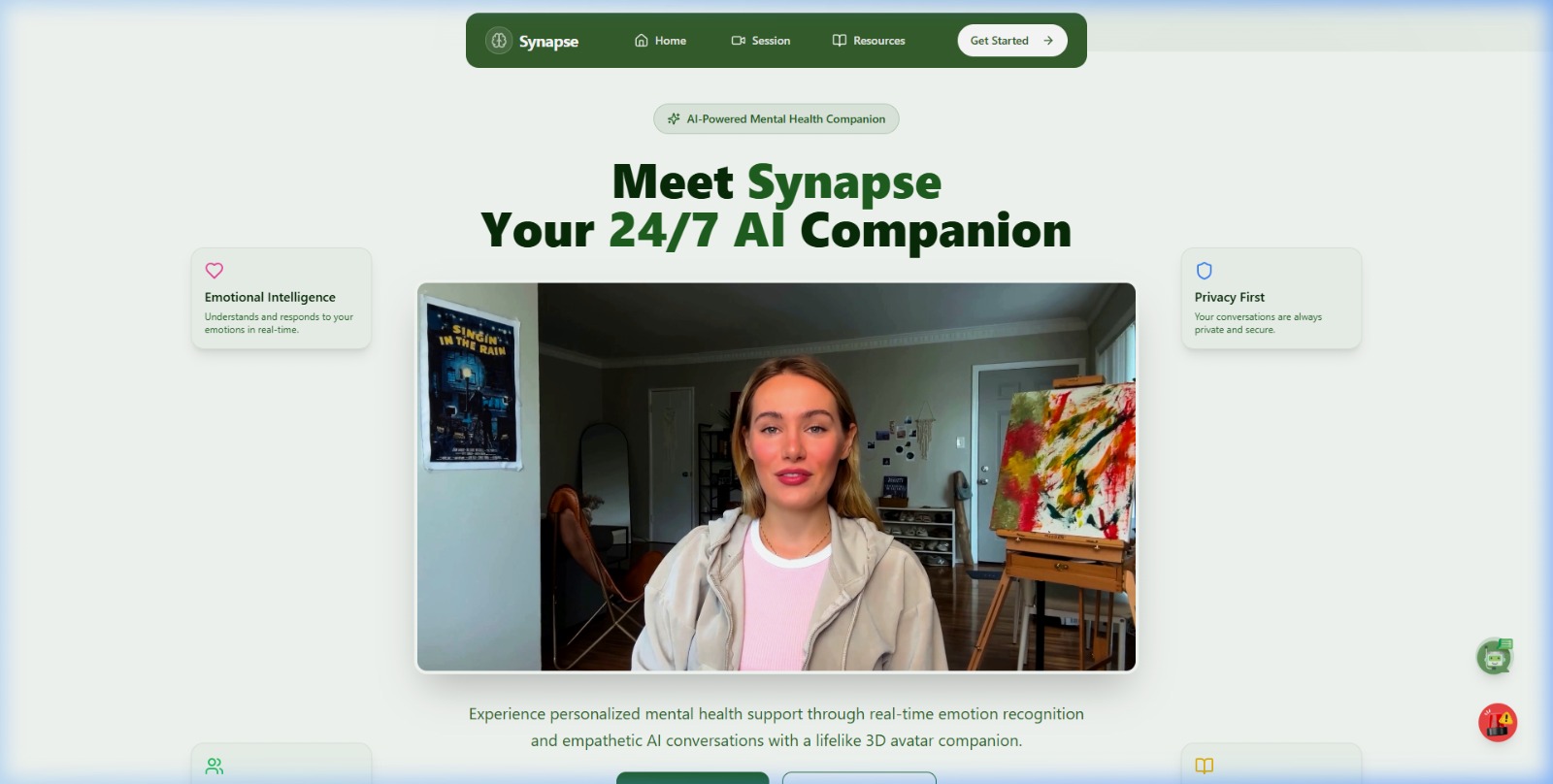
The Synapse landing page introducing our mission, core technology stack, and seamless 1-Click Sandbox access.
-
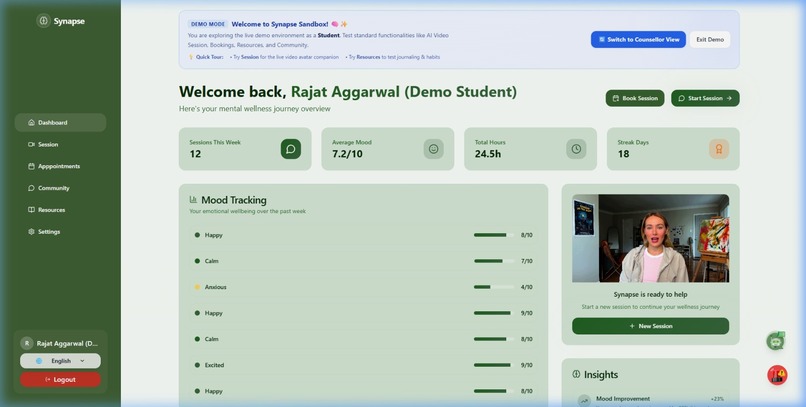
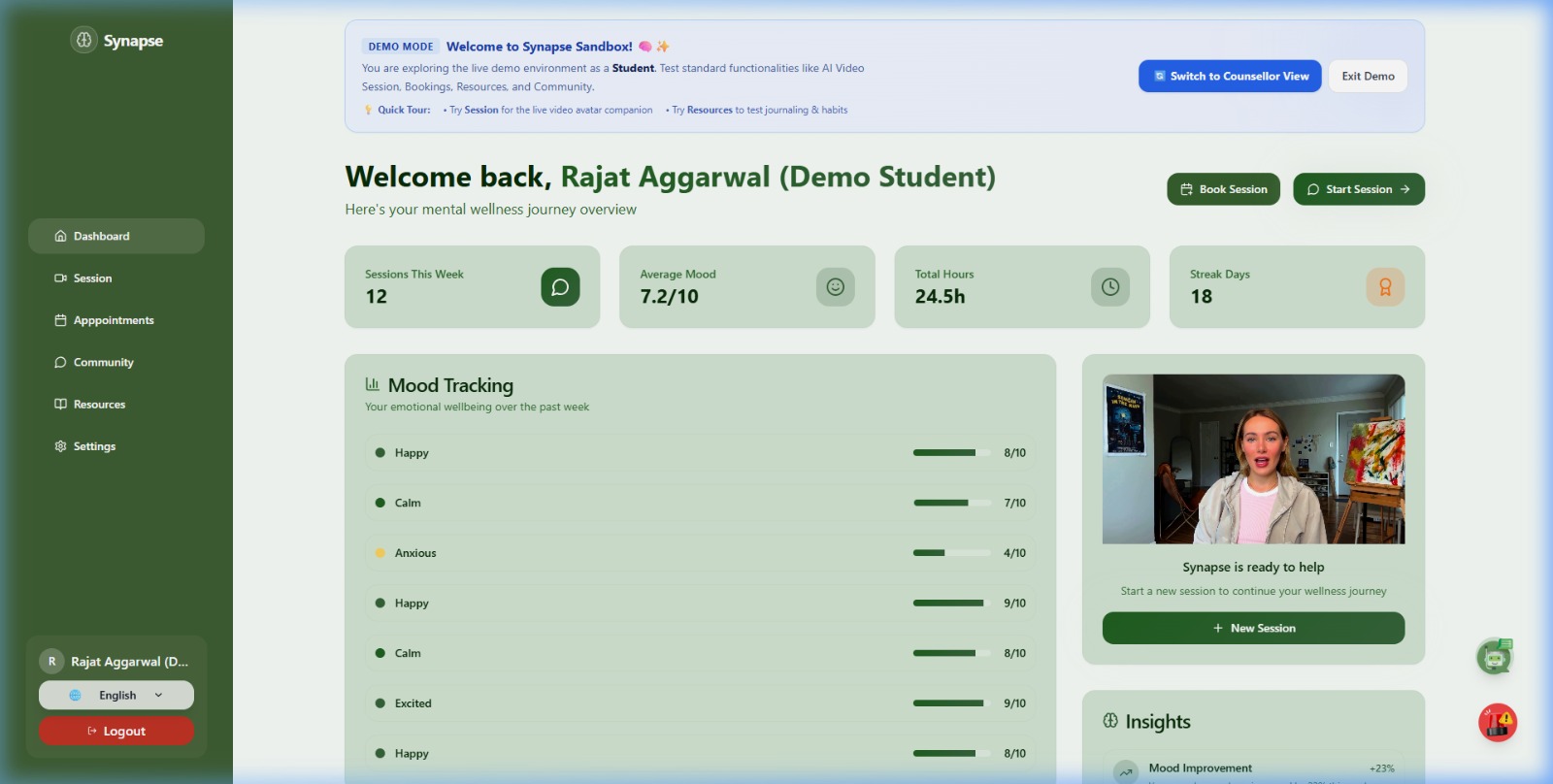
An intuitive student dashboard showing mental wellness metrics, scheduled appointments, and navigation widgets.
-
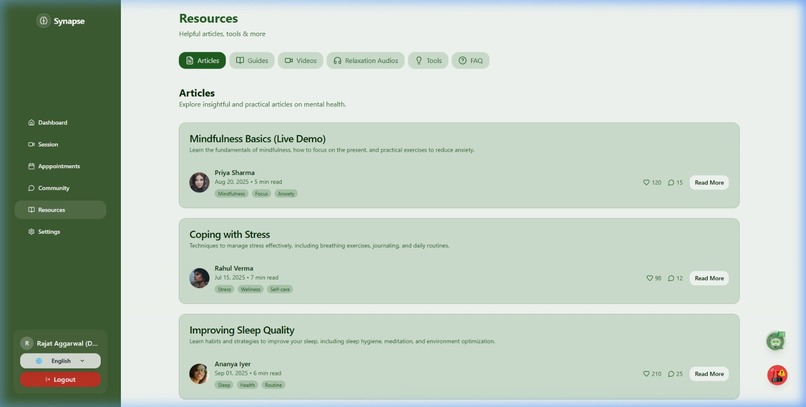
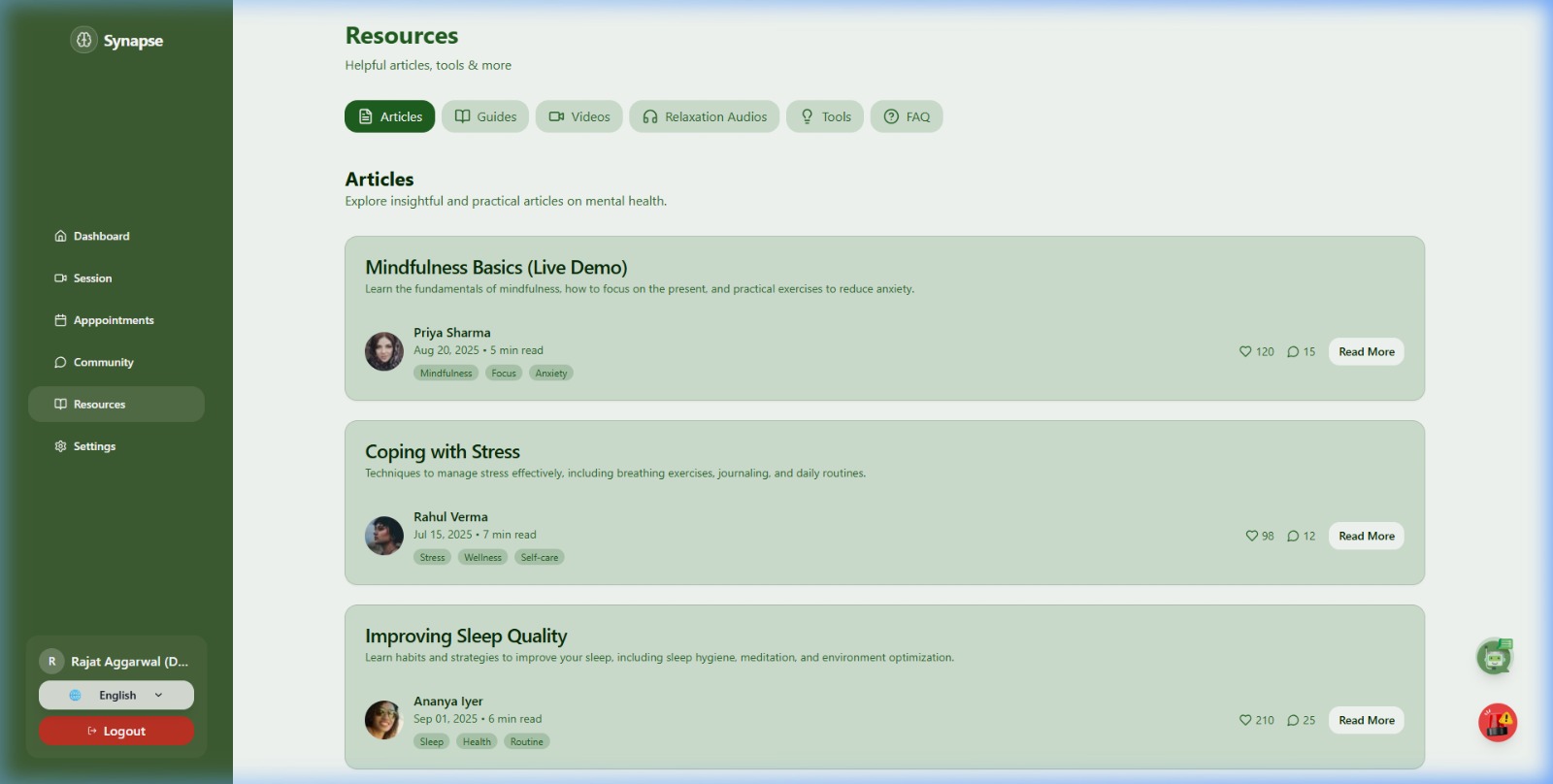
A comprehensive personal wellness dashboard featuring mood logs, gratitude trackers, and mindfulness timers.
-
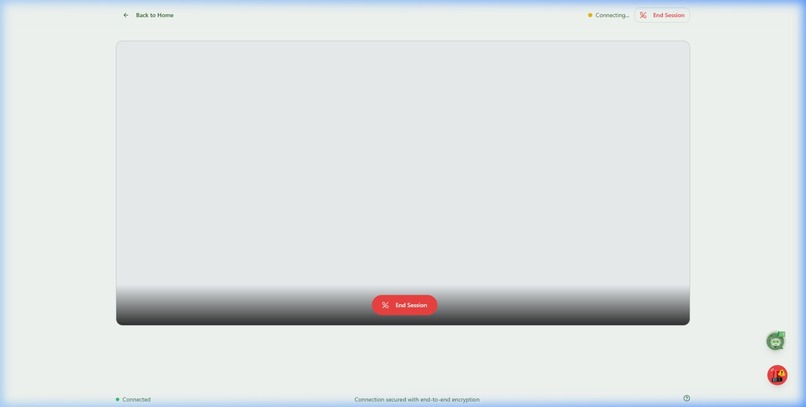
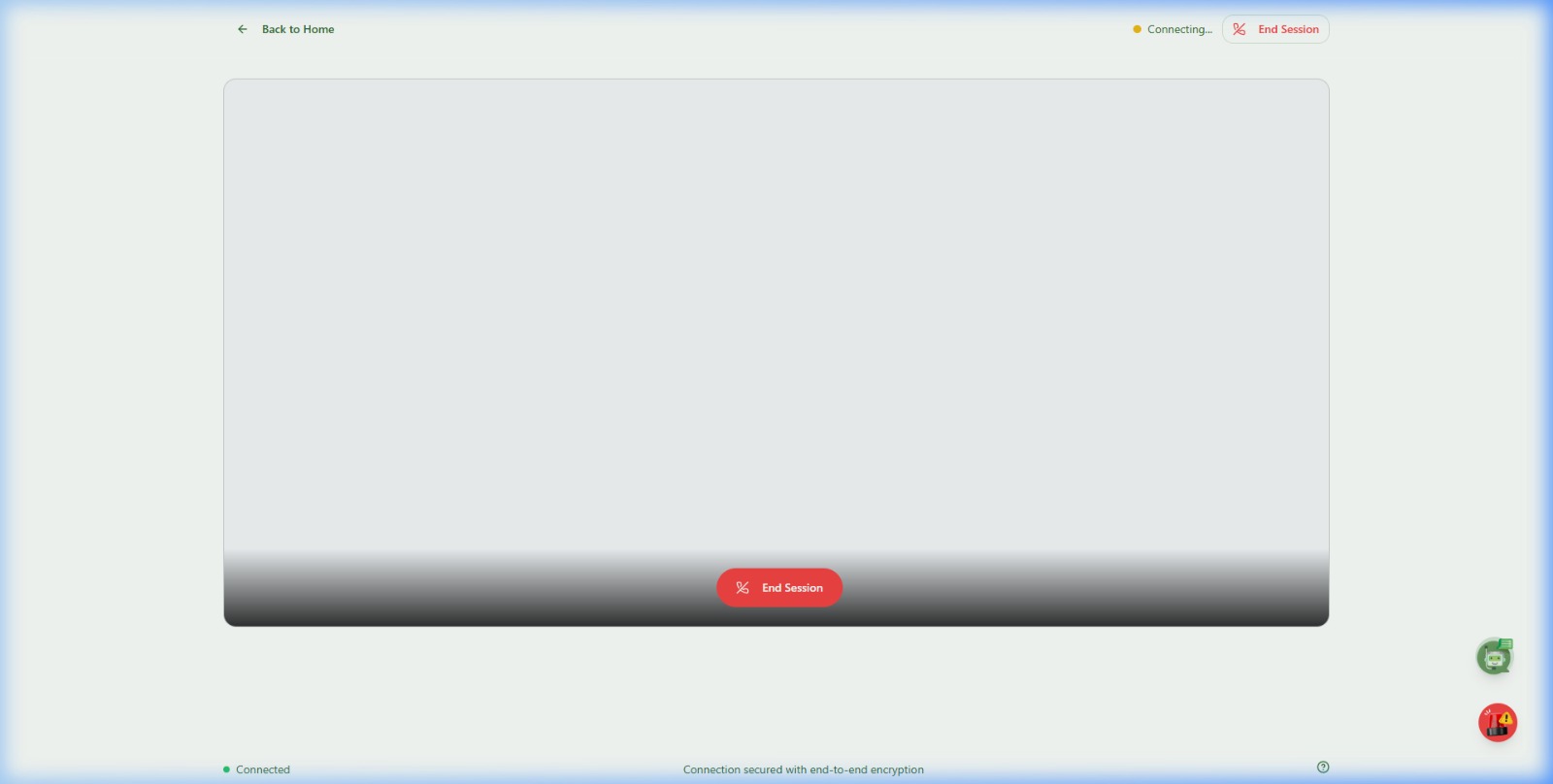
Interactive, face-to-face chat sessions with an empathetic 3D digital twin companion powered by Gemini and Tavus.
-
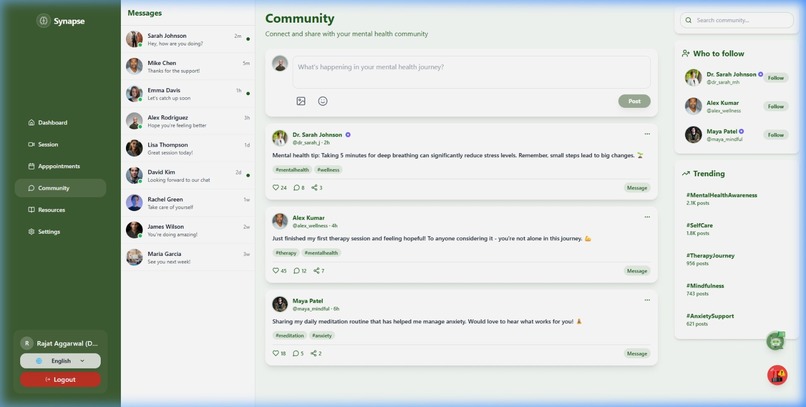
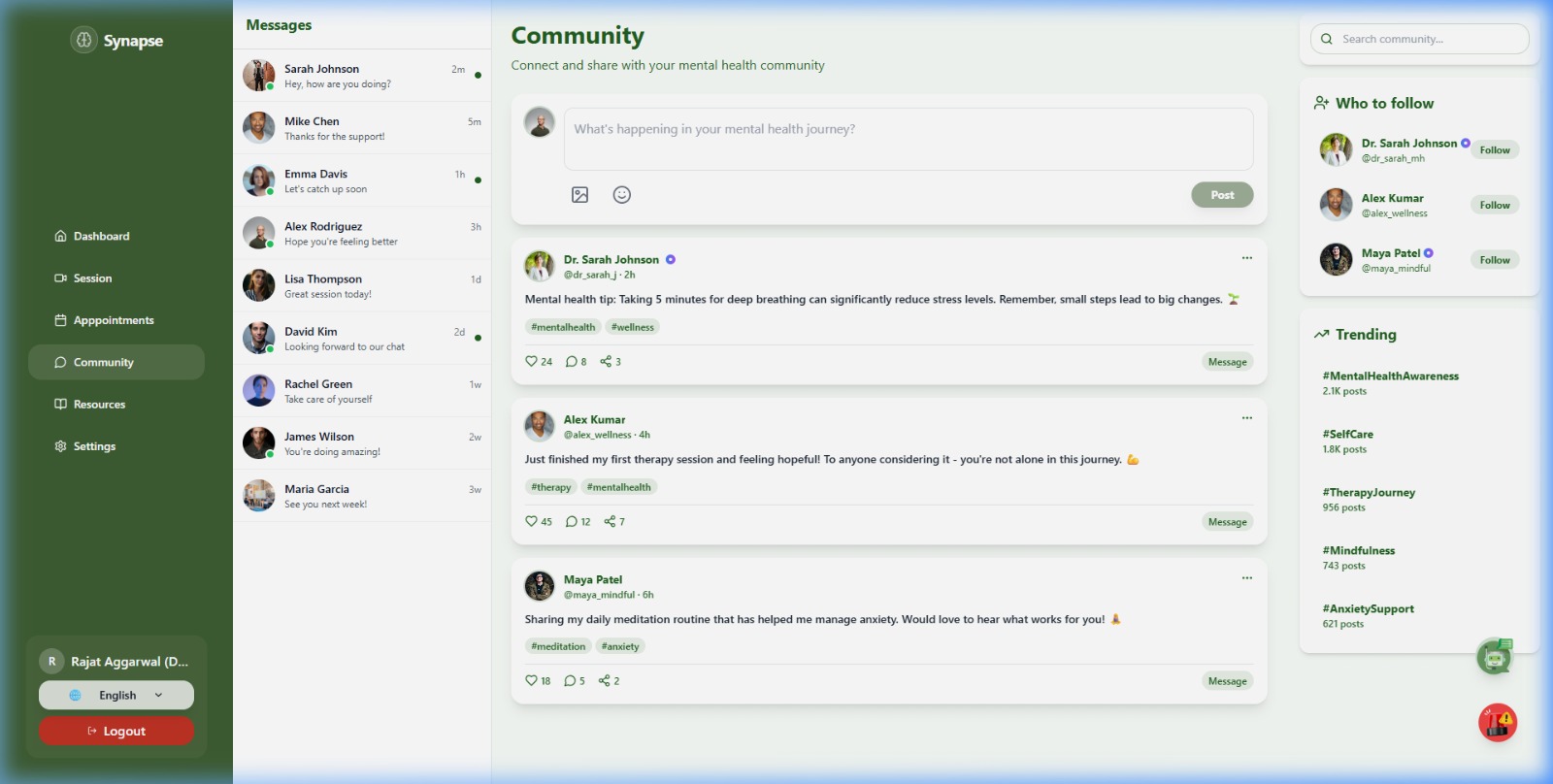
A secure, anonymous peer support forum designed to foster stories, sharing, and collaborative healing.
-
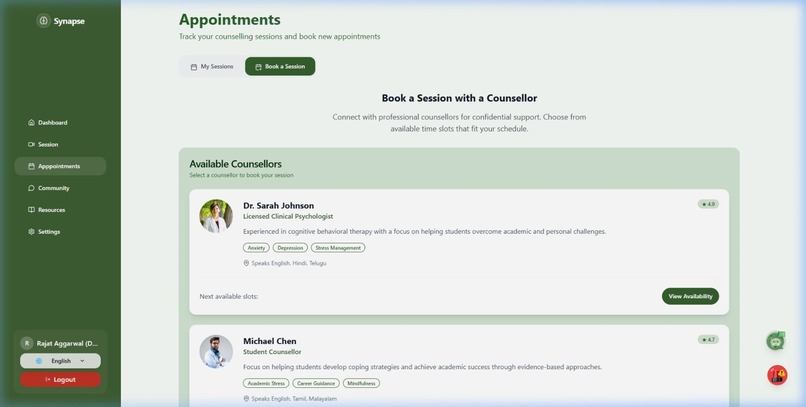
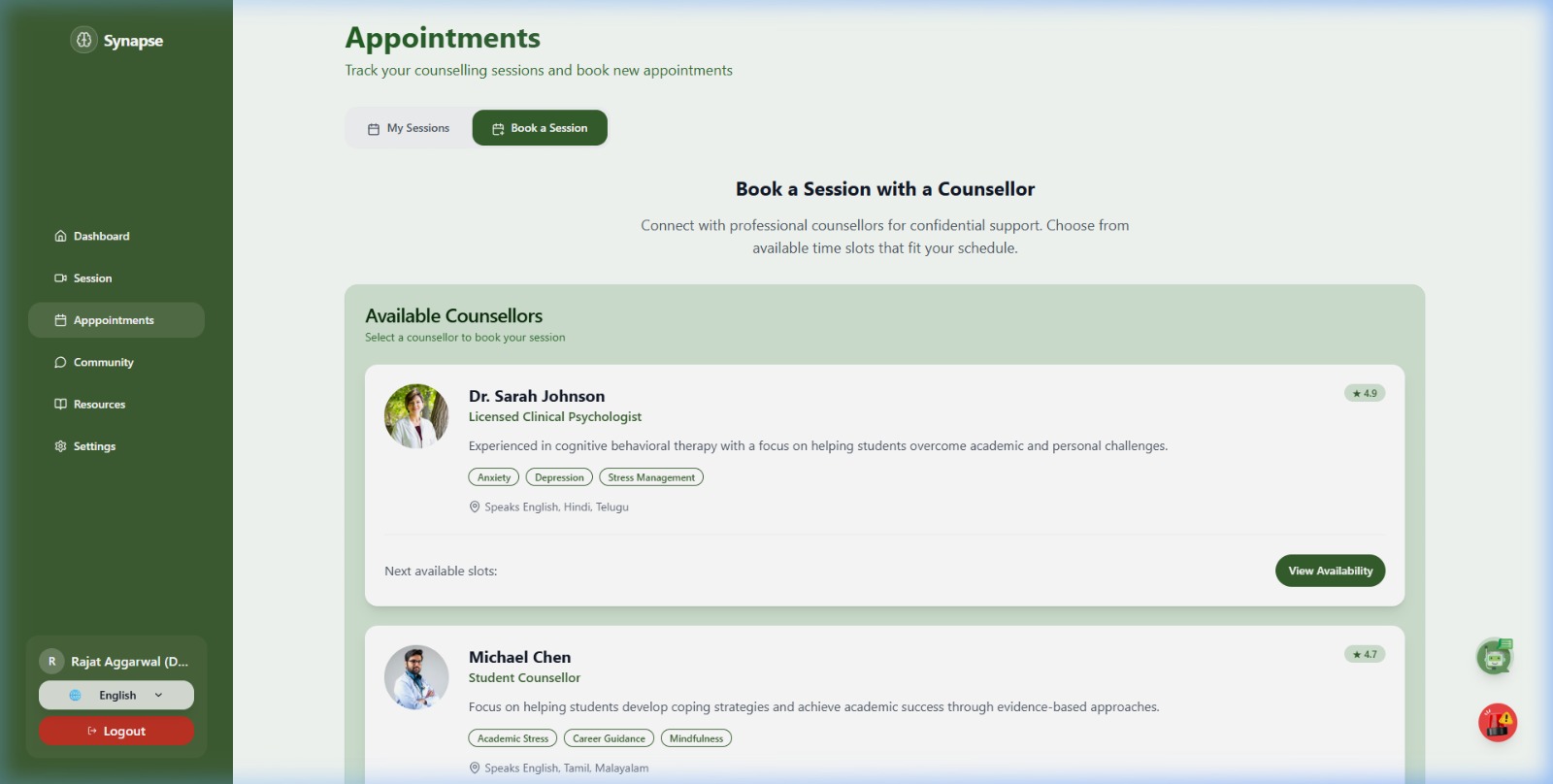
A seamless blended care scheduling portal allowing students to book and manage slots with verified human counselors.
Inspiration & Problem Statement
The mental health crisis among students and creators is one of the most pressing challenges of our time, directly impacting UN Sustainable Development Goal 3: Good Health and Well-being. Every day, millions suffer in silence from stress, anxiety, and isolation. Unfortunately, seeking professional help is hindered by several major factors:
- High Costs and Availability: Traditional therapy is often prohibitively expensive, and there is a severe shortage of mental health professionals.
- Language Barriers: Most existing mental health apps are strictly English-centric, making it extremely difficult for non-English speakers to express deep, complex emotions in their native tongue.
- Stigma and Friction: People are hesitant to seek help due to societal stigma, and are often turned off by complex registration processes or immediate paywalls.
We created Synapse to dissolve these barriers. We wanted to build a stigma-free, 24/7 accessible, and localized space that bridges the gap between conversational AI and human empathy.
What it does & Solution Overview
Synapse is an emotion-aware, AI-powered mental health platform that bridges the gap between conversational AI and human care. It works by combining advanced LLMs with real-time video generation. The user holds a real-time, face-to-face video session with a realistic 3D avatar digital twin companion.
- Empathetic AI Companion: The face-to-face conversation is powered by Google Gemini, optimized via custom empathetic prompts, ensuring safe, grounding, and helpful wellness dialogues. The visual video rendering is synthetically generated in real-time using the Tavus API.
- Regional Language Support: Features an on-the-fly localizer supporting 11+ regional Indian languages, allowing users to express themselves in their native language.
- Blended Care Routing: When AI is not enough, users can seamlessly book calendar slots with verified human counselors.
- Safe Peer Forums: An anonymous community dashboard where students can share stories, seek support, and stay connected without fear of stigma.
- Wellness Toolkit: Embedded utilities including a daily mood tracker, gratitude logs, habit builders, and breathing exercise timers to build everyday resilience.
- 1-Click Sandbox Mode: Bypasses authentication friction so evaluators and students can test the entire platform instantly without setting up databases or typing credentials.
Target Users: Who is this for?
- Students and Young Adults: Who face heavy academic stress, anxiety, or isolation and need immediate, stigma-free emotional support.
- Non-English Speakers: Communities who find it easiest to express emotional struggles in their regional language rather than English.
- Academic Institutions: Universities and schools looking to offer a digital mental health gateway to their students.
- Professional Counselors: Verified mental health practitioners seeking a seamless digital scheduling platform to manage and connect with students in need of hybrid care.
How we built it & Technologies Used
We engineered Synapse with a highly robust and responsive architecture:
- Frontend: Built using React 18, TypeScript, Tailwind CSS, and Framer Motion for sleek, responsive UI interactions and smooth micro-animations, all bundled with Vite.
- Backend: Powered by Node.js and Express.js, implementing secure JWT authentication, rate limiting, and password hashing with Bcrypt.
- AI & Avatar Layer: Leveraged the Tavus Video API for real-time digital twin video synthesis and the Google Gemini API for generating highly empathetic, prompt-grounded, and context-aware responses.
- Data Persistence: Integrated MongoDB with Mongoose ODM, backed by an offline self-healing fallback mechanism that allows the app to function gracefully even in database-disconnected states.
Challenges we ran into
- Latency Synchronization: Connecting an LLM (Gemini) to a real-time video synthesis API (Tavus) without creating awkward conversational pauses. We solved this by optimizing state management and rendering pre-warmed replica models.
- Empathetic Guardrails: Ensuring the AI companion is consistently supportive and safe. We spent hours refining the Gemini system prompt to construct ethical boundaries, ensuring it provides comfort and data-backed grounding without attempting to diagnose medical conditions.
- Offline Robustness: Making the platform robust for hackathon reviewers. We engineered a fallback mock database handler so that if MongoDB isn't running or configured, the app auto-heals and runs offline mock flows seamlessly.
Accomplishments that we're proud of
- Lifelike Interaction: Creating a platform where a user can look an avatar in the eyes and receive real-time, empathetic feedback.
- Language Inclusivity: Successfully implementing a translation workflow that instantly opens mental health support to non-English speakers.
- Zero-Friction Onboarding: Developing the 1-Click Sandbox mode so judges can experience the full counselor and student workflows in seconds.
What we learned
- Advanced Prompt Engineering: We learned how to inject emotional intelligence and boundaries into LLMs, shifting them from general-purpose assistants to specialized empathetic listeners.
- Video Streaming Pipelines: We gained hands-on experience orchestrating real-time avatar generation over APIs.
- Localization Empathy: We realized that emotional expression is deeply tied to native tongue; localizing the UI is not just a feature, it is an essential part of therapeutic care.
What's next for Synapse AI
- Voice-to-Voice Integration: Moving entirely to real-time voice conversations without manual typing.
- Wearable Health Syncing: Integrating with smartwatches to detect physiological stress spikes (like elevated heart rate) and proactively suggest breathing exercises.
- Expanded Counselor Directory: Partnering with universities and NGO counselor networks to offer free, immediate blended care paths worldwide.
Built With
- api
- css
- css3
- express.js
- framer
- gemini
- html5
- javascript
- mongodb
- mongoose
- motion
- node.js
- react
- tailwind
- tavus
- typescript
- vite

Log in or sign up for Devpost to join the conversation.