-
-
-
-
-
-
-
-
-
-
-
-
-
-
-
-
-
-
-
-
-
-
-
-
-
-
it
-
-
-
-
-
-
-
-
-
-
-
-
-
-
-
SynAegis: The Autonomous AI DevOps Guardian
Inspiration
Our vision was born from the chaos of modern DevOps and site reliability engineering (SRE). In today's hyper-scaled environments, managing infrastructure, security patching, and pipeline deployments manually is an intractable bottleneck. Human operators cannot react fast enough to micro-bursts in traffic or sudden zero-day vulnerabilities. We realized that cloud management needed a brain—a proactive guardian. We were inspired by the concept of Aegis, the mythological shield, and sought to create a synthetic version for the cloud. The mathematical inspiration behind our resource optimization engine is based on minimizing cost while maximizing uptime:
$$ \min_{\mathbf{x}} \sum_{i=1}^{n} c_i x_i \quad \text{subject to} \quad P(\mathbf{x}) \ge P_{threshold} $$
where \( c_i \) represents the cost of resource \( i \), \( x_i \) is its utilization, and \( P(\mathbf{x}) \) is the performance metric of the system.
What it does
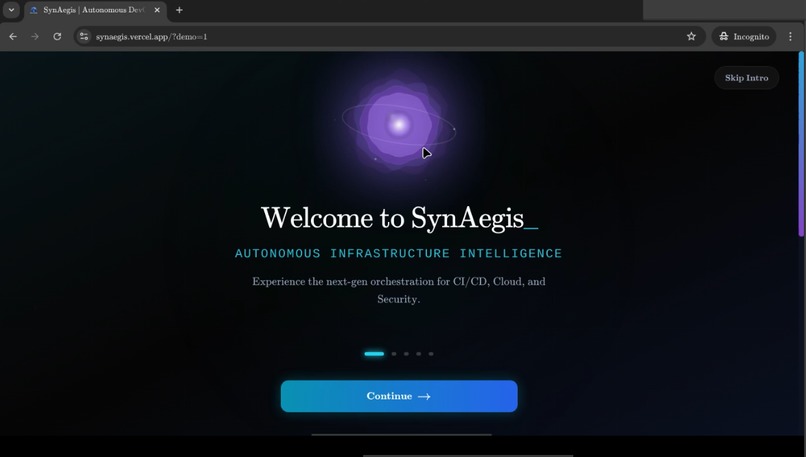
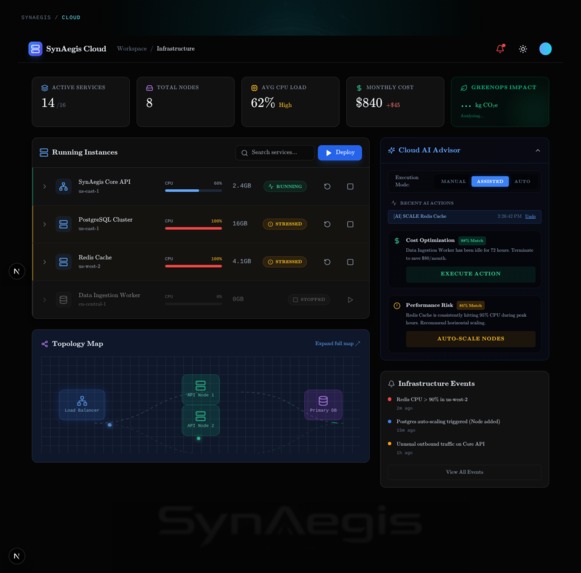
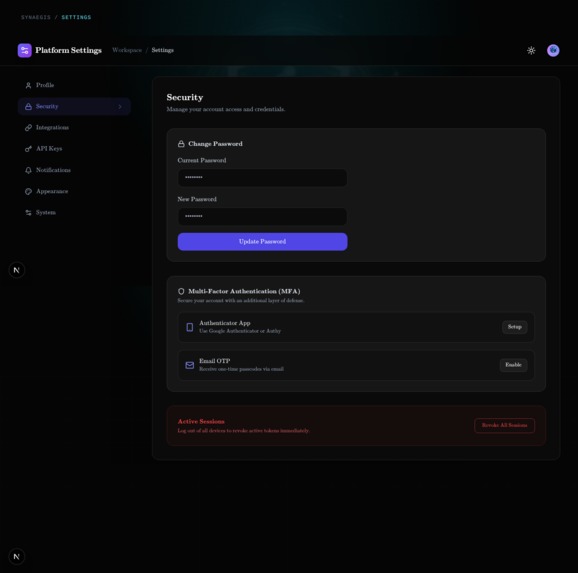
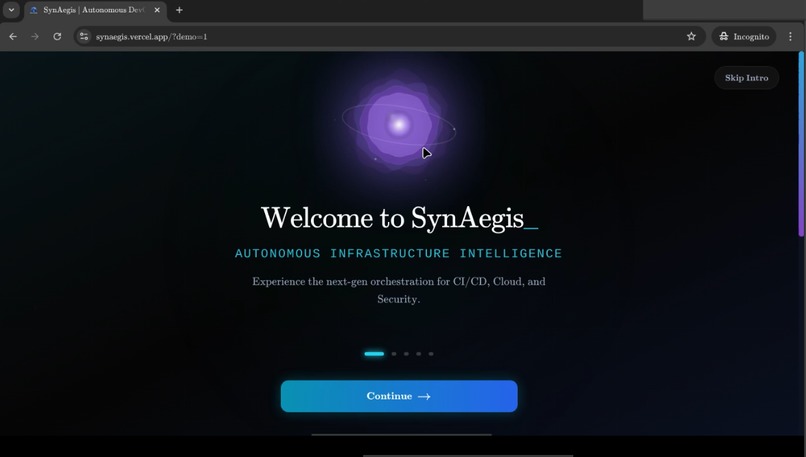
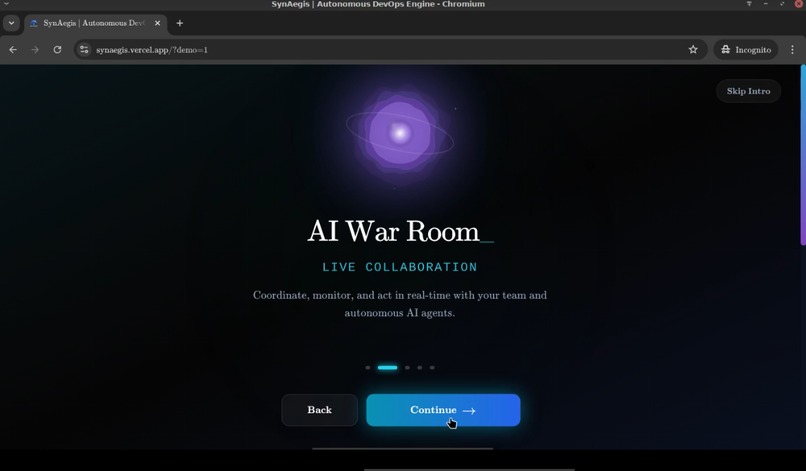
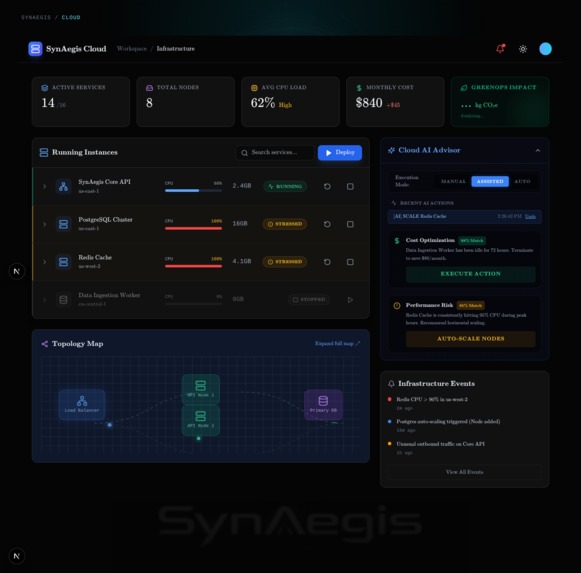
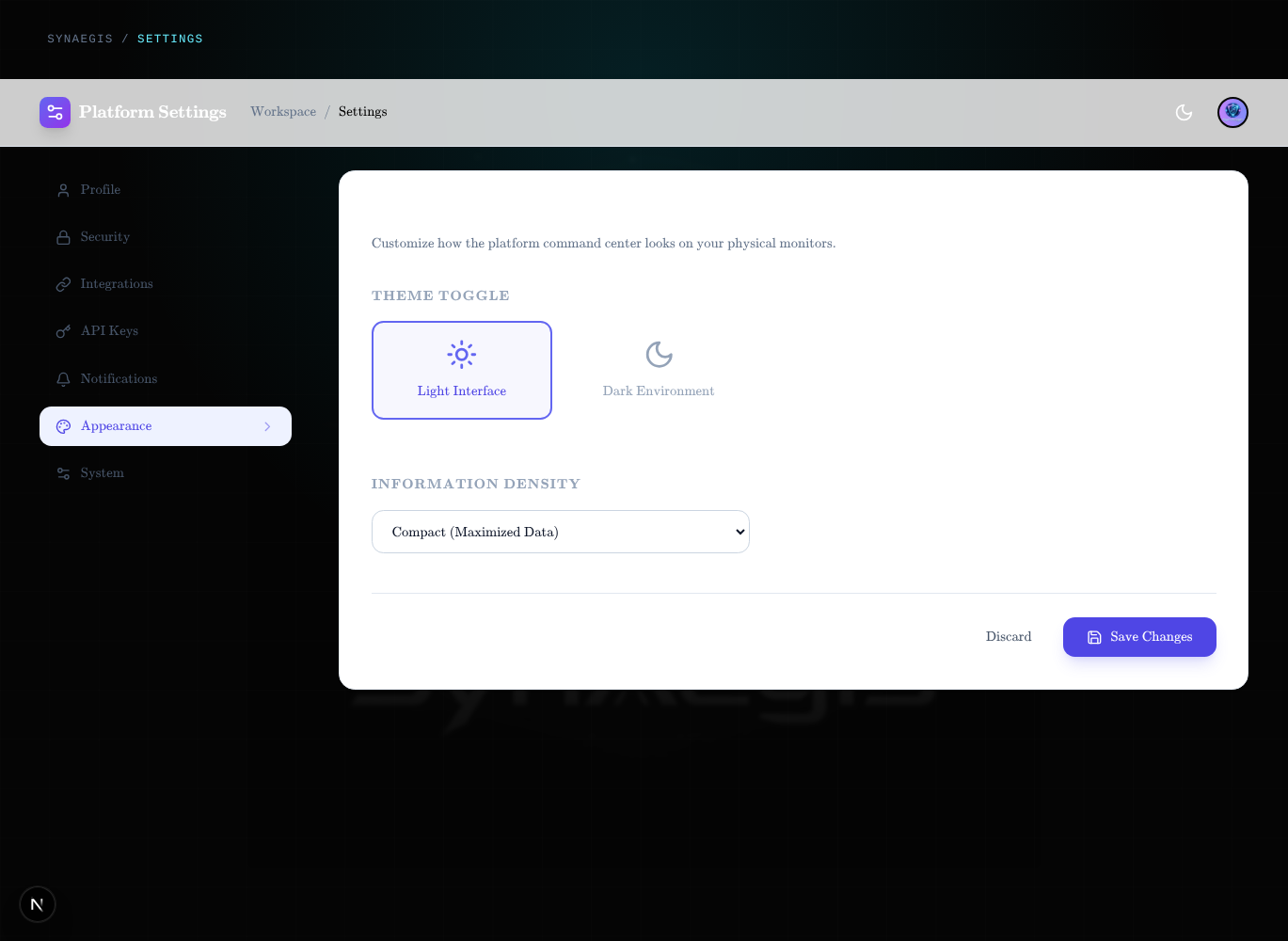
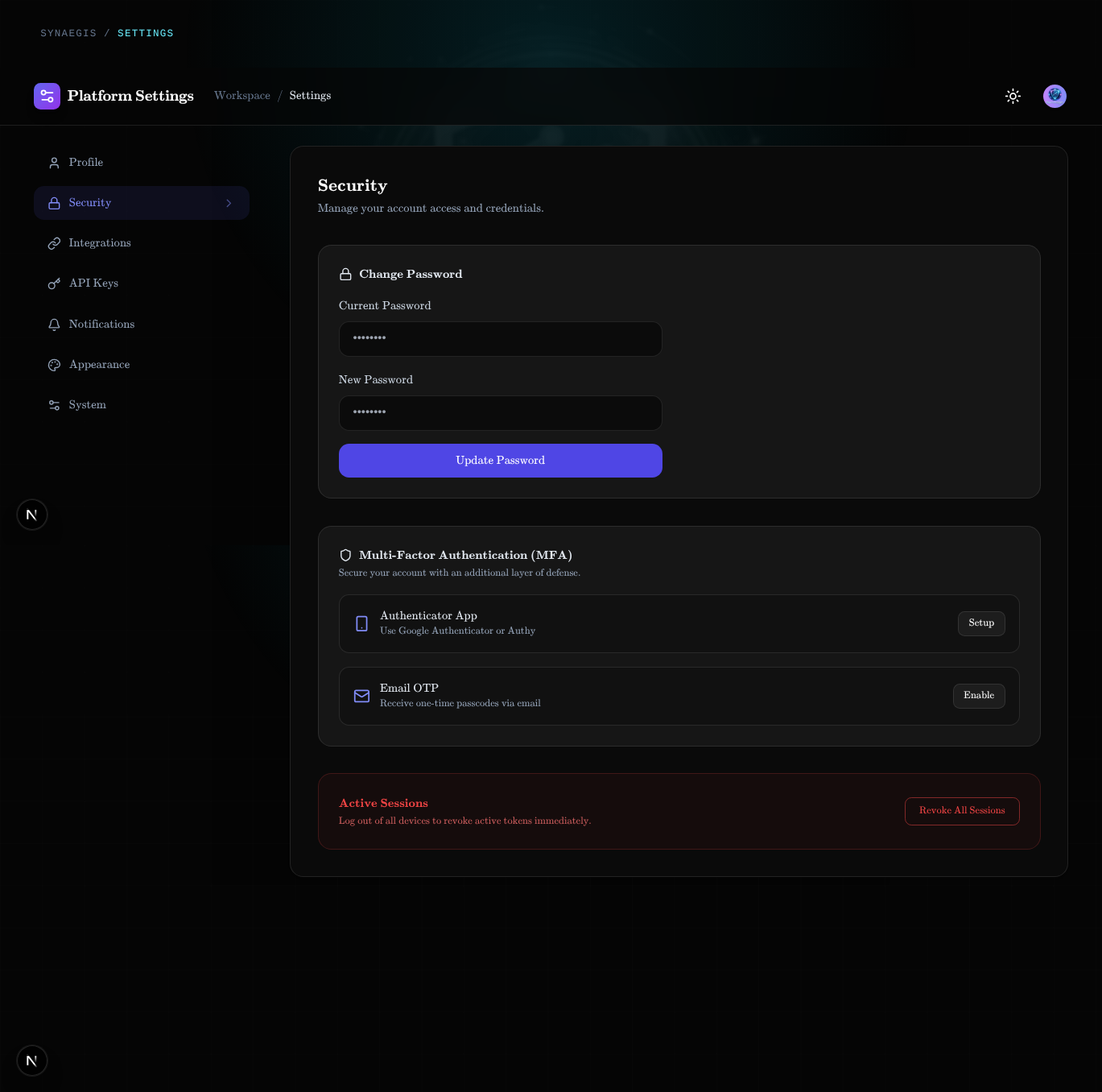
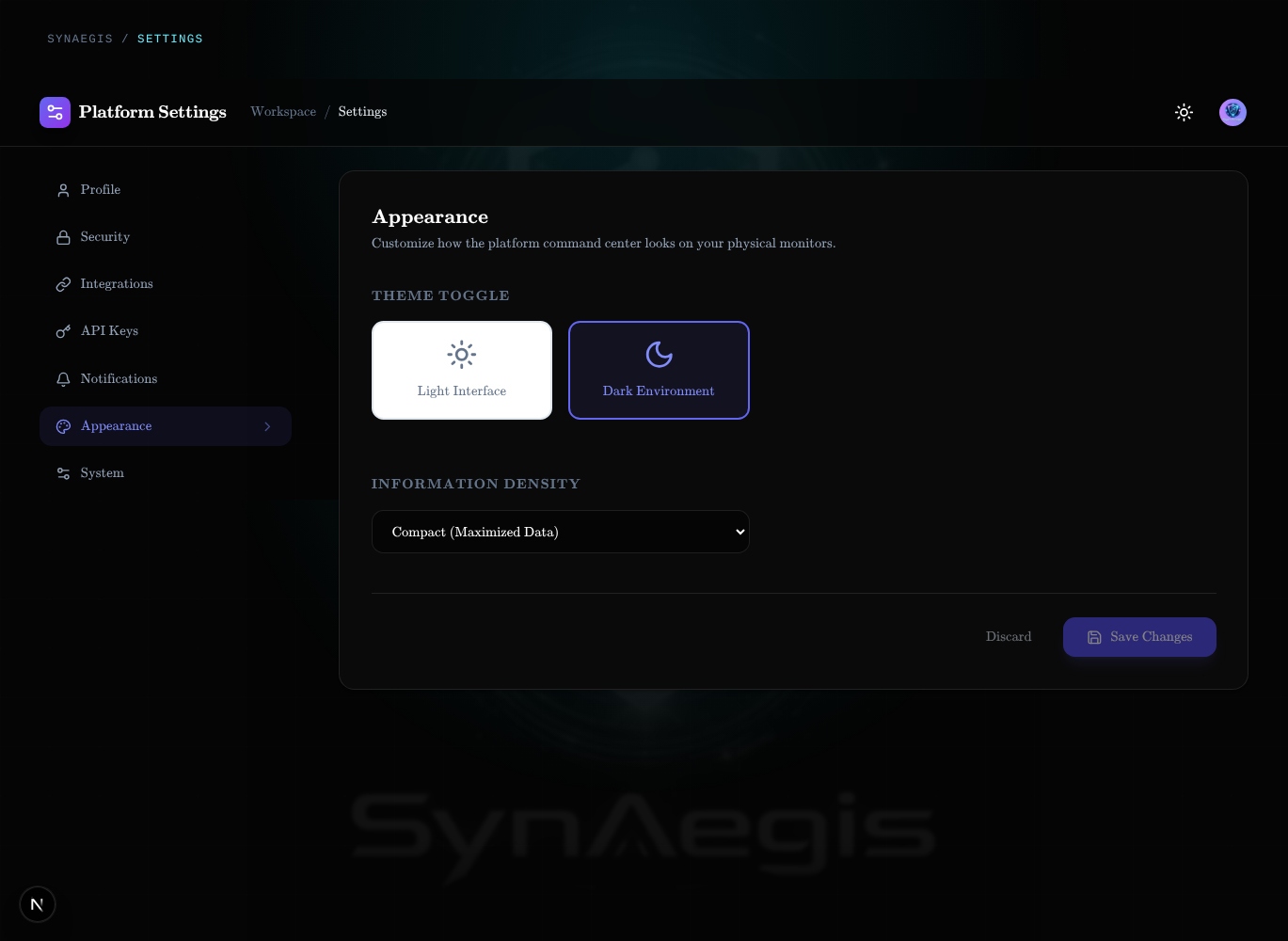
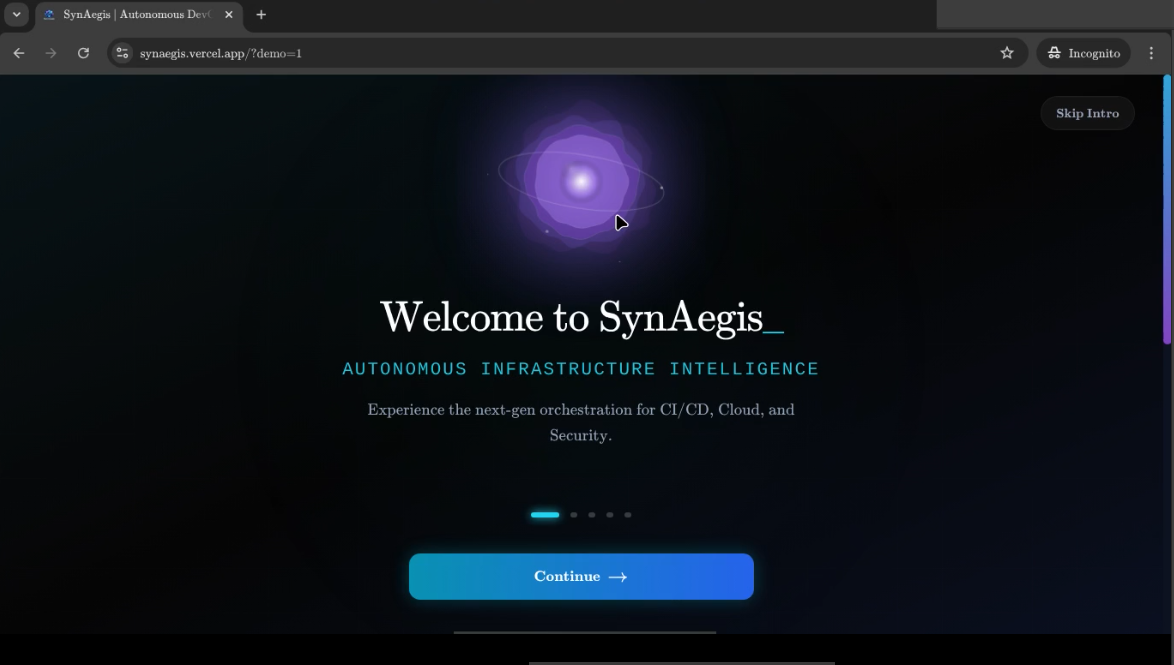
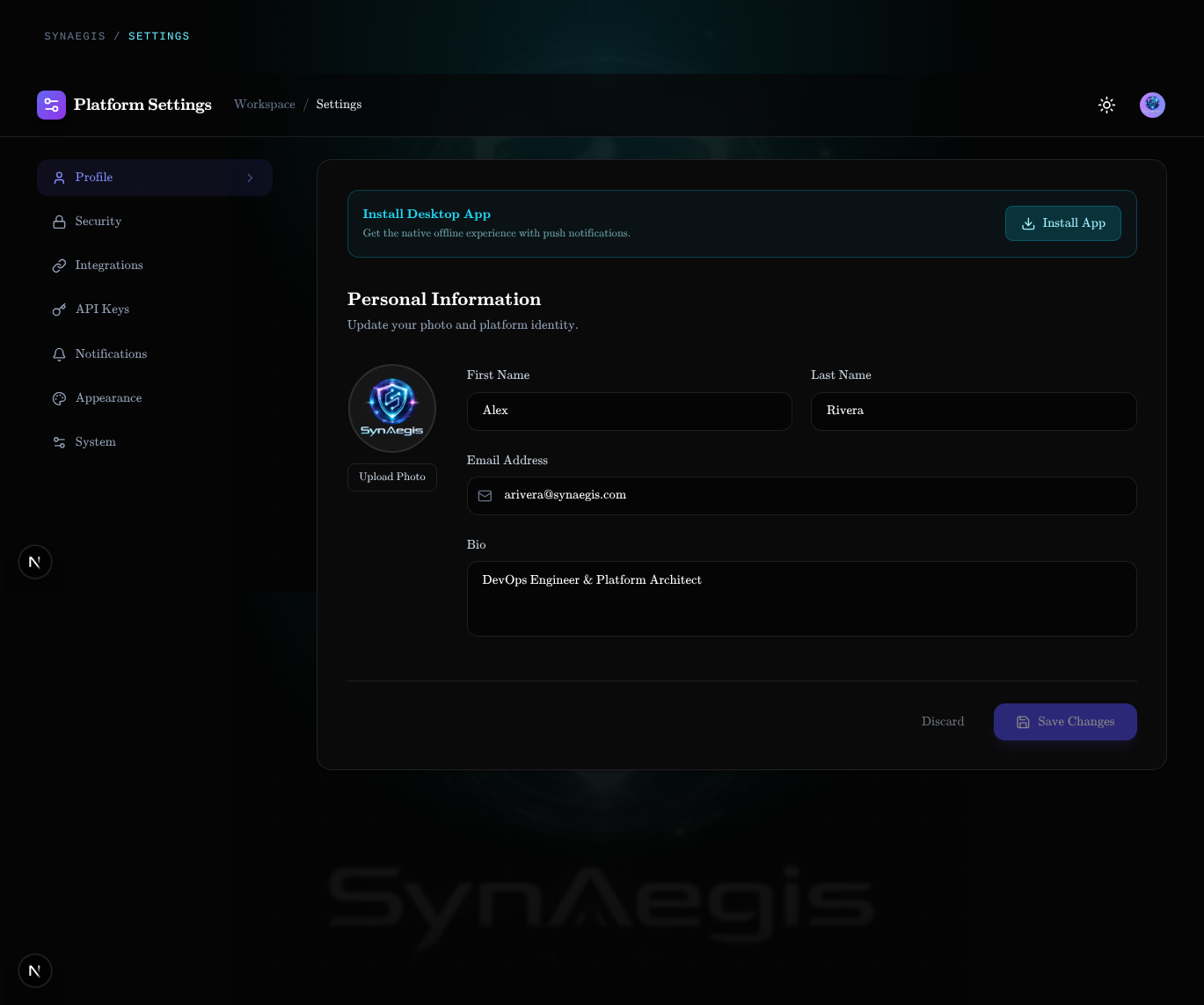
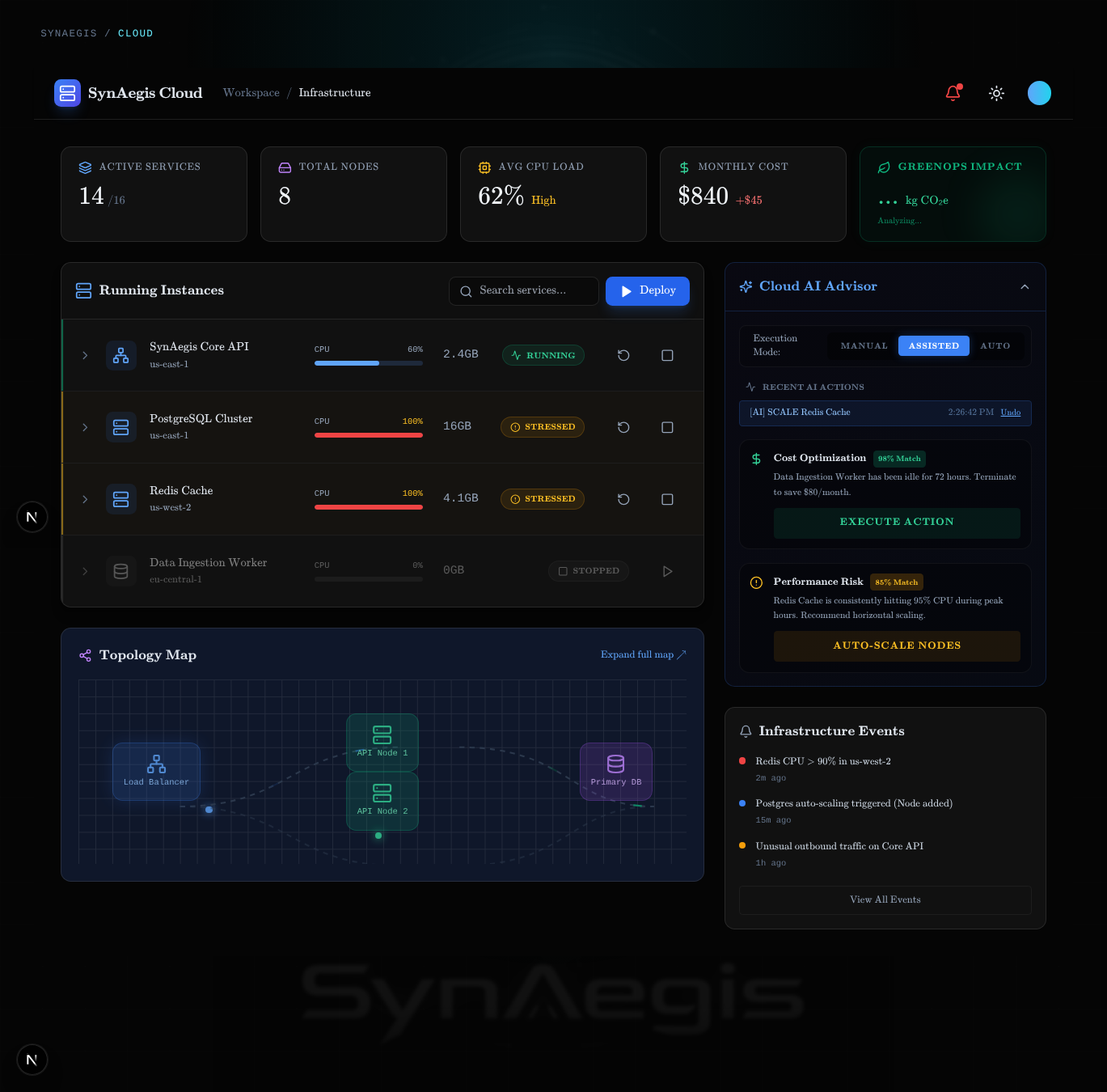
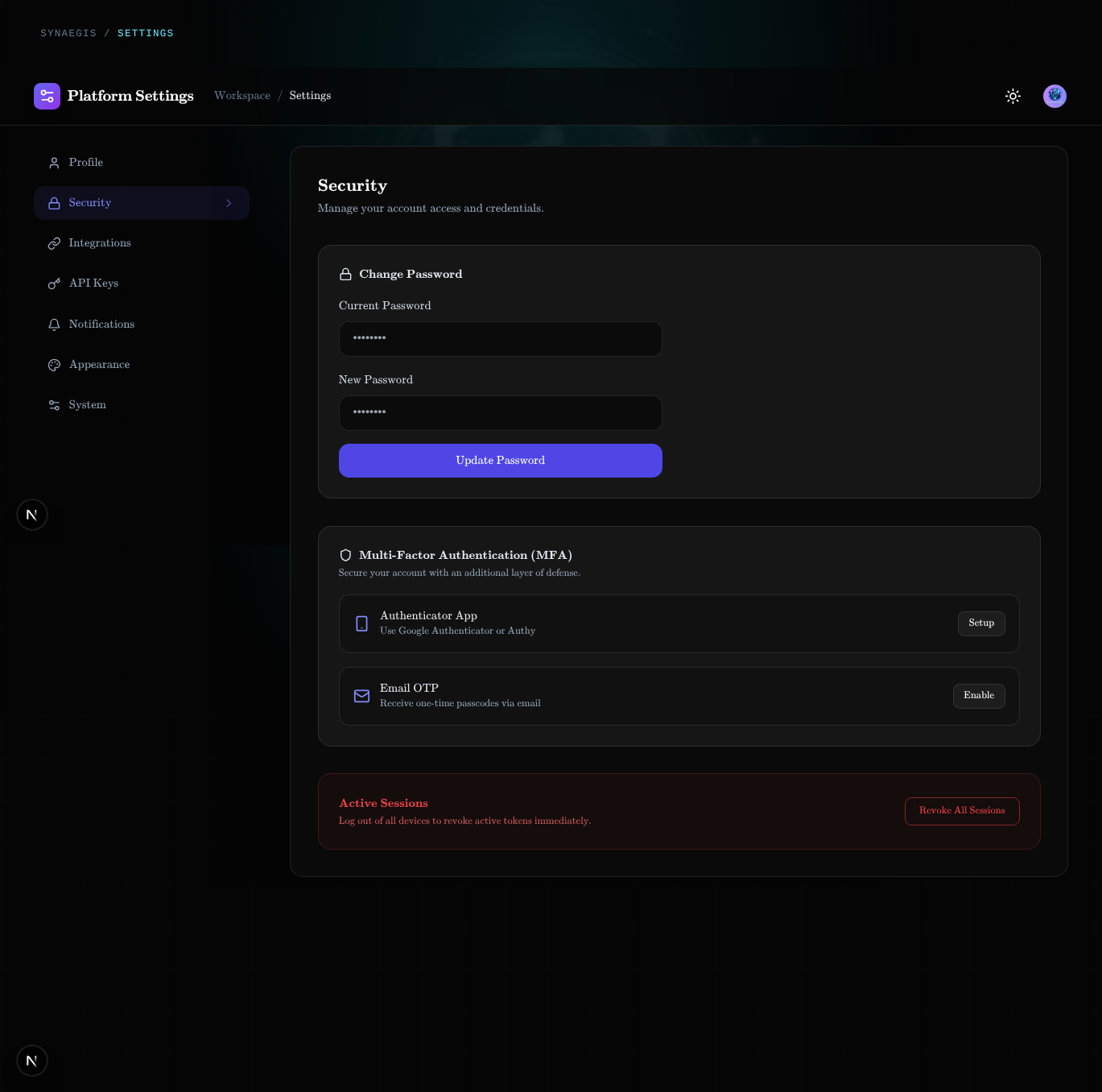
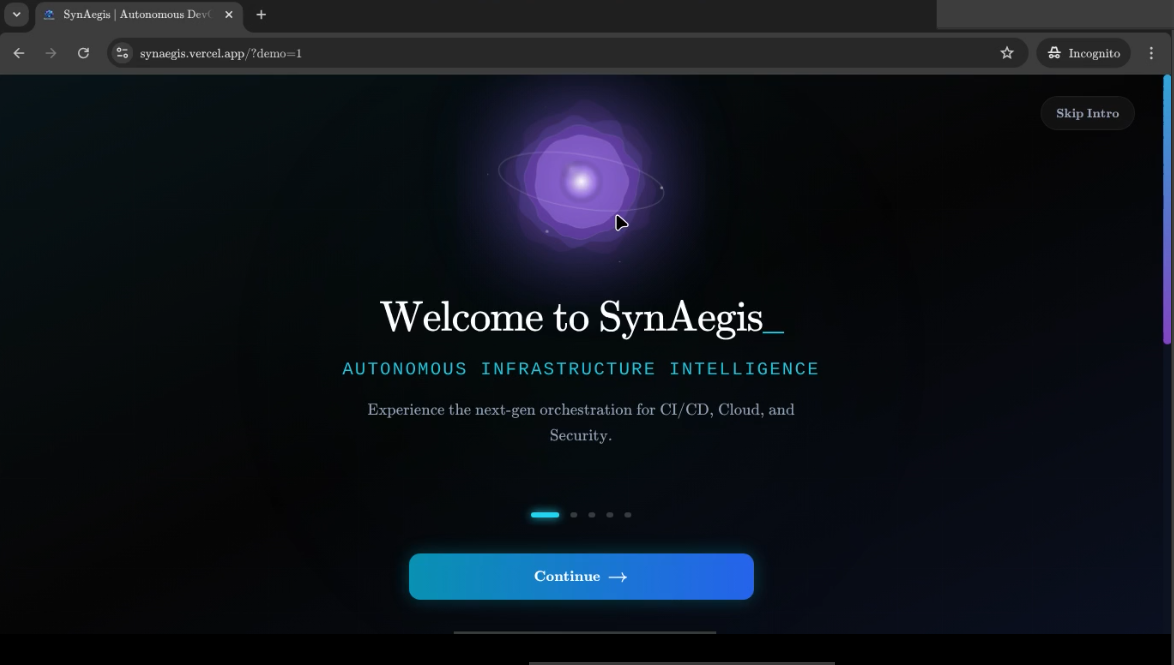
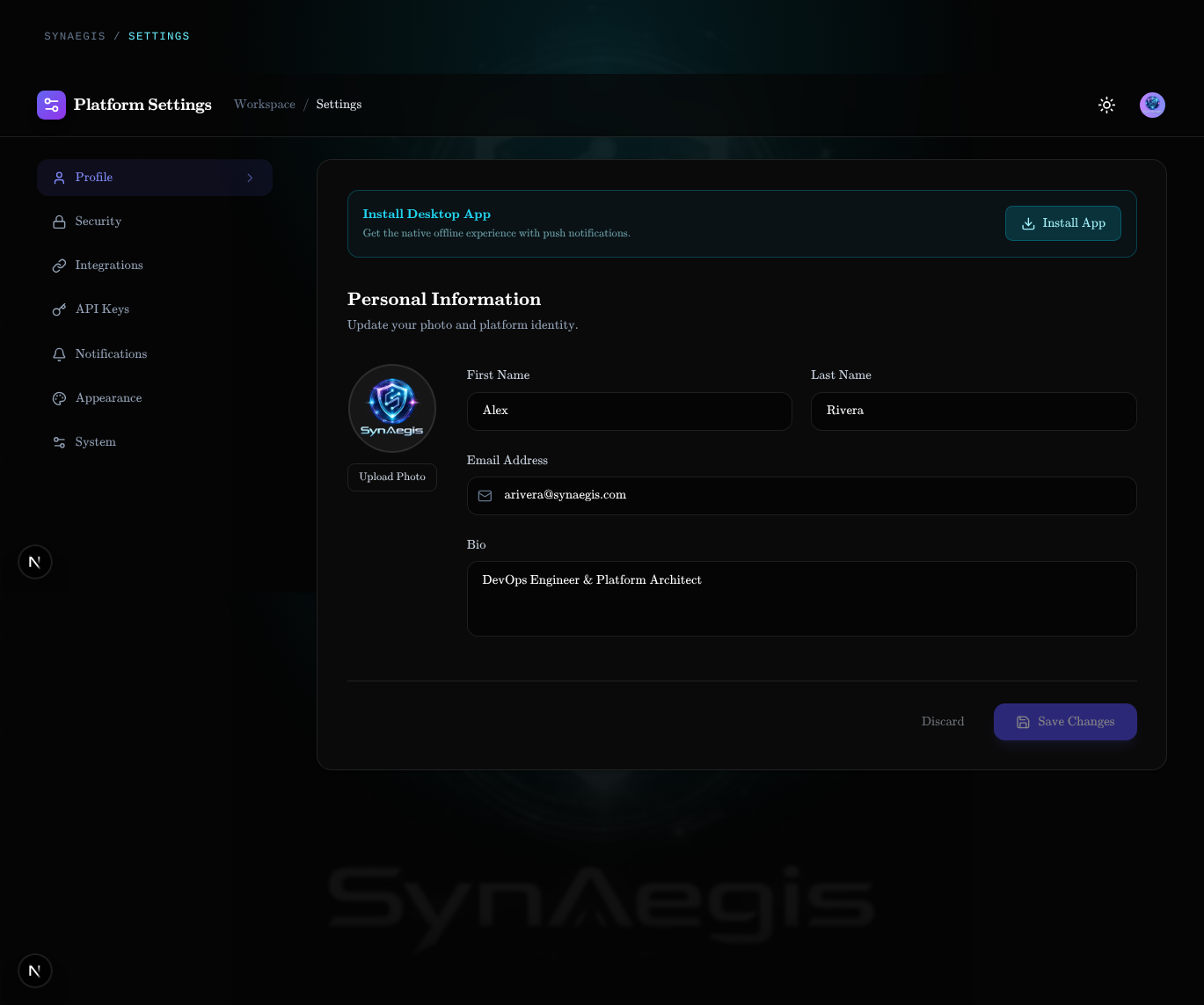
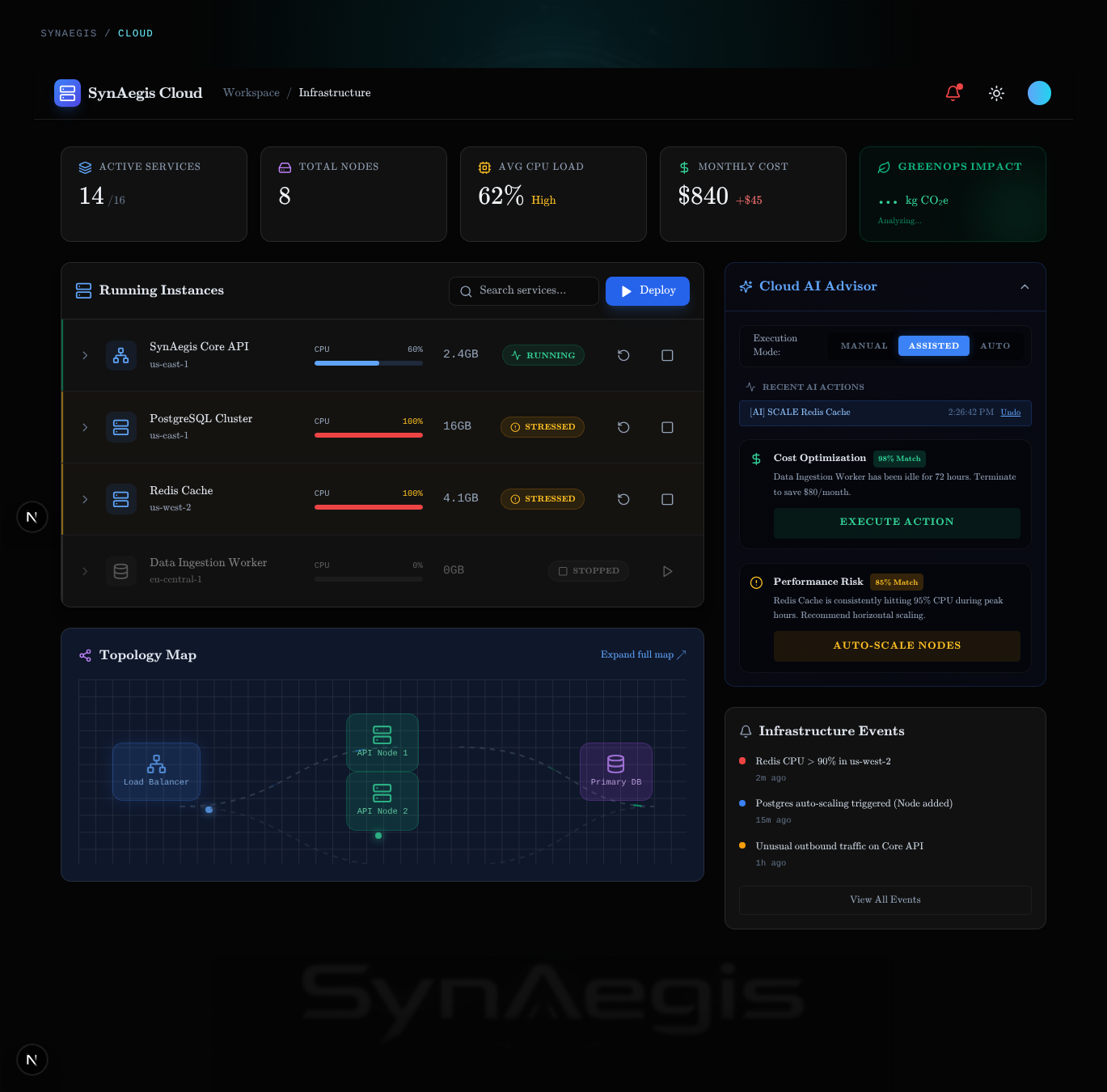
SynAegis is a fully automated, AI-driven DevOps control center and cloud management platform. It provides a god's-eye view of your entire infrastructure—from CI/CD pipelines to live production nodes and security endpoints.
Key features include:
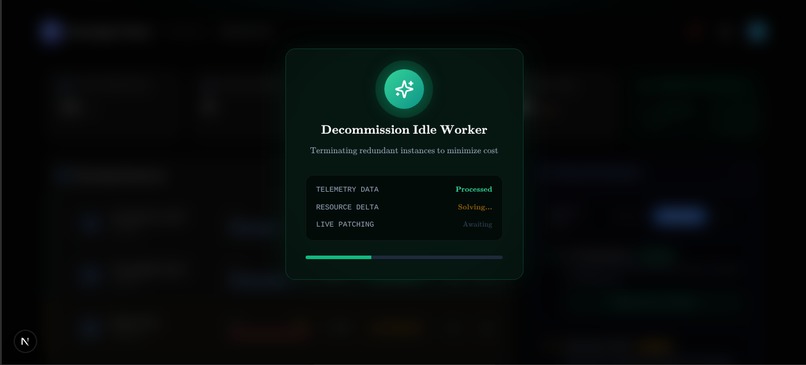
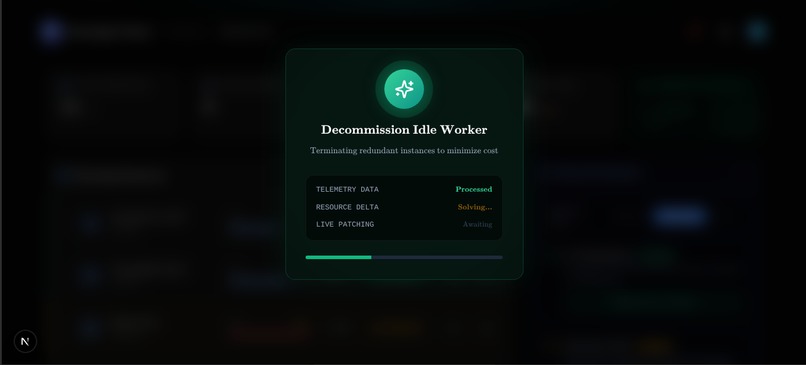
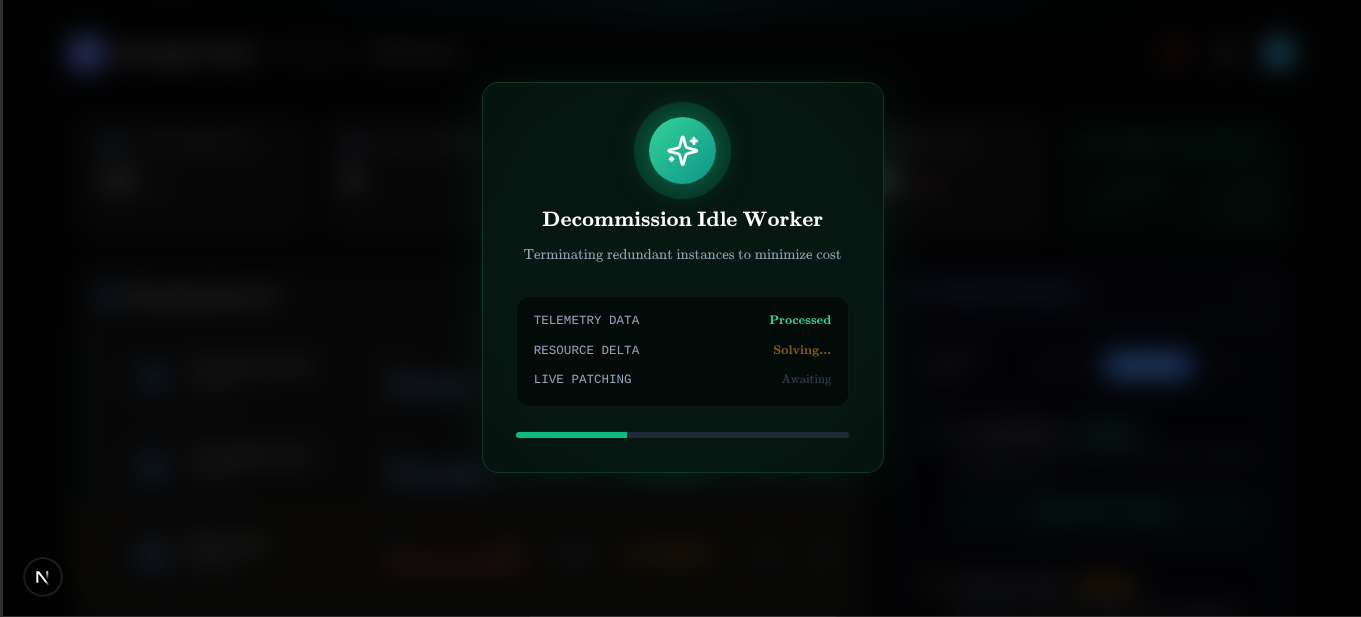
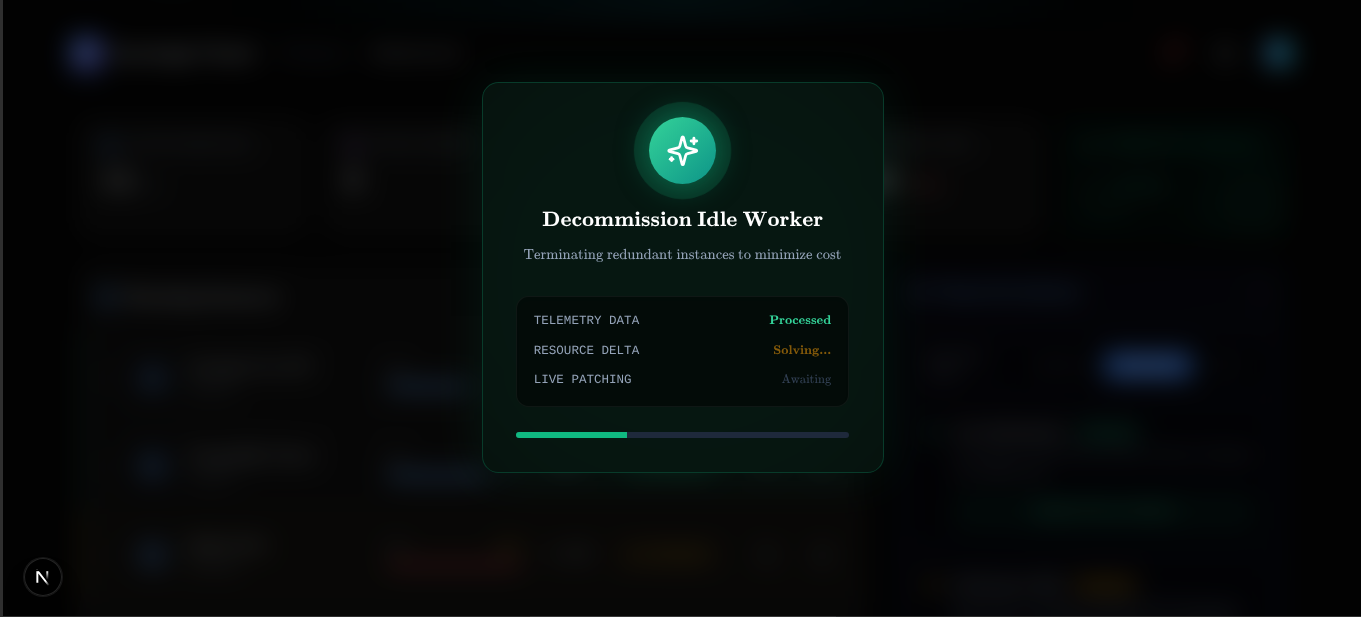
- Autonomous Self-Healing: SynAegis monitors CPU and memory thresholds. When a node spikes (e.g., > 95% CPU), the AI agent evaluates the telemetry, calculates the resource delta, and automatically scales the cluster horizontally without human intervention.
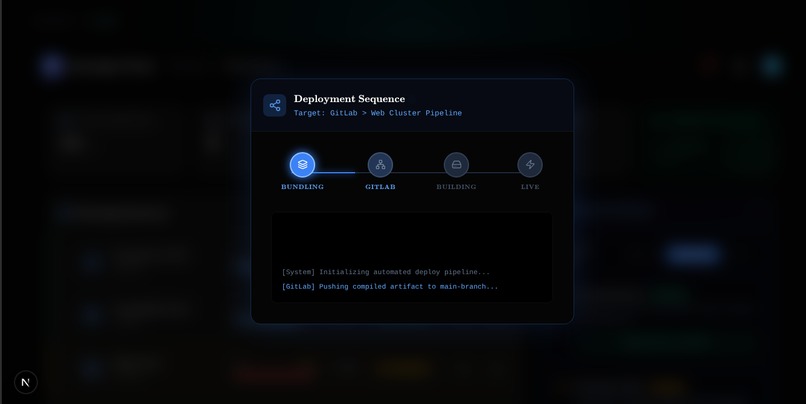
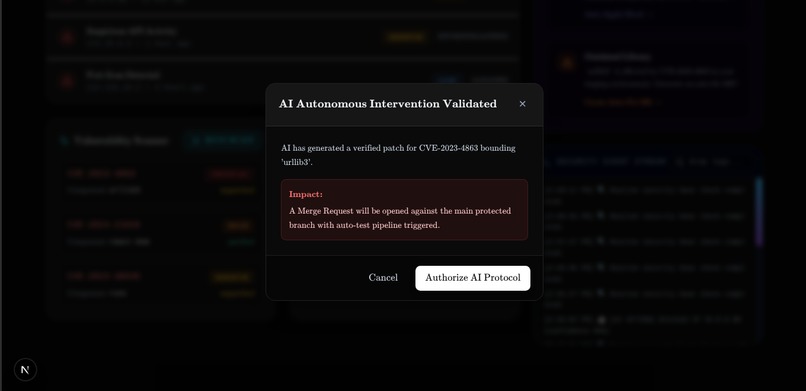
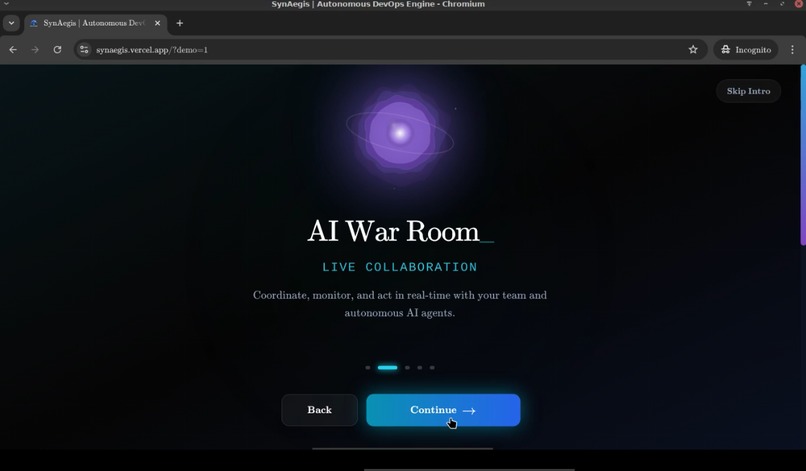
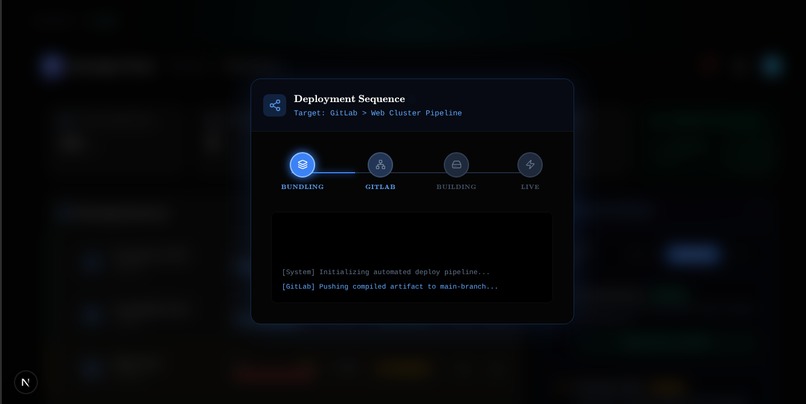
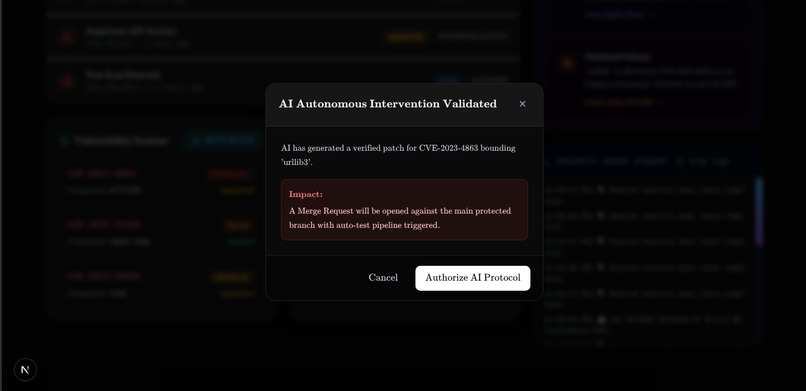
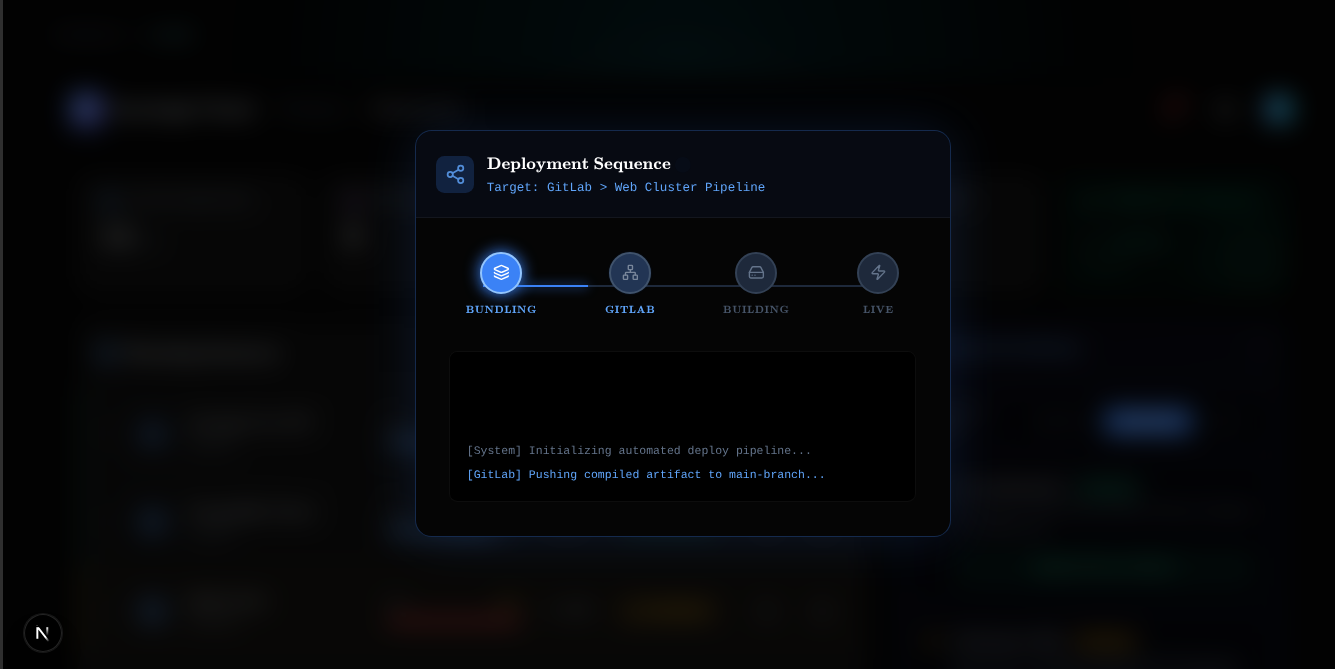
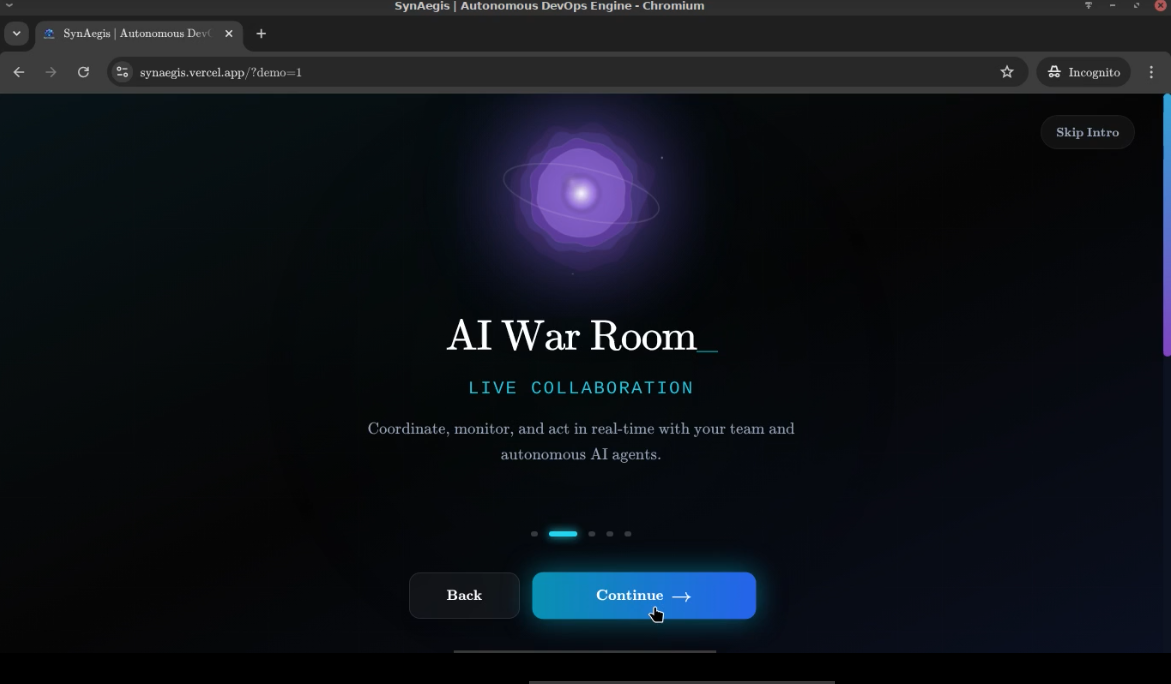
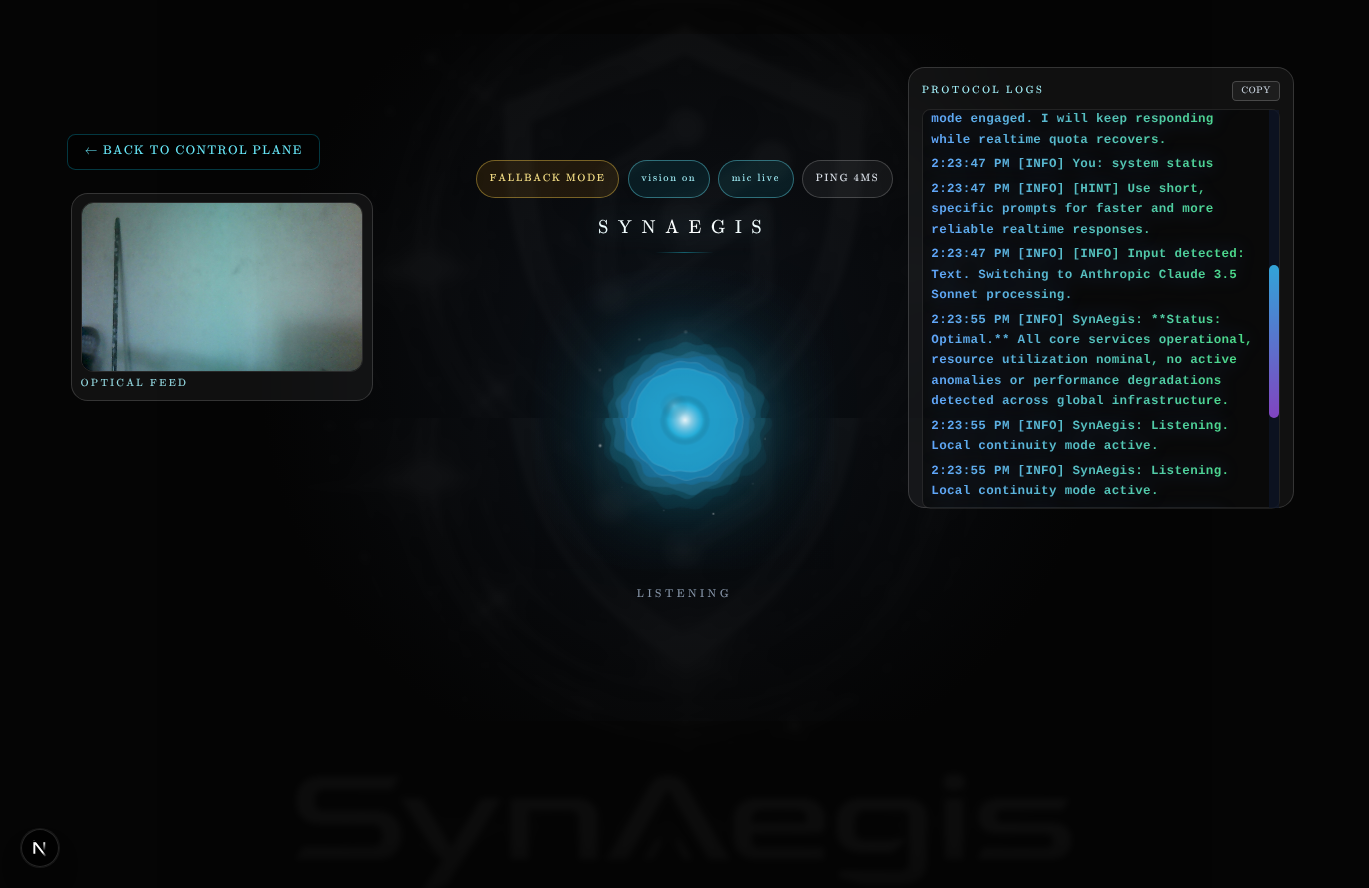
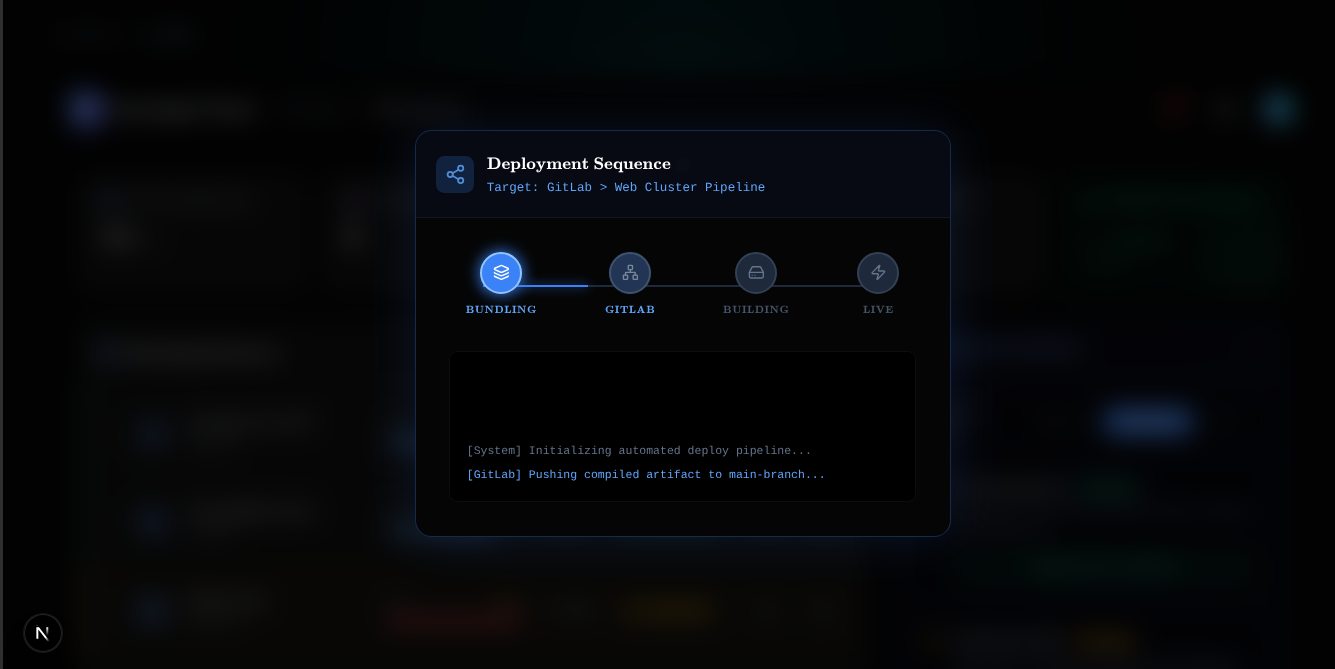
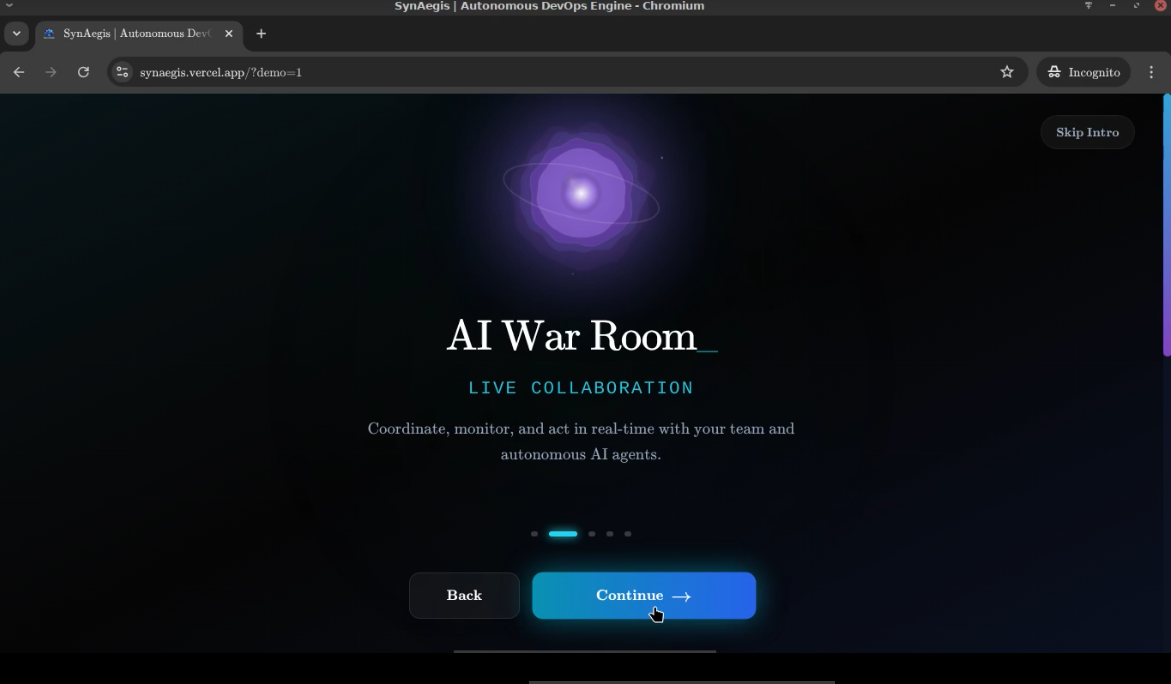
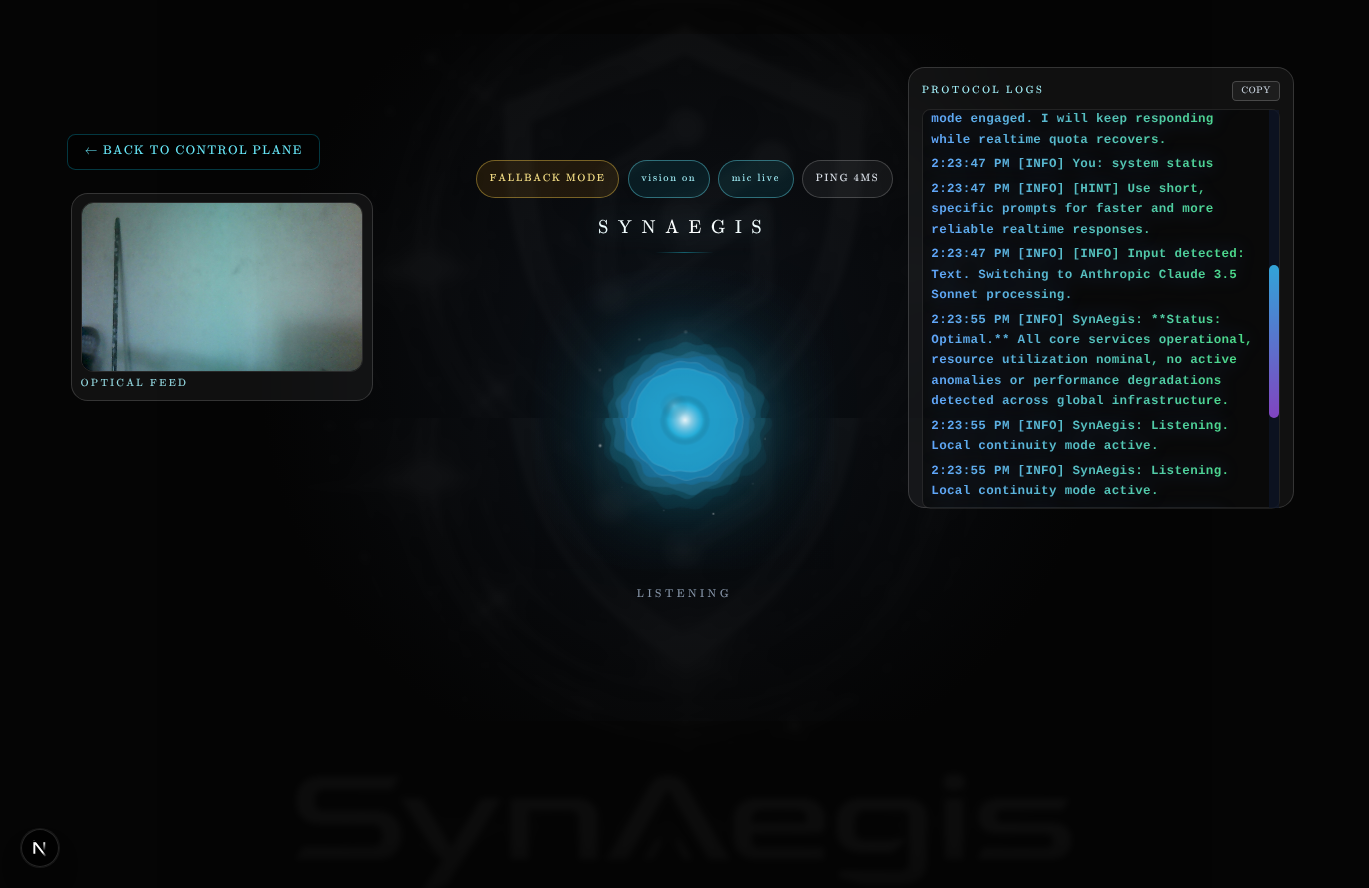
- High-End Visualizations: Complex deployment sequences and AI actions are mapped out visually with cinematic precision, showing exactly what the AI is thinking and doing in real-time.
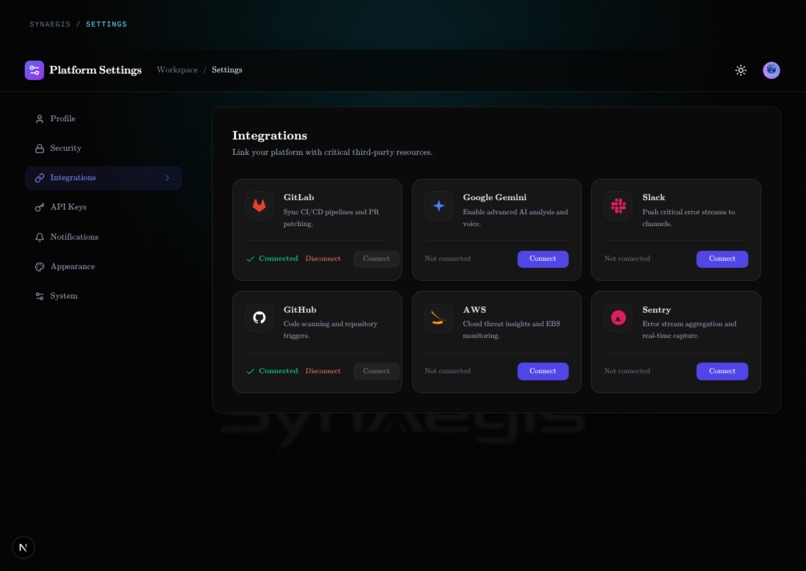
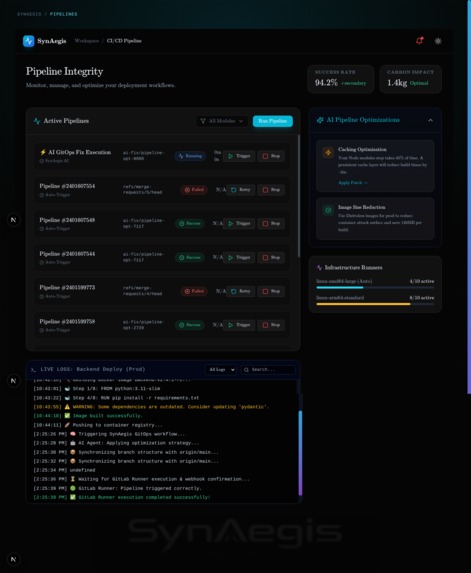
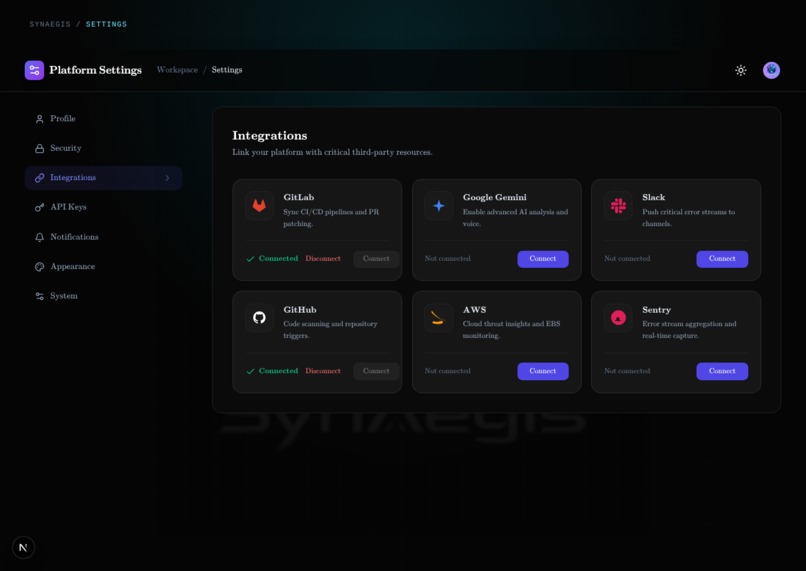
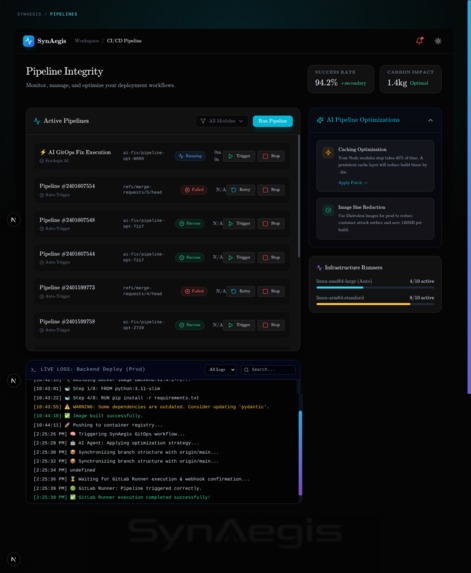
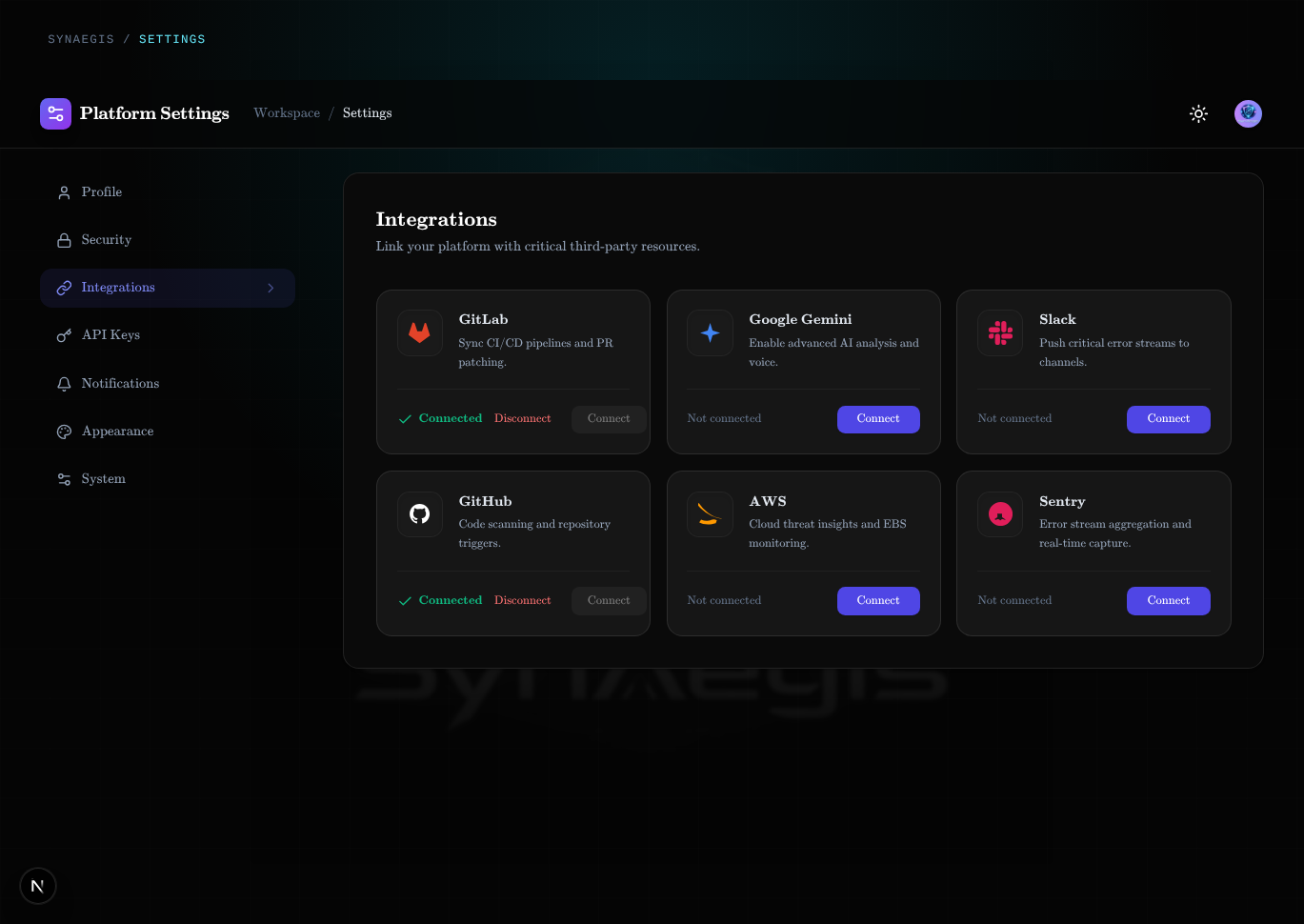
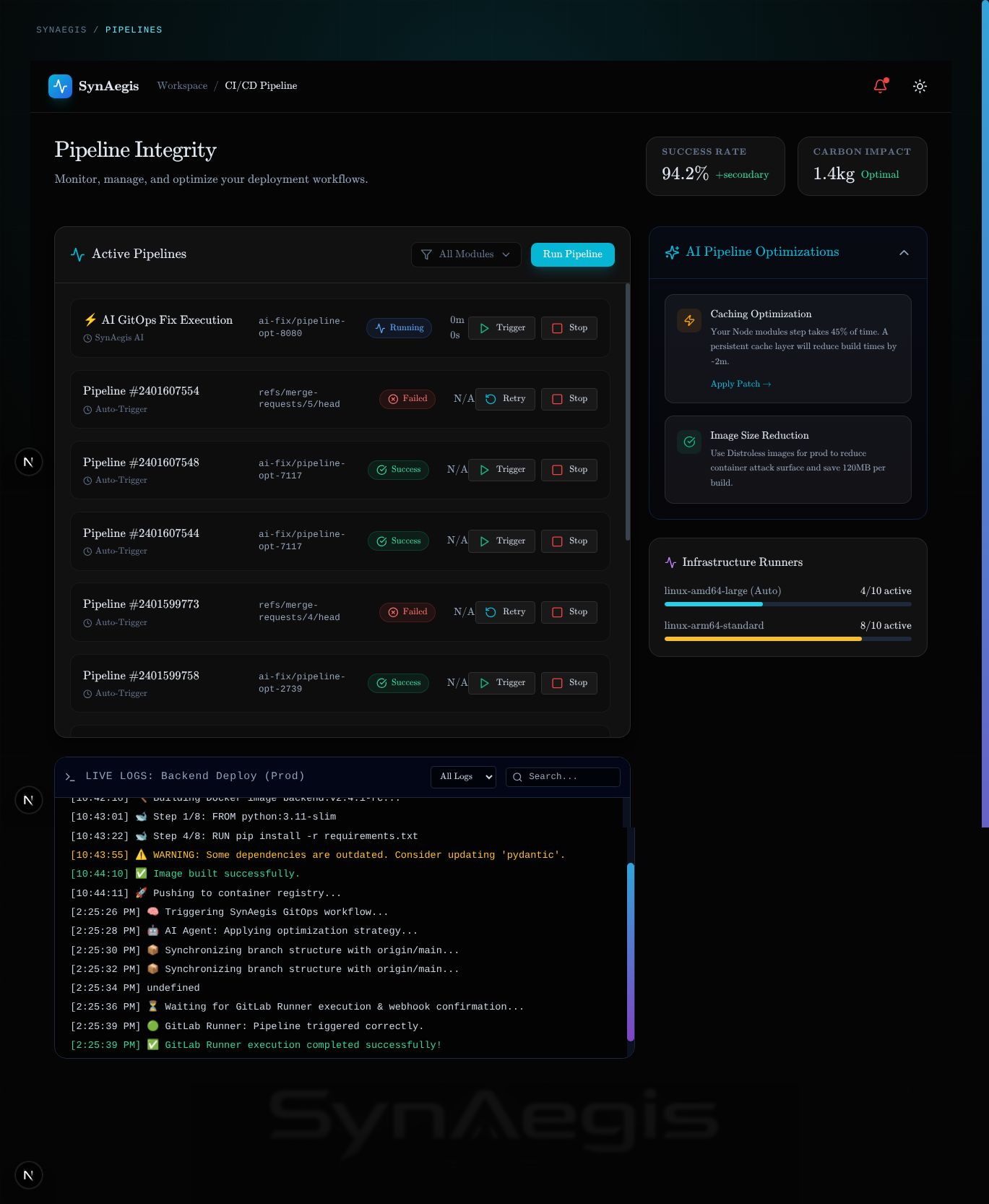
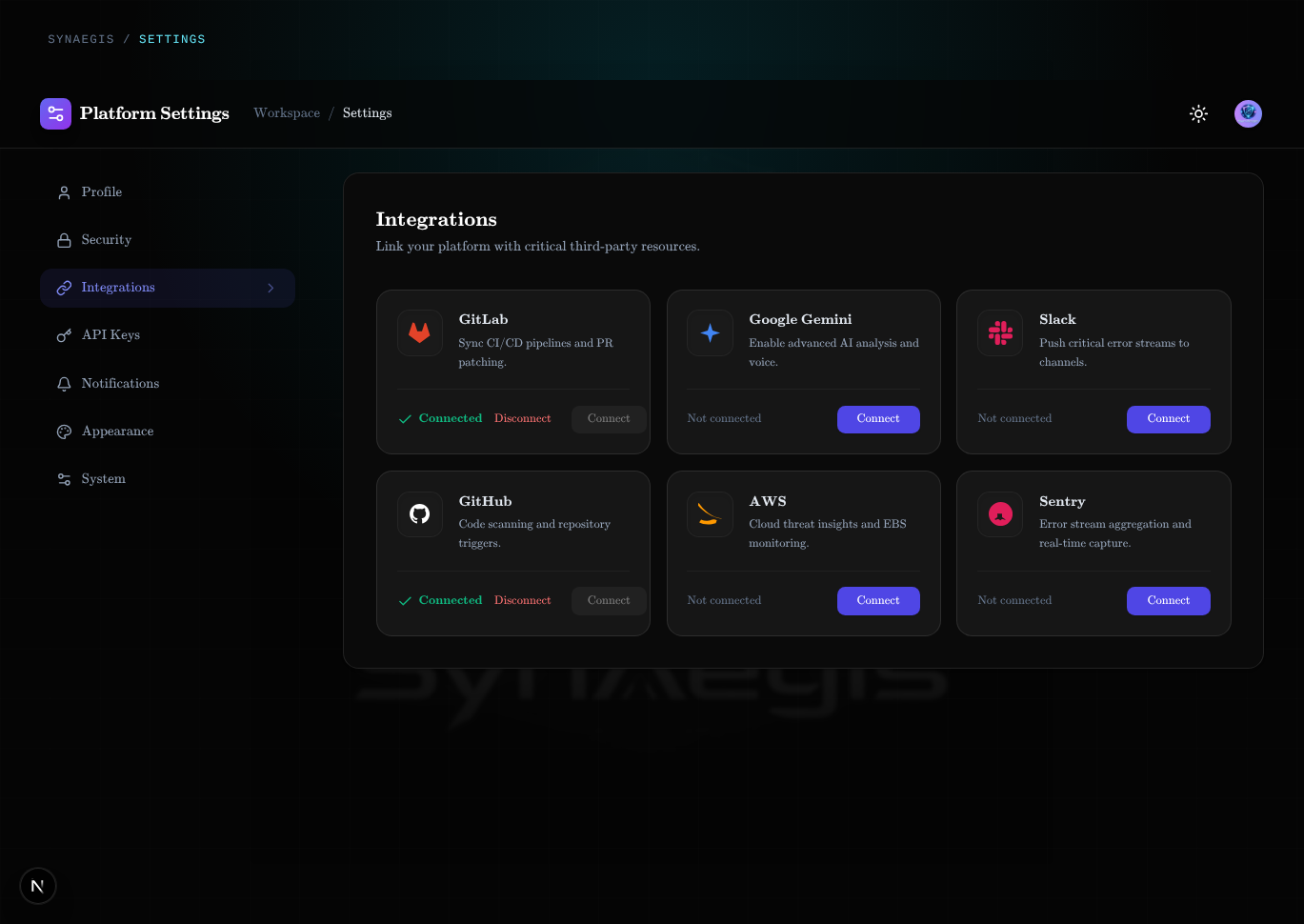
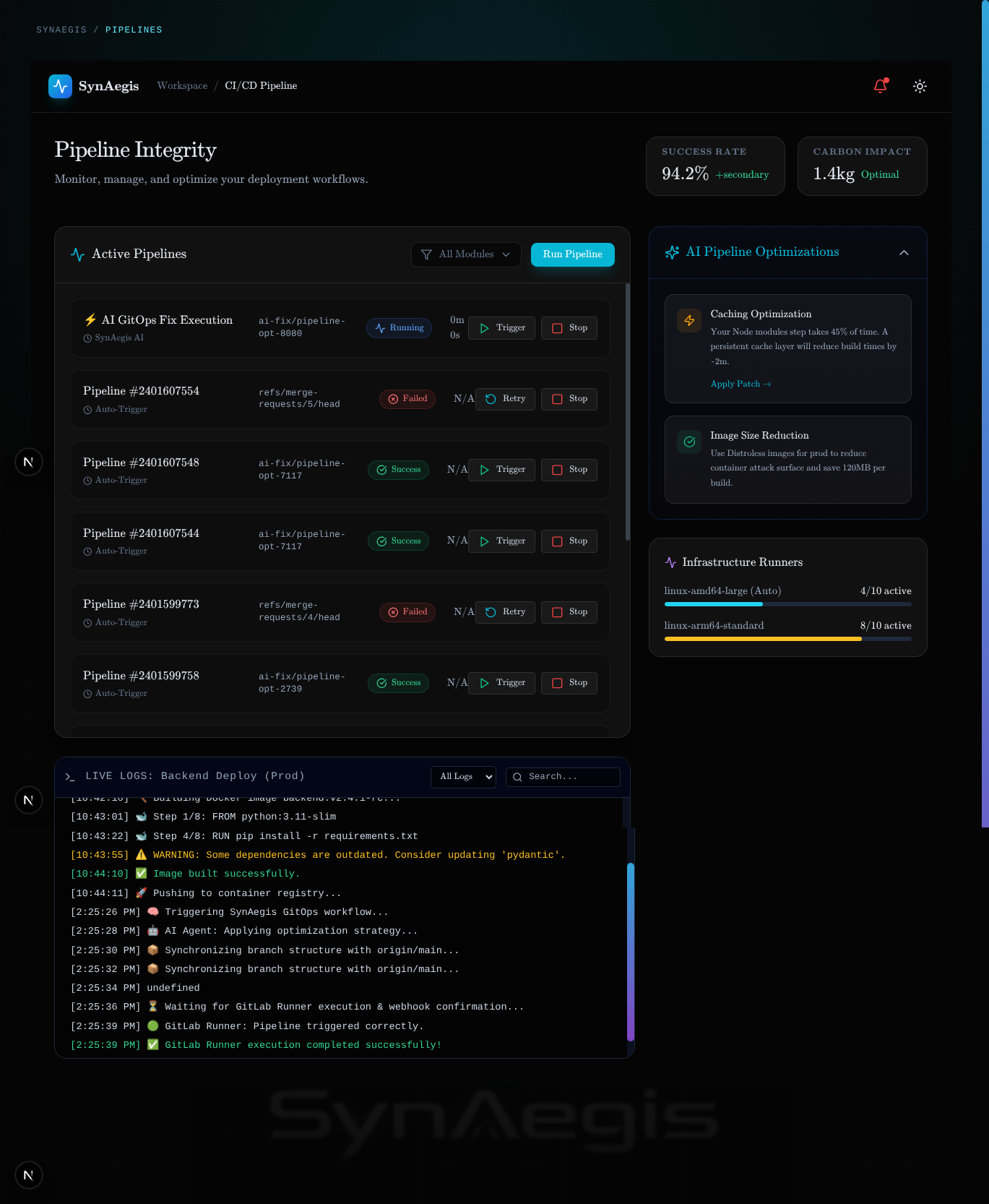
- GitLab CI/CD Integration: Seamlessly triggers, monitors, and validates multi-stage deployment pipelines directly from the dashboard.
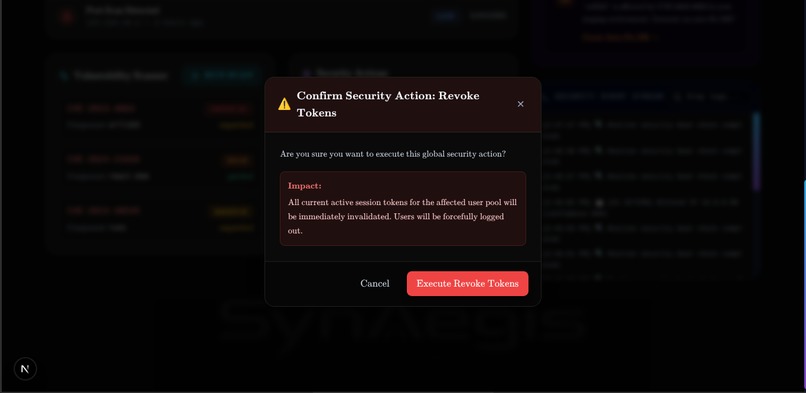
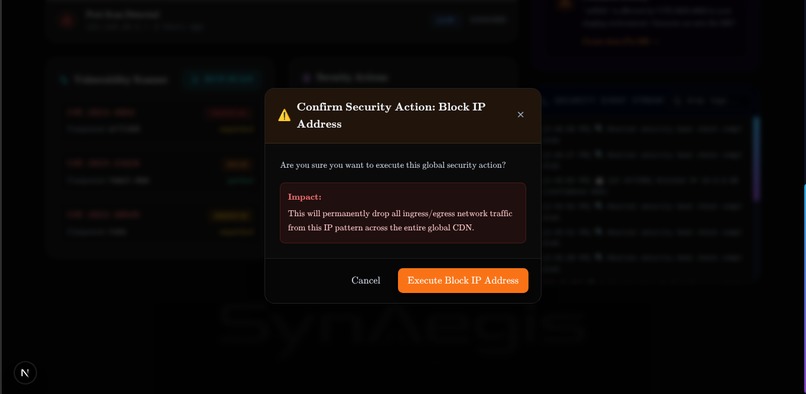
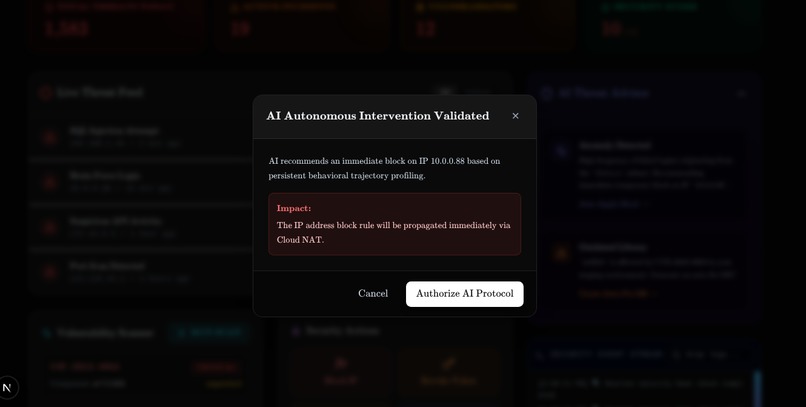
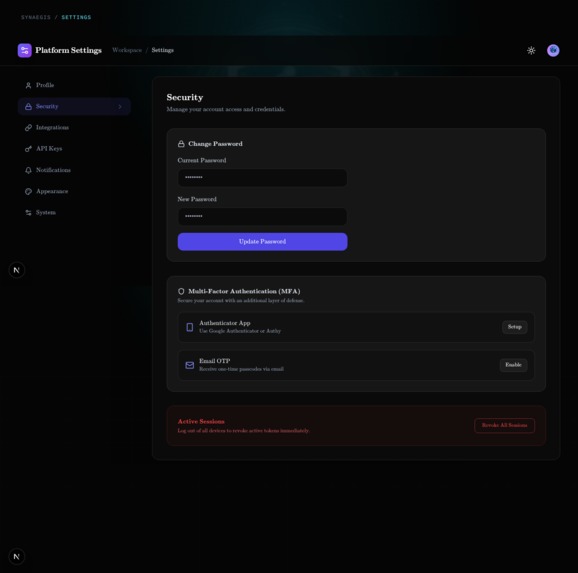
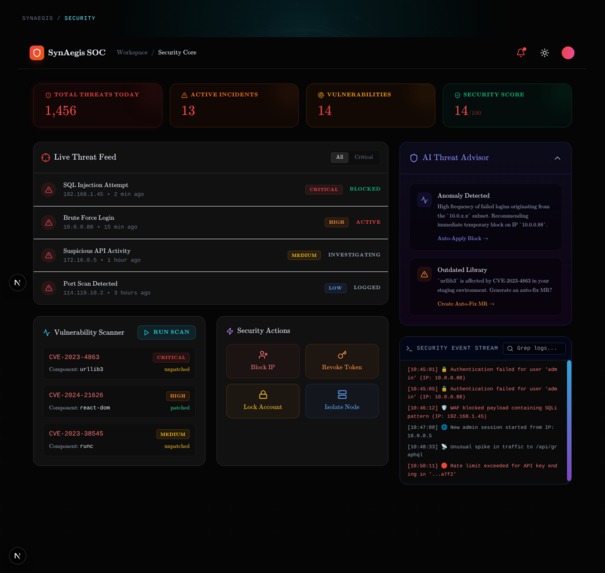
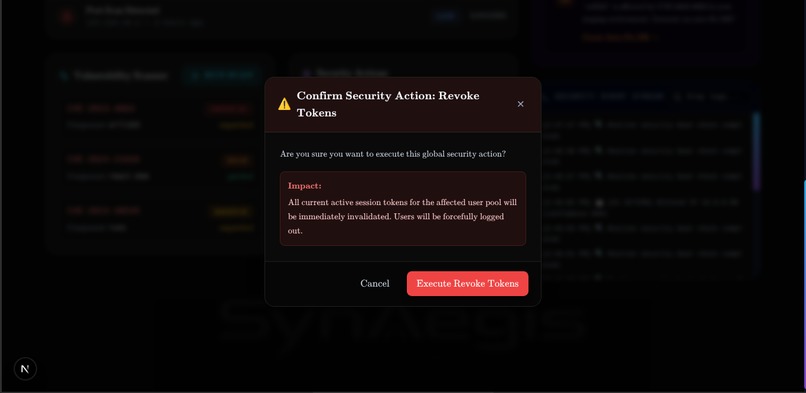
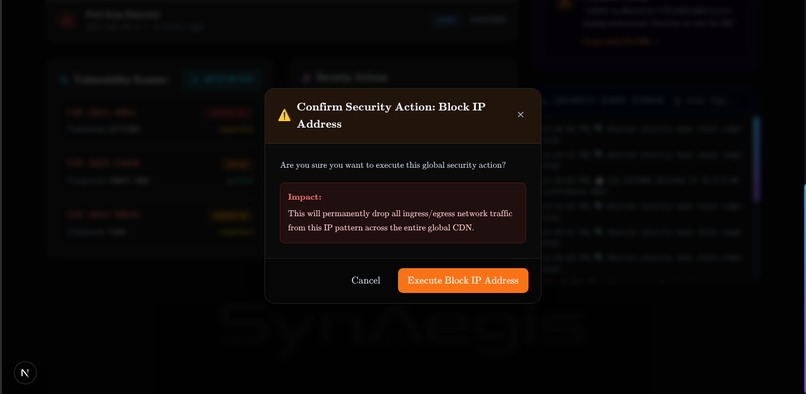
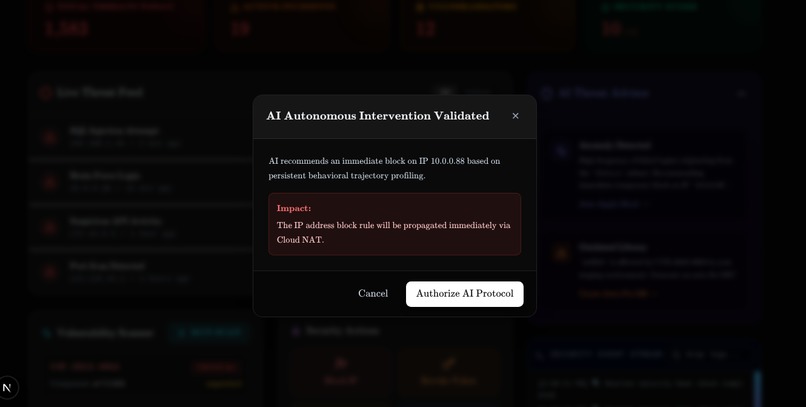
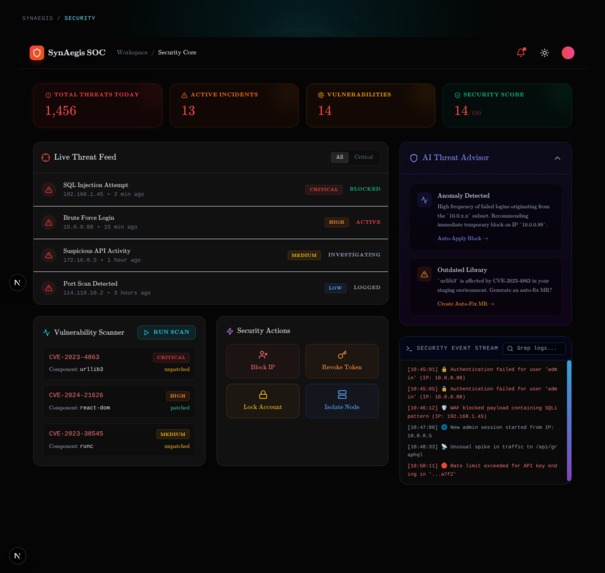
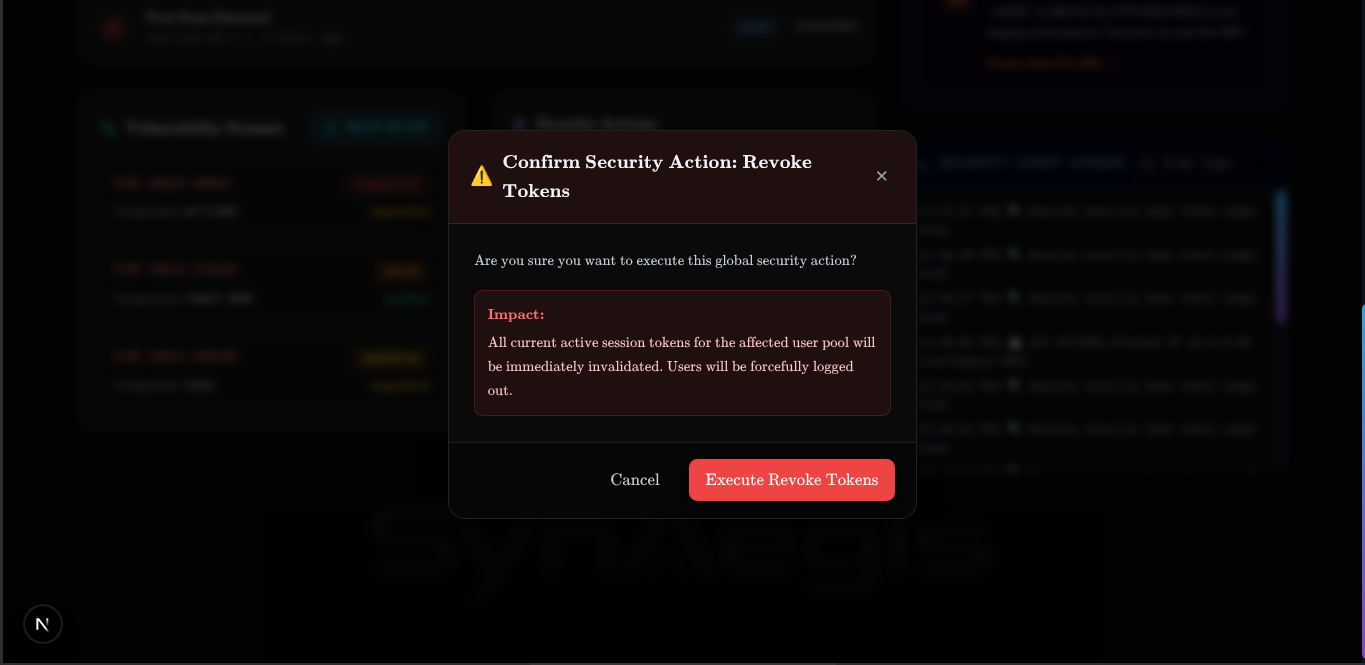
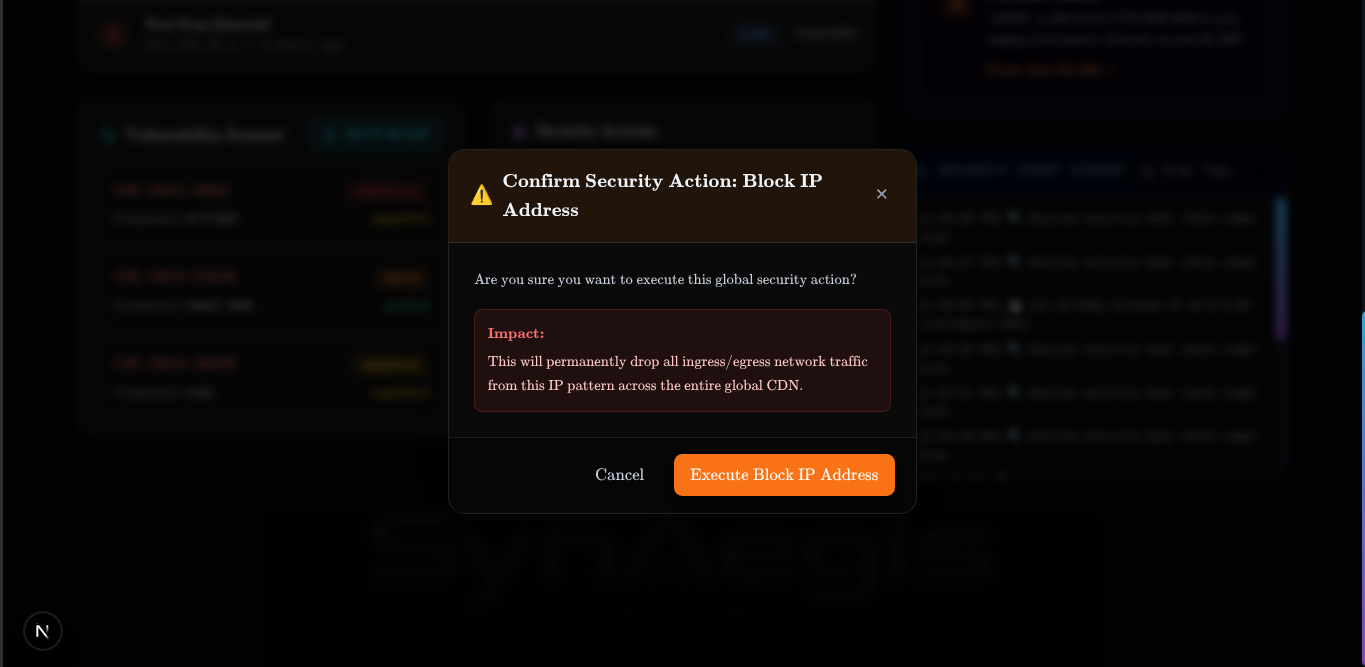
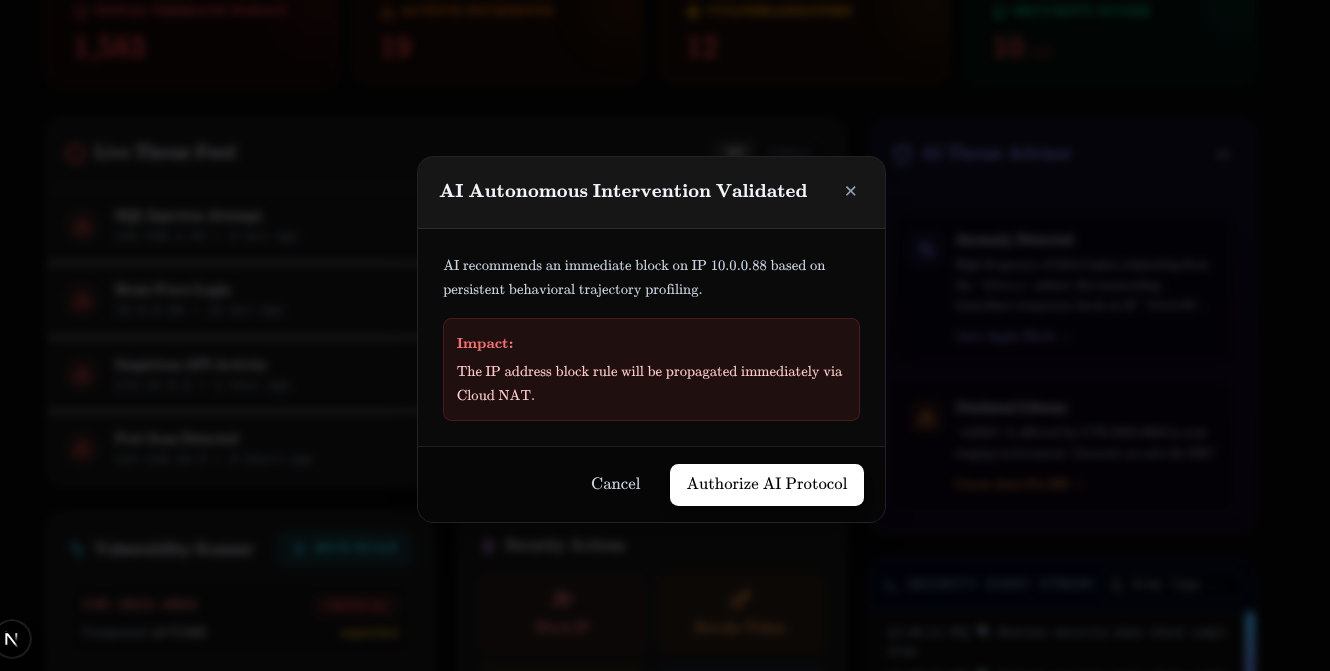
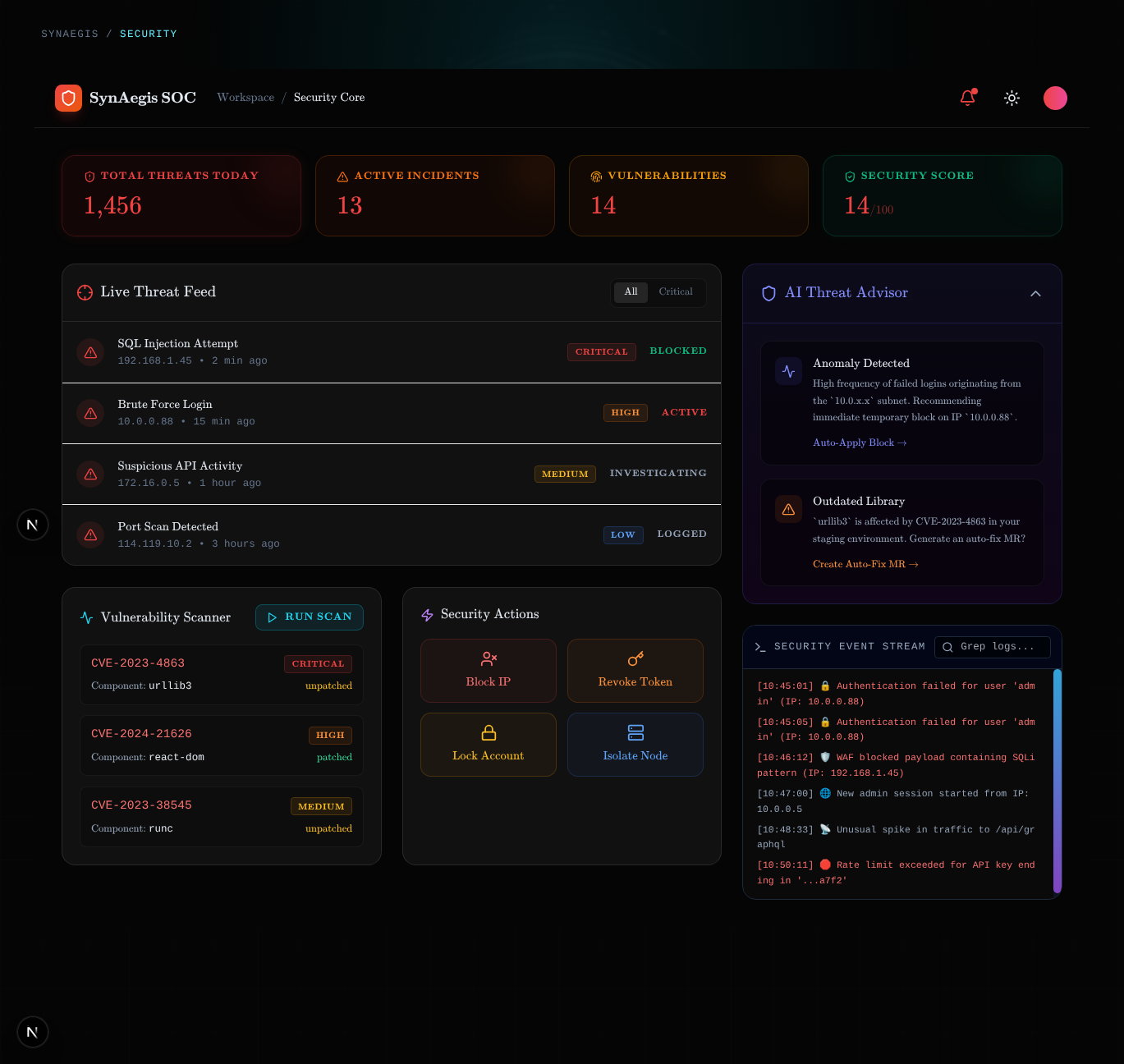
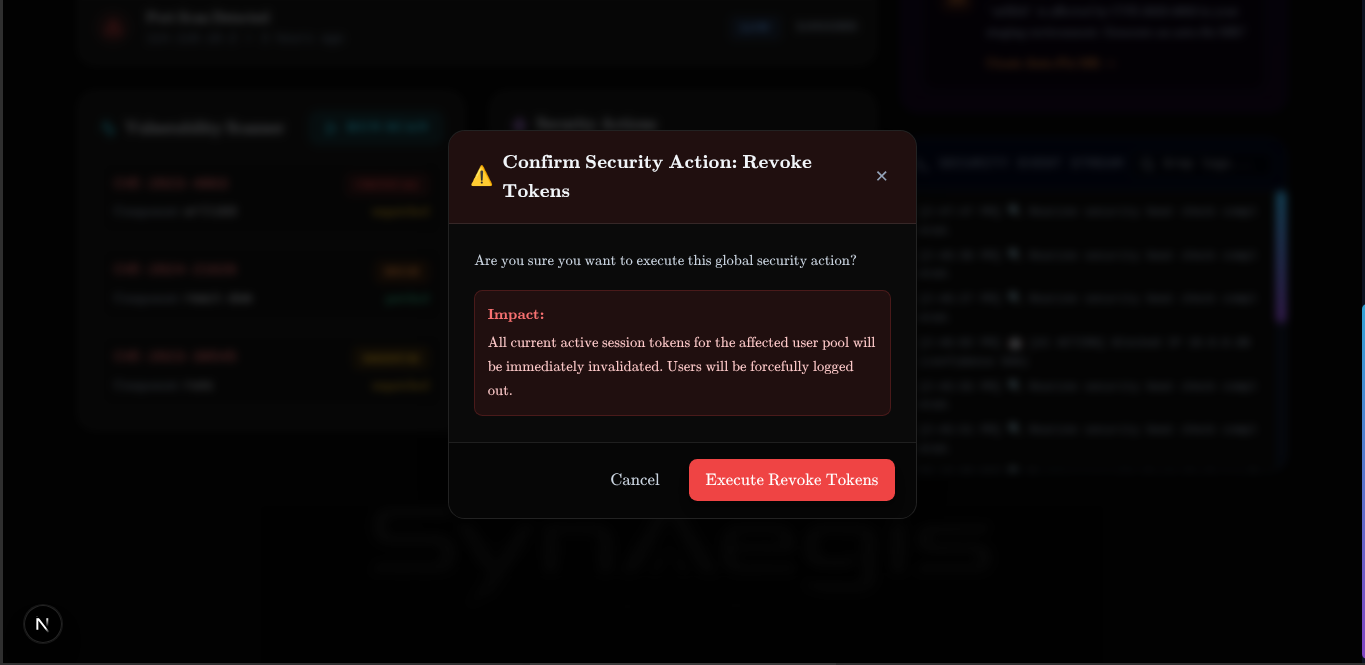
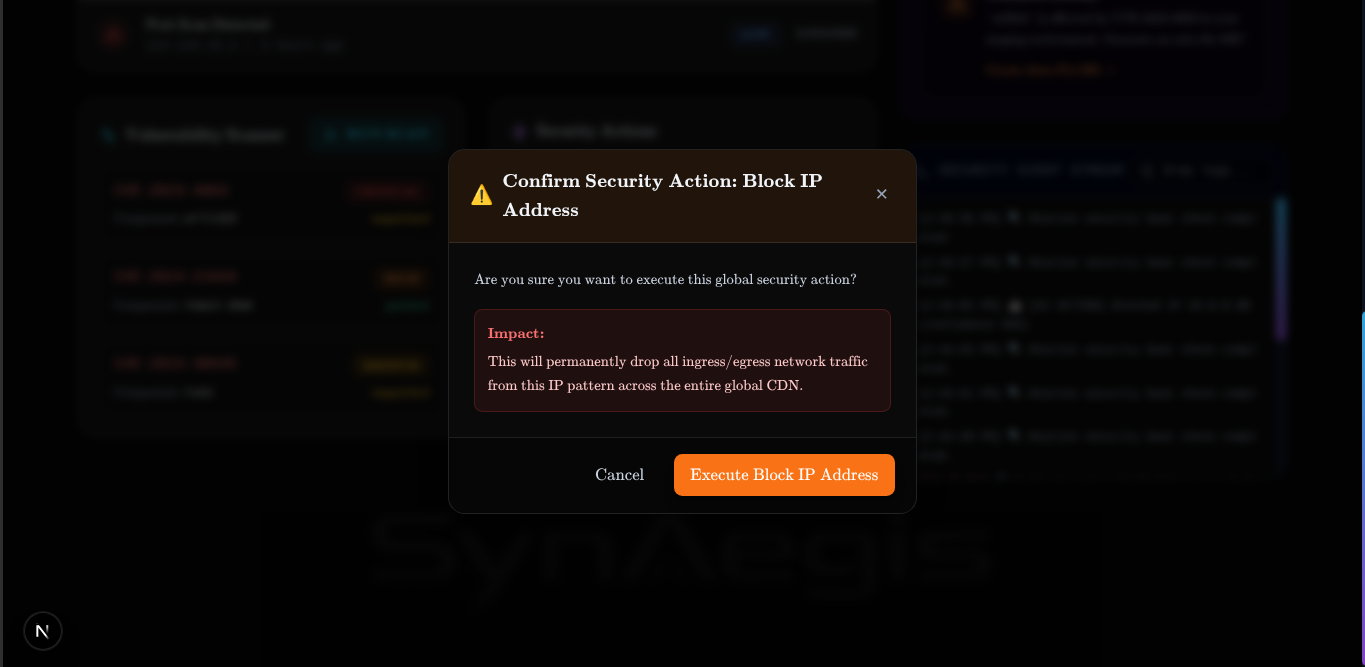
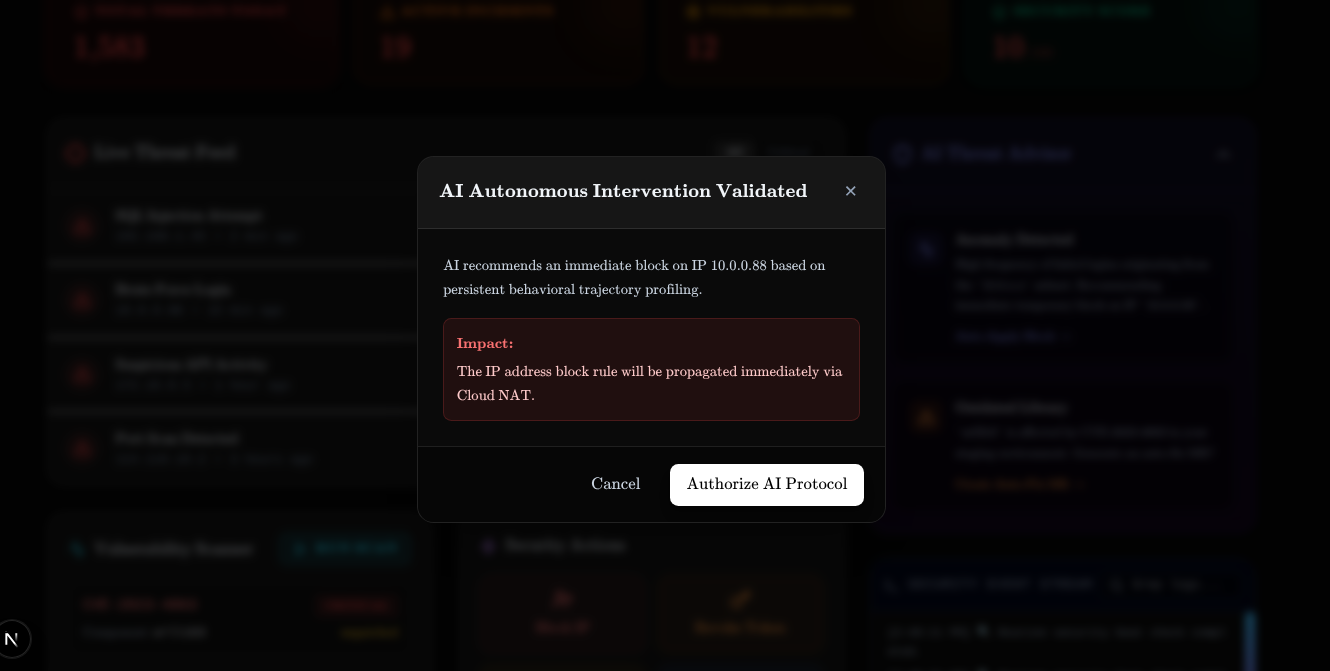
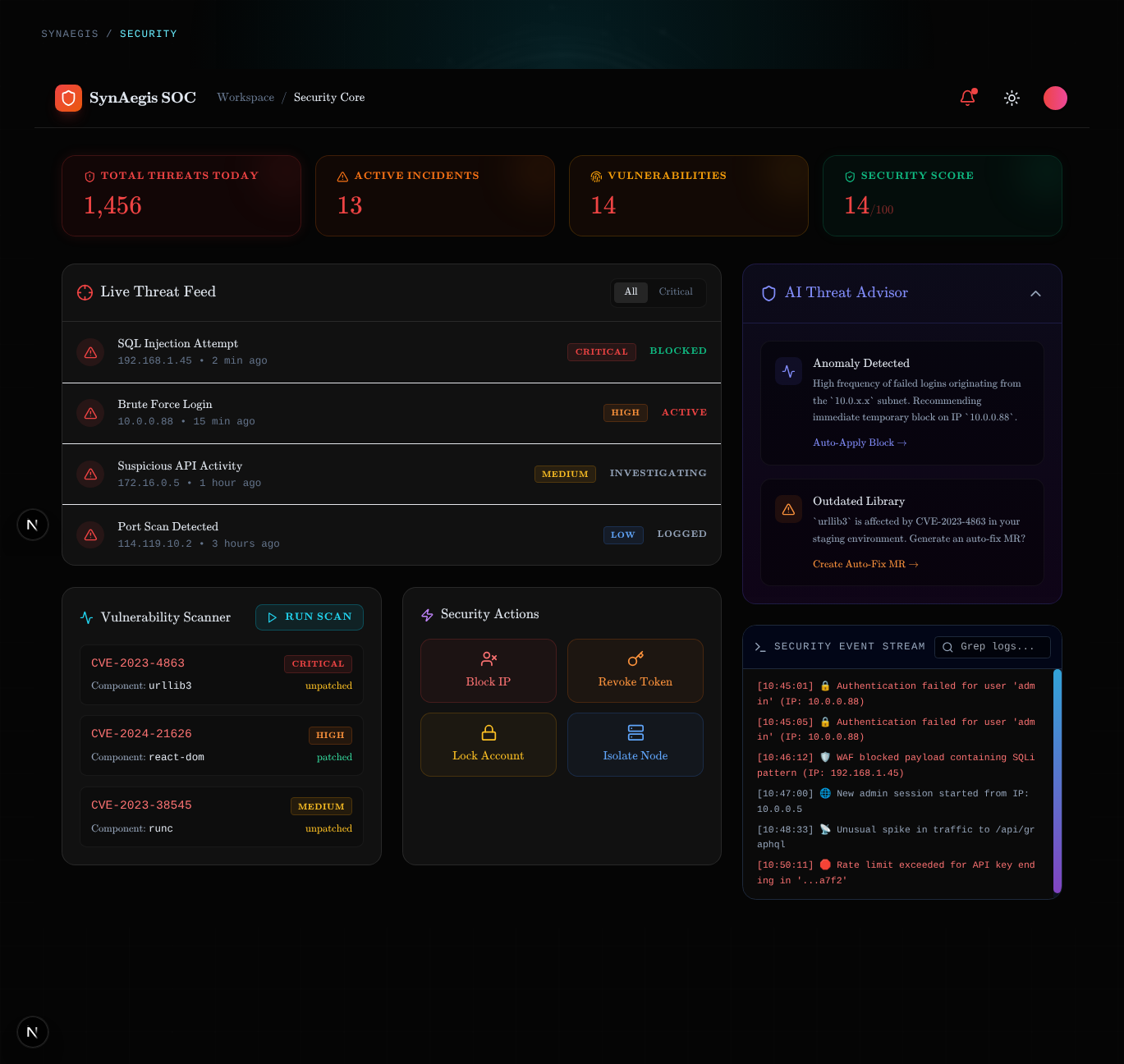
- Security & Production Guard: Real-time threat detection and automated decommissioning of compromised or idle workers.
How we built it
SynAegis is built on a modern, decoupled architecture designed for speed and real-time streaming:
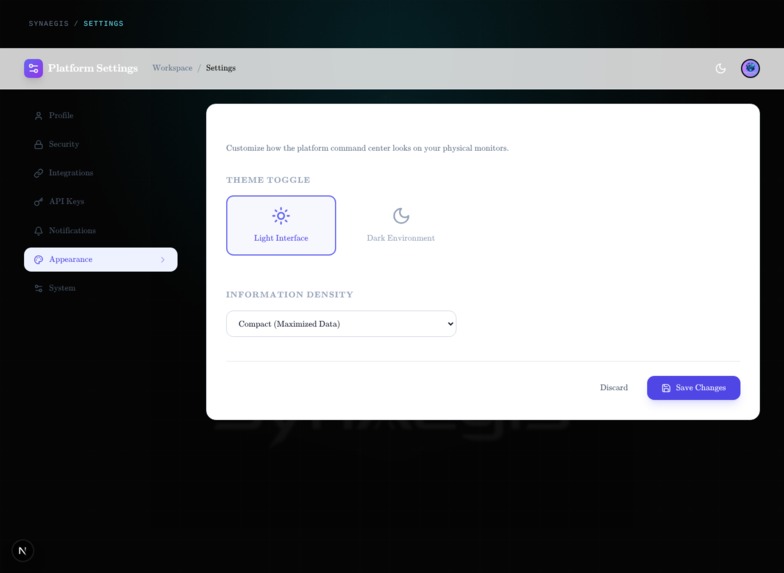
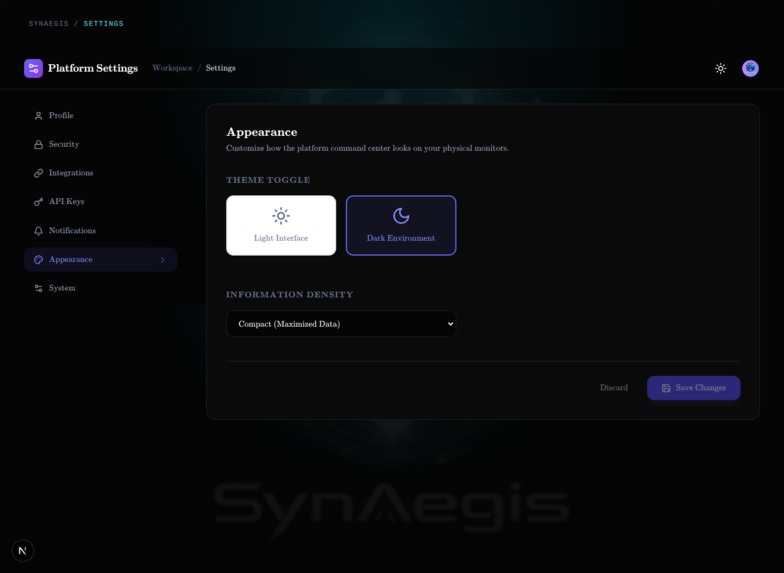
- Frontend (The Command Center): We used Next.js 15 and React 19 with TypeScript. The interface relies heavily on Tailwind CSS for styling and Framer Motion to create high-end, staggered animations and fluid modals that bring the AI's "thought process" to life.
- Backend (The Brain): The core engine is powered by Python FastAPI. It handles RESTful routing for cloud management, security, and pipelines, while WebSockets stream live telemetry data to the frontend at sub-second latency.
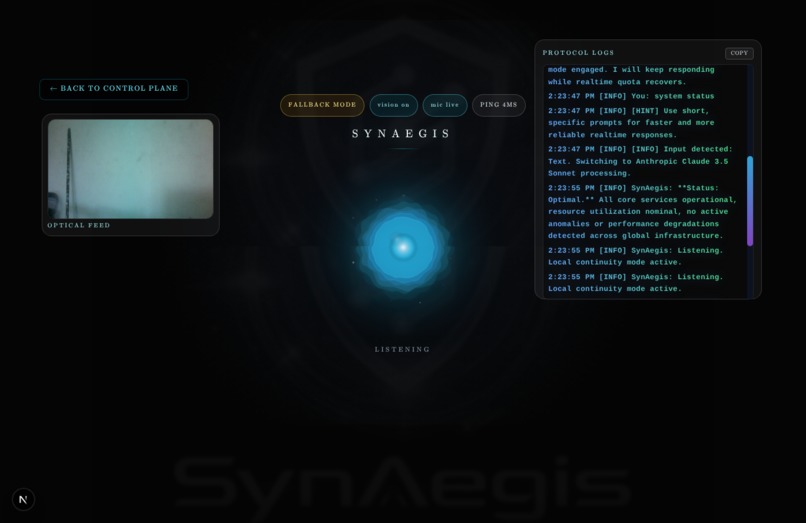
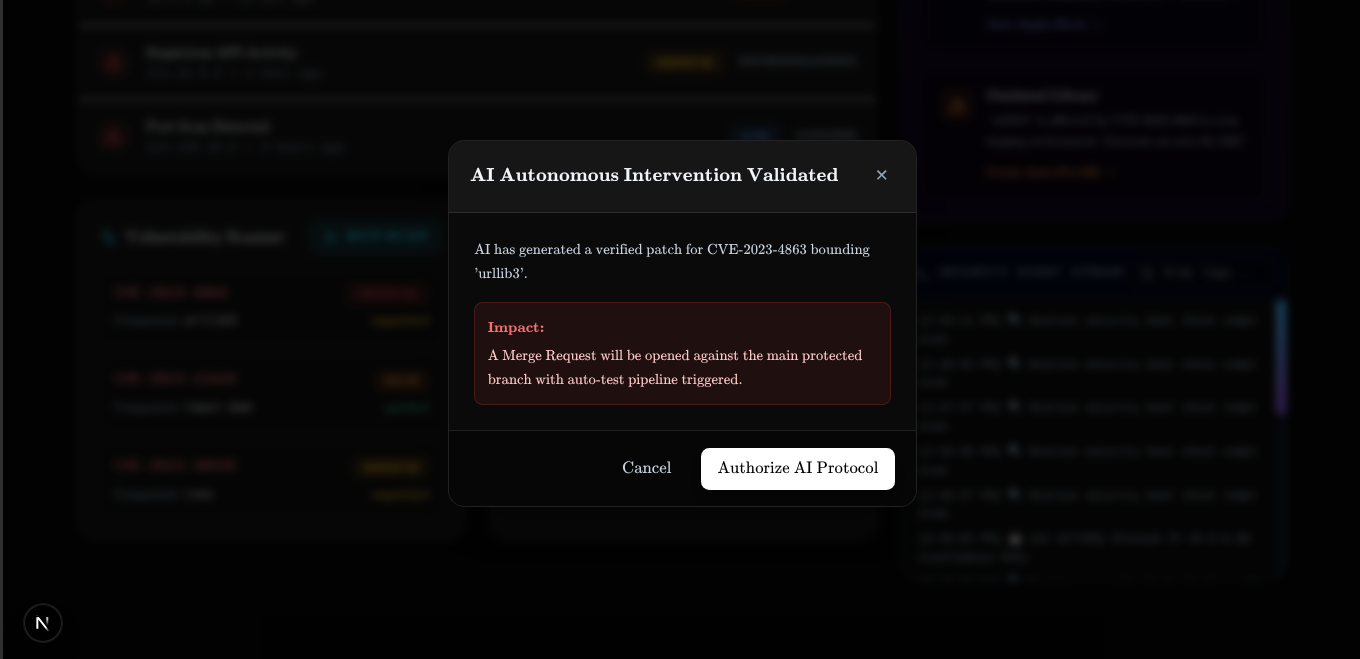
- AI Integration: Custom algorithmic modules analyze the incoming telemetry stream to make split-second decisions about scaling, decommissioning, and routing.
- Infrastructure: Containerized via Docker, orchestrated using docker-compose, and deployed via Google Cloud Run and Vercel.
Architecture Diagram (Simplified):
[ Vercel Frontend ] <--- WebSockets / REST ---> [ FastAPI Backend ]
       |                                              |
(Framer Motion UI)                           (Telemetry & AI Engine)
       |                                              |
[ Users / Operators ]                         [ Cloud / GitLab / Docker ]
Challenges we ran into
Building an autonomous system is inherently dangerous. If the AI makes a mistake, it could take down the entire production cluster.
- The Auto-Scale Cascade: Early on, our AI self-healing trigger was too aggressive. A slight spike in CPU caused it to spam the scale endpoint, leading to an infinite loop of provisioning. We had to implement strict state checks and a definitive
aiMode === "Auto"toggle to give humans the ultimate kill switch. - State Management Chaos: Handling rapid, concurrent WebSocket events alongside complex React state transitions (like multi-step deployment modals) led to severe synchronization issues. We battled the React render cycle to ensure progress bars representing AI computation and GitLab deployments didn't conflict or duplicate local state hooks.
- Strict TypeScript Boundaries: Heavily refactoring our UI components iteratively meant dealing with strict block-scoped variable definitions. We had to carefully architect our component tree to avoid variable pollution while rapidly injecting complex Framer Motion components.
Accomplishments that we're proud of
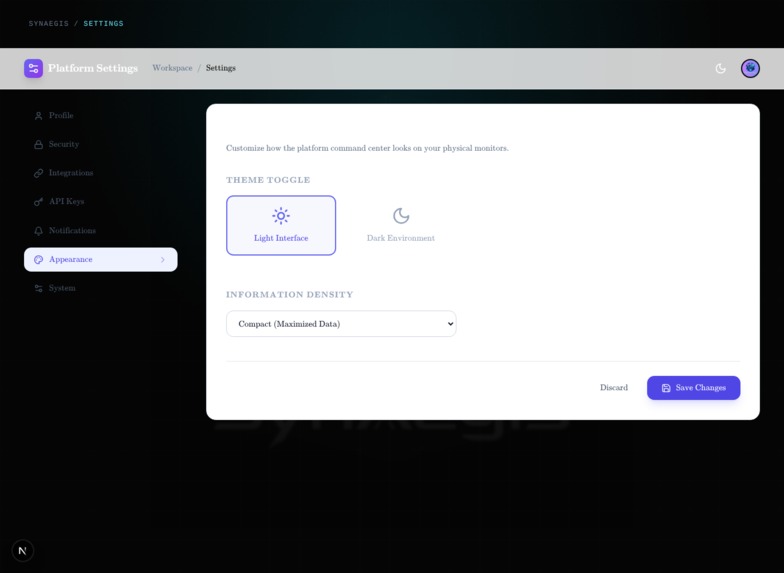
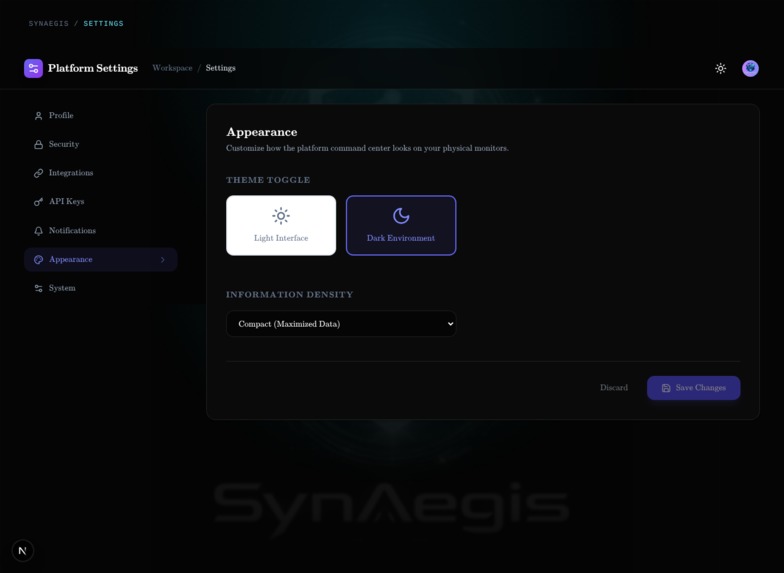
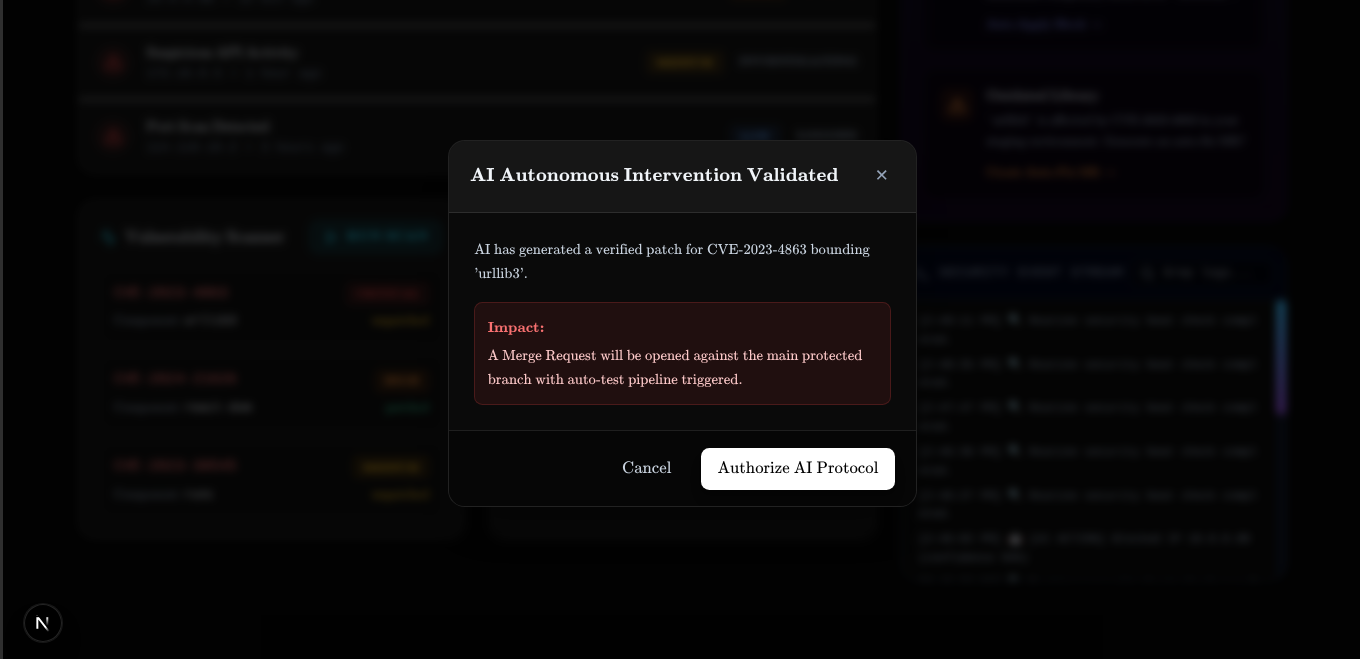
- The UI/UX Experience: We successfully transformed boring, tabular infrastructure data into a visually stunning, futuristic command center. The Framer Motion integration for the "AI Action" and "Deployment Sequence" overlays provides incredible user feedback.
- Zero-Latency Telemetry: The FastAPI WebSocket integration reliably handles continuous data streams without lagging the React frontend.
- A Functioning AI Co-Pilot: Seeing the system successfully detect a simulated 98% CPU load, calculate the delta, and visually execute a horizontal scaling operation entirely on its own was a breathtaking moment for the team.
What we learned
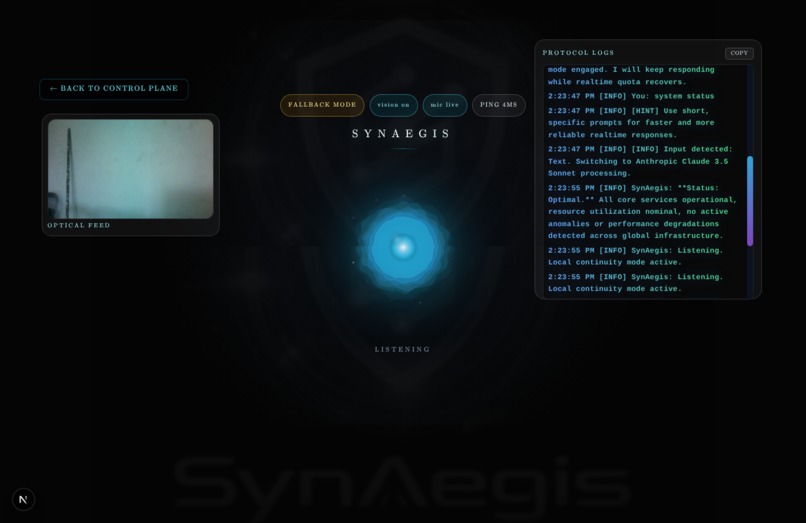
- UX Validates the Tech: Having a powerful backend is useless if the user doesn't trust it. By explicitly visualizing the AI's "thought process" (Telemetry Data -> Resource Delta -> Live Patching), we gained user trust.
- State Nuance in React: We deepened our understanding of React hooks (
useState,useEffect) andsetIntervalcleanup when dealing with rapid, multi-stage UI overlays. - Safety First: Autonomous cloud management requires extreme precision. We learned the hard way that every active automated action needs a debounce and a manual override.
What's next for SynAegis
We plan to expand SynAegis from a single-cluster dashboard to a multi-cloud (AWS, GCP, Azure) management plane. We are currently working on deep-learning models that don't just react to CPU spikes, but predict them based on historical traffic patterns, allowing SynAegis to pre-scale infrastructure minutes before a viral traffic surge hits. We will also integrate direct Slack/Discord alerting for the live-transcription of AI decisions.
Built With
- docker
- docker-compose
- fastapi
- framer-motion
- gitlab
- google-cloud-run
- google-gemini
- javascript
- next.js-15
- python
- react-19
- recharts
- rest-apis
- tailwind-css
- typescript
- vercel
- websockets

Log in or sign up for Devpost to join the conversation.