Inspiration
In many rural and underserved areas, doctors, clinics, and hospitals may be located far away from where people live. Because of limited access to healthcare, people may sometimes ignore early or seemingly minor symptoms instead of seeking timely medical guidance. A small health concern, when left unattended, can sometimes become more serious.
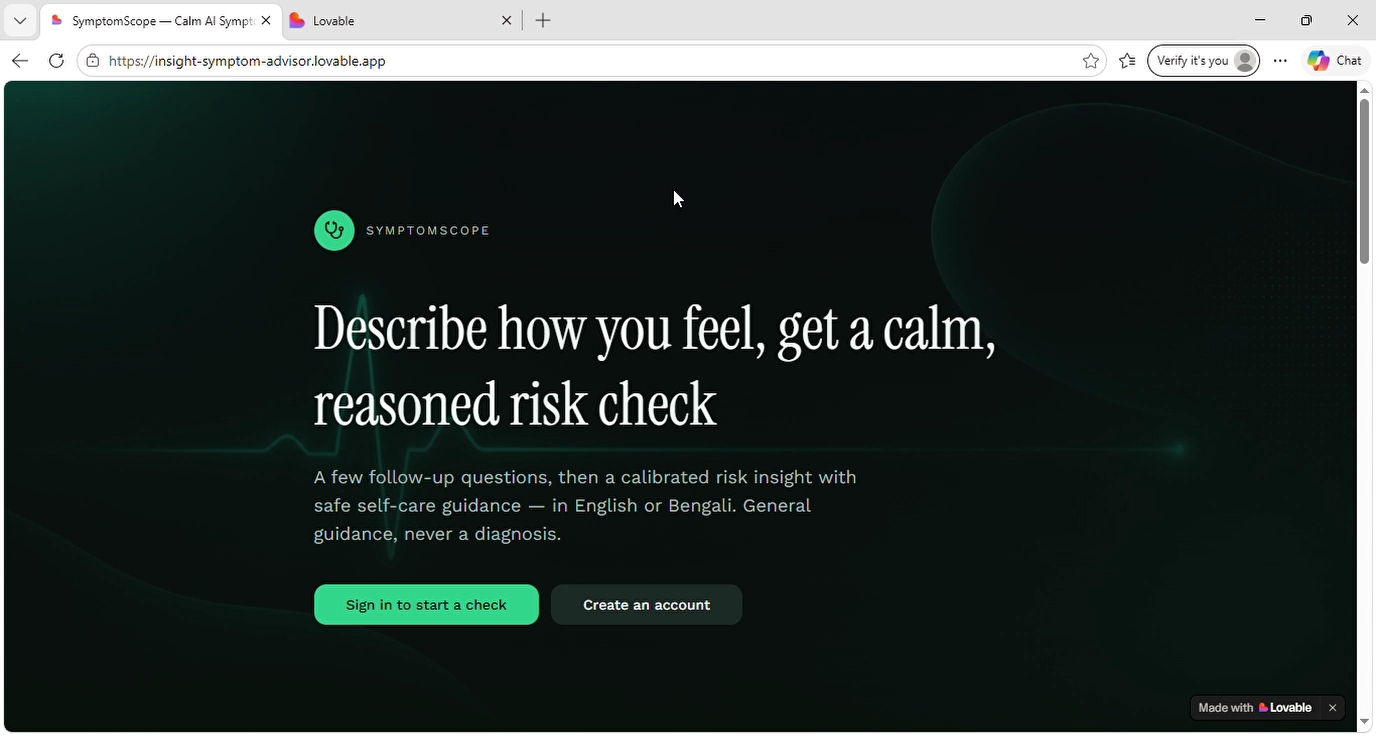
This inspired us to build SymptomScope, an AI-powered health guidance platform designed to make early symptom assessment more accessible.
What SymptomScope Does
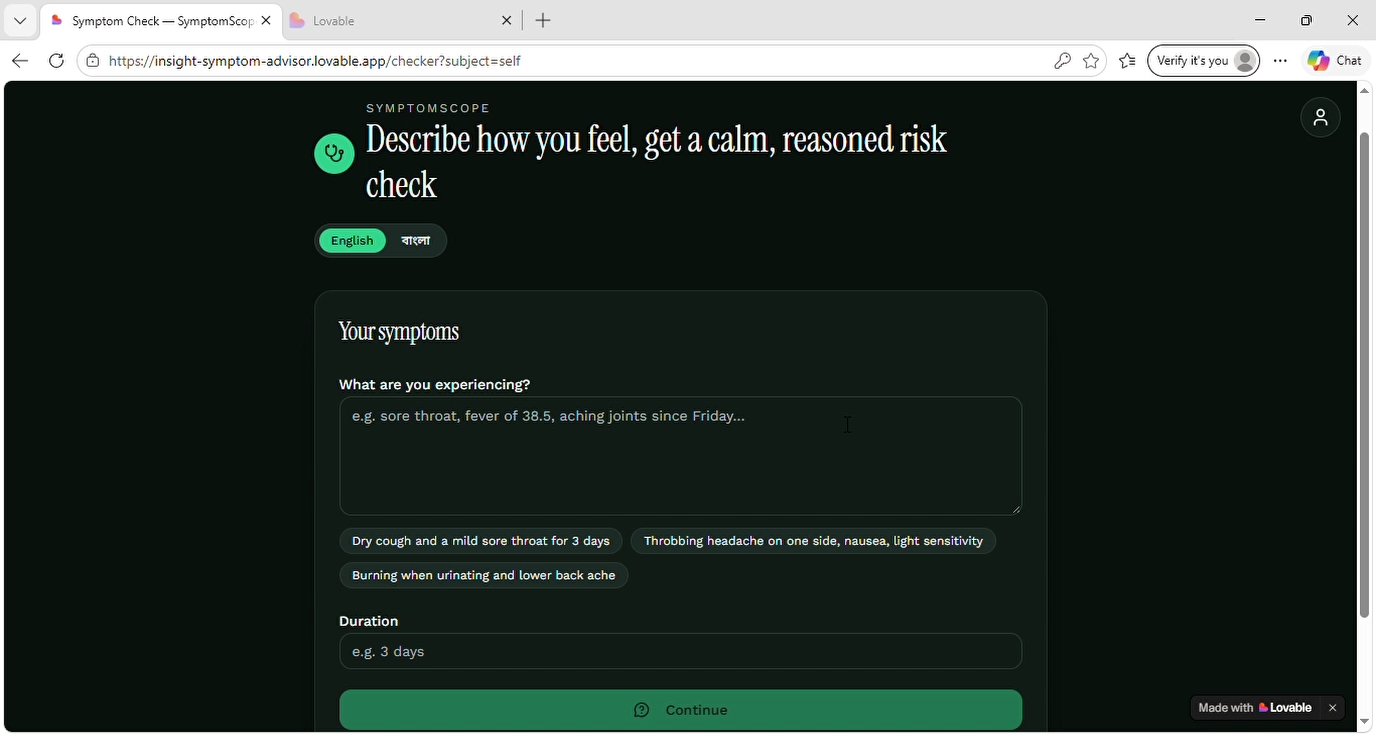
SymptomScope allows users to check their symptoms by describing what they are currently experiencing and how long they have been experiencing it. The system then asks relevant follow-up questions based on the reported symptoms and uses the collected information to generate an assessment.
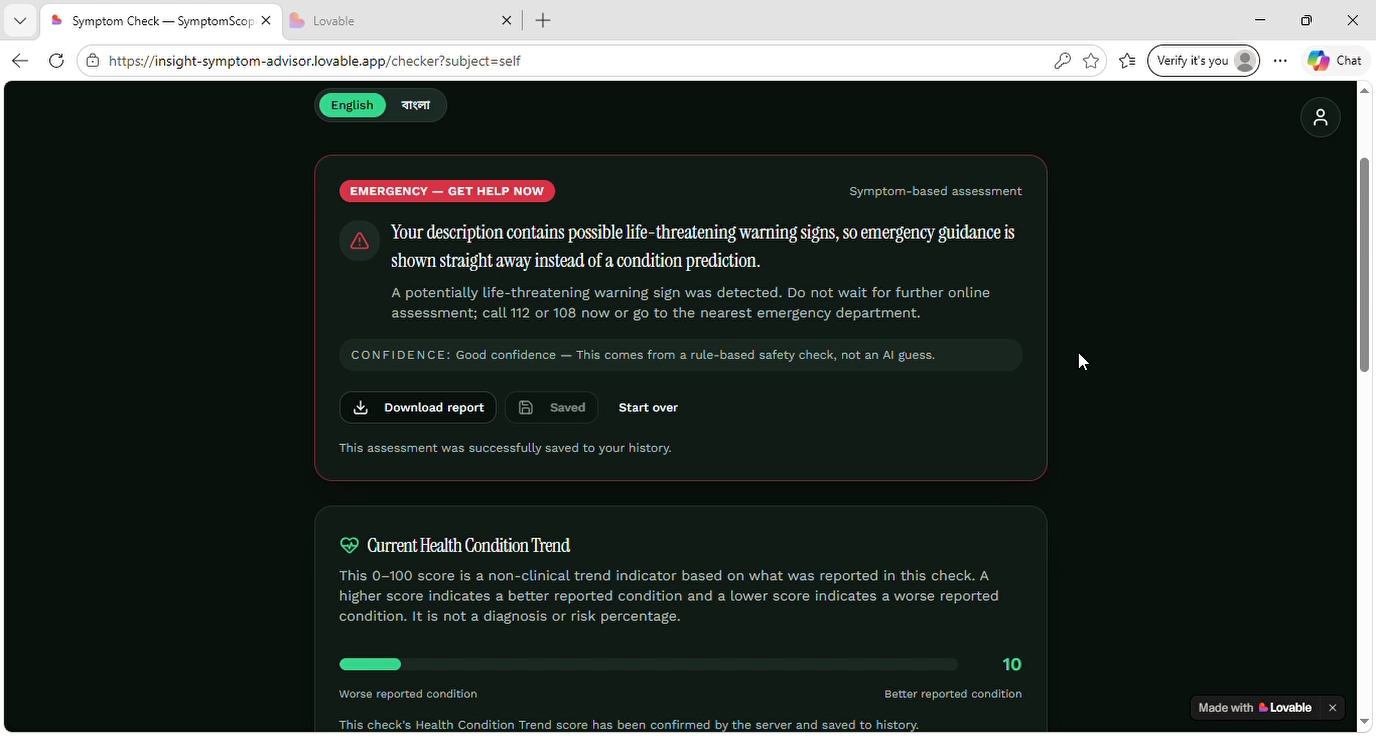
The platform presents possible health conditions, Symptom Match Strength, confidence information, urgency guidance, and recommended next steps. When potential emergency warning signs are detected, the system provides immediate safety guidance, including emergency helpline information and an option to find a nearby hospital.
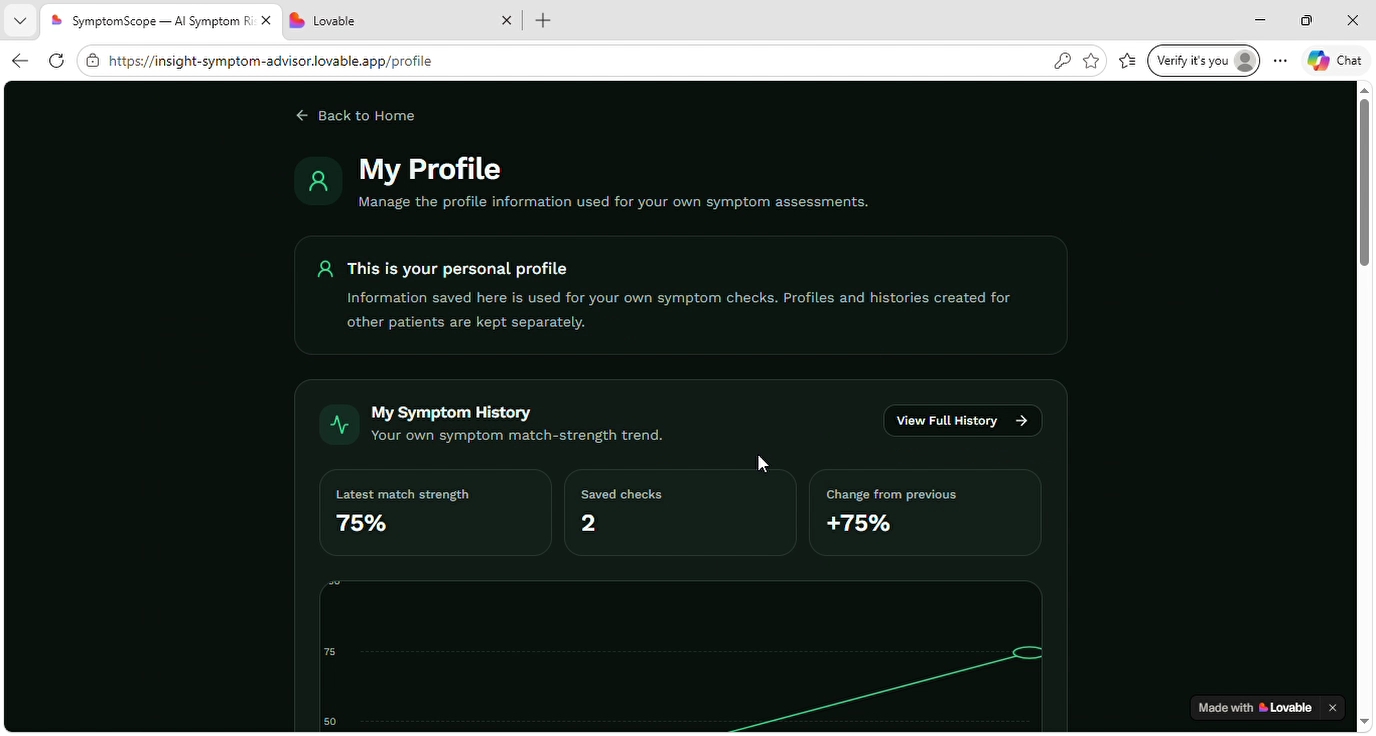
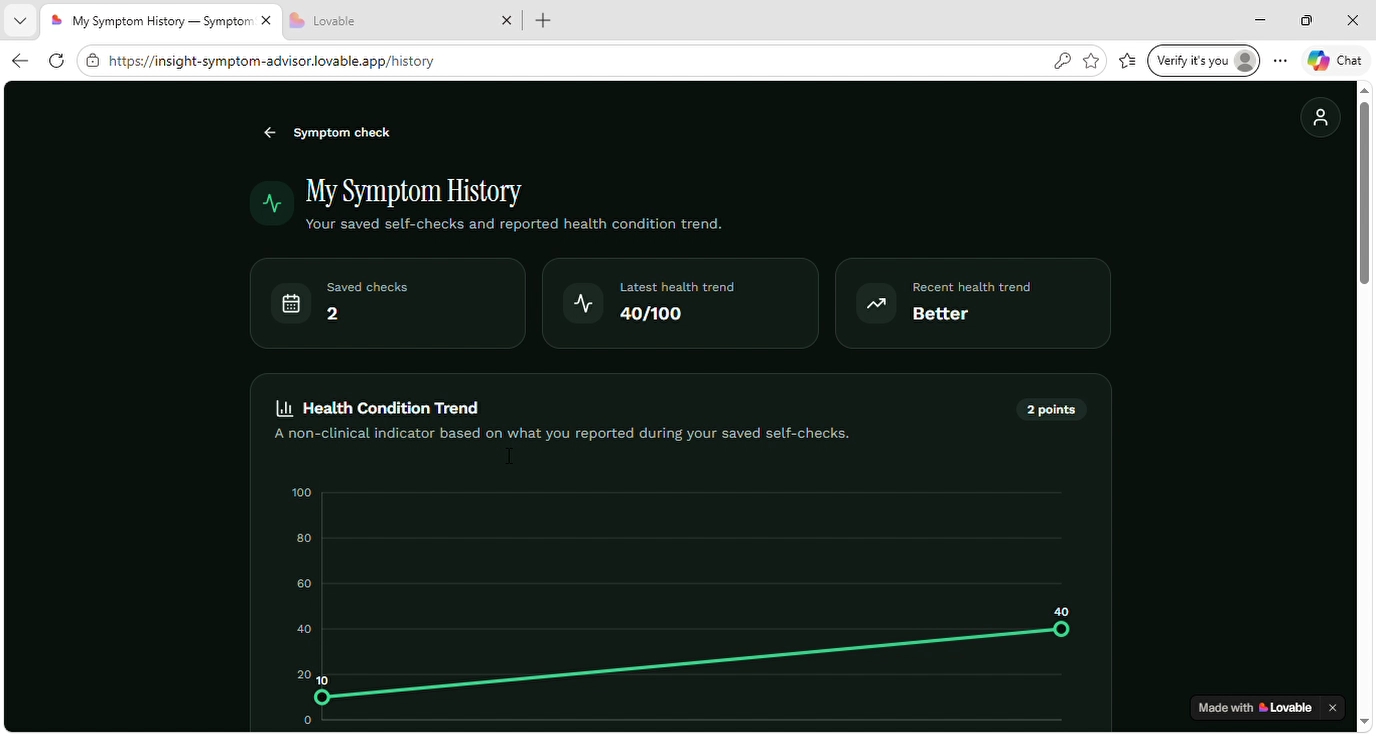
Users can also maintain their own symptom history and Health Condition Trend over time.
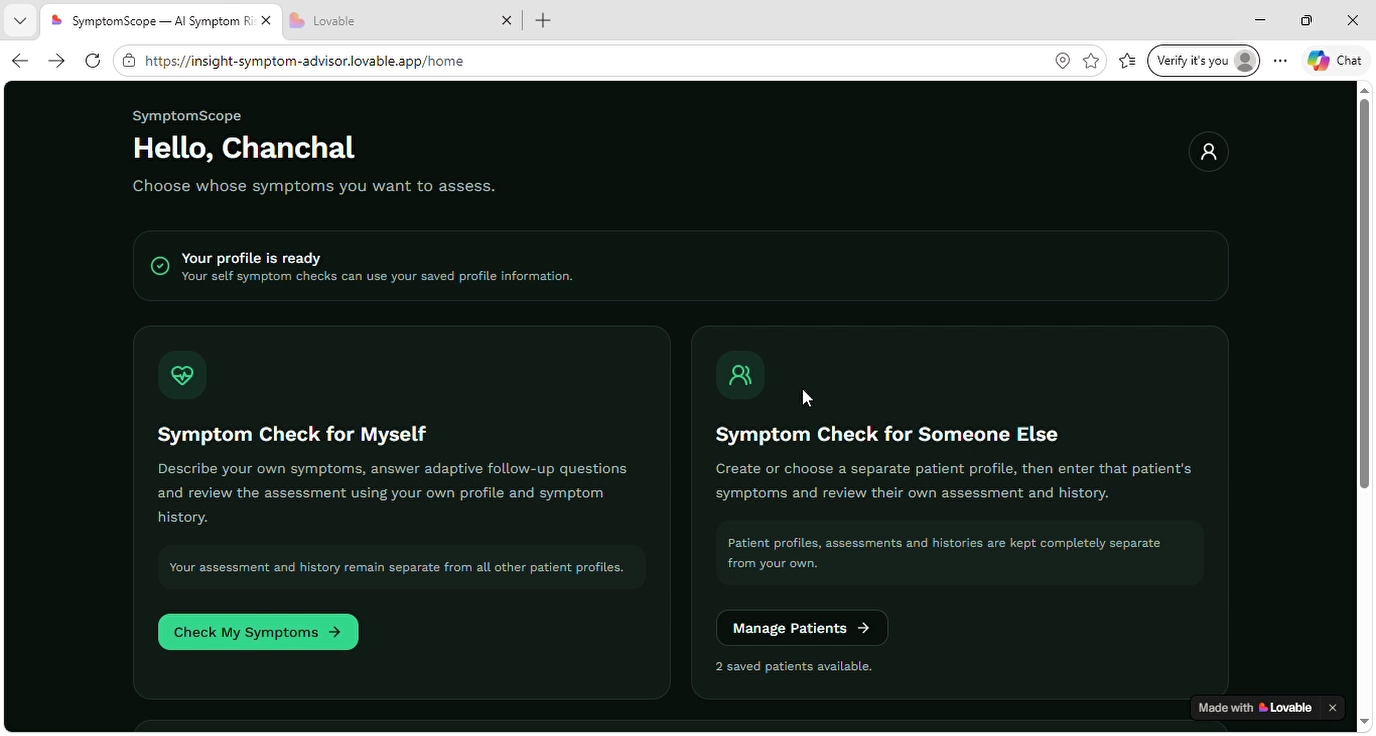
Checking Symptoms for Someone Else
SymptomScope also allows a logged-in user to manage separate patient profiles without creating separate accounts. Each patient's profile, symptom assessments, and history are stored separately, so the health information of one patient is not mixed with another patient's information or with the user's own history.
How We Built It
The project combines a modern web interface with authentication, structured patient profiles, symptom assessment logic, adaptive follow-up questions, history tracking, emergency-oriented safety checks, and AI-assisted analysis.
The system was designed with healthcare safety in mind. It provides guidance based on reported information rather than presenting itself as a definitive medical diagnosis.
What We Learned
While building SymptomScope, we learned how to connect frontend user flows with backend services, manage authenticated and patient-specific data, design adaptive symptom-assessment workflows, handle emergency scenarios, and maintain separation between different users and patient records.
We also learned that healthcare applications require additional attention to privacy, data isolation, uncertainty, and safe communication of results.
Challenges
One of the major challenges was creating a symptom-checking workflow that could adapt to different symptoms while collecting the relevant information through follow-up questions.
We also worked on maintaining separate self and other-patient histories, implementing health-trend tracking, handling emergency cases, and connecting the frontend and backend reliably.
Some frontend and backend issues still remain, including page-to-page redirection glitches, an incomplete Symptom Match Strength graph in the profile section, and an issue with the Find Nearby Hospital/location feature. These are planned for future refinement.
Future Scope
Future versions of SymptomScope can include Doctor Connect / Telemedicine, Medication Reminder, Health Report Dashboard, Smart Follow-up, Multilingual Support, Voice-based Symptom Input, Health Report Sharing, Emergency Alert System, and an AI Health Assistant.
Vision
Our vision is to make early health guidance more accessible, understandable, and convenient, especially for people who may face distance, availability, or language barriers when accessing healthcare.
Built With
- ai
- app
- artificial
- authentication
- checker
- css
- data
- healthcare
- healthtech
- intelligence
- postgresql
- react
- responsive
- router
- shadcn/ui
- supabase
- symptom
- tailwind
- tanstack
- typescript
- web

Log in or sign up for Devpost to join the conversation.