-
-
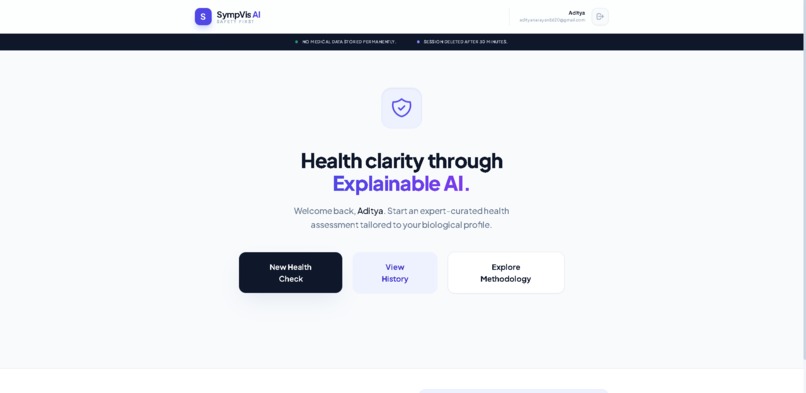
Dashboard Page
-
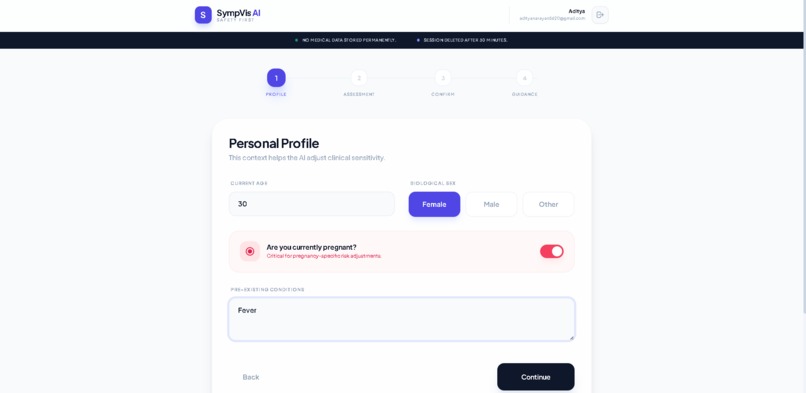
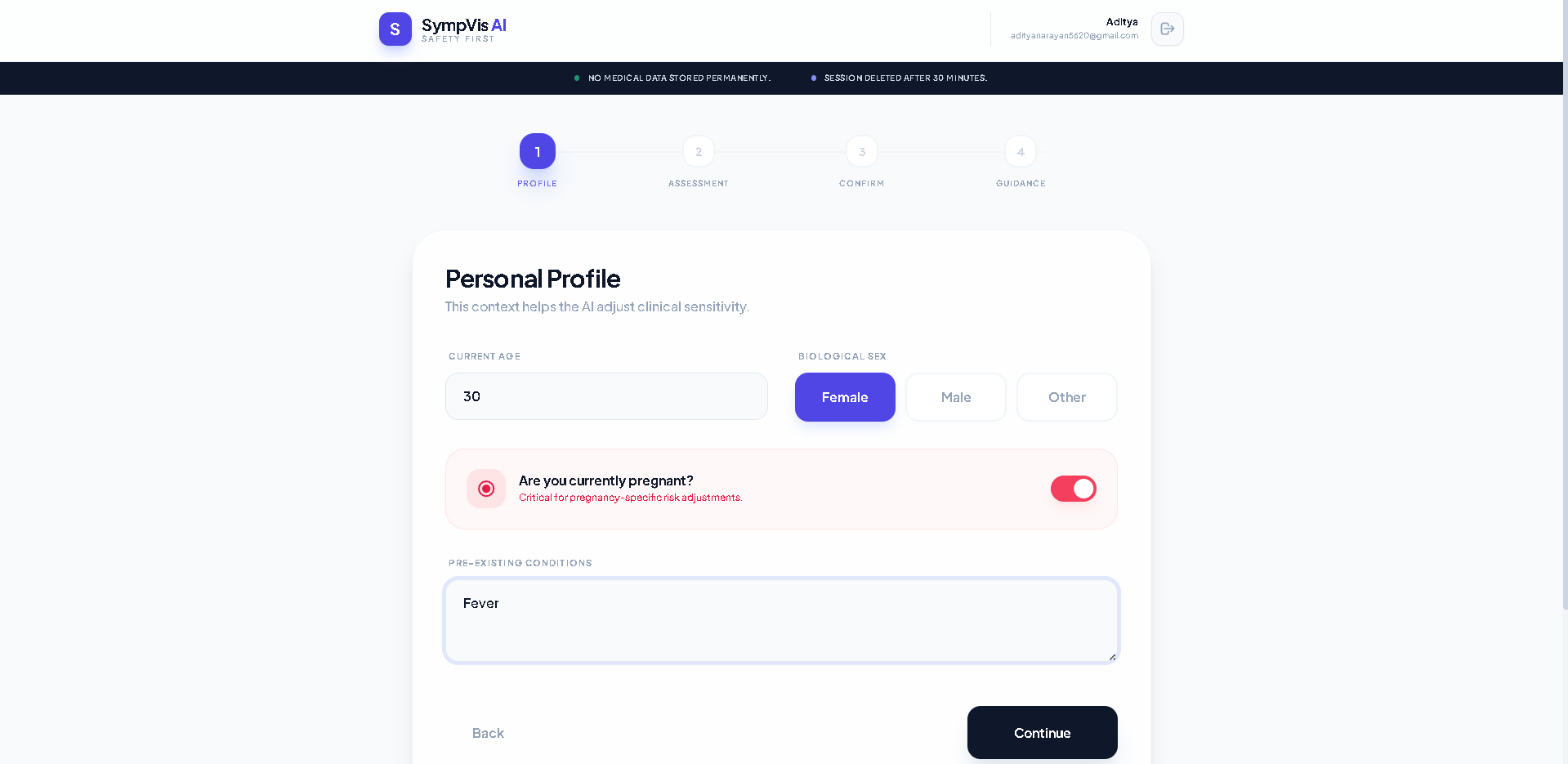
Profile Page
-
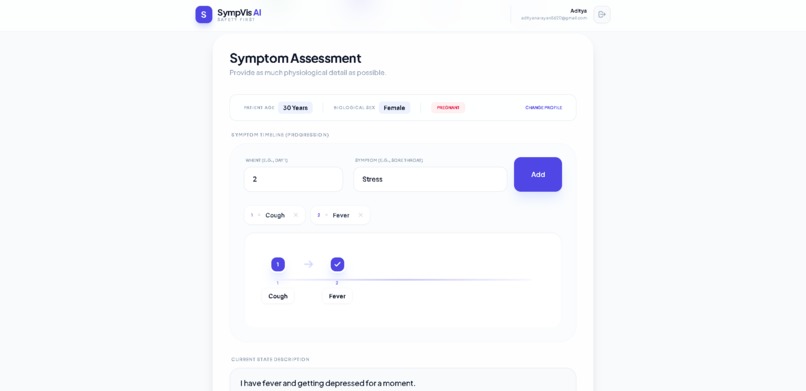
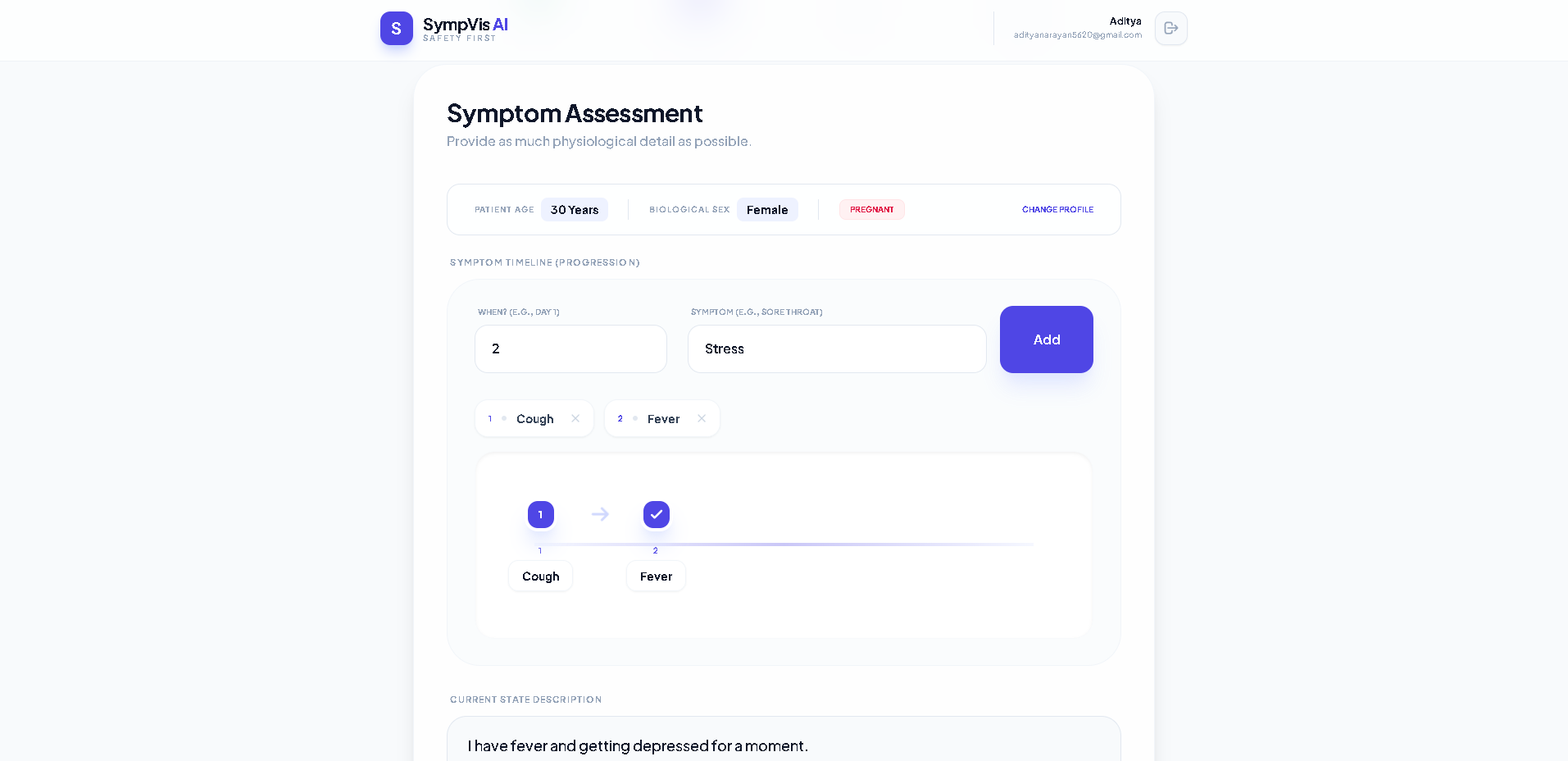
Symptom Assessment Page
-
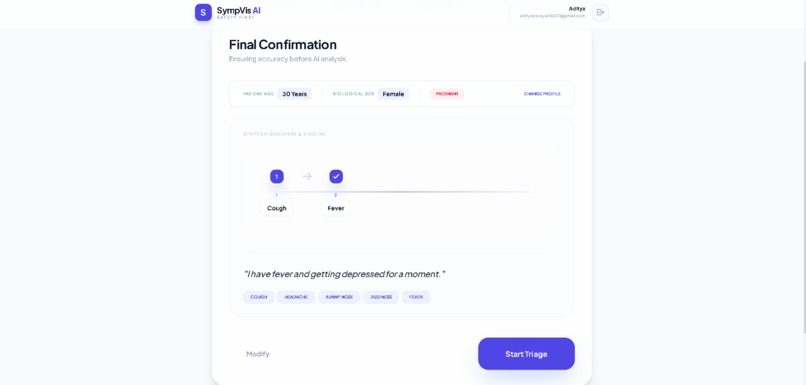
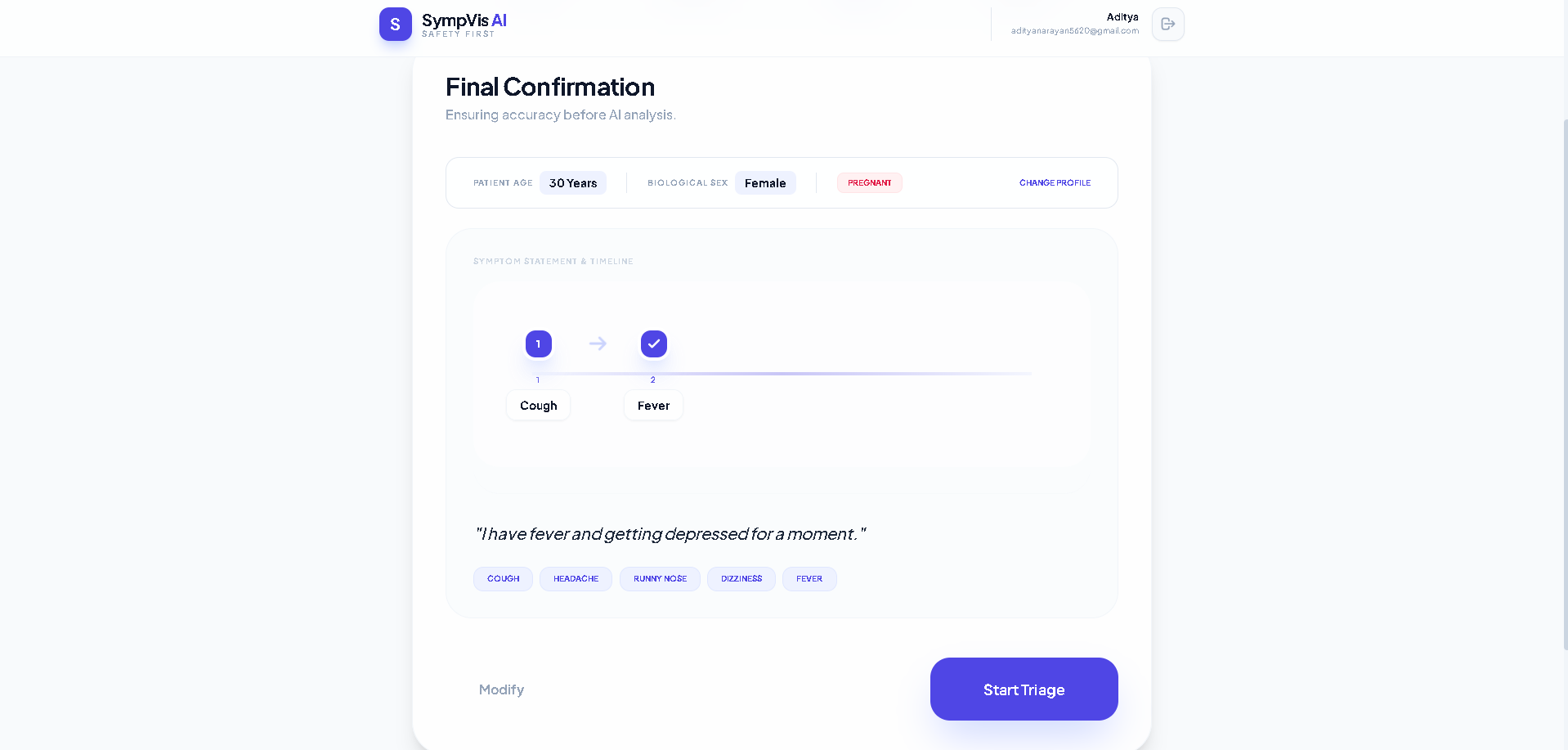
Confirmation Page
-
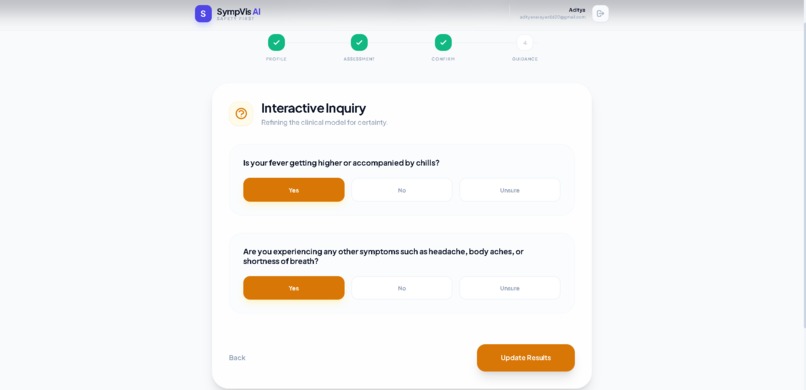
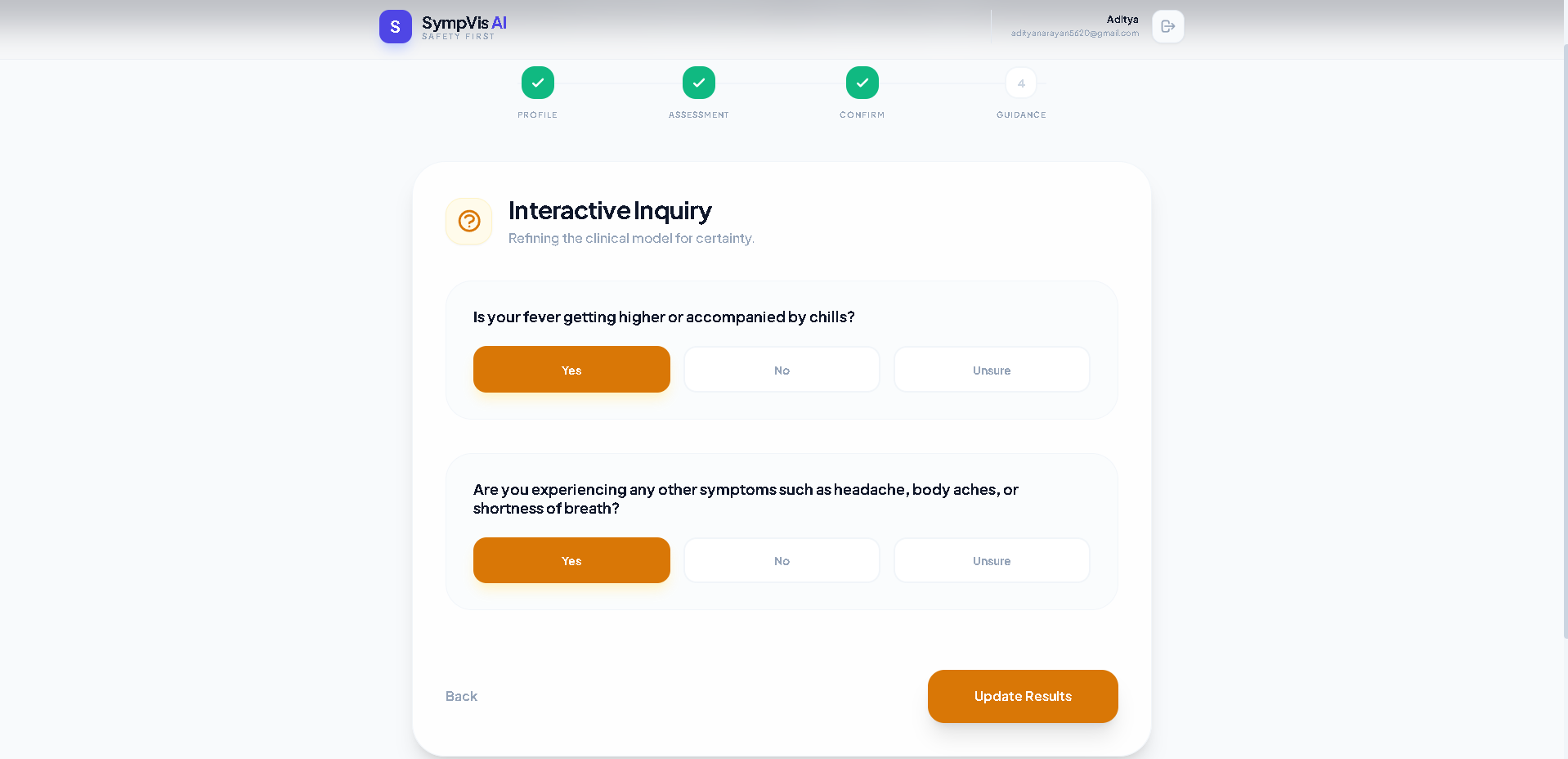
Interactive Inquiry Page
-
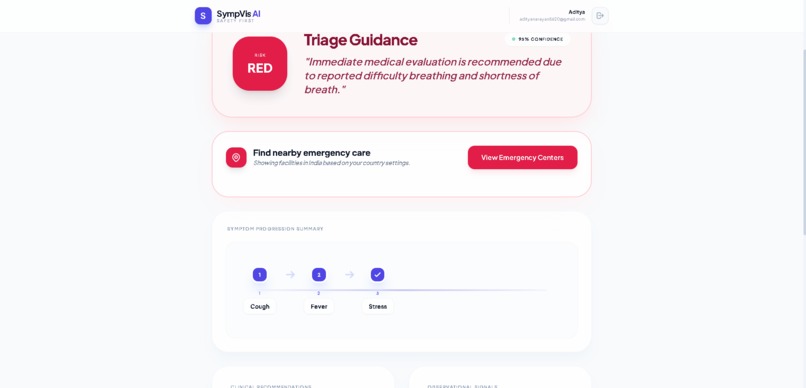
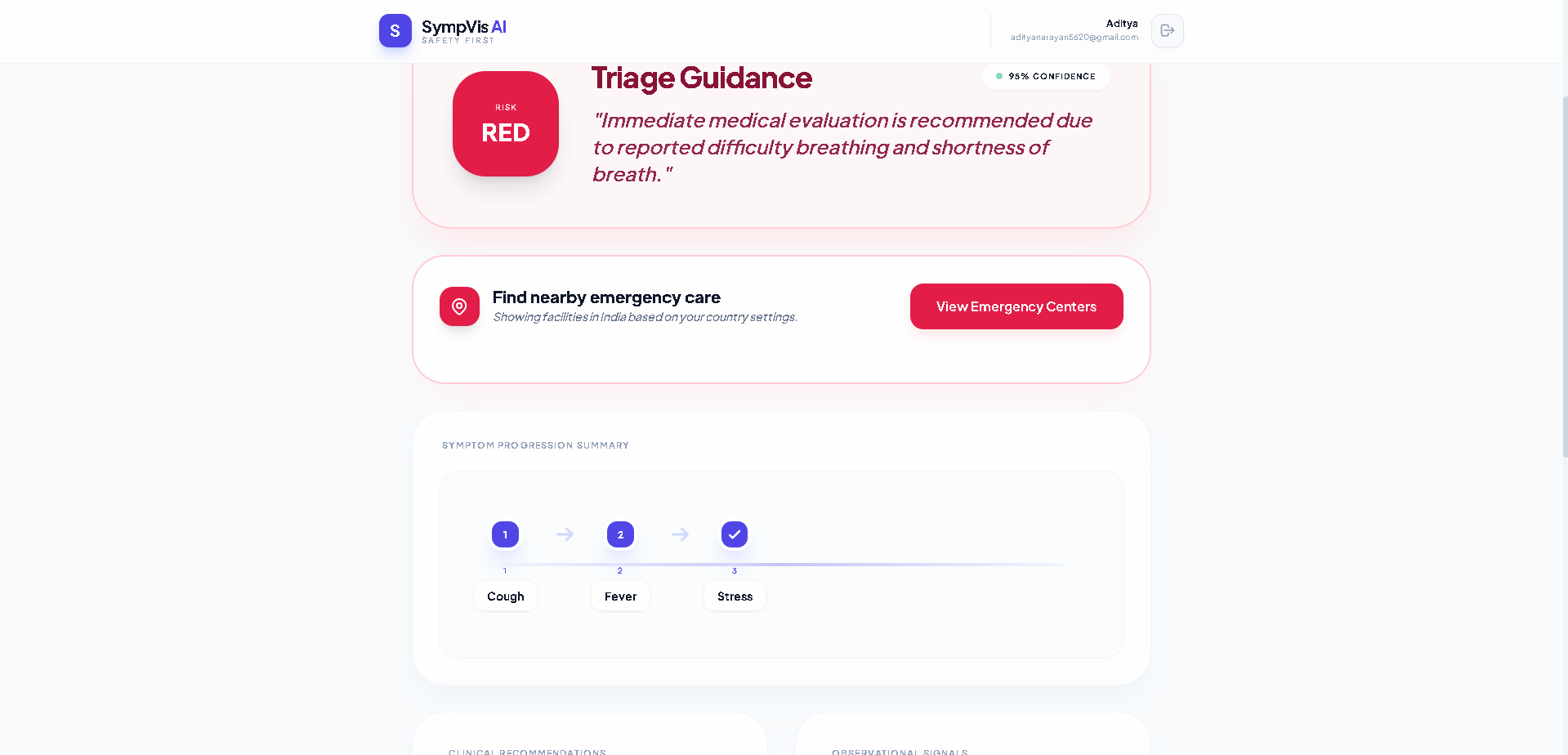
Result Triage Page
-
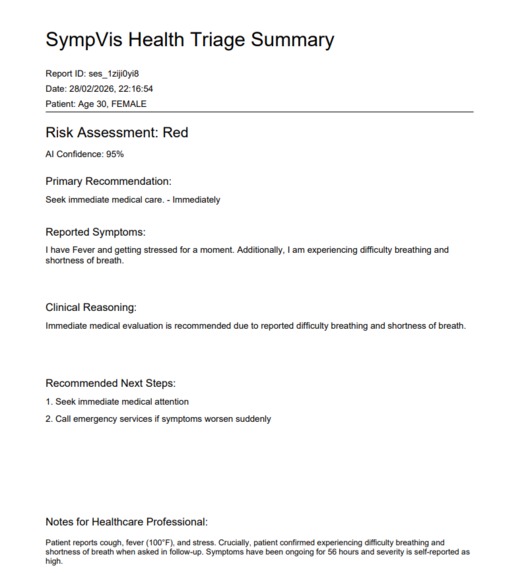
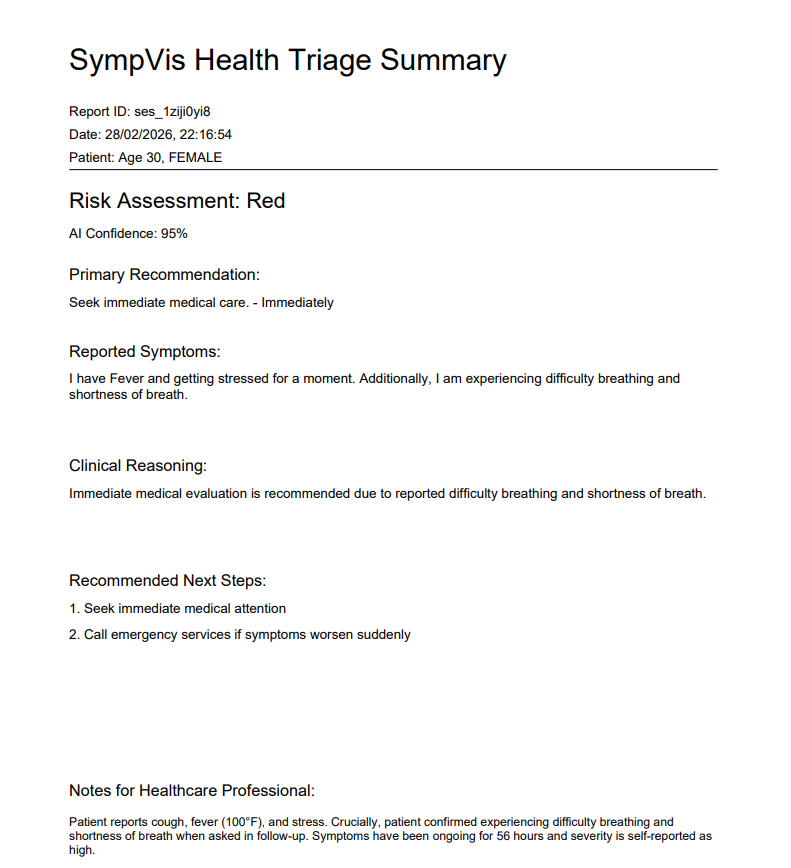
Report Summary PDF
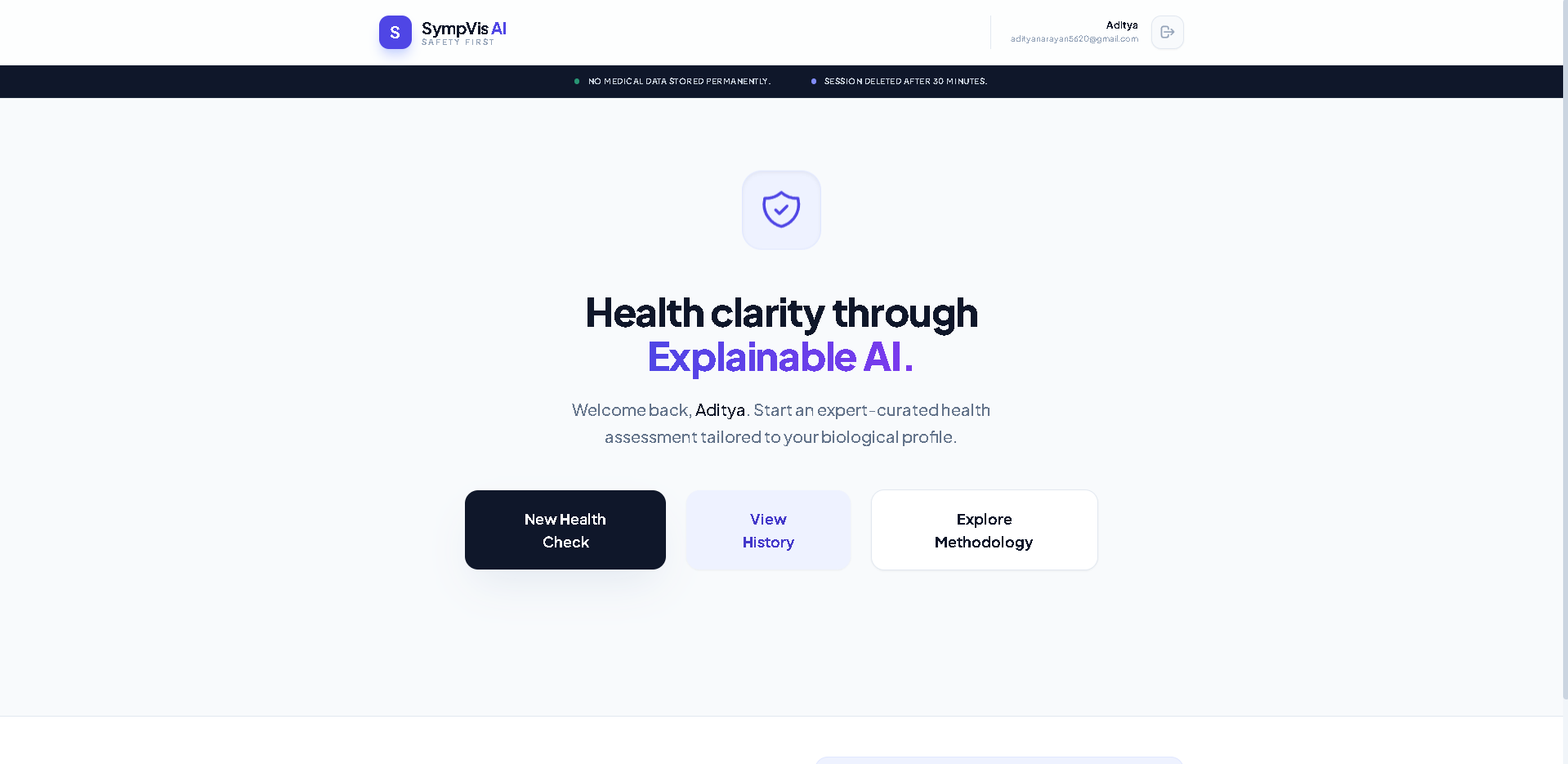
Inspiration
We've all spiraled down the rabbit hole of searching symptoms online ("Dr. Google"), only to be met with worst-case scenarios that induce panic rather than clarity. Standard symptom checkers are often rigid, lacking the nuance of a real conversation. We wanted to build a bridge between the user and professional care: a "Triage Coach" that listens like a doctor, understands your specific biological context (age, sex, pregnancy), and—most importantly—explains its reasoning. Our goal was to reduce health anxiety by providing a transparent, evidence-based risk assessment.
What it does
SympVis is an intelligent, privacy-first triage application that acts as your first line of defense.
- Contextual Intake: It gathers critical biological markers (Age, Sex, Pregnancy status, Chronic conditions) to tailor its risk model.
- Visual Symptom Timeline: Users can map out exactly when symptoms appeared, helping the AI understand disease progression (e.g., "Fever started 2 days ago, Rash today").
- Interactive Follow-up: Instead of making a guess on vague info, SympVis asks 2-3 targeted clarification questions (generated dynamically) to rule out strict emergencies.
- Explainable Results: It delivers a coded Risk Level (Green/Yellow/Red) accompanied by a "Confidence Score" and a "Confidence Reason," explicitly citing which user-reported symptoms led to the conclusion.
- Actionable Output: Users get a generated PDF summary to show their doctor and, in high-risk cases, are immediately shown a directory of nearby emergency facilities.
How we built it
- The Core (AI): We leveraged Google's Gemini 2.5 Flash for its speed and reasoning capabilities. We used a "Chain of Thought" prompting strategy to force the model to evaluate biological risk factors before generating a final verdict.
- Frontend: Built with React 19 and Vite for a blazing fast experience. We used Tailwind CSS to create a "Glassmorphism" aesthetic that feels clean, premium, and calming—essential for a health app.
- State Management: Complex multi-step wizard logic handles the flow from Basic Info -> Timeline -> Triage -> Follow-up -> Results.
- Security: Integrated Clerk for seamless, secure user authentication.
- Output: Used
jspdfto programmatically generate a professional clinical summary that patients can physically take to a hospital.
Challenges we ran into
- The "Uncertainty" Problem: Early versions of the model would confidently guess even when the symptoms were vague. We had to implement a strict "Uncertainty Guardrail" where the AI is instructed to reject the request and ask for more detail if the confidence threshold isn't met.
- Structured JSON from AI: Getting the LLM to consistently return valid JSON for not just the risk level, but also the dynamic follow-up questions and array of "Observation Signals", was tricky. We refined our schema definition to ensure robust parsing.
- Visualizing Time: Designing a UI that allows users to easily impute a "Timeline" of symptoms (Day 1 vs Day 3) required several iterations to make it intuitive on mobile.
Accomplishments that we're proud of
- The "Explainability" Layer: We didn't just want a black box. Seeing the AI quote specific symptoms back to the user ("I am concerned because you mentioned shortness of breath in combination with chest pain") builds immense trust.
- Premium UX/UI: The application feels like a high-end medical device interface. The animations and transitions make the experience less clinical and more comforting.
- Dynamic Safety: The system automatically adjusts its sensitivity. For example, a fever of 100.4°F triggers a different risk path for a pregnant user versus a general user.
What we learned
- Context is King: A symptom check without biological context (age/sex) is nearly useless. Adding these parameters improved our AI's accuracy dramatically.
- Prompt Engineering is a Safety Feature: You cannot rely on the model's default training for medical advice. You must explicitly instruct it on boundaries (e.g., "Do not diagnose, only assess risk").
- User Trust: Users are more likely to accept an AI's advice if it admits when it's unsure, rather than forcing an answer.
What's next for SympVis Triage Coach
- Multimodal Analysis: Integrating Gemini's vision capabilities to allow users to upload photos of visible symptoms (rashes, swelling) for analysis.
- Voice Interface: Adding a "Speak your symptoms" feature for elderly users or those in distress.
- Live Integration: Connecting the "Emergency Finder" directly to hospital wait-time APIs.
- Local LLM Support: Exploring on-device models for privacy-focused, offline triage in remote areas.


Log in or sign up for Devpost to join the conversation.