Inspiration
Getting medical help shouldn't feel like navigating a maze. We wanted to build an agent that could actually do something: assess symptoms, book an appointment, and talk back all on its own, without a human in the loop. That's how SymptoSync was born.
What it does
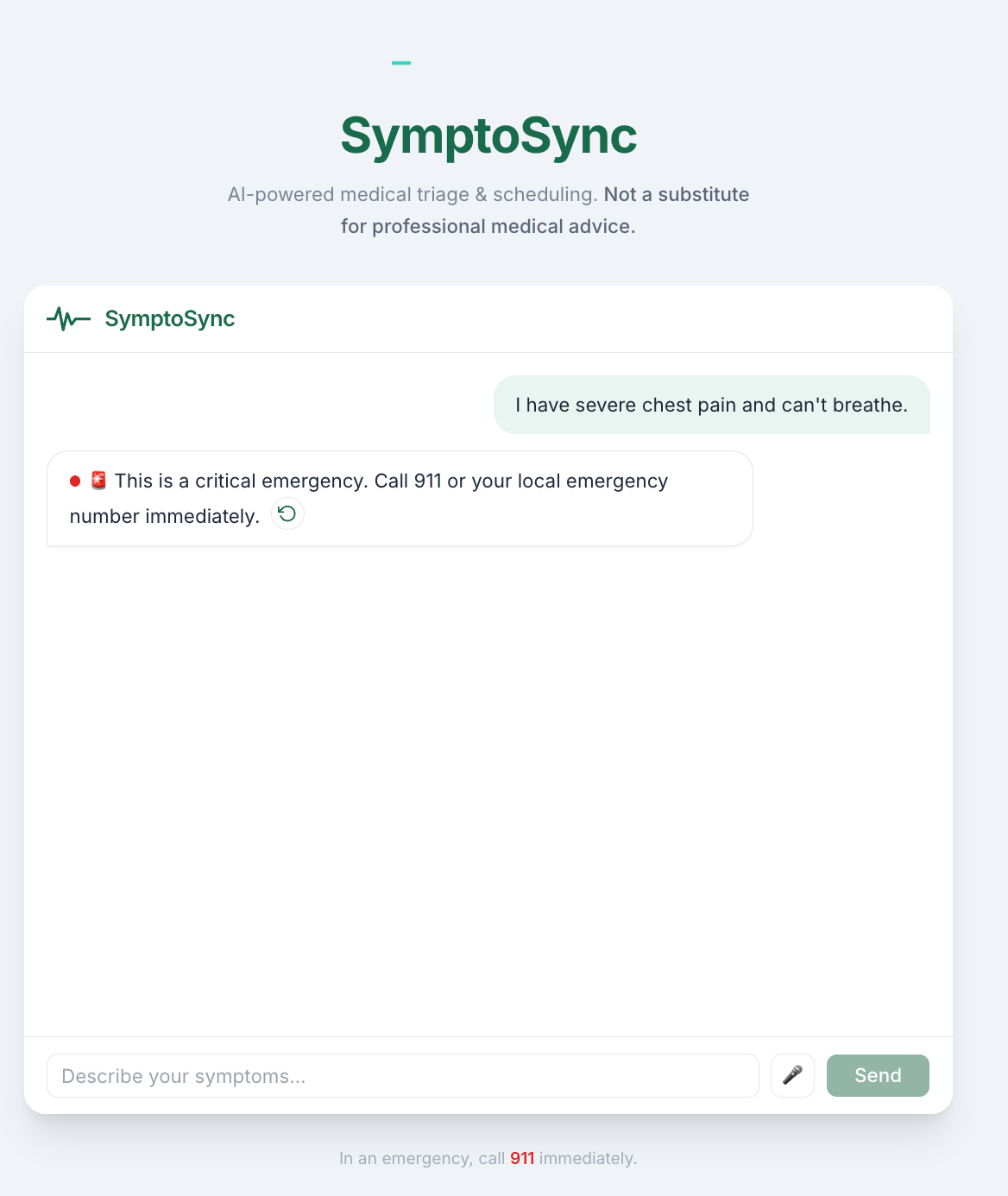
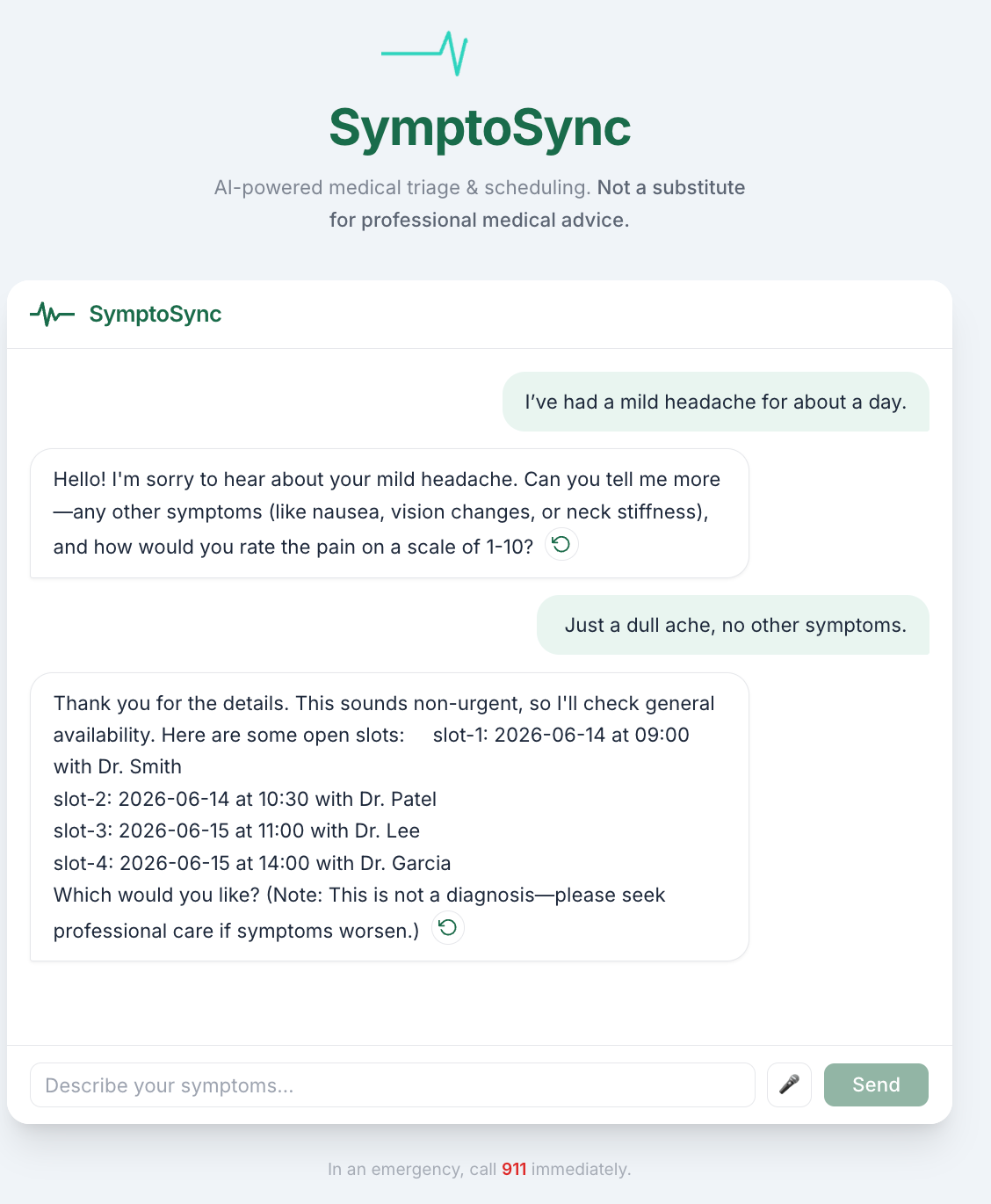
SymptoSync is a voice‑first triage assistant. A patient describes a symptom (by text or voice), and the AI:
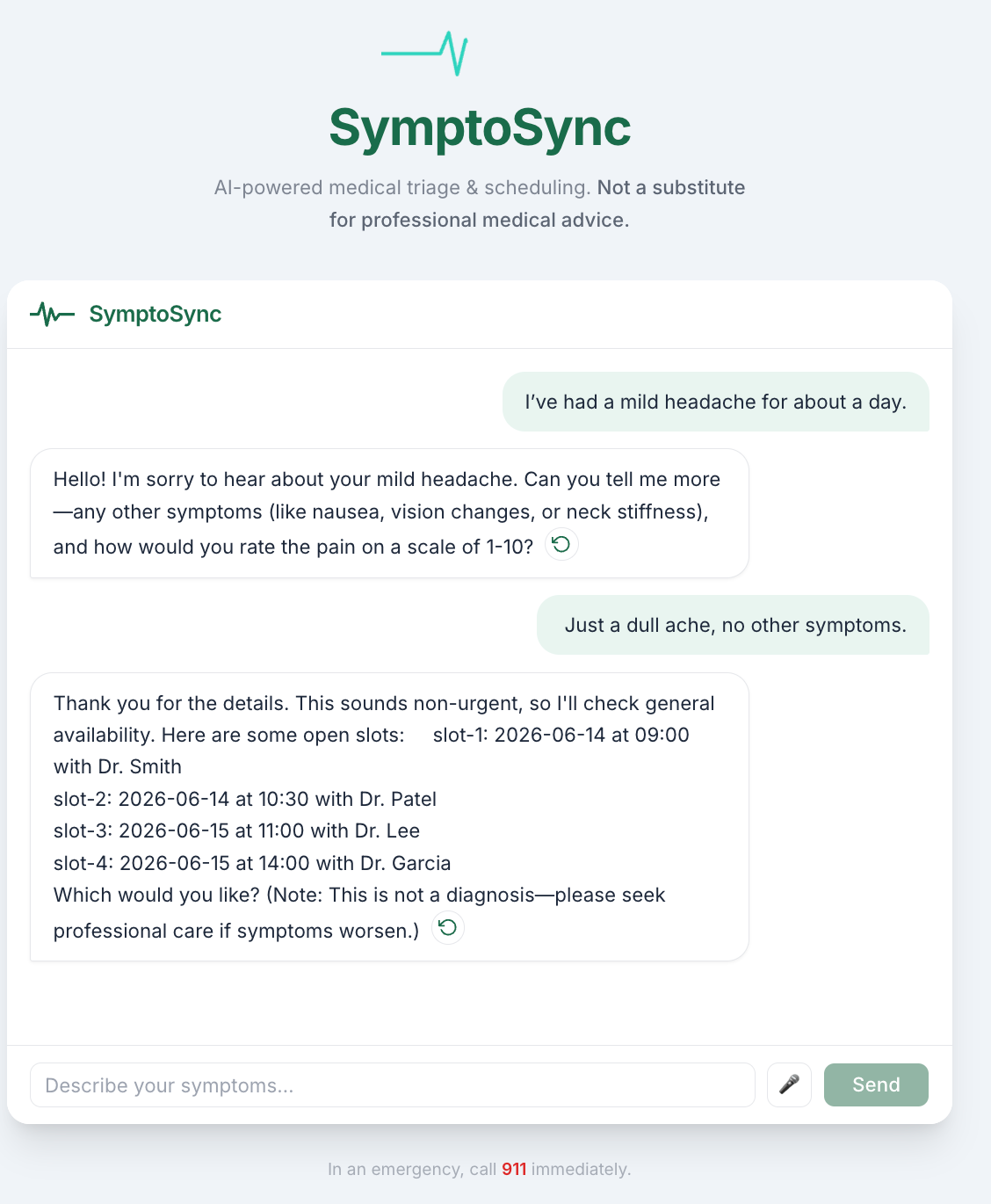
- Figures out how urgent it is
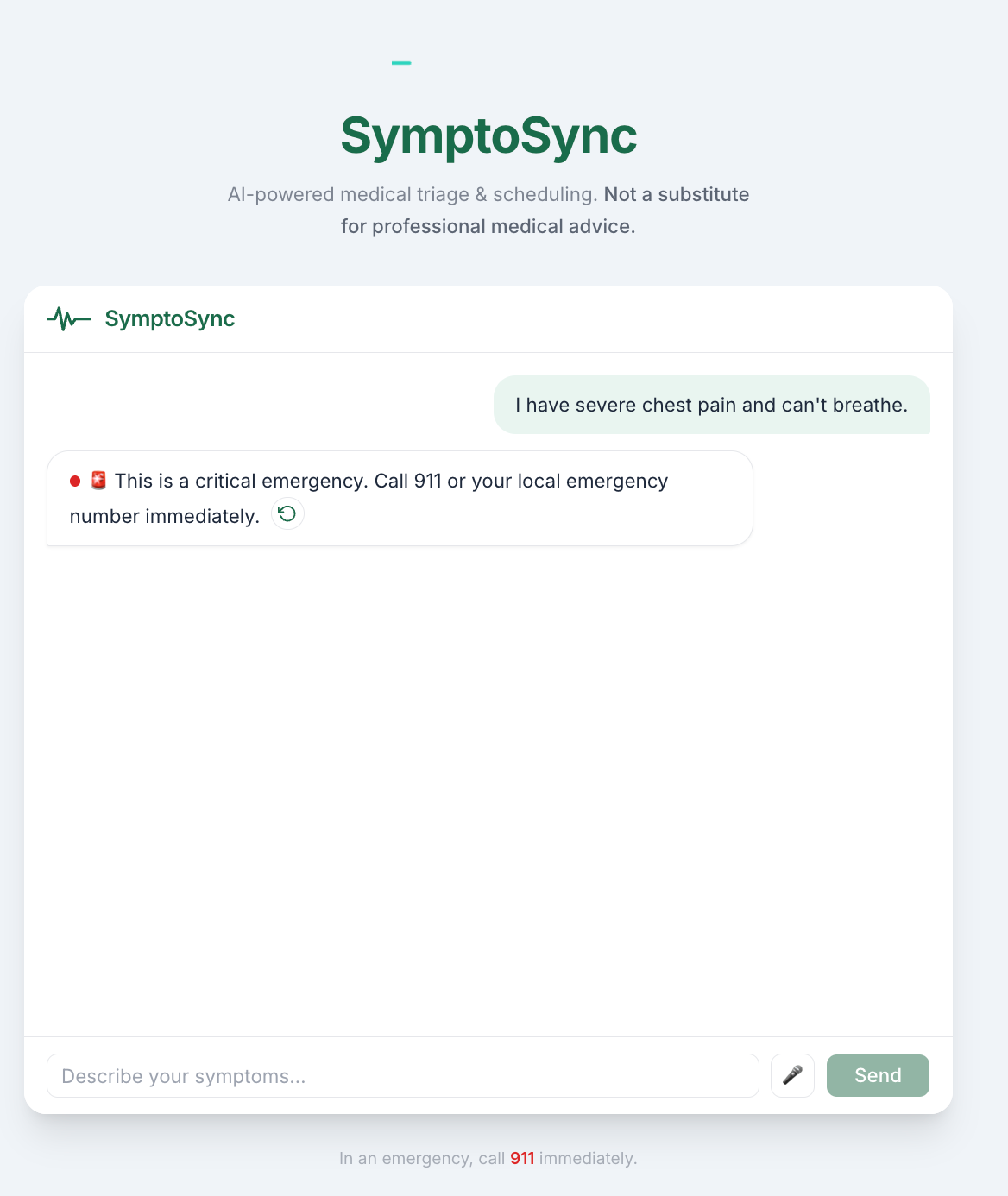
- Escalates emergencies immediately
- Suggests the right specialist for non‑emergencies
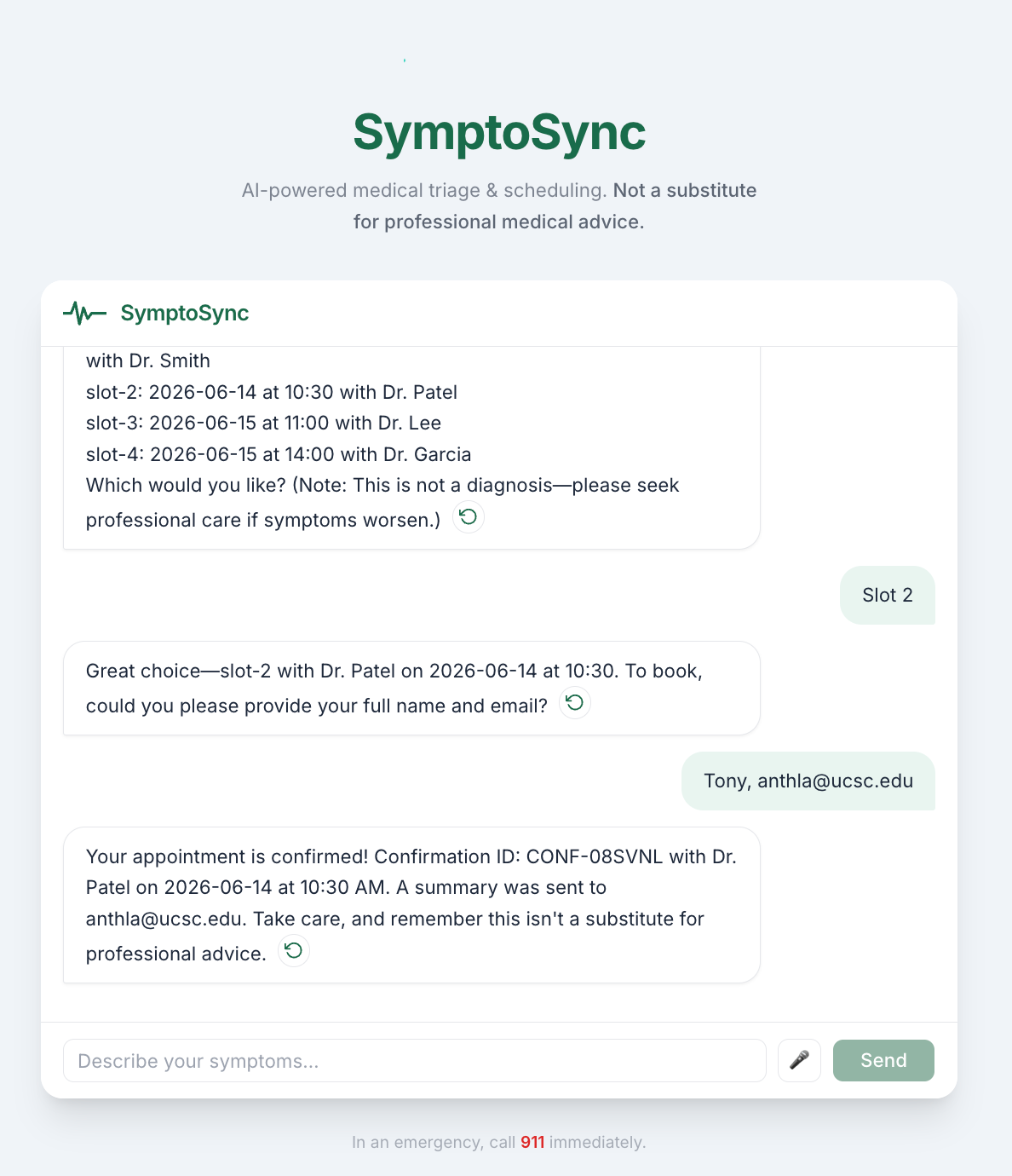
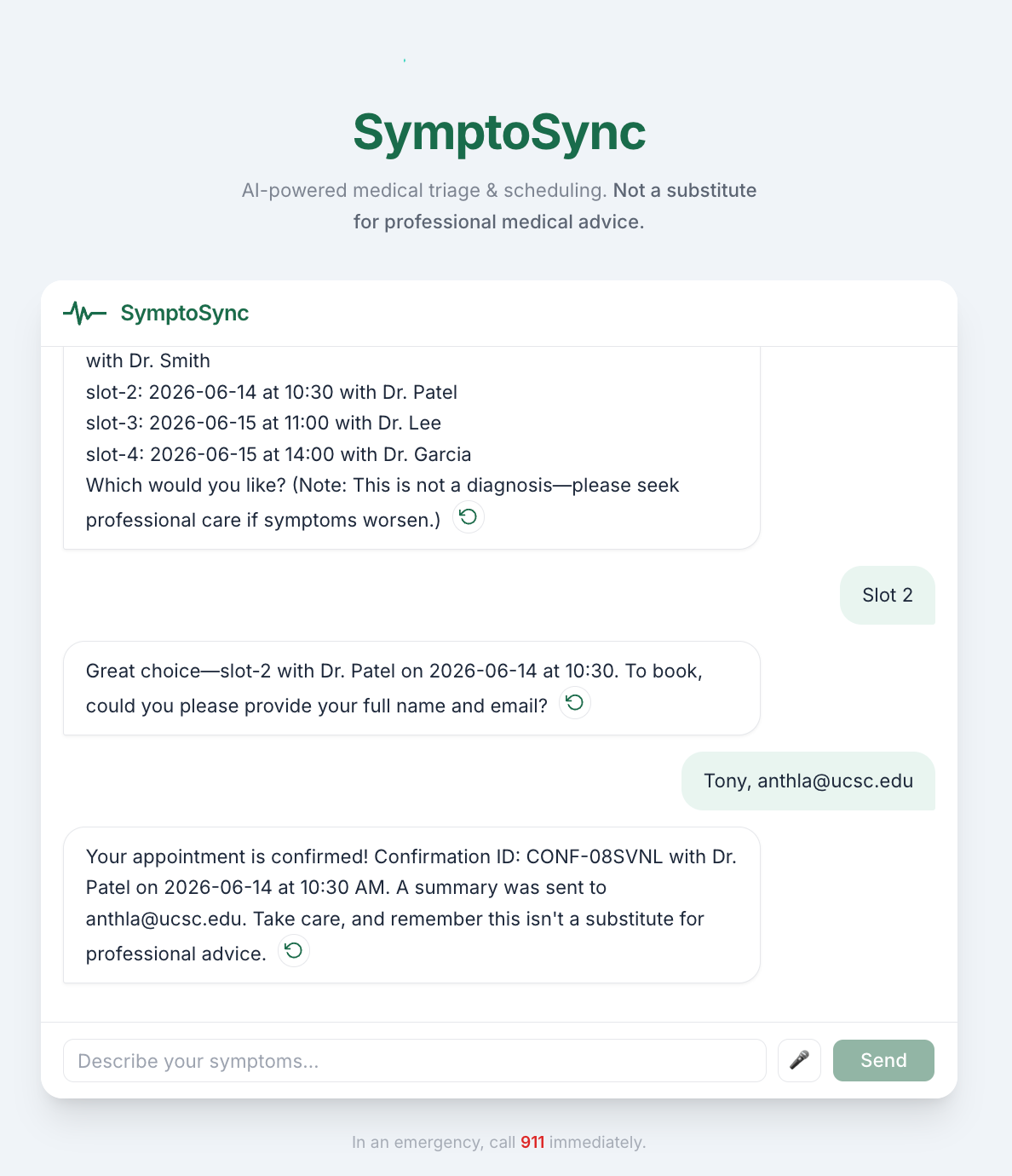
- Books an appointment automatically
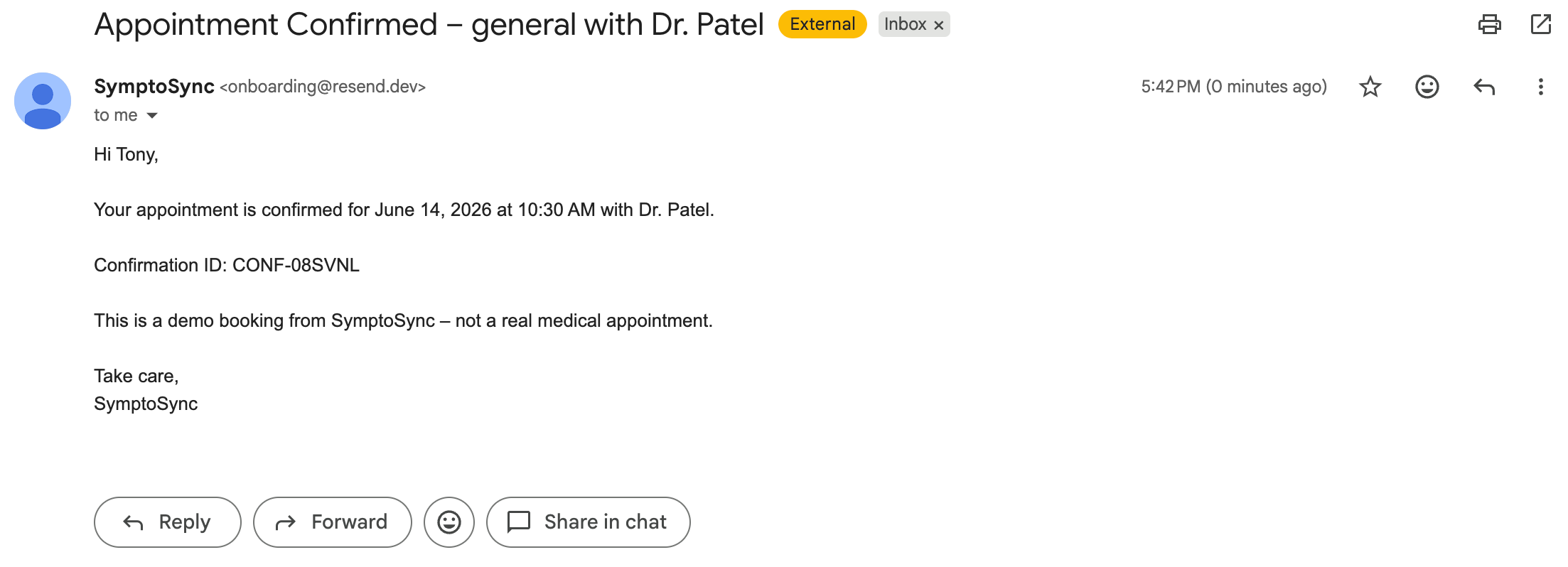
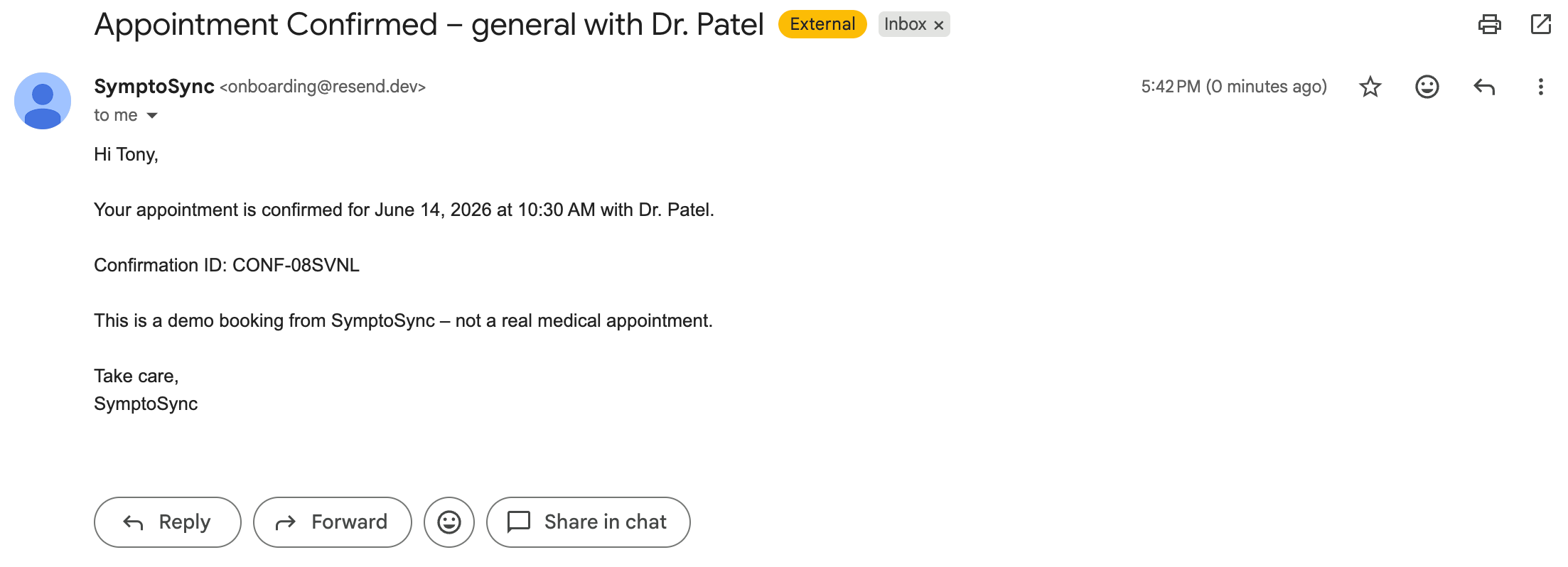
- Sends a confirmation email
- Reads its responses out loud, and listens to your voice
The whole experience feels like talking to a nurse who can actually schedule your visit.
How we built it
We used xAI Grok to power the clinical reasoning, Vercel AI SDK to stream the conversation and handle appointment booking, and Next.js for the frontend and backend. For voice, we combined Grok's text‑to‑speech API with the browser’s built‑in microphone for input. Email confirmations are sent through Resend.
Challenges
- API hiccups: Grok’s model name changed, and our first attempt crashed silently until we added proper error logging.
- CSS quirks: Small styling issues (like a button that kept jumping to the wrong corner) taught us that little details matter.
- Secrets in the wrong place: We learned the hard way that environment variables need to be available at runtime, not just during build.
What we learned
- Building an autonomous agent isn't just about the AI, it's about making all the pieces (voice, booking, email) work together seamlessly.
- Voice interaction makes the whole experience feel more human and immediate.
- Error logging is your best friend during a hackathon.
Built With
- github
- grok-tts-api
- next.js
- npm
- react
- resend
- shadcn/ui
- tailwind
- turbopack
- typescript
- vercel
- xai-grok-3
- zod

Log in or sign up for Devpost to join the conversation.