
SymptomWeave AI — Interactive Clinical Logic & Diagnostic Pathways
💡 Inspiration
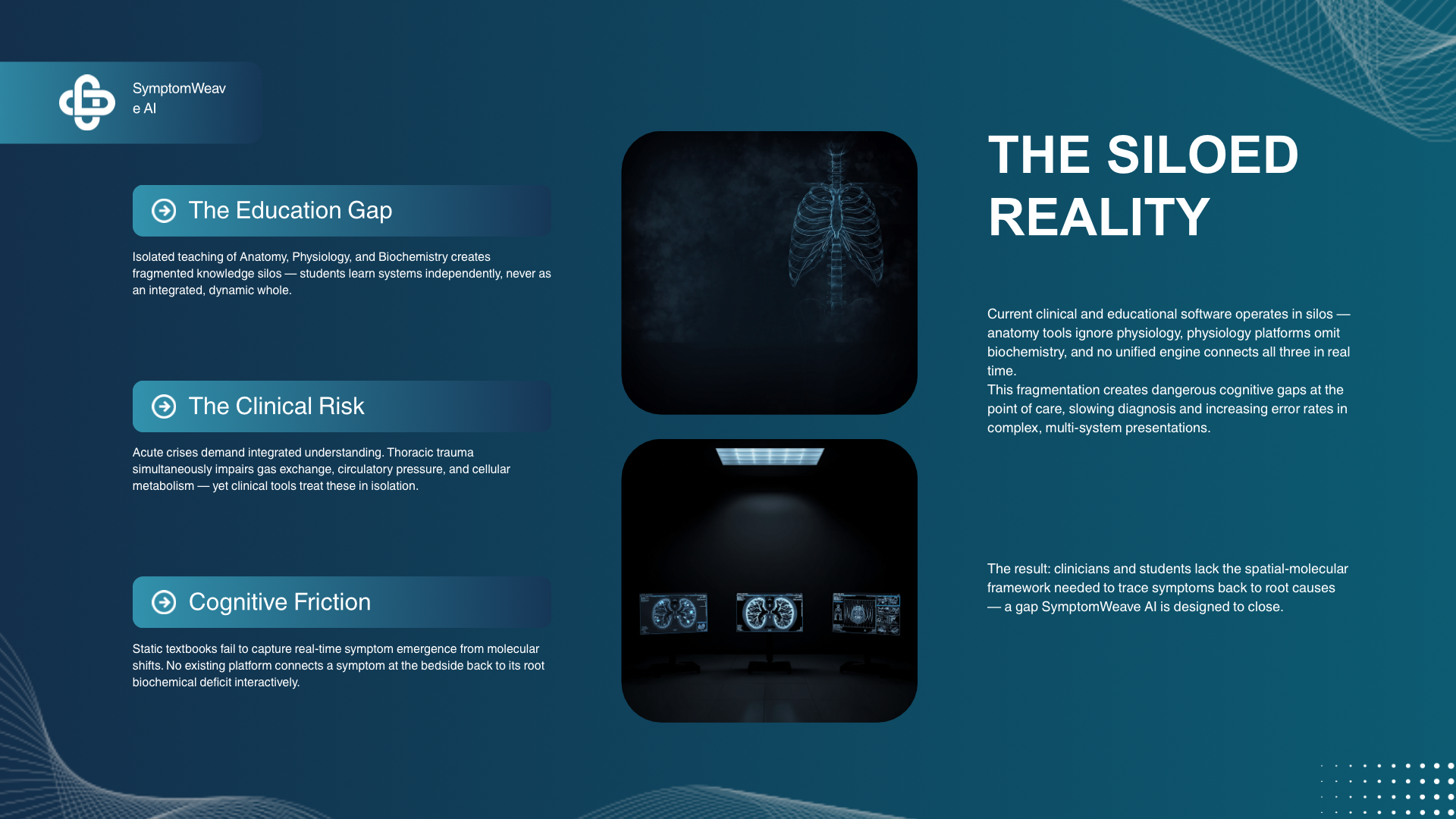
In modern medical education and digital diagnostics, we face a chronic issue: the silo effect. Traditional software, 3D anatomical models, and textbook chapters isolate Gross Anatomy, Functional Neurophysiology, and Cellular Biochemistry into completely separate domains.
However, in an emergency trauma bay or during an intensive pre-clinical examination campaign, an isolated understanding of structure becomes a clinical failure point. A medical practitioner cannot treat a physical boundary without simultaneously considering real-time pressure thresholds, nerve axoplasmic flow dynamics, and underlying molecular metabolic shifts.
We were inspired to create SymptomWeave AI after mapping complex regional pathways on a digital canvas. We realized that by combining the high-retention visual architecture of color-coded, handwritten medical mind maps with a programmatic backend logic engine, we could bridge this gap.
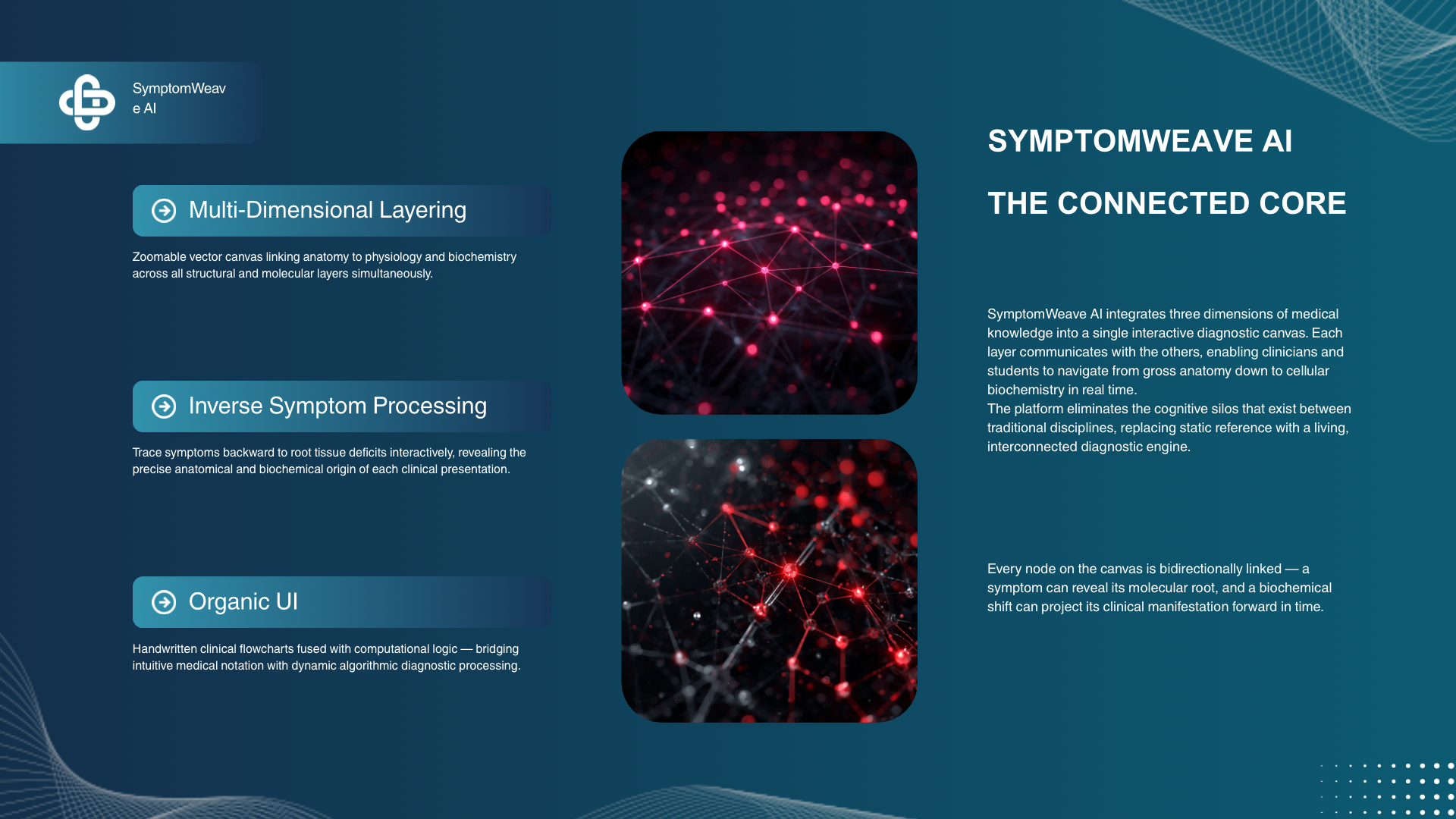
SymptomWeave AI functions as an active clinical logic matrix that maps a macroscopic clinical symptom directly to its microscopic cellular cause.
🛠️ How We Built It
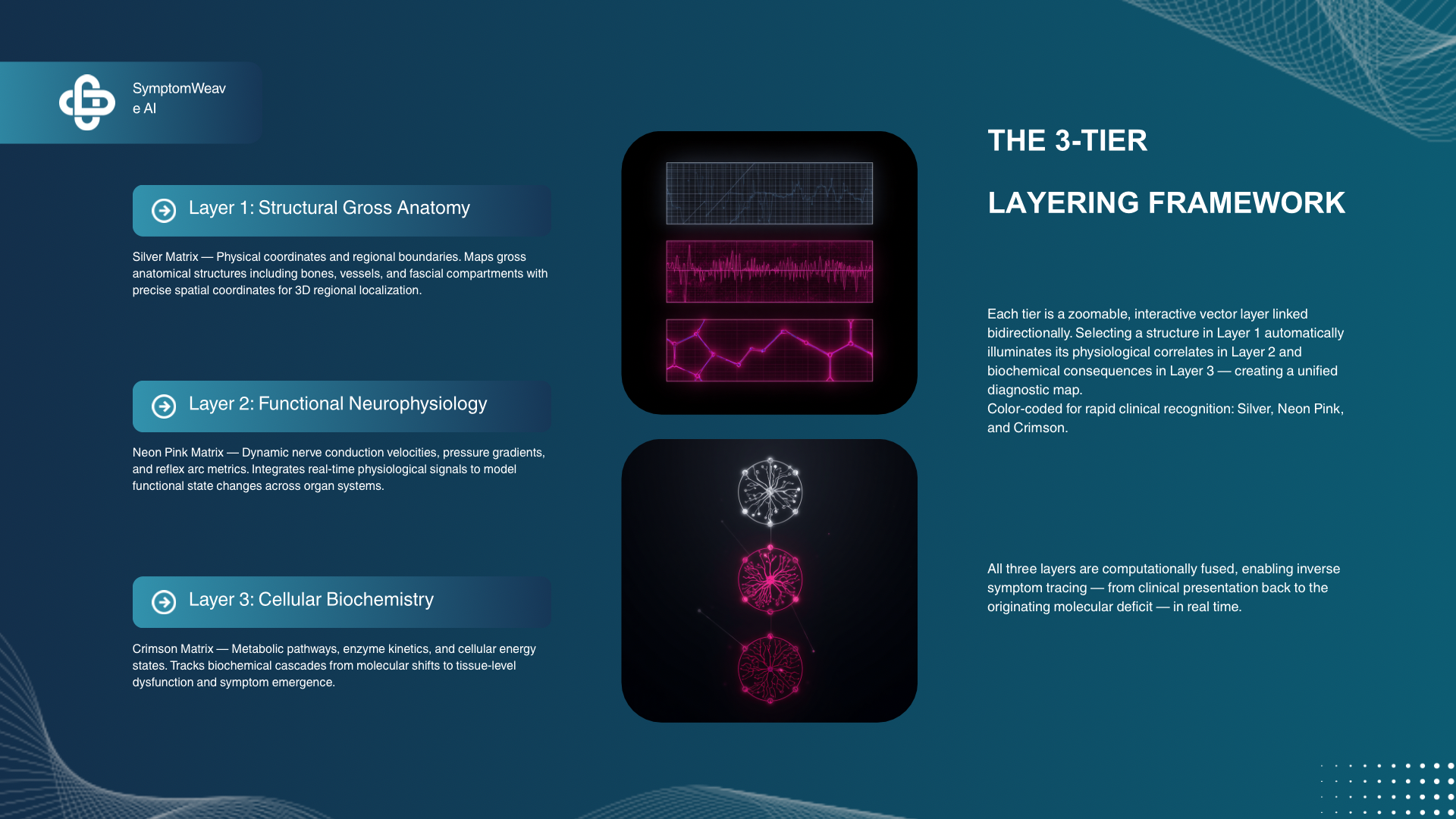
SymptomWeave AI is built as a responsive, multi-layered digital vector canvas running on a unified three-tier relational database architecture.
1. Structural Anatomy Matrix (Silver/White Vectors)
Houses hard-coded spatial coordinates of critical anatomical landmarks, including:
- Boundaries of the axilla
- Subcostal grooves of the rib cage
- Fascial spaces of the hand
2. Functional Neurophysiology Layer (Neon Pink/Yellow Vectors)
A physics-based computational engine that calculates dynamic physiological thresholds, including:
- Membrane depolarization
- Retrograde axoplasmic transport
- Anterograde axoplasmic transport
- Intrapleural pressure boundaries
3. Cellular Biochemistry Core (Crimson/Cyan Vectors)
A metabolic state machine that dynamically tracks cellular shifts under stress conditions, including:
- Anaerobic enzyme kinetics
- Local pH alterations
- Structural protein degradation cascades
The interactive MVP prototype was engineered using a Python-based state management engine.
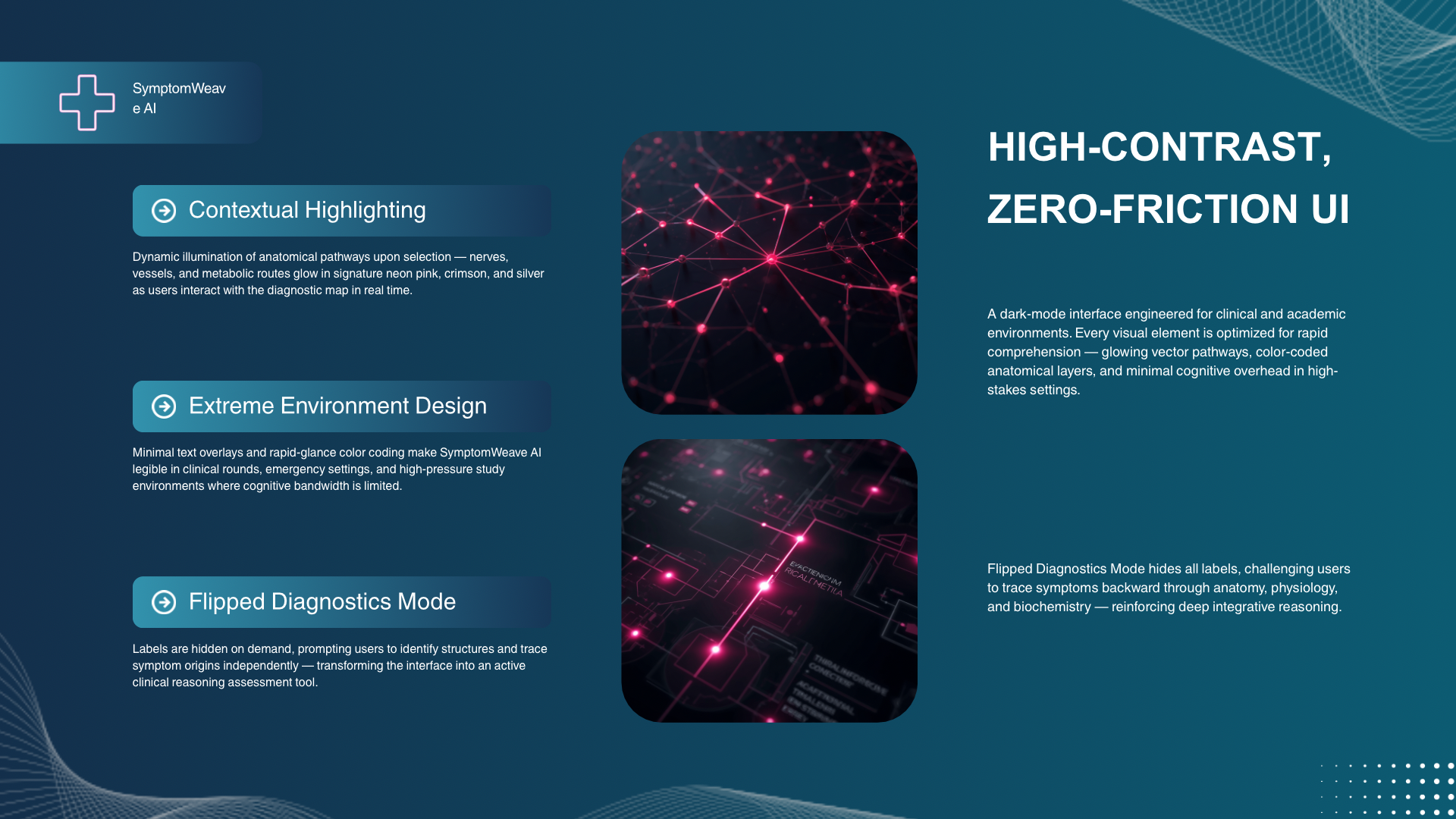
By utilizing a coordinate-mapped Scalable Vector Graphics (SVG) framework, the front-end allows users to interact with handwritten clinical nodes. Selecting a peripheral symptom or entering a mechanism of injury triggers a conditional algorithm that traces the entire physiological domino effect across the structural network.
🔬 What We Learned
Developing this platform required translating multisystem clinical pathology into clean mathematical, physical, and biochemical relationships.
1. Acute Thoracic Trauma & Pressure Mechanics
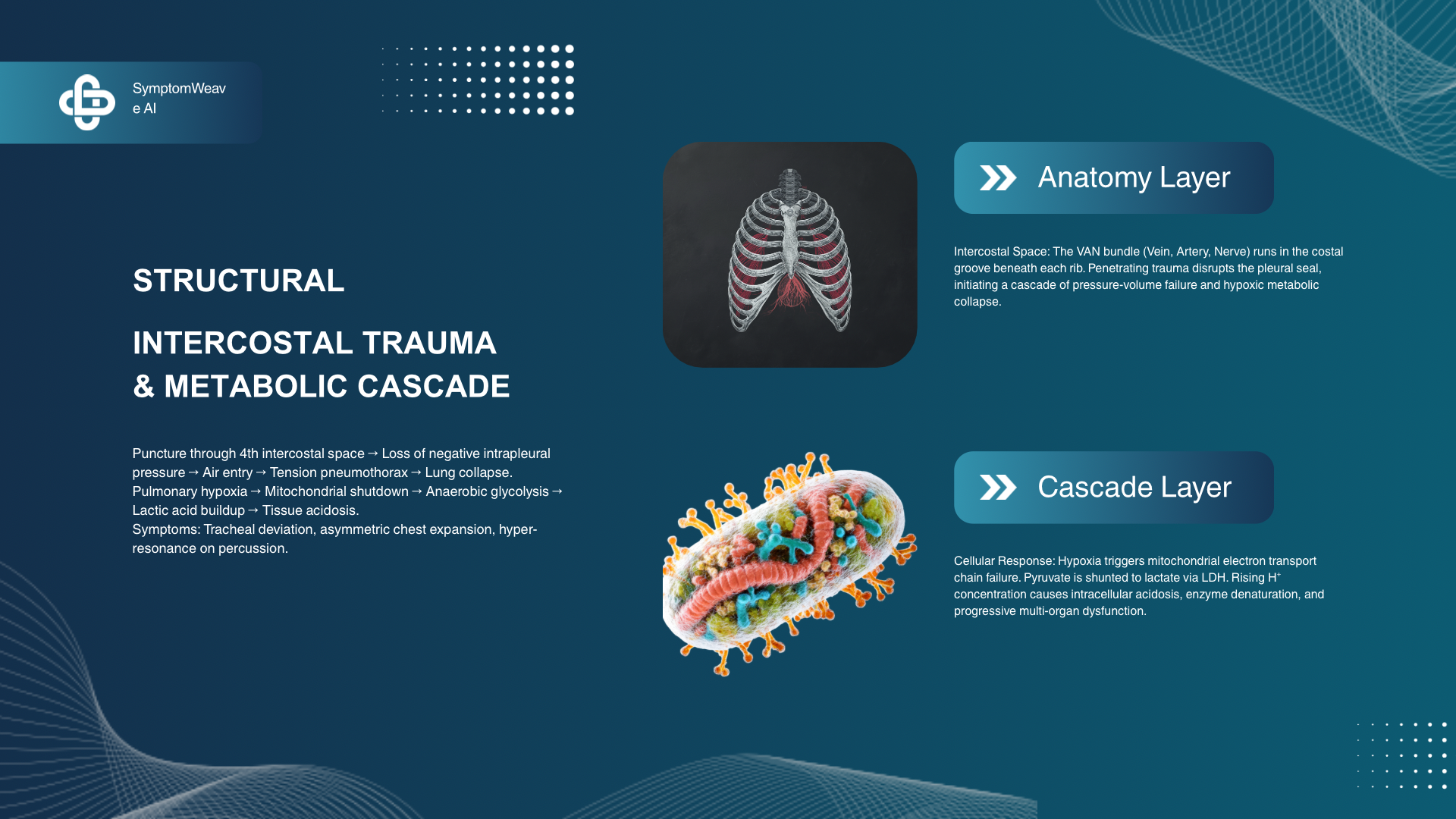
We modeled how a traumatic puncture wound traversing the chest wall layers
$$ \text{Skin} \rightarrow \text{Intercostal Muscles} \rightarrow \text{Endothoracic Fascia} \rightarrow \text{Parietal Pleura} $$
destroys the natural negative intrapleural pressure, bringing it toward atmospheric equilibrium and causing collapse of the lung parenchyma (tension pneumothorax).
Pressure Relationship
Under normal conditions:
$$ P_{\text{intrapleural}} < P_{\text{atmospheric}} $$
Following pleural breach:
$$ P_{\text{intrapleural}} \rightarrow P_{\text{atmospheric}} $$
which causes:
$$ \text{Lung Collapse} \rightarrow \text{Hypoxia} \rightarrow \text{Cellular Energy Crisis} $$
Metabolic Consequences
$$ Oxidative\ Phosphorylation \downarrow $$ and increases anaerobic glycolysis: $$ Glucose \rightarrow Pyruvate \rightarrow Lactate + 2ATP $$ leading to: $$ Lactate \uparrow $$ and $$ pH \downarrow $$
leading to respiratory and metabolic acidosis.
2. Ischemic Neuromuscular Compressions
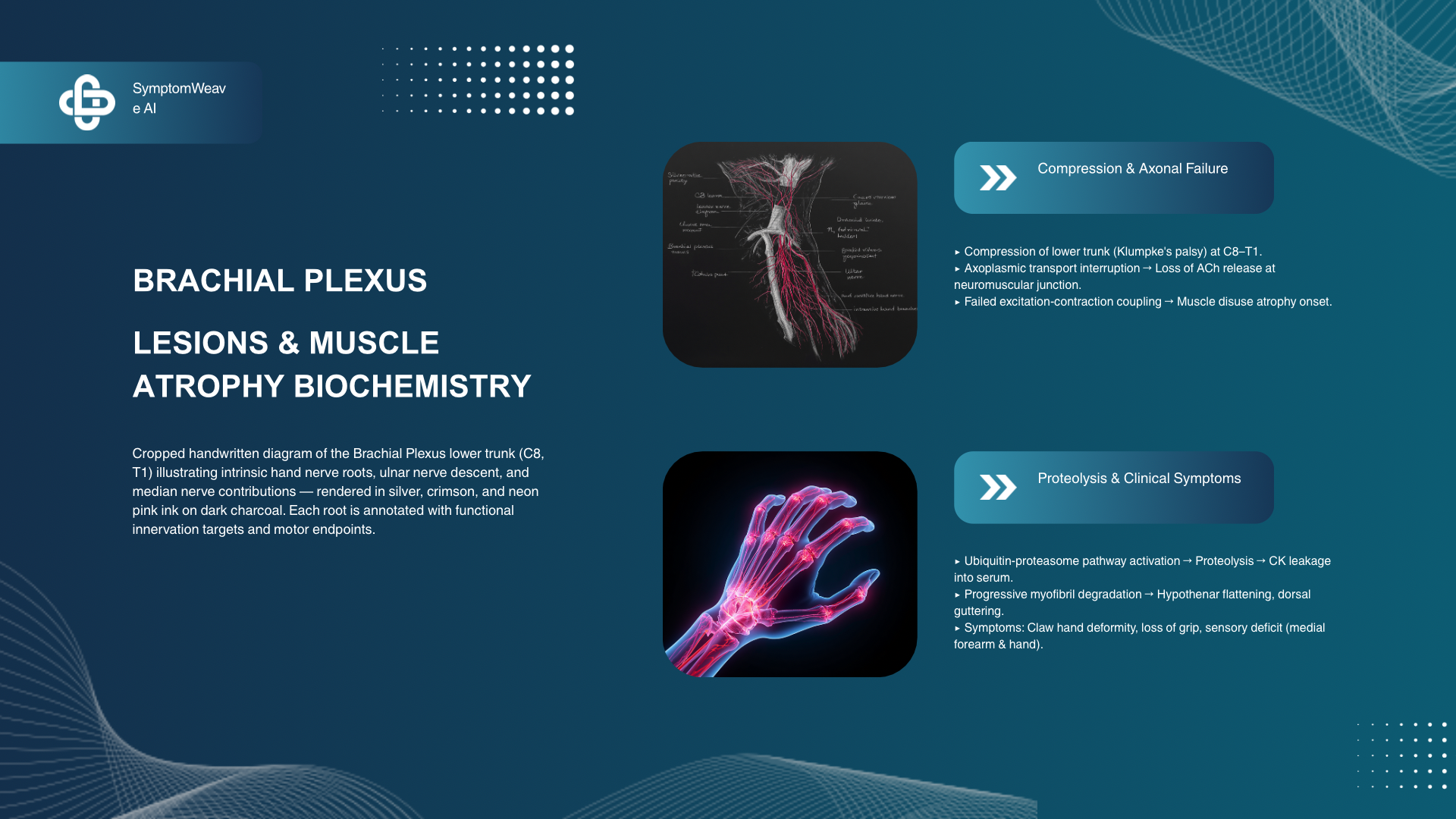
We successfully modeled how a lesion or compression of a major nerve pathway (such as an upper trunk Erb’s palsy injury or a lower trunk C8/T1 compression) disrupts anterograde axoplasmic transport.
Transport Failure
Normal state:
$$ \text{Neuron} \rightarrow \text{Axoplasmic Transport} \rightarrow \text{NMJ} \rightarrow \text{ACh Release} $$
Compression state:
$$ \text{Compression} \rightarrow \text{Transport Failure} \rightarrow \text{ACh Release} \downarrow $$
Neuromuscular Consequences
Reduced acetylcholine release causes:
$$ \text{NMJ Activation} \downarrow $$
$$ \text{Sarcolemma Depolarization} \downarrow $$
$$ \text{T-Tubule Activation} \downarrow $$
$$ \text{Excitation-Contraction Coupling} \downarrow $$
which ultimately results in:
$$ \text{Muscle Contraction} \downarrow $$
Muscle Atrophy Pathway
Without trophic electrical stimulation:
$$ \text{Disuse Atrophy} \uparrow $$
The ubiquitin-proteasome pathway becomes activated:
$$ \text{Protein Ubiquitination} \uparrow $$
$$ \text{Proteasomal Degradation} \uparrow $$
resulting in breakdown of:
$$ \text{Actin} + \text{Myosin} $$
and release of serum biomarkers:
$$ \text{Creatine Kinase (CK)} \uparrow $$
⚠️ Challenges We Faced
The most difficult engineering challenge was designing the Inverse Diagnostic Pattern Matcher.
Mapping an injury forward to a symptom is a relatively straightforward forward-chaining process:
$$ \text{Cause} \rightarrow \text{Pathway} \rightarrow \text{Symptom} $$
However, clinical reasoning frequently operates in reverse:
$$ \text{Symptoms} \rightarrow ? \rightarrow \text{Underlying Cause} $$
For example:
$$ \text{Wrist Drop} + \text{Forearm Lactic Acidosis} + \text{Elevated CK} $$
must be traced backward to:
$$ \text{Radial Nerve Lesion} \rightarrow \text{Spiral Groove} $$
without generating infinite recursion loops.
Solution
We implemented a strict state-dictionary architecture.
Each clinical sign functions as an endpoint node possessing:
- Physiological dependency pointers
- Biochemical dependency pointers
- Anatomical root references
This enables lightweight bidirectional traversal across the vector canvas:
$$ \text{Symptom} \leftrightarrow \text{Physiology} \leftrightarrow \text{Anatomy} $$
🚀 Future Horizons
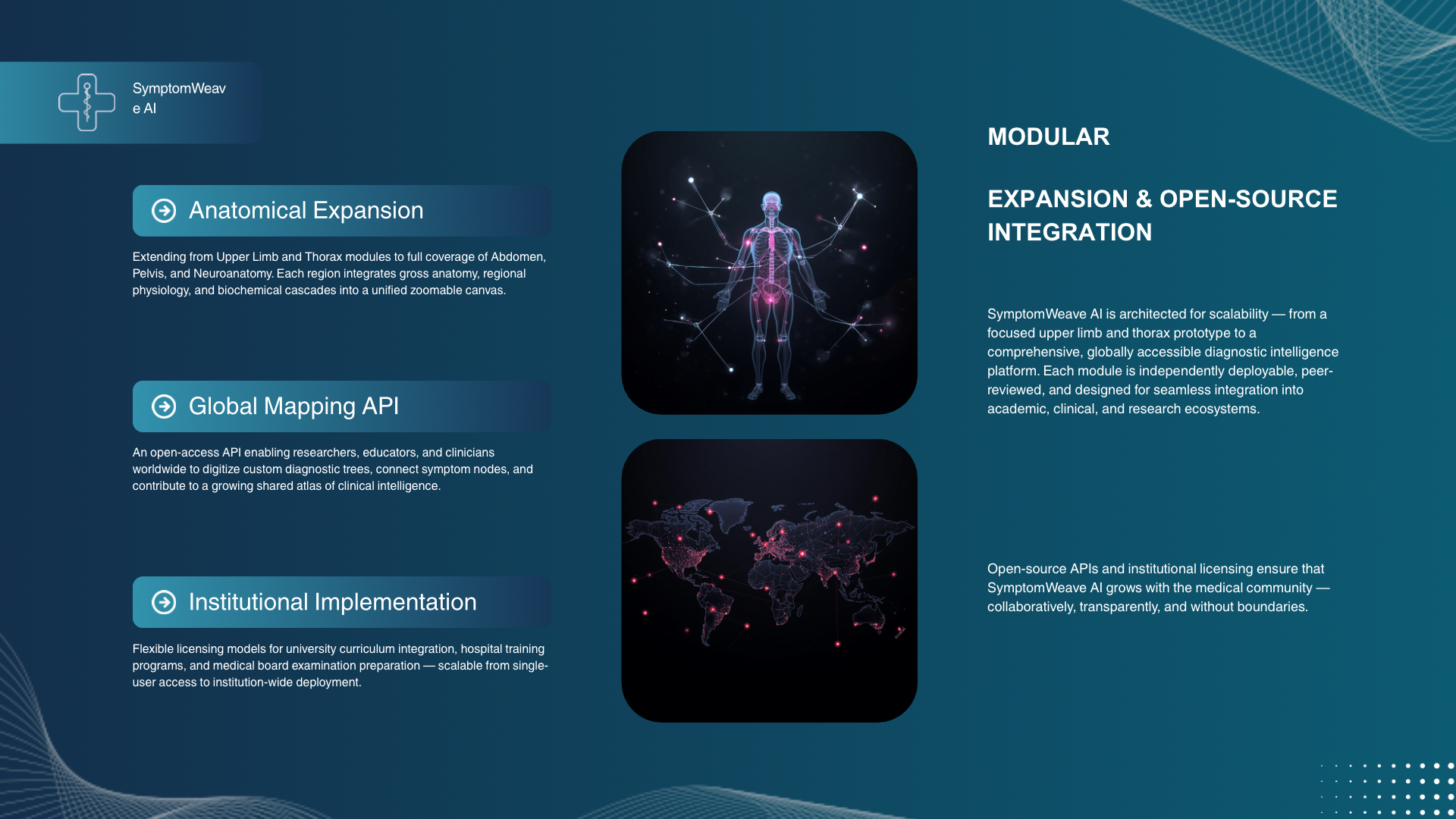
SymptomWeave AI currently contains detailed diagnostic modules for:
- Upper Limb Anatomy
- Thoracic Wall Anatomy
covering many of the highest-yield concepts encountered in medical education.
Future Expansion
We plan to expand the platform into:
- Neuroanatomy
- Head and Neck Anatomy
- Abdominal Anatomy
- Advanced Clinical Pathology Networks
Open-Source Ecosystem
Our long-term vision is a global open-source medical reasoning platform.
We are developing an API framework that will allow:
- Medical professors
- Anatomists
- Clinical educators
- Researchers
to digitally handwrite, connect, and submit their own diagnostic trees into a centralized computational logic engine.
Ultimate Goal
To create a living clinical knowledge network where:
$$ \text{Symptom} \leftrightarrow \text{Anatomy} \leftrightarrow \text{Physiology} \leftrightarrow \text{Biochemistry} $$
are seamlessly connected through an interactive diagnostic intelligence system.


Log in or sign up for Devpost to join the conversation.