-
-
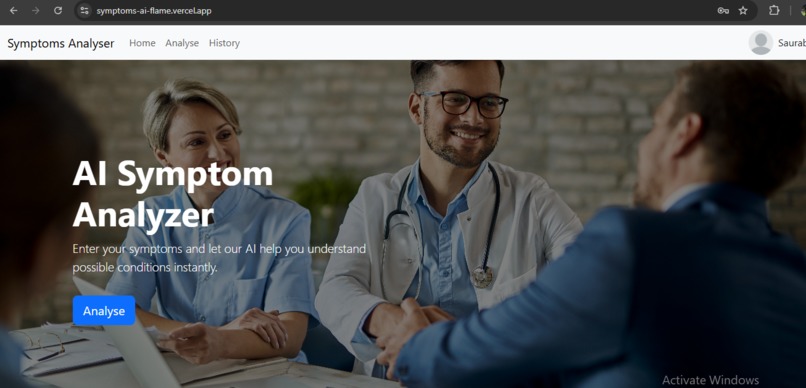
This is a home page.
-
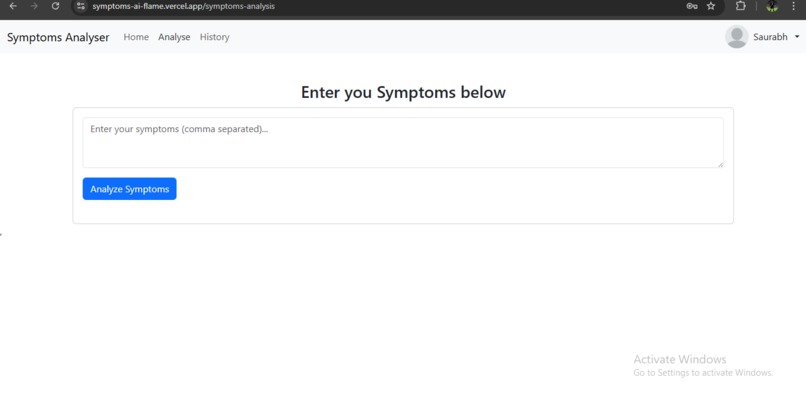
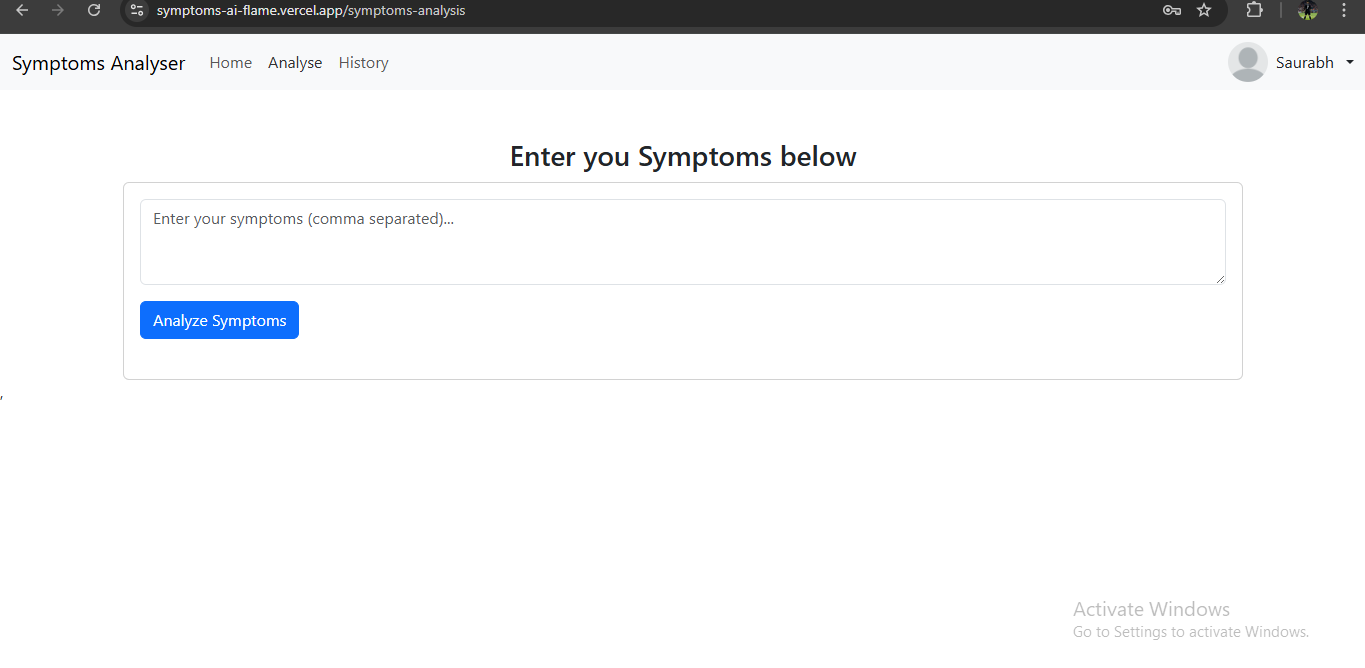
This is the analysis page where user will enter their symptoms.
-
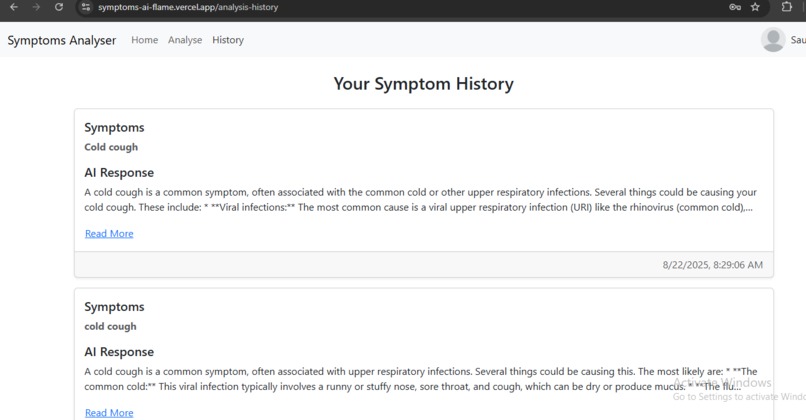
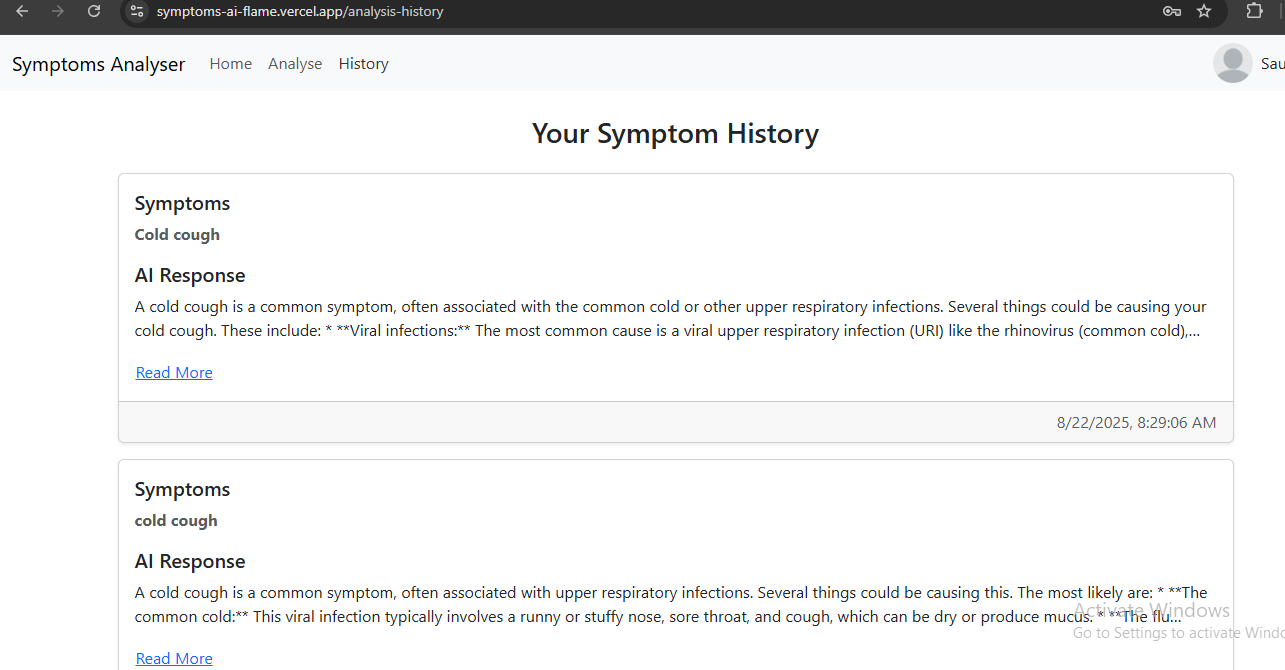
This is a history page where user will go through the previous responses they have received for particular symptoms.
Inspiration
When someone close to me fell sick recently, I realized how confusing it can be to figure out what symptoms actually mean. Most of us jump straight to Google searches, which often lead to panic and misinformation. That’s where the idea struck me — what if there was a simple web app that could analyze symptoms in a structured way and give people a calm, guided response instead of overwhelming them?
I wanted to build something that feels like a first step toward clarity, not a replacement for doctors, but a companion that helps people decide what to do next.
What it does
It is a web application that takes comma-separated symptoms the user is experiencing and will suggest the most likely health condition based on their prompt.
How we built it
I started with a React.js frontend to make the app fast and interactive. For styling, we used Bootstrap, keeping the UI clean and approachable. On the backend, we used Node.js + Express to handle requests and connect everything together.
To make the symptom analysis smarter, we integrated an AI model to process user input and generate human-like health insights. The AI takes the symptoms, looks for possible conditions, and then responds in a way that’s easy to understand.
I have also built features like:
A history page so users can track past symptom checks.
A simple and friendly flow from entering symptoms → getting analysis → suggested next steps.
Challenges we ran into
Accuracy vs. Simplicity: I wanted to give meaningful insights without overwhelming users or sounding too technical. Striking that balance was tough.
Time pressure: With limited time, I had to decide which features were essential and which could wait for the future.
AI limitations: Sometimes the responses weren’t perfect, and I had to build fallback logic so the app still provided value.
Accomplishments that we're proud of
- I have successfully integrated AI into my web app first time.
- Handled pressure and completed the application within time constraints.
What we learned
This project pushed me out of my comfort zone in several ways:
I have learned how to design an app that’s not just functional, but also empathetic toward the user.
I have gotten better at integrating AI into a real-world use case.
I have realized how important clear communication is — especially when dealing with health-related information.
What's next for Symptoms AI
We see this project as just the beginning. In the future, we’d like to add:
- Location-based hospital recommendations to bridge the gap between online analysis and real-world care.

Log in or sign up for Devpost to join the conversation.