-
-
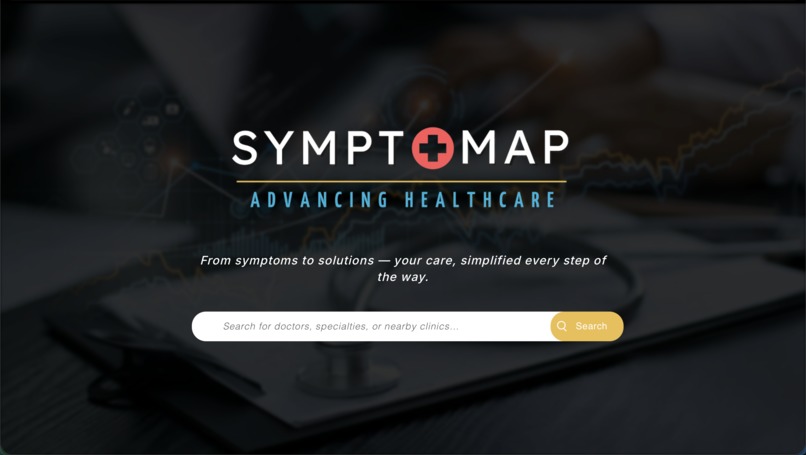
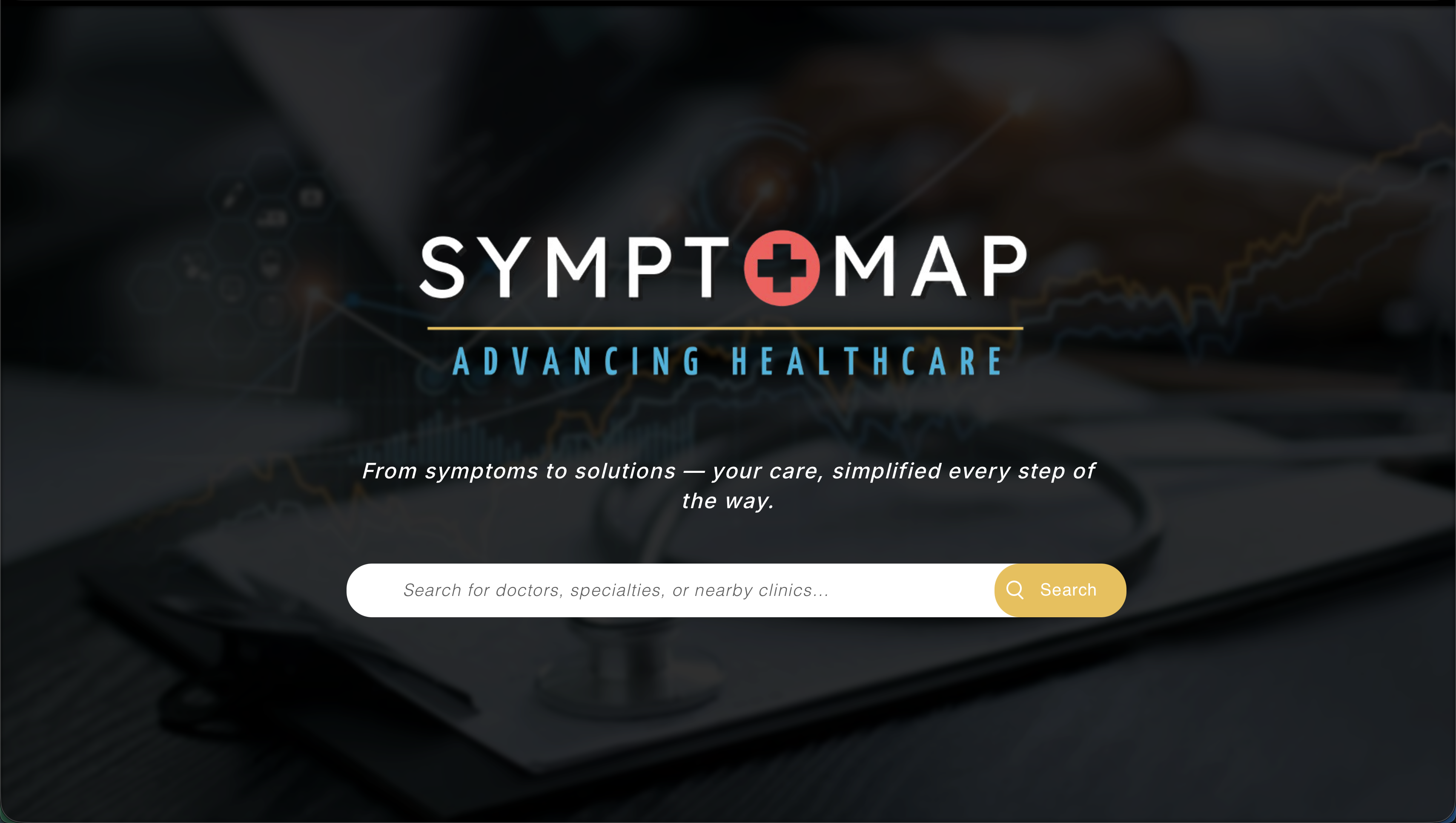
Home page
Inspiration Healthcare is becoming increasingly complex, and patients often struggle to find the right medical professionals for their specific needs. Traditional search methods rely on basic filters like location and specialty, but don't understand the nuanced language patients use to describe their symptoms or conditions. We were inspired by the potential of AI and semantic search to bridge this gap—allowing patients to search for doctors using natural language descriptions of their symptoms, conditions, or treatment needs, just like they would describe them to a friend or family member.
What it does Symptomap is an intelligent healthcare provider search platform that revolutionizes how patients find doctors. Instead of traditional keyword matching, our platform uses advanced semantic search powered by machine learning embeddings to understand the meaning behind patient queries. Users can search using natural language like "I have chronic back pain and need someone who specializes in non-surgical treatments" or "pediatrician who speaks Spanish and accepts my insurance."
The platform features:
Semantic Vector Search: AI-powered search that understands medical terminology and patient language Interactive Map Integration: Visual representation of doctor locations with real-time navigation Comprehensive Doctor Profiles: Detailed information including specialties, conditions treated, procedures performed, education, board certifications, languages spoken, and insurance accepted Intelligent Filtering: Automatic deduplication and relevance ranking of search results Modern UI/UX: Clean, responsive design optimized for both desktop and mobile users How we built it Frontend Stack:
Next.js 15 with React 19 for the modern web framework TypeScript for type safety and better developer experience Tailwind CSS with HeroUI components for beautiful, responsive design React Leaflet for interactive map functionality Framer Motion for smooth animations and transitions Backend & Database:
MongoDB Atlas with vector search capabilities for storing doctor profiles and embeddings HuggingFace Transformers (all-MiniLM-L12-v2) for generating semantic embeddings Next.js API Routes for serverless backend functionality Vector Database Architecture for similarity search and ranking Key Technical Features:
Semantic Embedding Pipeline: Convert search queries and doctor profiles into 384-dimensional vectors Advanced Deduplication Algorithm: Intelligent filtering to remove duplicate doctor records while preserving the most recent information Real-time Search: Instant results with loading states and error handling Responsive Design: Full-screen layouts with adaptive components Development Tools:
Vercel for deployment and hosting ESLint & Prettier for code quality Python for data generation and database seeding Challenges we ran into Vector Search Optimization: Implementing efficient similarity search across large datasets while maintaining sub-second response times required careful indexing and query optimization.
Semantic Understanding: Fine-tuning the embedding model to understand both medical terminology and everyday patient language was complex—ensuring "heart problems" matches with "cardiovascular disease" or "cardiologist."
Data Quality & Deduplication: Managing duplicate doctor records from multiple sources while preserving the most accurate and up-to-date information required building sophisticated comparison algorithms.
Serverless Architecture: Optimizing for Vercel's serverless environment, including managing MongoDB connections and handling cold starts efficiently.
Full-Screen Design Integration: Creating a seamless user experience with the beautiful homepage design while maintaining functionality across the search and results interfaces.
Real-time Map Integration: Synchronizing search results with interactive map markers and ensuring smooth navigation between doctor selection and map view.
Accomplishments that we're proud of Intelligent Search: Successfully implemented semantic search that truly understands medical context—patients can search "specialist for my diabetes complications" and find endocrinologists automatically Production-Ready Platform: Built a fully functional application with robust error handling, loading states, and responsive design Comprehensive Data Model: Created detailed doctor profiles with 20+ fields including specialties, conditions, procedures, education, and logistics Seamless User Experience: Designed an intuitive interface where patients can easily discover, evaluate, and connect with healthcare providers Scalable Architecture: Implemented a vector database solution that can handle thousands of doctor profiles with instant search results Beautiful Design: Created a polished, professional interface that feels trustworthy and modern for healthcare users What we learned Vector Databases: Deep understanding of semantic search, embeddings, and similarity matching in real-world applications Healthcare Data Complexity: The intricacies of medical specialties, subspecialties, and the nuanced relationships between conditions and treatments User Experience in Healthcare: How critical trust, clarity, and accessibility are when dealing with medical information Serverless Optimization: Best practices for deploying ML-powered applications in serverless environments Modern Web Development: Advanced patterns with Next.js 15, React 19, and TypeScript for building production applications Database Design: Strategies for handling complex relational data in NoSQL environments with vector search capabilities What's next for Symptomap Short-term Goals:
Real Appointment Booking: Integration with healthcare providers' scheduling systems Patient Reviews & Ratings: Community-driven feedback system for doctor recommendations Insurance Verification: Real-time insurance coverage checking and cost estimation Telehealth Integration: Direct video consultation booking for supported providers Medium-term Vision:
AI Health Assistant: Chatbot that helps patients understand their symptoms and suggests appropriate specialists Provider Dashboard: Tools for doctors to manage their profiles, availability, and patient communications Mobile App: Native iOS/Android applications with offline functionality and push notifications Multilingual Support: Expanding beyond English to serve diverse communities Long-term Impact:
Healthcare Accessibility: Reducing barriers to finding appropriate medical care, especially in underserved communities Data Analytics: Insights for healthcare systems about patient needs and provider gaps Global Expansion: Scaling the platform internationally with localized medical systems and regulations Research Platform: Anonymous analytics to help improve healthcare delivery and patient outcomes Our ultimate goal is to make quality healthcare more accessible and reduce the time and stress involved in finding the right medical care for every patient's unique needs.


Log in or sign up for Devpost to join the conversation.