-
-
-
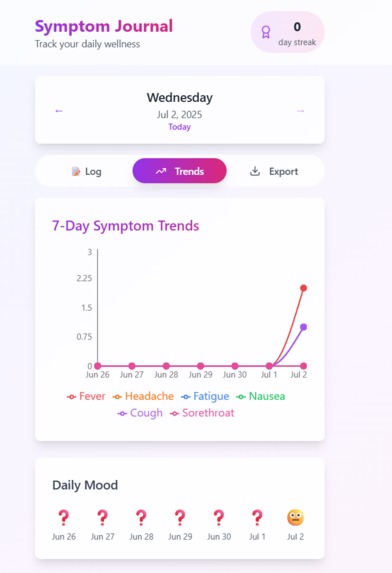
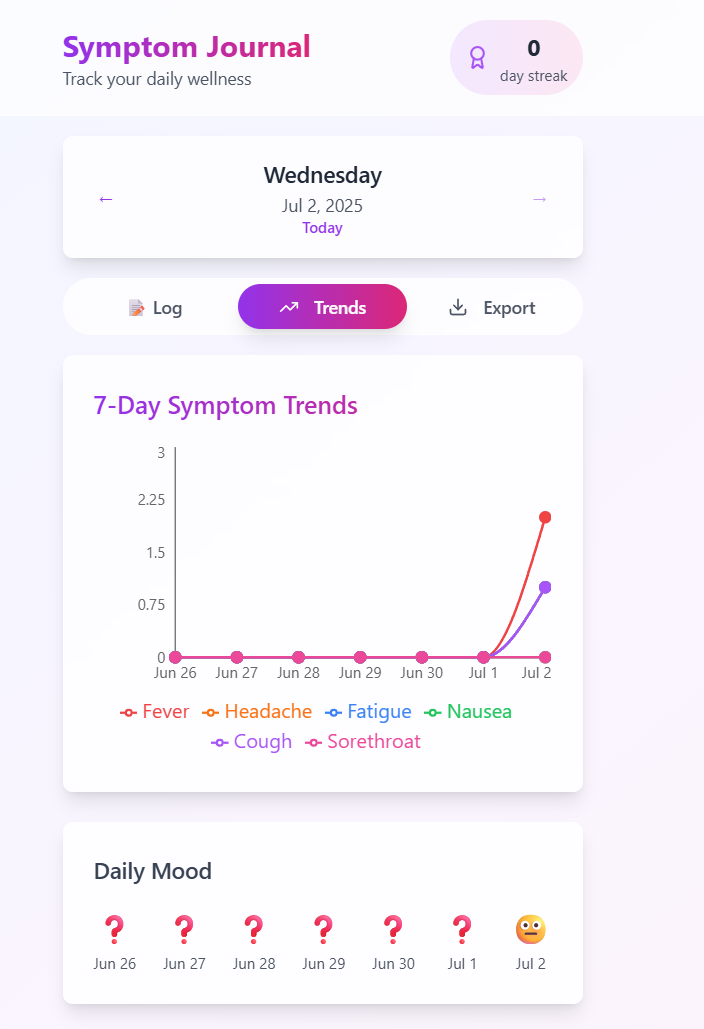
trends
-
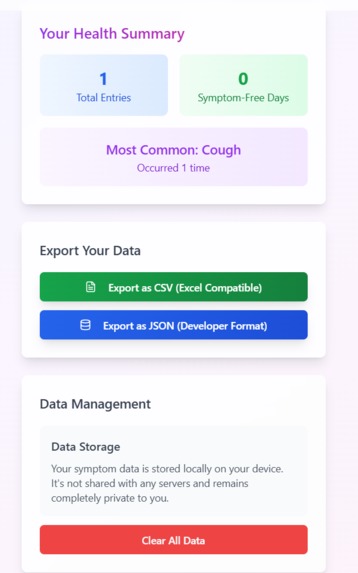
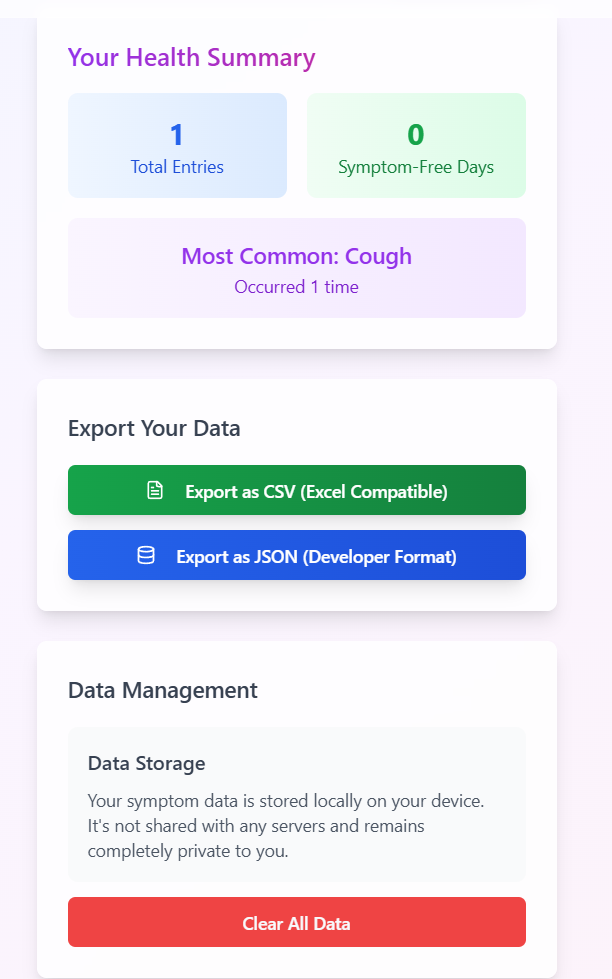
exports
-
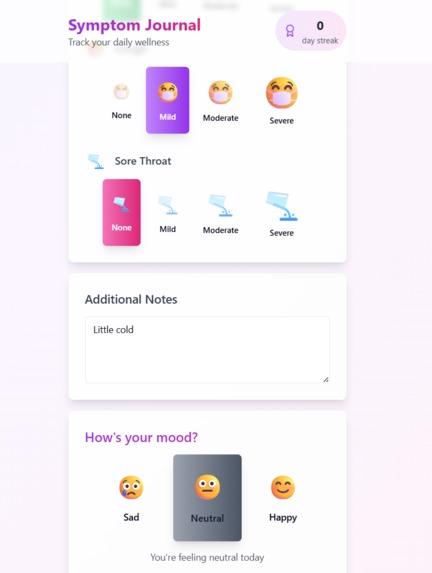
home page -2
-
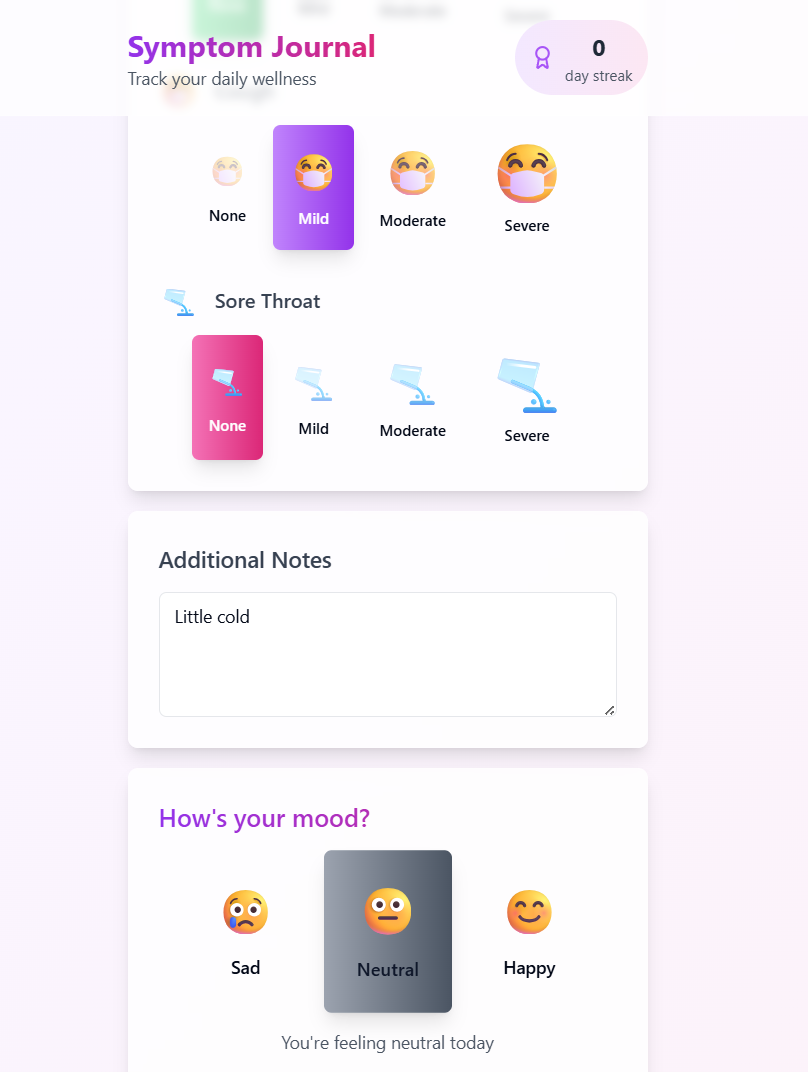
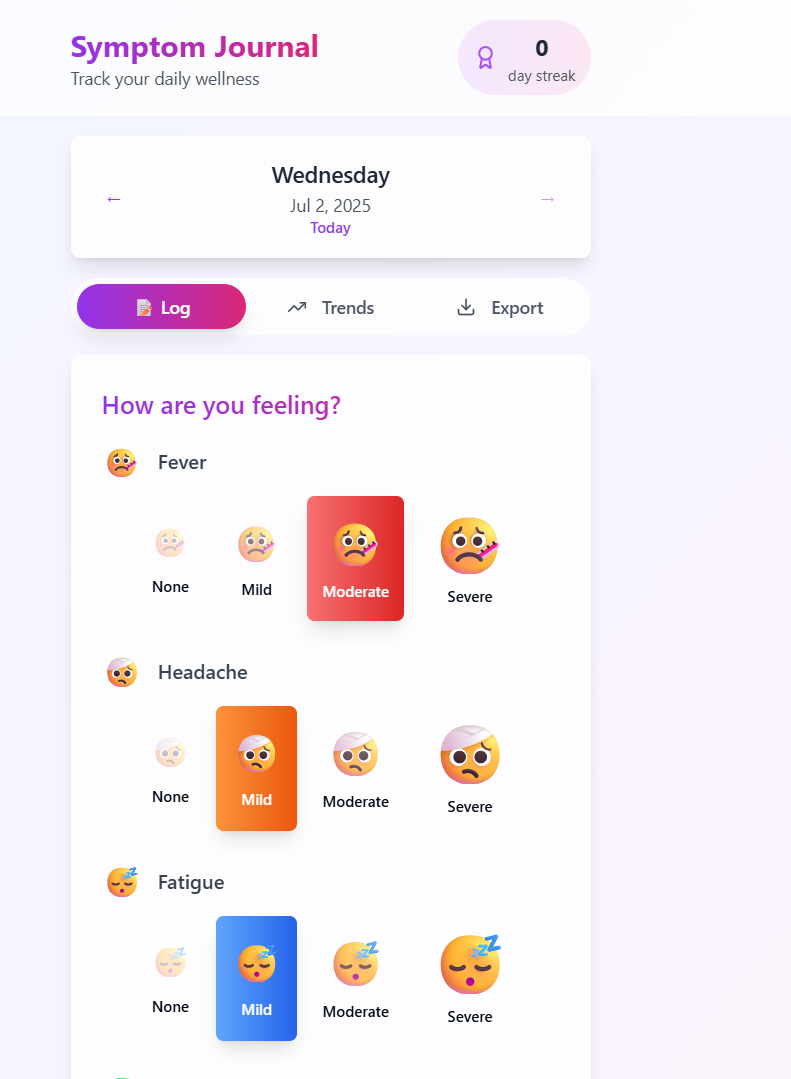
home page
Symptom Sense Daily Flow - Project Story
Inspiration
The idea came from watching family members struggle to remember their symptoms during doctor visits. My grandmother would say "I haven't been feeling well" but couldn't recall specific details about when symptoms started or how severe they were. This made it hard for doctors to help effectively. I wanted to create a simple tool to bridge this communication gap between patients and healthcare providers.
What it does
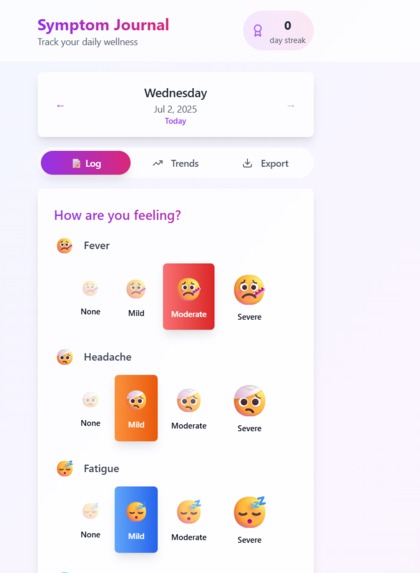
Symptom Journal is a mobile-friendly app that helps users track their daily health and share meaningful data with doctors. Users can:
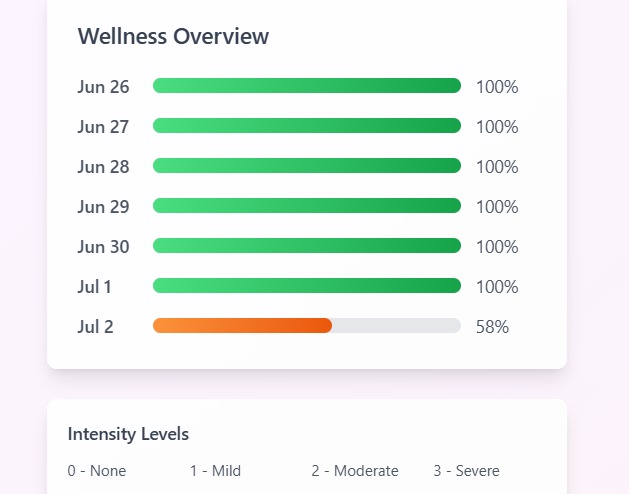
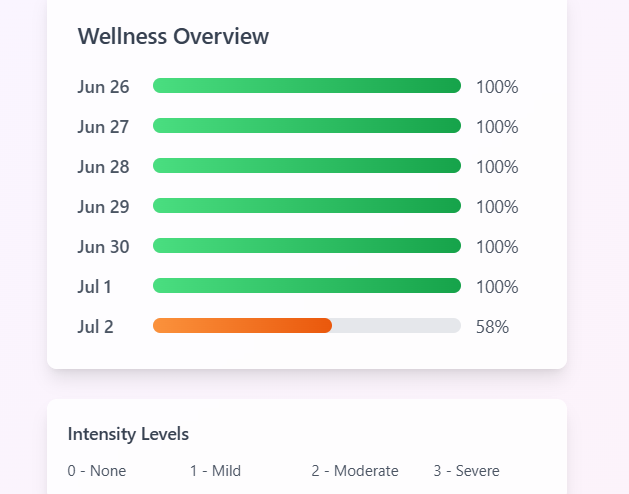
Log symptoms using emoji-based intensity scales (🤒 fever, 😴 fatigue, etc.) Track mood alongside physical symptoms View colorful trend charts showing patterns over time Build streaks for consistent logging and good health days Export data as CSV files for doctor visits Navigate dates with simple swipe gestures The app focuses on six common symptoms while keeping the interface simple and approachable.
How I built it
I built this as a web application using React with a mobile-first approach. The design uses calming colors and friendly emojis to make health tracking feel supportive rather than clinical. Interactive charts help visualize symptom patterns, and everything works offline with data stored locally on the user's device for privacy.
The development focused heavily on user experience - ensuring someone feeling unwell could quickly log symptoms without frustration.
Challenges we ran into
Making health tracking approachable: Balancing medical usefulness with everyday usability. I chose friendly emojis over medical terms and encouraging language throughout.
Mobile touch interactions: Creating smooth swipe navigation that felt natural without accidental inputs required careful gesture recognition.
Encouraging daily use: Getting people to log symptoms consistently, especially on good days. Streak counters and visual progress helped motivate regular use.
Data visualization: Presenting health data meaningfully for everyday users, not just healthcare professionals. Simple color-coded trends worked better than complex charts.
Accomplishments that I am proud of
Created a health app people actually use daily, even when sick Transformed vague health complaints into clear visual data for doctors Achieved smooth mobile experience with intuitive touch interactions Made health tracking feel supportive and non-intimidating Built privacy-focused solution keeping data on user's device Developed meaningful visualizations that help users understand their own health patterns What we learned Simplicity beats features: User experience is everything in health apps. People won't use complex tools when they're not feeling well.
Visual data tells better stories: Colorful charts help users understand health patterns better than numbers or lists.
Mobile-first is essential: Most health tracking happens spontaneously on phones throughout the day.
Small details matter: Swipe navigation, emoji selections, and gentle colors significantly impacted how approachable the app felt.
What's next for Symptom Journal
Medication tracking to correlate treatments with symptom relief Family sharing for caregivers to stay informed Personalized insights to help identify symptom triggers Healthcare integration with patient portals for seamless doctor communication AI suggestions for when to consult healthcare providers based on patterns
Built With
- browser
- bun
- charting
- code
- component
- css
- data
- date
- date-fns
- eslint
- frontend
- icon
- library
- linting
- localstorage
- lucide
- manipulation
- package
- persistence
- programming
- react
- recharts
- server
- shadcn/ui
- styling
- tailwind
- typescript
- visualization
- vite

Log in or sign up for Devpost to join the conversation.