-
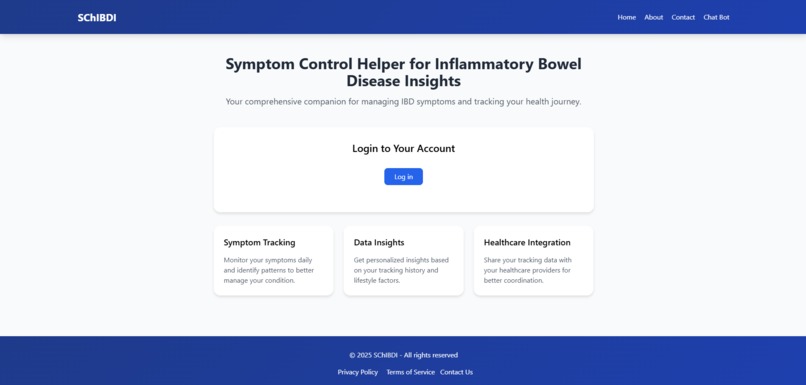
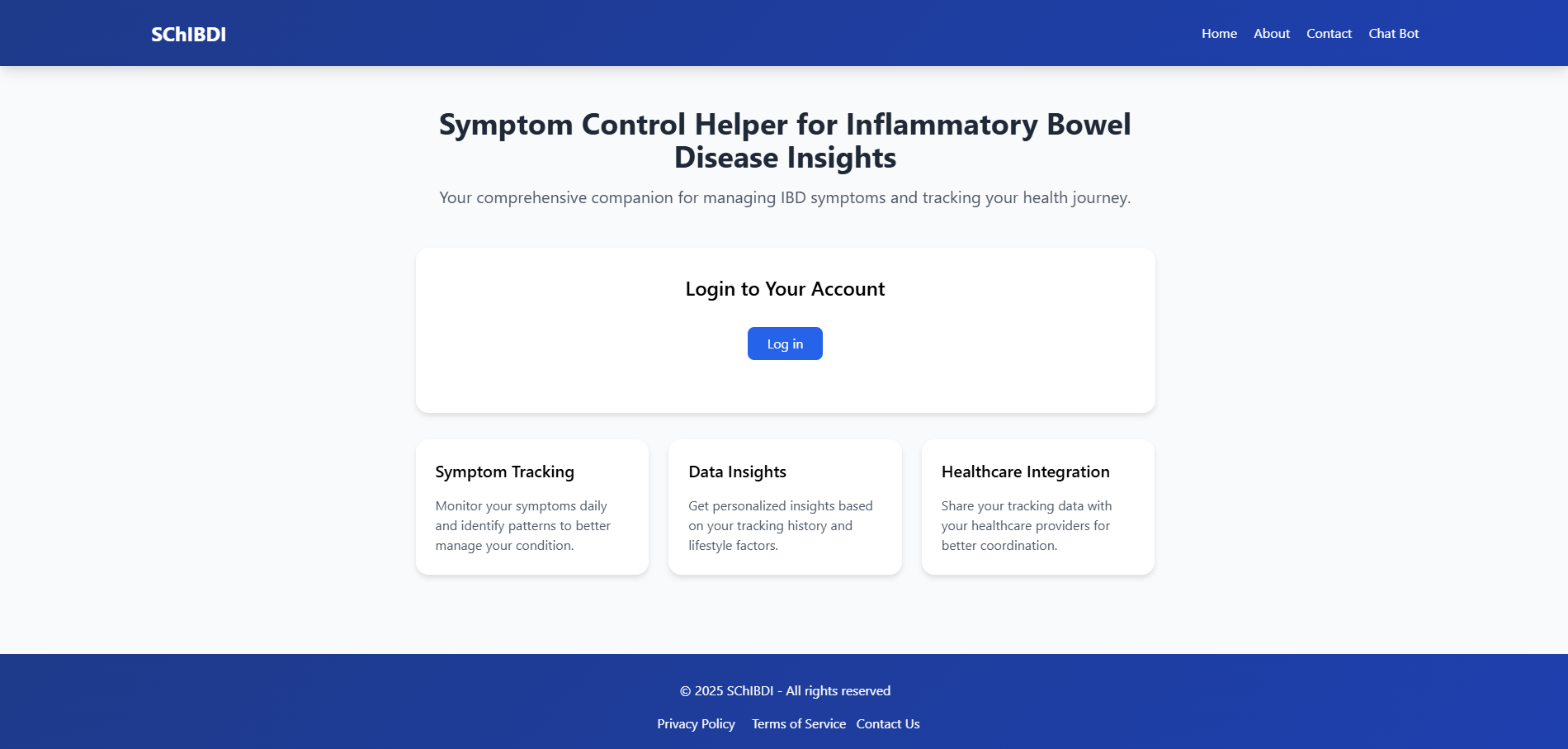
Home screen
-
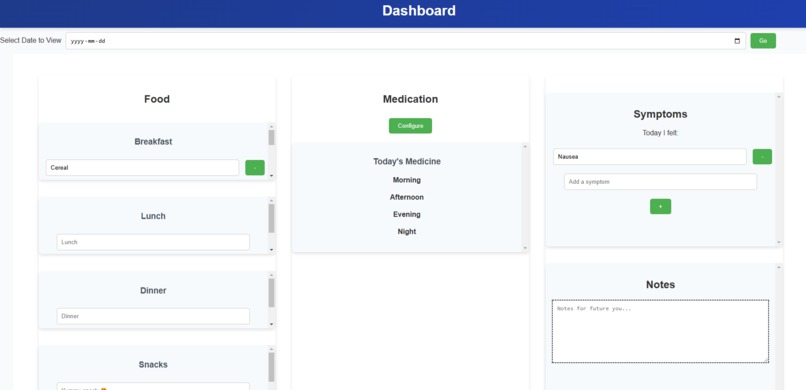
Dashboard
-
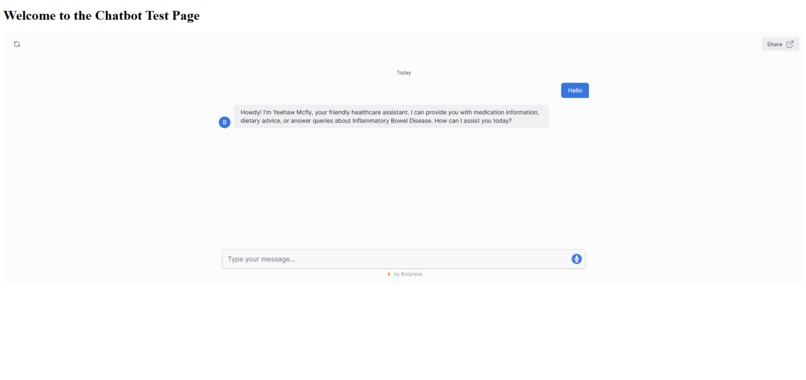
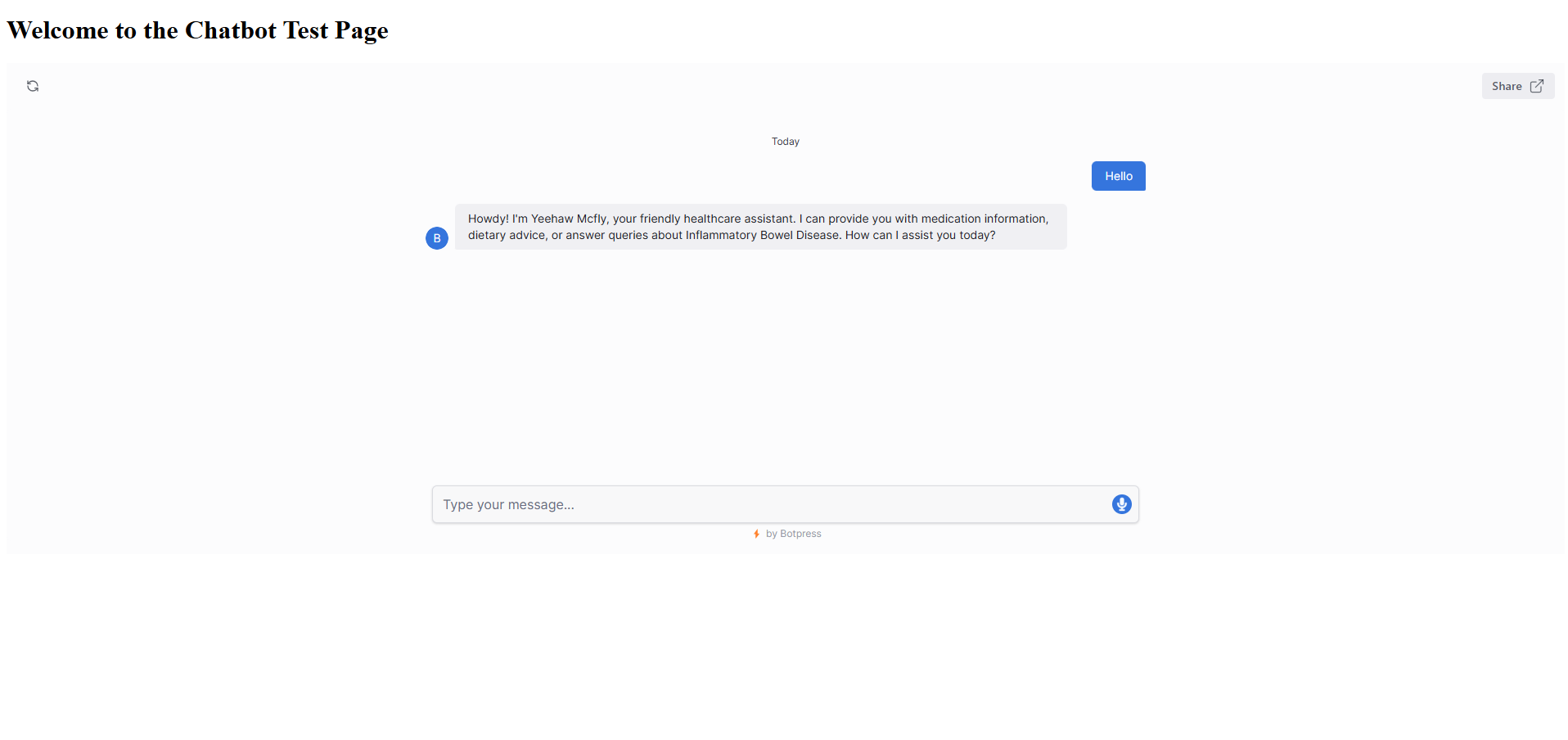
Picture of ChatBot
Inspiration
Our inspiration for this project came from a combination of personal experiences with friends who struggle with IBD and the growing availability of health technology. Seeing their challenges in managing their symptoms, we wanted to create a solution combining technology and healthcare to empower patients to better understand and control their condition.
What it does
SCHIBDI (Symptom Control Helper: Inflammatory Bowel Disorder Insight) is a tool designed to assist individuals with Inflammatory Bowel Disorders (IBD) in managing their symptoms. By tracking key factors such as symptoms, diet, stress levels, and medication, the tool offers personalized insights and recommendations to help users control and understand their condition better. It helps users visualize their symptoms over time and provides actionable advice based on individual patterns and trends.
How we built it
The development of SCHIBDI involved several stages:
- Research and Requirement Gathering: We conducted extensive research on IBD symptoms, their triggers, and patient needs. We consulted with healthcare professionals and users to identify the essential features.
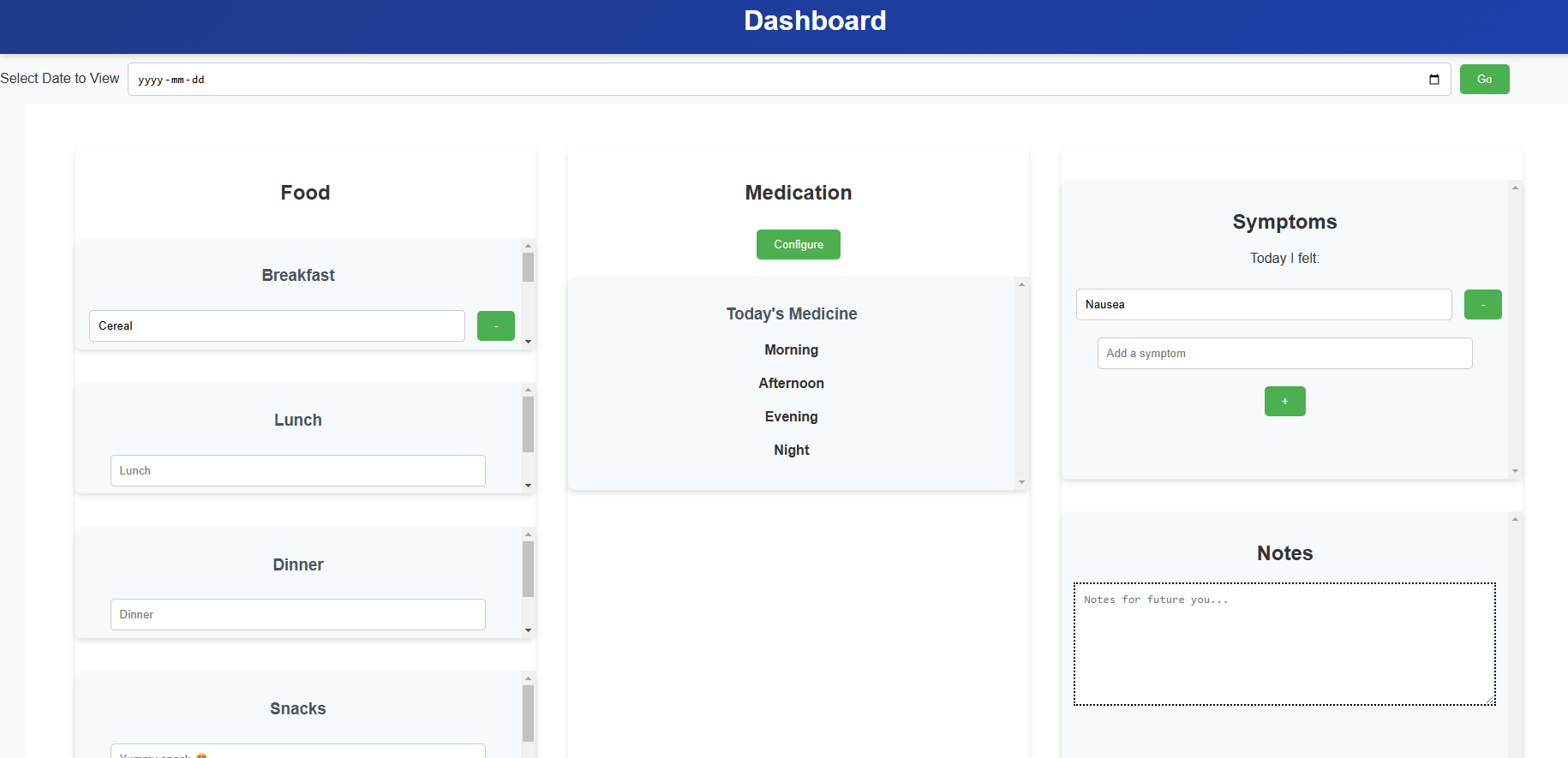
- Data Collection and Symptom Logging: We created a user-friendly interface that allows users to input their symptoms, diet, and other relevant factors like stress levels and medication usage.
- Data Analysis and Insights Generation: Using machine learning algorithms, we analyzed the logged data to identify trends and correlations. The system provides personalized advice based on these insights, helping users identify what could be causing flare-ups and how to manage them.
- User Interface and Feedback: We built an intuitive interface for users to easily track their data, view insights, and make informed decisions about their treatment plans.
- Testing and Refinement: We tested the system with real users to ensure it met their needs, adjusting the design and features based on their feedback.
Challenges we ran into
- Data Consistency and Accuracy: Ensuring that users consistently logged their data accurately was a challenge, especially with subjective factors like pain or fatigue levels.
- Personalization of Insights: Since IBD manifests differently in every individual, tailoring insights to each user’s unique symptoms and triggers was complex. We implemented algorithms that adapt based on user data, but fine-tuning them to offer actionable and precise advice required iteration.
- Engagement: Keeping users motivated to regularly log their symptoms was a challenge. We had to ensure the feedback was valuable, actionable and integrated seamlessly into users’ routines without being burdensome.
Accomplishments that we're proud of
- Personalized Insights: We successfully created an algorithm that tailors health advice to the individual based on their logged symptoms, offering relevant recommendations to help manage IBD.
- User-Friendly Interface: Despite the complexity of the data, we built an interface that is simple and intuitive, allowing users of all ages to easily track their symptoms.
- Positive User Feedback: Early testing with users has shown great enthusiasm for the tool. Many users found it useful in understanding their condition better and taking steps to improve their health management.
What we learned
Healthcare and Technology Integration: We learned how important it is to bridge healthcare with technology in a way that’s both effective and user-centric. It’s essential to understand user needs and limitations to create a tool that can genuinely improve their lives.
- Data-Driven Decisions: The power of data in healthcare is immense. By analyzing symptom patterns, we were able to create meaningful insights that help users take control of their condition.
- User Engagement Strategies: We discovered the significance of keeping users motivated and engaged. Offering actionable insights that lead to positive change was key to ensuring regular use of the tool.
What's next for Symptom Control Helper: Inflammatory Bowel Disorder Insight
- Further Personalization: We plan to refine the personalization of insights, incorporating more advanced machine learning techniques to offer even more tailored recommendations.
- Integration with Healthcare Providers: Our next step is to explore how SCHIBDI can be integrated with healthcare providers' systems, allowing for real-time communication and better collaboration in managing patient care.
- Expanding Features: We are considering adding additional features, such as medication tracking, integration with wearable devices to monitor real-time symptoms, and support for a broader range of chronic conditions.
- Continued User Feedback: We will continue to collect user feedback to refine the app, ensuring it remains responsive to their evolving needs and challenges.
Built With
- auth0
- css
- dietary-information
- ensuring-it-is-user-friendly-and-responsive-across-different-devices.-**javascript**:-implemented-for-dynamic-interactions-on-the-frontend
- flask
- html5
- including-handling-user-inputs-and-providing-real-time-feedback-and-visualizations.-**python**:-utilized-for-backend-development
- including-symptom-logs
- javascript
- postgresql
- python
- specifically-for-data-analysis-and-generating-personalized-insights-based-on-the-symptoms-and-user-data.-**postgresql**:-a-robust-relational-database-used-to-store-and-manage-user-data

Log in or sign up for Devpost to join the conversation.