-

-
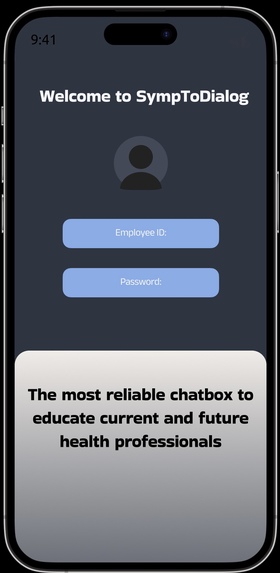
Login Screen
-
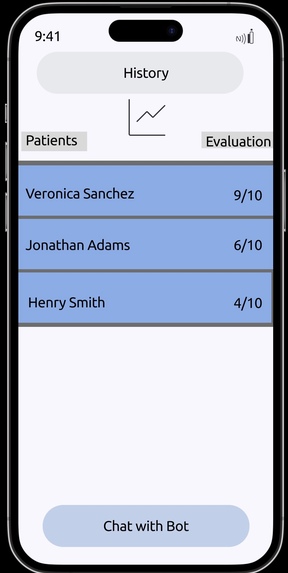
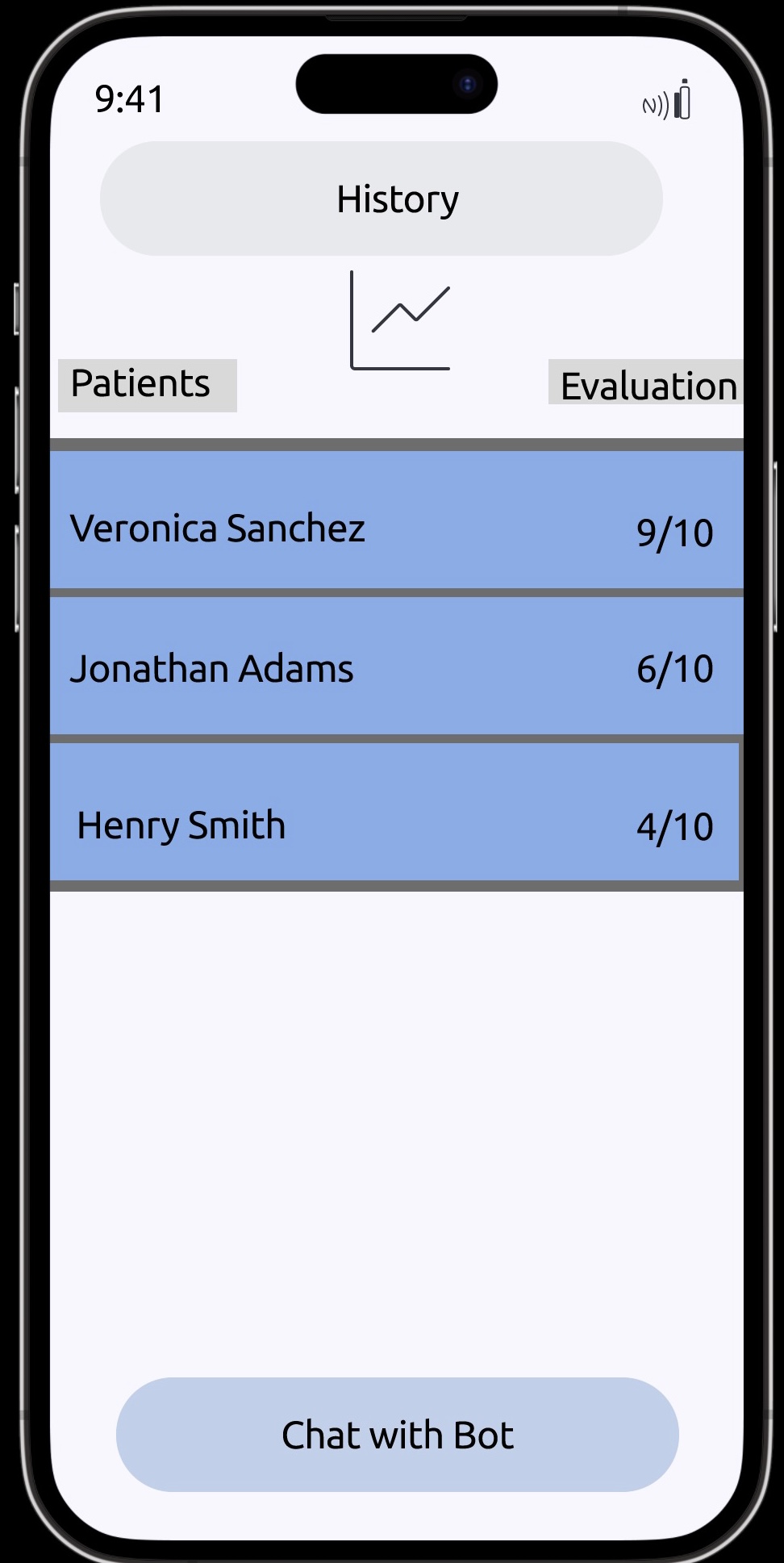
Chat History
-
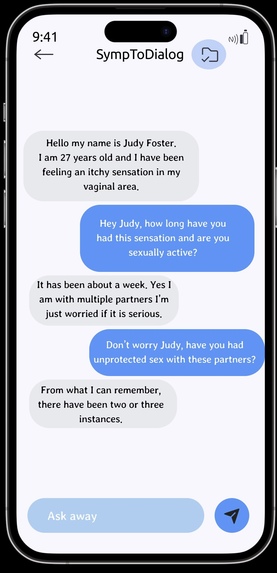
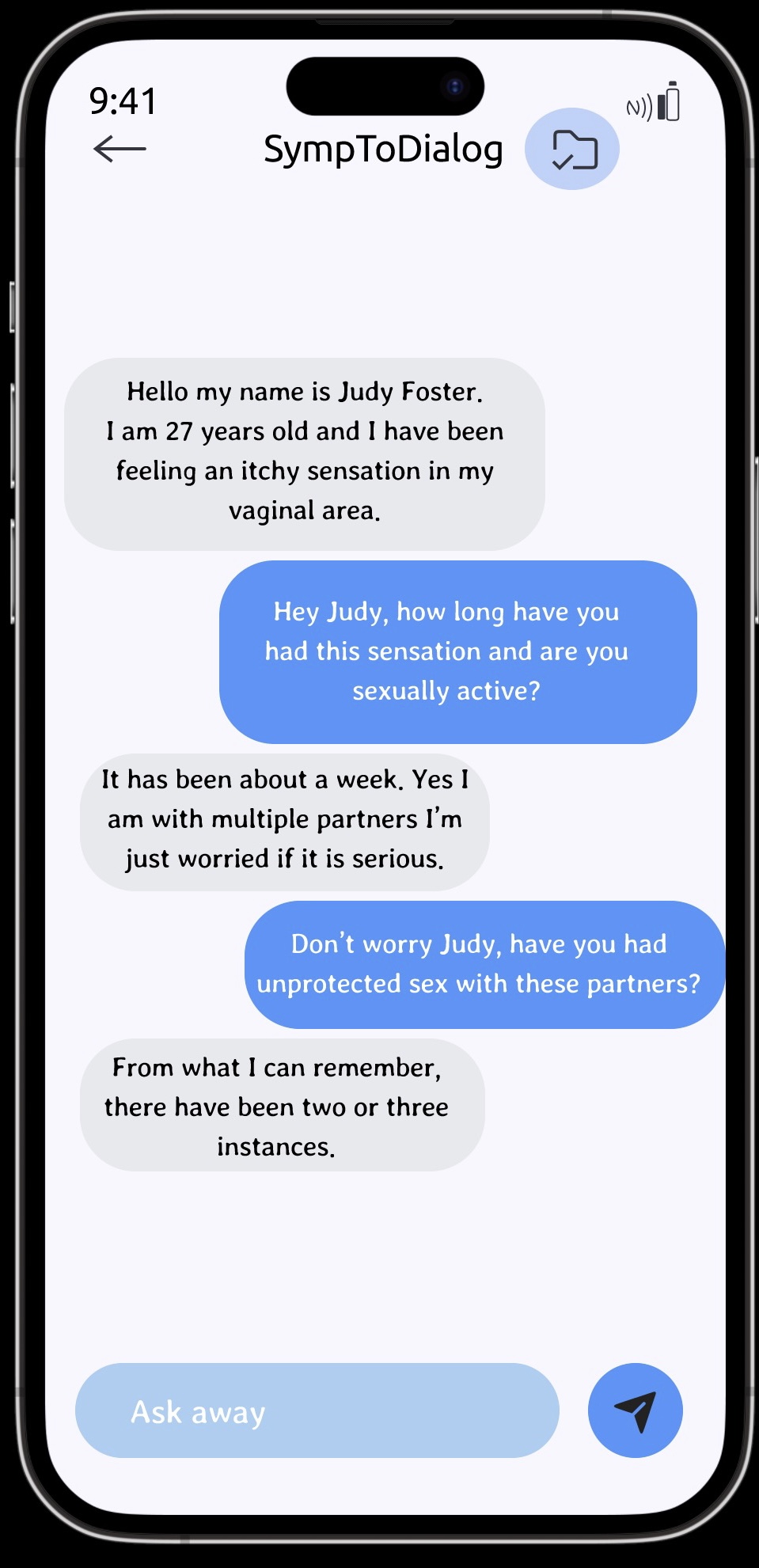
AI Chatbot

Inspiration
Our inspiration for SympToDialog came from the need to address the challenges medical professionals face when navigating conversations about STIs with patients. Recognizing that these discussions can be sensitive and complex, we sought to create a training tool that would promote confidence and enhance the skills of healthcare providers in diagnosing STIs.
What it does
SympToDialog is an AI-powered chatbot designed to simulate patient interactions during medical appointments. It offers a diverse range of personas with factors such as age, sexual orientation, ethnicity, cultural background, sexual behavior, geographic location, and biological factors. The chatbot engages in realistic conversations with medical professionals, allowing them to practice their communication and diagnostic skills in uncovering potential STIs.
How we built it
We built the SympToDialog project using a combination of technologies and tools. The project was developed using JavaScript, Node.js, and Next.js for the backend infrastructure and frontend implementation. Firebase was utilized for data storage, user authentication, and hosting. The OpenAI API played a crucial role in integrating the AI model for chatbot functionality. Figma was used for designing the user interface and visual components.
The development stack allowed us to create a robust and scalable application. Node.js provided the foundation for building the backend server, while Next.js facilitated server-side rendering and enhanced the user experience. Firebase served as the reliable and flexible platform for data management, authentication, and deployment. The OpenAI API was integrated to harness the power of AI language models for realistic conversations. Figma enabled the creation of a visually appealing and intuitive user interface.
Challenges we ran into
Due to time constraints, we were not fully able to implement as many components as we had wished for. One of the main challenges we encountered was fine-tuning the AI model to accurately comprehend and respond to medical professionals' inputs. This involved understanding the logic behind the OpenAI API and implementing an effective training process. Ultimatley, training the AI model would have required real-life examples of STI conversations between a medical professional and a patient, which was difficult to research and find online. Achieving the desired level of accuracy and context-awareness was a huge challenge that we would've wanted to research more about.
Another challenge was generating diverse and randomized personas that encompassed various determining factors for STIs. This required careful consideration of factors such as age, sexual orientation, ethnicity, cultural factors, sexual behavior, geographic location, and biological factors. Ensuring that the personas were realistic and represented a wide range of patient scenarios added complexity to the persona generation process.
Accomplishments that we're proud of
We are incredibly proud of the accomplishments we achieved throughout the development of the SympToDialog project. One of our biggest accomplishments was successfully utilizing a combination of multiple tools and technologies to create a fully functional application. Considering that team members had varying levels of software development experience, including two first-year computer science majors, this achievement holds even more significance. It demonstrates our ability to collaborate effectively, learn new technologies, and overcome challenges as a diverse team.
What we learned
Throughout the development of SympToDialog, we gained valuable knowledge and insights that will benefit us in future projects. We expanded our proficiency in JavaScript, Node.js, Next.js, Firebase, OpenAI API, and Figma. This hands-on experience allowed us to deepen our understanding of these technologies and improve our overall development skills. The project required us to quickly adapt to new tools and technologies. We embraced the challenge and successfully learned and implemented unfamiliar technologies, enhancing our ability to learn and adapt to future technology advancements.
What's next for SympToDialog
SympToDialog has great potential for further development and enhancements. Here are some ideas for what's next:
Expanded Knowledge Base: Continuously updating and expanding the AI model's medical knowledge base will ensure it stays up-to-date with the latest research, diagnostic criteria, and treatment guidelines. This can involve incorporating new information and insights from medical professionals and staying informed about advancements in the field of STIs.
Enhanced Persona Generation: Refine the randomized persona generation system to encompass an even broader range of determining factors for STIs. This can include factors such as socioeconomic status, education level, access to healthcare, and language preferences, making the training tool even more realistic and comprehensive.
Built With
- canva
- figma
- firebase
- javascript
- next.js
- node.js
- openai

Log in or sign up for Devpost to join the conversation.