🌌 Inspiration
During exam seasons and high-stress academic periods, students often experience physical discomfort but struggle to understand whether their symptoms are temporary, stress-related, or require medical attention.
Existing health tools typically fall into two extremes:
- Overly complex platforms filled with medical jargon
- Generic AI chatbots that provide answers without clarity or accountability
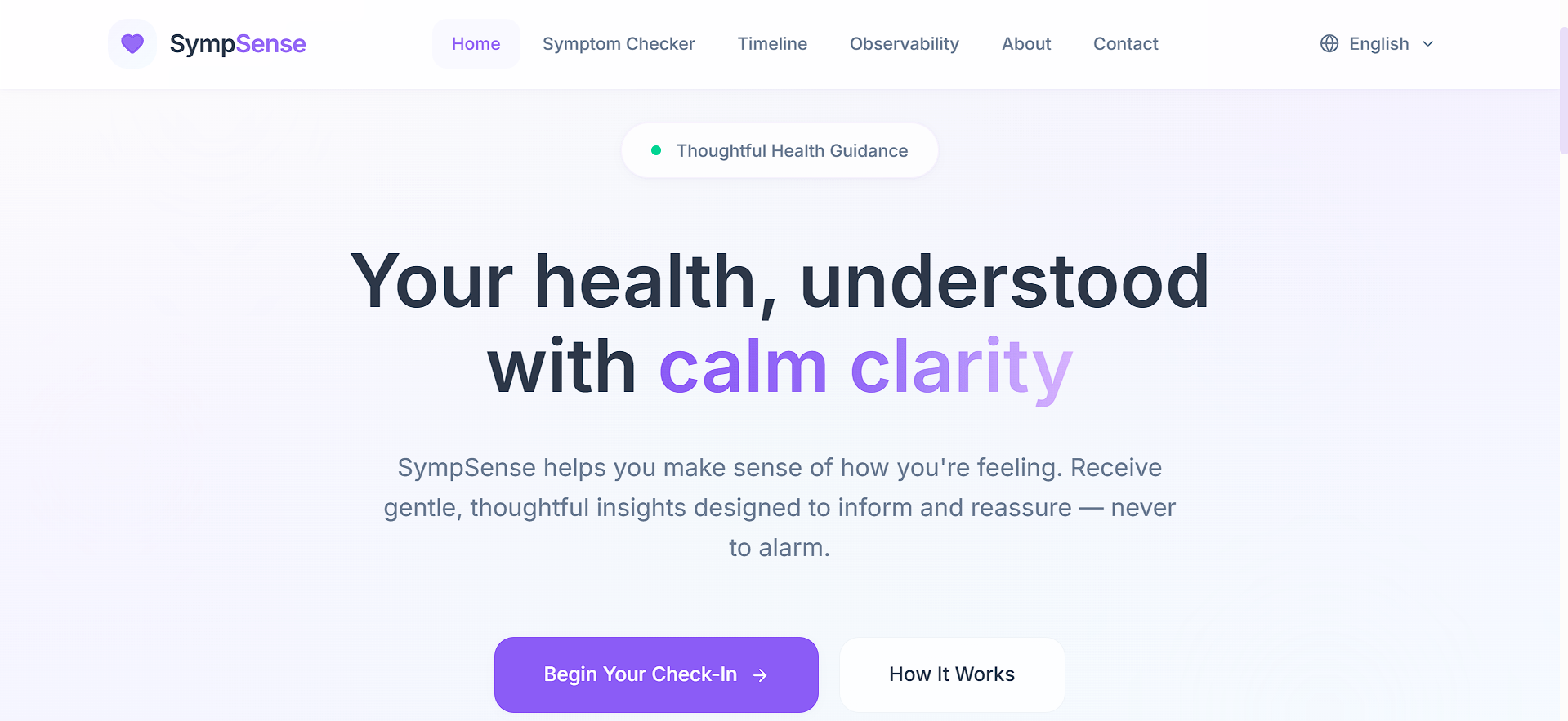
We initially set out to build a calm, student-first symptom awareness tool.
However, during development, we identified a deeper issue:
Most AI systems in healthcare operate as black boxes — users receive outputs, but have no visibility into how or why those outputs are generated.
This led us to rethink the system itself.
👉 SympSense evolved into a transparency-first health AI assistant focused on clarity, safety, and trust.
🚀 What it does
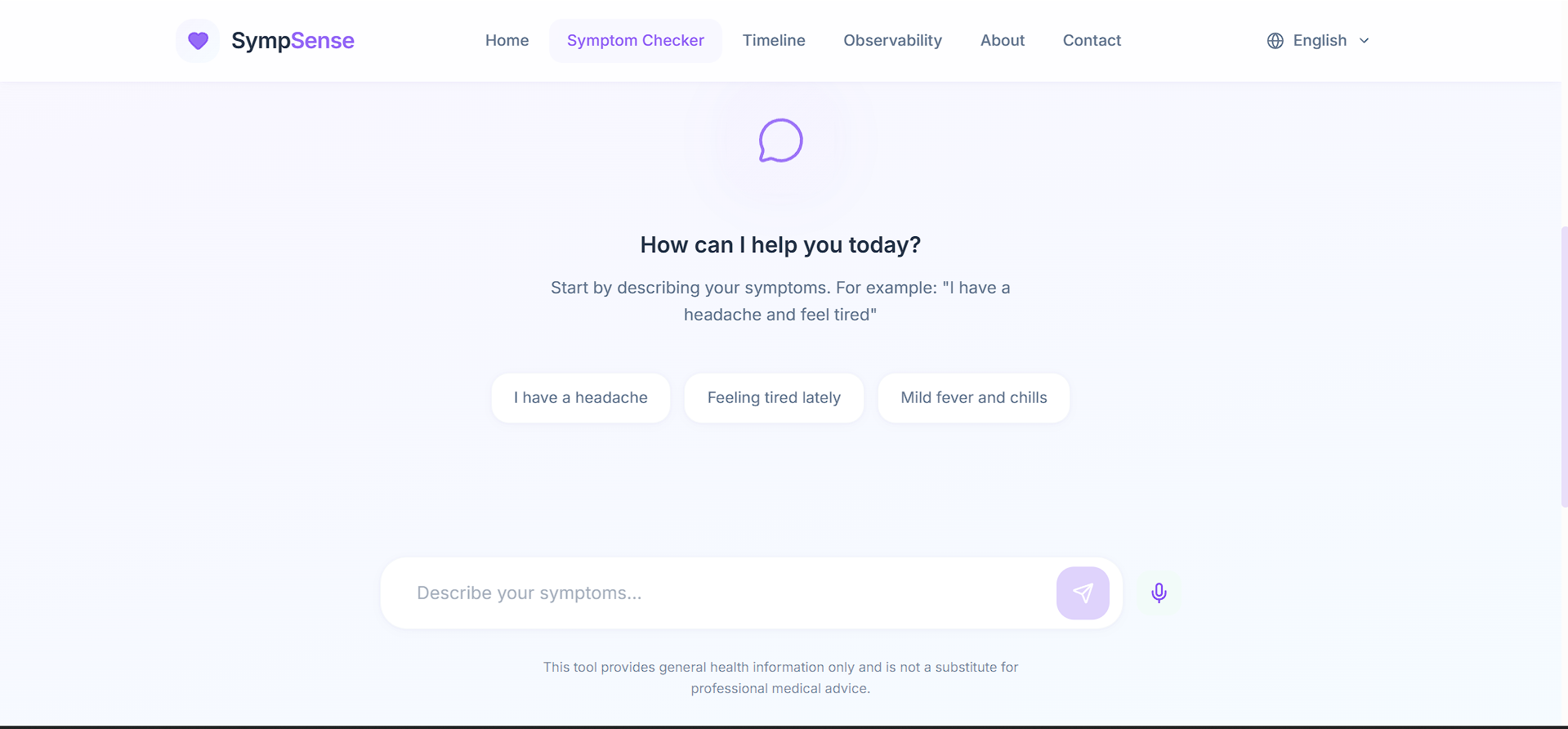
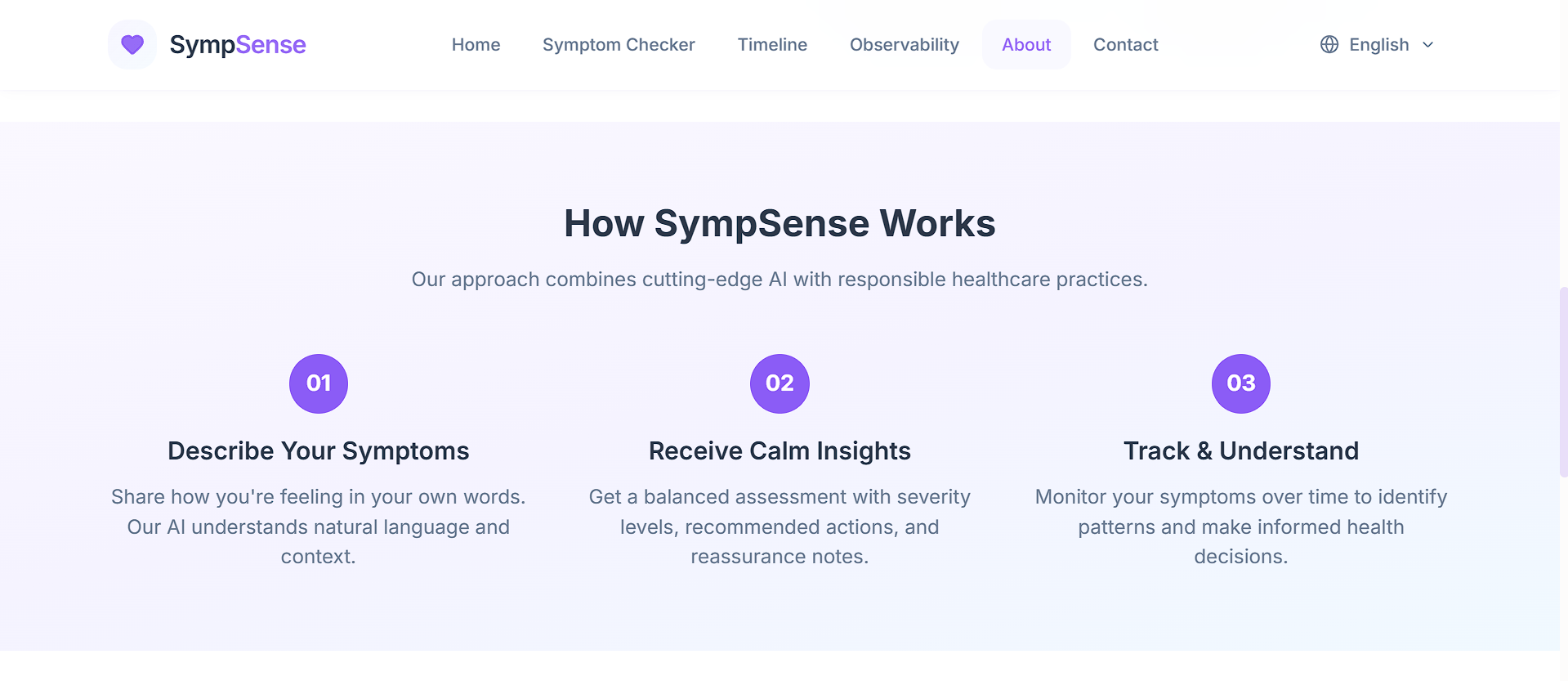
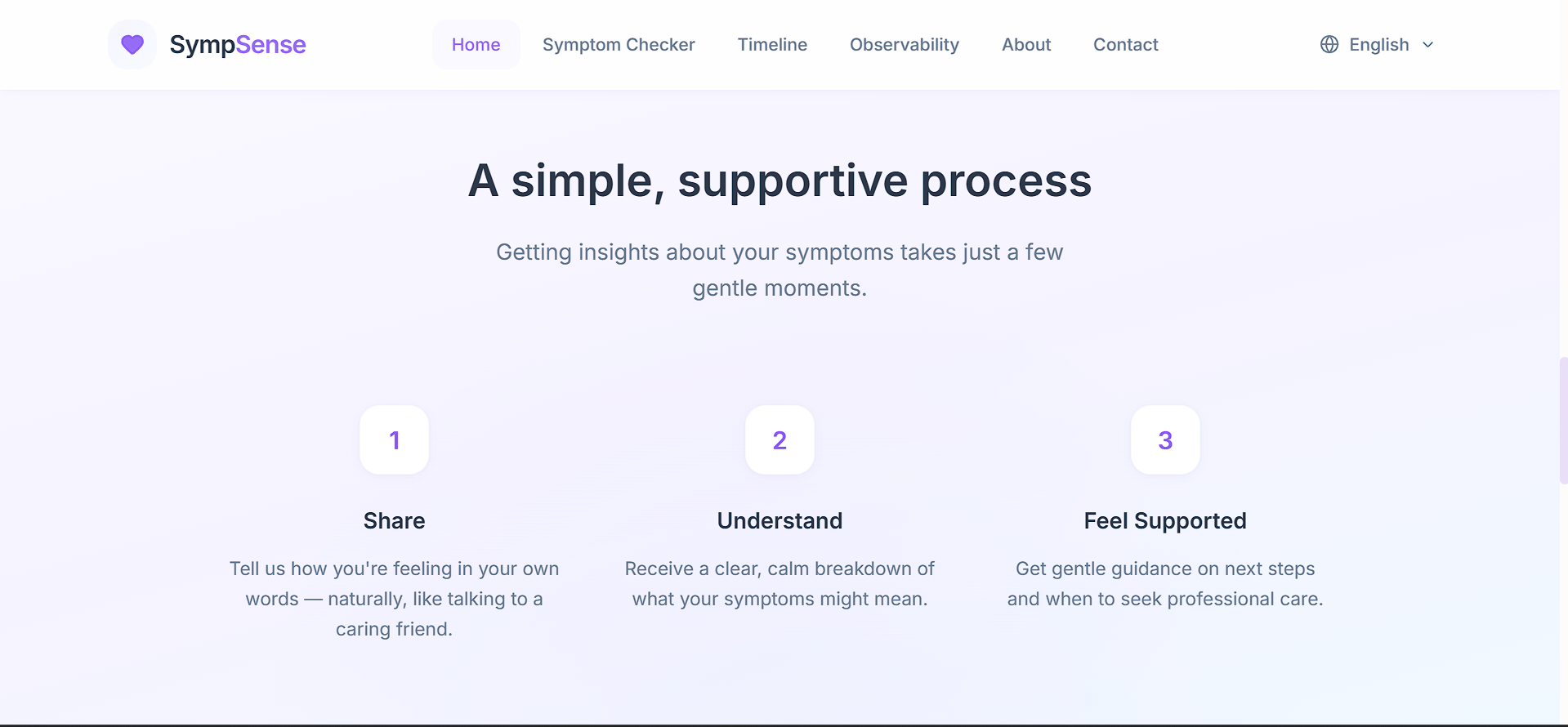
SympSense is a non-diagnostic AI health assistant that helps users:
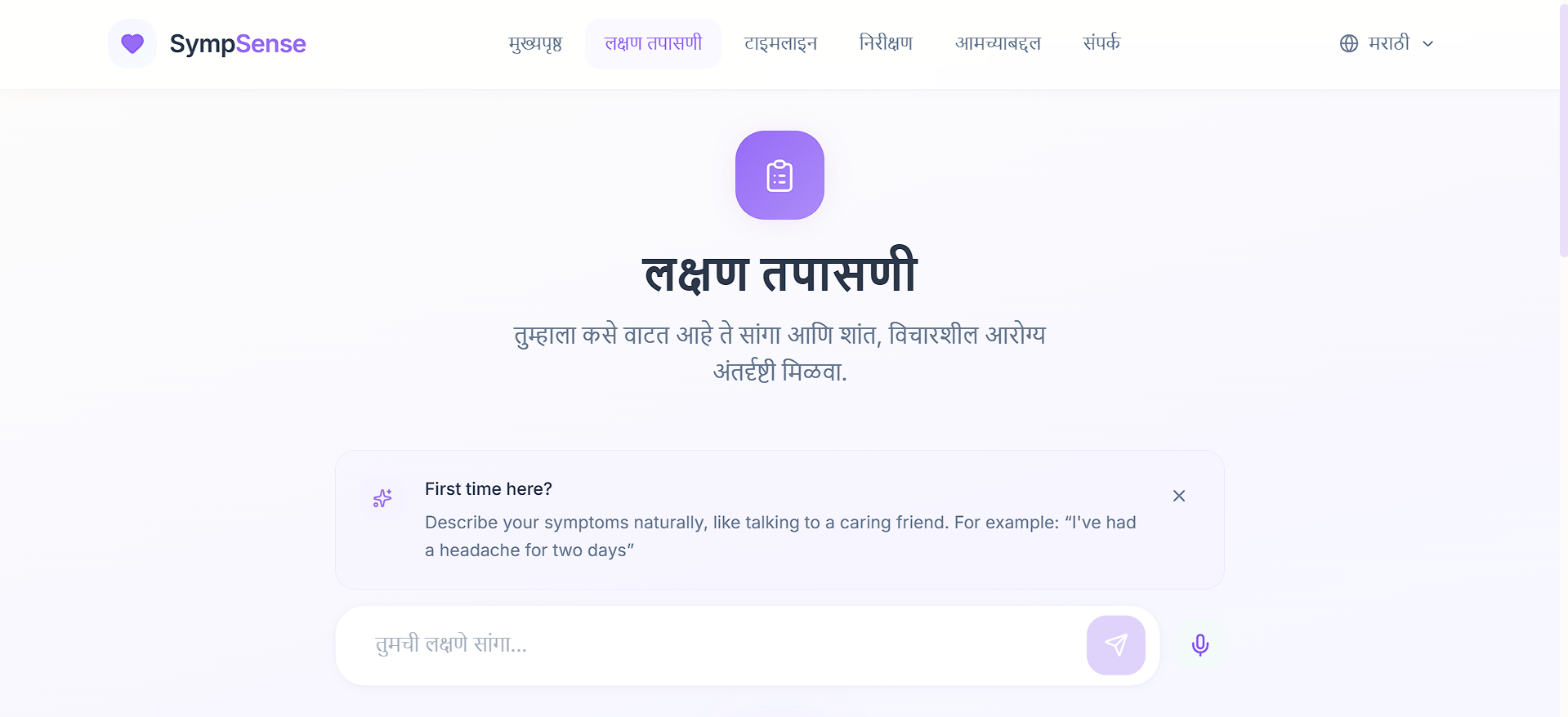
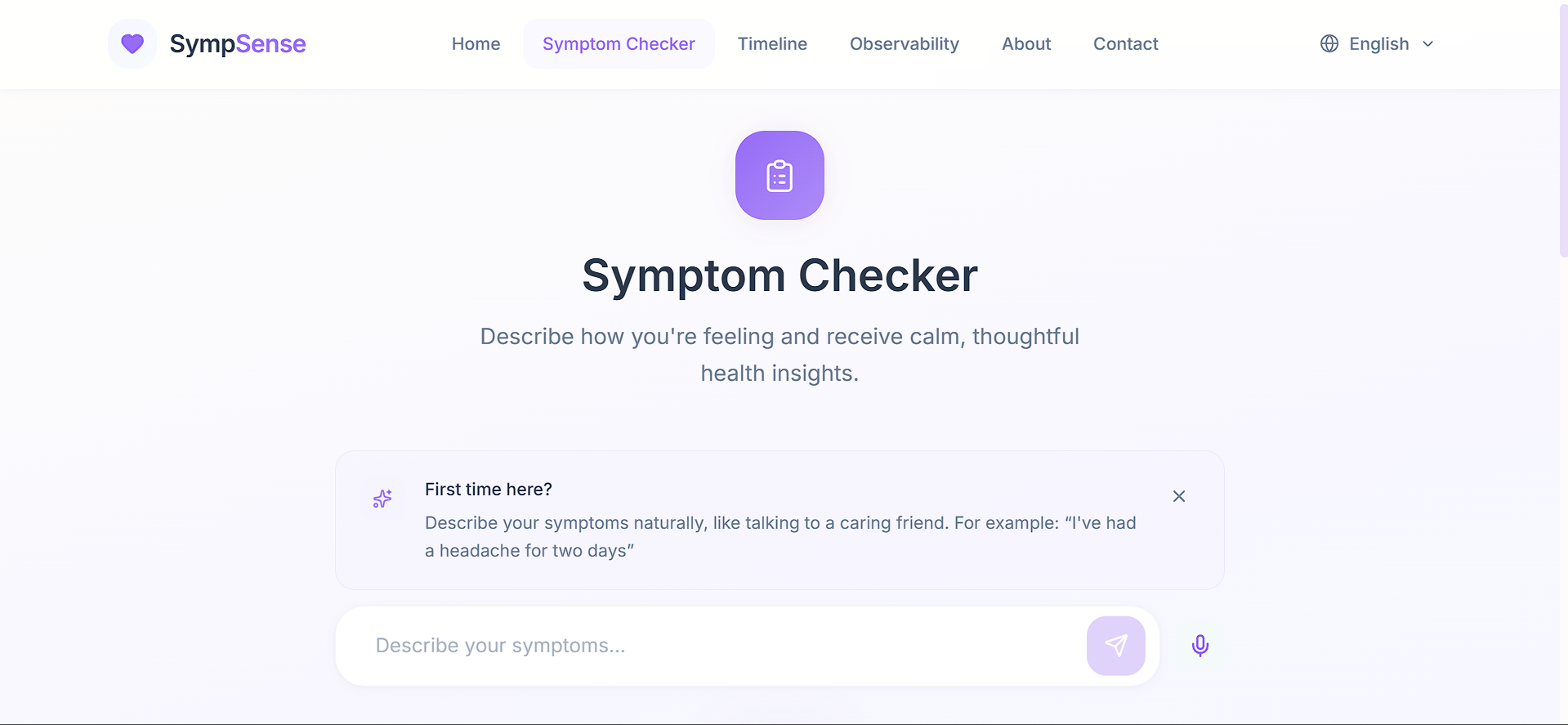
- 🧠 Describe symptoms naturally using text or voice
- 💬 Receive clear, structured, easy-to-understand explanations
- ⚠️ Understand whether symptoms can be monitored or require attention
- 🚨 Get guidance for potentially serious conditions
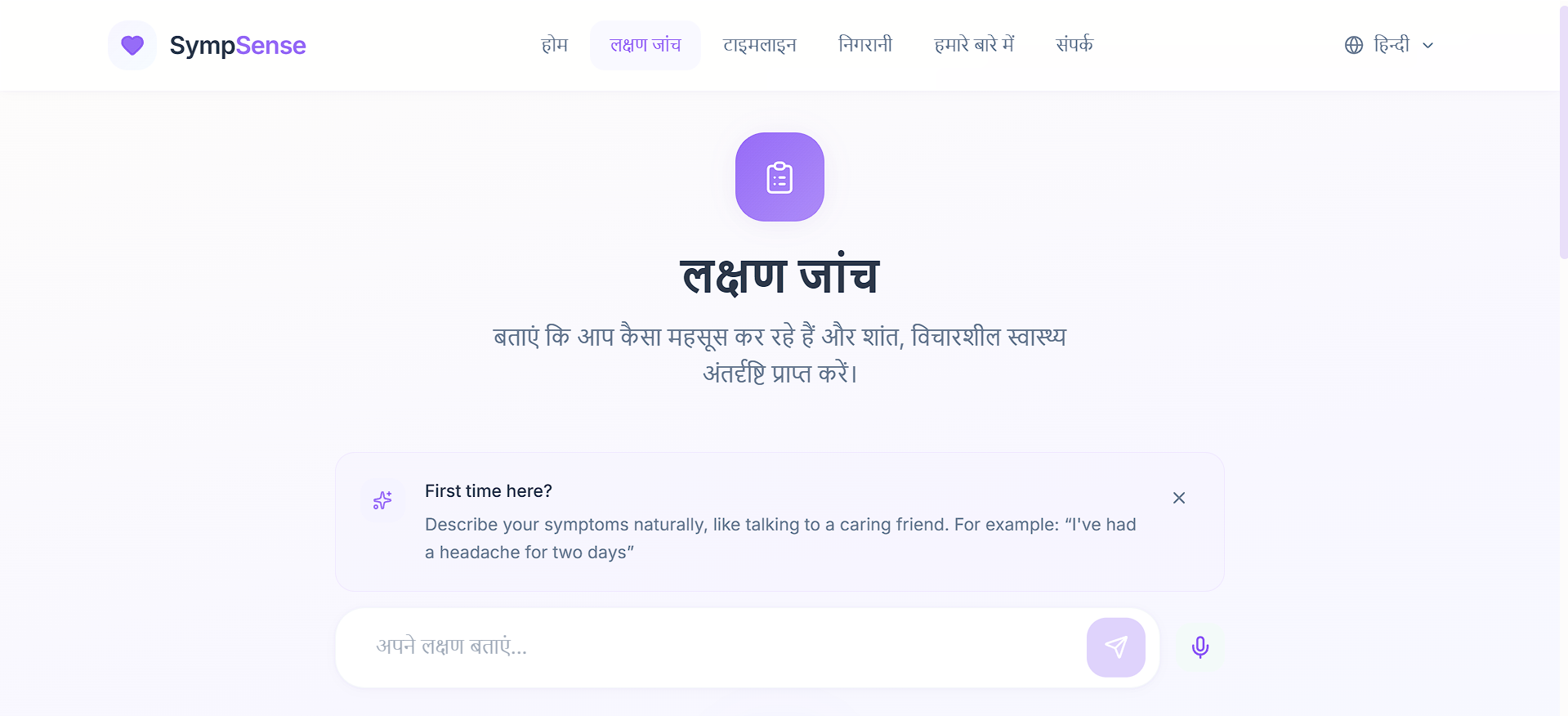
- 🌍 Access multilingual support for improved accessibility
🔥 What makes SympSense different
Most AI health tools optimize for generating answers.
SympSense is designed to optimize for understanding, safety, and user trust.
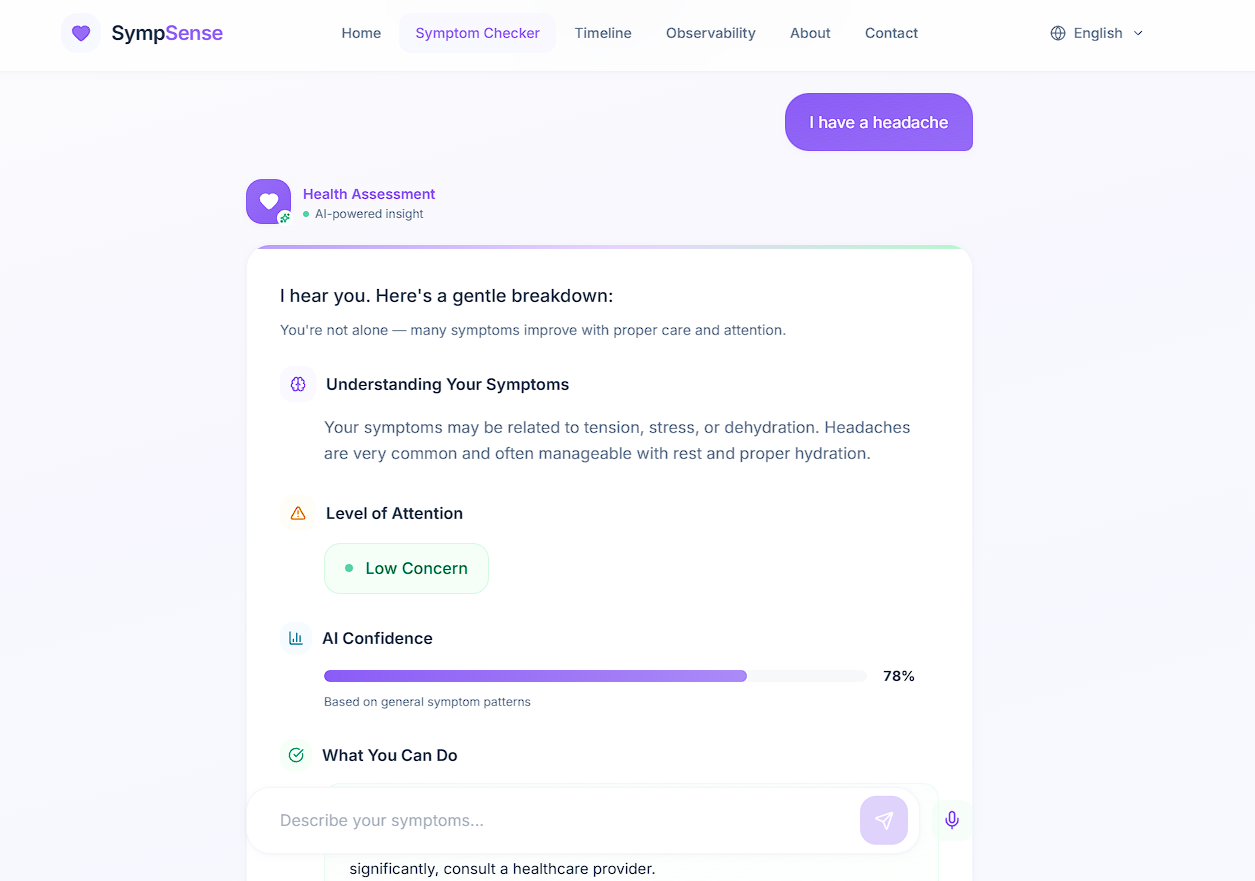
🧠 Structured AI Understanding
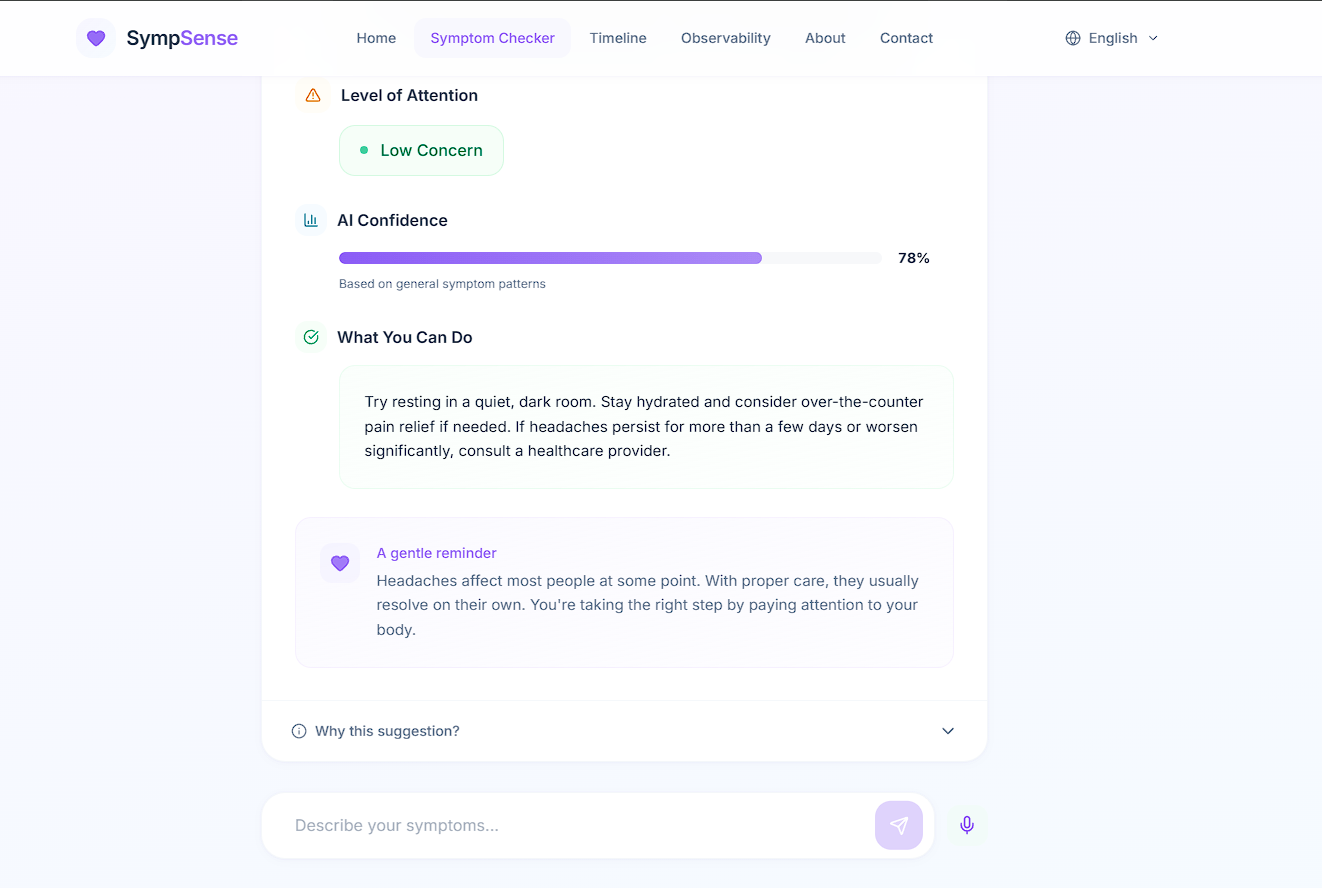
Instead of long, unstructured responses, outputs are organized into:
- Clear explanation
- Severity level (Low / Moderate / High)
- Confidence indicator
- Recommended next steps
👉 This reduces cognitive overload and helps users make clearer decisions.
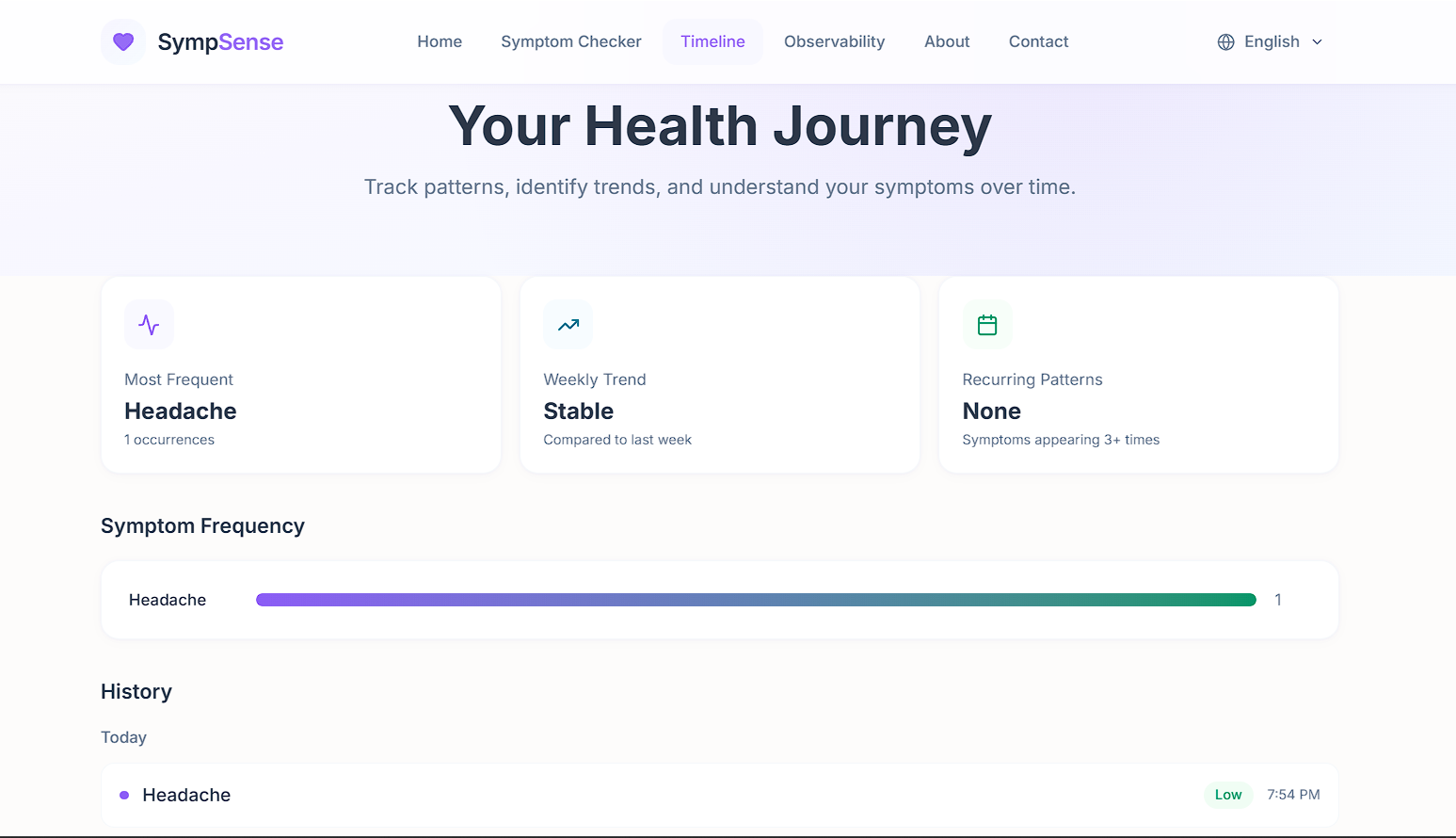
🕒 Symptom Timeline & Pattern Awareness
- Tracks symptoms over time
- Identifies recurring patterns
- Enables continuous health awareness
👉 Moves beyond one-time queries to longitudinal understanding
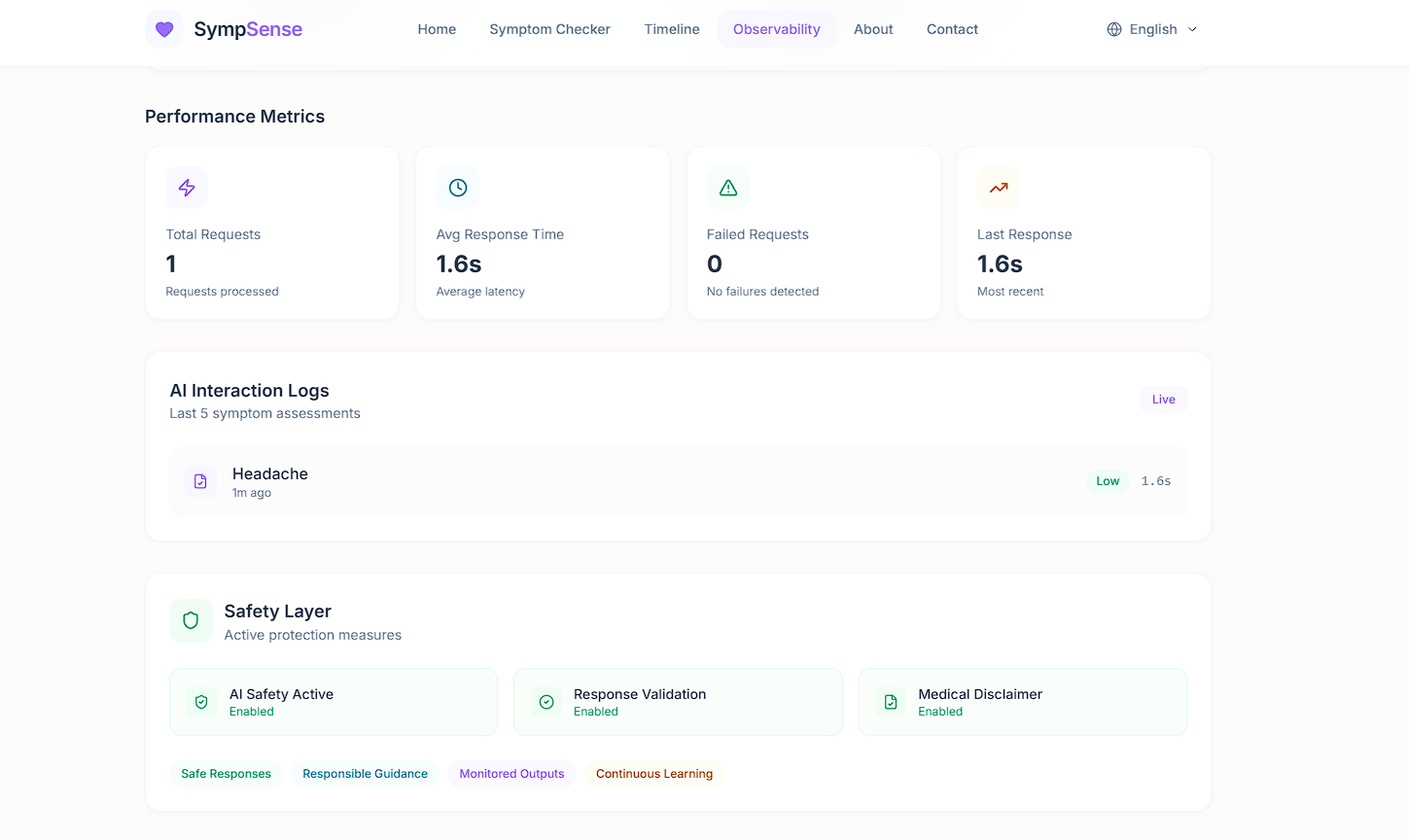
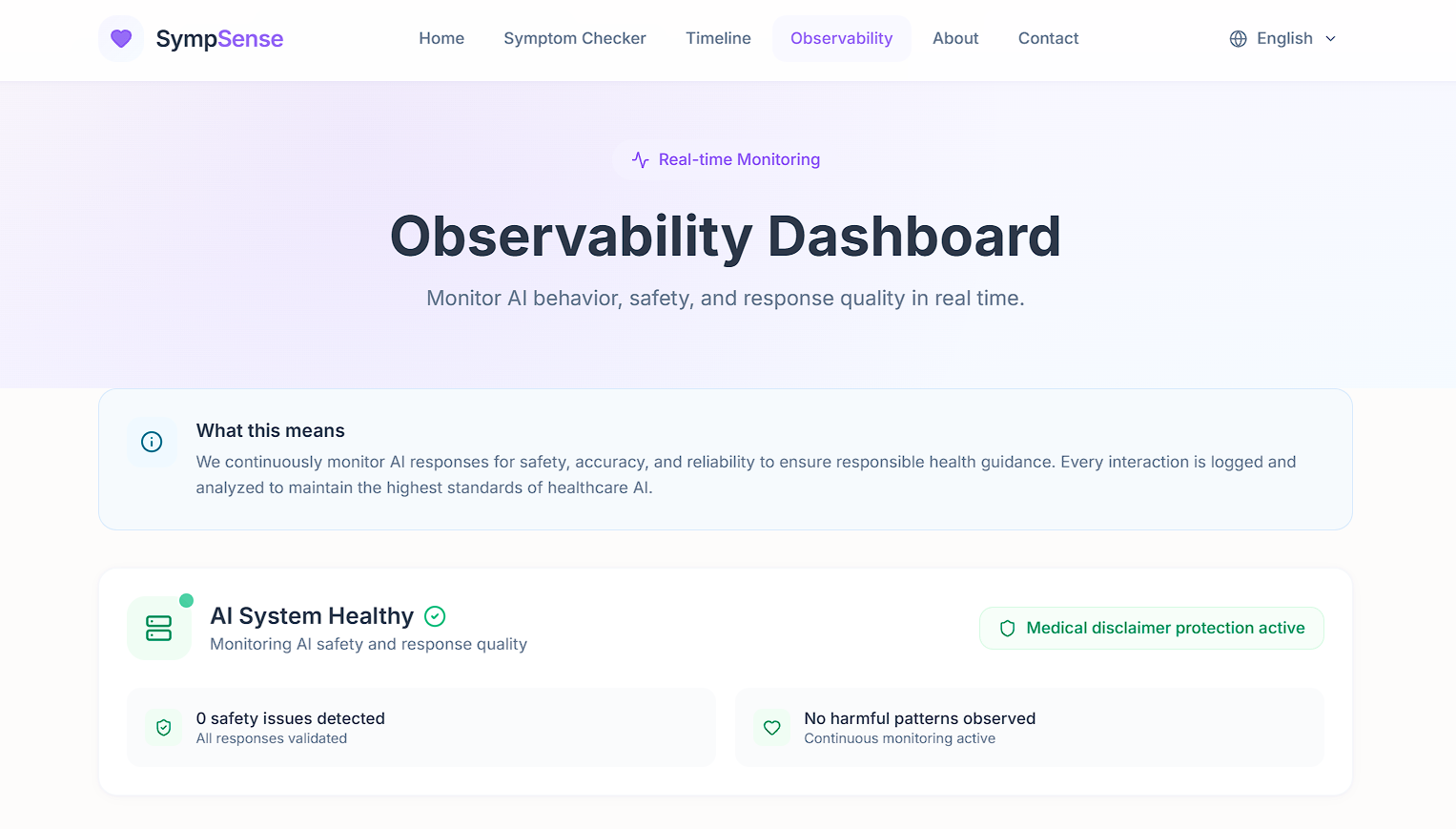
📊 Observability Layer (Core System Thinking)
SympSense introduces an observability layer that monitors:
- Response latency
- System behavior
- Safety-related signals
👉 This shifts the AI from a black-box responder → a monitored system
This serves as a foundation for deeper reliability and safety evaluation.
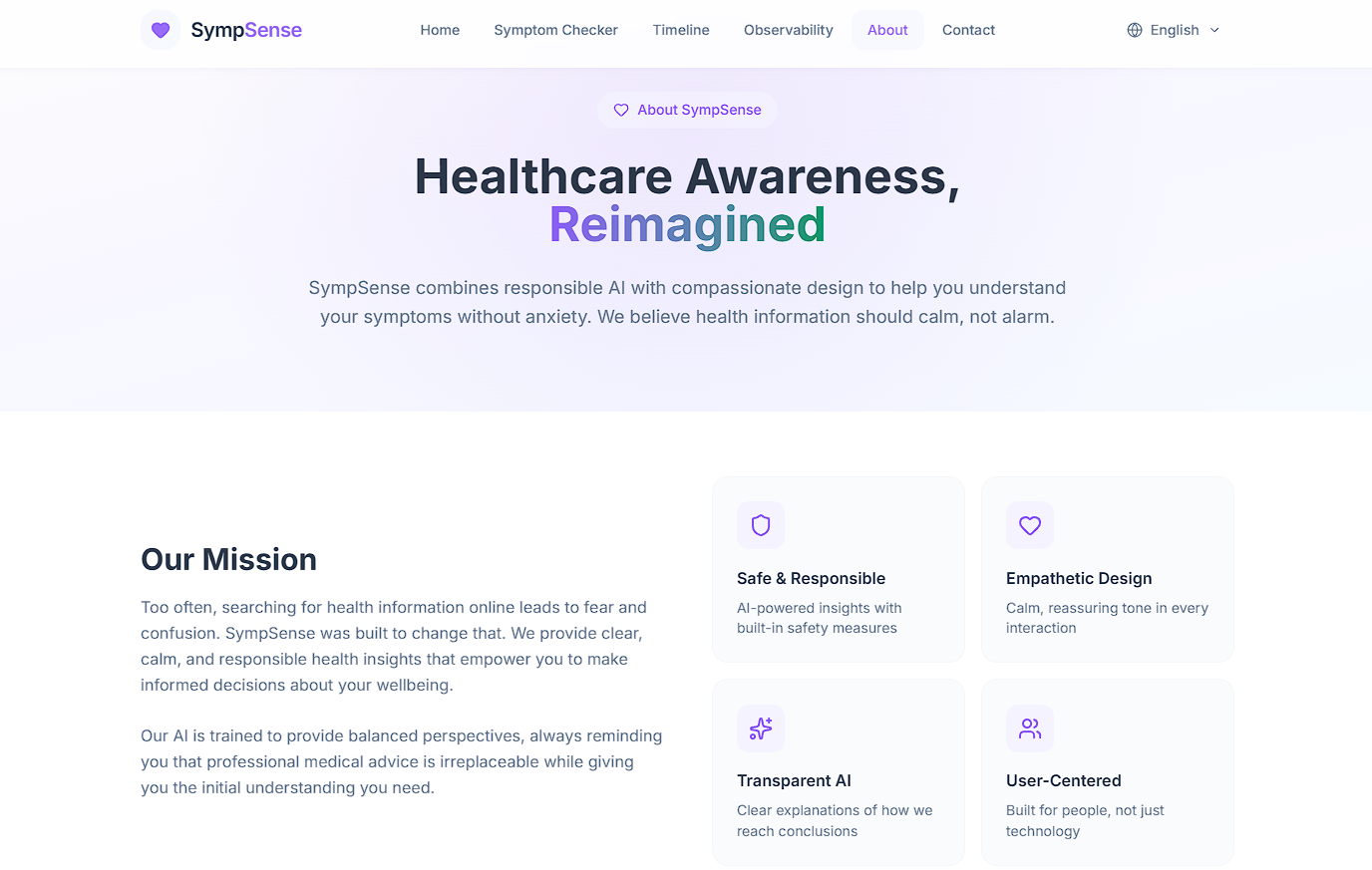
🛡️ Safety & Transparency Layer
- Detection of potentially high-risk symptoms
- Escalation guidance for critical scenarios
- “Why this response?” explanation panel
- Clear non-diagnostic boundaries
👉 Designed to inform responsibly without creating panic or misinformation
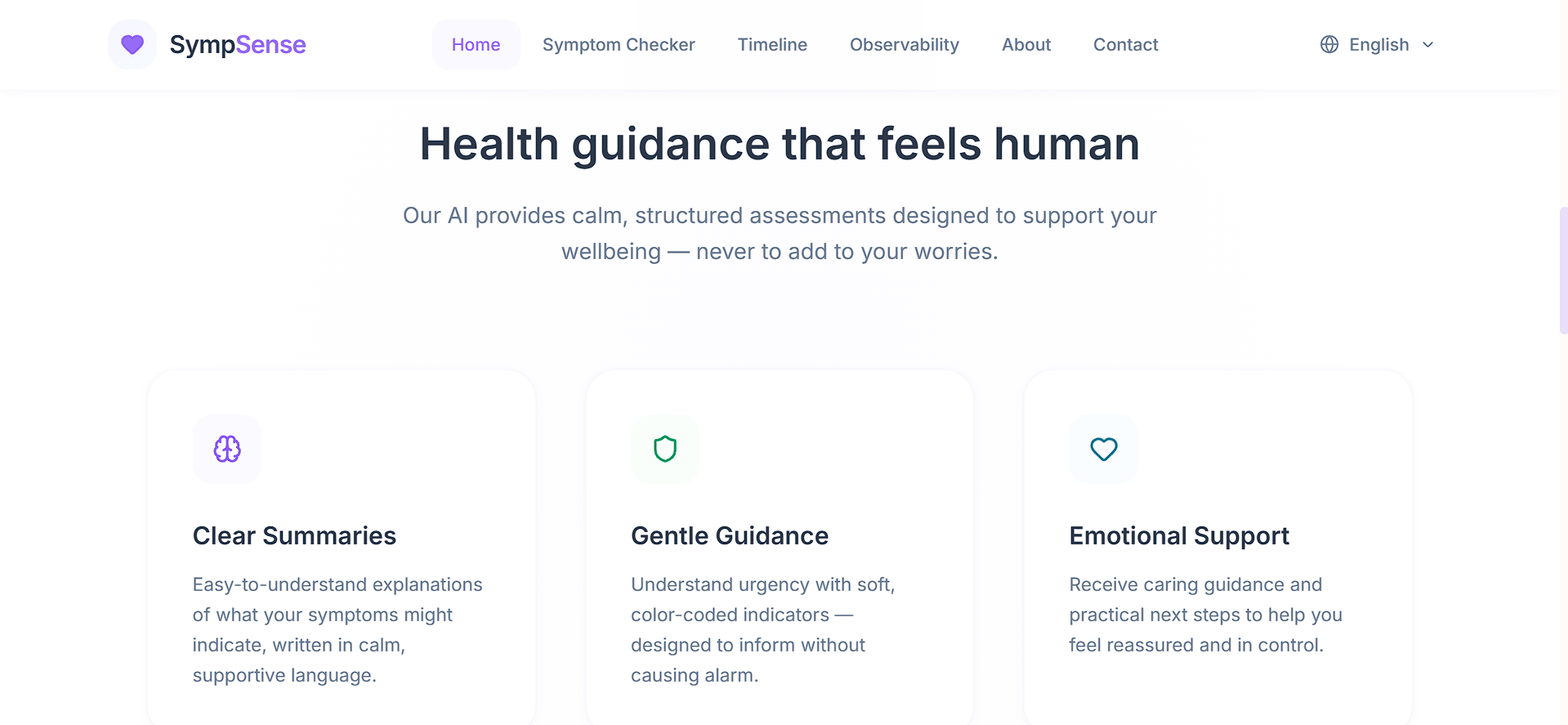
🧘 Calm, Human-Centered UX
- Minimal, soft interface designed to reduce anxiety
- Emotion-aware tone and microcopy
- Accessible and inclusive interaction design
👉 Focused on supporting users during uncertainty
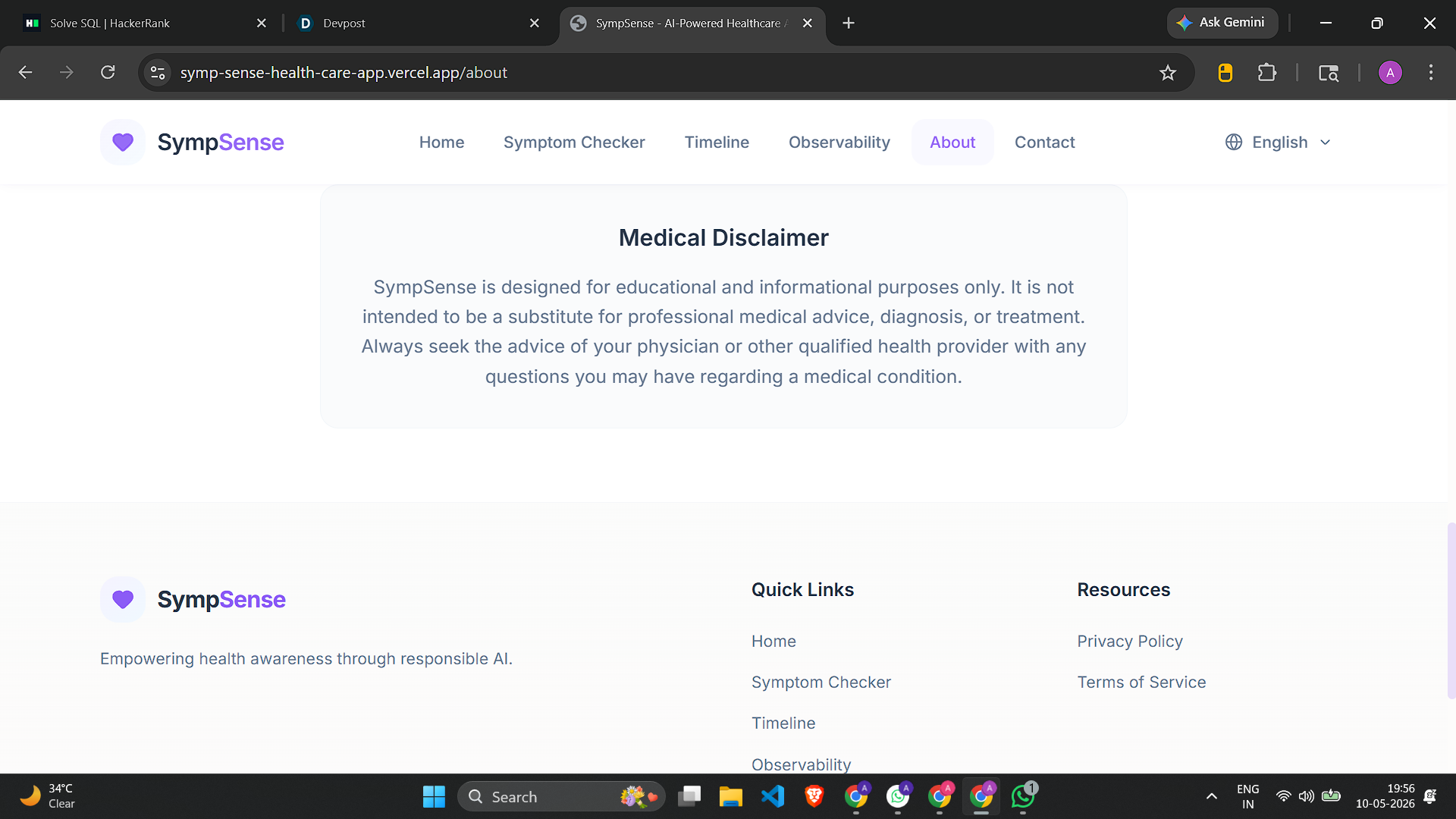
⚠️ Important: SympSense does not provide medical diagnoses. It supports awareness and encourages consultation with healthcare professionals.
🏗️ How we built it
Frontend
- TypeScript, HTML, Tailwind CSS
- Component-based architecture
- Mobile-first, responsive design
AI & Backend
- Google Gemini API for natural language understanding
- Lightweight backend for secure AI interaction
- Structured response formatting layer
Observability System
- Datadog integration for:
- Request/response logging
- Latency tracking
- System behavior monitoring
- Request/response logging
🔄 Finale Round Improvements
To align with the refinement-focused finale round, we prioritized depth and system design:
- 🔄 Refactored into a more scalable architecture
- 🧠 Introduced structured AI outputs (severity, confidence, actions)
- 🕒 Added symptom timeline and pattern tracking
- 📊 Integrated observability monitoring
- 🚨 Strengthened safety and escalation handling
- 🎨 Improved UI/UX for clarity and calm interaction
- 🌍 Enhanced multilingual accessibility
👉 The system evolved from a basic chatbot into a more structured and responsible AI experience
⚙️ Challenges we ran into
- Designing AI responses that inform without increasing anxiety
- Maintaining non-diagnostic boundaries while remaining useful
- Defining meaningful observability beyond simple logging
- Balancing system monitoring with user privacy
- Avoiding over-engineering while preserving usability
🏆 Accomplishments that we're proud of
- Built a production-style AI system, not just a prototype
- Introduced structured outputs for better user understanding
- Integrated observability into an LLM workflow
- Designed a calm and accessible experience for sensitive use cases
- Balanced intelligence, safety, and usability effectively
📚 What we learned
- AI systems in healthcare must be understandable, not just accurate
- User trust depends on both UX design and system transparency
- Responsible AI requires system-level thinking, not just model integration
- Observability enables proactive trust, not just debugging
🔮 What’s next for SympSense
- Advanced confidence calibration and reliability scoring
- Hallucination awareness and response validation
- Long-term personalized health insights
- Clinician-facing dashboards for oversight
Real World Impact
SympSense addresses a global challenge in digital healthcare:
• Lack of trust in AI-driven medical tools
• Over-reliance on black-box systems
• Anxiety caused by unclear or overwhelming outputs
By introducing explainability, structured outputs, and observability, SympSense improves:
• User understanding and confidence
• Responsible AI adoption in healthcare
• Early awareness and better decision-making
This makes it not just a tool, but a foundation for safer AI systems in real-world healthcare environments.
Built With
- datadog
- datalog
- google-cloud-run
- google-gemini-api
- html
- html5
- tailwind-css
- typescript
- vercel
- vite
- web-speech-api


Log in or sign up for Devpost to join the conversation.