-
-
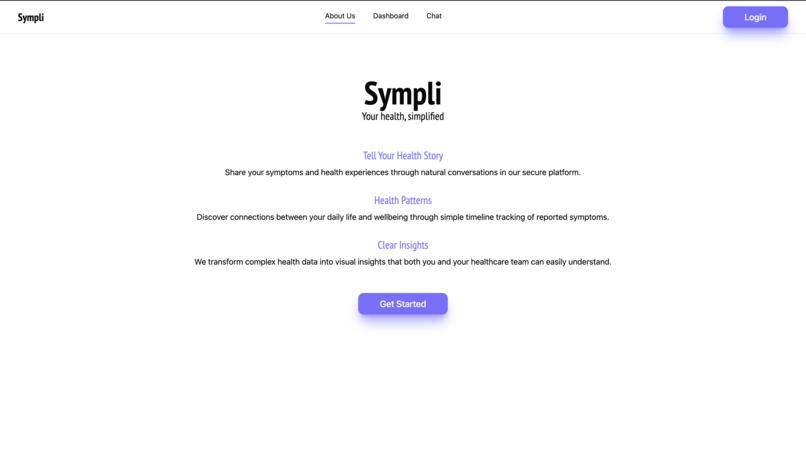
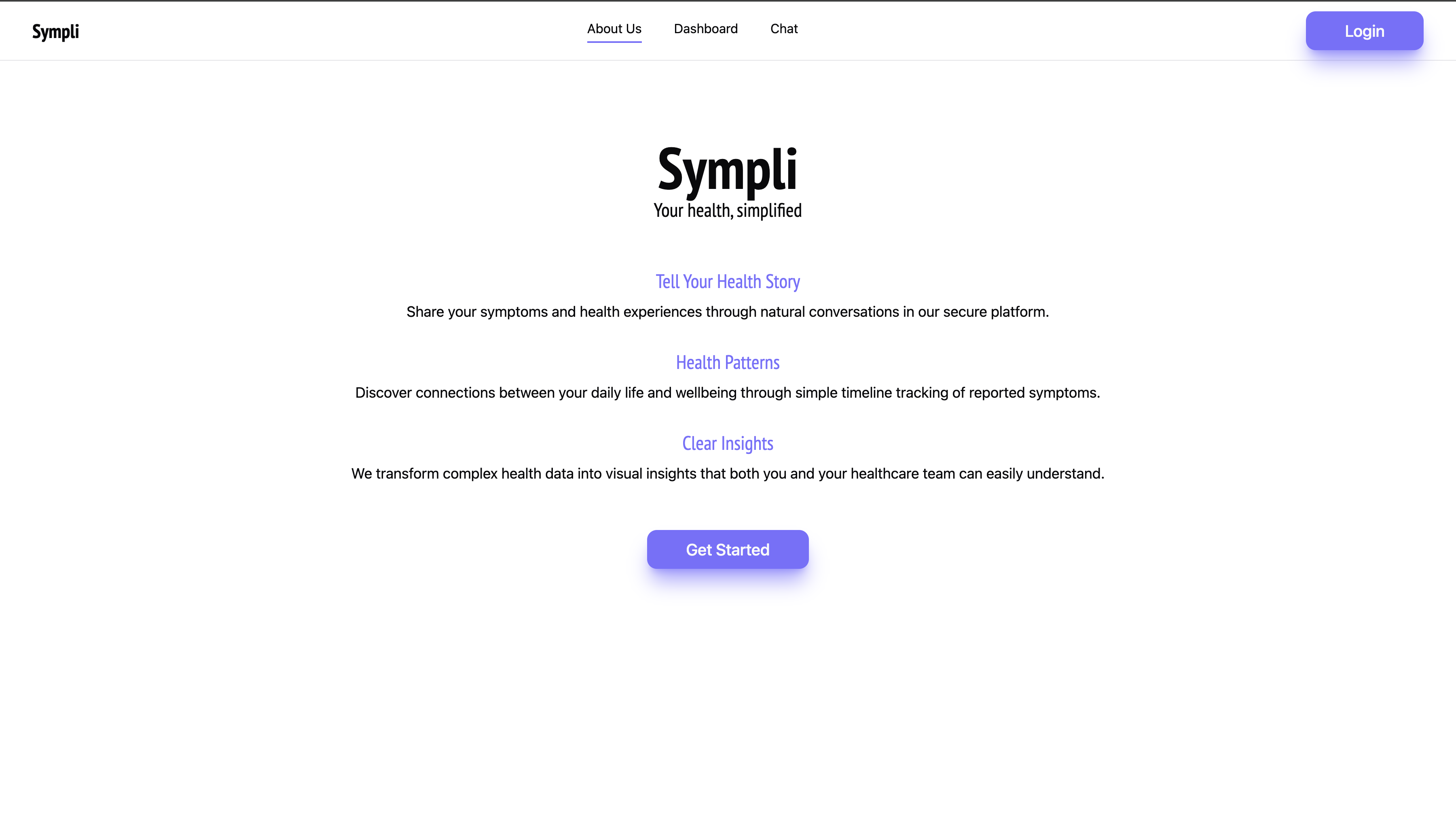
About Us Page and Vision for Sympli
-
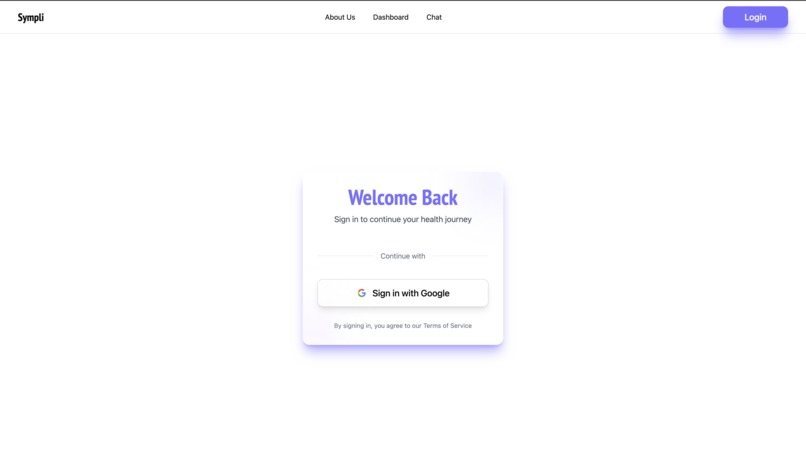
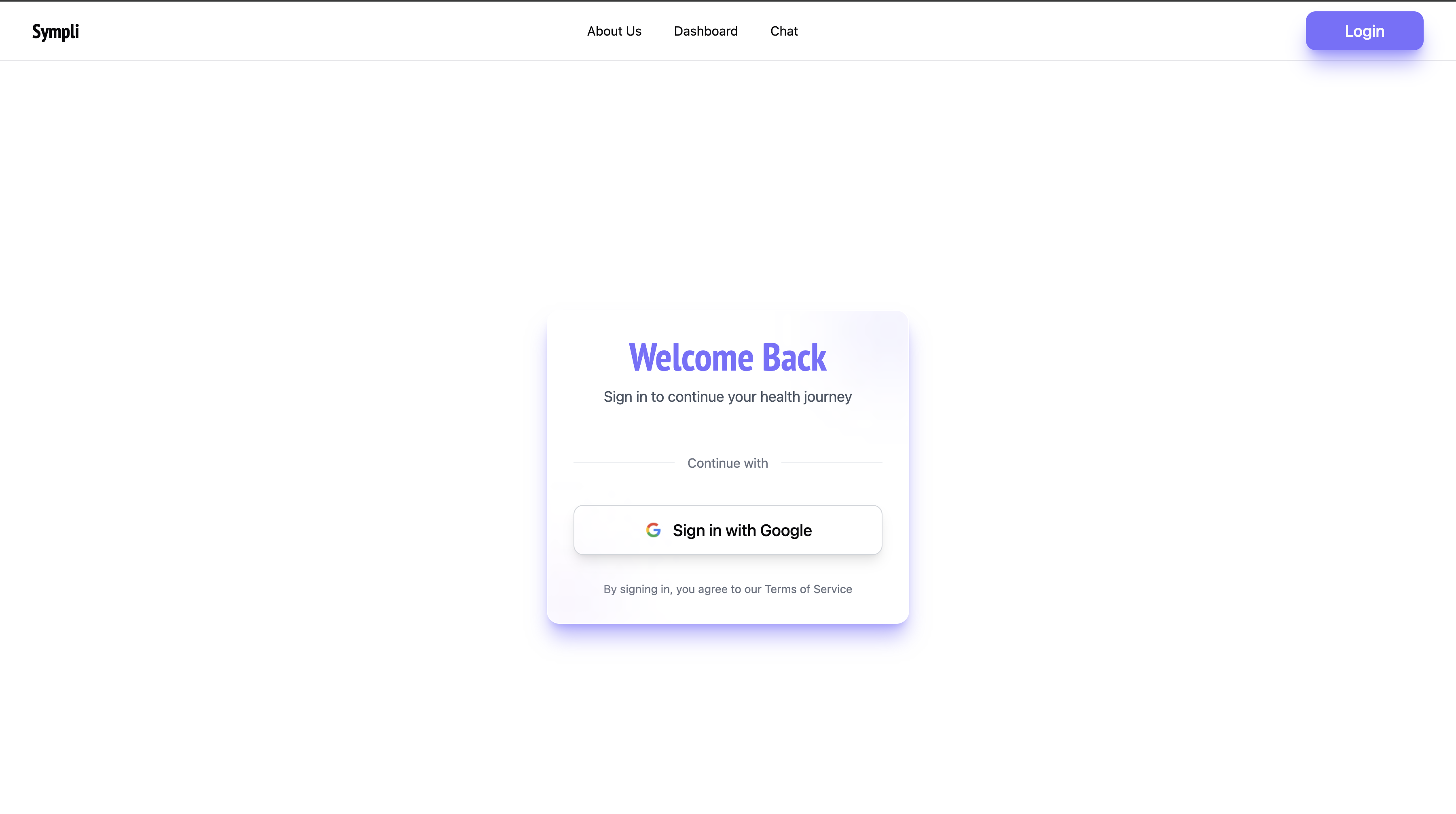
Login Page for Patients and Physicians
-
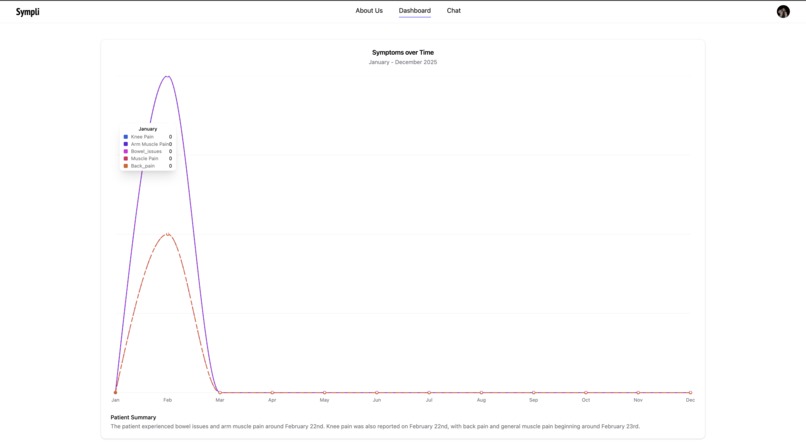
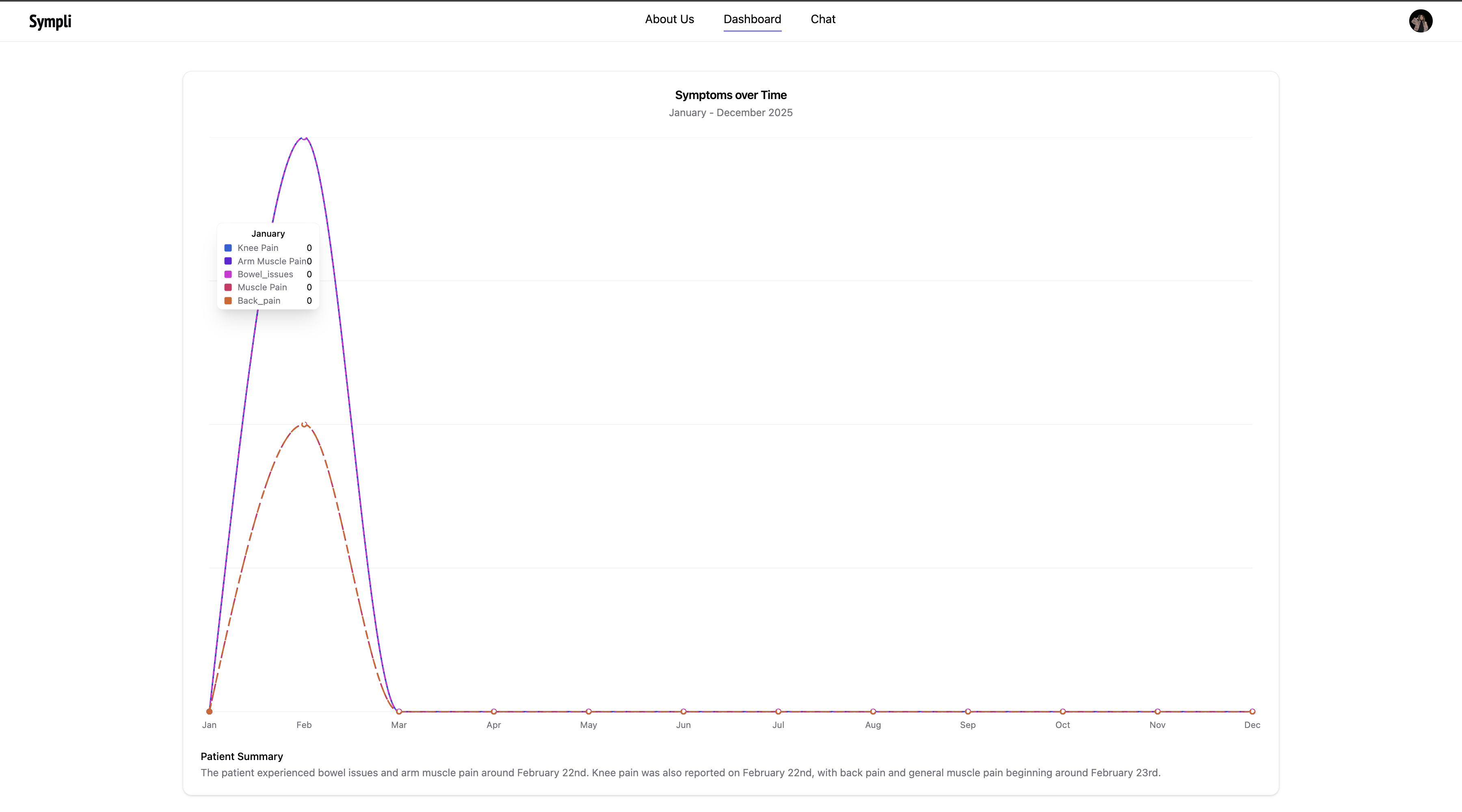
Graphical Representation of Patient Reported Symptoms
-
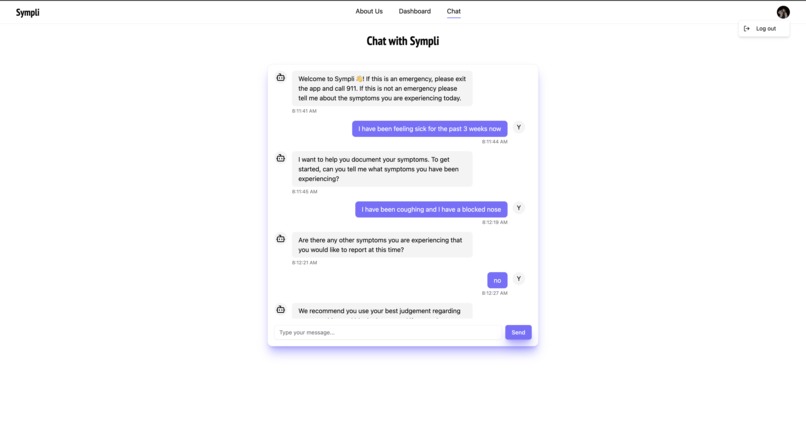
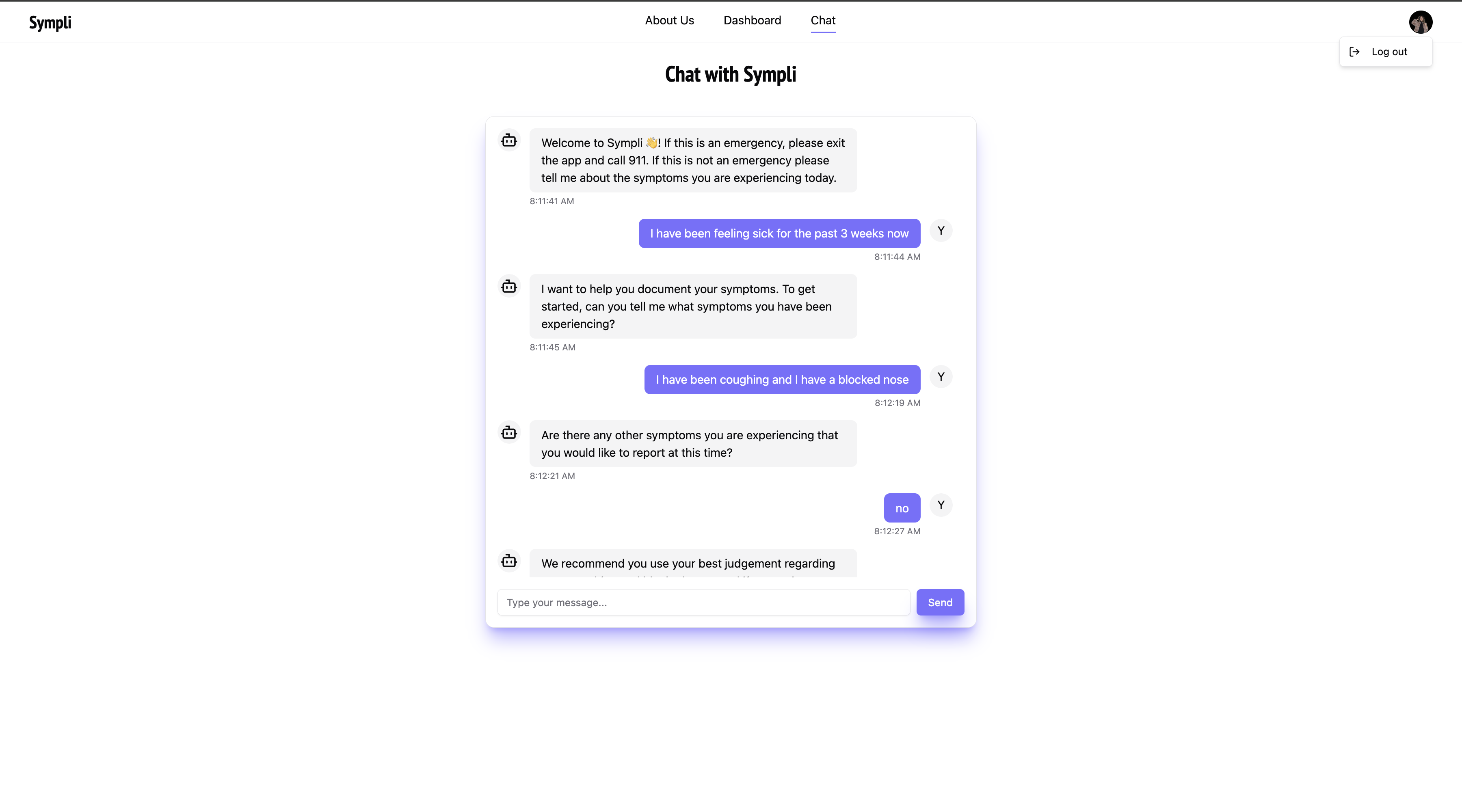
Chat function with Sympli
Tracks:
- Healthcare
- GenAI
Inspiration
The inception of Sympli was developed based on a conversation with a medical professional indicating a need for a real-time reporting platform for patient symptoms that doctors could use to assess chronic illness symptom progression overtime. Further research revealed that in the current healthcare landscape, 60% of Americans are diagnosed with at least one chronic condition, resulting in socioeconomic impacts and cost $4.1 trillion in healthcare expenditures annually. However, traditional reporting of symptoms are fragmented and delayed, hindering the impact that timely reporting could have on patient diagnosis and treatment. As such, our goal was to develop a web-application that could be used to solve this deficit in the medical field.
What it does
Our solution to this problem is Sympli, a web-based application designed to change patient symptom reporting and chronic disease management. Utilizing real-time patient inputs, Sympli collects user data to have a record for continuous monitoring of symptoms. Leveraging the aptitude of Gemini 2.0, Sympli prompts users to be tailored to obtain detailed patient symptomatology. The medical data obtained undergoes text parsing and data cleaning to generate a comprehensive visual for users and practitioners on symptom patterns and clusters over an annual period.
How we built it
We developed Sympli using a modern web development stack centered around React and TypeScript for robust type safety and improved development experience. The frontend interface was crafted using Tailwind CSS for styling and Shadcn/UI components, creating a clean and responsive design. For data visualization, we implemented Recharts to display symptom trends over time in interactive graphs.
The backend infrastructure is powered by Firebase, providing authentication services and real-time data storage through Firestore. We integrated Google's Gemini 2.0 AI model to create an intelligent chatbot that engages with users, collecting detailed symptom information through natural conversation. The data is then processed and analyzed to generate visual patterns and insights that help both patients and healthcare providers monitor symptom progression effectively. Protected routes ensure data privacy, while Firebase's real-time capabilities enable immediate updates as users log their symptoms through the chat interface.
Challenges we ran into
When developing this application, some issues arose. First, we found that having user communication with a chat bot would not be feasible over SMS services due to verification processes in relation to phone numbers. Instead, we opted for a firebase authentication through a web application to verify user identification for accurate tracking of patient symptom logs. Additionally, we ran into issues of how best to display results from user input to physicians that would be beneficial when reviewing patient charts or during clinic. We realized that it would be best to use a line graph that shows the correlation between the month and the frequency of that symptom during each month, where each line represents a symptom reported by the user. This allows users and medical staff to quickly assess patient symptoms in a timely manner and easy of interpretation to providers to ensure efficiency in patient care.
Accomplishments that we're proud of
After completing this project, we are proud of our robust, modular code structure that isolates features into self-contained components. This design accelerated the addition of new functionality, simplified debugging and maintenance, and fostered better team collaboration—all while ensuring clear, consistent coding standards. From the inception of the project, our architecture supported seamless scalability and high performance, backed by comprehensive automated testing and clear documentation. Additionally, we are proud of how we secured third-party integrations and found an intuitive, interactive interface significantly enhance patient-provider communication. Overall, we are proud of our general accomplishment of developing a product that help bridge a gap in medicine by providing a resource that physicians can use to access patient healthcare over an accurate time period.
What we learned
For our group, this question varies as we had programmers of different levels in our team. Individually, Our team consisted of programmers with varying skill levels, allowing each member to gain valuable experience in areas like task management, Firebase integration, embedded data structures, full-stack development, and building generative AI applications based on custom prompts. Team members who had completed a hackathon also noted that they learned how to complete the work loads required of a hacklytics at a faster pace with endurance. Futhermore, group members learned the importance of having members who are from different technical backgrounds, as our different backgrounds in the field of medicine assisted in us identifying possible concerns that could arise for users or in the code.
What's next for Sympli
Next steps for Sympli would include in depth documentation of patient medical records from communication with our AI model. This would provide medical providers a more robust dataset to assess patient symptomatology over time. We also plan to incorporate HIPAA compliance into our program to ensure patient medical records are protected at a high level and are in accordance with HIPAA regulations. Finally, we also plan to add more visual tools that use correlation and plots of patient symptomatology and environmental cues to make it clear to providers correlations between environmental cues and symptoms that maybe occurring.
Built With
- firebase
- firestore
- gemini
- google-cloud
- javascript
- react
- reactrouter
- shadcn/ui
- tailwind
- typescript
- vscode

Log in or sign up for Devpost to join the conversation.