Inspiration
Industrial waste is often treated as a disposal problem instead of a resource problem. We wanted to build a system that rethinks how factories interact by turning waste streams into tradeable inputs. Inspired by the concept of symbiosis, where one company’s byproducts become another’s raw materials, we aimed to make this process visible, data-driven, and easy to act on.
What it does
Symbio is a circular economy platform that connects factories based on their waste outputs and material needs. It allows users to:
- Browse and list industrial byproducts and resource demands
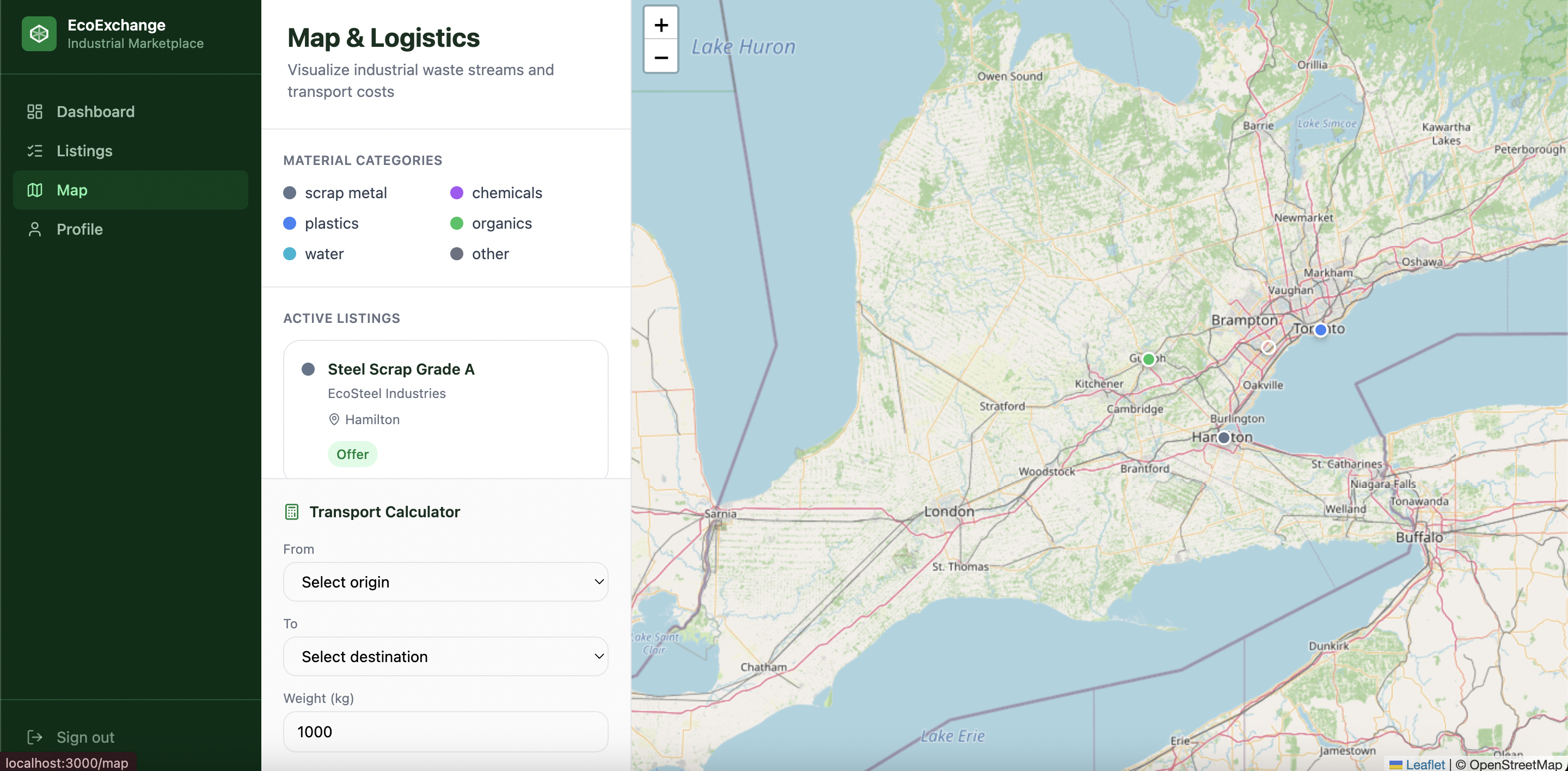
- Visualize factory locations and material flows on an interactive map
- Calculate transportation costs, emissions, and optimal logistics routes
- Match surplus materials (like plastics, scrap metal, organics) with nearby industries that can reuse them The goal is to reduce landfill waste and make industrial resource exchange seamless.
How we built it
We built the frontend using Next.js (React) with Tailwind CSS for styling and a modular component structure for scalability. For the mapping system, we integrated Leaflet with OpenStreetMap, allowing real geospatial visualization without relying on paid APIs. Key parts of the system:
- Custom logistics dashboard UI for material listings and filtering
- Interactive map with factory markers based on latitude/longitude data
- Transport calculator estimating cost, CO₂ emissions, and transit time across truck, rail, and ship modes
- State management using React hooks for matching origin/destination pairs Everything was designed to feel like a real industrial decision-making tool.
Accomplishments that we're proud of
We’re proud that we were able to flesh out and start building a fully functional system that:
- Visualizes real geographic industrial data
- Simulates logistics decision-making in real time
- Demonstrates a practical application of circular economy principles
- Feels like a tool that could realistically be used in industry, not just a prototype
What's next for Symbio
We have a working full-stack foundation, but the backend is not yet fully connected to every frontend feature. Right now some parts still rely on placeholder or partially wired data flows. Our next step is to fully integrate and refine these connections so the system runs completely end-to-end.
From there, we’ll focus on improving matching intelligence, transport optimization, and overall UI polish.
Built With
- leaflet.js
- next.js
- tailwind.css


Log in or sign up for Devpost to join the conversation.