-
-

app icon
-
-
-
-
-
-
-

Inspiration
Every mood tracker I tried felt like filling in a spreadsheet about my own feelings. You log a day, the app draws a slightly different colour on a chart, and nothing about that makes you want to come back tomorrow.
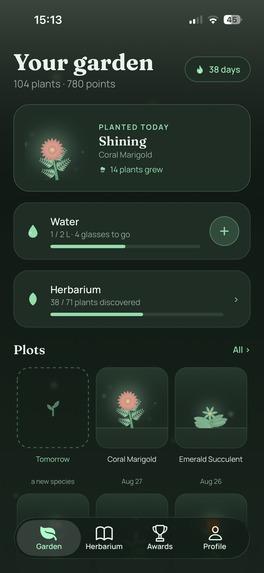
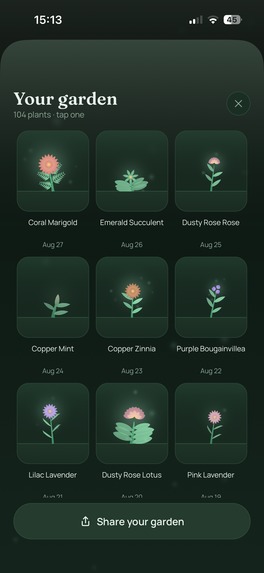
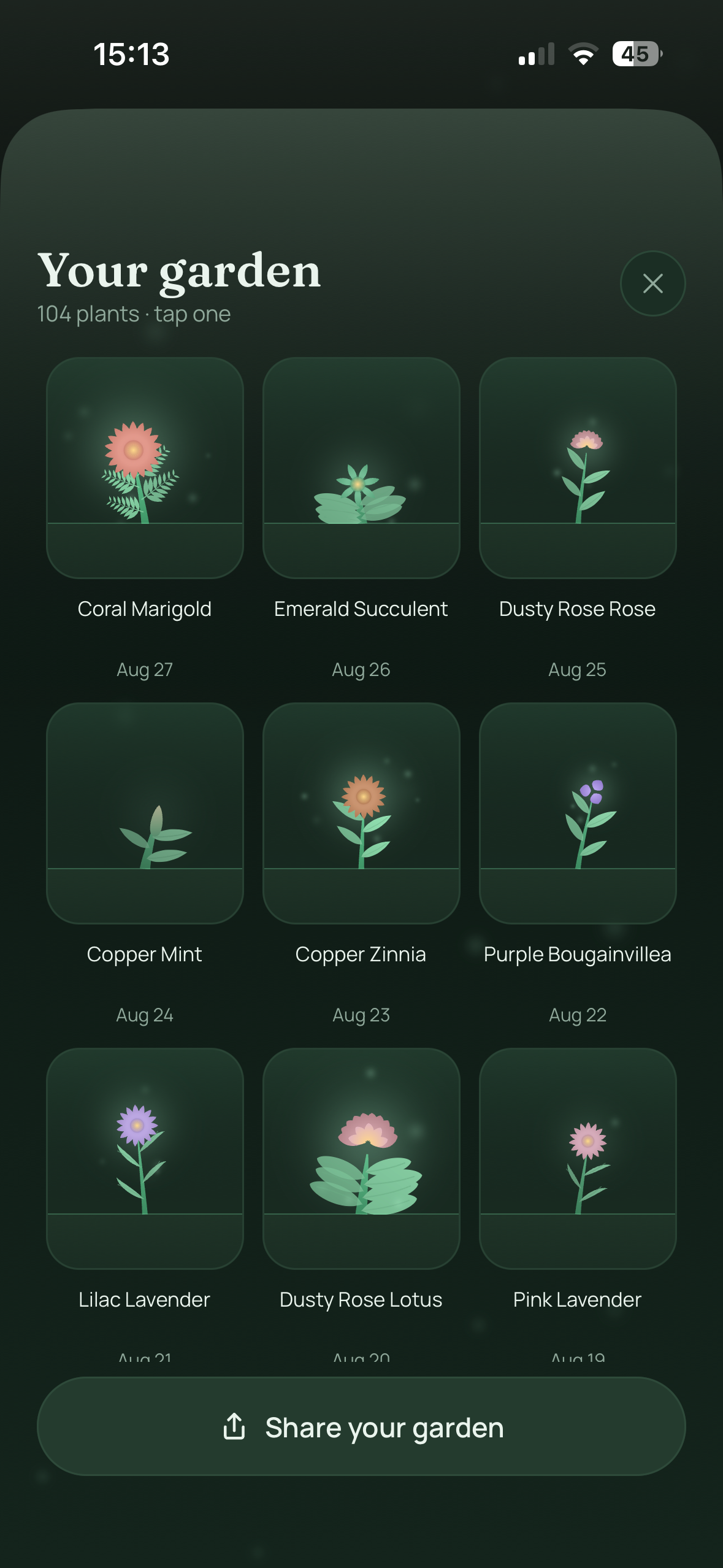
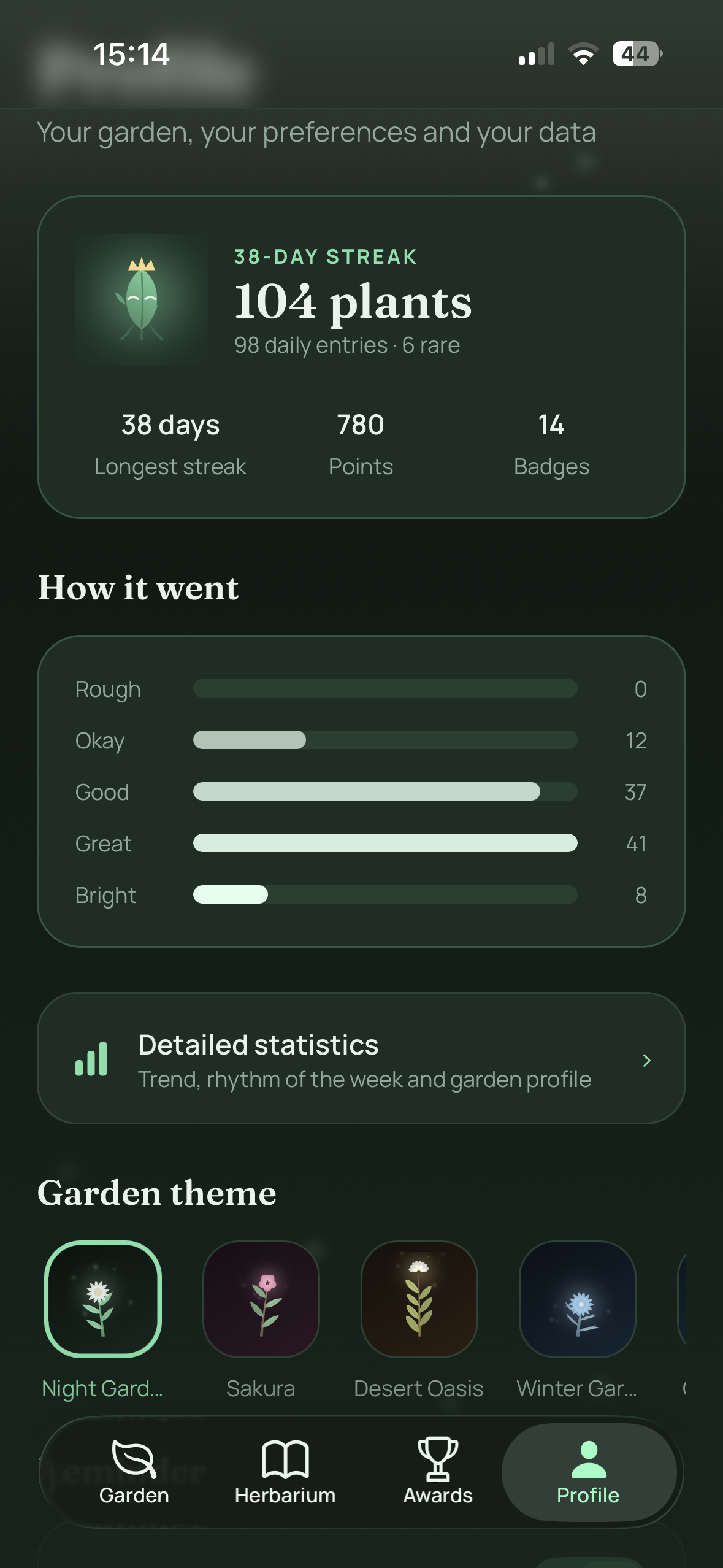
The reframe was simple: a list of past moods is a record, but a garden is something you tend. So Sylvo asks one question a day — how did today feel? — and turns the answer into a plant. Its species, its colour, how open its bloom is: all of it comes from the mood you picked. Rough days leave small, stubborn sprouts. Good days leave something that glows.
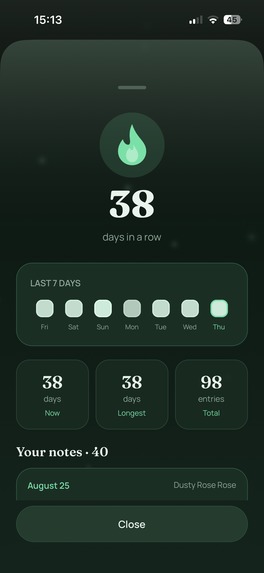
The second idea mattered just as much: miss a day and nothing dies. Streak apps that punish you are the reason most people quit them. In Sylvo your streak pauses, your plants stay exactly where they are, and the garden simply waits. It was built for the days you don't feel like opening an app.
What it does
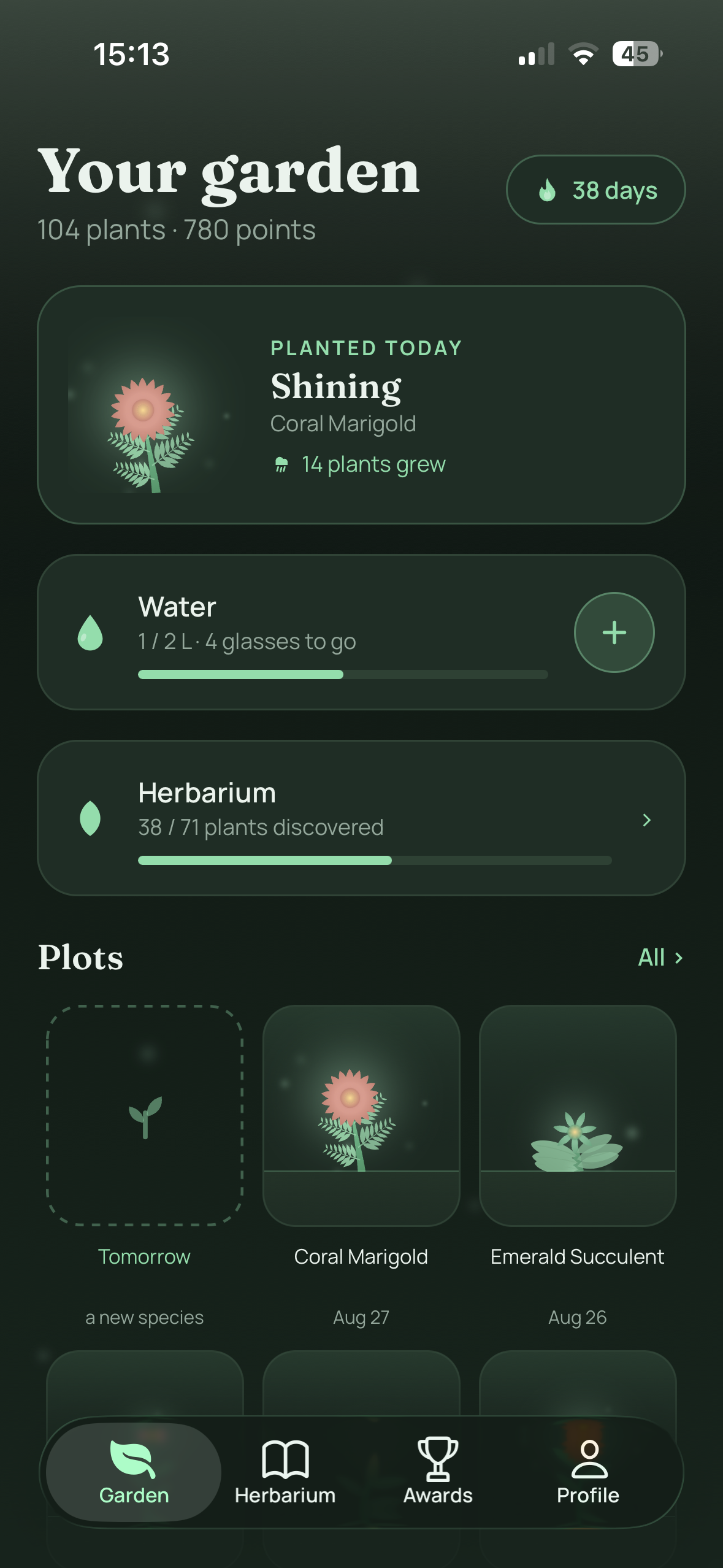
You log one mood a day. A seed drops, takes root, and becomes a plant that belongs to that day — and plants from earlier days keep maturing for two more weeks, so today's entry quietly grows everything behind it.
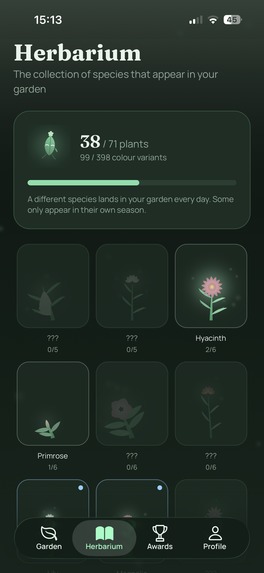
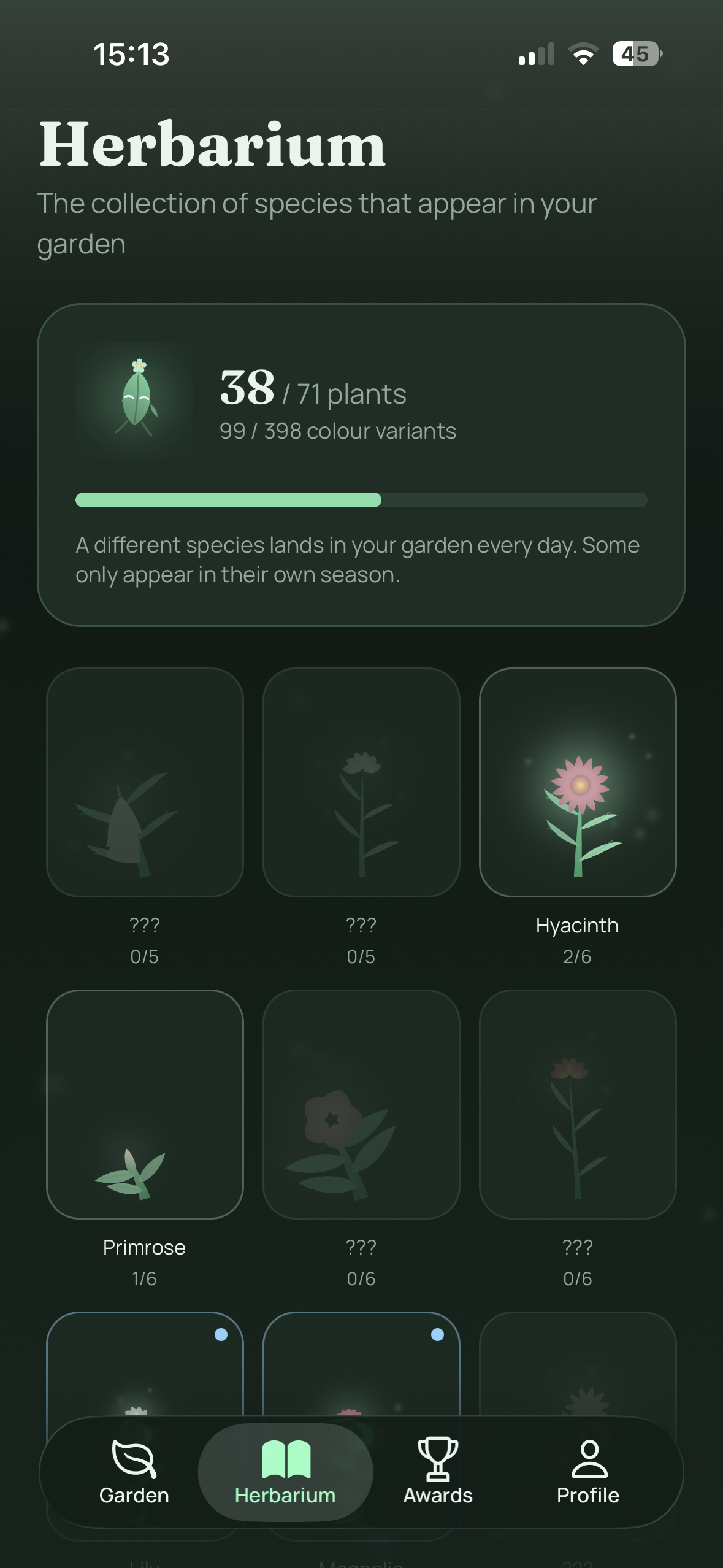
- Herbarium — 71 plant species across 398 colour variants to discover, tied to mood, season and rarity
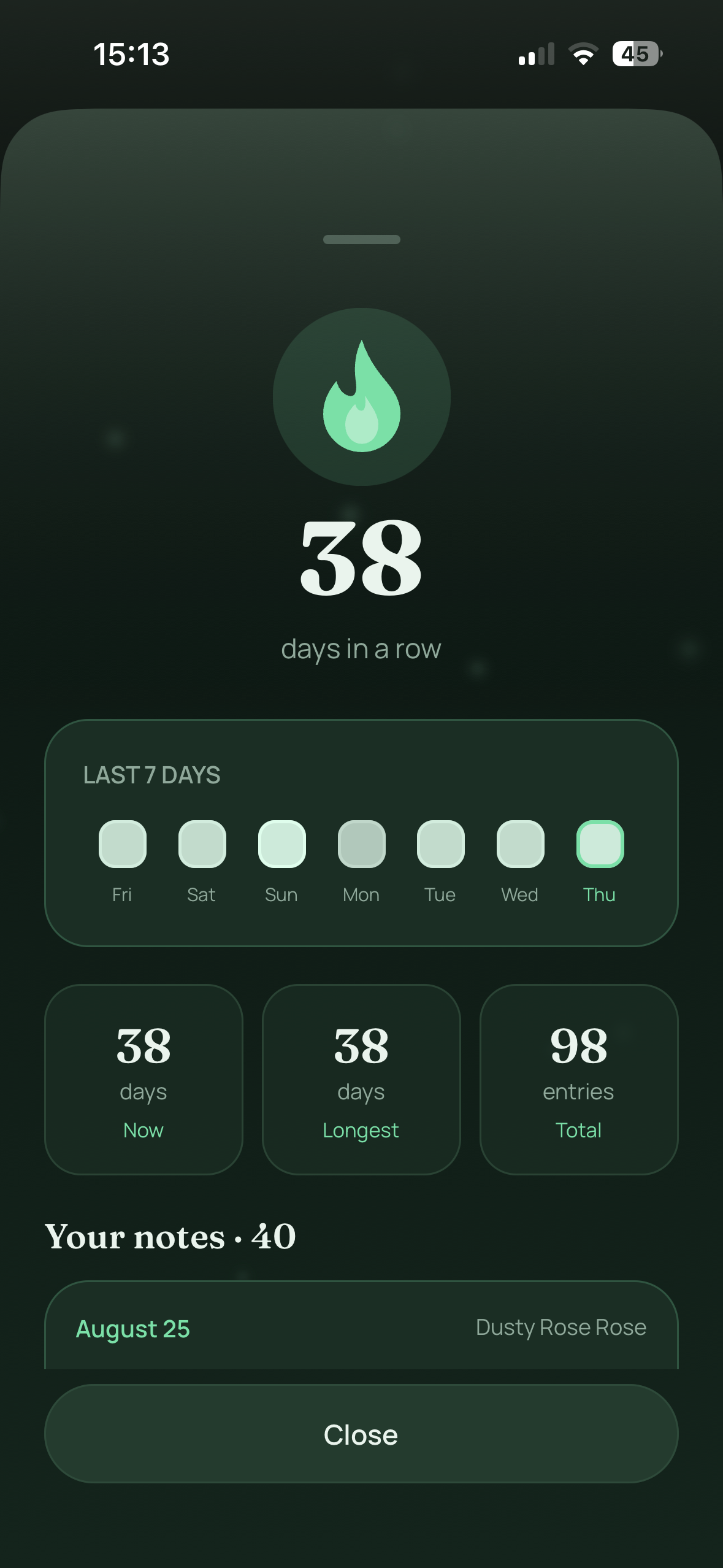
- Streak — the last seven days at a glance, with the note you left that day
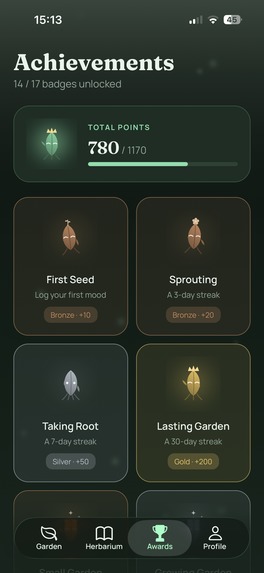
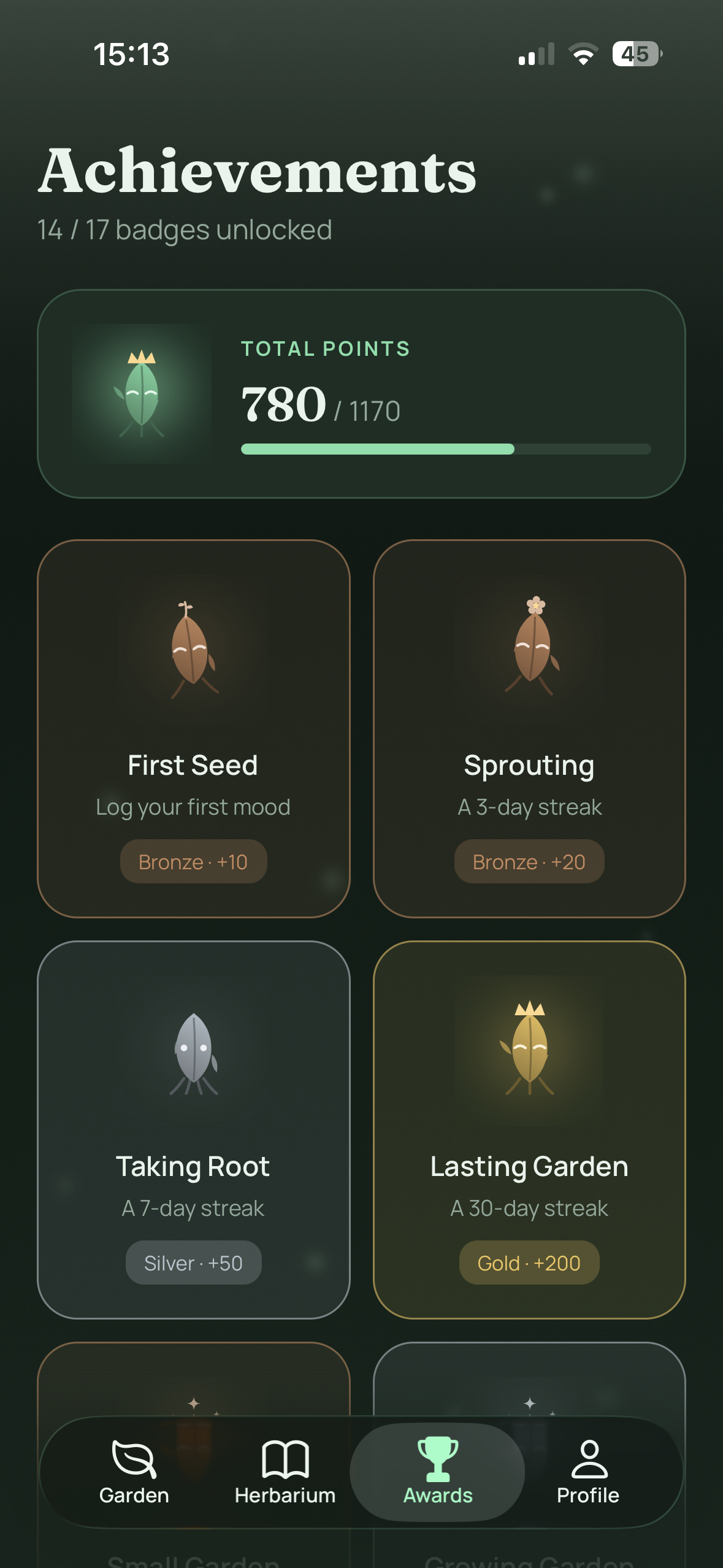
- Achievements — 17 badges, from your first seed to a 30-day garden
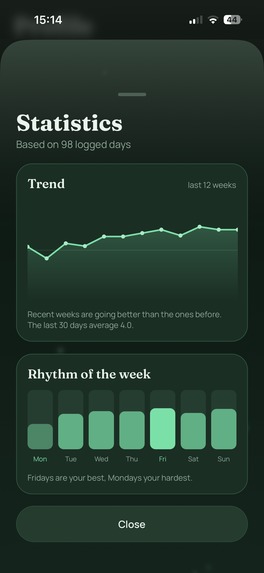
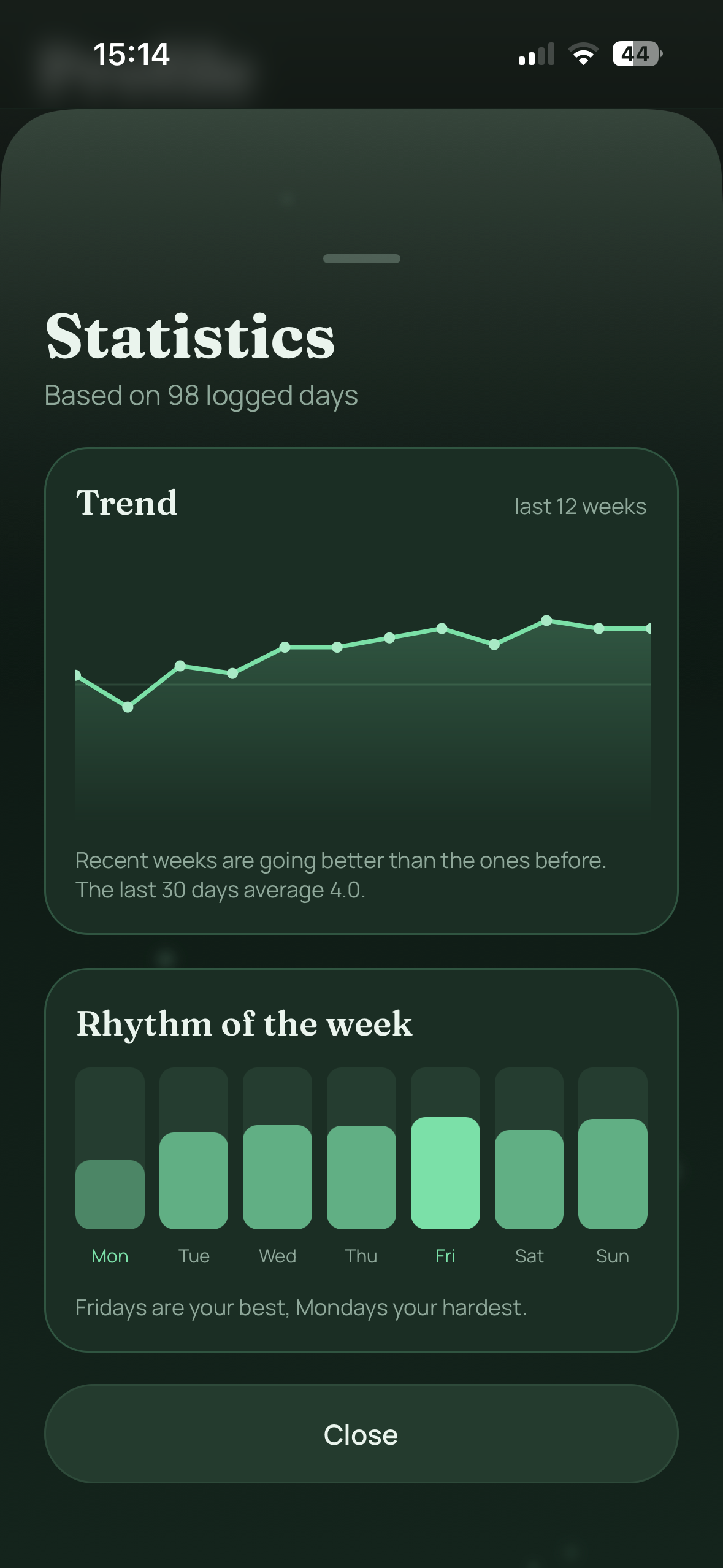
- Statistics — a trend line and the rhythm of your week
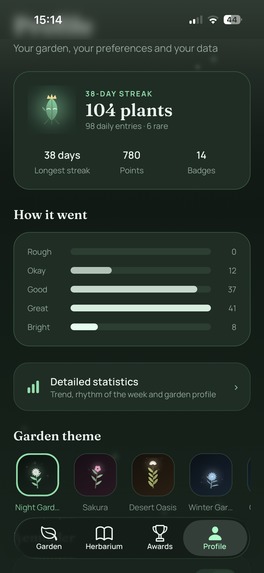
- Five garden themes — Night Garden, Sakura, Desert Oasis, Winter Garden, Coral Reef
- Six languages — English, Turkish, German, French, Italian, Spanish
- No account, no server, no ads. Every entry lives in a local SQLite database on the device. Nothing is uploaded, so there is no database of users anywhere for me to look into.
How we built it
Expo SDK 57 · React Native 0.86 on the New Architecture, Expo Router with native
tabs, Reanimated 4 + worklets, and @shopify/react-native-skia for everything
that grows.
No bitmap assets. Every plant is procedural Bézier geometry generated at runtime. Species form is picked deterministically from the entry's own identity, so a plant looks the same on every launch while the garden never looks repetitive. Vitality — from withered to glowing — drives height, leaf count, whether a bud has opened, and the particle glow.
Colours are derived, not written. A theme defines six anchor colours. A plant's colour is mixed along a vitality ramp between them. Adding a new theme means tuning six values, not twenty-five.
Geometry is pure, animation is cheap. buildPlantGeometry() is a pure
function behind useMemo. The sway animation only drives the transform of the
root Skia Group — paths are never rebuilt per frame — which is why dozens of
plants can breathe at once, and why the history grid can turn animation off
entirely.
Monetization is a custom paywall on RevenueCat. Three products (monthly,
annual with a 7-day trial, lifetime) behind a single premium entitlement. The
paywall is hand-built rather than RevenueCat's prebuilt component, but it still
calls trackCustomPaywallImpression(), so conversion analytics keep working
without giving up design control.
Challenges we ran into
Making a subscription worth it in an app you open for twenty seconds. My first premium tier was themes and detailed statistics — things you look at once and never again. In a daily app, that's invisible value. The fix was a daily rare seed: one extra plant per day that doesn't replace your daily entry, it sits next to it. Premium is now something you feel every single day.
Promising a free trial to someone who already used it. product.introPrice
is a property of the product, not the user — it's populated for everyone, so
a naive paywall shows "Start your free trial" to people who'd be charged full
price immediately. Sylvo checks eligibility per Apple ID and only shows trial
copy for a definite ELIGIBLE. UNKNOWN is excluded too, following
RevenueCat's own guidance not to create a misleading situation. The cost is a
conversion; the alternative is lying to a user.
Six languages inside narrow, fixed-width containers. Plot labels and mood columns don't flex, and German and French overflow where English fits. Guessing and rebuilding was burning hours, so I wrote an offline measurement script that loads the real font files into CanvasKit — the same Skia engine that draws the text — and measures every string in all six languages against every narrow container. Overflow is now caught before a build exists.
iOS silently drops pending notifications past 64. Sylvo schedules two independent reminder families (evening entry, water). Each is planned under its own identifier prefix and only ever cancels its own prefix — before that, each resync quietly swept the other one's schedule away. Total budget: 14×1 + 7×2 = 28.
Store text drifting from the app. The App Store description once said "63 species" while the herbarium showed a different number, because the catalog grew and the copy didn't.
Accomplishments that we're proud of
- A garden with no art in it. 71 species and 398 colour variants, and not one of them is an image file. Every plant is drawn from math at runtime.
- Six languages shipped, not bolted on. Every string localised, every narrow container measured offline against real font metrics before a build exists.
- A custom paywall that didn't cost me the data. Full design control while RevenueCat still receives paywall impressions, so conversion is measurable.
- A privacy label that is almost empty. No account, no server, no ad network, no IDFA, no analytics SDK — and every claim in the privacy policy is verifiable in the source.
- Numbers that cannot drift. The store description reads the species count from the app's own catalog, and one source file generates both the in-app legal screens and the hosted pages. The app and its metadata can no longer disagree.
What we learned
That restraint is a feature. Water tracking was the clearest lesson: it would have been easy to let water grow plants too, but then a plant's height would answer two questions at once and the garden would stop being readable — and every plant from before the water feature existed would be permanently thirsty. Water got its own language instead: fill your goal and the same rain that falls when a plant grows falls across the screen.
Also: privacy is far easier when you design for it from the start than when you retrofit it. Because there was never a server, "what do we collect?" had an honest one-line answer at every stage — including when it was time to fill in the App Store privacy questionnaire.
What's next for Sylvo
Real gardens. The plan I care about most is closing the loop between the garden on the screen and the ground outside: committing a share of subscription revenue to planting actual saplings through a reforestation partner, with garden milestones mapped to real trees and a public counter so it can be checked rather than believed. A mood journal that quietly reforests something is a better promise than one that only draws.
Beyond that: an Android release, a home-screen widget for the daily entry, and more seasonal species in the herbarium.
Built With
- eas
- expo-notifications
- expo-router
- expo-sqlite
- expo.io
- i18n
- in-app-purchase
- react-native
- react-native-reanimated
- revenuecat
- skia
- typescript
