-
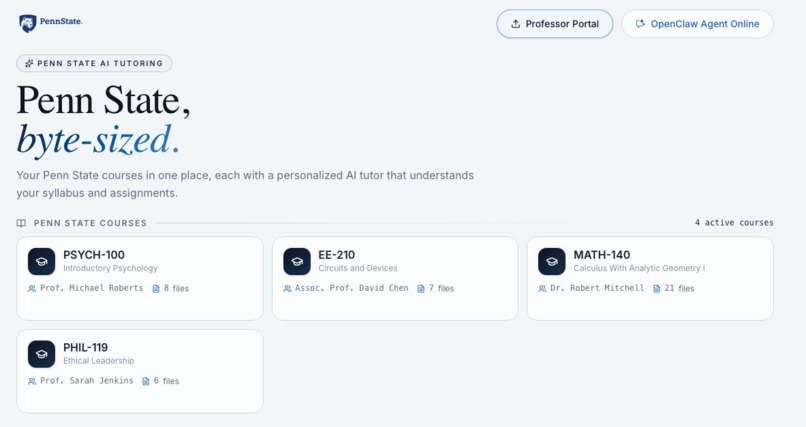
Landing page
-
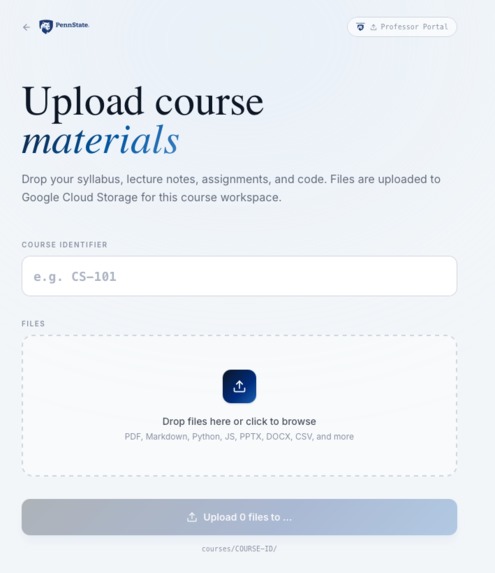
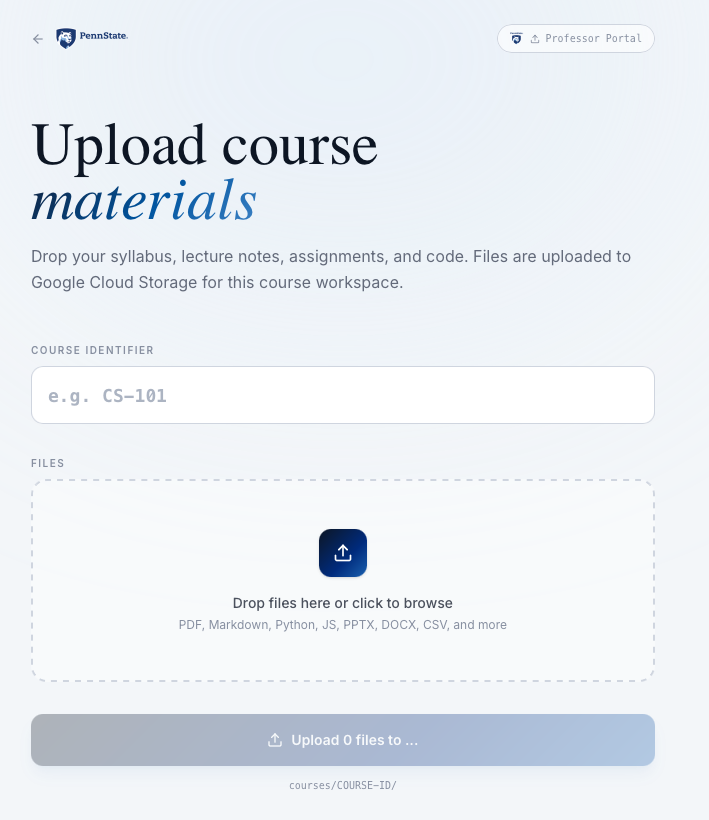
Professors can upload their own course materials
-
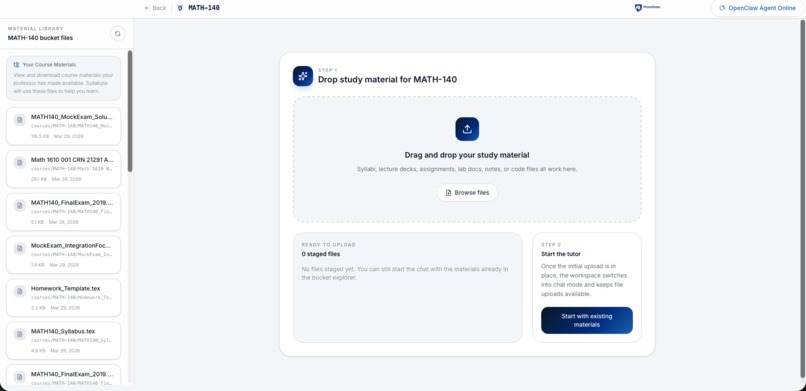
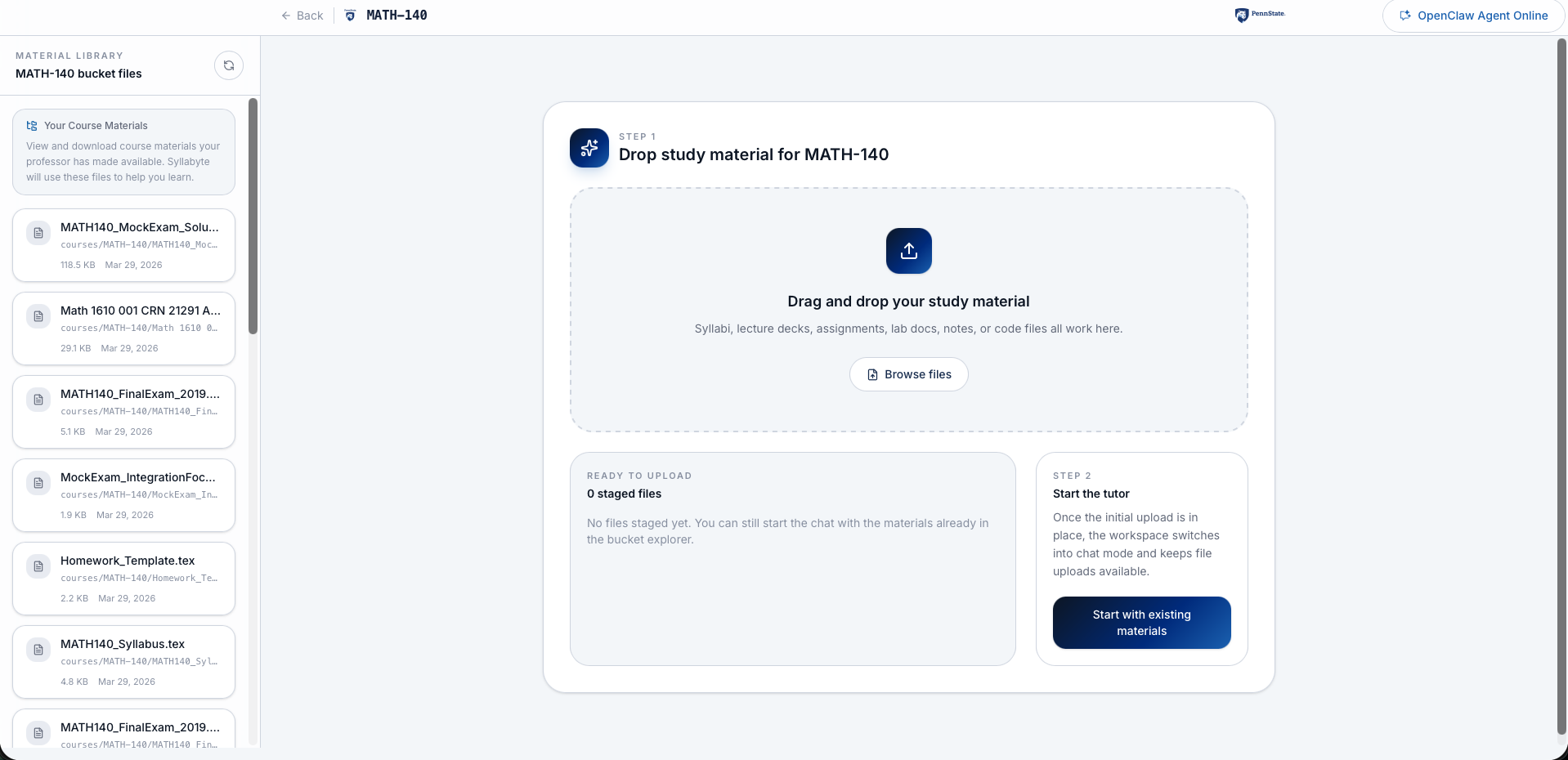
Students can interact with agents through a familiar interface
Inspiration
Students juggle studying, assignment submissions, and exam prep across a dozen different tools — none of which talk to each other. We wanted to build something that could act as a single intelligent academic companion: one that understands your coursework, helps you learn it, evaluates your work, and gets you ready for exams — all in one conversation.
What it does
Syllabyte is a multi-agent AI platform built for students. You describe what you need in plain English, and a project manager agent figures out the best way to help you — routing your request to one of three specialized sub-agents:
- Tutor — explains concepts, answers questions, and walks you through material step by step
- Grading — reviews your work and gives structured, rubric-aware feedback
- Exam Prep — generates practice questions, quizzes you, and identifies weak spots
Responses stream in real time so the experience feels like talking to a knowledgeable study partner, not waiting on a slow API.
How we built it
Syllabyte is built on a multi-agent architecture orchestrated by a central PM agent powered by Gemini. The PM interprets each user prompt and delegates to the appropriate sub-agent, which then streams its response back through a WebSocket connection to the frontend. The backend runs on a GCP e2-medium VM, and the frontend is deployed on Vercel. Inter-agent communication is handled over a standardized JSON envelope protocol so the client always knows which agent is responding and why.
Challenges we ran into
Getting the PM agent to route accurately without over-specifying the prompt took a lot of iteration. We also had to design a WebSocket message protocol that could handle multi-step delegation — cases where the PM chains sub-agents sequentially in a single session — without losing context or confusing the UI. Streaming tokens from Gemini through multiple layers of agent logic while keeping latency low was another non-trivial piece.
Accomplishments that we're proud of
We're proud of how natural the delegation feels — users just type what they need, and the right agent shows up. The real-time streaming UX makes it feel responsive and alive rather than like a form submission. We're also proud of building a genuinely modular agent system where each sub-agent can be improved or swapped independently without touching the others.
What we learned
Multi-agent systems live or die by their communication contracts. A lot of our early bugs came from inconsistent message formats between agents and the client — standardizing on a typed JSON envelope protocol early would have saved us hours. We also learned that prompt design for an orchestrator agent is its own discipline: too vague and it misroutes, too rigid and it breaks on edge cases.
What's next for Syllabyte
We want to add course context — letting students upload a syllabus or paste lecture notes so agents can give grounded, class-specific responses rather than generic ones. Longer term, we're exploring persistent session memory so Syllabyte can track a student's progress over time and proactively suggest what to study next.
Built With
- claude
- javascript
- openclaw
- python
- typescript


Log in or sign up for Devpost to join the conversation.