Inspiration
Most study tools hand you flashcards built from someone else's material, or AI quizzes you can't fully trust. We loved the thrill of games like Krillion, where any correct answer counts and the obscure ones score the most, and asked: what if studying felt like that? Better yet, what if every answer came straight from your own course notes, with proof of where it came from?
What it does
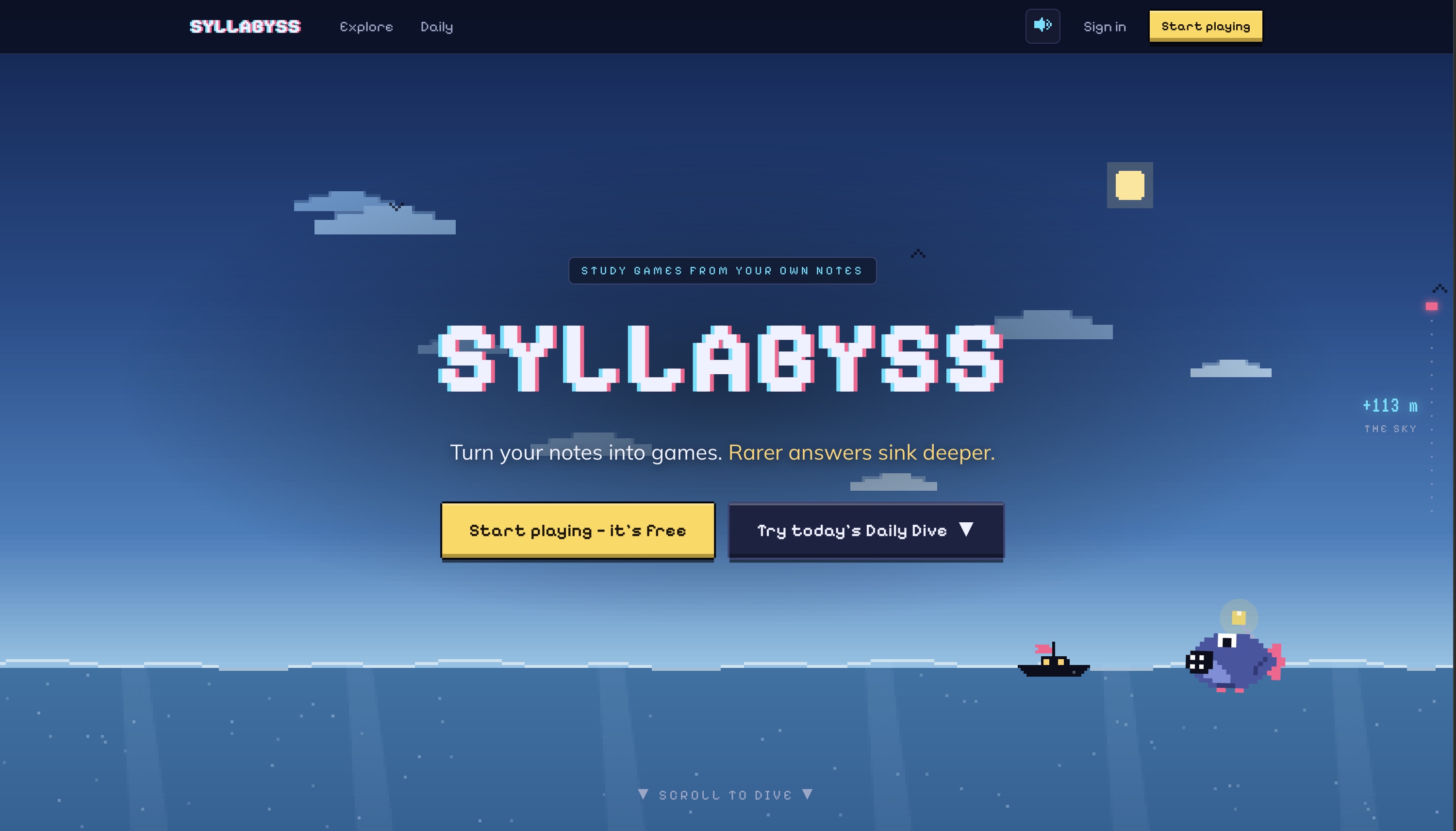
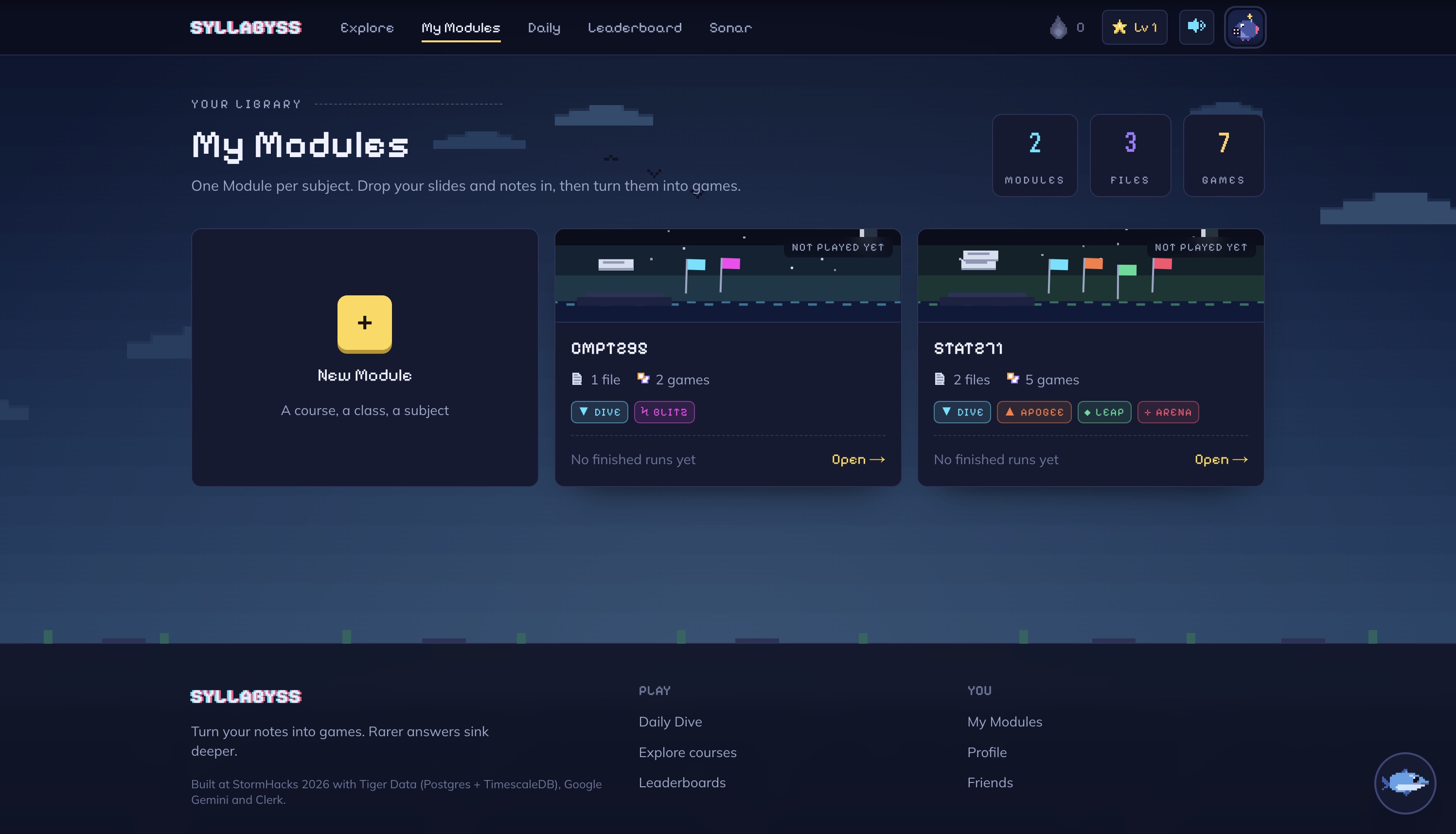
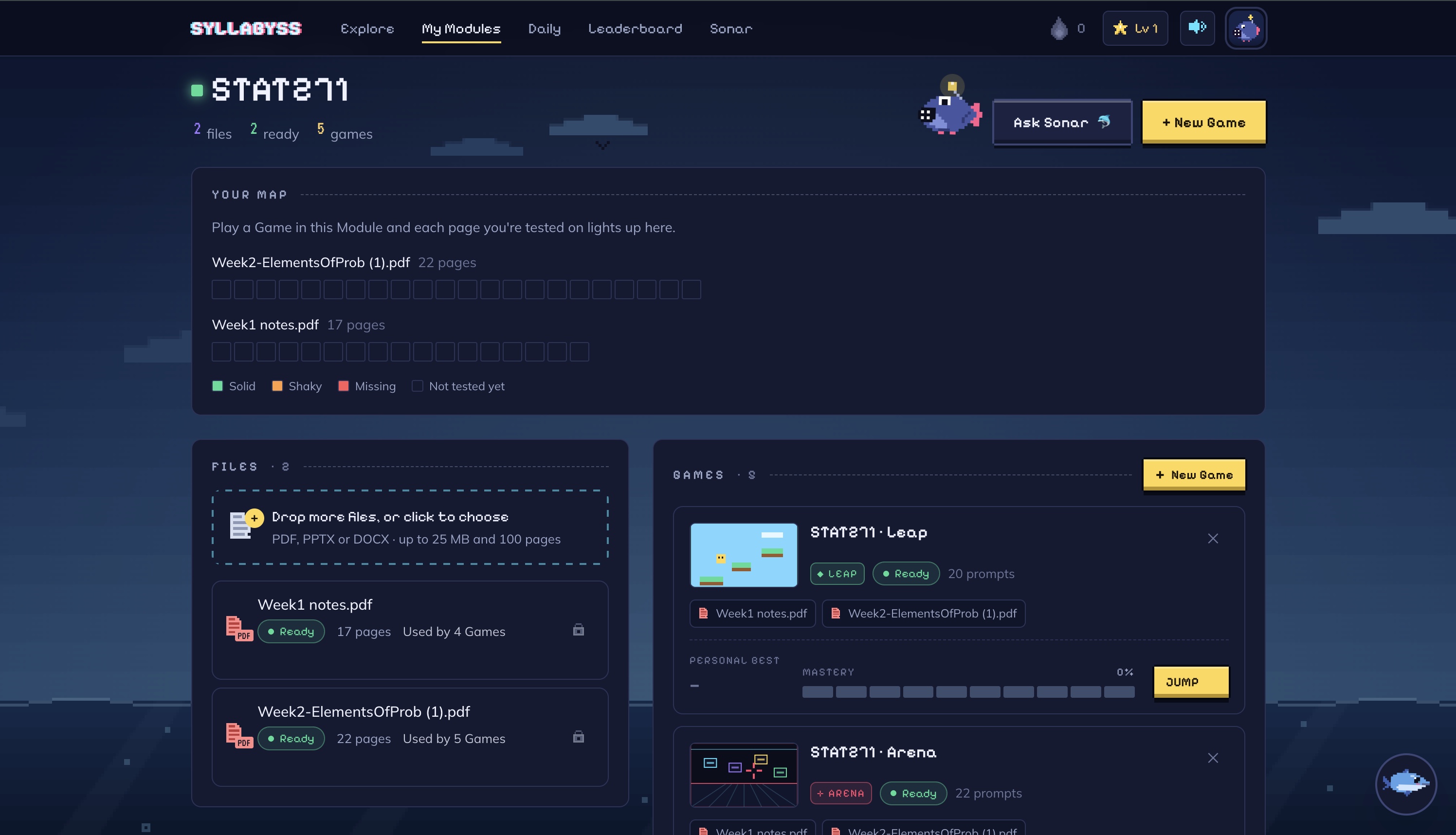
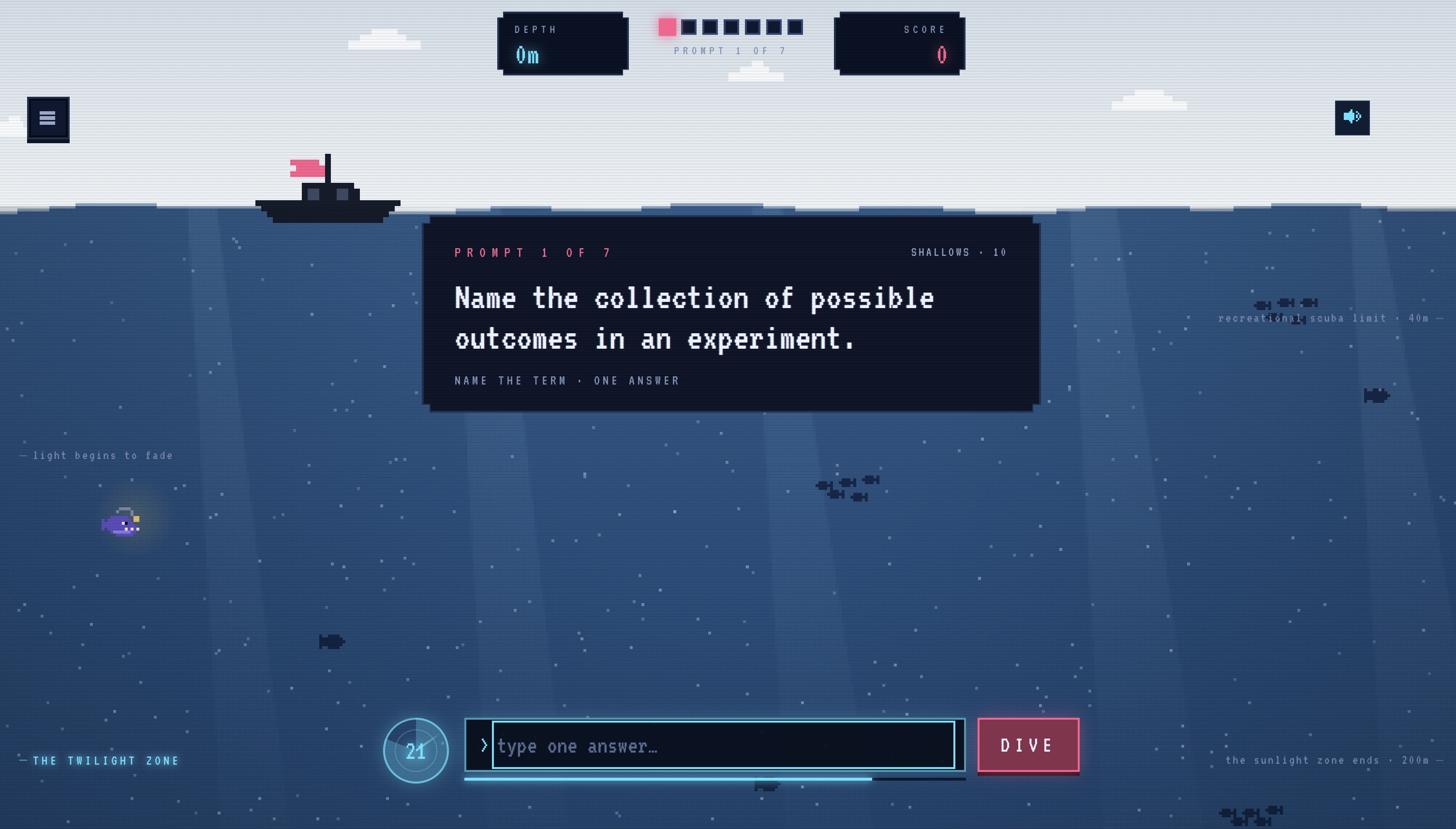
Syllabyss turns your syllabus into an abyss worth exploring. Upload your slides, notes or readings (PDF, PPTX, DOCX) into a Module, pick your files, and Gemini builds a Game from them in one of six Modes:
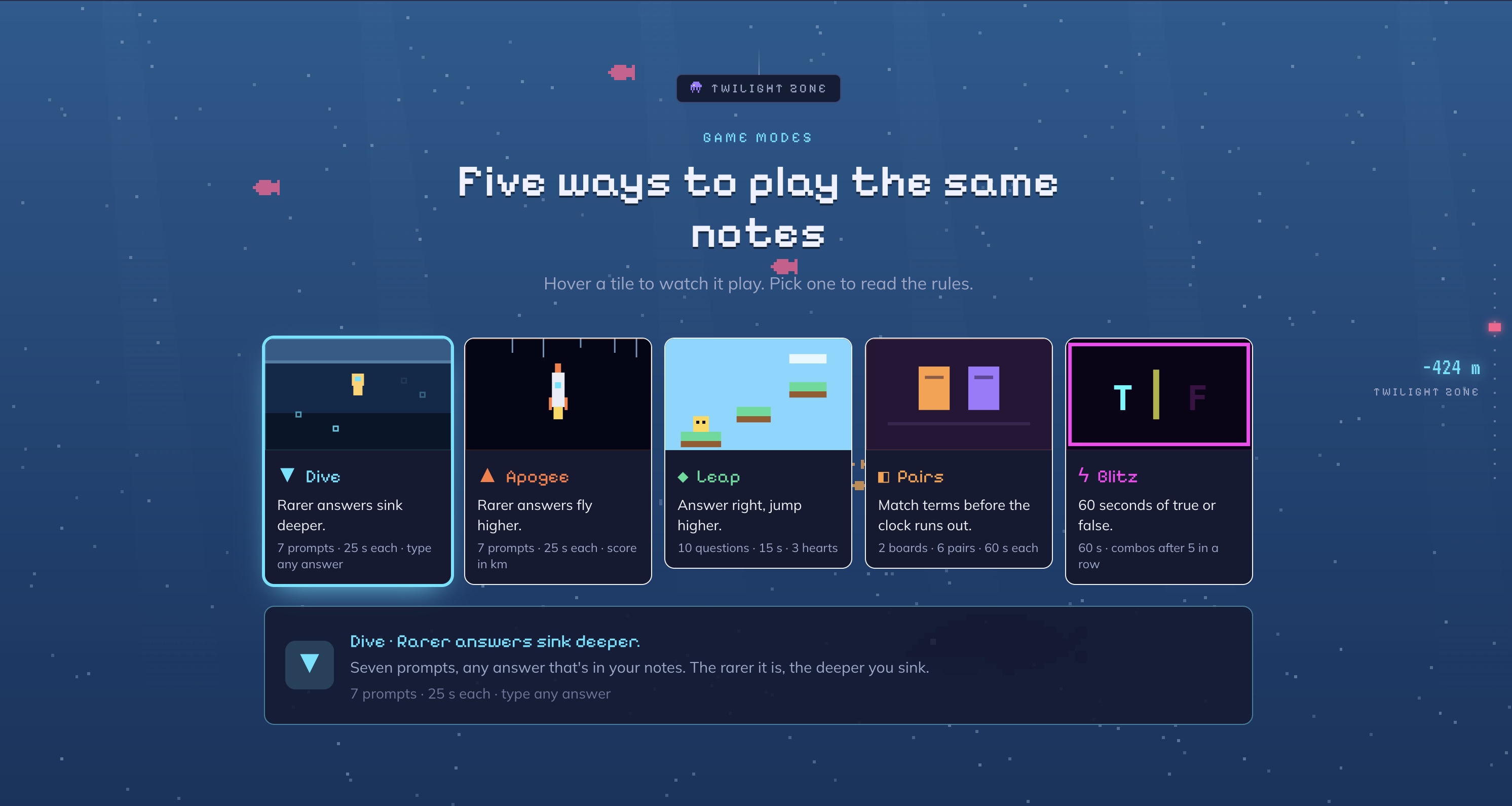
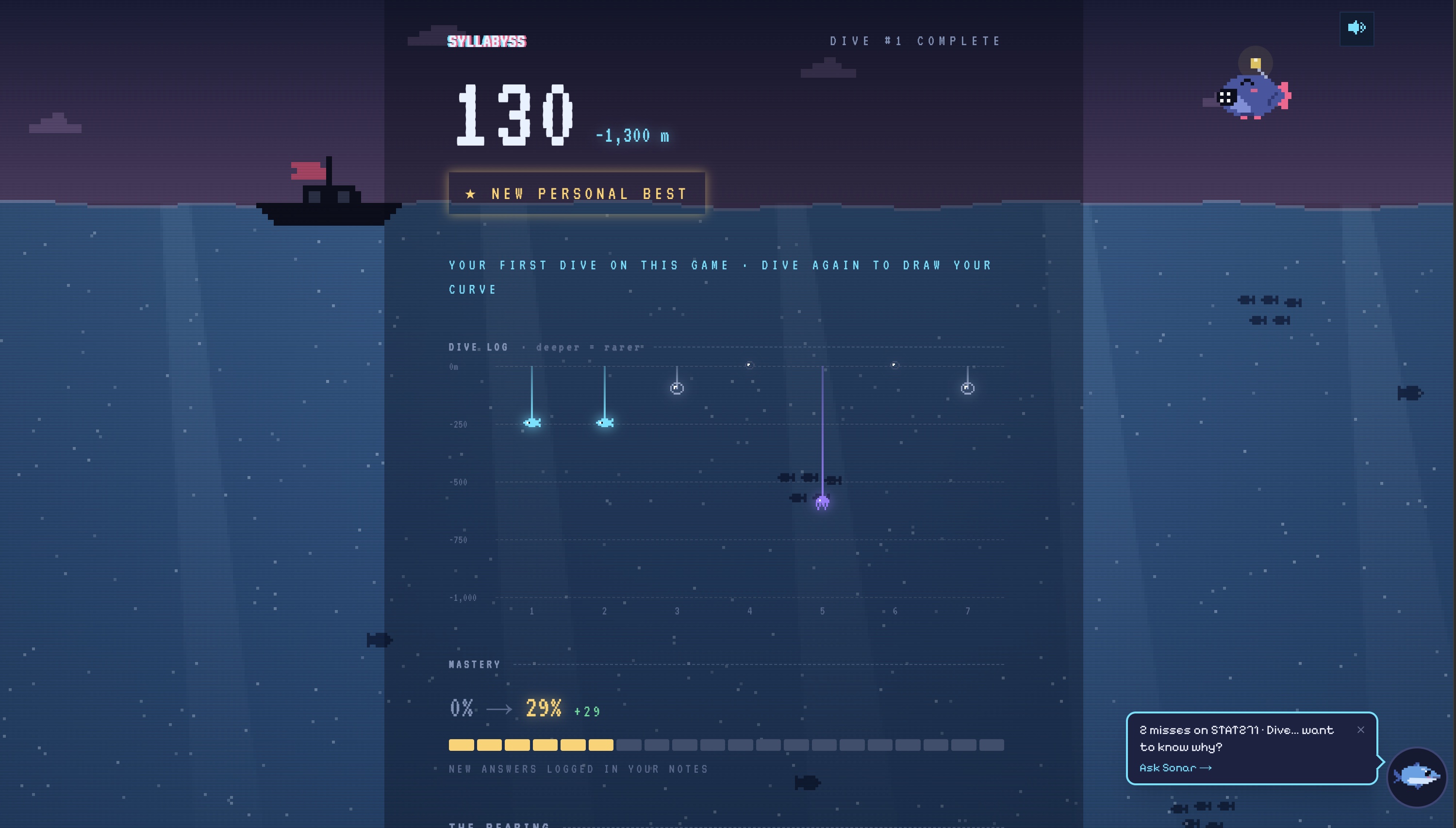
- 🌊 Dive: 7 timed open-ended prompts. Name any correct answer; the rarer it is, the more you score and the deeper your diver sinks, from the Shallows to the Trench.
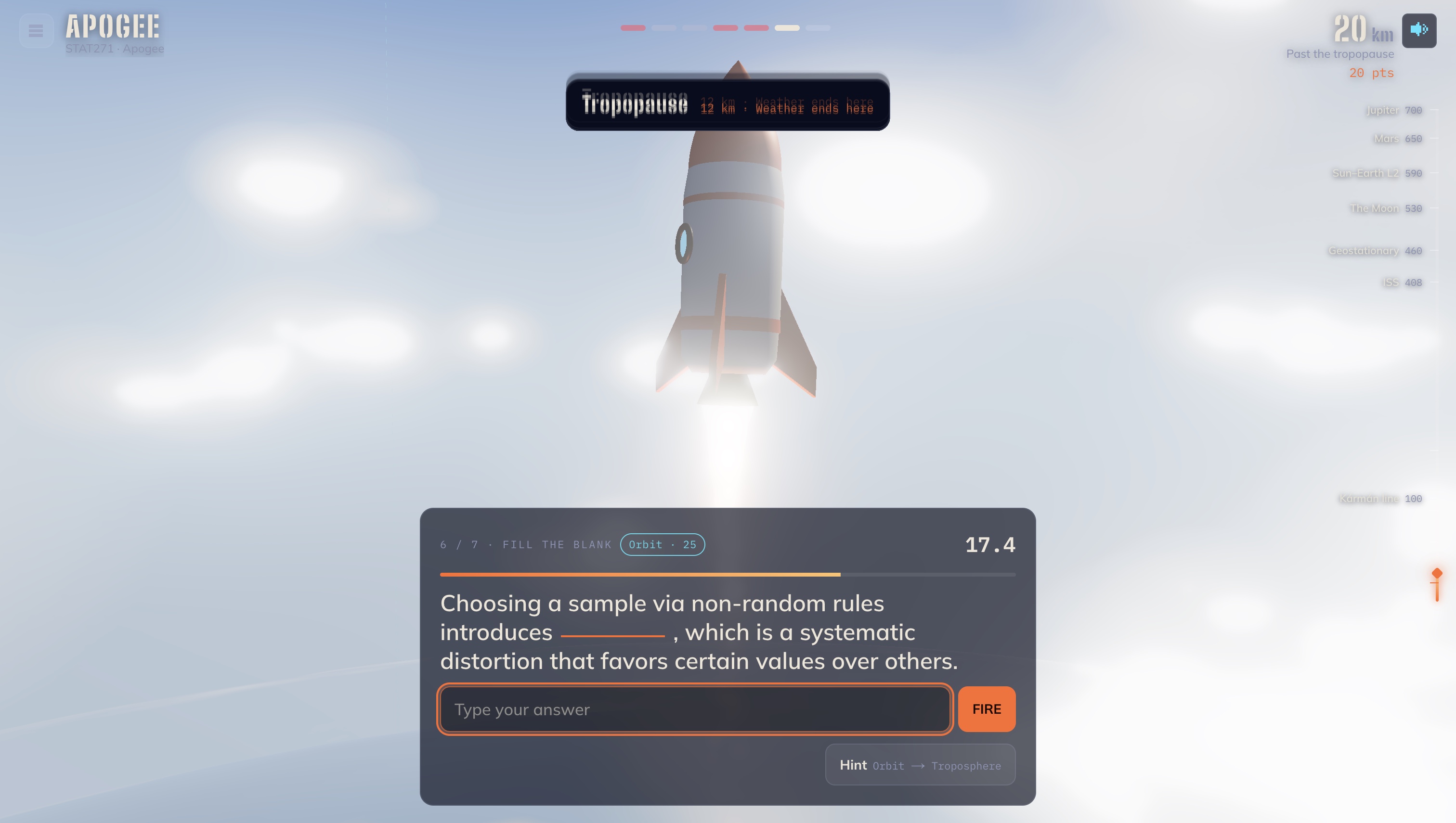
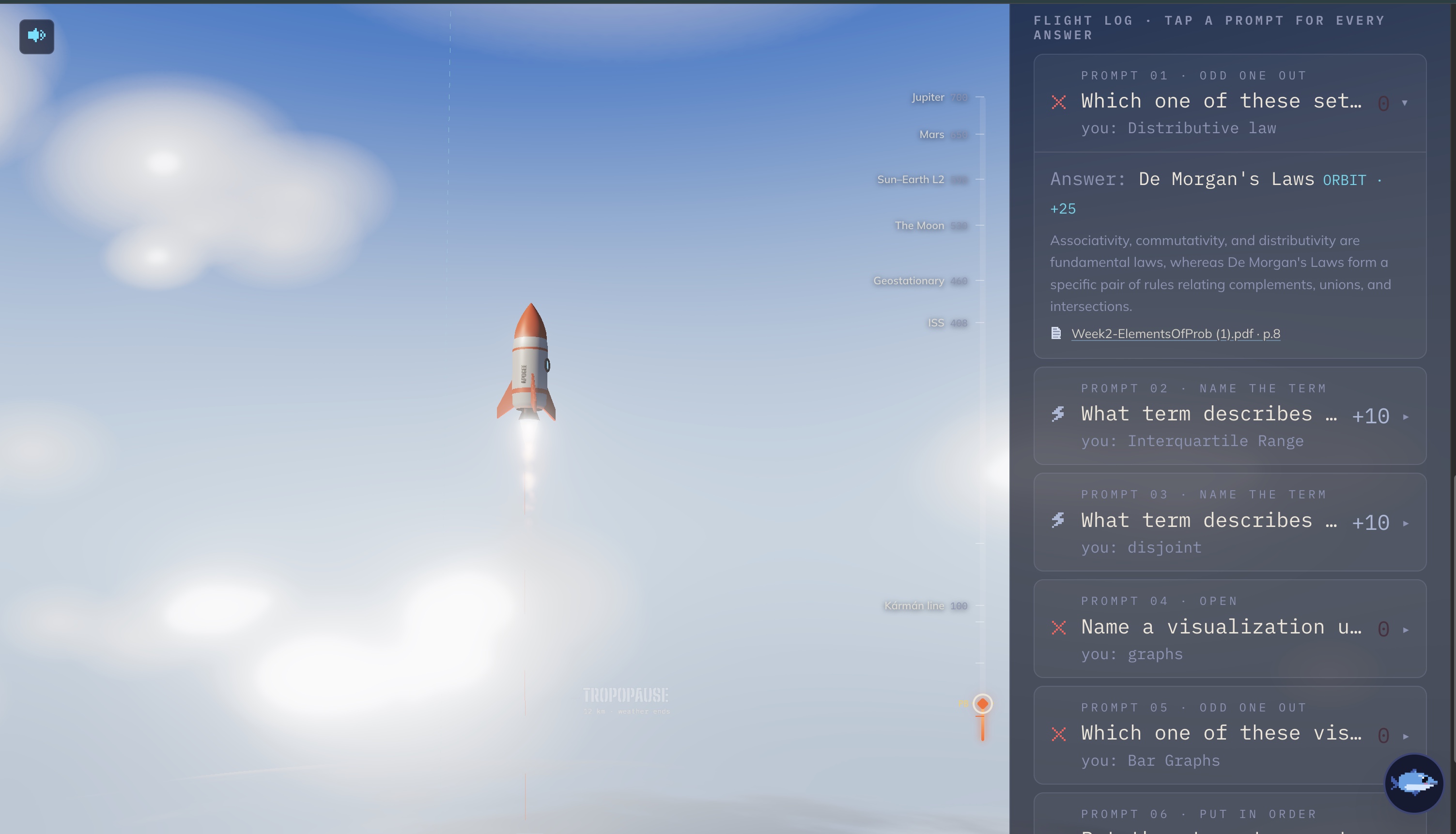
- 🚀 Apogee: Dive's rules, but you launch a rocket from the Troposphere into Deep Space.
- 🏝️ Leap: multiple choice across floating sky islands, with 3 hearts, streak multipliers and a 50/50 lifeline.
- 🧩 Pairs: match terms to definitions against the clock.
- ⚡ Blitz: 60 seconds of rapid-fire true/false with combos.
- 🎯 Arena: a 3D first-person room where you shoot the right answer.
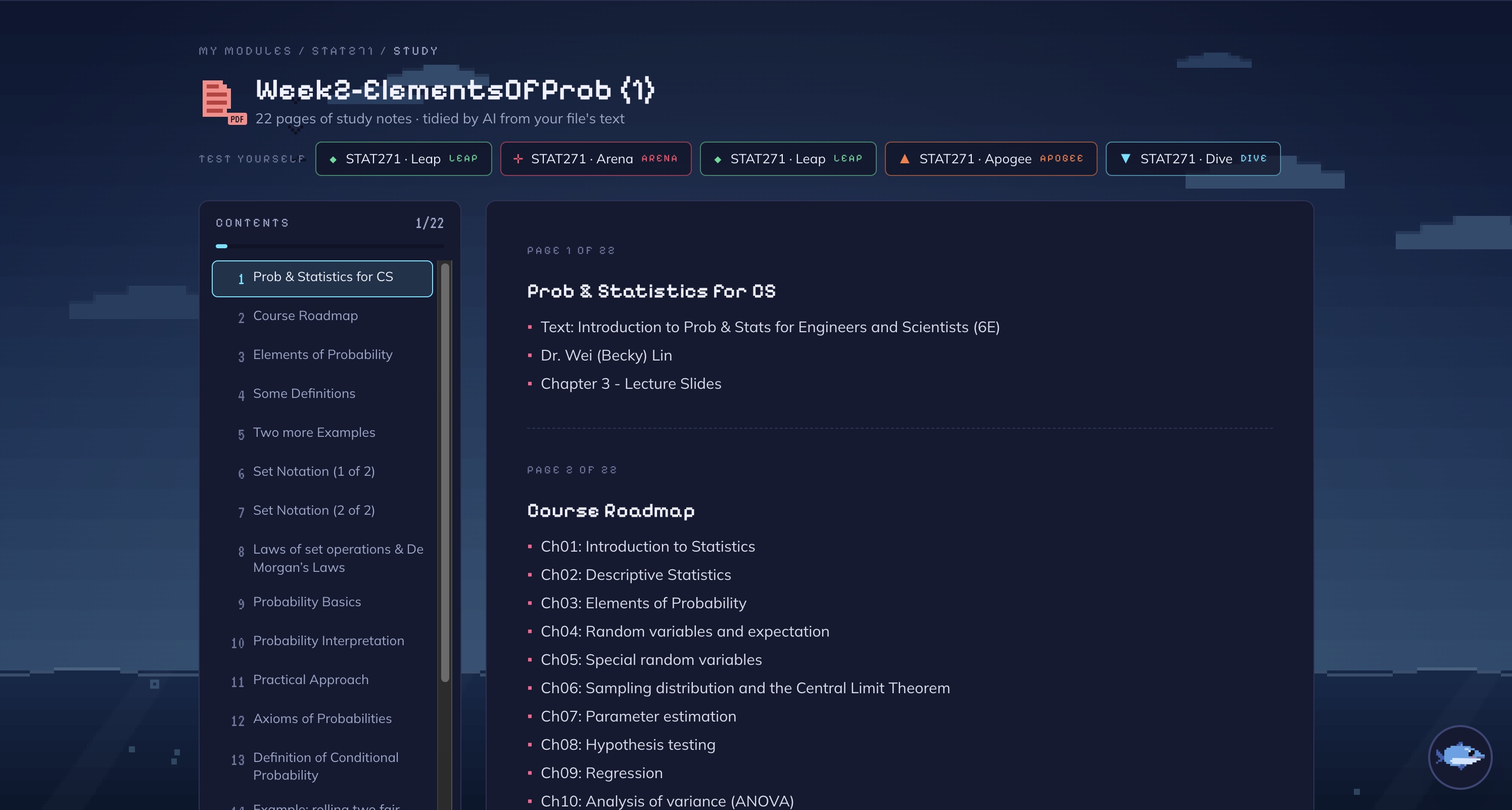
Every answer is backed by evidence. Each one cites a page from your files, and you can open the slide right from your results or study AI-written notes for every page.
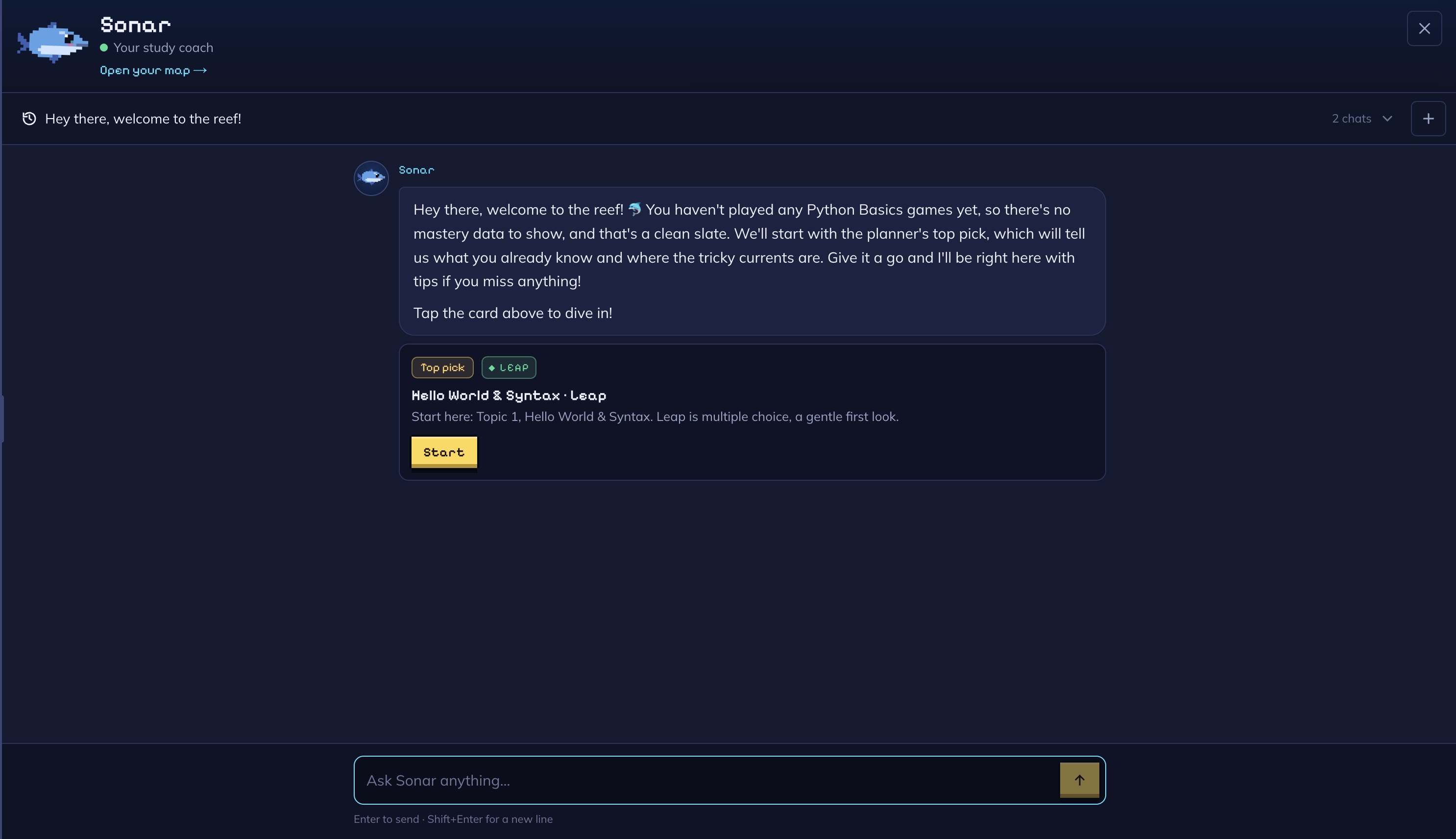
Meet Sonar, your AI study coach. Sonar tracks your mastery of each concept from every guess you make, finds the root cause behind your mistakes ("your for-loop misses actually come from range()"), quotes your own wrong answers back to you, and recommends exactly what to play or read next. It can even build you a new Game on the spot.
Around it all:
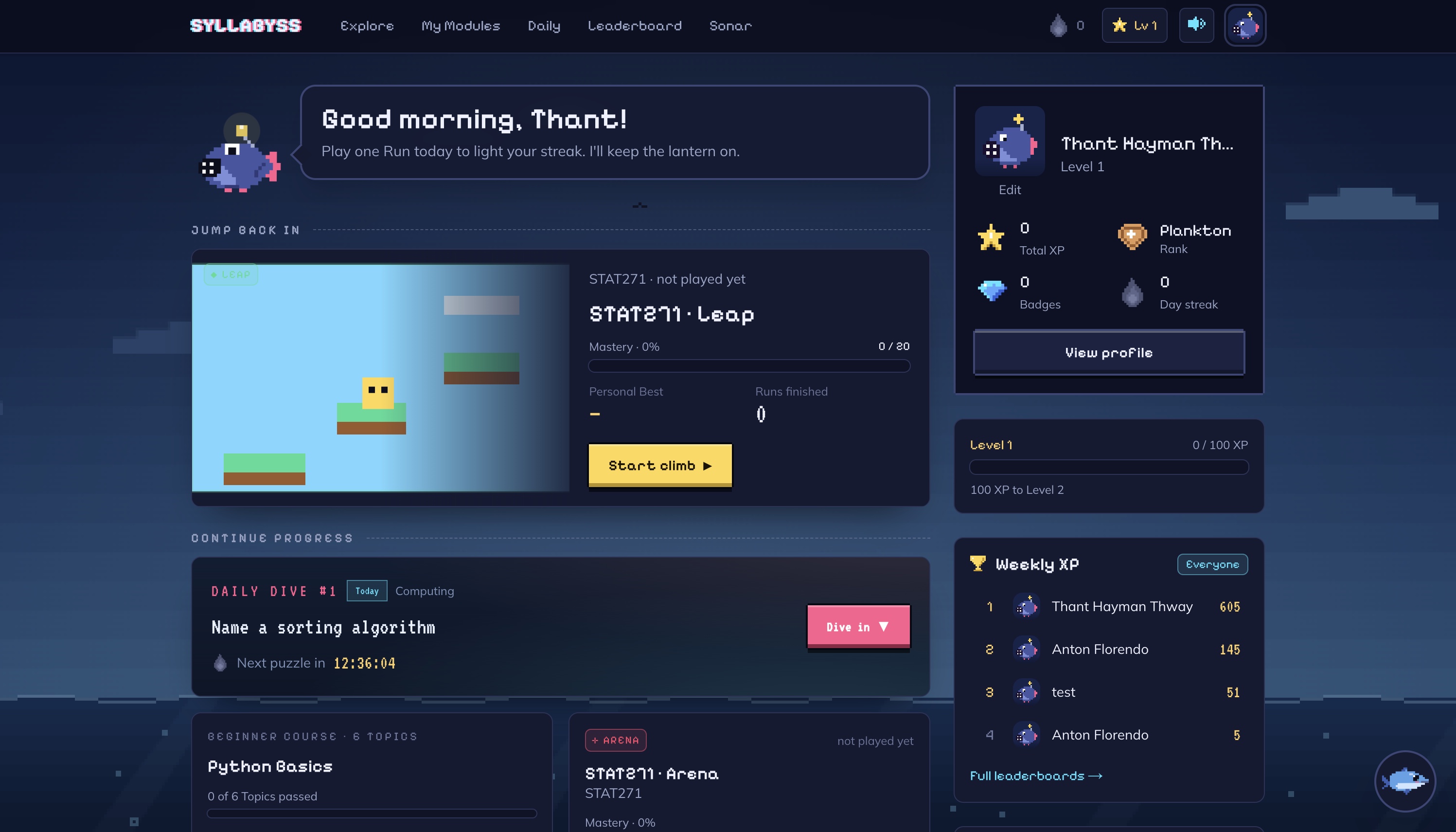
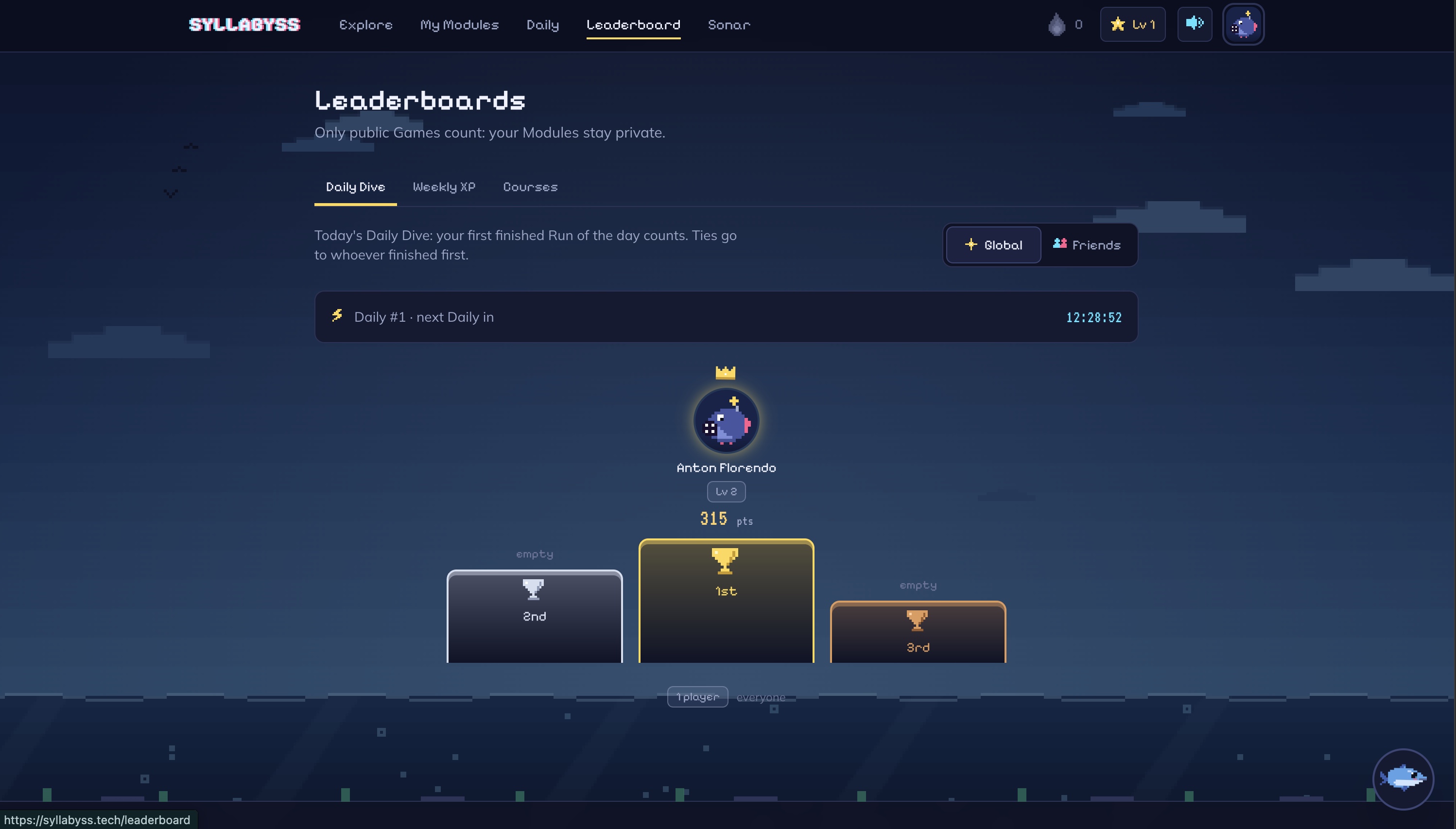
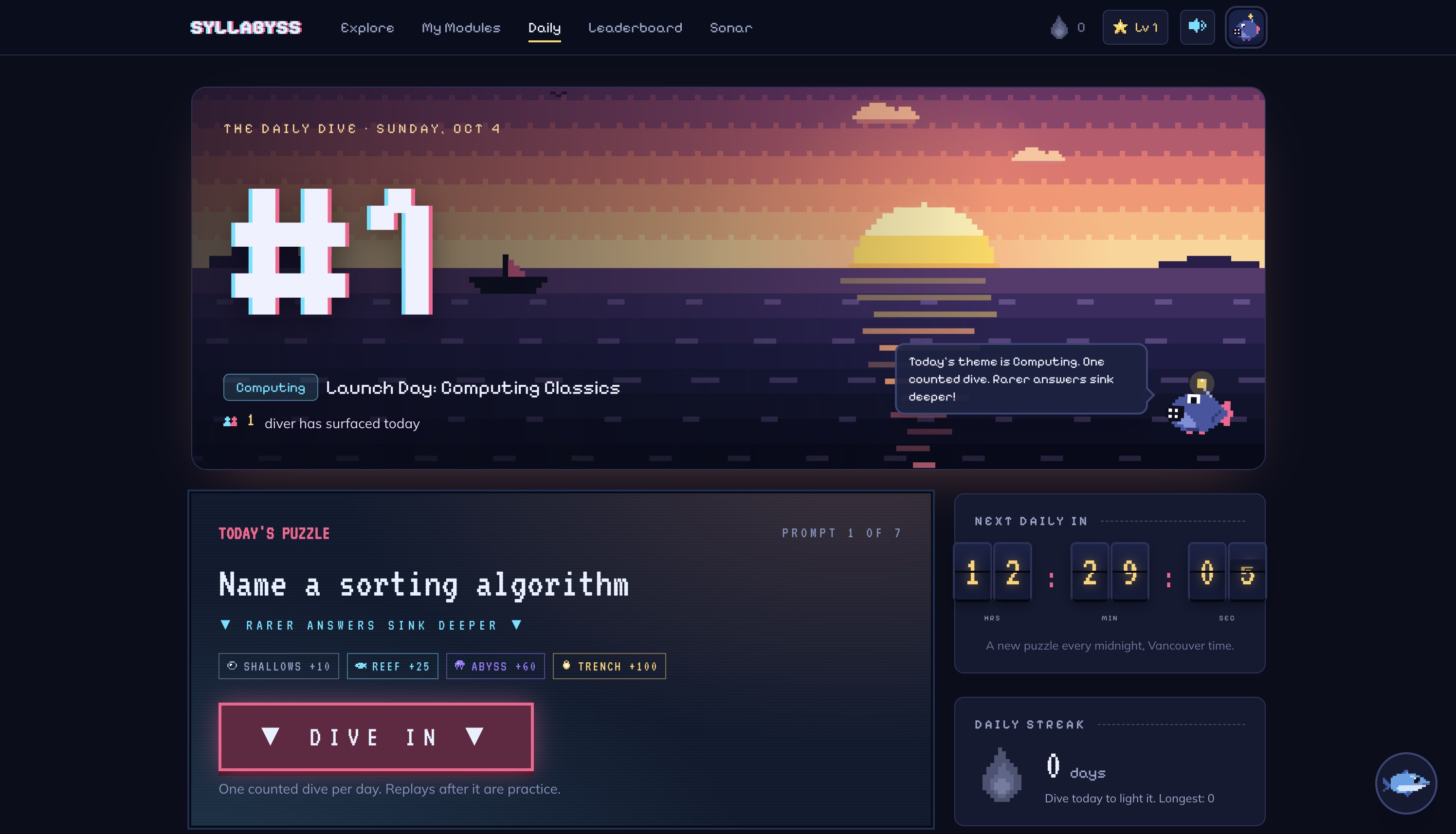
- Daily Dive: one shared puzzle a day, Wordle-style, with share grids and "% of players found this" on every answer.
- Python Basics: a built-in beginner course with Topics that unlock as you pass them.
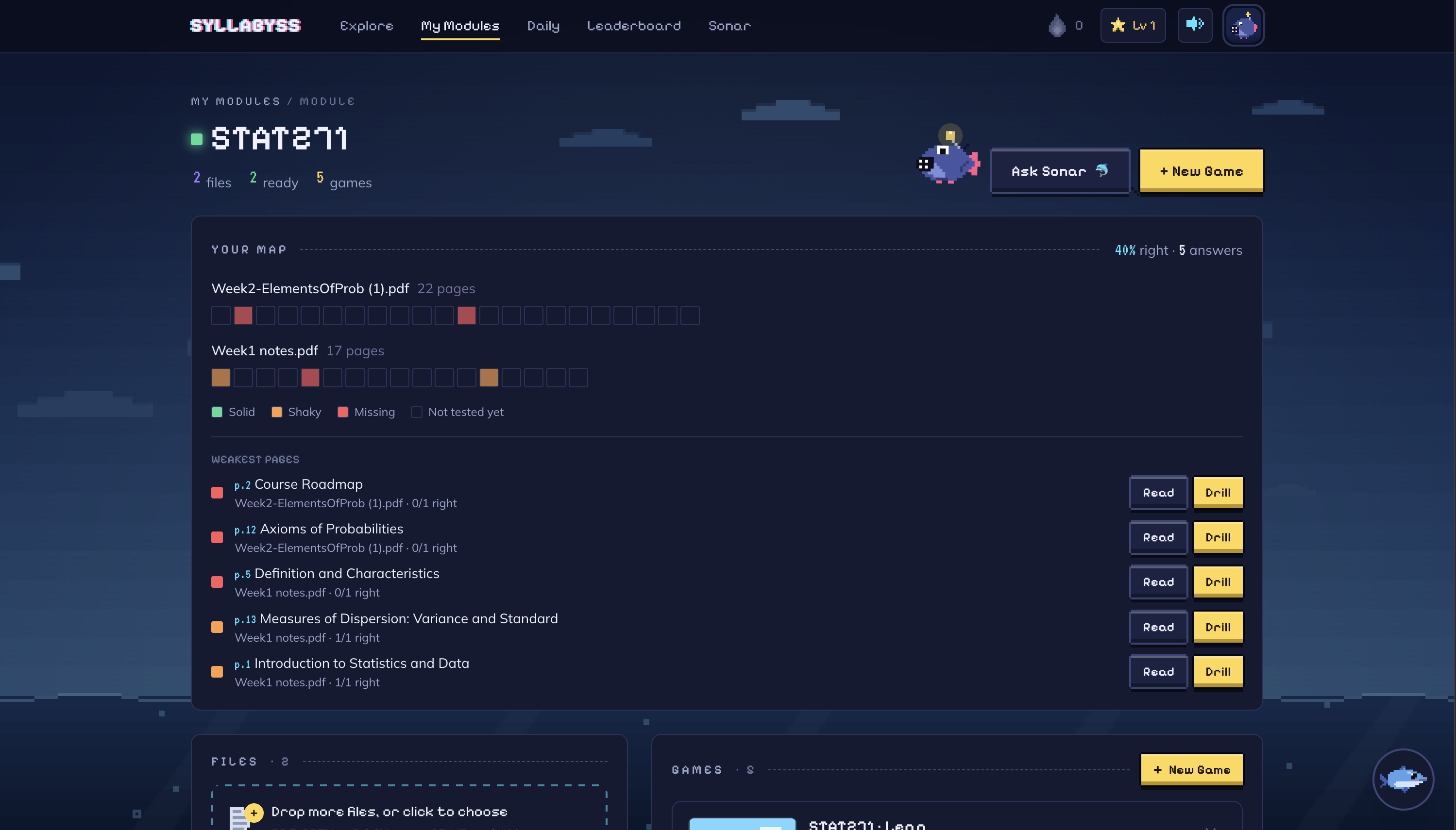
- Module page map: shows which pages of your notes you've mastered and which need work.
- Social features: XP, ocean ranks (Plankton → Leviathan), streaks, badges, an activity heatmap, friends and leaderboards.
How we built it
- Frontend: Next.js 16, React 19 and Tailwind 4, with three.js powering the 3D Modes (Apogee, Leap, Arena) and synthesized WebAudio sound effects.
- Game generation: Gemini with structured JSON output writes prompts, answers, aliases, hints and evidence quotes. A second verification pass checks every answer against its source page and drops anything unsupported. Gemini never runs during play, so games are fast and fair.
- Data: Tiger Data (TimescaleDB). Every guess lands in a hypertable, and real-time continuous aggregates drive the heatmap, weekly leaderboards and Daily stats. Toolkit percentiles power "better than X% of players", a scheduled job publishes each Daily puzzle at midnight, and typo-tolerant answer matching runs in SQL with Levenshtein distance.
- Sonar: a LangGraph agent running on Claude Sonnet with a Gemini fallback. The key design choice is that deterministic code decides what's true and the LLM decides how to say it. Mastery comes from Bayesian Knowledge Tracing per concept, weighted by how easy each Mode is to guess, with blame split across concepts and forgetting over time. Sonar explains those numbers; it never invents them.
- Auth: Clerk.
- Teamwork: each of us built alongside our own AI coding agent. The agents coordinated through GitHub Issues as claim locks, a session-start sync script, a shared feature board and resumable worklogs, which let us ship in parallel without stepping on each other.
Challenges we ran into
- Making AI answers trustworthy. Getting Gemini to produce answers that were both correct and actually in the notes took a verification pass, generating extra prompts and keeping the best ones, and an evaluation scorecard run against real lecture decks.
- Speed under load. Gemini overloads and timeouts pushed us to split generation into parallel calls and add fast model fallbacks.
- Keeping Sonar honest. We had to make sure Sonar stays scoped to the Module you're in and never recommends a Game you can't play yet. Every suggestion it makes is checked on the server.
- Merge chaos. With several humans and agents building at once, we had to tame merge conflicts and duplicate feature numbers in shared docs.
Accomplishments that we're proud of
- Every single answer is traceable to a page in your own notes.
- An AI coach whose diagnoses come from a real learner model, not LLM guesswork.
- Six polished, distinct game Modes, all generated from one pipeline.
- Real time-series features in TimescaleDB, not just a Postgres table with timestamps.
- Shipping 40+ features in one weekend with a team of humans and AI agents.
What we learned
- LLMs are at their best when they explain facts computed by deterministic code, not when they make those facts up.
- TimescaleDB continuous aggregates make live leaderboards and analytics almost effortless.
- With clear protocols, multiple AI agents can build one codebase together surprisingly well.
- Gamification works best when the fun mechanic (rarity) is also the learning mechanic (going beyond the obvious answer).
🌍 Impact: UN SDG 4, Quality Education
Syllabyss supports UN Sustainable Development Goal 4: ensure inclusive and equitable quality education and promote lifelong learning opportunities for all.
- Free, personalized study for any course. Any student can turn their own notes into practice. No premade question banks, paid tutors or textbook add-ons needed (Target 4.1).
- Learning that's grounded in the source. Every answer links back to the exact page it came from, so students learn from their real course material instead of unverified AI output.
- A coach that finds the real gap. Sonar diagnoses the root cause of mistakes and points to what to study next. That's the kind of one-on-one guidance usually only available to students who can afford a tutor (Targets 4.4 and 4.5).
- Motivation that lasts. Games, streaks, a Daily puzzle and friendly leaderboards keep students coming back, which builds lifelong learning habits (Target 4.4).
- A free beginner course. Our Python Basics course gives anyone a no-cost entry point into programming, a key digital skill for future jobs (Target 4.4).
What's next for Syllabyss
- Concept maps for any Module, so Sonar can find the root causes of your mistakes in every subject, not just Python Basics.
- Smarter answer coverage using retrieval (pgvector) to accept more valid answers from your notes.
- Shared class Modules, so study groups and whole courses can dive together.
- Mobile-first polish for studying on the go.
Built With
- nextjs


Log in or sign up for Devpost to join the conversation.