-
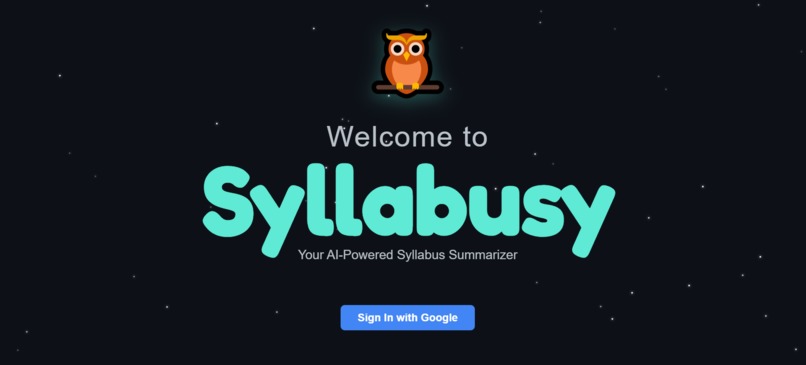
Title and Login Page
-
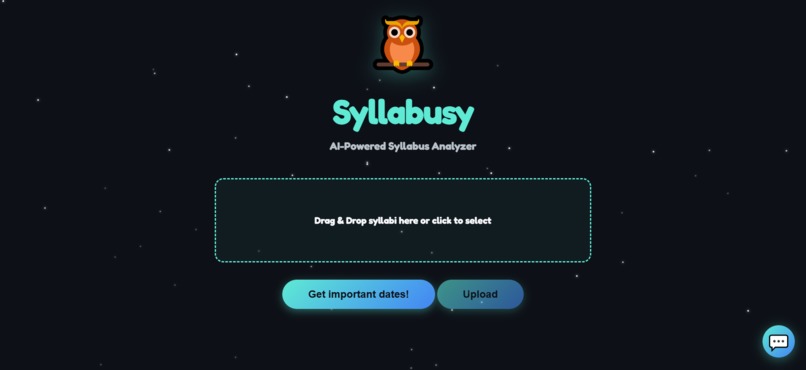
Home Page
Inspiration
Every semester, students face the tedious task of manually combing through multiple course syllabi to track assignment deadlines, exam dates, and late submission policies. Some of us spend hours highlighting and transferring this critical information into our calendars, while others simply don't acknowledge the syllabus at all, too busy with other priorities. By the time exams roll around, many students find themselves caught off guard without adequate time to prepare. We realized there had to be a better way... why not leverage AI to automatically extract and organize these key details for us? This frustration inspired us to create Syllabusy, a tool that transforms syllabus management from a chore into a seamless experience.
What it does
Syllabusy is an intelligent web application that automatically analyzes course syllabi and extracts essential academic information. Students simply upload their syllabi in PDF format, and our AI-powered system identifies and highlights important milestones and deadlines such as assignment due dates and exam dates.
The extracted information is then exported into Google Calendar, allowing students to quickly visualize their entire semester at a glance and stay on top of their academic commitments. Students are also given a Chatbot where they can ask questions about their syllabus.
How we built it
On the front-end, we built Syllabusy using Svelte, a modern Javascript framework that encapulates HTML, CSS, and Javascript together in a single file. Flask and Python formed the backend, while Google Gemini AI was used to process the uploaded syllabi and intelligently extract the dates. For authentication, we integrated Auth0, enabling a secure Google sign-in for a seamless login experience.
Challenges we ran into
Building Syllabusy came with several technical and design challenges. We ran into problems connecting our back-end to the database for storing parsed syllabus data. On the front-end side, connecting the database back to Svelte was tricky as we had to carefully design API endpoints and handle asynchronous fetch calls. In addition, we wanted to ensure a secure login with Auth0 which took some time since authentication could only be ran in the browser. Getting consistent and relevant results from the AI was also very important. This took multipleiterations of prompt engineering and formatting adjustments.
Accomplishments that we're proud of
We successfuly built an application that takes a syllabi PDF, sends it to our Flask and Python backend, and is able to export the important academic dates powered by AI to Google Calendar. Setting up secure login with Auth0 and integrating it with Svelte was a major technical milestone as well. One of our biggest technical achievements was the integration of Gemini AI and Google Calendar, enabling users to seamlessly add important dates to their personal schedules.
What we learned
Technical-wise, we learned how to integrate and employ AI APIs to process real-world data. From setting up authentication and connecting front-end and back-end systems to sending requests and handling responses correctly and securely, we learned and gained lots of technical experience. Beyond the code, we gained valuable experience by working on a real-world coding challenge. As a team, we improved our problem-solving abilities by discussing and solving complex issues under time constraints, and developed effective teamwork and communication skills while doing so.
What's next for Syllabusy
Syllabusy plans to expand its features, such as collecting and presenting more important information from the user's uploaded syllabuses. Future improvements could allow it to extract grading rubrics, office hours, and important policies from the instructor. Our future goal is to make Syllabusy not just a tool for tracking deadlines, but a comprehensive academic assistant powered by AI that helps students plan their semester more efficiently.


Log in or sign up for Devpost to join the conversation.