-
-
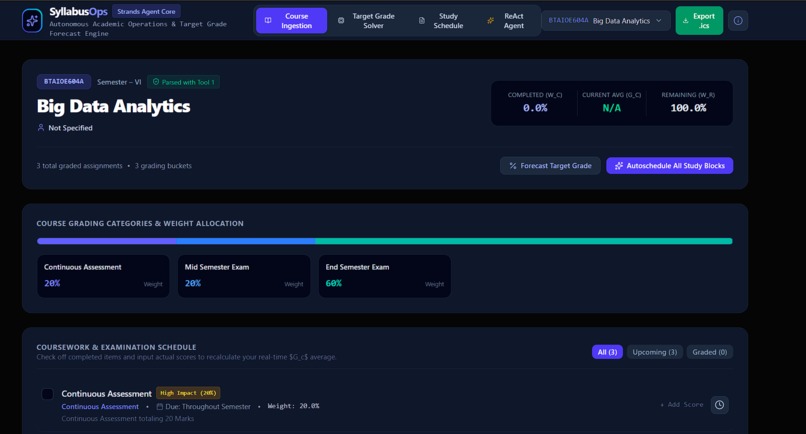
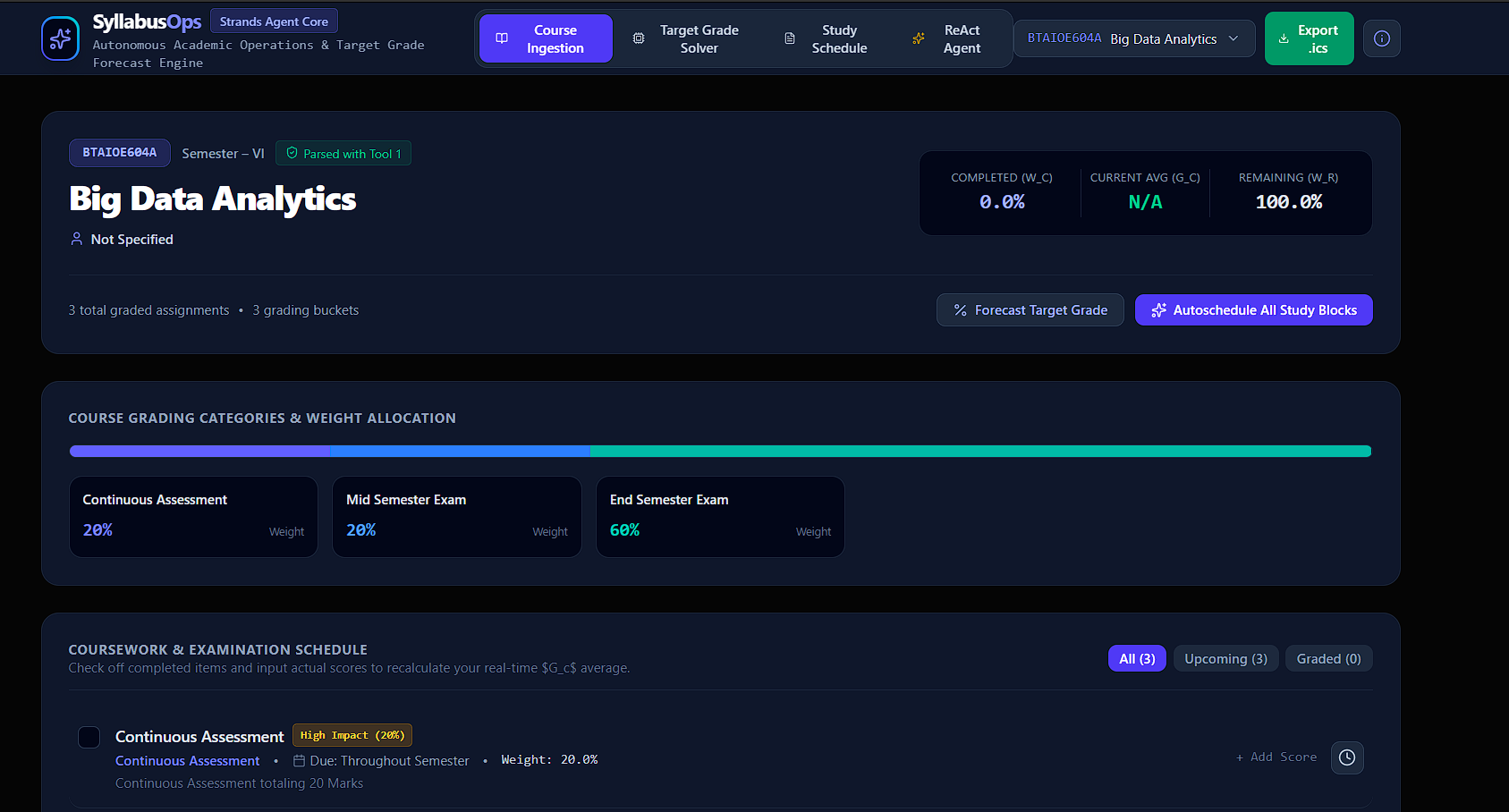
Dashboard of user with
-
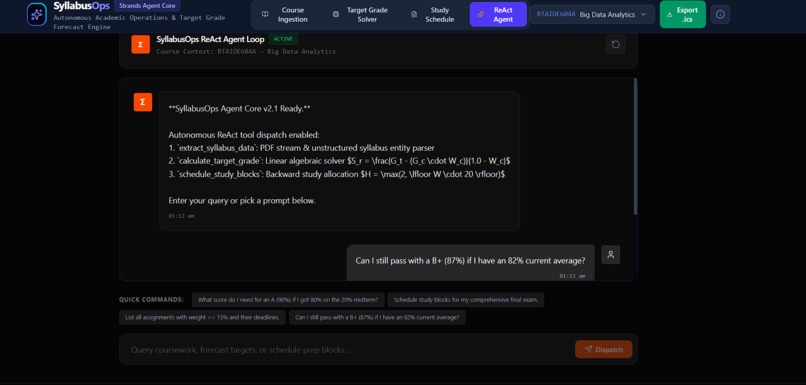
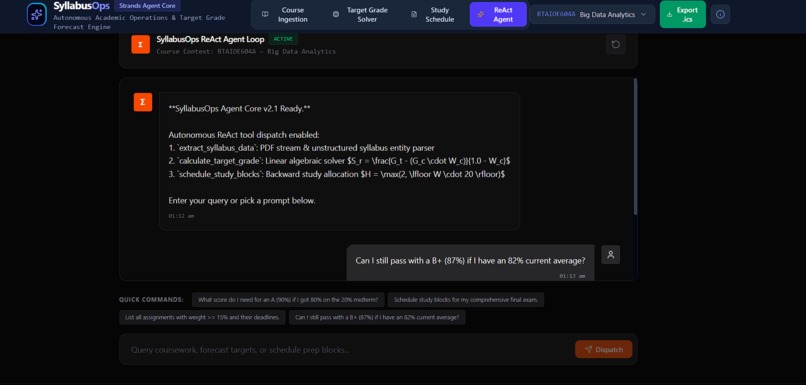
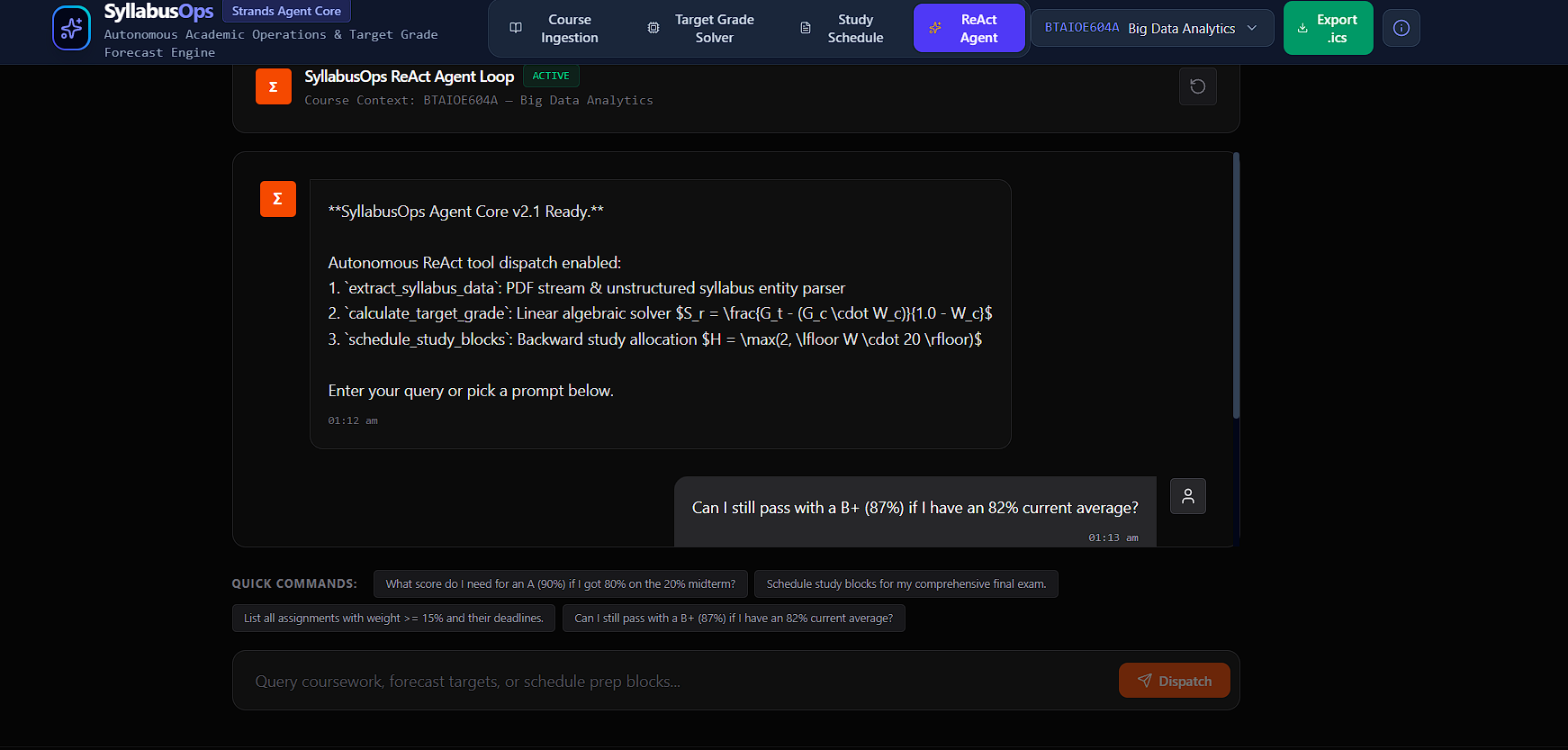
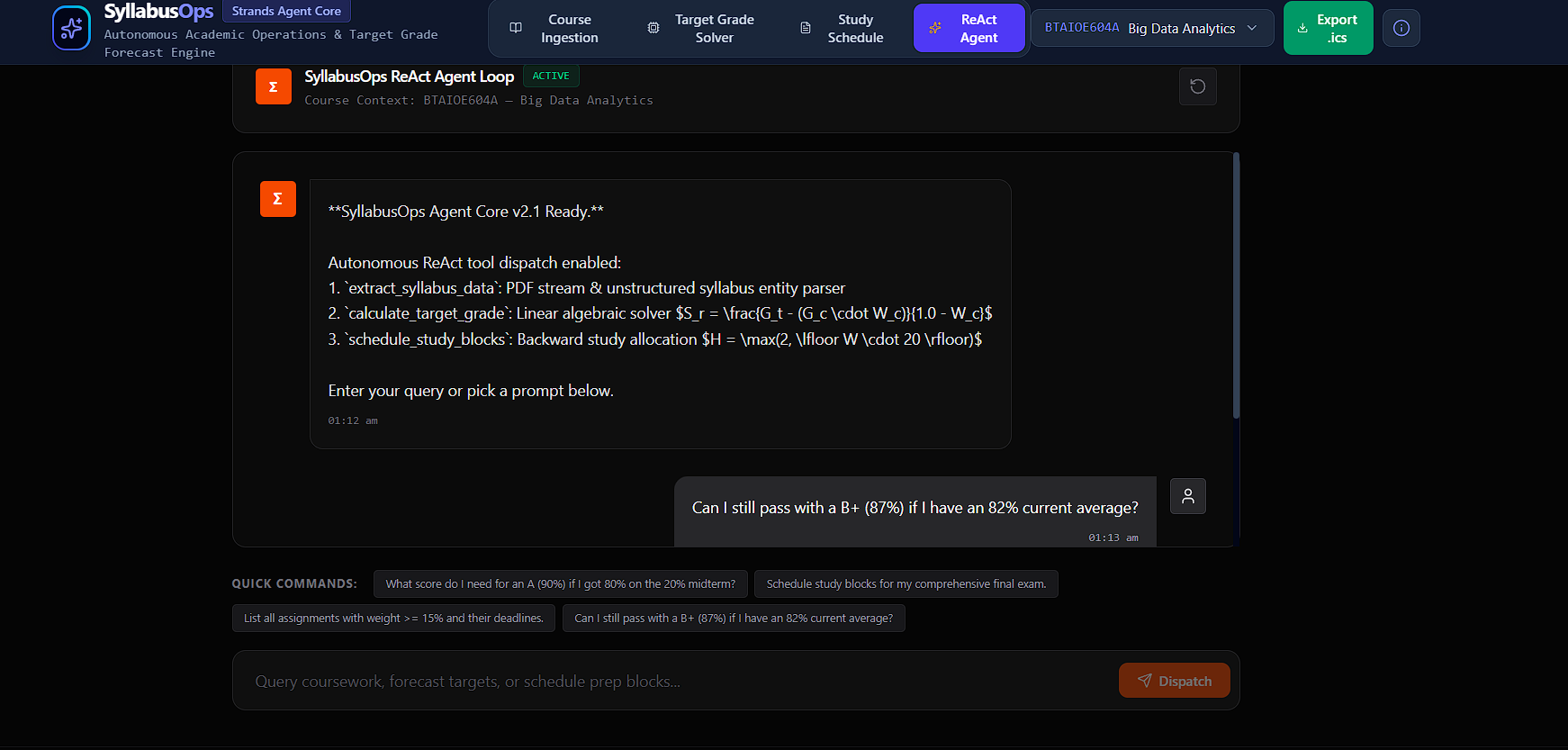
(AI Agent or Chatbot) Question and answer related question
-
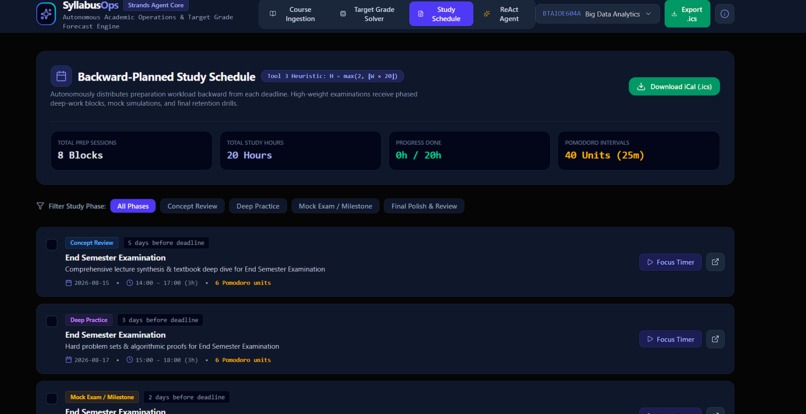
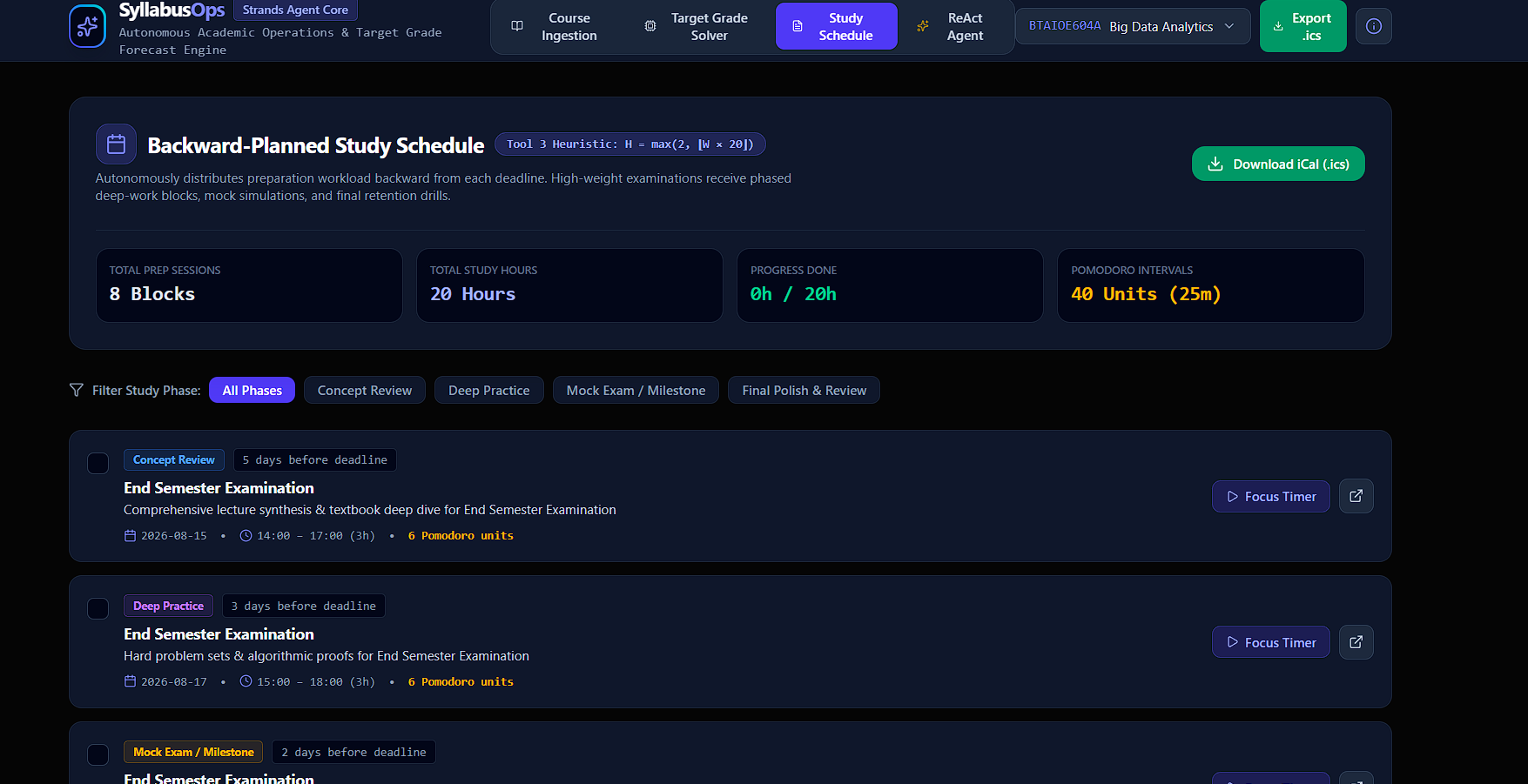
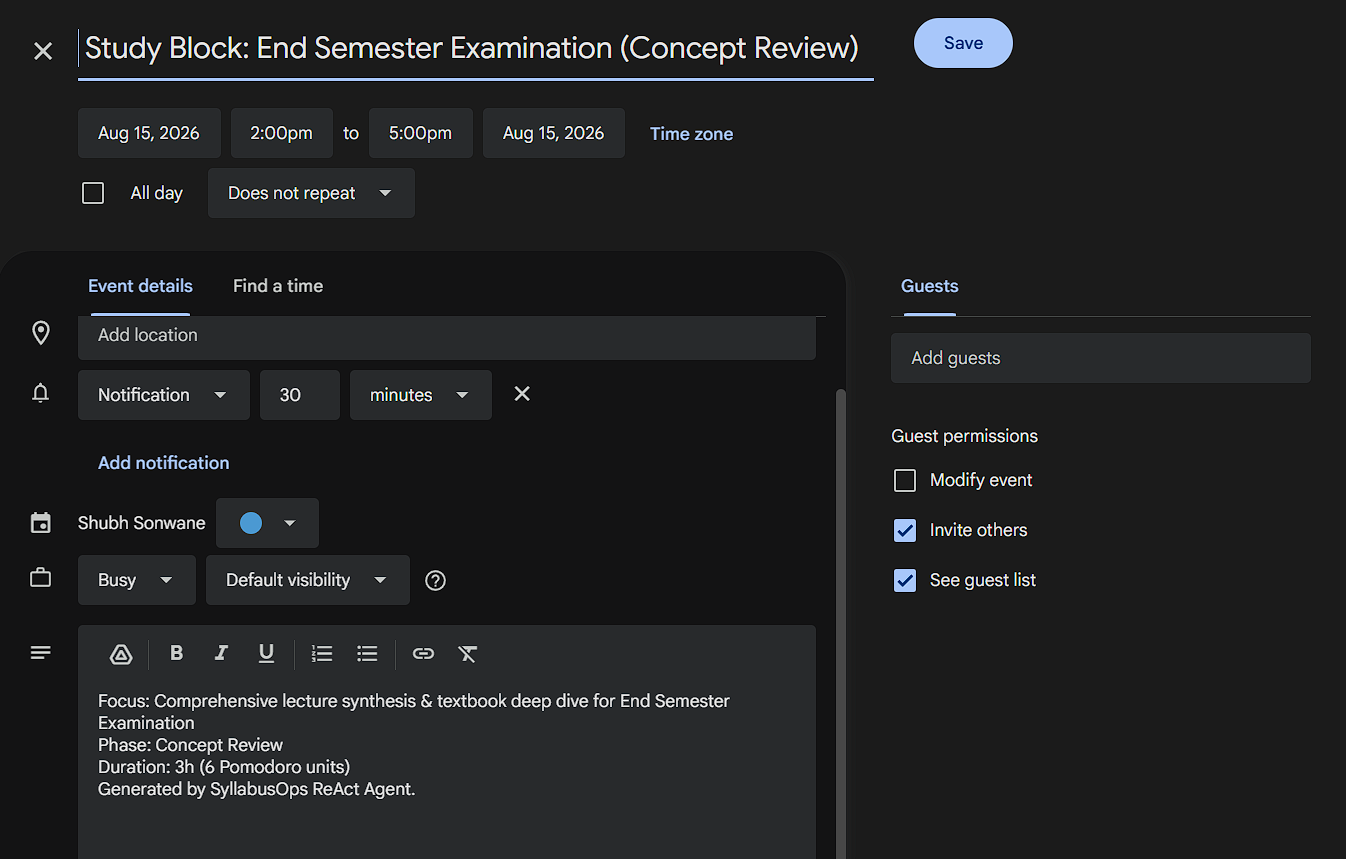
study scheduler
-
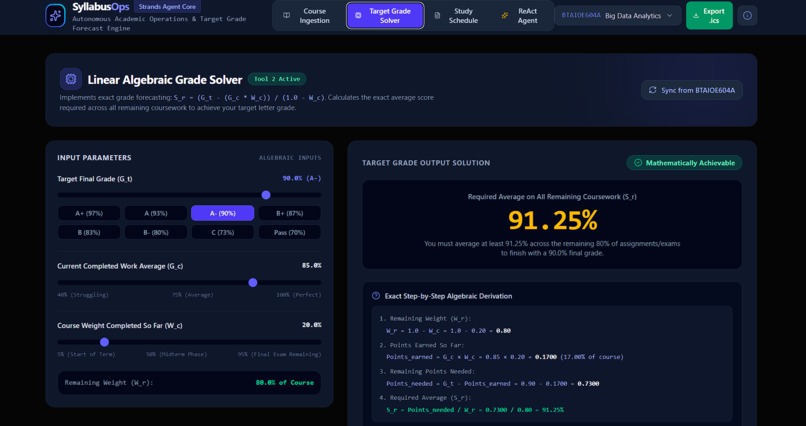
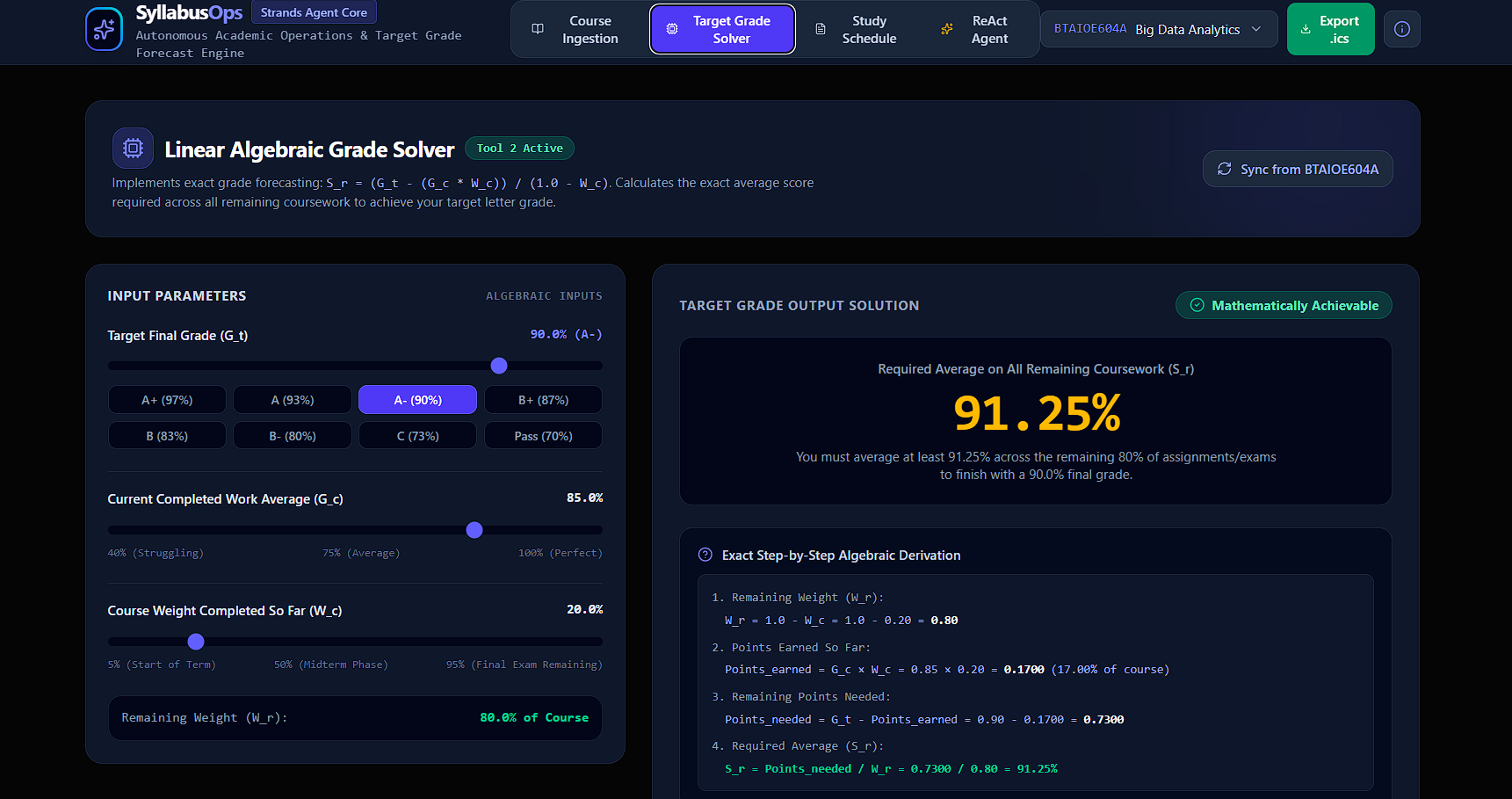
Target Guide Solver
-
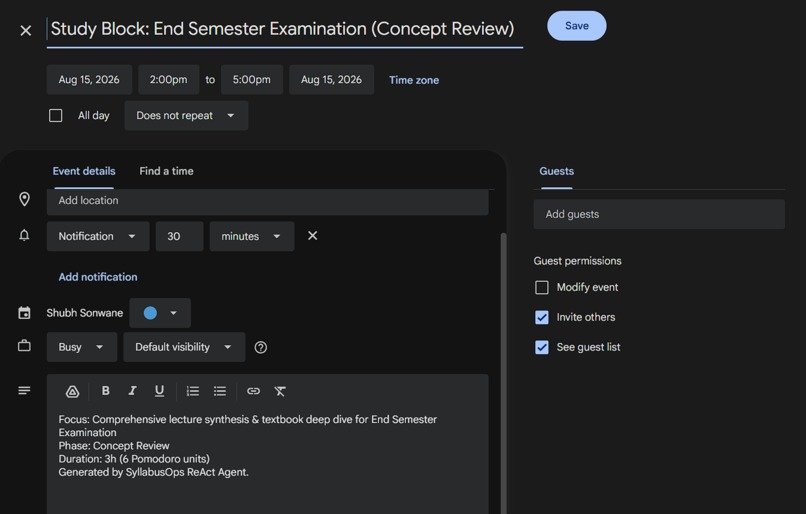
Directly access the google Callender for schedule
-
-
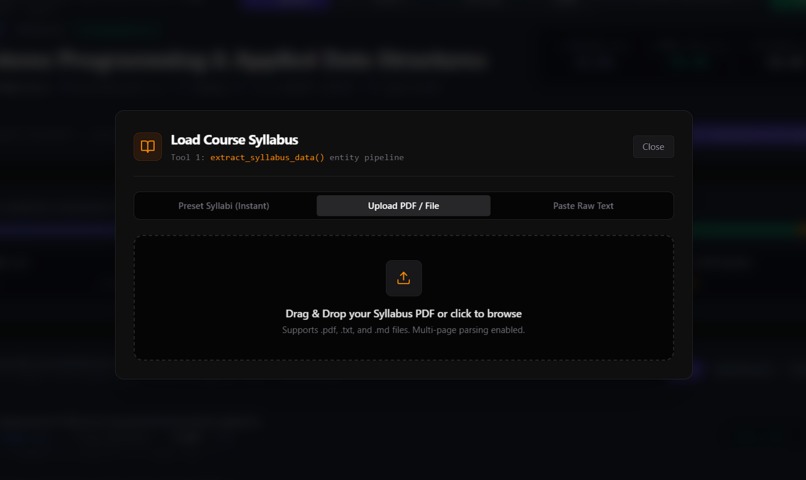
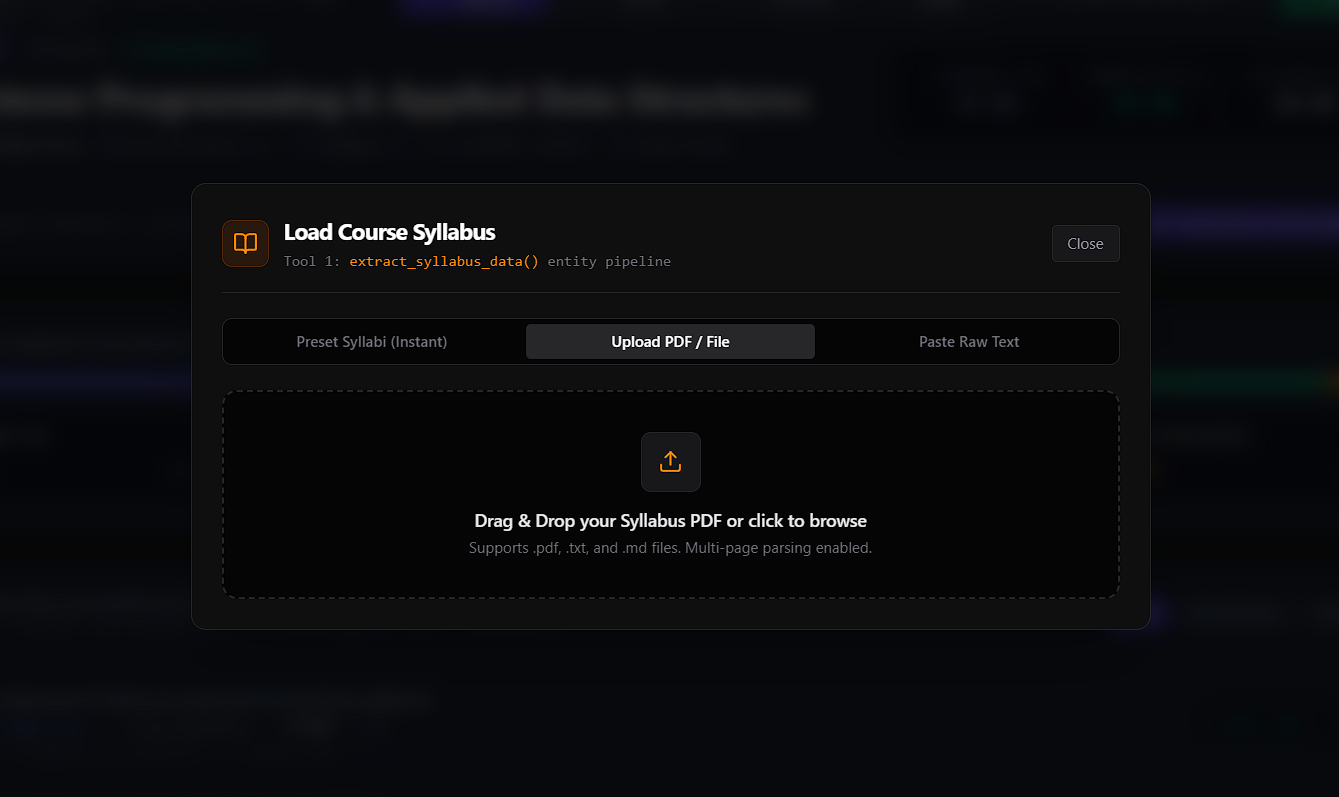
Drag and Drop Your Syllabus PDF or Click to browse
-
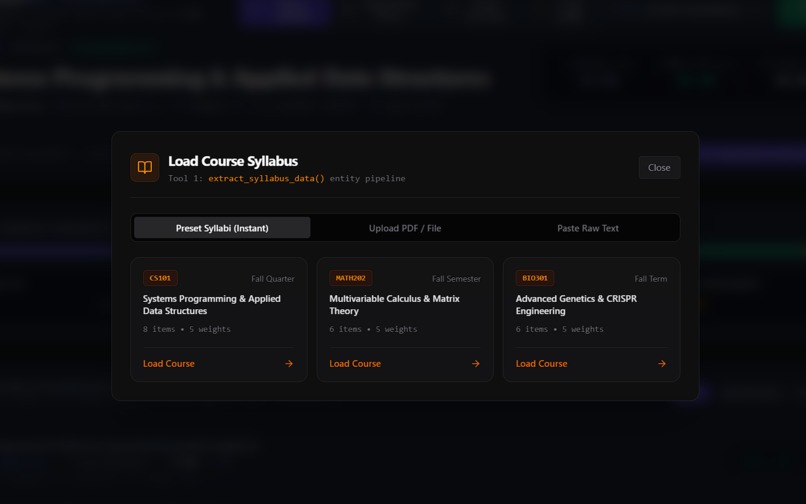
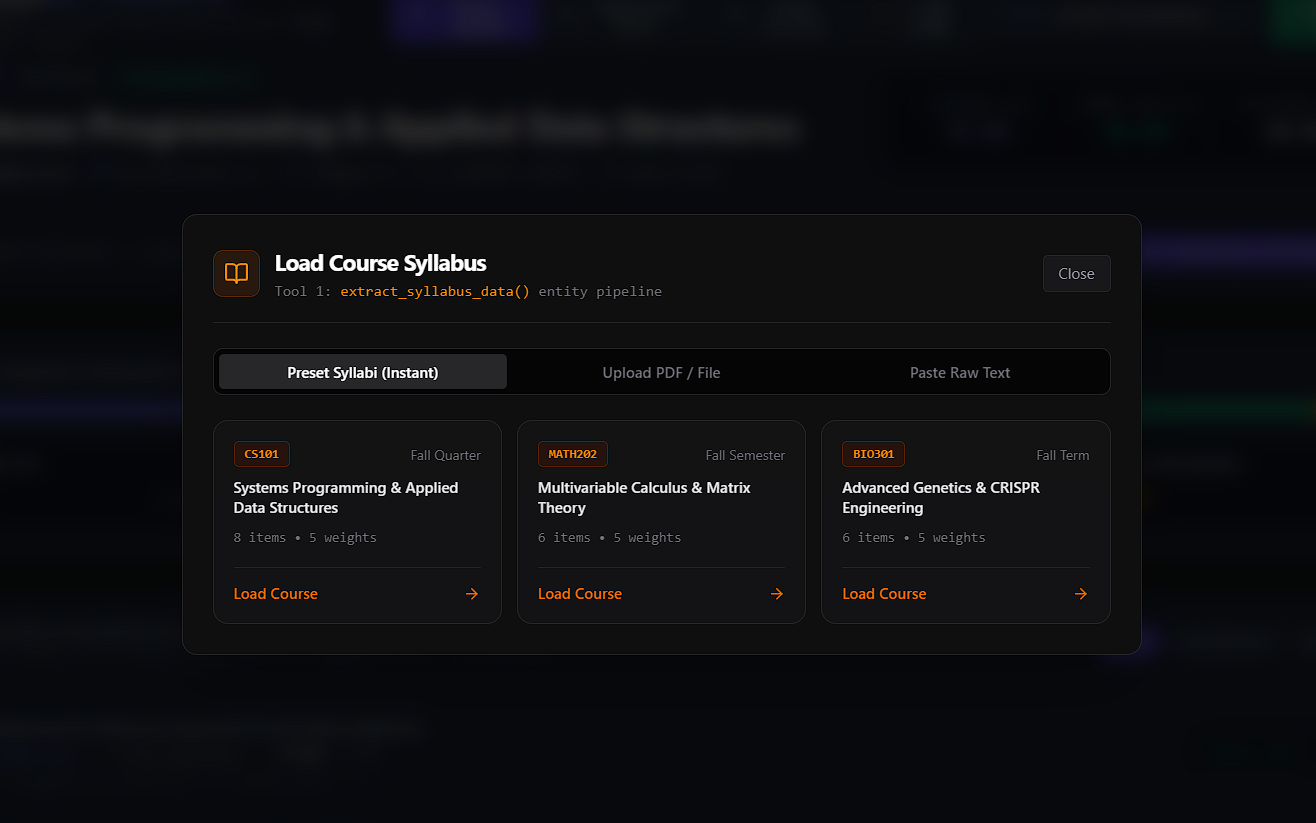
previous Load Course Syllabus
-
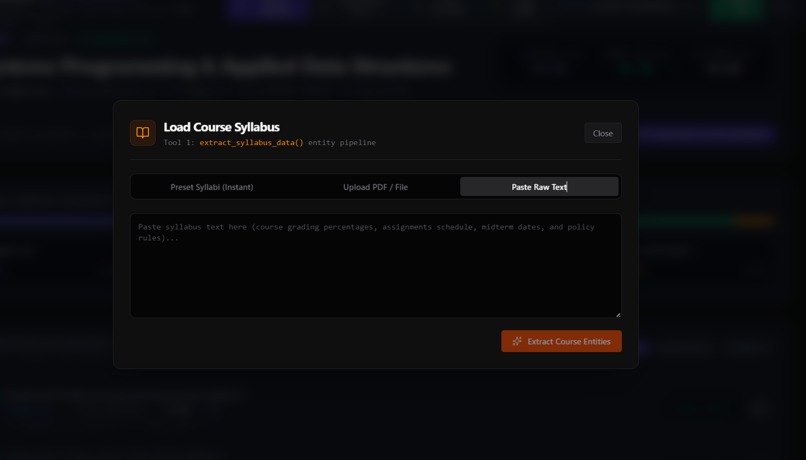
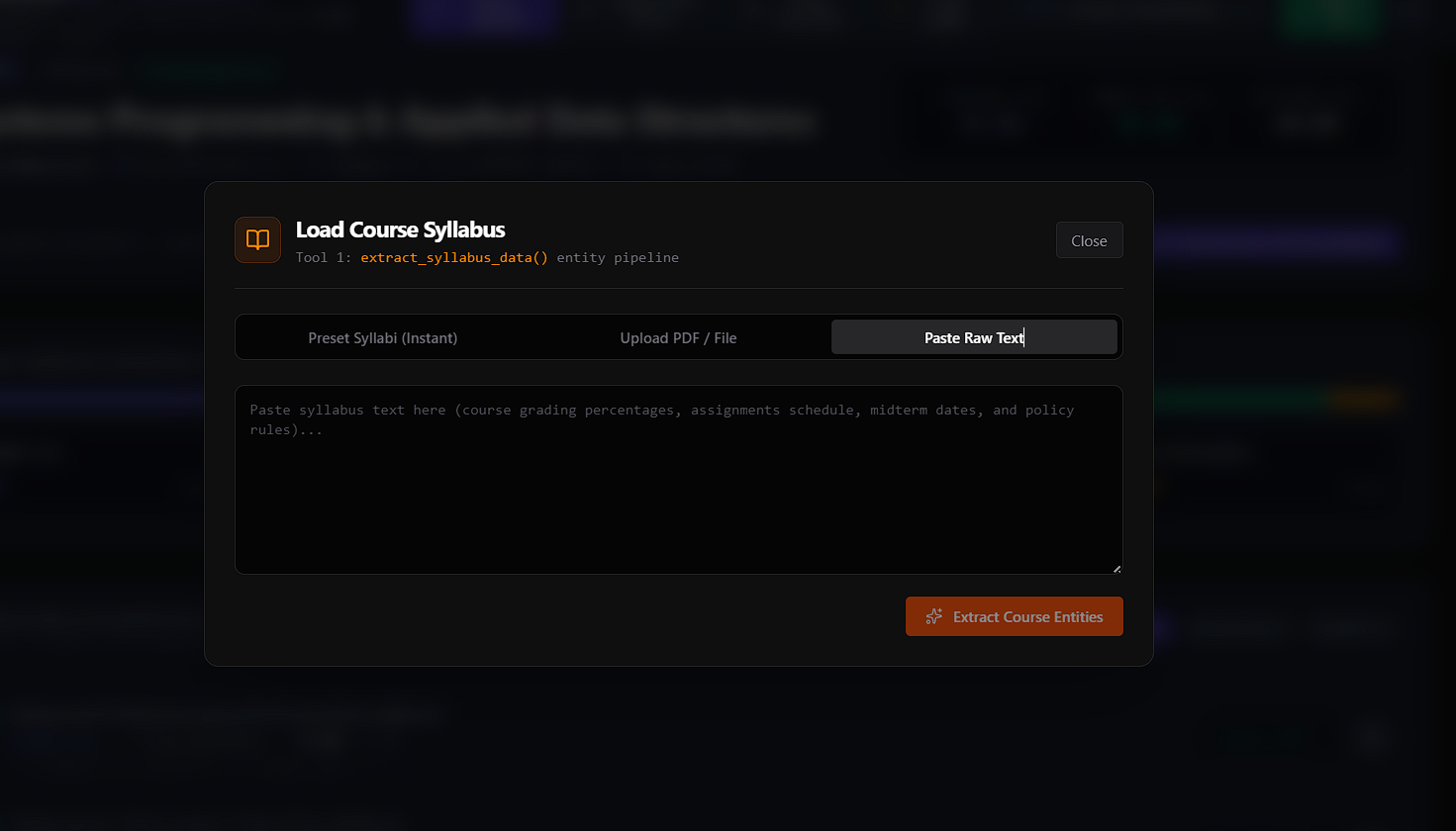
paste raw text
Inspiration
Every semester, college students face the same hidden challenge: navigating a flood of 10-to-20-page course syllabi across multiple classes. Important assignment due dates, exam schedules, and complex grade-weighting schemes are locked inside static PDF documents. Students either spend hours manually transferring dates into calendars or—worse—miss critical deadlines and miscalculate what scores they need on final exams to maintain their grades. We wanted to build an agent that eliminates this friction entirely. SyllabusOps turns static academic PDFs into an active operational engine, giving students an autonomous assistant that parses course policies, calculates target grade requirements, and proactively blocks out study time on their calendar.
What it does
How we built it
Challenges we ran into
Handling Different PDF Formats: Syllabi can look very different depending on the professor. Some use tables, while others use bullet points, multiple columns, or different layouts. Making the AI correctly understand all these formats and consistently extract the information in the required JSON format took a lot of prompt tuning and testing. Creating a Balanced Study Schedule: Another challenge was automatically creating study sessions without overlapping them. The system also had to consider assignment deadlines and their importance while planning the available study time. To solve this, I designed scheduling rules and heuristics before connecting the system to the calendar API.
Accomplishments that we're proud of
What we learned
Understanding the Power of the Strands SDK: One of the biggest things I learned was how useful the Strands SDK tool-based approach can be. Instead of creating complicated conditional logic for every step, I could define Python functions using @tool and let the AI agent decide which tool to use and when. This made the system more flexible and easier to maintain. Automating Repetitive Tasks with AI Agents: I also learned that everyday repetitive tasks, such as planning study schedules and managing calendar events, can be automated effectively using AI agents. By breaking the process into multiple steps, the agent can understand the user's requirements, perform the necessary calculations, and complete the task automatically.
What's next for SyllabusOps AI
Canvas & Blackboard Integration: In the future, SyllabusOps could be connected directly with LMS platforms such as Canvas and Blackboard. This would allow the system to automatically detect new assignments and deadlines whenever professors post them, reducing the need for students to enter information manually. Multi-Syllabus Conflict Detection: Another useful feature would be allowing students to upload multiple course syllabi at the same time. The system could analyze all of them together and identify busy periods, such as weeks when several important exams or high-weight assignments are scheduled close to each other. It could then adjust the study plan to help students prepare in advance.
Built With
- ai-agents
- amazon-bedrock
- amazon-web-services
- anthropic-claude
- generative-ai
- google-calendar-api
- json
- llm
- pdf-parsing
- python
- restapi
- strands-agents-sdk
- streamlit


Log in or sign up for Devpost to join the conversation.