-
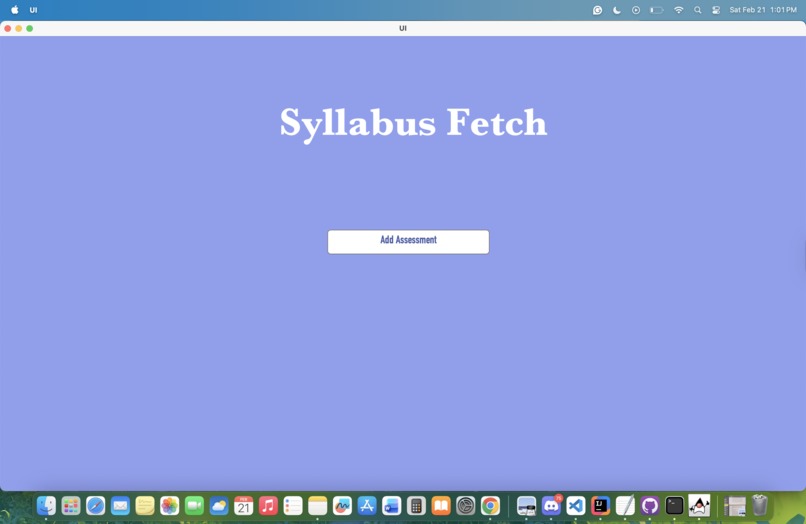
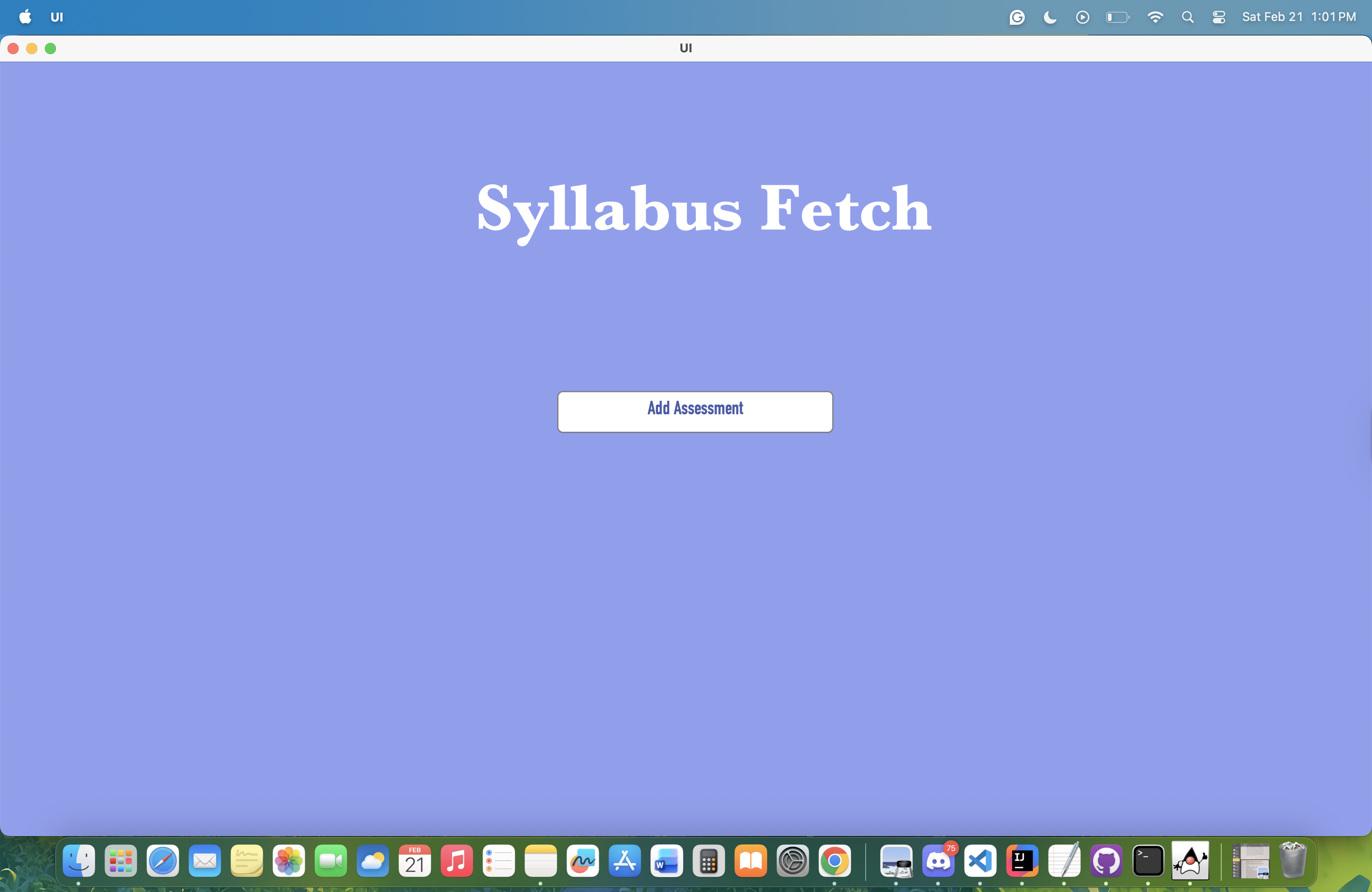
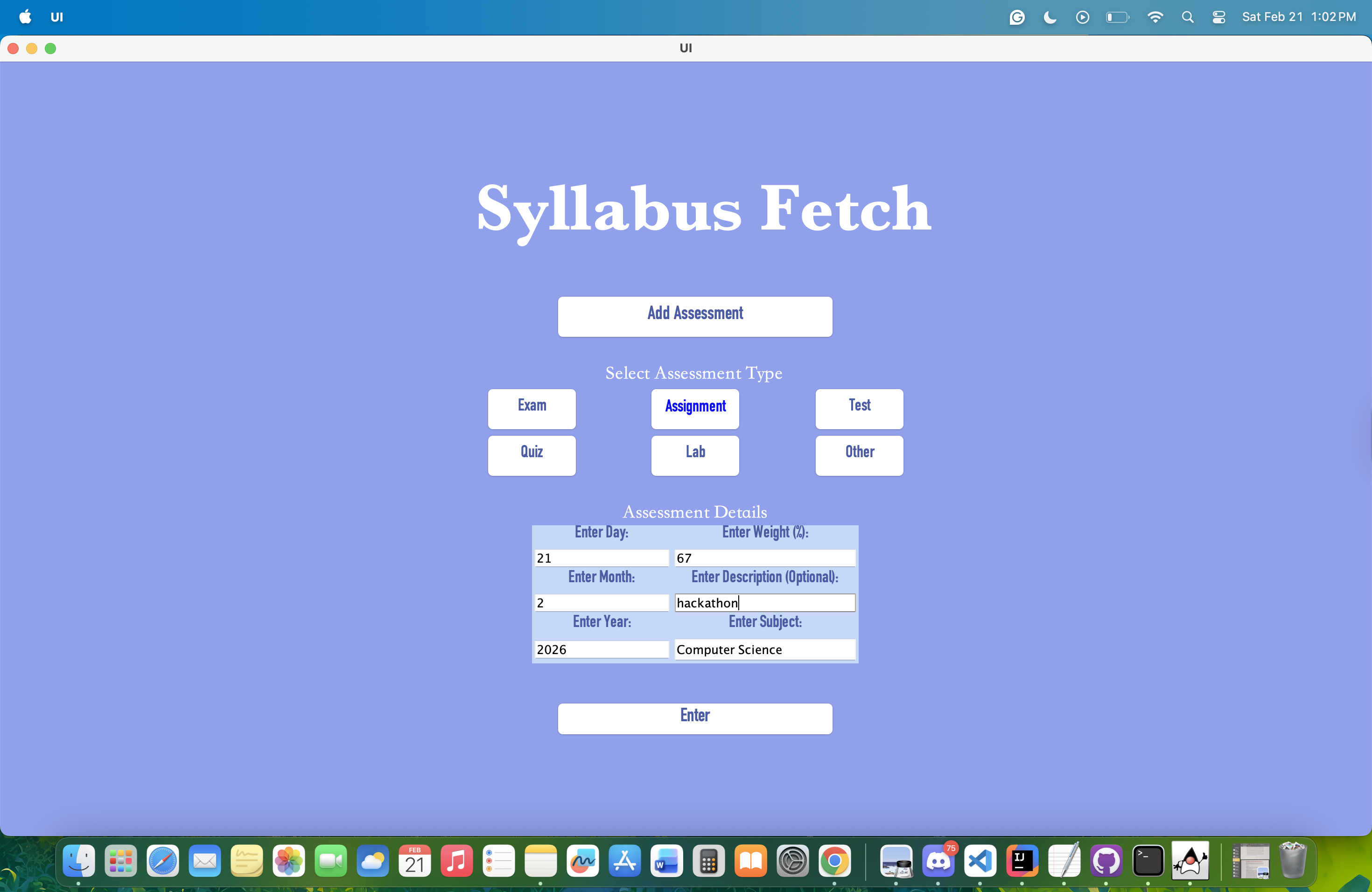
This is the home screen of the application.
-
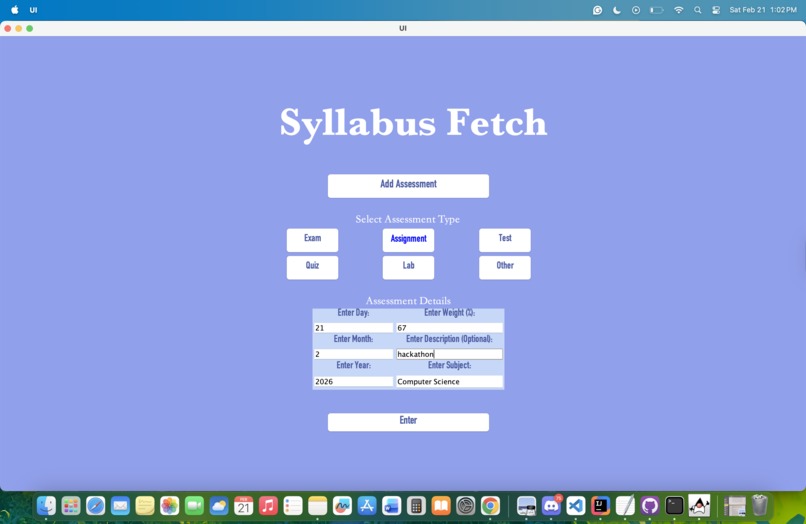
This is where users can input their assessment details, clicking "Submit" to add it to the .csv
-
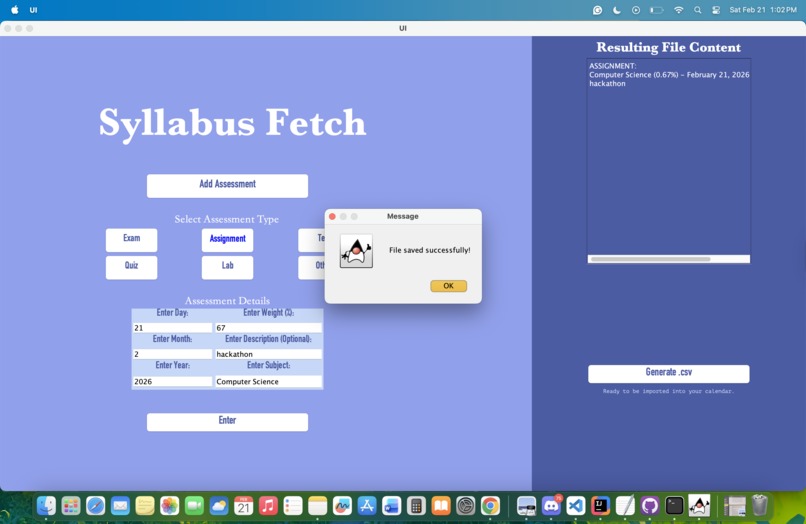
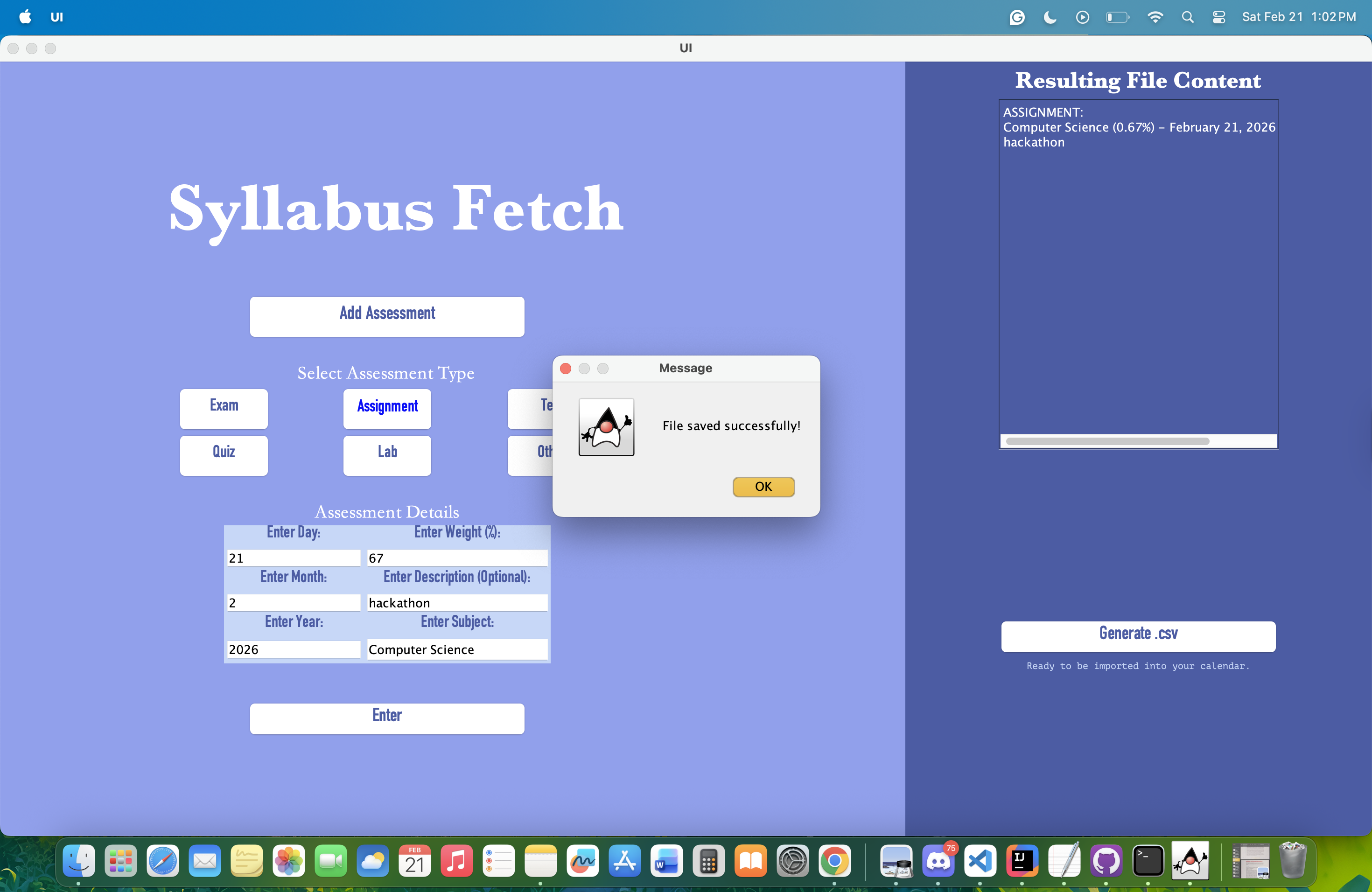
This is the message displayed to the user on a successful file download.
Inspiration
Students have busy lives. When courses start, student's rush to view their syllabus to add all their assessments to their calendar. This takes up a bunch of time, and time is crucial for students. Instead of valuable time being wasted tediously transferring assessment after assessment into their calendars, Syllabus Fetch makes this process 10x easier.
What it does
All you have to do is input the general details about your assessments, and a .csv file will be automatically created for you so that you can import it to ANY calendar app of your choice.
How we built it
We used Java for the backend and Java Swing for the frontend. We used a two-tier architecture with a UI and a domain tier. The UI layer handles user input and output, and the domain layer handles all the logic and data management. Together, they communicate to form this amazing app!
Challenges we ran into
Java Swing was relatively new to us, so having to learn and implement that under time constraints posed a respectable challenge. Moreover, our group mates were unfamiliar with one another and had different specialties when it came to our coding knowledge. This made communication difficult at first, but through perseverance and our common goal to succeed, we managed to overcome these challenges.
Accomplishments that we're proud of
We sufficiently planned our project, roles, and ideas to effectively use the allotted time to do the best we could. We were proud of the fact that all the knowledge that we have learnt throughout our individual coding careers came together to produce a project that encompasses all of our abilities.
What we learned
We learnt that if we wanted to produce something real and useful, planning beforehand and communicating with other members was key.
What's next for Syllabus Fetch
We plan to hopefully add features to further enhance the syllabus-fetching experience, as well as improve future code maintainability.

Log in or sign up for Devpost to join the conversation.