Inspiration
Having to repeatedly check a syllabus for assignments can be tedious and even confusing. We decided that student's should have an application that would allow them to make one unified assignment schedule for all their classes.
What it does
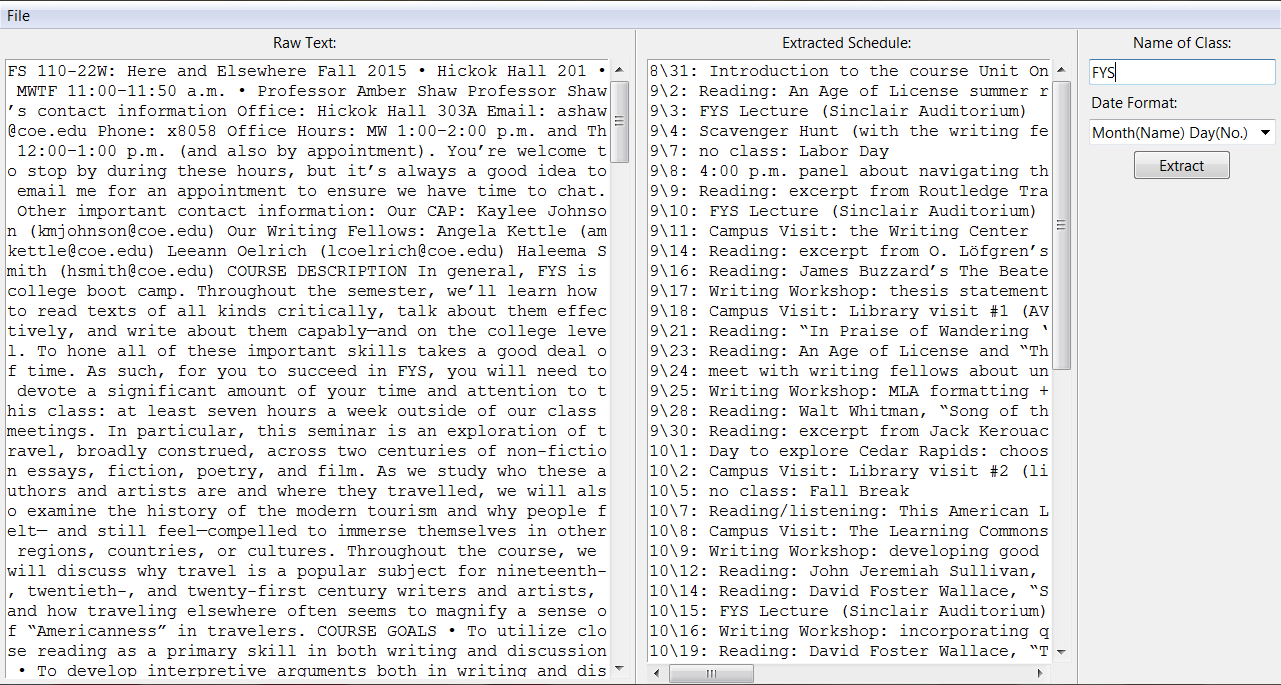
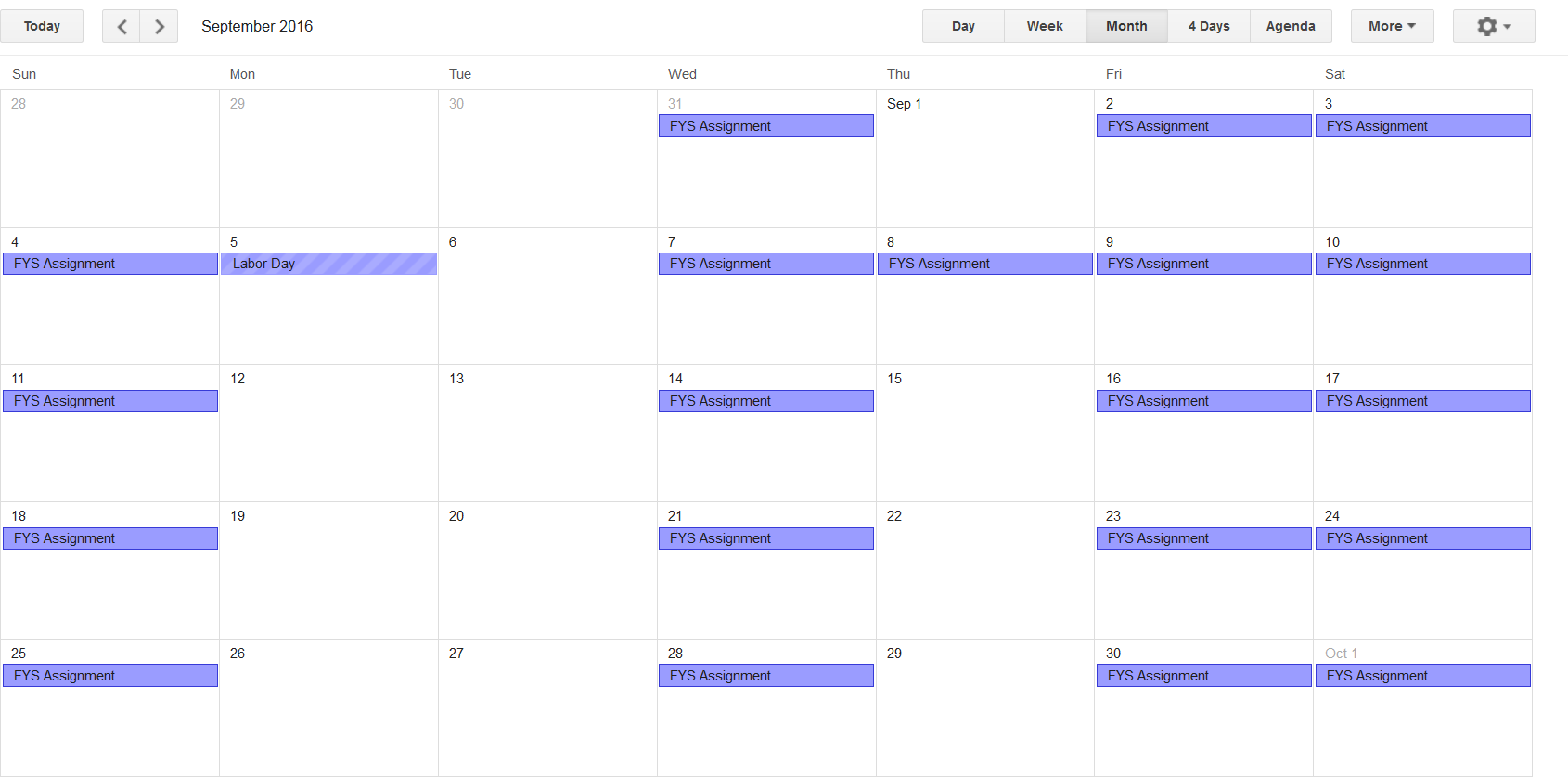
Syllabot reads in a syllabus as a text document and scans for due dates according to the user's specified format. Syllabot then saves these deadlines in a Comma Separated Values (.csv) file, which the user can then import to a variety of calendar applications such as Google Calendar.
How we built it
Syllabot was constructed in Python using IDLE with TkInter providing Syllabot's GUI, and as a result is platform independent. We performed date/assignment extractions using a variety of techniques for the different date/assignment formats.
Challenges we ran into
Dates and assignments can take on a wide variety of formats, and professors may not be consistent within their own syllabi. Similarly, deciding which statements are assignments and which are filler text proved to be a problem, although not insurmountable.
Accomplishments that we're proud of
We managed to adapt Syllabot to accommodate the most common assignment formats that professors use. We also provided a file that users can easily import to a scheduler of their choice.
What we learned
Certain date/assignment formats are substantially easier to accommodate than others. Regular expressions can help in that regard, but not for all formats.
What's next for Syllabot
An expanded set of supported date/assignment formats, as well as support for reading .pdf and .doc files. A potential end-goal would be support for direct input into Google Calendar.
Built With
- idle
- python


Log in or sign up for Devpost to join the conversation.