-
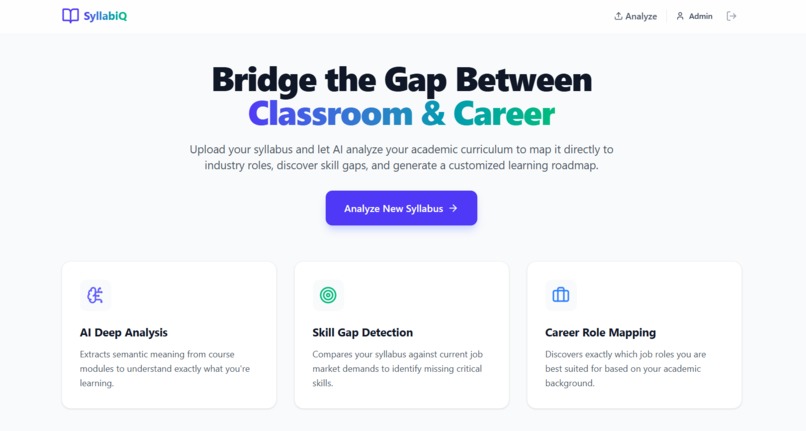
Dashboard with History
-
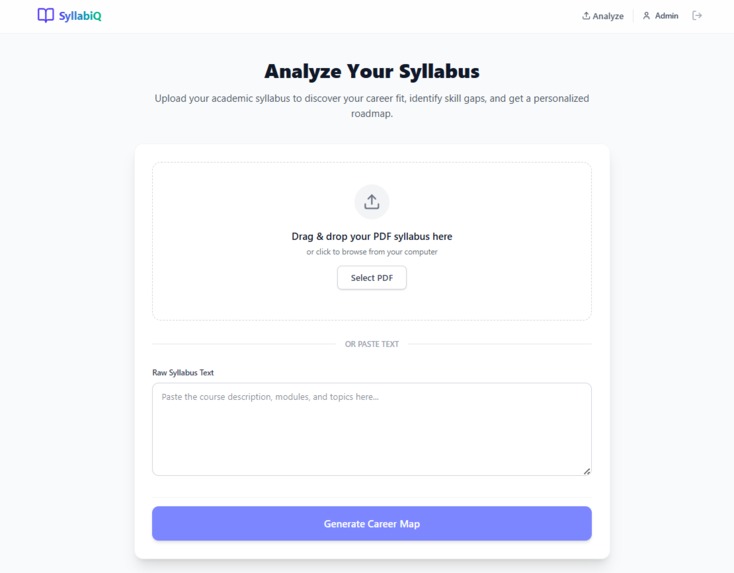
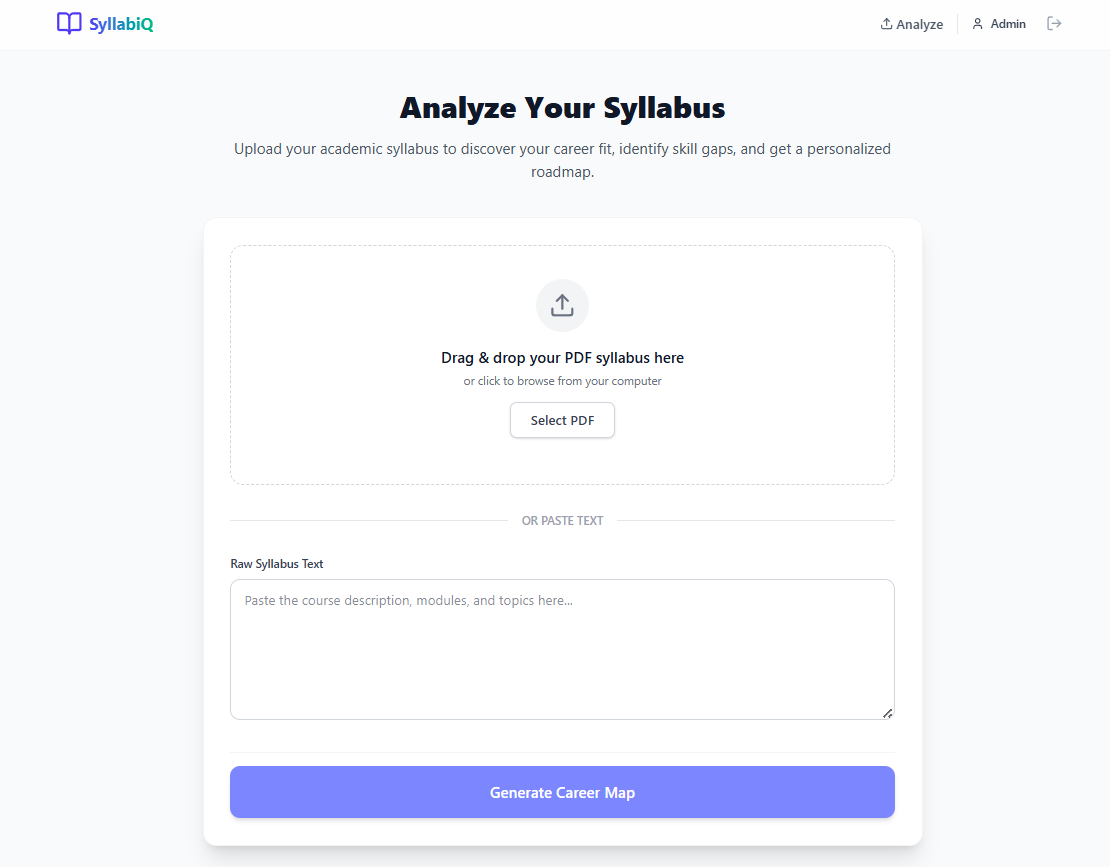
Syllabus Upload
-
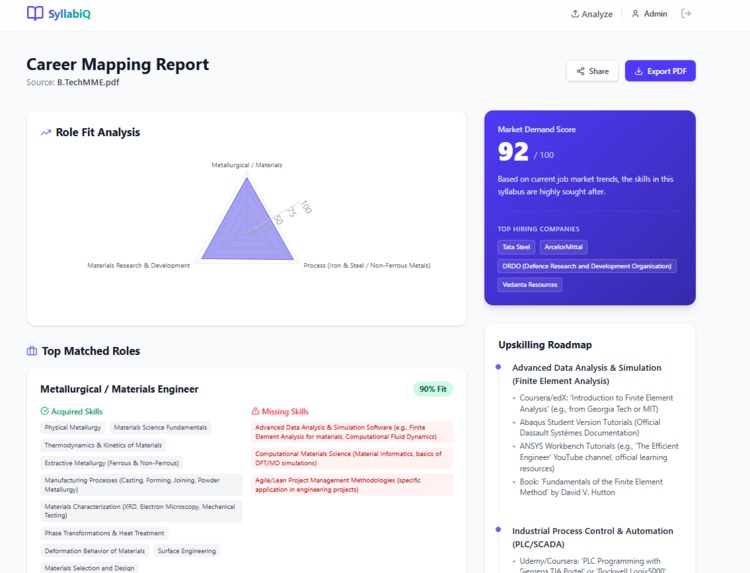
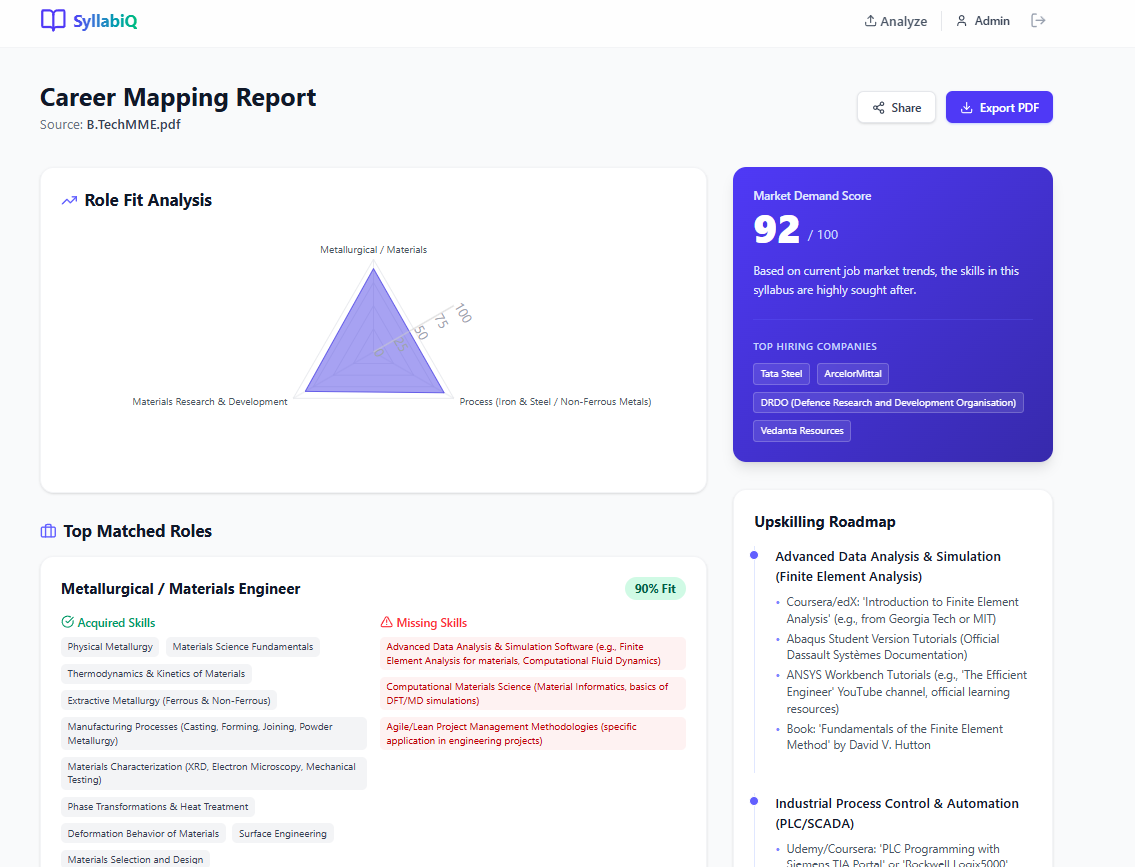
AI Analysis - Matched Role , Missing Skills , Upskilling Roadmap , Top Hiring Companies
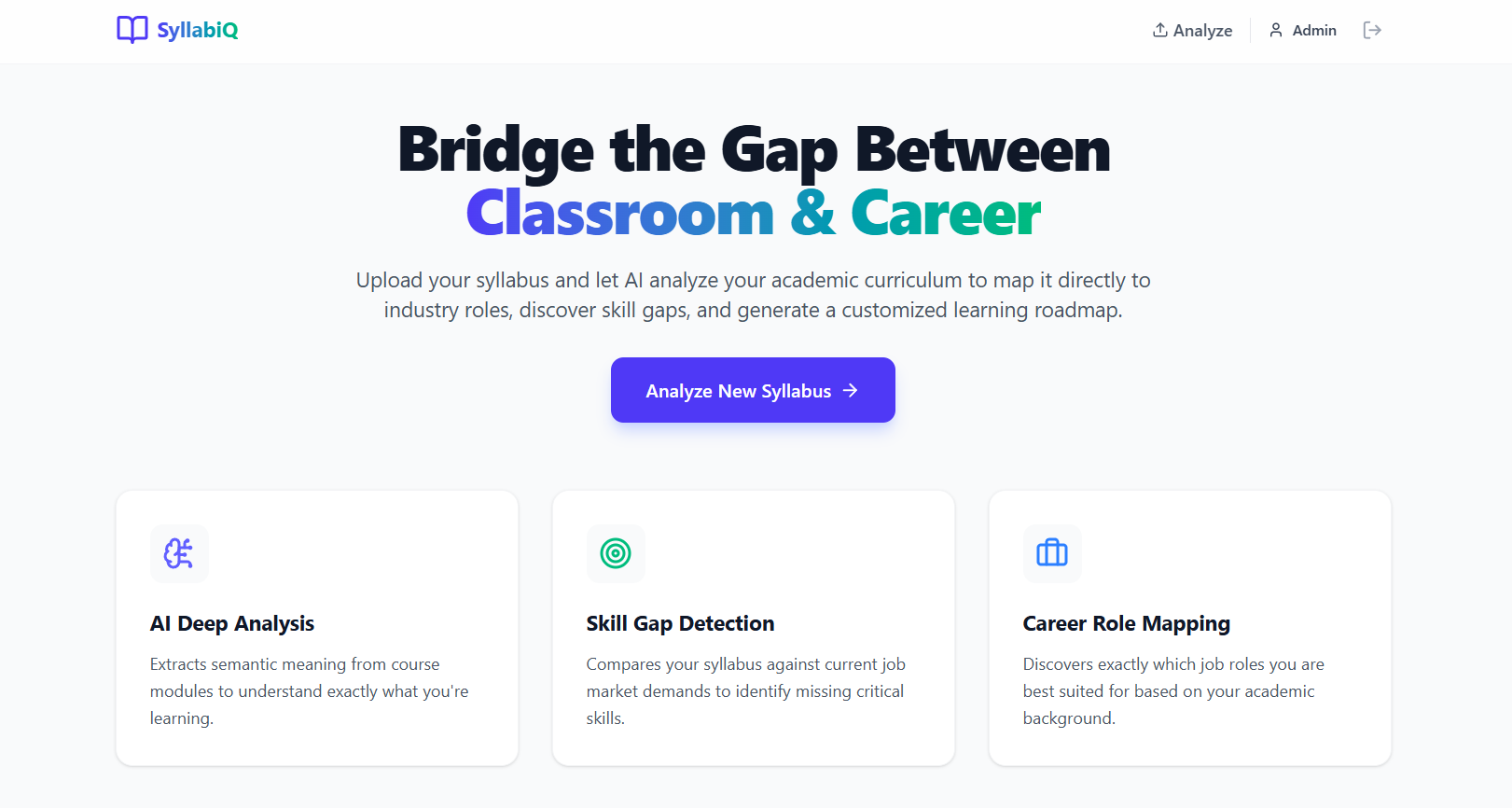
SyllabiQ - AI Powered Smart Syllabus Analyzer
Inspiration
Most students spend years studying subjects without clearly understanding where those subjects can actually lead in the real world. A syllabus usually tells students what to study, but not why it matters for their future careers.
We noticed that many students struggle to connect academic learning with industry expectations. Even after completing courses, they are often unsure about:
- what career roles fit their knowledge,
- which important skills they are still missing,
- and how prepared they are for the job market.
That is what inspired us to build SyllabiQ — a platform that converts syllabus content into practical career insights using AI.
What It Does
SyllabiQ helps students understand the real-world value of their academic syllabus.
Users can upload a syllabus PDF or paste syllabus text, and the platform analyzes the content to:
- identify important topics and skills,
- map them to relevant career paths,
- detect missing industry-required skills,
- and generate a personalized career analysis report.
The platform also provides a simple dashboard with visual insights so students can better understand their strengths, gaps, and possible career opportunities.
Instead of looking at a static syllabus document, students get a clearer picture of where their learning can take them.
How We Built It
We built SyllabiQ as a full-stack web application.
Frontend
- React.js
- Vite
- Tailwind CSS
- Framer Motion
- Recharts
Backend
- Node.js
- Express.js
- MongoDB Atlas
- JWT Authentication
AI & Processing
- Gemini AI
- PDF text extraction
- Prompt Engineering
Deployment & Tools
- Render
- Vercel
- GitHub
- Postman
The workflow starts with syllabus upload and text extraction. The extracted content is then processed through AI-based analysis to identify skills and compare them with career requirements. Finally, the platform generates insights and visual reports for the user.
Challenges We Faced
One of the biggest challenges was handling syllabus PDFs because different universities use completely different formats and structures.
Extracting meaningful skills from raw syllabus text was also difficult. Academic terminology does not always directly match industry terminology, so building useful career mapping required careful logic and processing.
We also faced challenges while:
- integrating frontend and backend smoothly,
- handling file uploads efficiently,
- designing the dashboard UI,
- and presenting complex analysis in a simple and understandable way.
Building an end-to-end working platform within limited hackathon time was itself a major challenge.
Accomplishments We’re Proud Of
We are proud that we successfully built a complete working platform that solves a real student problem.
Some key achievements include:
- syllabus upload and analysis system,
- AI-based career and skill mapping,
- interactive analytics dashboard,
- secure authentication system,
- and personalized career insight generation.
More importantly, we created something that can genuinely help students make better academic and career decisions.
What We Learned
While building SyllabiQ, we learned a lot about:
- full-stack application development,
- AI integration,
- PDF processing,
- authentication systems,
- API handling,
- and database management.
Beyond technical skills, this project also taught us how important problem-solving, teamwork, debugging, and time management are during rapid product development.
What’s Next for SyllabiQ
We want to expand SyllabiQ into a more complete academic and career guidance platform.
Some features we plan to add in the future:
- real-time job market analysis,
- internship and job recommendations,
- personalized learning roadmaps,
- AI mentoring assistant,
- resume generation,
- and multilingual support.
Our goal is to help students not just understand their syllabus, but also understand how to build a successful career from it.
Final Thoughts
Education and industry are evolving faster than ever, but students still rely on static syllabus documents with very little career direction.
SyllabiQ aims to bridge that gap by helping students connect what they learn in classrooms with what the real world actually needs.
Built With
- axios
- express.js
- framer-motion
- full-stack-web-development
- github
- google-gemini-ai
- google-gemini-ai-api
- javascript
- jwt-authentication
- mern
- mongodb
- mongodb-atlas
- multer
- node.js
- pdf-parsing
- postman
- react.js
- recharts
- render
- rest-apis
- tailwind-css
- vercel
- vite


Log in or sign up for Devpost to join the conversation.