-
-
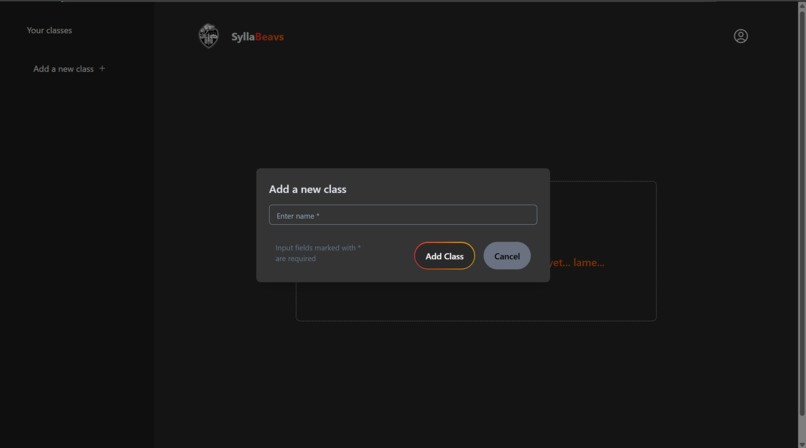
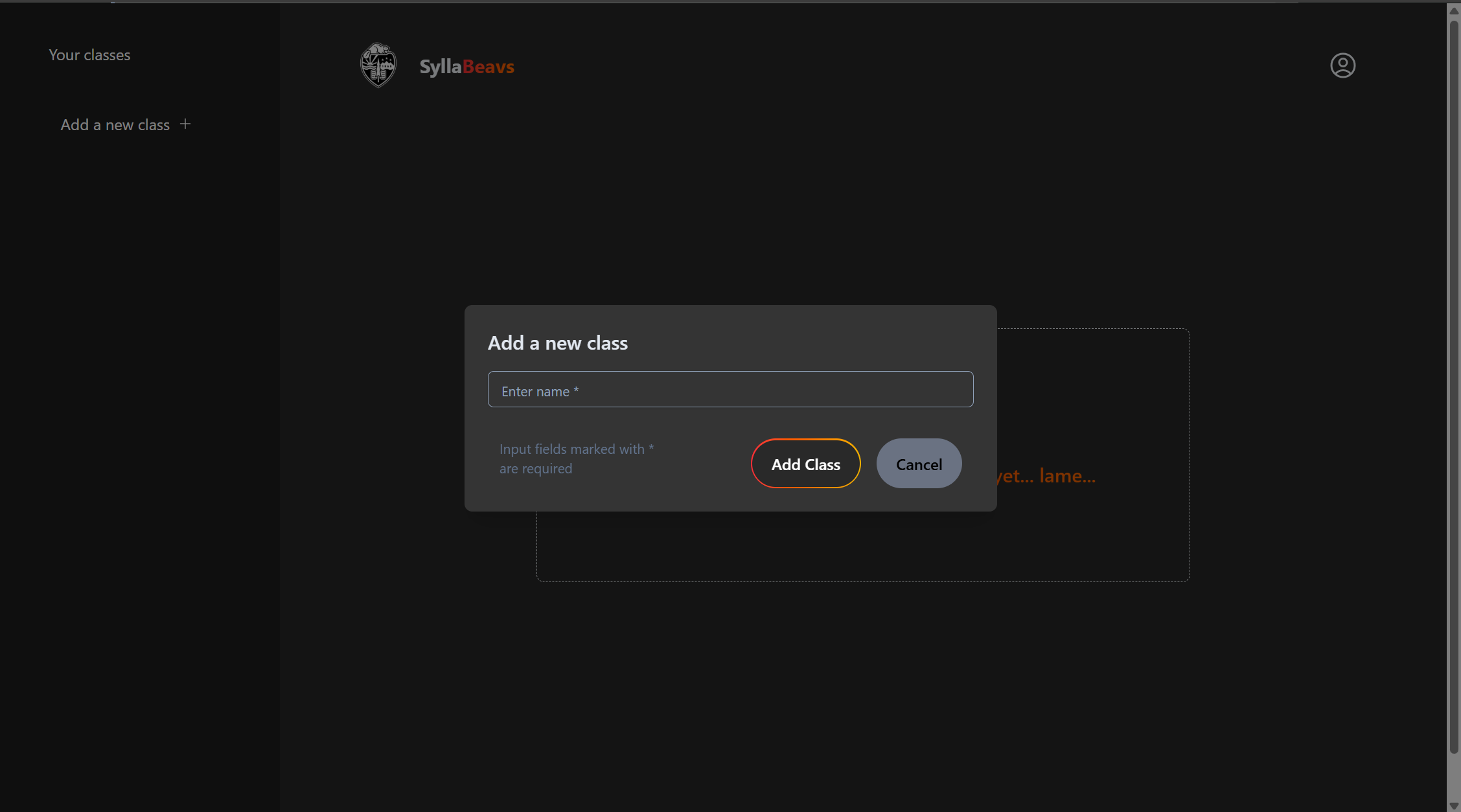
Add Class
-
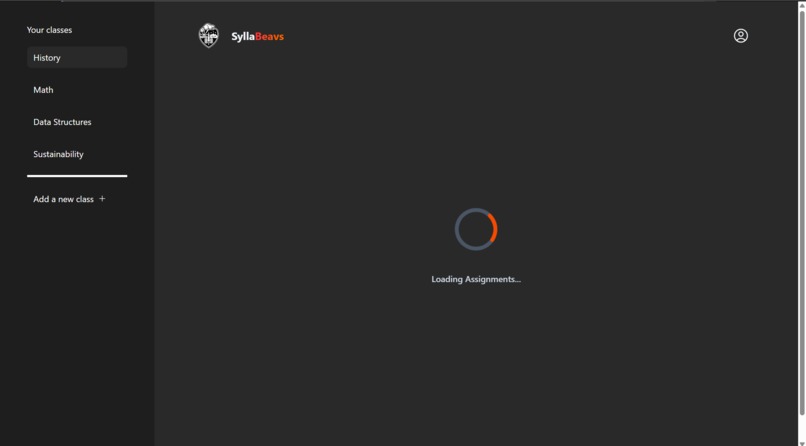
Uploaded Syllabus
-
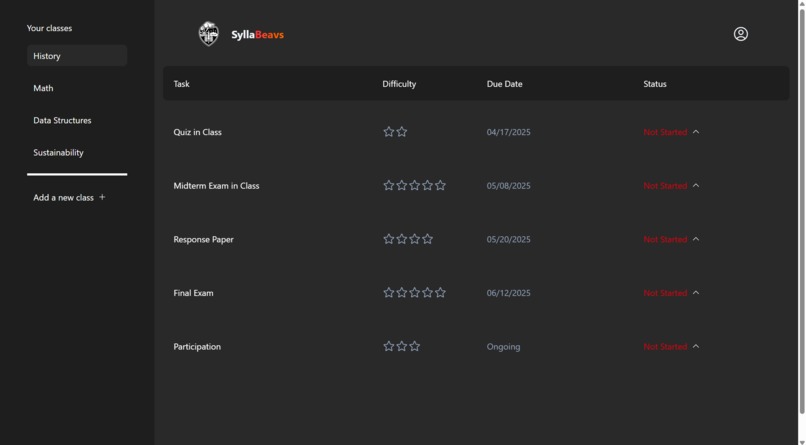
Assignment List
Inspiration
As students, we've often found ourselves stuck behind with a confusing syllabus, struggling to keep track of important assignments and deadlines. We wanted to created something that would automate this process for us, something that would turn such a mess into an organized assignment. That's how SyllaBeavs was born -- a better way to keep up with class work helping students like us stay organized and stress less
What it does
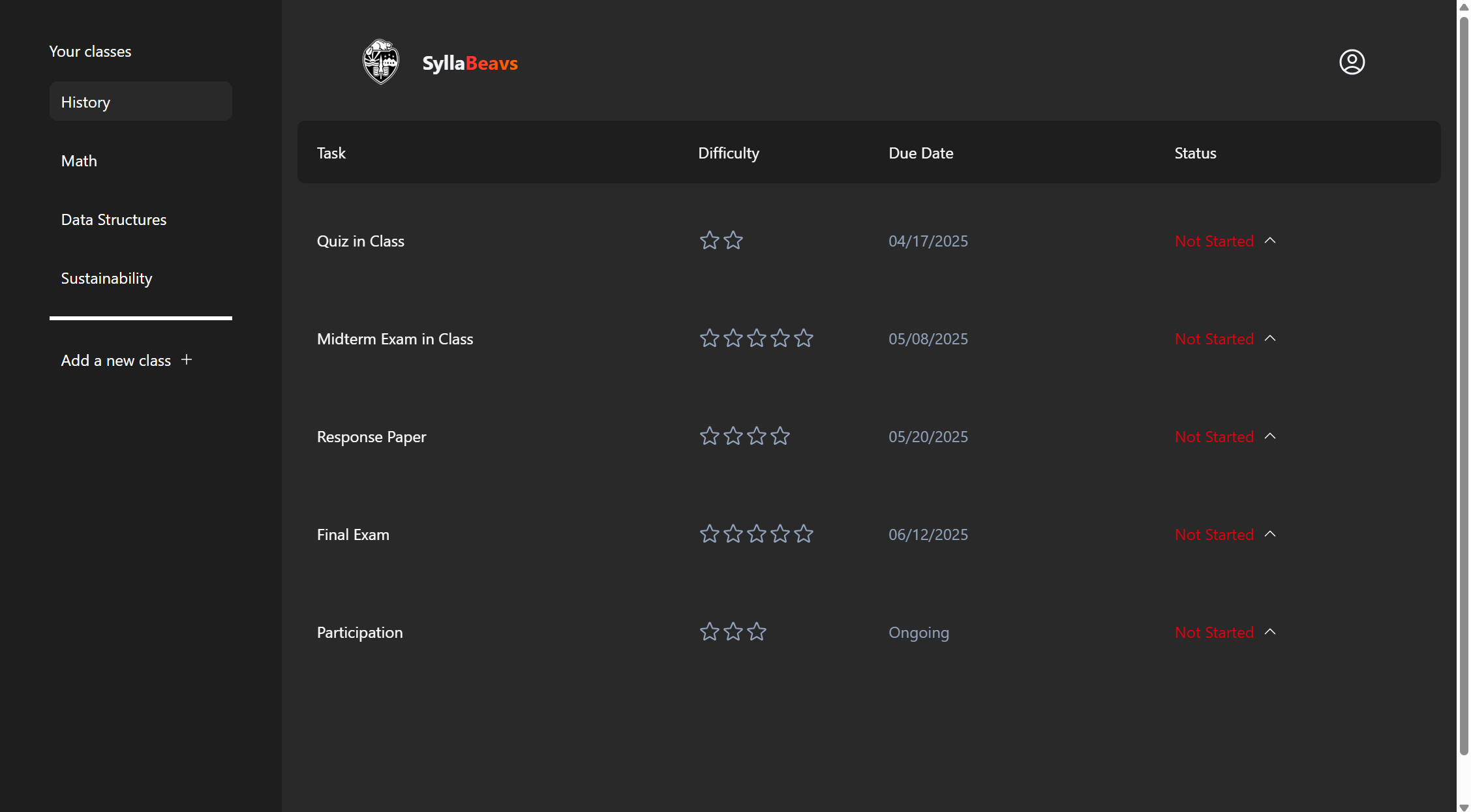
SyllaBeavs is an AI-powered organizational model takes in a class syllabus as a PDF, parses the content, and creates a list of assignments. This list include the assignments' names, due dates, estimated difficulty levels, and completion status (all of which is customizable and sortable to fit each user's needs). Users log in via Google OAuth, upload their syllabus, and receive a clean, summary of their assignments for the term.
How we built it
We build SyllaBeavs using Next.js with a React framework for the frontend, while also integrating Motion for smooth animations. The backend is powered by Python and FastAPI, which handles syllabus parsing and data extraction through OpenAI API calls. These two sides are connected via API calls to provide a seamless user experience.
Challenges we ran into
Integrating Google OAuth and general authentication for the first time was a big challenge for the team, and it required a lot of learning to be able to properly sync with our frontend and backend systems. In addition, handling calls between the React frontend and the FastAPI backend proved to be a difficult task.
Accomplishments that we're proud of
We're proud that we built a fully functional MVP in such a short amount of time. Our growth compared to the last BeaverHacks hackathon was incredible. We were able to make a connection between the frontend and backend and create a seamless UI that has animations for polish. Seeing the app come together near the end was extremely rewarding.
What we learned
We deepened our understanding of full-stack development, especially how to connect our frontend frameworks with the backend. We also learned how to work with Google OAuth, handle file uploads and parse them using OpenAI, and apply animations using Motion. Importantly, we learned how to collaborate as a team and manage a clean GitHub repository with minimal merge conflicts.
What's next for SyllaBeavs
We plan to improve session persistence by further developing our database system. We would also like to explore features such as calendar integration, reminders, and suggestions as to when to do homework. In the future we would love to potentially launch Syllabeavs with a tiered subscription service, which would offer premium features that will empower students to unlock the full capabilities of our app.


Log in or sign up for Devpost to join the conversation.