-
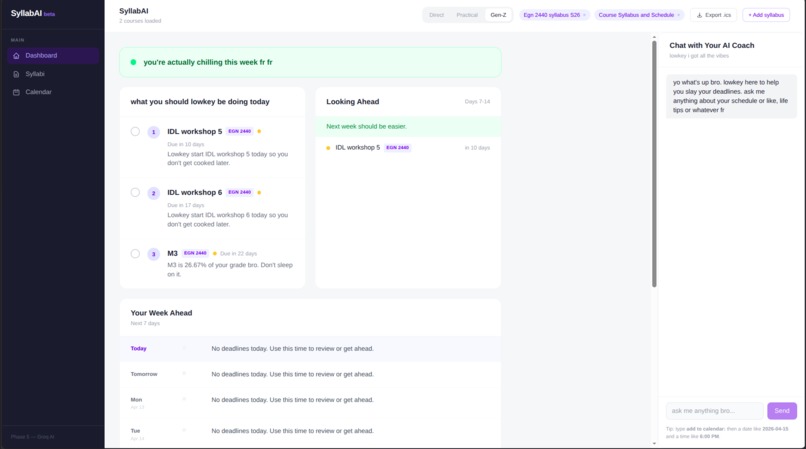
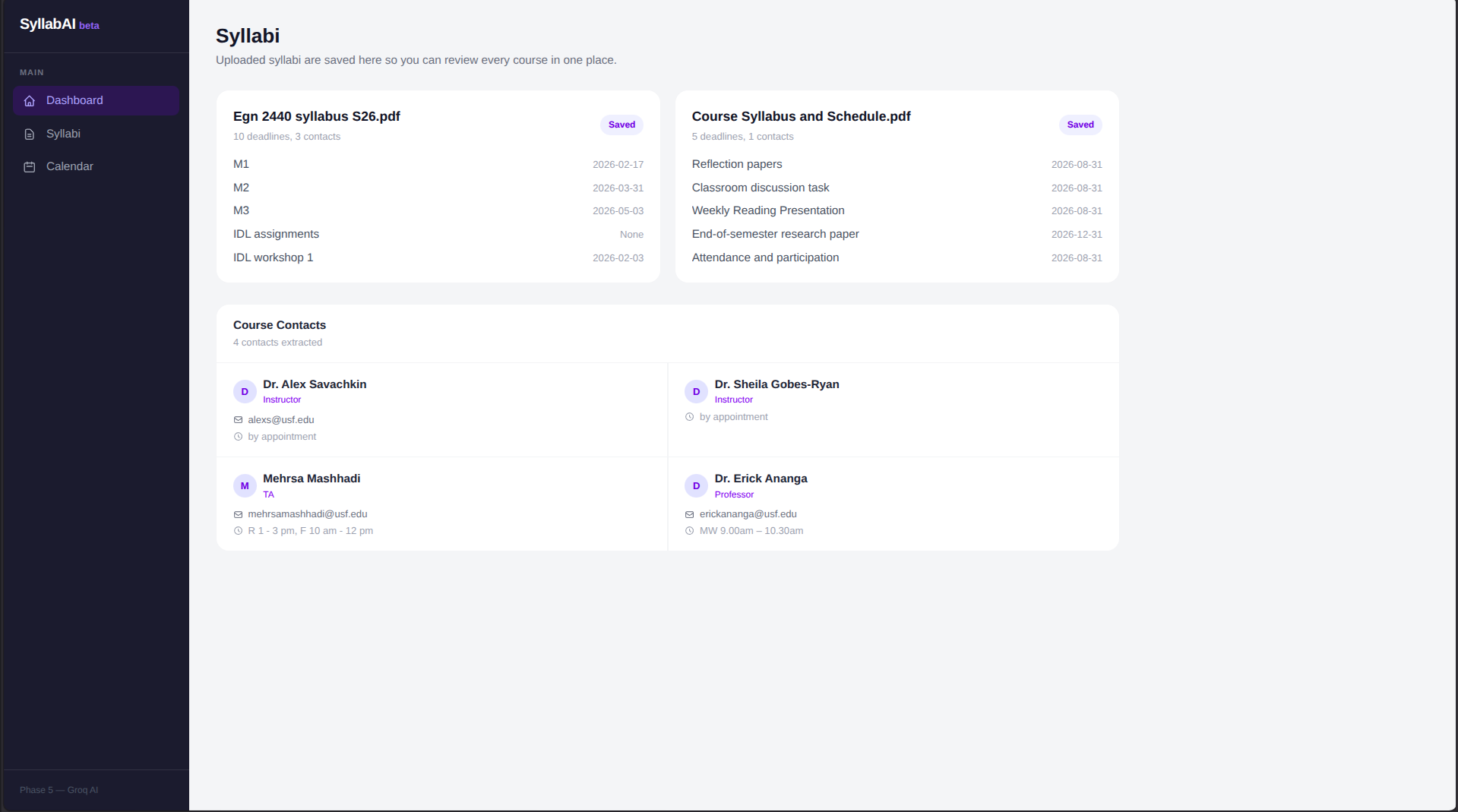
Dashboard
-
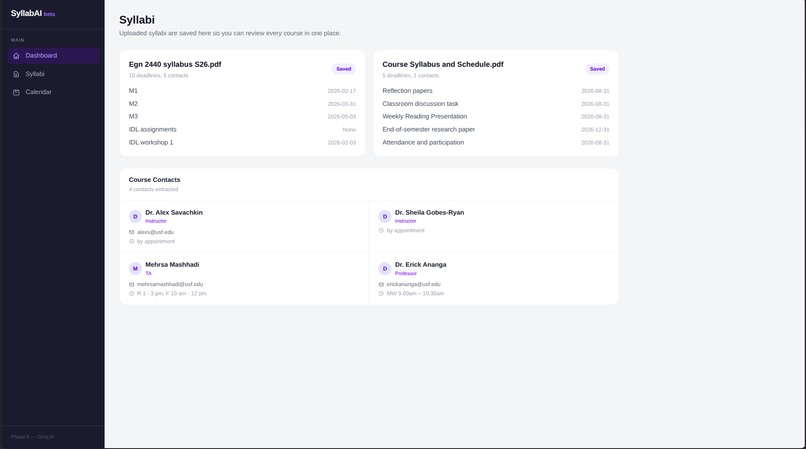
List of Events
-
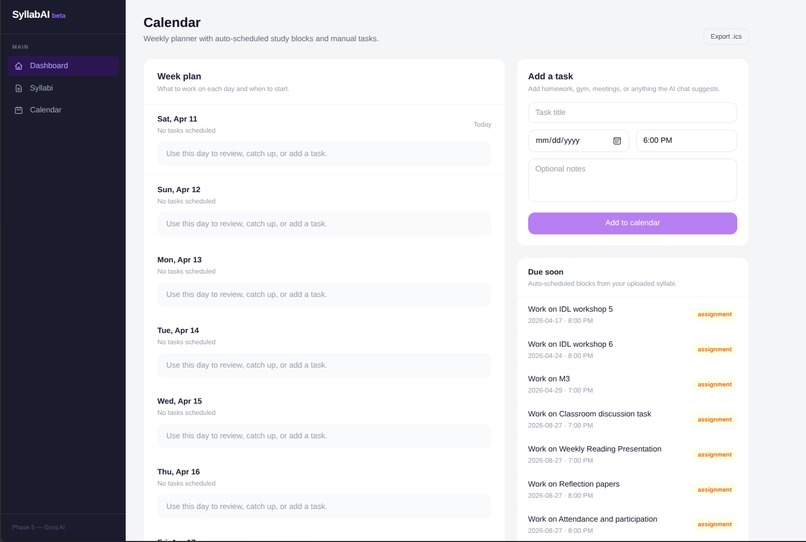
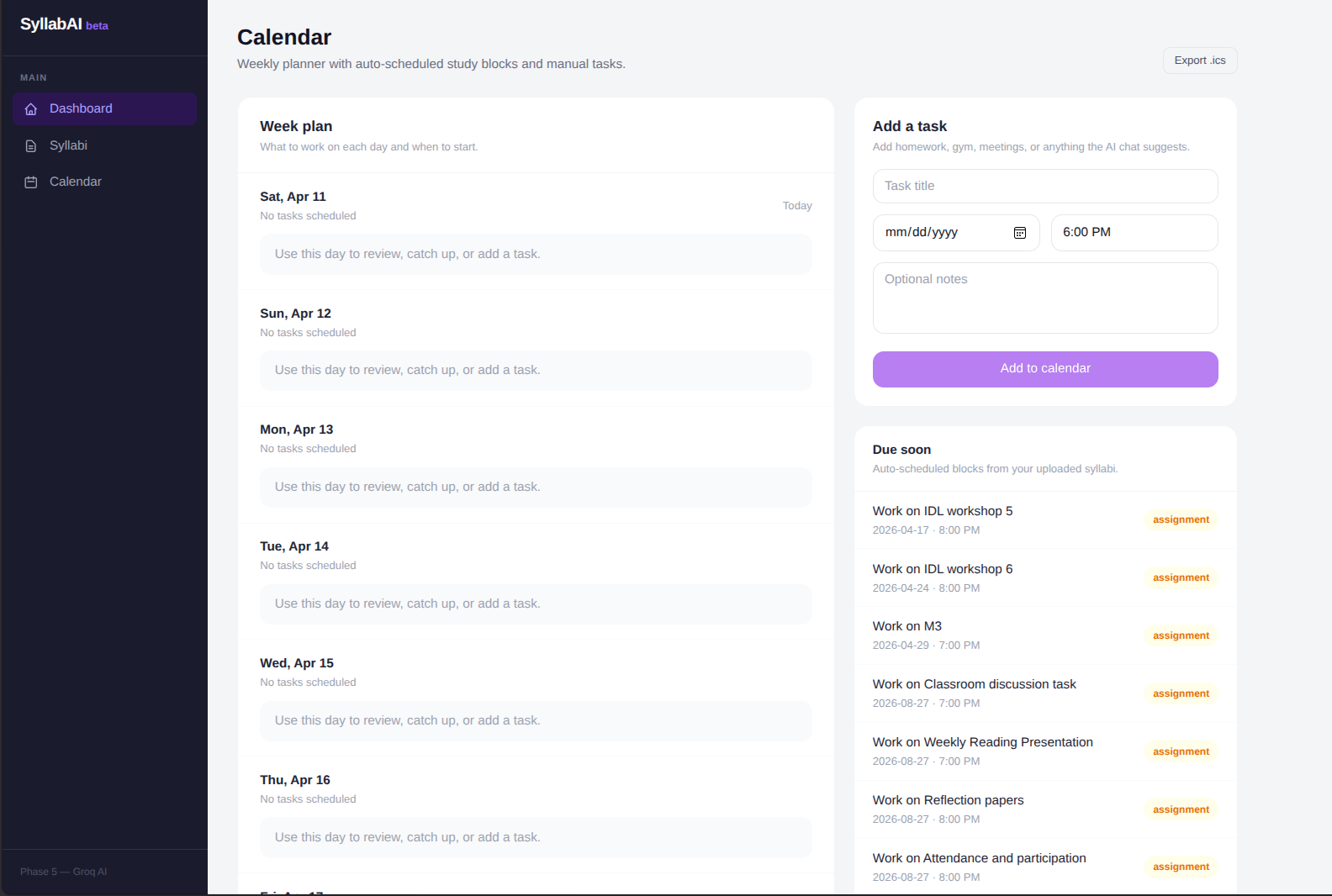
Example Calendar
SyllabAI Hackathon Submission
Inspiration The idea for SyllabAI came from a common problem with Canvas and similar platforms. These systems mostly focus on hard deadlines, meaning they only show assignments once they are officially posted. Because of that, students often do not see exams, projects, or important work early enough. This creates a situation where deadlines feel like they appear out of nowhere. We wanted to fix that by building something that does not just show deadlines, but actually helps students understand when they should start working and how important each task really is.
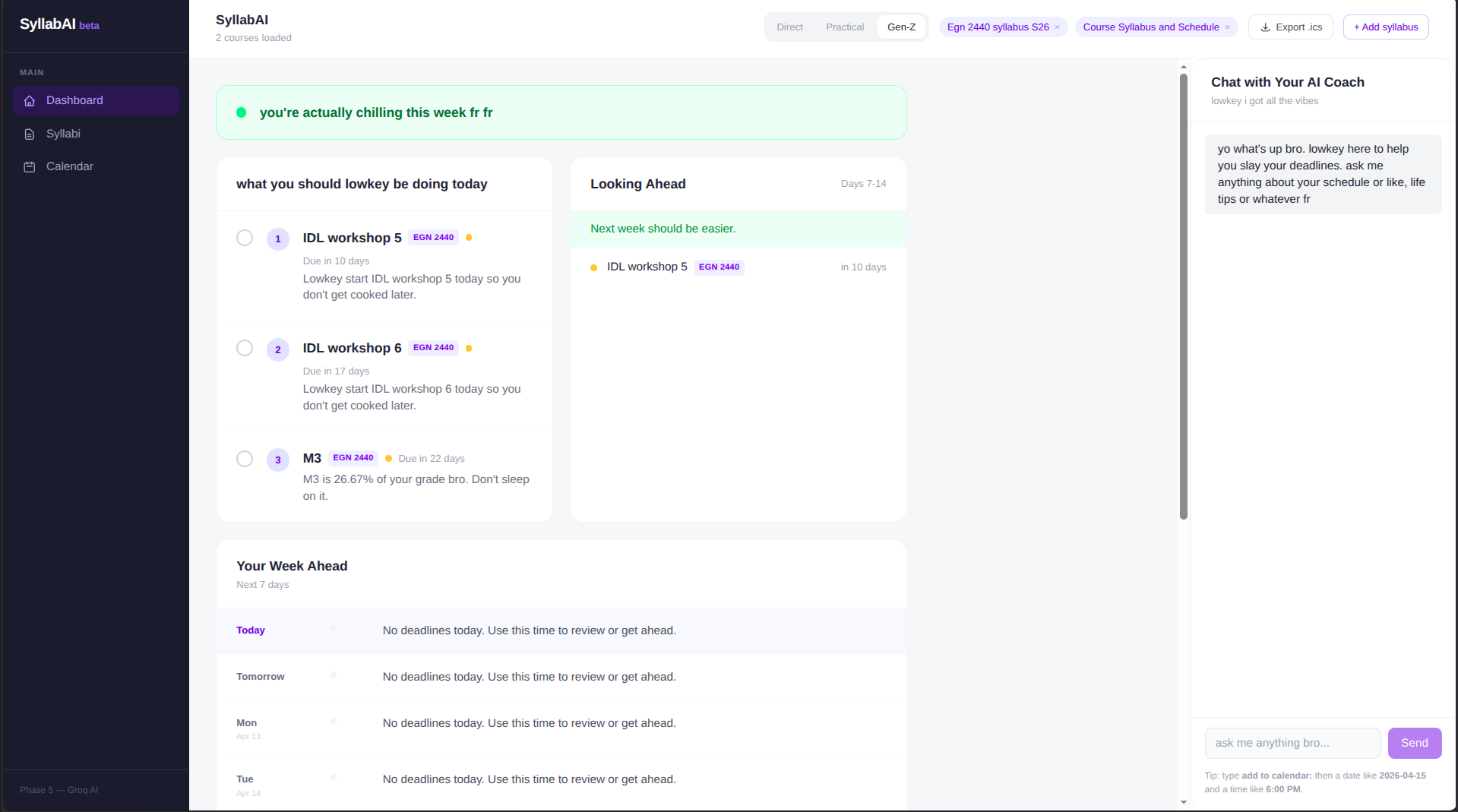
What it does SyllabAI goes beyond a simple calendar or to-do list. Instead of just listing deadlines, it reads the entire syllabus and builds a full plan from it. It shows not only what is due, but also when you should begin working on it. It calculates urgency based on things like how close the deadline is and how much the assignment is worth in your grade. This means a small homework due soon might not matter as much as a big project due later, and SyllabAI helps you see that clearly.
On top of that, users can interact with an AI chat that acts like a planning coach. You can ask what to do first or how to manage your week, and it gives direct guidance based on your actual schedule. The system also lets you download your full schedule as an ICS calendar file, so you can import everything straight into Google Calendar or Apple Calendar. In addition to that, users can add their own tasks directly into the built-in calendar, making it a complete planning tool in one place.
How we built it We built SyllabAI using Next.js for the frontend to create an interactive experience. On the backend, we used Fast API and Groq APIs to process the syllabus data and connect everything together. This allowed us to turn messy text into a clear, usable plan for students.
Challenges we ran into One of the main challenges was that some ideas sounded simple but ended up breaking parts of the system. For example, the copy and paste textbox feature caused issues because syllabus formats vary a lot, which made parsing harder than expected. Another challenge came from the AI itself. Since we used free Groq API keys, we ran into token limits during testing, which slowed down development and forced us to adjust how we used the system.
Accomplishments that we’re proud of We are proud that we finished the project before the deadline, but more importantly, we are proud of how complete it feels. The system works across different types of syllabi and actually provides useful guidance, not just raw information. It feels like a real tool that even us as students could rely on throughout a semester.
What we learned We learned how to work with APIs and connect them to a frontend in a real project. We also learned how to use AI models to take unstructured data and turn it into something meaningful. This project helped us understand how different parts of a system come together to solve a real problem.
What’s next for SyllabAI Next, we want to improve how users interact with assignments. Right now, users cannot directly open assignment pages from within our platform, so we plan to add that feature. We also want to keep improving the planning system so it becomes even more accurate and helpful over time.
In the end, SyllabAI solves a real issue that students deal with every semester. Instead of reacting to deadlines at the last minute, students can actually plan ahead, understand what matters most, and stay in control of their workload. That is what makes it different.
Built With
- css
- fastapi
- groq
- json
- next.js
- pypdf2
- python
- tailwind
- typescript

Log in or sign up for Devpost to join the conversation.