-
-
SynapseNet your gateway to samrter collaboration
-
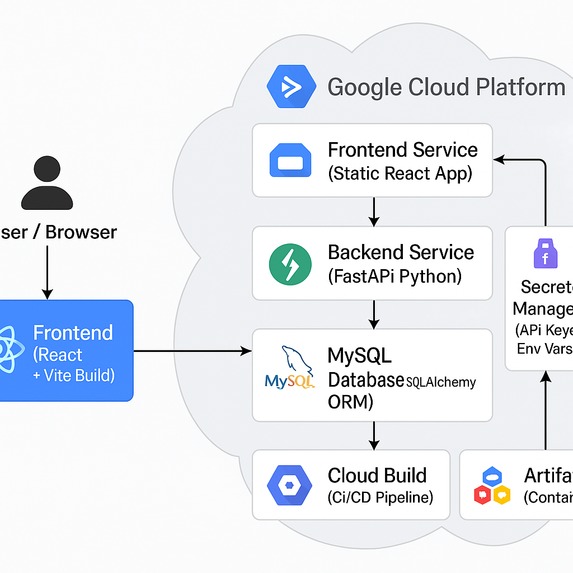
system architecture
About the Project
🧠 Inspiration
The idea for SynapseNet was inspired by the human brain — a masterpiece of interconnected neurons exchanging information effortlessly. I wanted to bring that same concept into the digital world by creating a network where humans, data, and AI systems communicate as naturally as biological synapses.
My goal was to build a unified, intelligent framework that bridges AI reasoning, collaboration, and real-time interaction.
📚 What I Learned
While developing SynapseNet, I explored and mastered several challenging areas:
- FastAPI and React integration for building a seamless full-stack architecture.
- Real-time communication using WebSockets and event-driven updates.
- Cloud deployment through Google Cloud Run, including CI/CD automation.
- AI integration and fine-tuning for responsiveness, stability, and scalability.
Every phase of development taught me how to align creativity with engineering precision.
⚙️ How I Built It
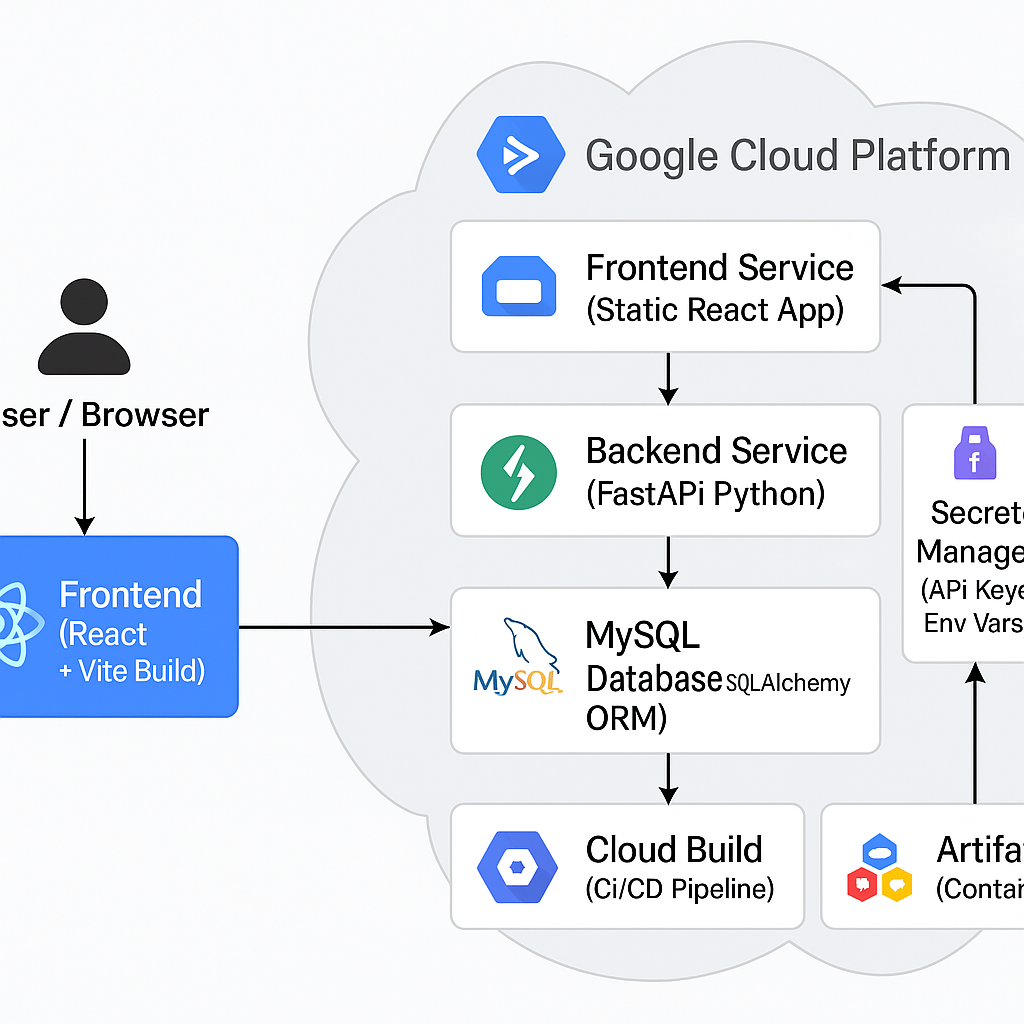
SynapseNet was built using a modern and modular tech stack:
- Frontend: React (Vite) + TailwindCSS + Framer Motion for dynamic UI.
- Backend: FastAPI with asynchronous endpoints and WebSocket support.
- Database: MySQL managed via SQLAlchemy ORM for efficient queries.
- Deployment: Fully automated build and deploy pipeline on Google Cloud Run, managed with
cloudbuild.yaml.
The system ensures seamless communication between frontend, backend, and AI services with minimal latency.
🧩 Challenges I Faced
Innovation rarely comes easy. I faced multiple hurdles during development:
- Dealing with Docker dependency conflicts between Python and Node builds.
- Managing asynchronous data flows for real-time AI responses.
- Troubleshooting Cloud Run startup issues due to missing packages like
python-multipart. - Designing an interface that balances performance, accessibility, and minimalism.
Each challenge pushed me to rethink architecture, optimize configurations, and refine my problem-solving approach.
🚀 Conclusion
SynapseNet represents the idea of digital neurons — a space where intelligent systems and human creativity converge.
Building it taught me more than just technical skills; it showed me how ideas evolve into intelligent ecosystems that connect, learn, and grow.


Log in or sign up for Devpost to join the conversation.