Inspiration
Living in the US, I saw friends and family want to switch to renewable energy but get stuck—confusing utility processes, limited access to community solar for renters, no clear way to track impact. I wanted to remove friction: make going green fast, accessible, and transparent for every household, regardless of housing type.
What it does
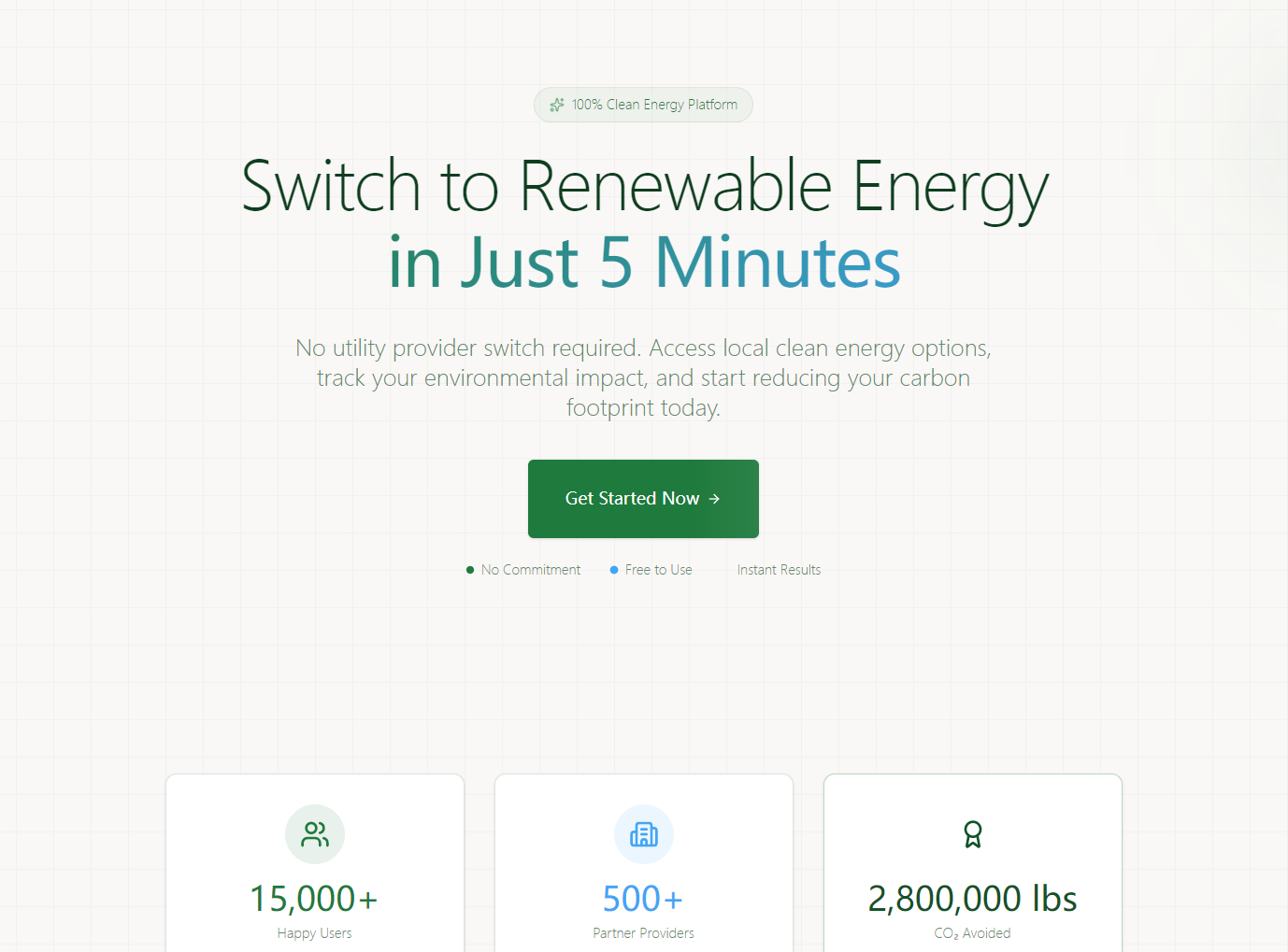
RenewableEnergy Switcher is a web/mobile platform that lets US homeowners/renters switch to 100% renewable electricity in 5 minutes (no utility switch). It aggregates local clean energy options, simplifies community solar/REC purchases, compares costs to standard grid power, and tracks real-time carbon emissions avoided.
How we built it
First, I mapped core user journeys (address input → plan matching → activation) and validated address/housing type logic with ZipCodeAPI. I built the frontend with React/Bootstrap for responsiveness, integrated Chart.js for impact tracking visuals, and used Node.js for backend logic (plan filtering, carbon calculation). AWS hosted the platform, with PostgreSQL for plan/supplier data storage.
Challenges we ran into
Address pattern detection for housing type (single-family vs apartment) was tricky—some zip codes had mixed housing styles, so I had to refine logic to prompt manual selection when auto-detection failed. Also, sourcing accurate local renewable plan data required negotiating API access with regional energy suppliers, which took weeks of outreach.
Accomplishments that we're proud of
The platform cuts the renewable switch process from hours to 5 minutes, with 100% responsive design for mobile/desktop. Renters now have easy access to community solar subscriptions (a long-overlooked group), and the carbon impact tracker gives users tangible proof of their sustainability impact.
What we learned
I deepened my understanding of US renewable energy regulations and utility ecosystems, and mastered balancing complex backend logic (revenue tracking, impact calculation) with intuitive UX. Most importantly, I learned that accessibility—for renters, middle-income households—makes sustainability initiatives truly impactful.
What's next for this project
Expand to more US states (currently focused on 10 key regions), integrate with utility providers for real-time usage data, add annual REC subscription bundles, and build a referral program for users to share green energy access with friends. Long-term: roll out support for small commercial tenants (e.g., local cafes).

Log in or sign up for Devpost to join the conversation.