
What makes SwipeHire unique?
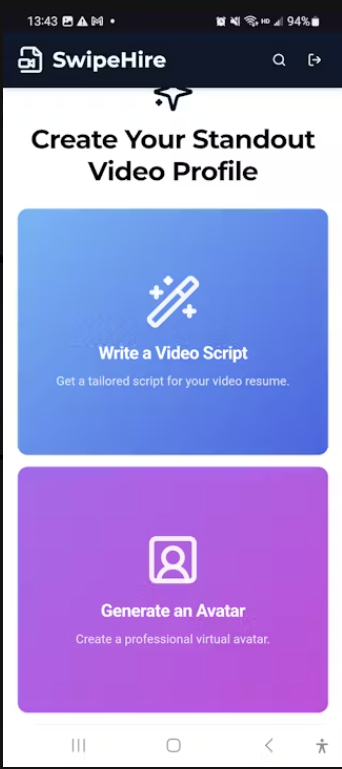
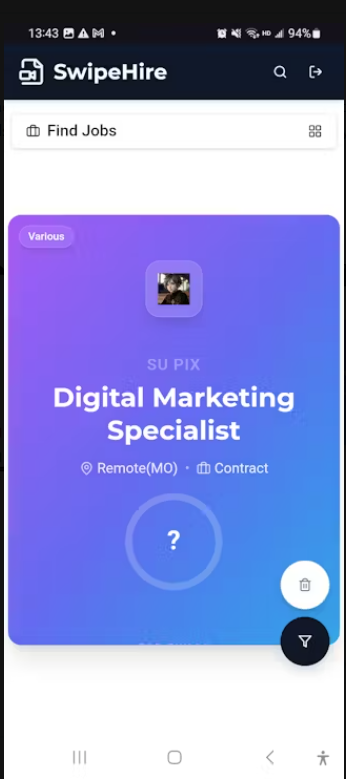
SwipeHire's uniqueness lies in its core focus on AI-powered video resumes as the central element of the hiring process. It integrates video and artificial intelligence to fundamentally change how candidates present themselves and how recruiters discover talent, prioritizing personality and potential beyond traditional credentials, supported by intelligent AI assistance.
Why should a person choose SwipeHire over its competitors?
A person should choose SwipeHire over competitors because it offers a more dynamic, engaging, and potentially more effective way to connect in the job market. Job seekers can truly express themselves and stand out through video with AI tools to help them, while recruiters gain deeper insights into candidates earlier, potentially improving screening efficiency and leading to better-fitting hires.
How would you describe your primary audience?
SwipeHire's primary audience is a dual-sided market:
- Job Seekers: Individuals actively looking for employment who are willing to use video to present themselves and are interested in leveraging AI tools to enhance their job search.
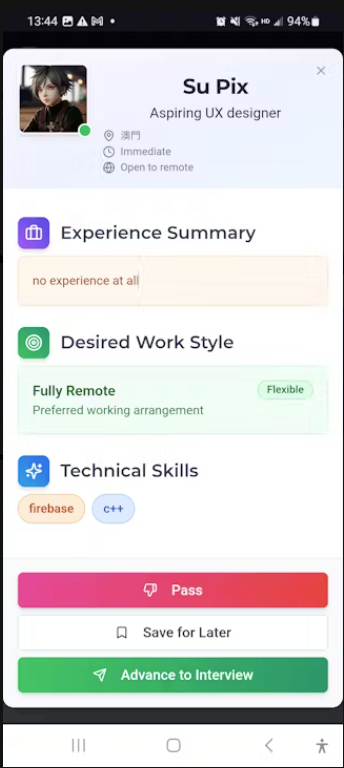
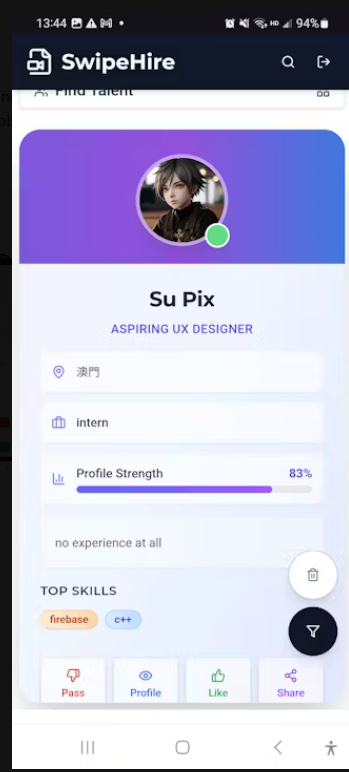
- Recruiters and Companies: Hiring professionals and organizations of various sizes looking for innovative ways to source talent, improve screening efficiency, and find candidates who are a strong cultural and skill fit.
What's the story behind SwipeHire?
The story behind SwipeHire is rooted in the belief that the traditional hiring process is often inefficient and fails to capture the full picture of a candidate. The idea was to create a platform that leverages the power of video to bring personality and communication skills to the forefront, combined with artificial intelligence to make the process smarter and more efficient for everyone involved. It's about building better connections and finding the right fit beyond just matching keywords.
Which are the primary technologies used for building your product?
The primary technologies used for building SwipeHire are:
- Frontend: Next.js (a React framework), TypeScript
- Backend: Node.js, Express.js, MongoDB (for database), Mongoose (for MongoDB object modeling)
- AI: Google Cloud's Genkit (for orchestrating AI flows)
- Containerization: Docker
- Cloud Platform: Google Cloud Platform (Cloud Run, Artifact Registry, Google Cloud Storage)
- Real-time Communication: Socket.io
- Queueing (Planned): Redis and BullMQ

Log in or sign up for Devpost to join the conversation.